Replace Patchy Grass Around Georgia Garden Paths With These Tough Creeping Plants
Grass along a garden path often wears down into thin, muddy strips no matter how much seed you throw at it.
Foot traffic and shade from nearby plants both take a toll on those narrow edges. Over time, the bare spots tend to grow wider instead of filling back in.
Reseeding those strips every year can turn into a chore that never seems to stick.
Creeping groundcovers handle that kind of spot differently than turf does. Many of them spread low and fill gaps on their own, and some handle light foot traffic better than you expect.
Several options grow well in Georgia, from sunny walkways to shady stepping stone paths.
Look at where your path edges thin out the most, since that tells you which kind of plant fits.
1. Native Frogfruit Takes Light Foot Traffic And Feeds Butterflies
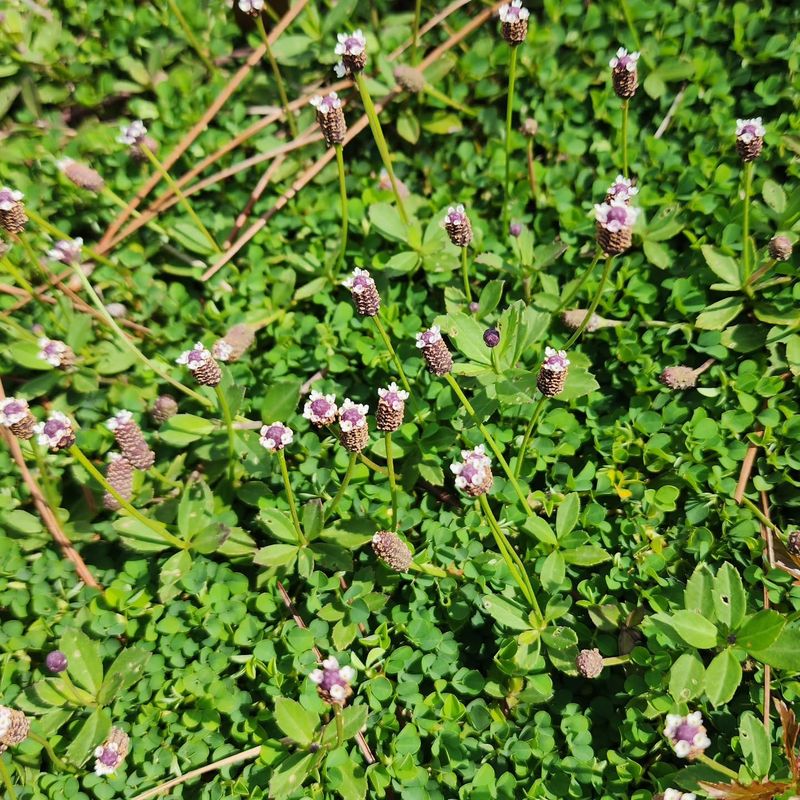
Small white flower heads with pink centers are the first thing you notice on frogfruit. Look closer in summer and you will likely spot butterflies working those blooms.
Phyla nodiflora grows wild across much of the Southeast, including parts of Georgia, so it is used to local heat and humidity.
Gardeners like it near paths because it stays low and spreads quickly by runners. In full sun, a few plugs set about a foot apart can often knit together within one growing season.
Light foot traffic is usually fine, especially on the edges of a walk where steps are occasional.
Soil does not need to be rich for frogfruit to settle in. It tends to handle sandy ground, clay, and even spots that stay a bit soggy after rain, though very poor drainage can slow it down.
Expect it to go brown and dormant in colder winters, mostly in the northern part of the state.
Plants generally green up again once spring warms the soil. If that seasonal brown look bothers you, mixing frogfruit with an evergreen neighbor can help the path stay attractive year round.
Watch the borders, since its runners may wander into flower beds. A quick trim or a simple edging strip keeps it where you want it.
2. Creeping Thyme Needs Sharp Drainage To Handle Humid Summers
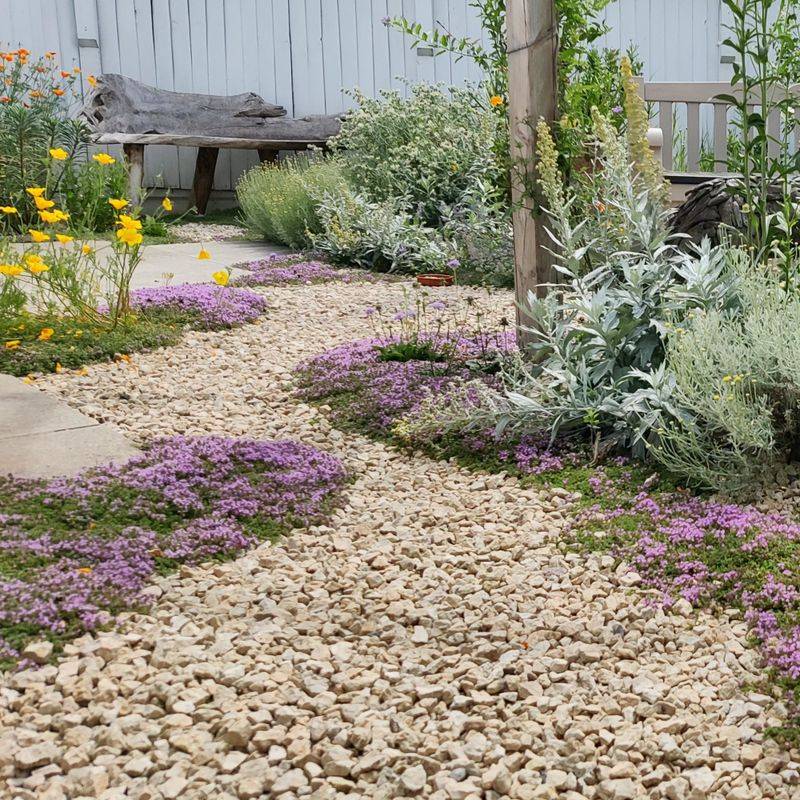
Wet feet are creeping thyme’s biggest enemy. Give it gritty soil and full sun, and it can turn a plain path edge into a fragrant, flowering strip.
Thyme comes from dry, rocky places, so muggy Southern summers test it.
Gardeners in Georgia often have the best luck planting it in raised spots, along gravel walks, or tucked between stones where water drains away fast. Heavy clay that stays damp can lead to rot, especially after long rainy spells in July.
Mixing in fine gravel or expanded shale before planting may improve drainage a lot.
Skip thick mulch around the crowns. A thin layer of pea gravel tends to keep stems drier than shredded bark, which holds moisture against the plant.
Brushing past it releases a pleasant herbal smell, and that is part of the fun.
Varieties such as Thymus serpyllum and woolly thyme stay very low. Woolly types have fuzzy leaves that look lovely but can struggle more in humidity, so smooth-leaved kinds are often a safer bet.
Your Georgia Garden Changes Every Week. Your Plan Should Too.
Gardening in Georgia changes quickly throughout the season. Every Friday you’ll receive a simple weekly plan showing exactly what to plant, prune, fertilize, harvest, and protect so you never miss the right timing.
Patches may thin out in the middle after a few years. Lifting and replanting healthy sections in early fall can refresh them, and bees usually return as soon as new flowers open in late spring.
Once established, creeping thyme usually needs little extra water, which also helps keep the crowns from staying too wet.
3. Dwarf Mondo Grass Knits A Dense Carpet Between Pavers
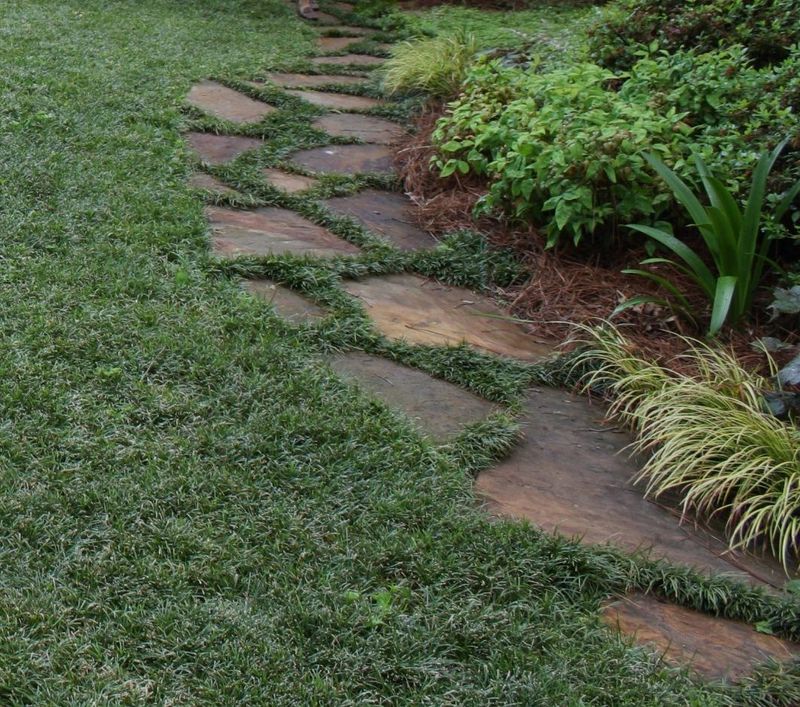
Clean lines and deep green color make dwarf mondo grass a favorite for formal walkways. Planted between square pavers, it creates that tidy grid look you see in magazine courtyards.
Ophiopogon japonicus Nana grows only a few inches tall and stays evergreen through most winters.
Patience matters here. Mondo grass spreads slowly, so plan on placing small divisions close together, about three to four inches apart, if you want a full look in a couple of years.
Part shade suits it well across Georgia, though it can take morning sun.
Hot afternoon sun may scorch the leaf tips, especially in sandy soil that dries out quickly. Regular watering during the first summer helps roots settle into the gaps before the plant gets tougher.
Foot traffic is a different story than with softer creepers.
Occasional steps between pavers are usually fine, but repeated walking right on top of it can wear it down. Keep it in the seams where stones take most of the weight.
Very little trimming is needed beyond clearing old leaves in late winter. Some gardeners lightly shear tired patches before spring growth, while others simply pull out any stray weeds and let the carpet fill in on its own schedule.
A thin layer of mulch around the edges can help hold moisture while the slow-growing plants establish.
4. In Shadier Stretches, Ajuga Spreads Into Glossy Purple Mats
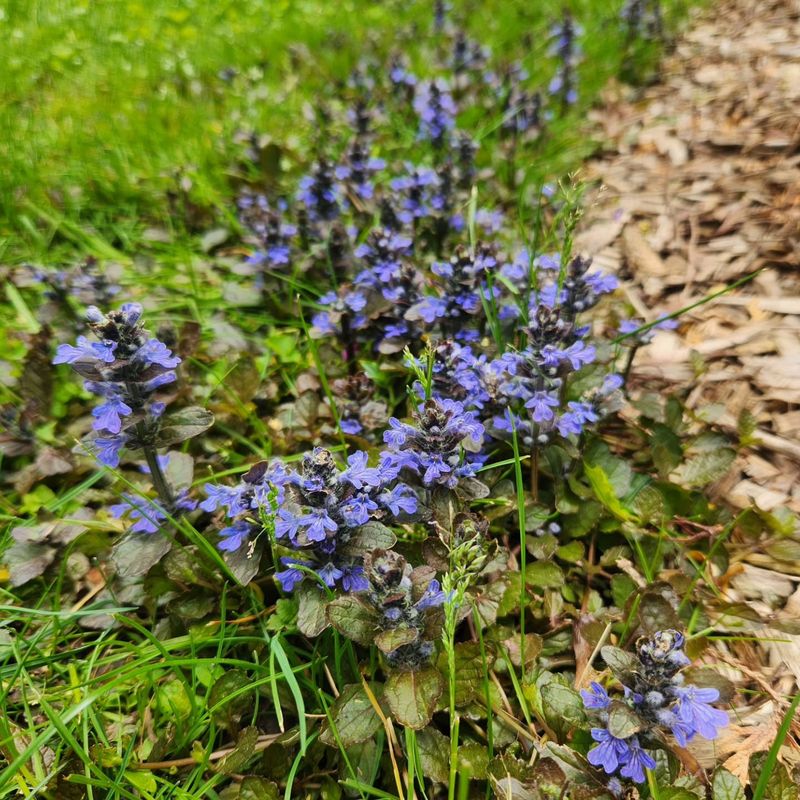
Under oaks and pines, grass often gives up long before you do. Ajuga steps into those shady corners with shiny leaves in purple, bronze, or green.
Also called bugleweed, it sends out runners that root as they go, so a few pots can cover a surprising amount of ground.
Spring brings short spikes of blue flowers that stand above the foliage for a few weeks. Varieties like Chocolate Chip stay extra small, while Black Scallop has larger, darker leaves.
Good airflow matters more than people expect.
In the humid heat of a Georgia summer, crowded ajuga in soggy soil can develop crown rot. Thinning thick clumps and avoiding overhead watering in the evening may lower that risk.
Light shade to part sun usually brings the best leaf color.
Deep shade can make plants a bit sparse, and harsh afternoon sun tends to fade purple foliage. Aim for a spot with morning light and protection later in the day.
Keep in mind that ajuga can creep into lawn edges and beds. Many gardeners run it right up to a path border, where pavers or edging act as a natural stop line, and pull wanderers by hand a couple of times each year.
Dividing crowded patches every few years can refresh the planting and give you extra pieces to fill other shady gaps.
5. Round-Leaved Dichondra Can Pass For A Soft, Low Lawn
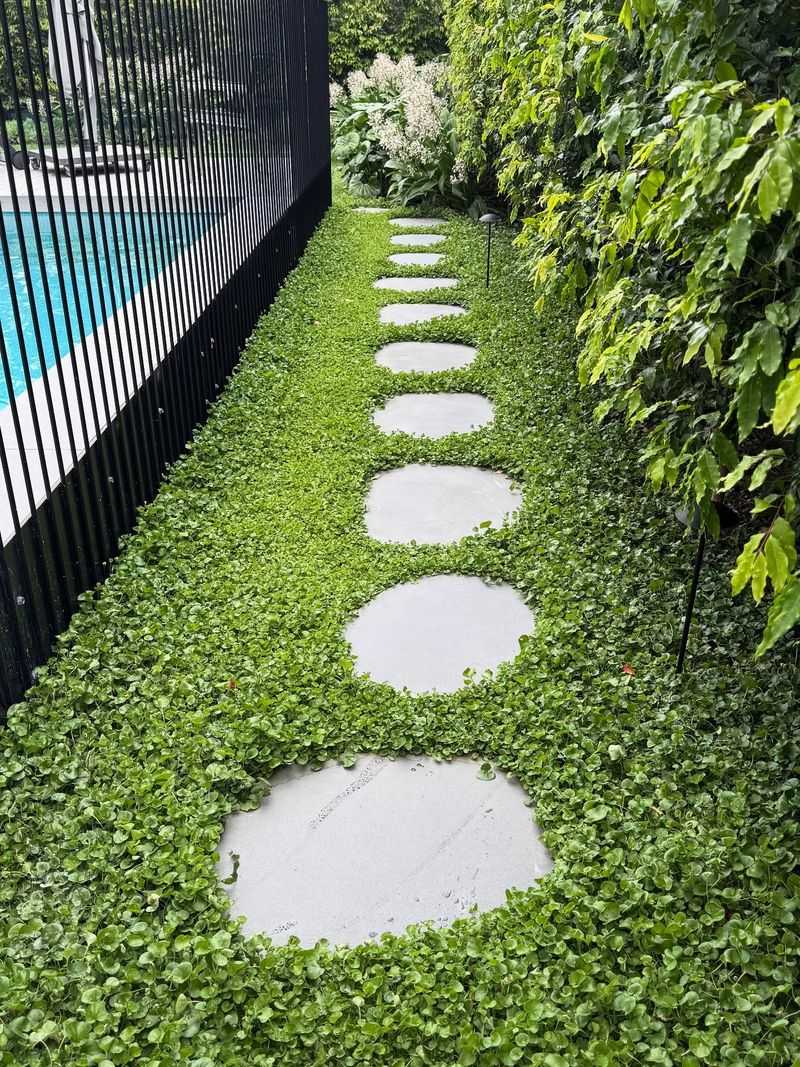
Picture a lawn made of tiny green coins, and you have a good idea of dichondra. Its kidney-shaped leaves form a soft mat that some homeowners use instead of turf in small spaces.
Dichondra carolinensis is native to the Southeast, and it often shows up on its own in damp Georgia yards.
Moist soil and part shade tend to suit it best. In those conditions, it can stay quite low without mowing, though some people trim it once or twice in summer to keep it even.
Drought is where it struggles.
Dry spells in late summer can leave patches thin, so a deep watering during long stretches without rain helps. Sandy soil may need more attention than clay that holds moisture.
Light foot traffic along path edges is usually okay. Constant walking will wear paths into it, so stepping stones through the middle are a practical solution.
Cold snaps can brown the leaves in northern counties, while warmer areas often see it stay green most of the year.
Weeds are the main maintenance chore at first. Once the mat thickens, it shades out some of them, but expect hand pulling during the first season while the plants fill in.
Small bare spots can usually be patched by transplanting rooted pieces from a thicker part of the mat.
Keeping fallen leaves and other debris off the surface also helps sunlight reach the low-growing foliage.
6. Mazus Fills Gaps With Tiny Lavender Spring Flowers
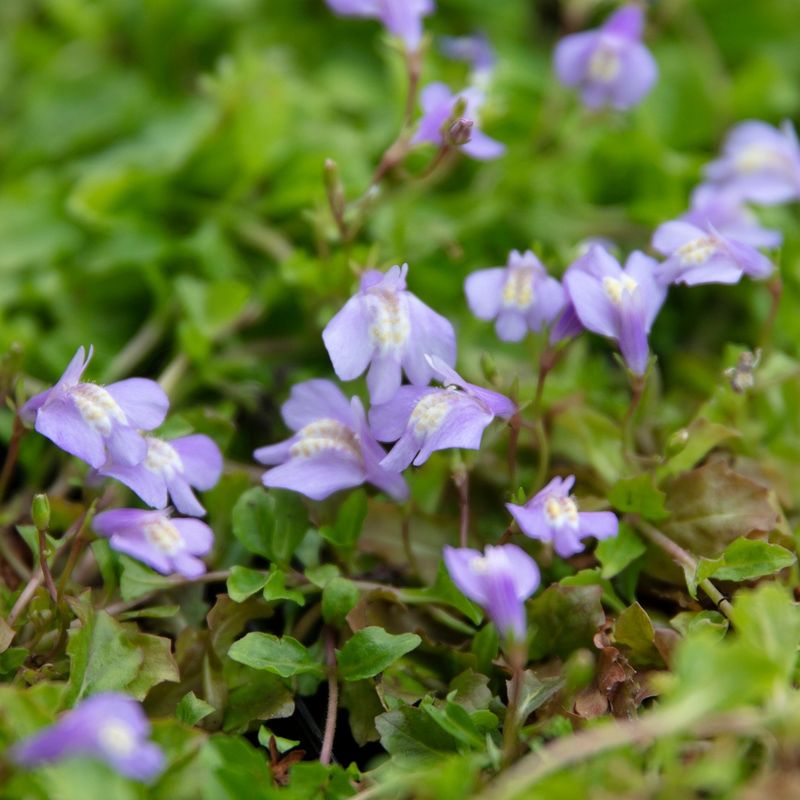
April is when mazus shows off. Little lavender blossoms with white and yellow throats pop up across a flat green mat, filling cracks between stones like spilled confetti.
Mazus reptans stays very short, often just an inch or two tall, which makes it handy for tight spaces between flagstones.
Steady moisture is the key to success. It prefers soil that stays evenly damp, so spots near downspouts or low areas along a path can work nicely.
Full sun is possible in cooler parts of Georgia if the ground stays moist.
Farther south, afternoon shade usually keeps it looking fresher through the heat. Without regular water, leaves may crisp and the mat can thin during dry summers.
Plant small clumps about six inches apart in spring or early fall, and it may fill in within a year under good conditions.
Occasional steps are usually tolerated, especially when stones carry most of the weight. Treat it as a gap filler rather than a walking surface for daily traffic.
Spreading can be fairly quick, so keep an eye on nearby lawn or bed edges. Pulling extra runners is easy because the roots are shallow, and those pieces can be replanted elsewhere along the path.
A light layer of compost around the plants can help the soil hold steady moisture without burying the low stems.
Dividing crowded patches every few years can also keep the mat dense and encourage fresh growth.
7. Blue Star Creeper Tolerates Light Steps In Moist Ground
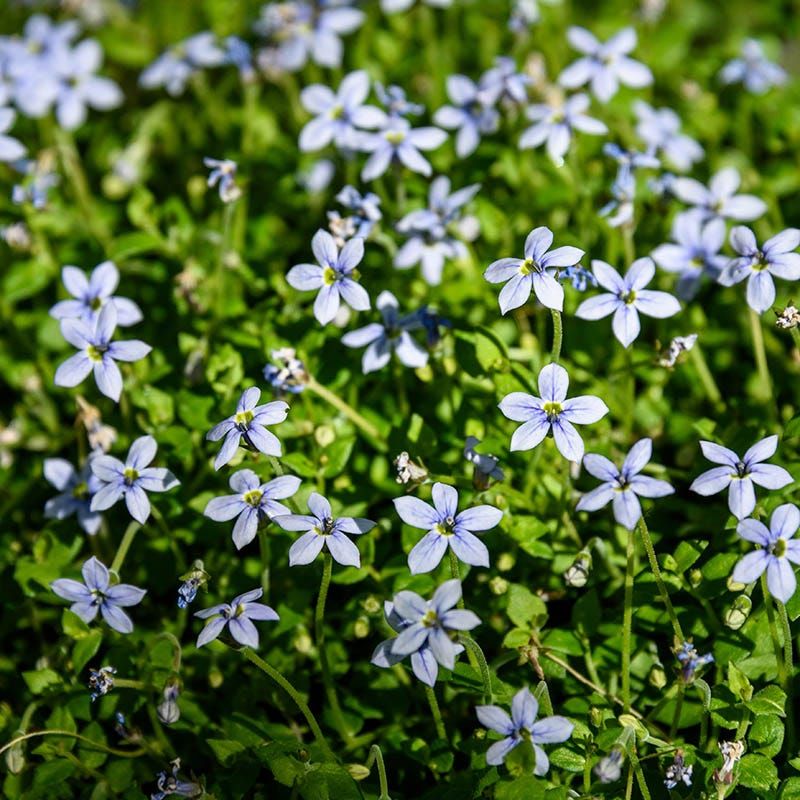
Tiny pale blue stars scattered over bright green leaves give this plant its name. Up close, the flowers look delicate, but the mat beneath them is tougher than it seems.
Isotoma fluviatilis, sometimes sold as Pratia, hugs the ground and roots along its stems.
Moist, well-drained soil keeps it happiest. Constantly soggy clay can cause problems, while very dry ground may leave it patchy, so the sweet spot is somewhere in between.
Light steps are fine once plants are established.
Gardeners often tuck it around stepping stones where a foot might land now and then. Heavy, daily traffic is too much, though, and worn spots can show up quickly in that case.
Shade from hot afternoon sun is helpful in Georgia summers. Morning sun with protection later tends to keep foliage greener through July and August.
Flowers usually appear from late spring into summer, and some plants keep blooming lightly for weeks.
Spacing plugs about eight to twelve inches apart allows them to join up over time. Keep in mind that blue star creeper can spread into nearby lawns, so a firm edge or path border helps control it without much extra work.
A little extra water during long dry spells can help the shallow roots stay active and keep the mat from thinning.
Trim or pull wandering stems whenever they cross the path edge to keep the planting neat and contained.
8. Green And Gold Spreads Low Along Shadier Path Edges
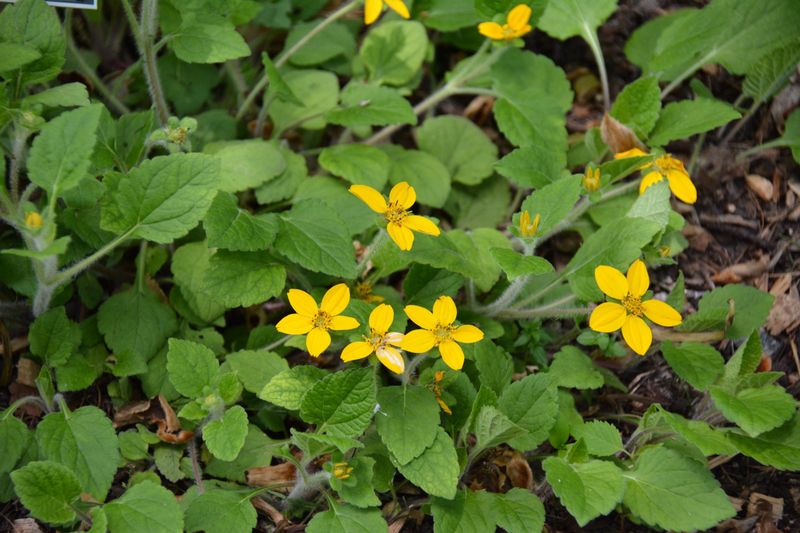
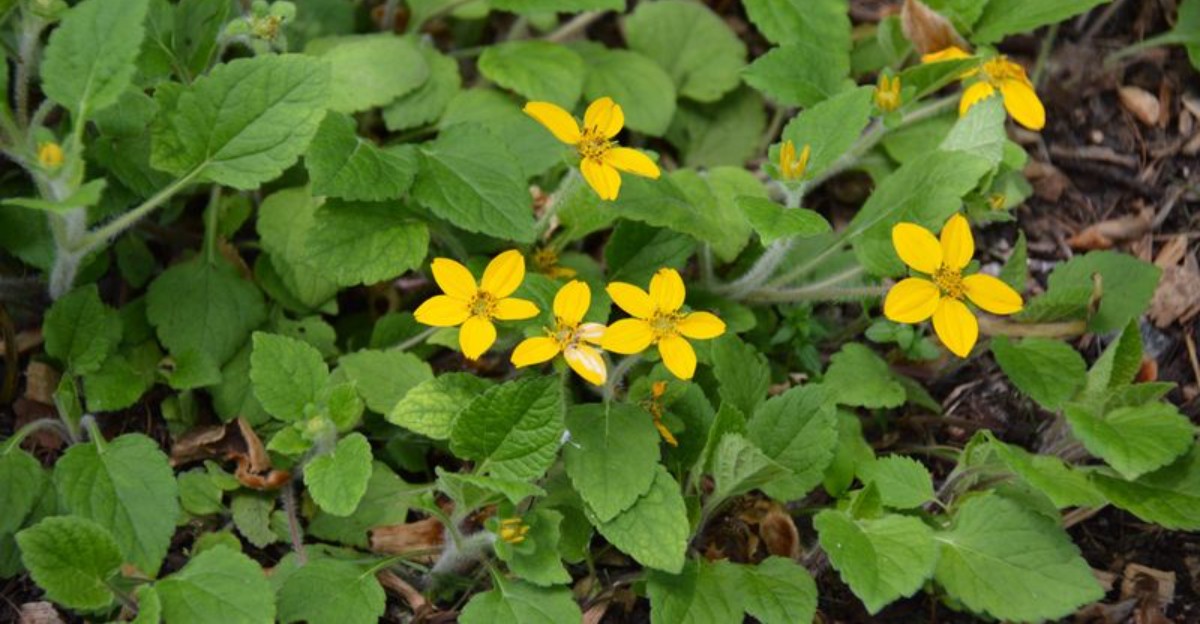
Bright yellow flowers in a shady spot feel like a small surprise. Green and gold delivers that cheerful color under trees where few other blooms show up.
Chrysogonum virginianum is native to the eastern United States, and it grows naturally in woodland areas of Georgia.
Fuzzy green leaves form low clumps that slowly spread by runners. Main blooming happens in spring, and some plants offer scattered flowers later into summer or fall when weather stays mild.
Part shade and soil rich in organic matter tend to give the best results.
Working in compost or leaf mold before planting can help, especially in heavy red clay. Good drainage matters, since roots may struggle in ground that stays waterlogged.
Path edges are a better fit than the center of a walkway. Green and gold is not meant for foot traffic, so let stones or mulch handle the steps while it softens the border.
Growth is moderate rather than fast, which makes it easier to manage than aggressive spreaders.
Plant small clumps about a foot apart for a fuller border over time. During the first summer, water during dry spells, then expect it to settle in and need little more than a light cleanup each spring.
A thin layer of leaf mulch around the plants can help protect the shallow roots while keeping the woodland look natural.
Older clumps can be divided in spring if you want to extend the border into other shaded spots.