The Pests Michigan Gardeners Keep Finding Under Kale Leaves And How To Rinse Them Off
Kale leaves that look perfectly clean from above often hide a different story underneath. Aphids and other small pests frequently cluster on the undersides of leaves, tucked away from casual observation and out of direct sunlight.
These pests can multiply quickly once established, since their hidden location gives them extra time to build up numbers before anyone notices.
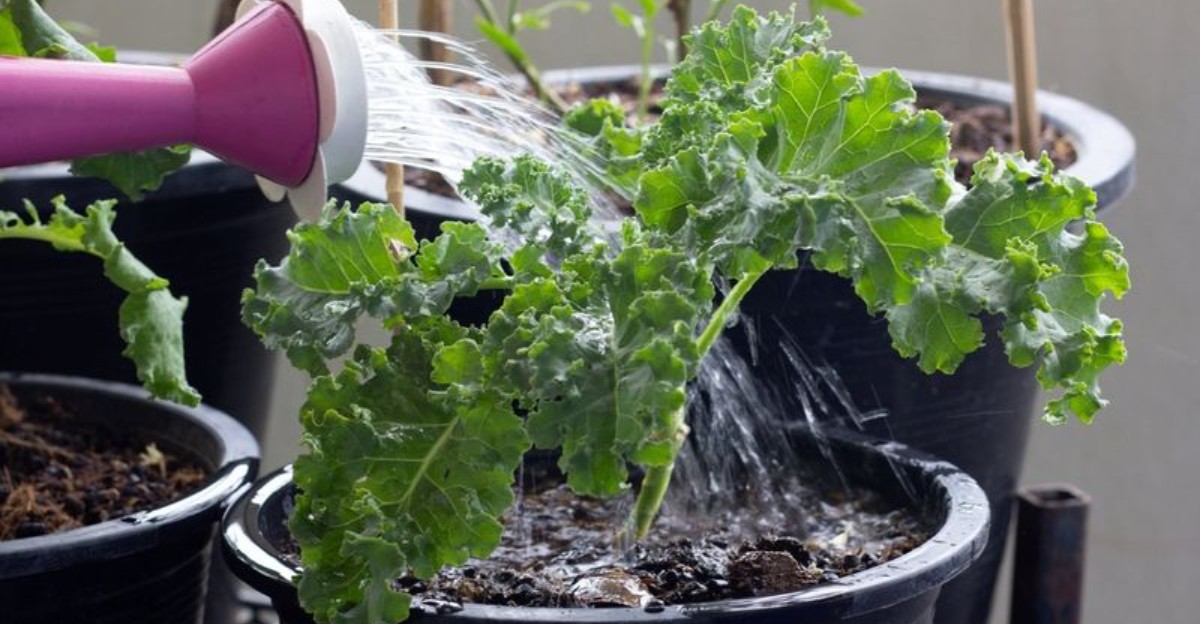
A strong spray of water aimed directly at the underside of leaves can dislodge many of these pests without resorting to chemical treatments.
Checking leaves regularly, rather than assuming a plant is pest-free just because the top looks fine, helps Michigan gardeners catch problems before they spread further across the plant.
1. Cabbage Aphids Cluster On Leaf Undersides
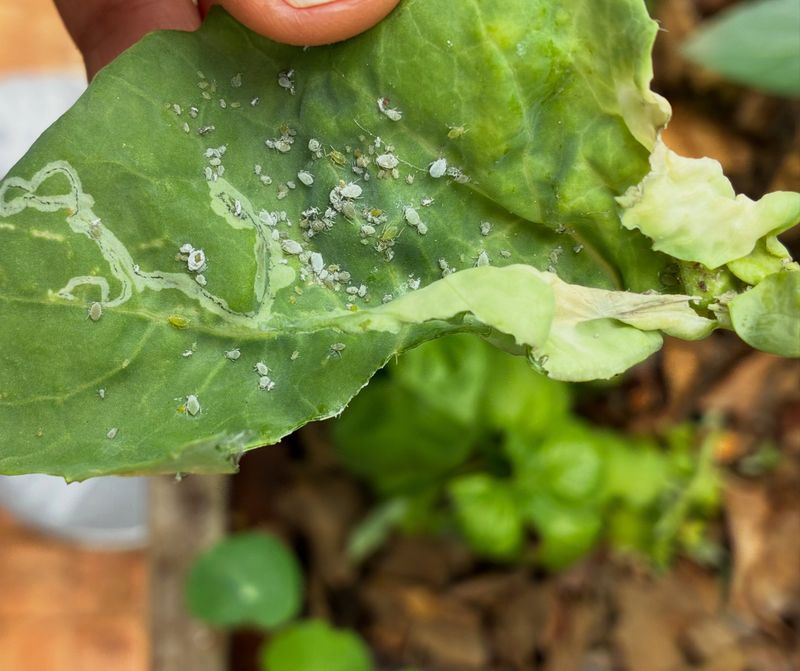
Turn a kale leaf over in September, and you may find what looks like a smear of gray dust. Look closer, and that dust is moving.
Cabbage aphids are tiny grayish green insects covered in a waxy, powdery coating, and they pack together in thick colonies on leaf undersides and in the tender center of the plant.
Cool weather suits them perfectly. They multiply fast, since females can give birth to live young without mating, so a few aphids can become hundreds in about a week or two.
Their waxy coat works like a raincoat, helping them cling tight and shrug off water, which is why a gentle rinse rarely budges them.
Fighting back starts with your garden hose. Use a strong, narrow spray aimed right at the colonies, and repeat every few days to knock them loose before they settle back in.
Leaves that are curled, sticky, or crowded with aphids are best snipped off and tossed in the trash, not the compost pile.
If numbers keep climbing, insecticidal soap can help. The key is thorough coverage, because the soap only works on aphids it actually touches, so spray the undersides and the plant center carefully.
Ladybugs and tiny parasitic wasps will often join the effort if you avoid harsh sprays. Michigan gardeners tend to see cabbage aphids peak in late summer and fall as nights turn crisp.
Checking plants weekly during that stretch helps you catch small groups early, long before they turn your beautiful kale into a crowded aphid apartment building.
2. Green Caterpillars Hide Along The Leaf Veins
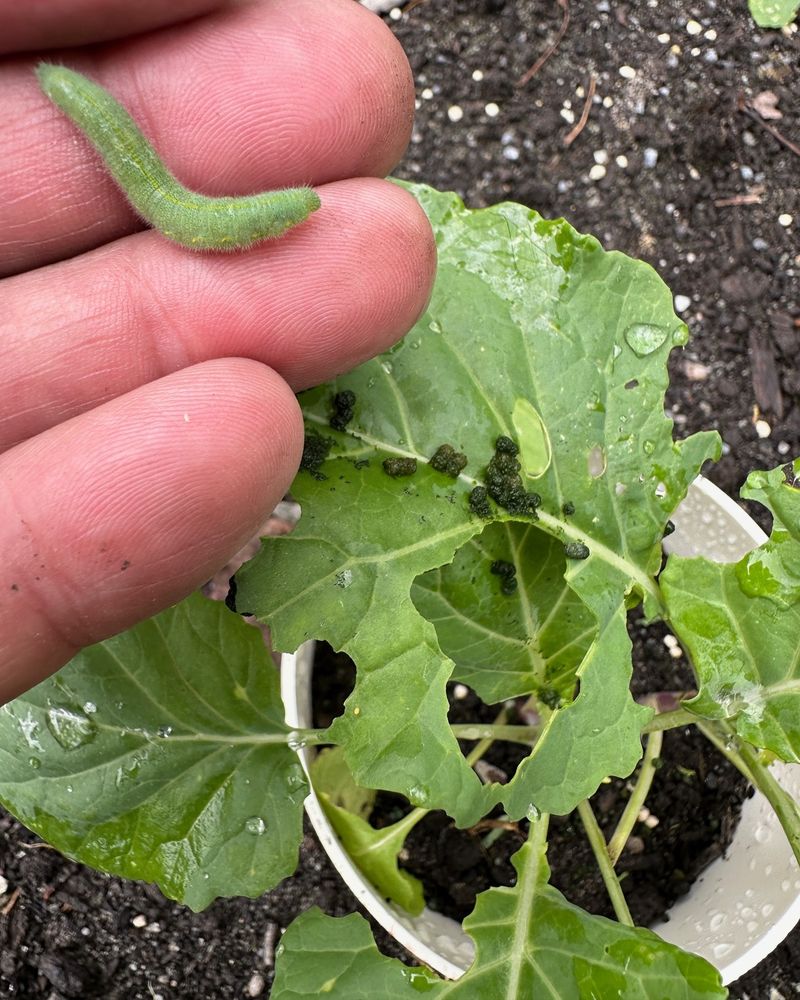
Those pretty white butterflies fluttering over your garden are not as innocent as they seem. They are cabbage white butterflies, and their babies are imported cabbageworms, soft, velvety green caterpillars with a big appetite for kale.
Spotting them takes sharp eyes. Their color matches kale almost perfectly, and they love to stretch out along the midrib or main veins on the undersides of leaves.
You may notice the damage first, ragged holes in the leaves and little clumps of dark green droppings sitting in the folds below where they feed.
Hand-picking is simple and surprisingly satisfying. Run your fingers along the veins, peek under each leaf, and drop any caterpillars you find into a cup of soapy water. Kids often love helping with this job, and it turns into a fun treasure hunt.
Your Michigan Garden Changes Every Week. Your Plan Should Too.
Gardening in Michigan changes quickly throughout the season. Every Friday you’ll receive a simple weekly plan showing exactly what to plant, prune, fertilize, harvest, and protect so you never miss the right timing.
For bigger problems, Bacillus thuringiensis, often sold as Bt, is a helpful tool. It is a natural bacteria that targets caterpillars that eat it, while leaving people, pets, and most helpful insects alone.
Spray it when caterpillars are young and small, since it works best on early stages. Prevention works even better than cleanup. Lightweight row covers draped over plants and sealed at the edges keep butterflies from landing and laying eggs in the first place.
Since cabbage whites are active in Michigan from spring all the way into fall, keeping covers on for most of the season can save your kale from months of munching.
3. Cabbage Loopers Blend Right In
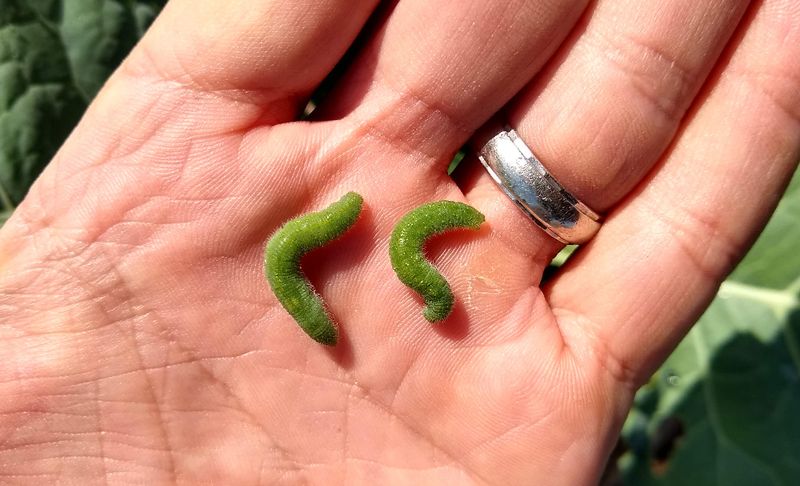
Ever washed kale for dinner and found a green caterpillar staring back at you from the colander? There is a good chance it was a cabbage looper.
Plenty of gardeners only meet these sneaky critters after harvest, because they hide so well on the plant.
Loopers are pale green with faint white stripes running down their sides. They get their name from the way they walk, arching the middle of their body into a little loop with every step, a bit like a tiny inchworm.
That motion is the easiest way to tell them apart from other caterpillars. Their feeding leaves a mark. Loopers chew large, ragged holes in kale leaves, and a few of them can shred a young plant quickly.
Bigger loopers eat much more than small ones, so catching them early matters a lot. Make leaf checks part of your garden routine, especially on the undersides where they like to rest. Hand-pick any loopers you see, and do it often, since new ones keep hatching.
When caterpillars are still small, a Bt spray can stop them from feeding without harming bees or birds.
Here in Michigan, loopers have an interesting story. The moths do not survive our cold winters well, so most arrive each year by flying north from warmer southern states.
As they migrate in, numbers often build up on kale, cabbage, and broccoli in late summer. Watch closely in August and September, and you will stay one step ahead of these clever little hiders.
4. Diamondback Moth Larvae Wriggle Away Fast
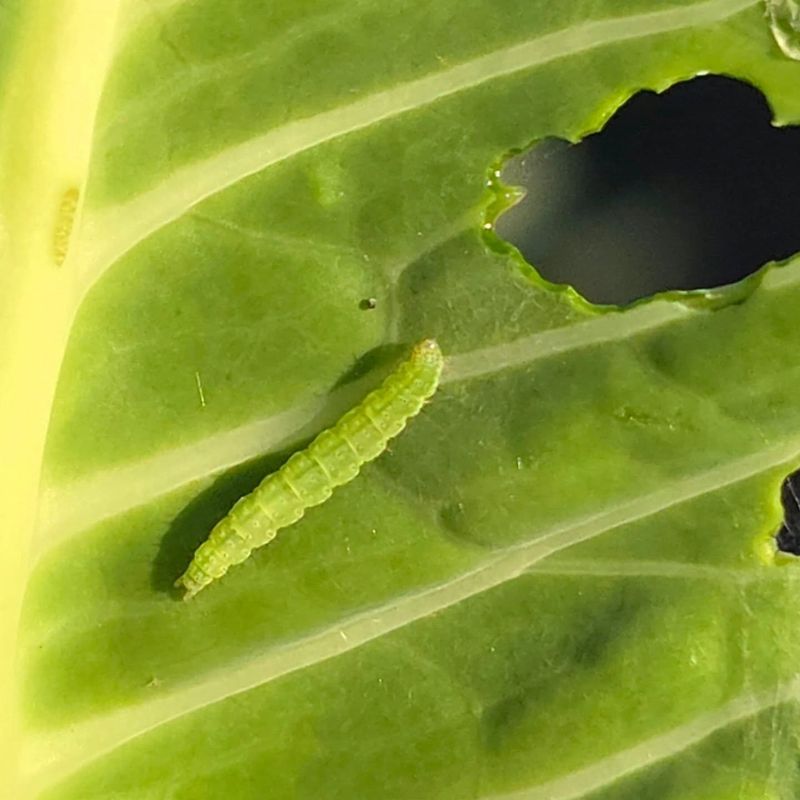
Touch one of these little caterpillars and watch it panic. Diamondback moth larvae wriggle backward wildly when disturbed, and some drop right off the leaf, dangling on a thin silk thread like a tiny bungee jumper.
They are small, pale green, and pointed at both ends, usually less than half an inch long when fully grown. The adult moth gets its name from diamond shapes that show up along its back when its wings fold together.
The damage they leave is easy to recognize once you know it. Young larvae feed on leaf undersides and scrape away tissue without breaking through, leaving thin, see-through patches that gardeners call windows.
Later, those windows turn into holes. Because these moths can have several generations in a single season, their numbers can climb surprisingly high on kale.
Your best defense is regular scouting. Check the undersides of leaves and the tender center of each plant, where larvae love to tuck in.
Pick off any you find, and keep a cup of soapy water nearby for the ones that try to drop and escape.
Bt sprays work well on young larvae, too. Cleaning up matters as much as spraying, so pull out old kale, cabbage, and broccoli plants after harvest, since leftover leaves can shelter the next round.
Diamondback moths are a common brassica pest in Michigan home gardens. Staying on top of them with weekly checks keeps your kale leafy, green, and free of those little windows.
5. Tiny Yellow Eggs Mean More Caterpillars Are Coming
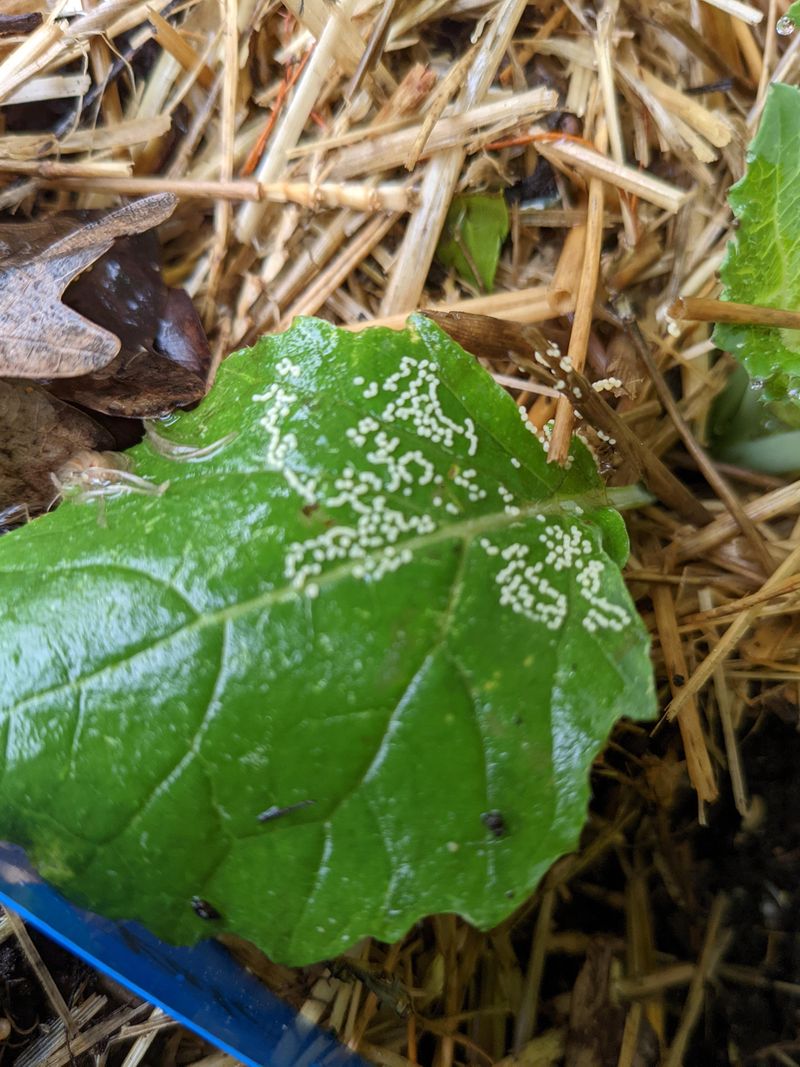
Some of the best pest control happens before a single caterpillar hatches. All it takes is a sharp eye and a few minutes each week to find the tiny clues left behind by butterflies and moths.
Imported cabbageworm butterflies lay their eggs one at a time. Each egg is pale yellow, shaped like a tiny bullet standing on end, and about the size of a pinhead.
You will usually find them on leaf undersides, though some show up on top as well. Cabbage looper moths lay small, pale, dome-shaped eggs too, often singly.
Finding eggs early is a real win. Every egg you remove is one less hungry caterpillar chewing holes later, and that adds up fast over a whole bed of kale.
Set a weekly reminder to inspect your plants. Gently flip leaves over and scan for little yellow or pale dots.
When you spot one, simply rub it off with your thumb or squish it between your fingers. A magnifying glass makes the job easier and a little more fun.
Row covers are your partner in this task. Once plants are covered, butterflies and moths cannot reach the leaves to lay more eggs. Just check under the cover now and then, because a few eggs may already be there.
In Michigan, egg laying on kale continues through much of the growing season, from late spring well into fall. Steady checking, rather than one big effort, keeps your plants ahead of each new wave.
6. Slugs Hide In Curled Leaves After Damp Nights
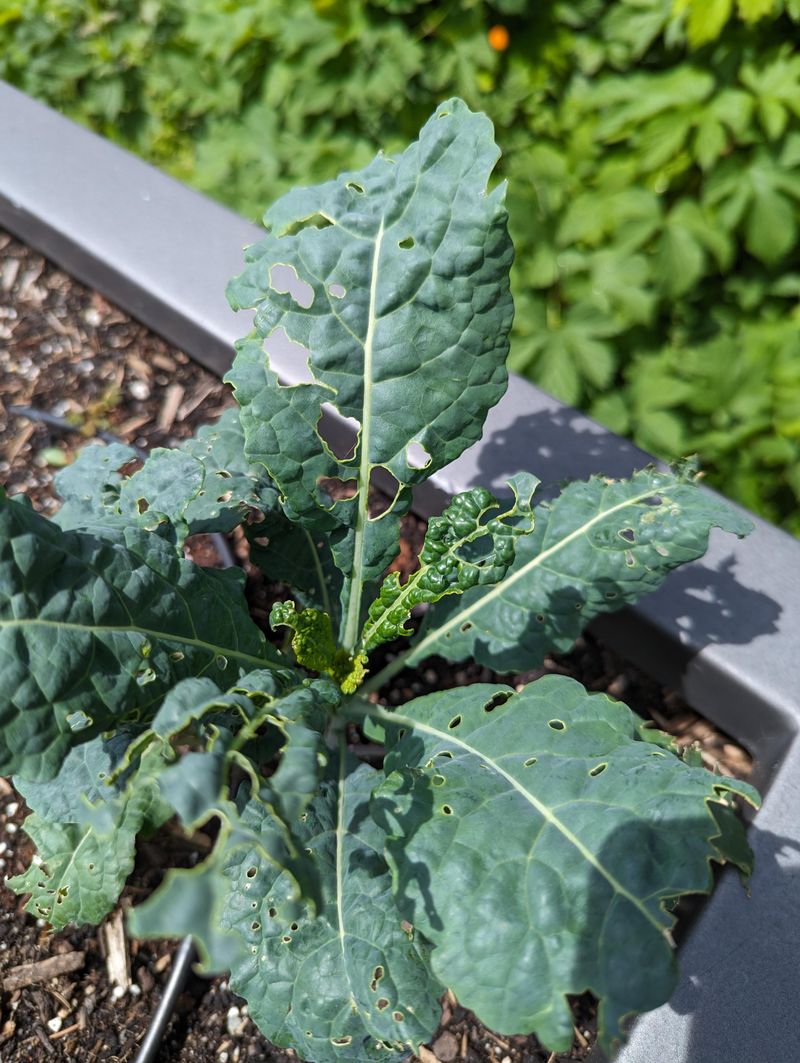
Slimy trails across your kale in the morning tell a clear story. Slugs came to dinner overnight, and some of them may still be hiding in the leaves.
Slugs feed at night when the air is cool and moist. During the day, they need shelter from the sun and drying wind.
Curly kale is like a perfect hotel for them, since its tight ruffles stay damp and shady and sit right next to their favorite meal. Look for irregular holes with smooth edges and shiny slime trails as signs they have visited.
Timing makes all the difference. Head out in the early morning or evening, when slugs are easiest to find, and pick them off by hand. Gloves help if the slime bothers you.
Board traps are an old-school trick that really works. Lay a flat piece of wood on the soil near your kale, and slugs will crawl underneath to hide by morning. Lift the board each day and clear away whatever has gathered there.
For heavier problems, try iron phosphate slug bait. Choose a product labeled for use in vegetable gardens, and scatter it lightly around plants following the label directions. It is considered a safer option around pets and wildlife than older baits.
Michigan falls are often cool and damp, which keeps slugs active in kale beds for weeks. Staying alert during rainy stretches protects your harvest and saves you from a slippery surprise in the kitchen.
7. Soak Harvested Kale In Salt Water
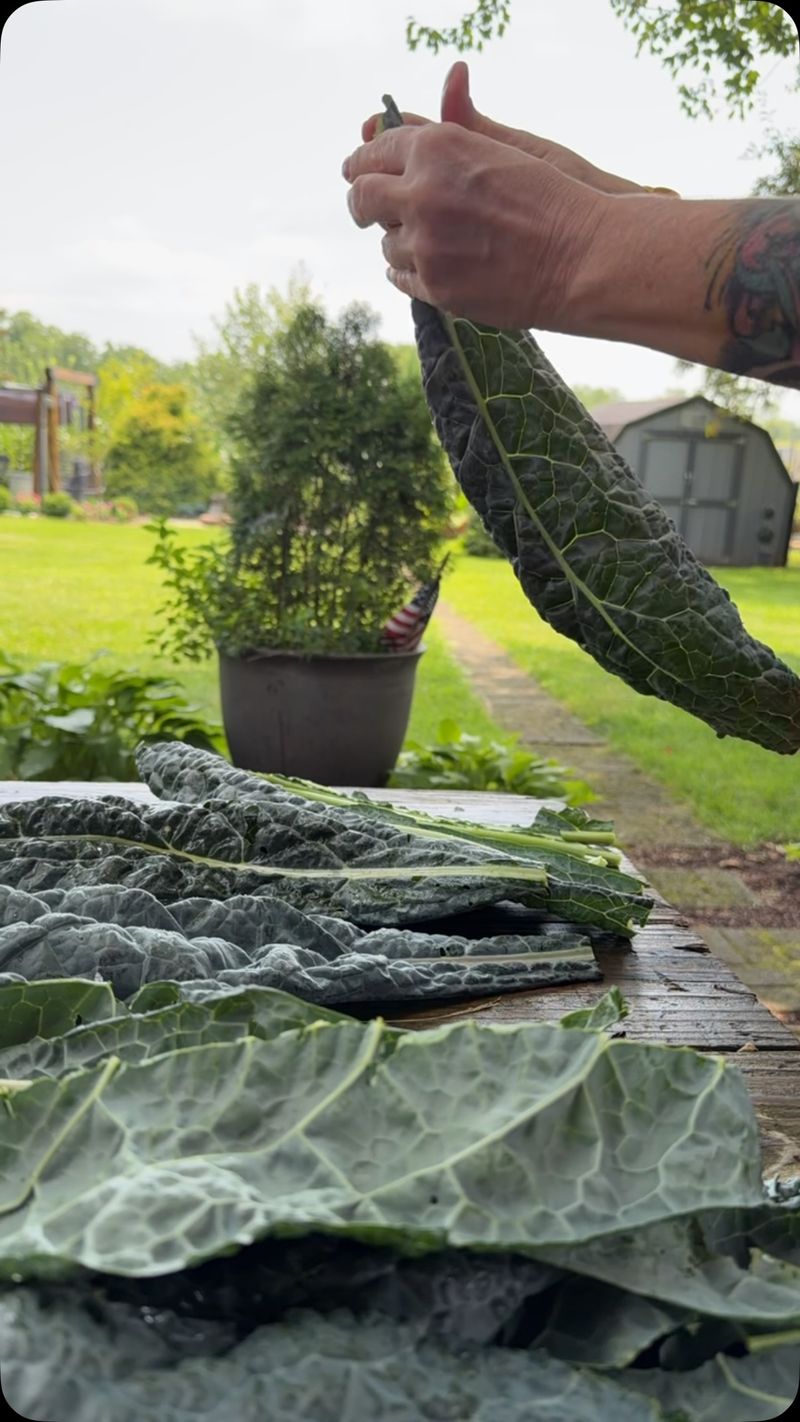
A quick splash under the faucet feels like enough, but kale pests are stubborn. Aphids hang on with their waxy coats, and caterpillars grip tightly with their little legs. A salt water soak gives them a reason to let go.
Salty water loosens aphids and makes caterpillars release their hold. Many of them float right to the surface, where you can see them and scoop them away. Tap water rushing over the leaves for a few seconds often misses these hidden hitchhikers.
Getting started is easy. Fill a large bowl or a clean sink with cool water, then stir in a small amount of salt, about a tablespoon or two for a big bowl is plenty.
Push the kale leaves under the water and swish them around gently to help shake pests loose.
Now give it time. Let the leaves soak for about 10 to 15 minutes. Keep an eye on the surface during that wait, and you may be surprised by what floats up.
When the soak is done, drain the water and rinse the kale well under fresh, running water. That final rinse washes away any leftover pests and the salt, so your kale tastes clean and fresh rather than salty.
For Michigan gardeners, this step really pays off in fall. Kale picked late in the season often carries more hidden pests than early leaves, since aphids and caterpillars have had all summer to build up. A short soak means cleaner greens and happier eaters.
8. Rinse Curly Kale Leaf By Leaf
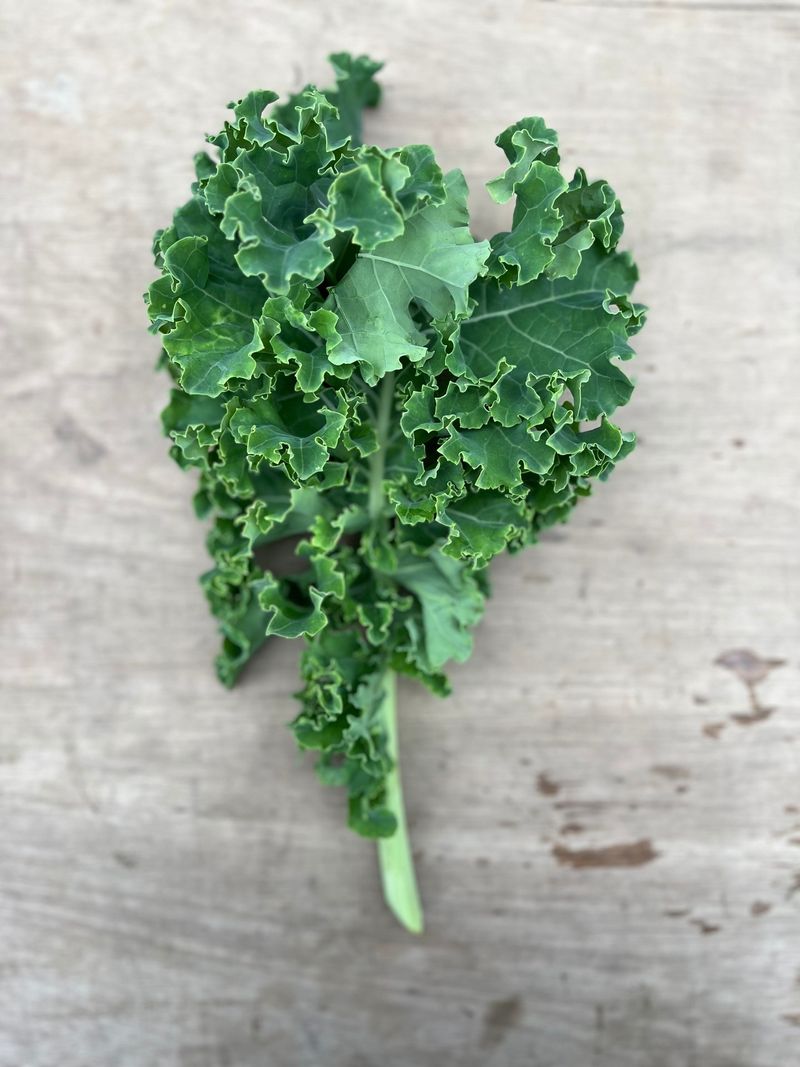
Curly kale is gorgeous in the garden, all frilly and bright, but those ruffles come with a catch. Every fold is a perfect hiding spot for aphids, tiny caterpillars, and bits of soil.
Even after a good soak, some can stay wedged deep in the curls. A little extra care solves the problem. Start by stripping the leaves away from the tough center stems.
Hold the stem at the bottom and pull your other hand upward along it, and the leafy parts slide right off. Save the stems for soup or compost.
Next, spread the leaves apart so nothing stays bunched together. Hold each piece under cool running water and rub gently along the curls and undersides with your fingers. This hands-on rinse reaches into folds that soaking cannot.
Good lighting helps more than people think. Check each piece near a bright window or under a kitchen light, turning it over to look for any small green or gray specks that are left behind.
Drying matters too. Spin the leaves in a salad spinner or pat them dry on clean towels before storing.
Wet kale spoils faster in the fridge, while dry leaves stay crisp for days when kept in a bag or container with a paper towel.
Michigan gardeners love curly kale for good reason. It handles cold well, and a light frost even makes the leaves taste sweeter.
Since it keeps growing into late fall, careful leaf by leaf rinsing keeps every cozy autumn meal clean and delicious.