The Red Headed Lizard Some Georgians Call A Scorpion Is Not Venomous
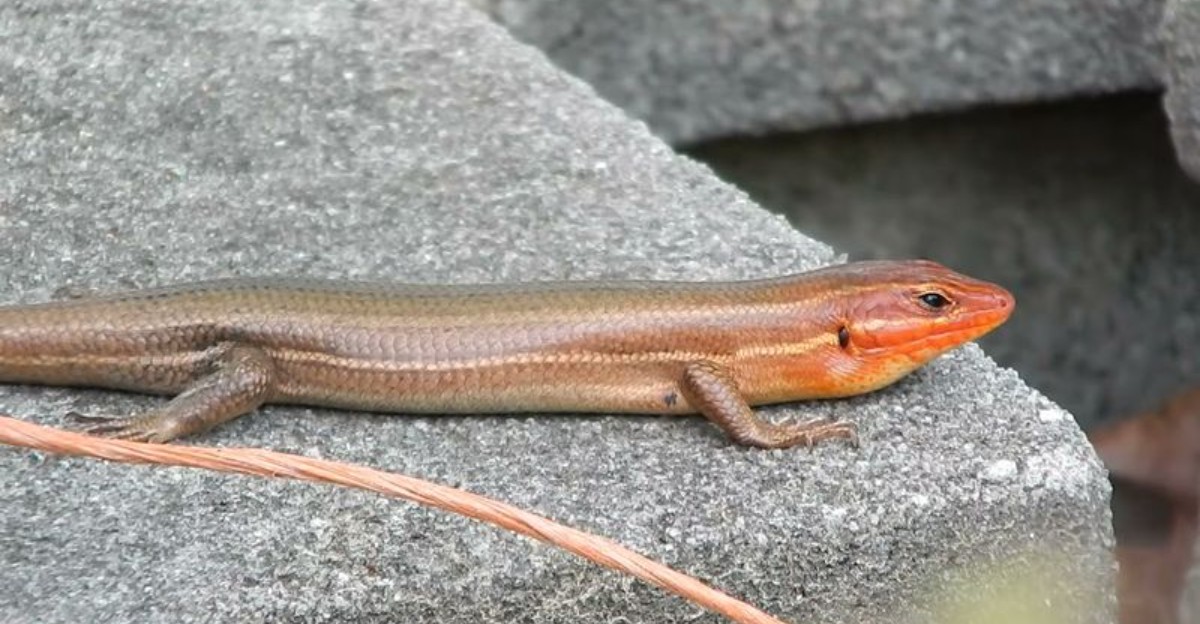
A flash of red around a lizard’s head can look alarming when it darts across a porch, wall, or garden edge.
Some Georgians call these lizards scorpions, but the nickname gives the wrong impression. They are not venomous and cannot sting you.
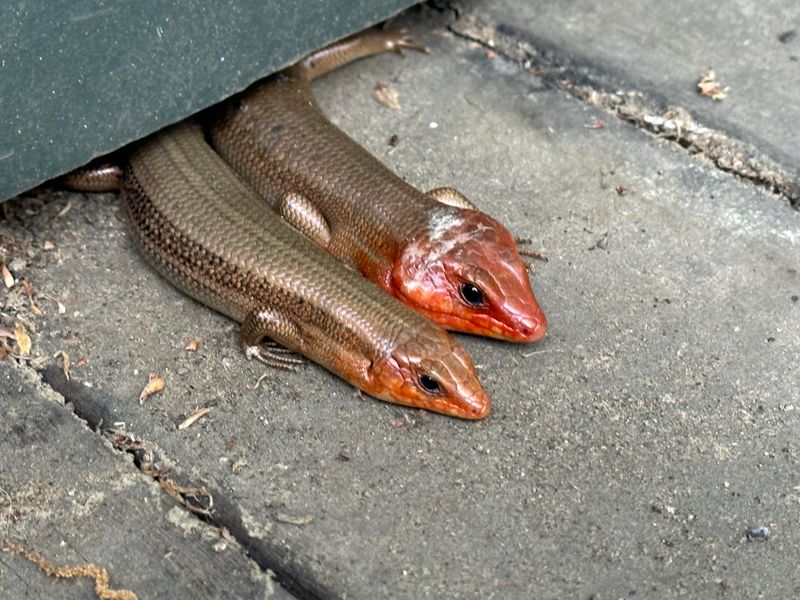
The name often refers to male broad headed skinks, which can develop reddish or orange coloring around the head during breeding season.
If you spot one, give it space and watch where it goes instead of trying to catch it. These skinks usually retreat when disturbed.
Their appearance may seem unusual, especially when the head color becomes intense.
Knowing what you are looking at can make the next sighting far less confusing. That bright head is striking, but it does not mean the lizard poses a venomous threat.
1. That Bright Red Head Belongs To A Broad-Headed Skink
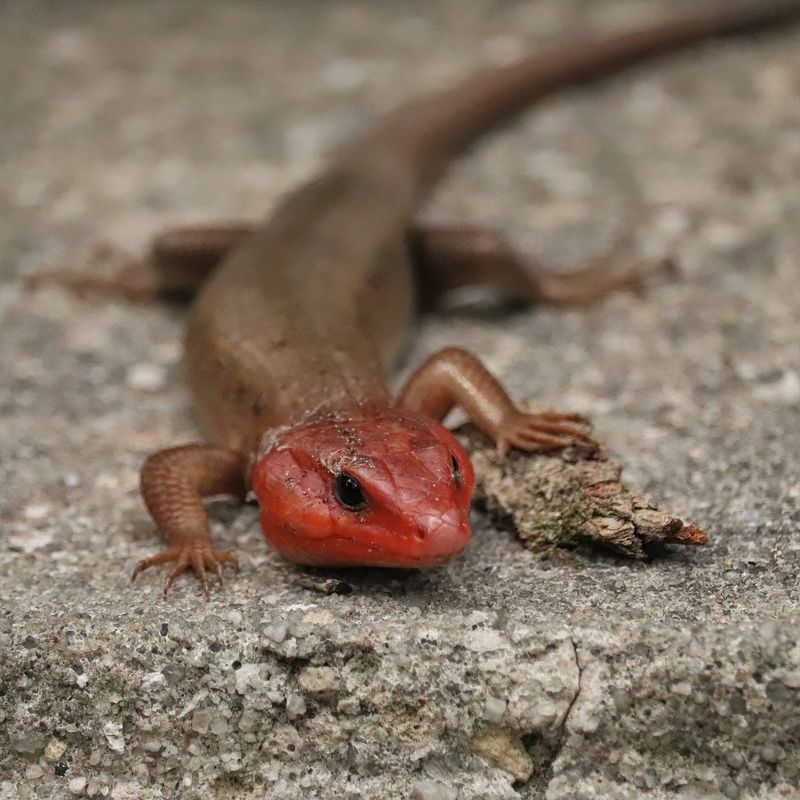
Spot a big lizard with a tomato-colored head on your fence post, and you are probably looking at a broad-headed skink. Its scientific name is Plestiodon laticeps, and it ranks among the largest skinks in the Southeast.
Adults can reach roughly 6 to 13 inches long, counting the tail.
Look at the head first, since that feature gives the species its name. Older males have wide, swollen jaws that make the head look almost triangular from above.
The body is usually olive brown to tan, with smooth, shiny scales that catch the sunlight.
Across Georgia, these skinks show up from the mountains down to the coastal plain. You might see one sunning on a stump, a woodpile, or the side of a shed on a warm morning.
Telling it apart from the five-lined skink can be tricky, because the two look alike. Broad-headed skinks often grow larger, and the adult males tend to lose their stripes more fully as they age.
A quick look at size and head shape usually helps, though even trained naturalists sometimes need a closer view to be sure.
Snapping a photo from a few feet away is a smart way to check it later without disturbing the animal.
2. The Old Scorpion Nickname Has Nothing To Do With Venom
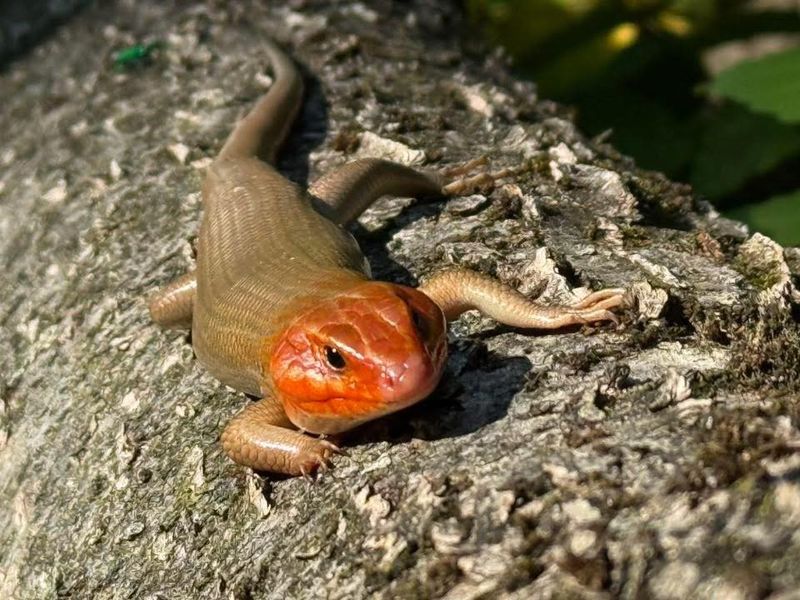
Call it a scorpion in parts of the rural South, and plenty of folks will nod along. Somewhere along the way, that label got attached to the broad-headed skink, and it stuck around for generations.
Nobody knows exactly where the nickname started, but it has been around in Georgia for a long time.
Some people believe the red head looked like a warning sign. Others link the name to the skink’s habit of biting hard when grabbed.
Here is the important part, and it is worth repeating to neighbors and kids.
Broad-headed skinks have no venom glands and no stinger. A bite from a large male can pinch and might break the skin slightly, but it carries no poison.
Real scorpions are a totally different kind of creature, related to spiders rather than lizards. Georgia has native scorpions too, including the southern devil scorpion and striped scorpion, which may help explain some of the confusion.
Your Georgia Garden Changes Every Week. Your Plan Should Too.
Gardening in Georgia changes quickly throughout the season. Every Friday you’ll receive a simple weekly plan showing exactly what to plant, prune, fertilize, harvest, and protect so you never miss the right timing.
If a skink bites, wash the spot with soap and water, just as you would with any small scrape.
Watch for redness or swelling over the next few days, and call a doctor if signs of infection show up.
3. Adult Males Develop Their Boldest Head Color During Breeding Season
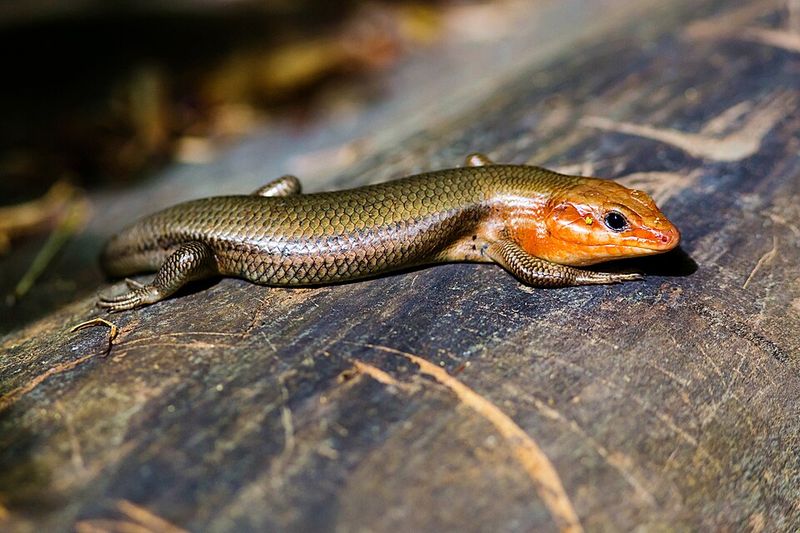
Spring turns certain skinks into showoffs. Around April and May, adult males flush with their brightest orange-red head color, and the shade can look almost glowing in good sunlight.
Hormones linked to breeding season drive that change, and the color often fades somewhat after summer.
Females usually keep a duller look year-round. They tend to hold onto faint stripes and a browner head, which makes the sexes fairly easy to sort out in spring.
During these weeks, you might catch two males chasing each other across a deck or tree trunk.
Those scuffles are about territory and mates, not about you. Giving them space lets the drama play out without anyone getting nipped.
Timing can shift a bit from year to year depending on weather. A warm spell in Georgia might bring out bold colors a little earlier, while a cool, wet spring could slow things down.
After mating, females lay eggs in early summer inside rotting logs or similar damp, hidden spots.
Mothers often stay with their eggs for a while, which is unusual behavior for a lizard. If you find a nest while splitting firewood, the kindest move is to set the log back gently and leave it undisturbed.
4. Young Skinks Look Different With Stripes And Bright Blue Tails
Blue tails surprise a lot of first-time gardeners. A tiny lizard zips across the mulch, and its tail flashes an electric blue that seems almost unreal.
Hatchling broad-headed skinks are dark, nearly black, with five light stripes running down the back.
That bright tail likely helps draw a predator’s attention away from the head and body. If a bird or cat grabs the tail, it can break off and keep wiggling while the young skink escapes.
A new tail usually grows back, though it often looks shorter and plainer than the original.
Growing a replacement costs the lizard energy, so please avoid picking young skinks up by the tail. Even gentle handling can cause it to drop.
As the months pass, the stripes slowly fade and the blue softens toward gray or brown. Males start showing hints of orange on the head as they mature, usually over a couple of years.
Hatchlings in Georgia commonly appear in mid to late summer, so that is when you are most likely to spot them.
Keep in mind that young five-lined skinks also have striped bodies and blue tails. Telling the two species apart at this age can be hard, even with a close look.
5. Trees, Logs, And Wooded Yard Edges Give Them Places To Shelter
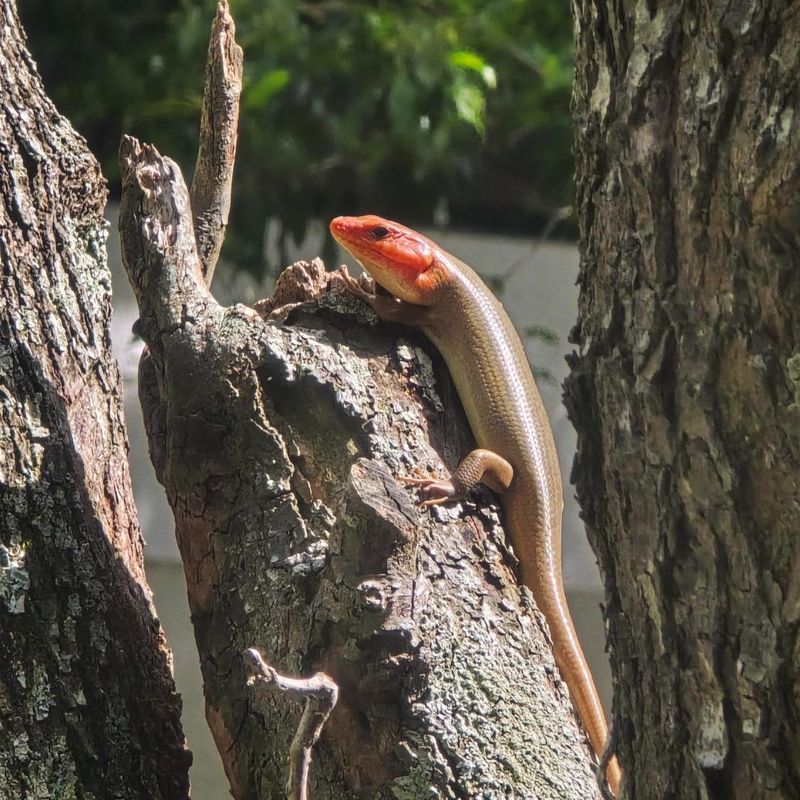
Look up, not just down. Broad-headed skinks climb more than most skinks, and they often hang out on tree trunks, especially big hardwoods with loose bark and hollow spots.
Tree cavities give them safe places to rest, hide from hawks, and escape the midday heat.
Fallen logs matter just as much. Rotting wood holds moisture, attracts insects, and offers shelter for egg laying, which makes it a handy setup for these lizards.
In Georgia neighborhoods near woods, they frequently move along the line where lawn meets trees.
Brush piles, stone walls, and old sheds can also work as hideouts. If your yard has a mix of shade, sun, and cover, there is a fair chance a skink already lives nearby.
Want to welcome them? Try leaving a log or two in a quiet corner instead of hauling every piece of wood away.
Skipping heavy pesticide use near those spots may also help, since it keeps more insects around for them to eat.
Results vary with your yard size, nearby habitat, and local predators, so there is no promise a skink will move in. Still, a little natural cover often makes a yard friendlier for many small creatures, not just lizards.
6. Insects And Other Small Prey Make Up Much Of Their Diet
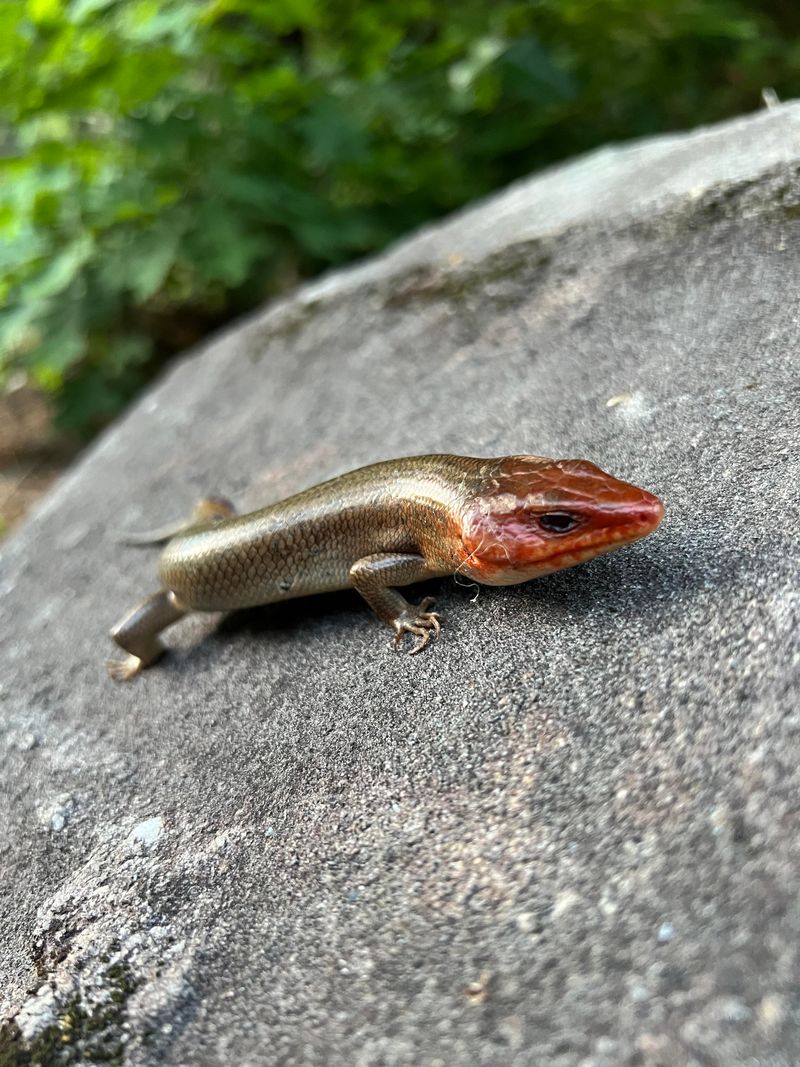
Crickets beware. Broad-headed skinks are active hunters, and they spend warm days searching bark, leaf litter, and garden beds for something to eat.
Their menu includes beetles, grasshoppers, caterpillars, spiders, roaches, and similar small creatures.
Larger adults may sometimes take bigger prey, such as smaller lizards. Those strong jaws help them crush insects with hard shells that other lizards might pass up.
For gardeners, that hunting habit can be a small bonus.
Don’t expect a single skink to clear out a pest problem, though. One lizard can only eat so much, and insect numbers depend on weather, plants, and many other factors.
Skinks also need water, which they often get from dew, rain, and the moisture in their food. A shallow dish set low in a shady spot may help during dry spells.
Feeding wild skinks by hand is not a good idea, since it can make them less wary of pets and people.
Here in Georgia, they are most active from spring through fall and slow down when cold weather arrives. During winter, they usually tuck into logs, tree hollows, or underground spots and stay mostly out of sight until temperatures climb again.
7. Leaving A Skink Alone Is Usually The Simplest Response
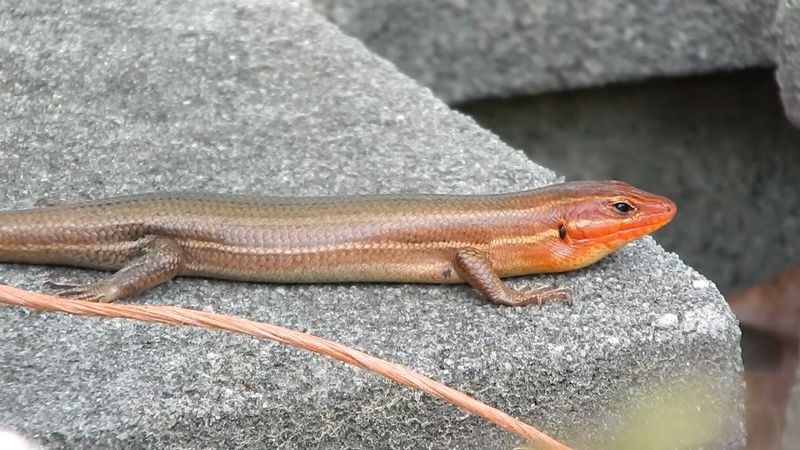
Step back and breathe. When a big red-headed lizard pops out of the woodpile, the easiest thing to do is simply let it go on its way.
Skinks would much rather run than fight, and most will vanish under cover within seconds.
Bites usually happen when someone grabs or corners one. Keeping your hands off greatly lowers any chance of a pinch.
Kids may want to catch one, so a quick talk ahead of time can help.
Show them how to watch quietly from a few feet away instead. Binoculars or a phone camera make the experience fun without stressing the animal.
Pets are another story. Cats and some dogs chase lizards, and a skink may bite back or drop its tail, so supervising pets outside can protect both sides.
If one wanders into your house, gently guide it into a box with a broom and release it outdoors near cover.
Wearing gloves while moving firewood or clearing brush is smart anyway, since it protects you from splinters, spiders, and surprise nips.
Across Georgia, sharing space with these lizards is mostly about patience, and a little patience lets them keep doing their quiet work in your yard.