The Pennsylvania Native Evergreen That Screens A Yard Faster Than Arborvitae
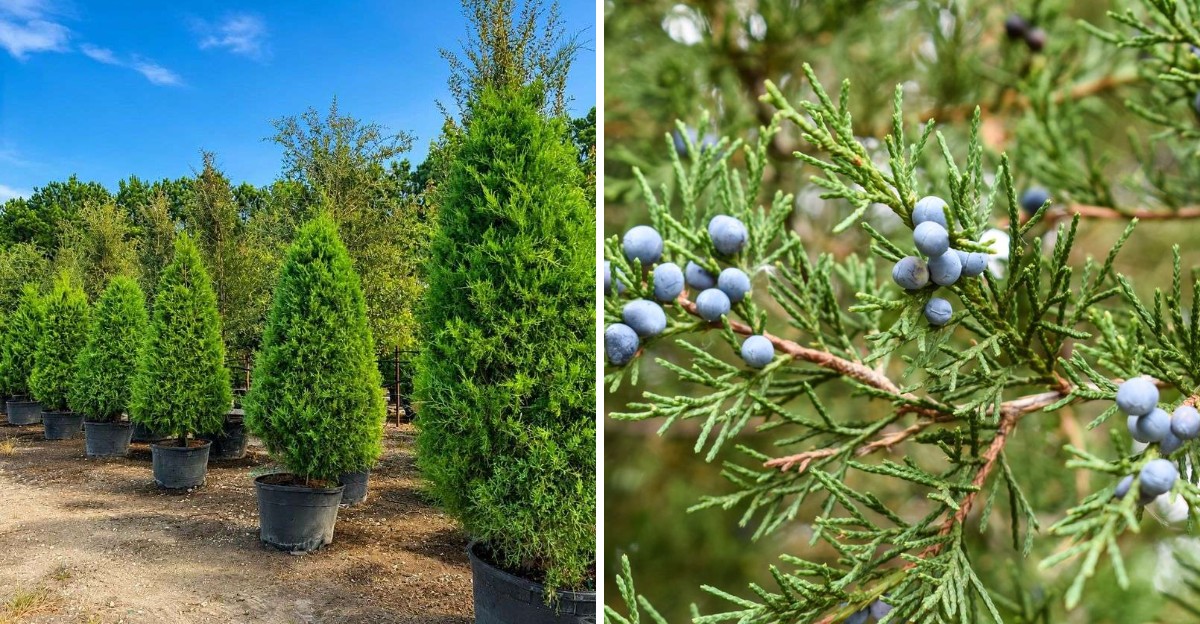
Drive through almost any Pennsylvania neighborhood, and you’ll spot them. Tall, narrow arborvitae lined up along property lines like green soldiers, doing their best to block out the neighbors.
They’re popular for a reason. But they have a big weakness. Deer love them. Come winter, hungry herds can strip the lower branches bare, leaving a screen full of awkward gaps.
Heavy snow can also split them open, and dry spells can leave them brown and struggling. There’s a native evergreen that handles those challenges far better.
It grows quickly, fills in thick from top to bottom, and shrugs off poor soil, drought, and harsh winter winds. Deer usually leave it alone, and songbirds rely on it for shelter and berries all winter.
For a privacy screen that stays full and green for years, this tough native deserves a closer look.
The Fast-Growing Native Screen
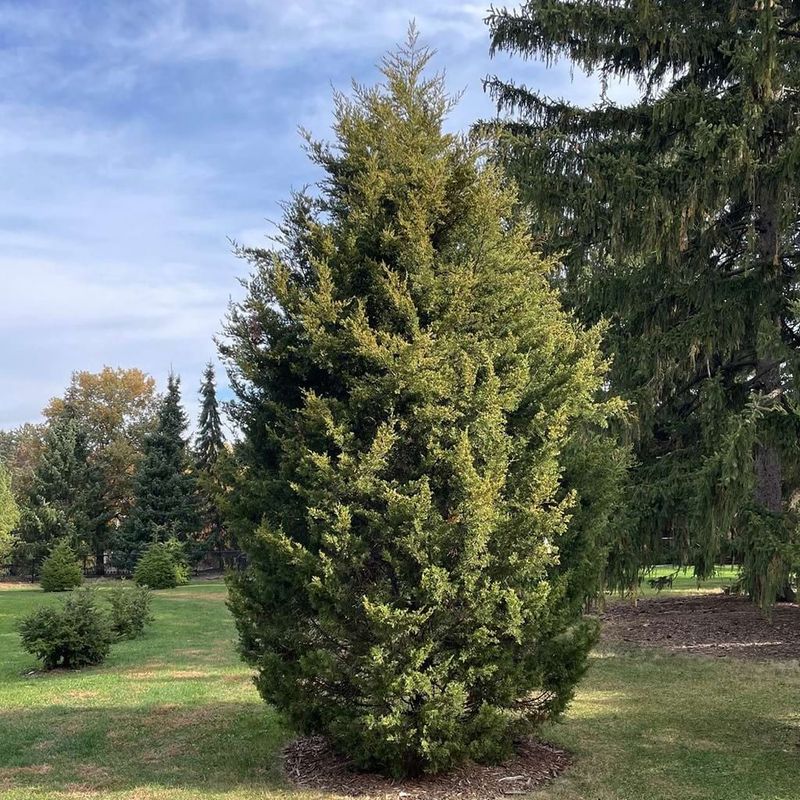
Drive down almost any country road in Pennsylvania and you will spot them. Tall, dark green cones stand along fencerows and in old pastures.
Those trees are eastern red cedars, and they have been part of the landscape here long before any of us arrived.
Despite the name, eastern red cedar is not a true cedar at all. It is actually a type of juniper, with the science name Juniperus virginiana.
Early settlers called it cedar because its wood smells sweet and resists rot, much like the cedars they knew in Europe.
Fun fact: the wood was once the top choice for making pencils. It is also used for cedar chests, since its scent helps keep moths away from clothes and blankets.
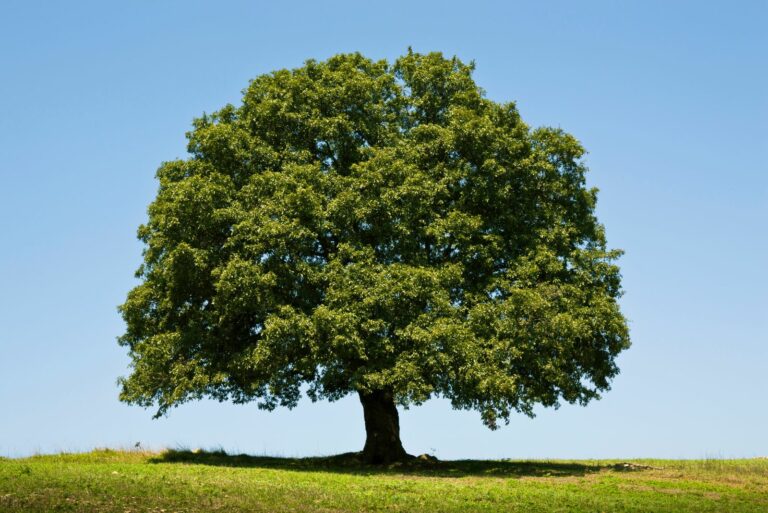
So why does it make such a good screen? The answer is in its shape. Red cedar grows in a tight, upright column or pyramid. Its branches are packed close together, which blocks views well.
It is also found in nearly every county in the state. That means it is already used to our hot summers, icy winters, and up and down weather. You do not have to baby it the way you might with a plant from far away.
Because it is native, it fits right into local nature. Bugs, birds, and small animals already know how to use it. Your screen becomes part of a living system instead of just a wall of green.
For homeowners, that adds up to a plant that looks good, works hard, and needs little help. If you want privacy that feels like it belongs in Pennsylvania, red cedar is a smart place to start.
Faster Growth Than Common Arborvitae
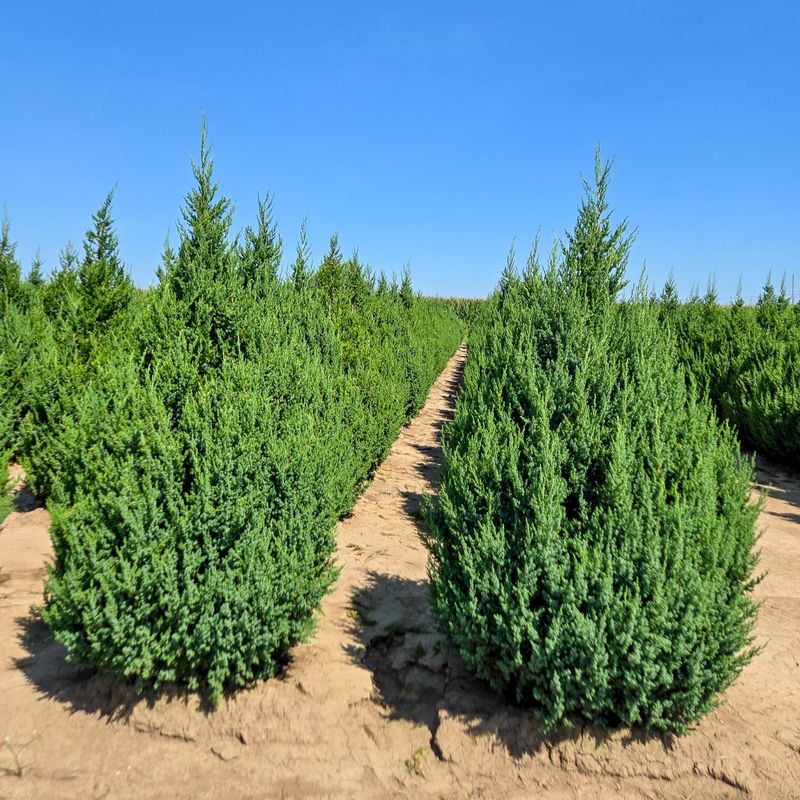
Patience is great, but nobody wants to stare at the neighbor’s trash cans for ten years. Speed matters when you plant a screen. Here is where red cedar really pulls ahead.
In full sun and decent soil, eastern red cedar often grows about 1 to 2 feet each year. Compare that to ‘Emerald Green’ arborvitae, one of the most popular screening plants sold today. It usually adds only about 6 to 12 inches a year.
Your Pennsylvania Garden Changes Every Week. Your Plan Should Too.
Gardening in Pennsylvania changes quickly throughout the season. Every Friday you’ll receive a simple weekly plan showing exactly what to plant, prune, fertilize, harvest, and protect so you never miss the right timing.
Let’s run some quick math. Say you plant both at 4 feet tall. After five years, the arborvitae might reach around 7 to 9 feet. The red cedar could easily hit 9 to 14 feet in that same time.
That difference is huge when you are trying to block a second-story window or a busy road. A few extra feet can mean the gap between seeing the neighbor’s deck and seeing nothing but green.
Red cedar also keeps going. Mature trees often reach 30 to 40 feet tall, while ‘Emerald Green’ tends to top out around 12 to 15 feet. If you need a tall screen, cedar gives you more height to work with.
There is one catch to keep in mind. Growth speed depends on conditions. Shade, packed clay, or very wet ground will slow any tree down, cedar included.
To get the fastest results, give your trees plenty of sun and water them during their first summer. After that, they mostly take care of themselves. A little care early on pays off with years of quicker coverage.
Bottom line? If you want privacy sooner rather than later, red cedar is the faster horse in this race.
Dense Foliage From The Ground Up
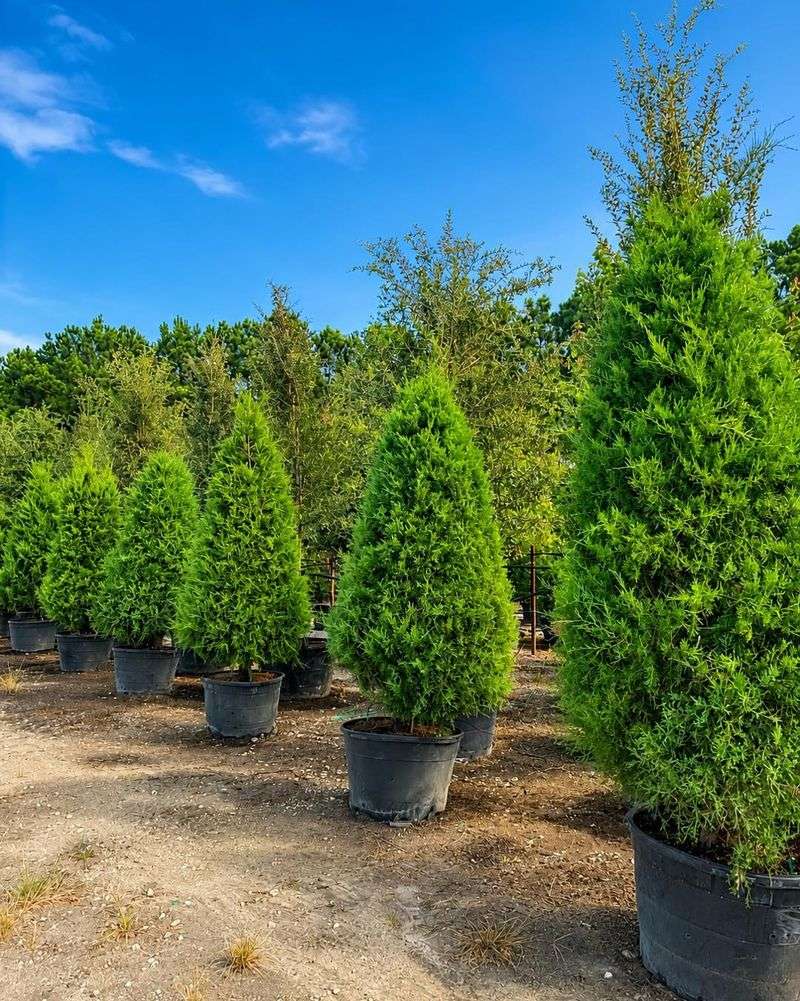
Ever notice how some screen trees look great on top but bare at the bottom? You end up with a nice green wall and a big gap right where your eyes are. Red cedar does not have that problem, at least when it gets enough sun.
Grown in full sun, eastern red cedar holds onto its lower branches for many years. They often sweep right down to the grass. That gives you a solid screen from the ground up to the treetop.
Eye level is where privacy counts most. When you sit on your patio or stand at the kitchen sink, that is the zone you want blocked. A thick base handles that job well.
The leaves are another plus. Young growth has prickly, needle-like leaves. Older growth has soft, tiny scales that overlap like shingles on a roof. Both types pack in tight and keep the tree full.
Best of all, the foliage stays green all year. When maples and oaks drop their leaves in fall, your cedar screen keeps working. Your privacy does not take a winter break.
You might notice the color shift a bit in cold weather. Some trees turn a bronze or purplish green in winter. That is normal, and the fresh green color returns in spring.
Want to keep the bottom thick? Do not crowd your trees with other tall plants that cast shade. Avoid cutting off the lower limbs unless you truly need to.
A light trim on the sides in late winter can also help the tree stay tidy and full. Just never cut back into bare wood, since junipers do not regrow well from old stems.
Tougher Than Arborvitae In Many Ways
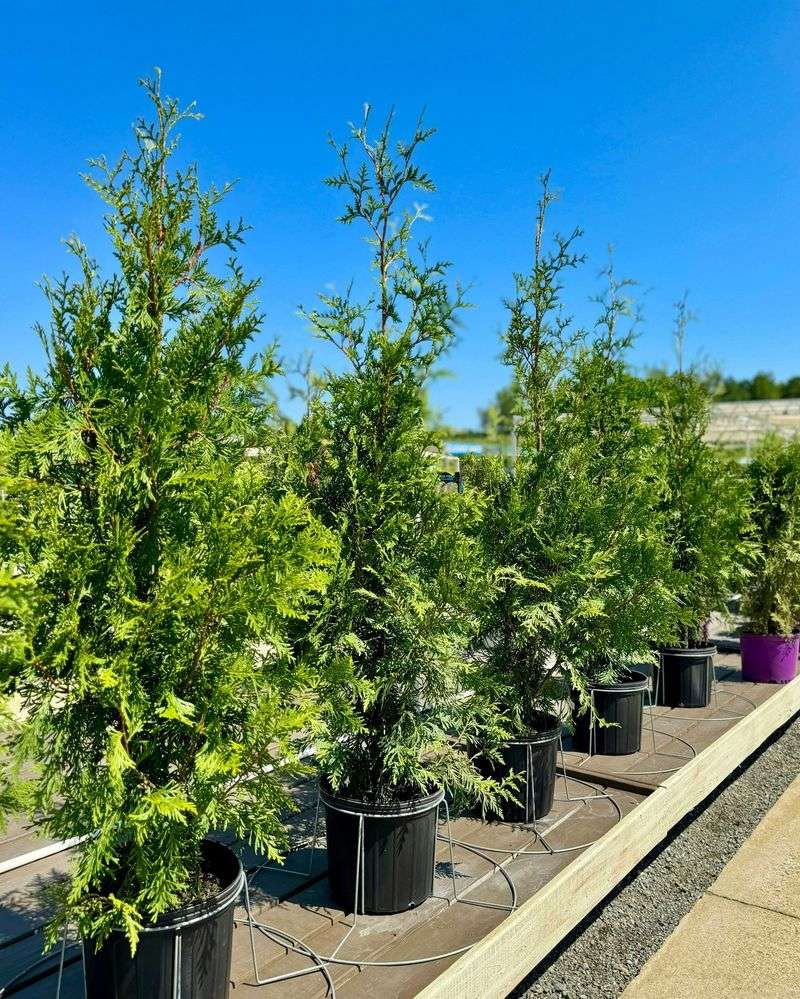
Think about where red cedar grows in the wild. Rocky slopes, dry roadsides, worn-out farm fields. Those are tough spots, and the tree thrives there anyway.
That toughness carries over to your yard. Eastern red cedar handles drought much better than most arborvitae. Its deep roots reach for water far below the surface, so a dry August will not send it into a slump.
Poor soil is no big deal either. Red cedar grows in thin, rocky, or sandy ground. It even tolerates alkaline soil, which many evergreens dislike.
Wind is another test it passes. The flexible branches bend in strong gusts instead of snapping.
Heavy snow tends to slide off its narrow shape, too. Arborvitae, on the other hand, often splays open under wet snow.
Cold? Red cedar handles bitter Pennsylvania winters without a fuss. It grows wild from Canada down to the Gulf states, so it knows how to adapt.
Now for the big one: deer. Anyone in Pennsylvania knows the deer problem is real. In winter, hungry deer love to chew arborvitae, sometimes stripping it bare up to 5 or 6 feet high.
Red cedar is not totally deer-proof. A starving deer will nibble almost anything. But cedar is much lower on their menu, thanks to its prickly young leaves and strong scent.
Quick tip: protect very young cedars with a wire cage for the first couple of winters. Once they get taller and tougher, they usually hold their own.
Put all of this together and you get a screen that keeps looking good without constant rescue work.
Shelter And Food For Wildlife
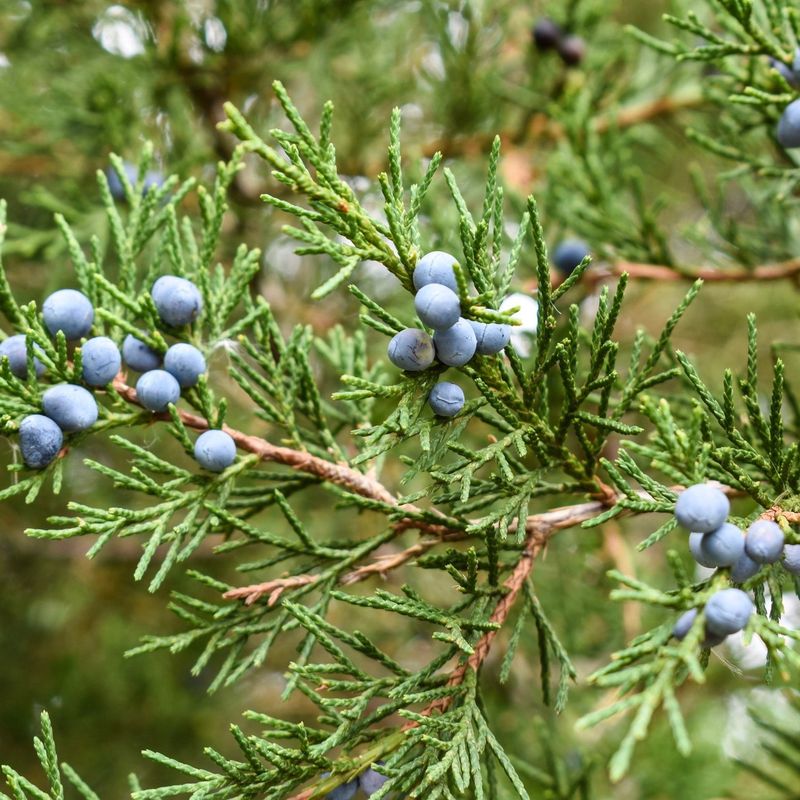
“Look, the waxwings are back!” If you plant red cedar, you might hear yourself saying that some winter morning. Those sleek, crested birds are named for this tree, and they cannot resist it.
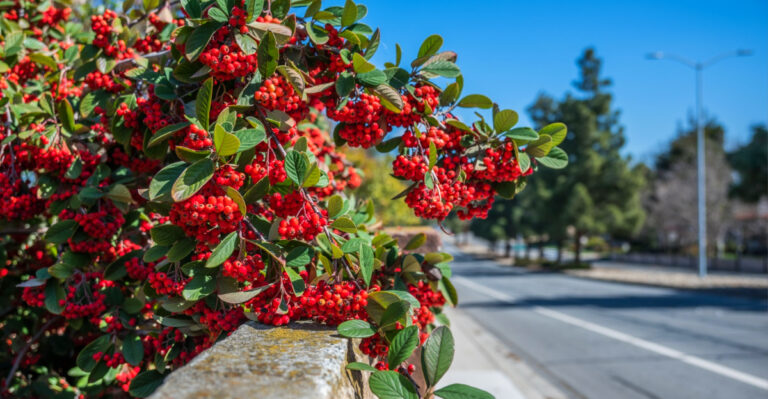
Female red cedars produce small, round, bluish cones that look just like berries. They have a frosty, powdery coating. Cedar waxwings, robins, bluebirds, and mockingbirds all eat them.
The best part is the timing. The berries hang on through much of winter, when other food is hard to find. For a hungry bird in January, a cedar full of fruit is like finding an open diner in a snowstorm.
Shelter matters just as much as food. The thick, prickly branches block cold wind and hide birds from hawks and cats. On freezing nights, small birds often tuck deep inside to stay warm.
In spring, many birds nest in red cedar, too. Chipping sparrows, cardinals, and song sparrows like the safe cover. You may spot a tiny nest tucked close to the trunk.
One thing to know: only female trees make berries. Male trees produce tiny pollen cones instead. Nurseries do not always label them, so planting several trees gives you a better shot at getting some berry makers.
Some butterflies benefit as well. The juniper hairstreak, a small green butterfly, lays its eggs on red cedar. Its caterpillars feed only on junipers.
So your screen does double duty. It gives you privacy, and it turns your yard into a busy, lively spot for wildlife. Grab some binoculars and keep them by the window. You will want them.
Tips For Planting A Red Cedar Screen
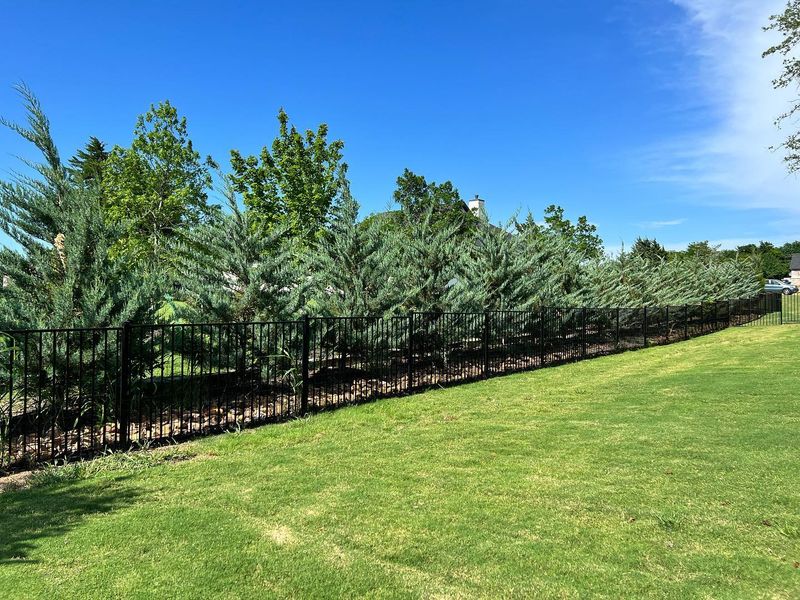
Ready to grab a shovel? A little planning now will save you headaches later. Follow these simple steps and your screen will get off to a strong start.
First, pick a sunny spot. Red cedar needs full sun, which means at least six hours a day. In shade, it grows thin and loses its lower branches.
Next, think about spacing. Plant trees about 6 to 10 feet apart in a single row. Closer spacing fills in sooner, while wider spacing gives each tree more room as it matures.
Want faster coverage? Try a staggered double row. Set up two lines about 6 to 8 feet apart, and offset the trees like a zigzag. The gaps in one row get covered by trees in the other.
When you plant, dig a hole about twice as wide as the root ball but no deeper. Set the tree so the top of the roots sits level with the ground. Then fill in with the native soil and water deeply.
Spread 2 to 3 inches of mulch around each tree, but keep it a few inches from the trunk. Water once a week during the first summer if rain is scarce.
Here is one big warning. Do not plant red cedar near apple or crabapple trees. Red cedar can host cedar-apple rust, a fungus that spreads between the two plants.
On cedars, it forms odd orange, jelly-like galls in spring. On apples, it causes spotted leaves and poor fruit. Keeping them far apart, ideally several hundred feet, helps break the cycle.
Fall and early spring are the best times to plant. Cool weather lets roots settle before summer heat arrives.