The Michigan Weed With Sap That Can Burn Skin Before Gardeners Realize It Is In The Yard
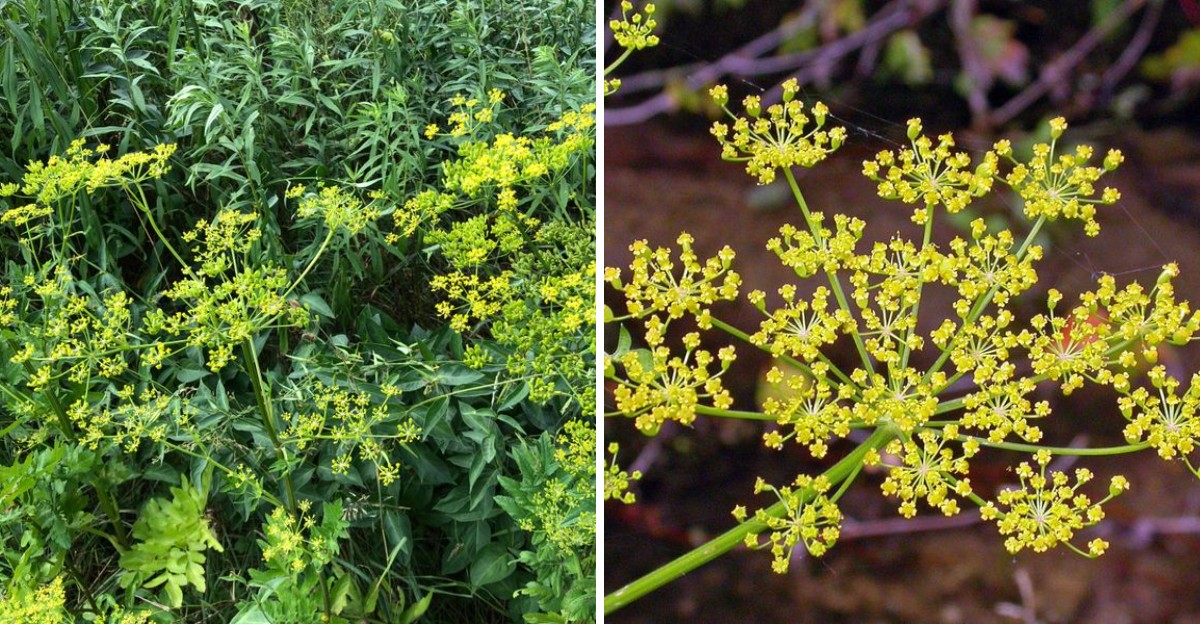
Wild parsnip is one of those Michigan weeds that looks completely unremarkable right up until it is not. Tall, yellow-flowered, and faintly carrot-scented during summer, it blends into roadsides, fence lines, and unmowed yard edges without raising any alarms.
Most people learn about it the hard way, through a burn that shows up a day or two after brushing against a broken stem. But fall is actually when this weed deserves the most attention from gardeners.
First-year rosettes are actively growing right now, staying green long after surrounding plants go dormant, and fall is one of the most effective windows for controlling the plant before next season begins.
Knowing what to look for this October could prevent a much bigger problem come spring.
1. Fall Is Actually The Best Time To Find Wild Parsnip In Michigan
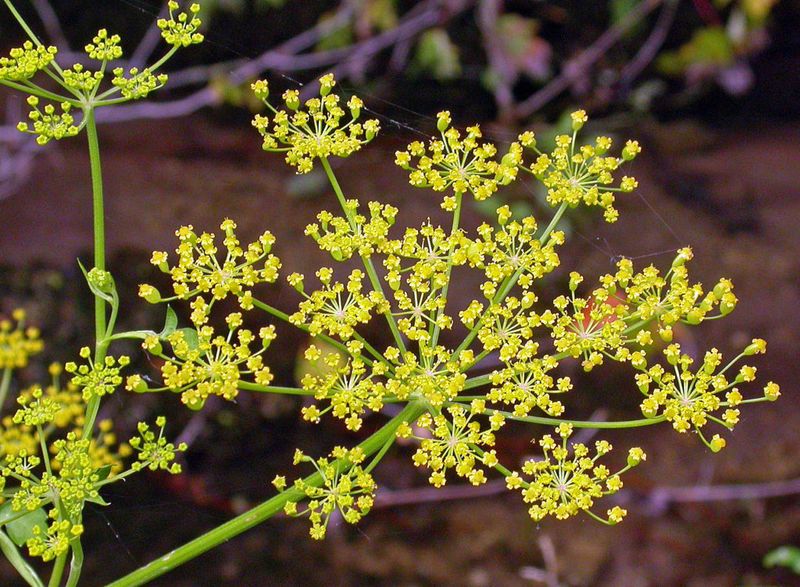
Most people think of wild parsnip as a summer problem, and the burn risk is highest in June and July when the plant is tall and UV light is intense. But fall has a quality that summer does not: contrast.
When surrounding native plants and grasses go dormant and turn brown, wild parsnip rosettes stay a distinctive yellowish green. That color difference makes first-year plants far easier to spot in October and November than at any other time of year.
Michigan DNR Best Control Practices documentation specifically identifies fall as one of the two most effective treatment windows for wild parsnip, alongside early spring. The reason is that the plant is actively growing while most competing vegetation is not, which makes both mechanical removal and herbicide application more targeted and effective.
Walking the yard edges, fence lines, and unmowed corners in fall with this in mind turns what looks like a routine cleanup into a genuine opportunity to get ahead of the problem. A few minutes of scouting now can prevent a much larger infestation next summer.
The plant has been in Michigan since at least 1838, and its populations continue expanding. Fall scouting is one of the simplest tools available to keep it from spreading further into yards and gardens.
2. Wild Parsnip Rosettes Look Very Different From The Summer Plant
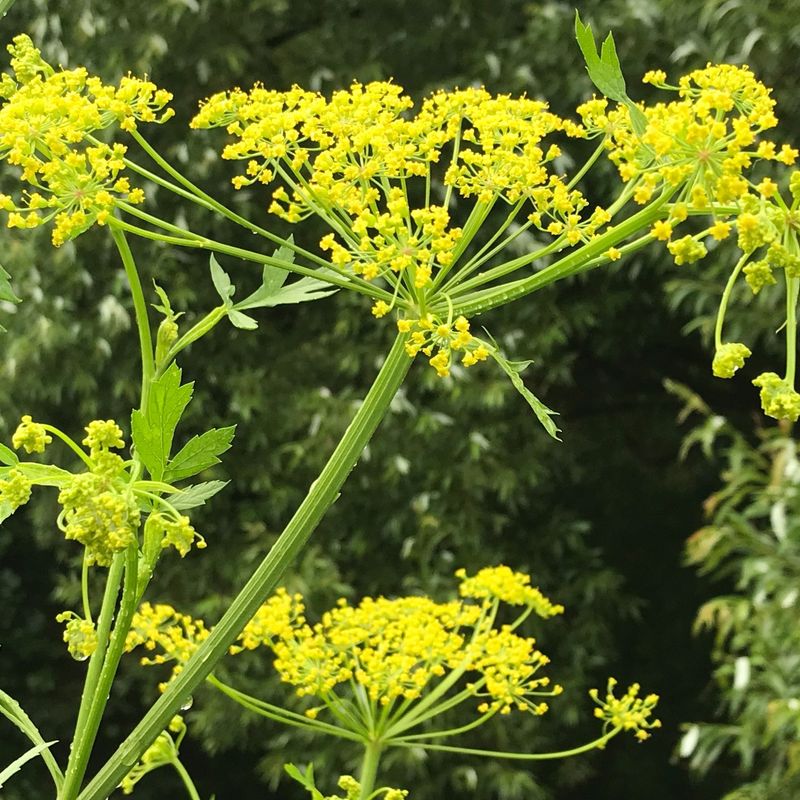
A fall rosette looks very different from the tall flowering plant most people associate with wild parsnip. In its first year, the plant stays low, producing a flat cluster of leaves close to the ground with no central stem.
The leaves are the main clue. They are pinnately compound, meaning a central leaf stalk with several paired leaflets branching off it, similar in shape to celery leaves but with coarser, more jagged, saw-toothed edges.
The overall color is a distinctive yellowish green that stands out against dormant fall vegetation.
The taproot is thick and runs deep, resembling a cultivated parsnip root. If you pull one up carefully, that carrot-like root confirms identification.
Rosettes can range from a few inches across in young plants to more than a foot wide in plants that have been growing since spring. Larger rosettes that have stored a full season of energy are the ones most likely to send up a flowering stalk next year.
Your Michigan Garden Changes Every Week. Your Plan Should Too.
Gardening in Michigan changes quickly throughout the season. Every Friday you’ll receive a simple weekly plan showing exactly what to plant, prune, fertilize, harvest, and protect so you never miss the right timing.
Look closely along fence lines, shed edges, sunny unmowed strips, and roadsides where the grass has thinned. Wild parsnip does not tolerate shade, so open, sunny spots are where it concentrates.
Wear gloves and long sleeves even while scouting. The sap is present in the rosette leaves and stems, and fall cleanup often involves handling or brushing against plants without realizing it.
3. The Sap Is Still Present In Fall Rosettes And Can Still Burn Skin
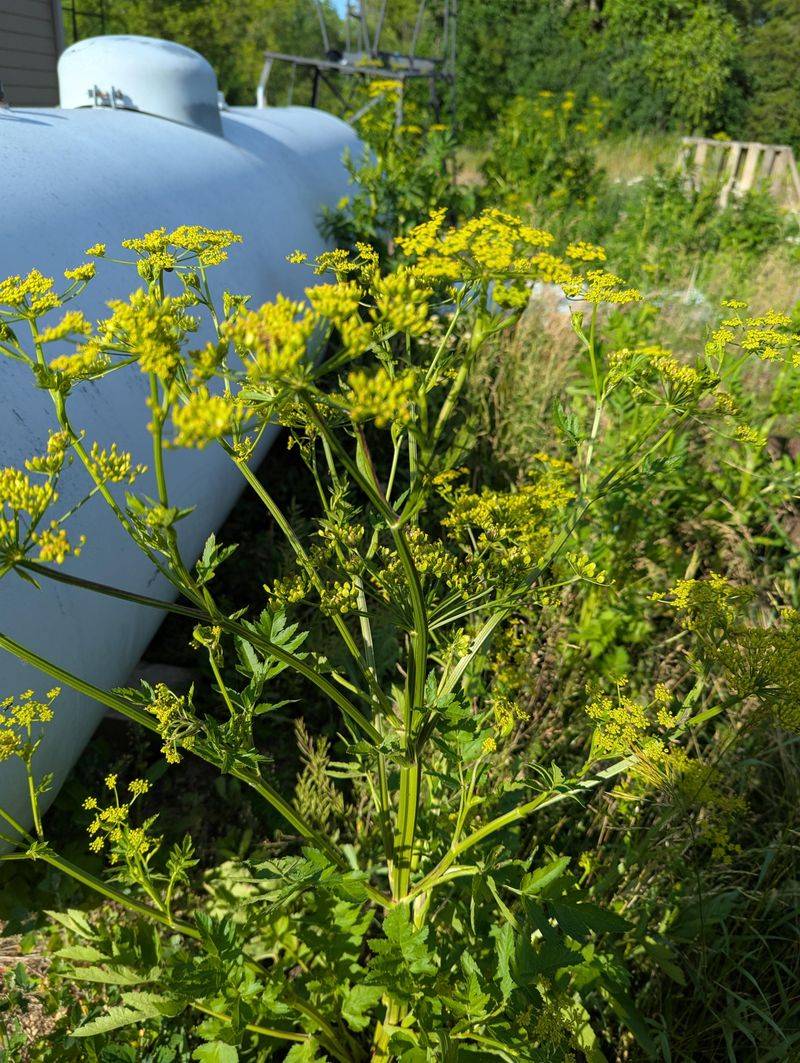
A common and dangerous assumption is that wild parsnip only burns in summer. The phototoxic chemicals, called furanocoumarins, are present in the plant’s sap year-round, including in the fall rosette stage.
What changes in fall is the burn risk level, not the presence of the chemical. Michigan’s autumn sun is lower in the sky and UV intensity is reduced compared to June and July, which lowers but does not eliminate the risk of phytophotodermatitis.
On a bright October afternoon, especially around midday, UV exposure is still sufficient to trigger a reaction if sap contacts bare skin. The reaction works the same way as in summer: sap lands on skin, UV light activates the chemicals, and blistering can develop within 24 to 48 hours.
Fall yard cleanup is exactly the kind of activity where accidental contact happens. Raking near fence lines, pulling weeds, trimming edges, and clearing overgrown corners all bring hands and arms close to low-growing rosette plants that are easy to miss.
The protective gear advice from summer applies equally in fall. Wear nitrile or rubber gloves, long sleeves, and long pants whenever working near suspected wild parsnip.
If sap contacts skin, move out of sunlight immediately, wash thoroughly with soap and water, and keep the area covered from UV light for at least 48 hours.
4. Summer Remains The Peak Danger Season
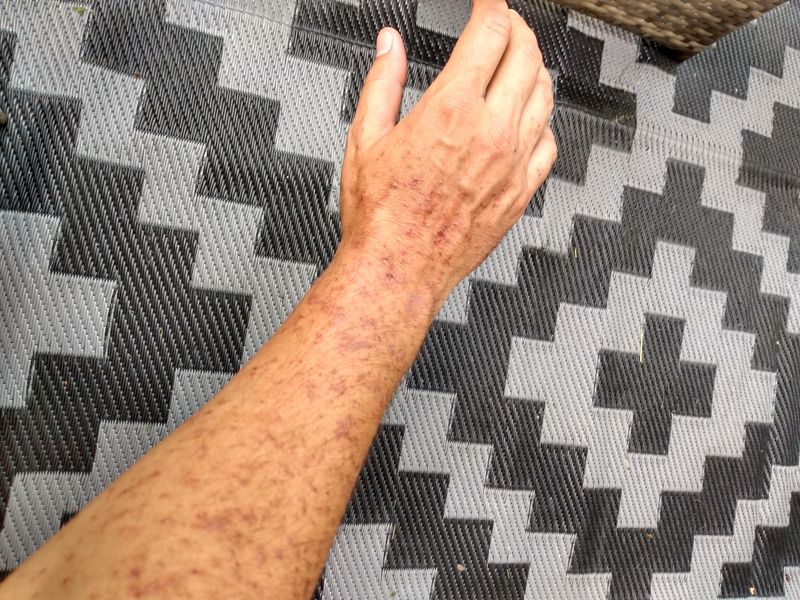
Fall rosettes carry risk, but summer is when wild parsnip becomes genuinely dangerous in Michigan yards and along roadsides.
During the second year, the plant shoots up a tall stalk that can reach four to five feet in height. The stems and leaves at this stage hold more sap, the plant is more likely to be accidentally broken or brushed during mowing and trimming, and June and July sun delivers peak UV intensity.
The reaction, called phytophotodermatitis, can develop within 24 to 48 hours of sap contact combined with sunlight exposure. It begins as redness and tightness, followed by blistering that follows the exact pattern where sap touched the skin.
After healing, brown or purple marks often remain for months and occasionally up to two years.
Using a string trimmer near wild parsnip in summer is particularly risky. Broken stems spray sap onto arms and legs before anyone realizes what plant they were standing next to.
Wild parsnip blooms in Michigan roughly from June to mid-July, and this is when most people encounter it and get burned. Understanding that summer peak risk is the reason fall control matters so much: removing or treating rosettes in October directly reduces the number of tall, sap-heavy plants that will appear the following June.
5. Fall Is The Right Time To Dig Out Wild Parsnip Rosettes
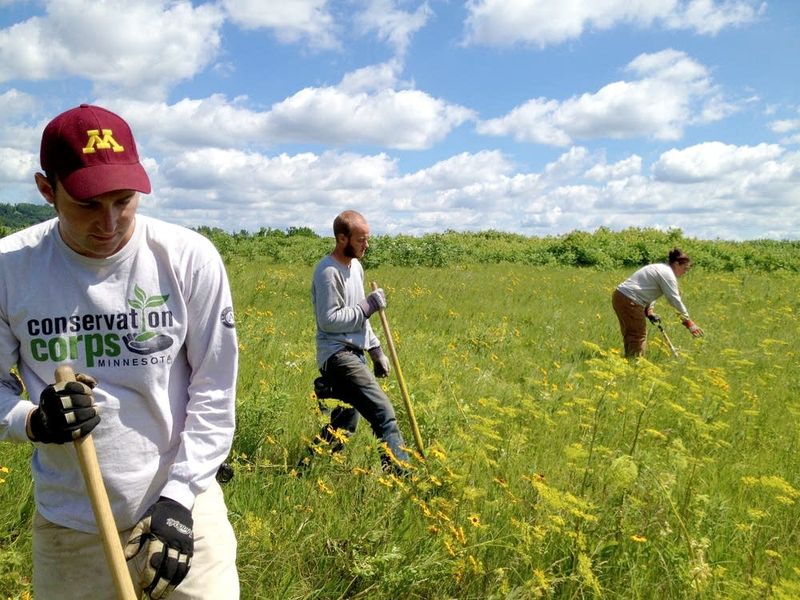
Fall soil in Michigan is still workable and soft enough to allow effective mechanical removal of wild parsnip rosettes before the ground freezes, which makes October and early November a genuine opportunity for hands-on control.
The goal with digging is to sever the taproot one to two inches below the soil surface. Cutting the root at this depth prevents the plant from resprouting.
A sharp spade or garden knife works well for this task.
Wear full protective gear before starting: nitrile or rubber gloves, long sleeves, long pants, and eye protection. Even in fall, the sap in rosette leaves and stems can cause a phototoxic reaction on exposed skin if UV conditions are sufficient.
After cutting the taproot, remove the rosette from the ground and place it directly into a heavy trash bag. Do not leave cut plants lying on the soil surface, as sap can still contact skin during cleanup.
Do not compost wild parsnip at any stage. Bag all removed plants and dispose of them with household garbage.
For large areas, digging becomes impractical and herbicide treatment is more appropriate. For small patches along fence lines or shed edges, careful fall digging is one of the most effective and chemical-free options available to homeowners.
Check treated areas again in spring. Seeds can remain viable in soil for up to four years, so new seedlings will continue to emerge and require follow-up management.
6. Fall Herbicide Timing Works Better Than Spring
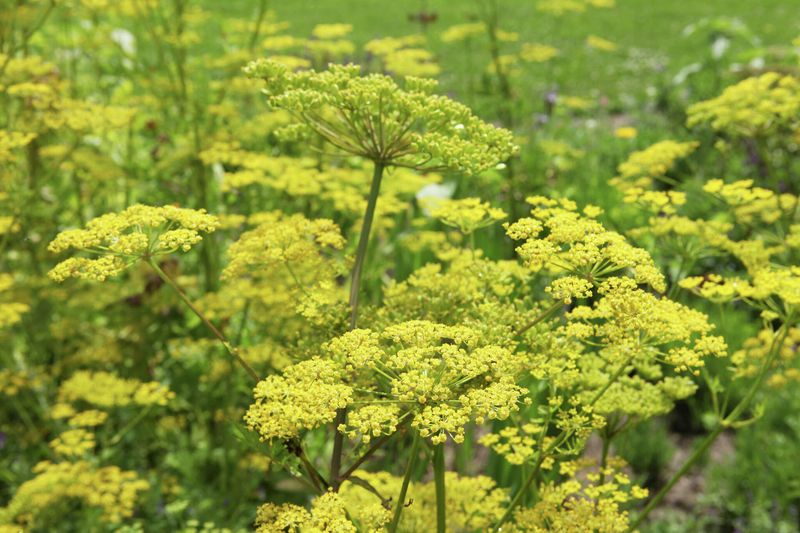
Michigan DNR Best Control Practices documentation, Utah State University Extension, and Iowa State University Extension all specifically recommend late fall as one of the two most effective herbicide application windows for wild parsnip, alongside early spring.
The reason fall timing works so well comes down to competition. When native plants and desirable grasses go dormant in October and November, wild parsnip rosettes are still actively growing.
A foliar herbicide applied to rosettes in late fall reaches an actively metabolizing plant, which carries the treatment down into the root system more effectively than a plant that is stressed or drought-slowed.
The most commonly recommended herbicides for wild parsnip include those containing 2,4-D, dicamba, and glyphosate. Multiple sources recommend applying these several days before the first hard frost to ensure the plant has enough active growing time to absorb and translocate the herbicide.
Read every herbicide label carefully and follow all directions. Pay attention to application site restrictions, especially near water, and protective clothing requirements.
For Michigan homeowners uncomfortable with herbicide selection and application, consulting a licensed landscape professional is a reasonable option.
Fall herbicide treatment will not control seeds that germinate after application, which is why follow-up management in spring is still important. Consistent fall and spring treatment over three to five years is what produces meaningful reduction in wild parsnip populations.
7. Seed Heads Still Standing In Autumn Are Worth Removing Before Winter
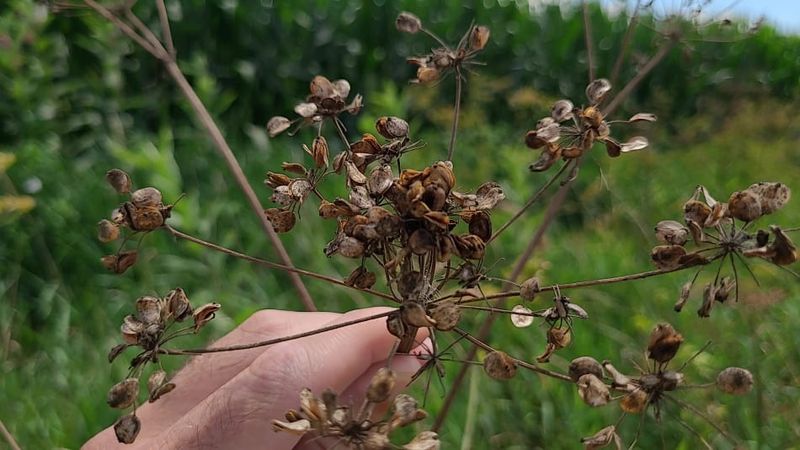
Second-year wild parsnip plants that flowered in June and July have produced seeds by late summer and early fall. The dry, papery seed heads remain standing on tall stalks well into autumn, and those seeds are still capable of spreading until they drop or are carried off by wind, rain, or animals.
Walking the property in early fall and identifying any remaining second-year stalks with intact seed heads gives Michigan homeowners one last opportunity to reduce the seed bank before winter.
Wear full protective gear for this task. Second-year stalks are no longer actively growing, but residual sap in dried stems and seed heads can still cause a phototoxic reaction on exposed skin in bright conditions.
Cut seed heads carefully and place them directly into heavy trash bags before they can release seeds. Do not shake or disturb them more than necessary during cutting and bagging.
Each wild parsnip plant can produce up to 1,000 seeds, and those seeds can remain viable in soil for up to four years. Removing seed heads before they drop makes a meaningful difference in how many new rosettes emerge the following spring.
Second-year plants have already set seed and will not regrow from the root after the season ends. The priority is preventing seed dispersal, not controlling the mature plant itself.
8. Several Plants Look Like Wild Parsnip Rosettes In Fall
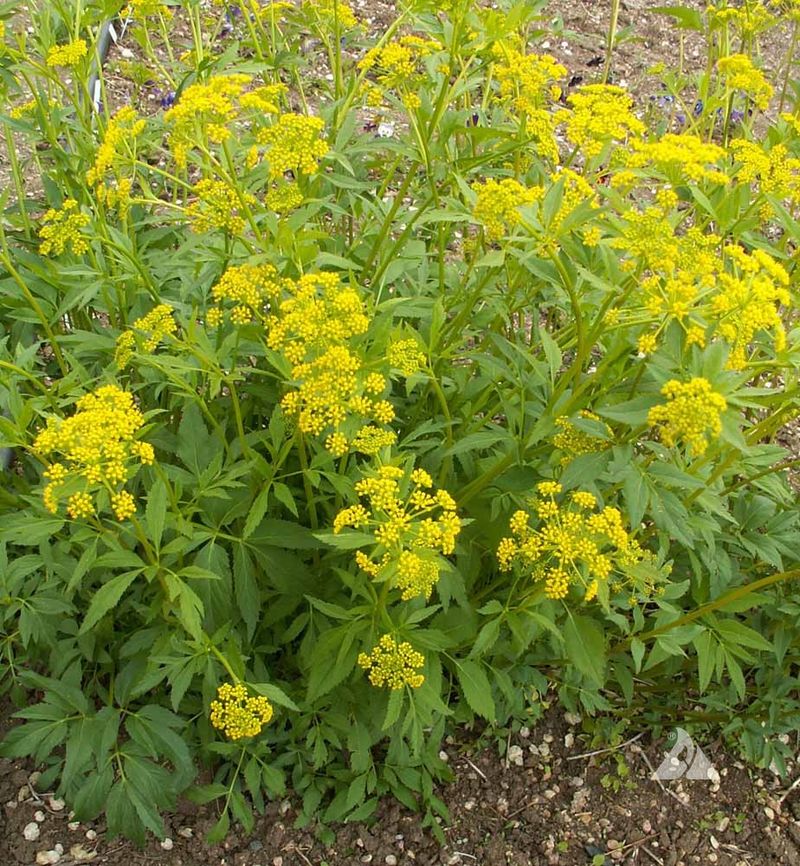
Fall rosette identification is harder than summer identification because the plant has no flowers to help with recognition. Several common Michigan plants produce similar low rosettes of compound leaves in autumn, and getting the identification right before attempting removal matters.
Golden alexanders is the most commonly confused native plant. Its fall rosette has similarly shaped compound leaves but tends to be a darker, richer green rather than the yellowish green of wild parsnip.
Golden alexanders is a valuable native pollinator plant and should not be removed.
Queen Anne’s lace, also called wild carrot, produces a flat rosette in its first year with finely divided, feathery leaves that are softer and more delicate than wild parsnip’s coarser, saw-toothed leaflets.
Cow parsnip is a native plant that can also confuse people. Its first-year rosette has much larger, rounder leaflets and noticeably more hairy stems and leaf surfaces than wild parsnip.
Cow parsnip sap can also cause skin irritation in bright conditions, so treat any unidentified plant in this family with caution.
If identification is uncertain, photograph the plant and submit the image to MISIN, the Midwest Invasive Species Information Network, or contact your local MSU Extension office. Only approximately two percent of suspect plants submitted to MDARD for giant hogweed identification turn out to be confirmed, which shows how common misidentification is across this plant family.
Taking time to confirm identification before removing anything is always the right approach.
9. Fall Yard Cleanup Is When Kids And Pets Face The Most Accidental Exposure
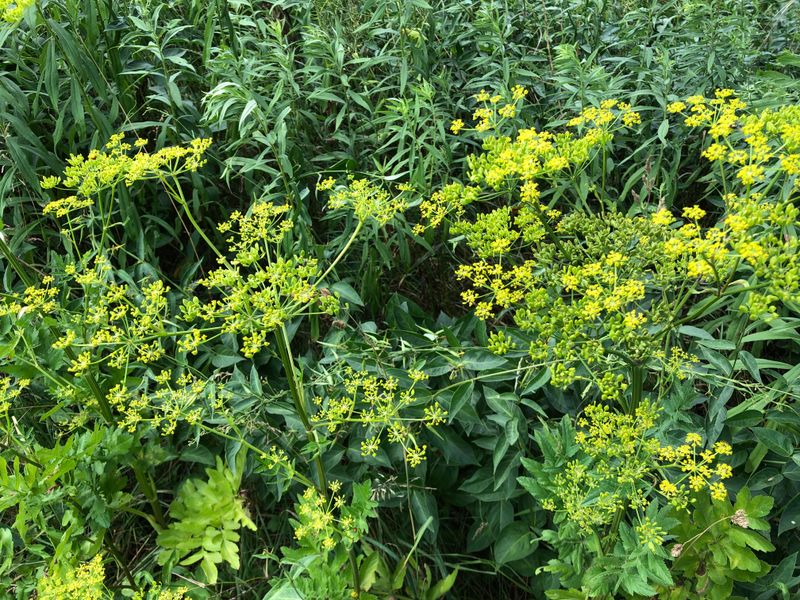
Fall cleanup brings families outdoors for raking, pruning, and general tidying, and those activities often happen in exactly the areas where wild parsnip rosettes concentrate: fence lines, shed edges, and unmowed corners where tall vegetation spent the summer.
Teaching children what a wild parsnip rosette looks like in fall is a practical and age-appropriate safety lesson. The yellowish green, celery-like rosette is distinctive enough that older children can learn to recognize and avoid it.
Make it a scouting activity rather than a scary warning.
Keep children away from areas being cleared until wild parsnip has been removed or treated. The same sap hazard that applies to adults applies to children, whose skin may react more intensely.
Pets face some risk as well. Dogs and horses with exposed pink skin or thin fur around the nose and belly can develop phytophotodermatitis if sap contacts those areas during outdoor time in fall.
After walks near fence lines or roadsides in October, a quick rinse of a dog’s legs and belly with plain water removes potential sap contact before the animal comes back indoors.
Talk with neighbors about wild parsnip patches near shared fences or play areas. Fall is the most effective season for coordinated removal, and a block-level effort during October does far more than one yard tackling it alone.
Report large roadside stands to your county road commission or submit a sighting through the MISIN reporting system. Early fall reports help management crews plan treatment before the seed bank grows further.