Why Michigan Gardeners Are Adding Virginia Bluebells To Shade Gardens This Fall
A Michigan shade garden can look full of promise in April, then strangely empty once spring bulbs finish their show.
That gap is exactly where Virginia bluebells earn attention.
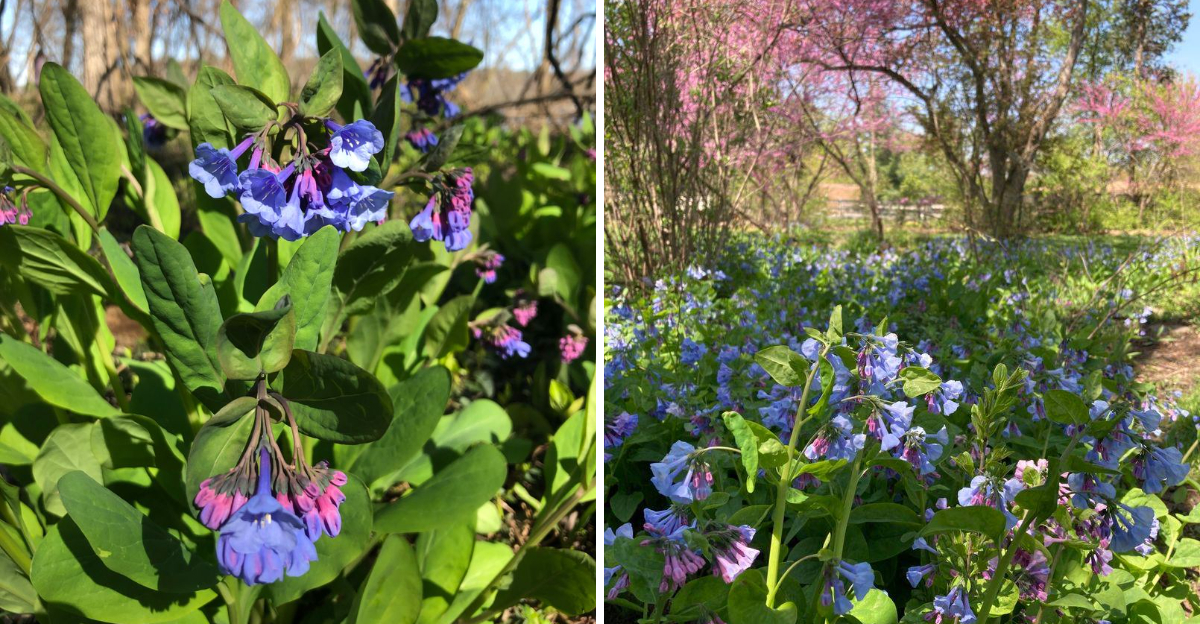
Their pink buds open into soft blue bells beneath bare tree branches, then the whole plant slips underground as summer arrives. The seasonal disappearance sounds inconvenient until the bed is designed for it.
Fall gives gardeners a useful chance to place this woodland perennial before spring growth begins.
So what makes bluebells worth adding now?
They prefer moist, rich soil with good drainage and partial shade. They can form loose colonies over time, and early pollinators visit the flowers when much of the shade garden has barely awakened.
There is also a Michigan detail worth noting. Virginia bluebells are native in the state, but only very locally in natural populations.
Use them thoughtfully.
A well-planned patch can turn one quiet spring corner into a blue display, then hand the space to ferns, sedges, and other shade plants for summer quite beautifully.
1. Rare Blue Flowers Wake Up Shady Spring Beds
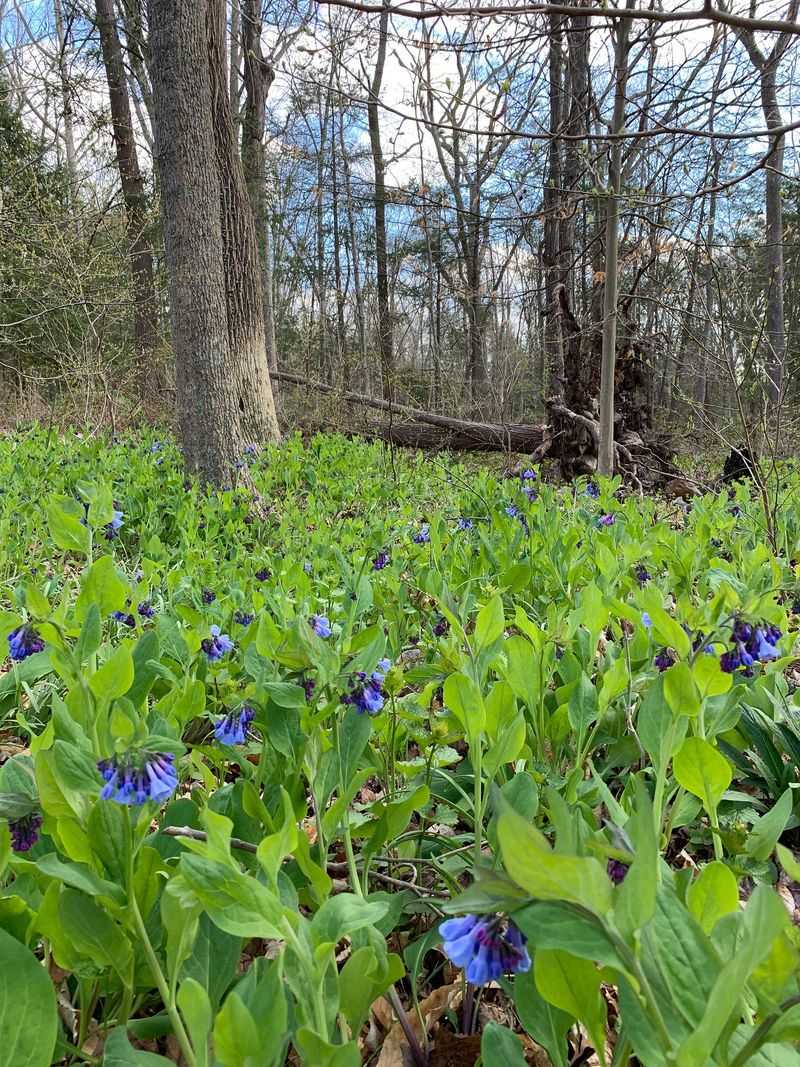
A damp patch beneath open tree branches can be a better home for bluebells than a sunny flower border.
Virginia bluebells prefer partial shade and moist, fertile soil with good drainage. In nature, the species often occurs in floodplain forests and along streams, where spring moisture is reliable but roots are not trapped in stagnant water.
Choose a site that stays cool through spring and does not bake dry by May.
Give the soil a simple test after rain. Moist earth that drains without a lasting puddle suits the plant far better than a low depression that stays saturated.
Michigan gardeners also get an important native-status detail.
Virginia bluebells do occur naturally in Michigan, but Michigan Flora describes them as native only very locally in the Grand, Raisin, and St. Joseph River systems.
That makes the plant a genuine Michigan native, just not a widespread one across the entire state.
Use that fact to guide expectations rather than discourage the planting.
A woodland-style bed with rich soil, leaf litter, and light shade can suit cultivated plants well beyond those natural populations. Buy nursery-propagated stock rather than remove plants from wild colonies.
Skip the driest corner under dense roots.
Give bluebells a site that resembles their natural preference, and the fall transplant gets a much fairer start before its first Michigan spring.
2. Virginia Bluebells Fill The Gap After Early Bulbs Fade
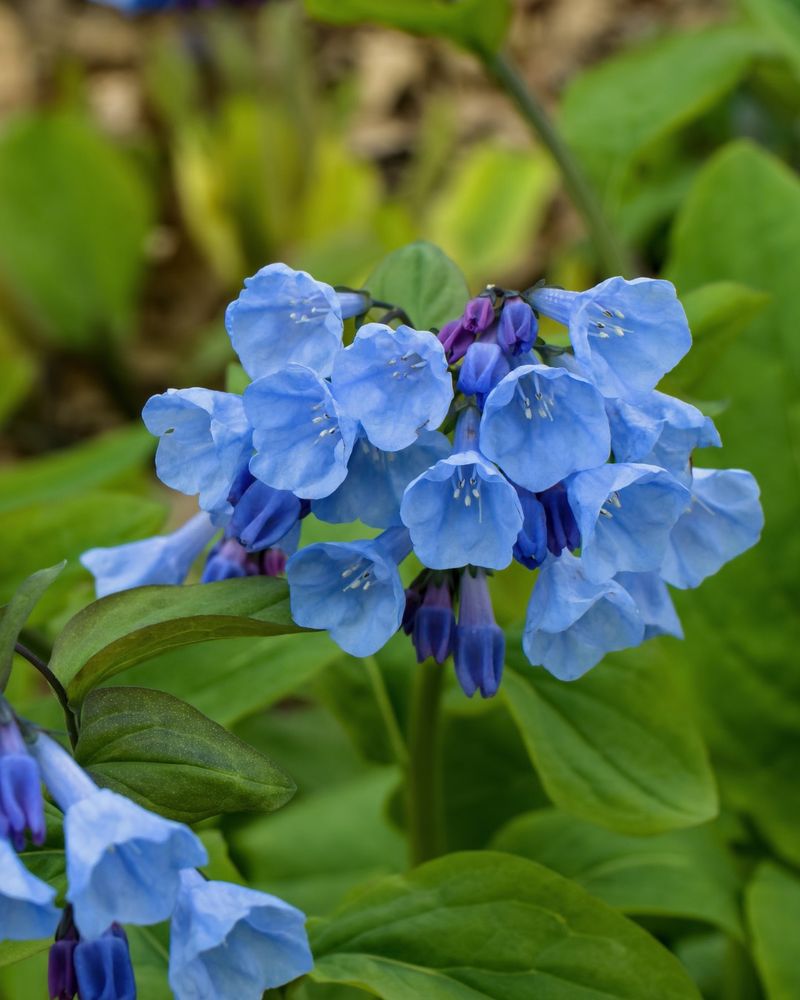
A small fall transplant can occupy much more space after several good seasons.
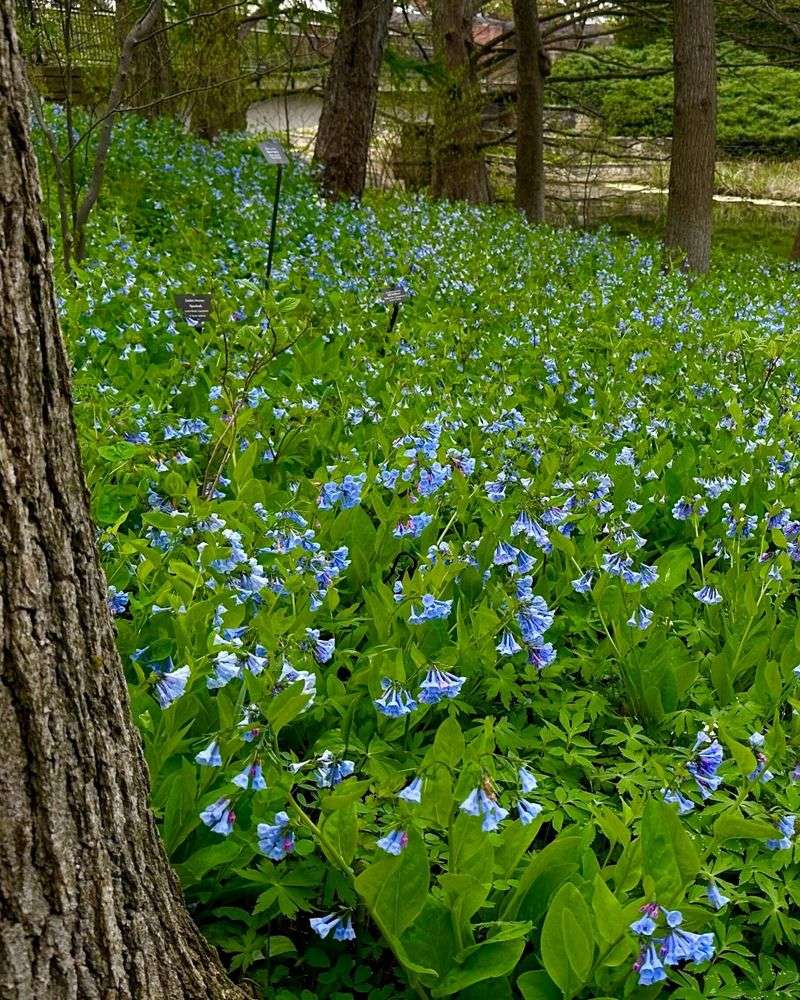
Virginia bluebells grow in clumps about one to two feet tall, and established plants can self-seed into loose colonies.
That gradual spread is part of the woodland effect gardeners usually want, so leave room around each crown rather than pack the bed tightly on day one.
Place plants about a foot apart as a practical starting point.
That spacing gives leaves room to open in spring and leaves bare soil between young plants for future seedlings. A young mass may look sparse during the first year, but bluebells are better served by patience than tight spacing.
Your Michigan Garden Changes Every Week. Your Plan Should Too.
Gardening in Michigan changes quickly throughout the season. Every Friday you’ll receive a simple weekly plan showing exactly what to plant, prune, fertilize, harvest, and protect so you never miss the right timing.
Mark each crown after fall work is complete.
The plant spends summer and winter out of sight above ground, which makes an unmarked patch easy to disturb with a shovel, new perennial, or enthusiastic spring cleanup.
Use a discreet label or small stake near the clump.
Keep aggressive groundcovers away from the colony. A fast mat that fills every inch can compete with new bluebell seedlings before the patch gains size.
Give the colony a quieter neighbor instead.
Ferns, sedges, and slower woodland perennials can share the bed without a territorial dispute over every open pocket.
Bluebells do not need an empty garden around them.
They simply need enough breathing room for spring leaves, future seedlings, and that loose colony shape to develop at its own pace.
3. Moist Shade Becomes Useful Garden Space
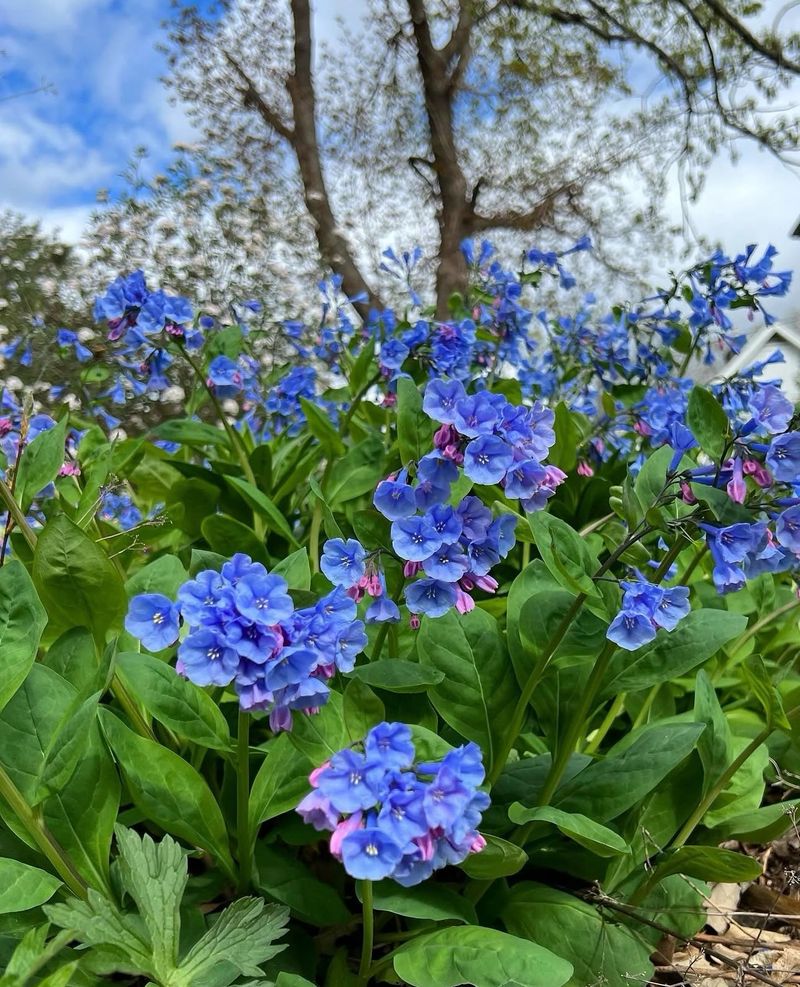
The first color trick happens before a single flower turns fully blue.
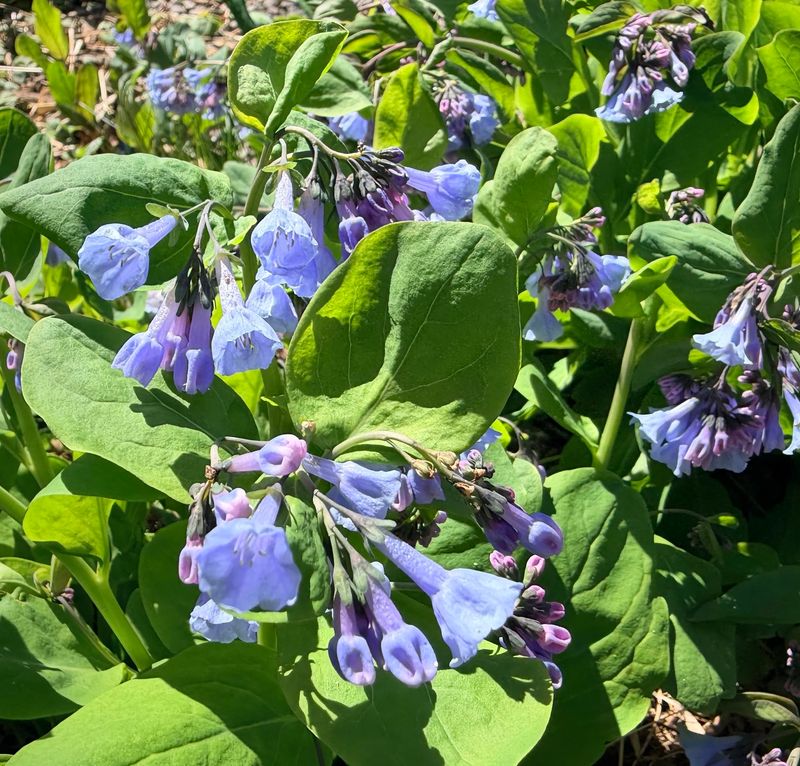
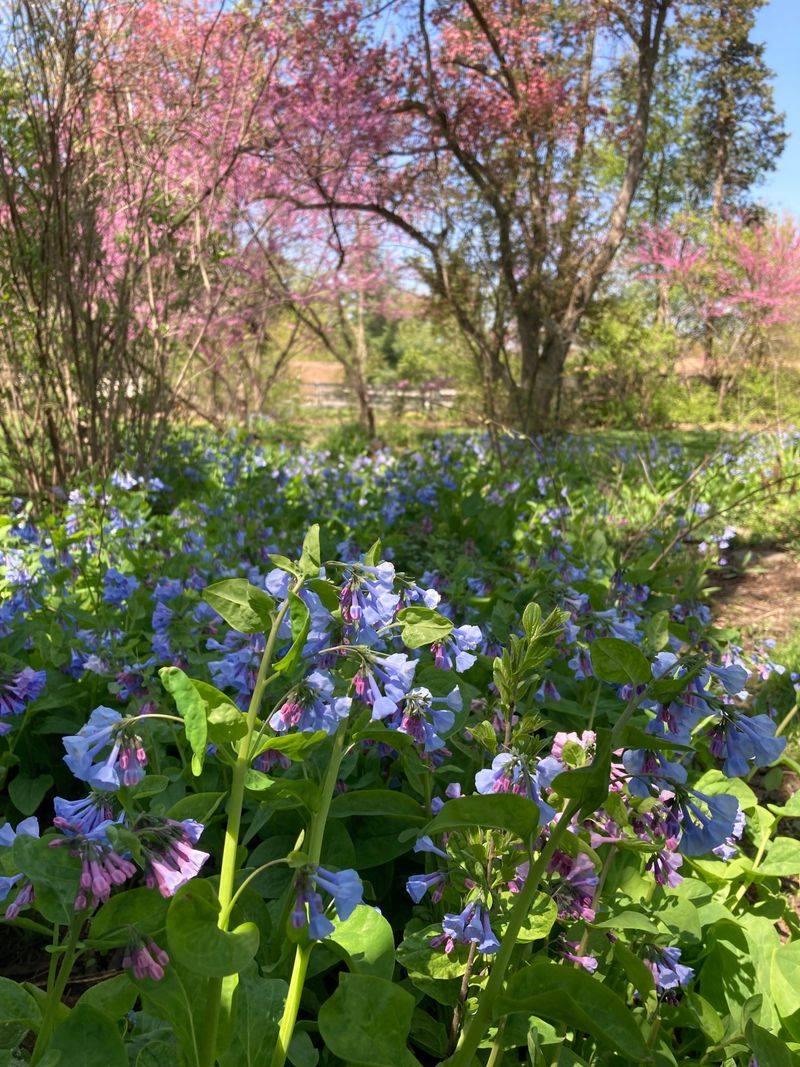
Virginia bluebell buds begin pink, shift through purple tones, then open into soft sky-blue bells on arching stems. That color shift gives one clump several shades at once and makes the spring display feel much richer than a single-color patch.
Expect the show in early to mid-spring, with exact timing set by local weather and your part of Michigan.
The flowers usually last only a few weeks, so place the colony where you will actually see it from a path, porch, or favorite window. A hidden back corner wastes one of the plant’s best features.
Let nearby plants stay lower during peak bloom.
Early woodland companions such as bloodroot, trillium, spring beauty, or low sedges can frame the blue and still leave it visible.
Pollinators notice the display too.
Virginia bluebells provide an early nectar source for several bees, especially longer-tongued visitors such as bumblebees. Butterflies, skippers, moths, and occasional hummingbirds may also visit the flowers.
That early timing matters in a shade bed that offers relatively few blooms before the canopy fills.
Do not expect a summer-long flower machine.
The appeal is concentrated and dramatic.
For a few Michigan spring weeks, the shady bed gets pink buds, blue bells, and plenty of insect traffic before the rest of the garden reaches full volume.
4. Ferns And Other Shade Plants Make Natural Companions
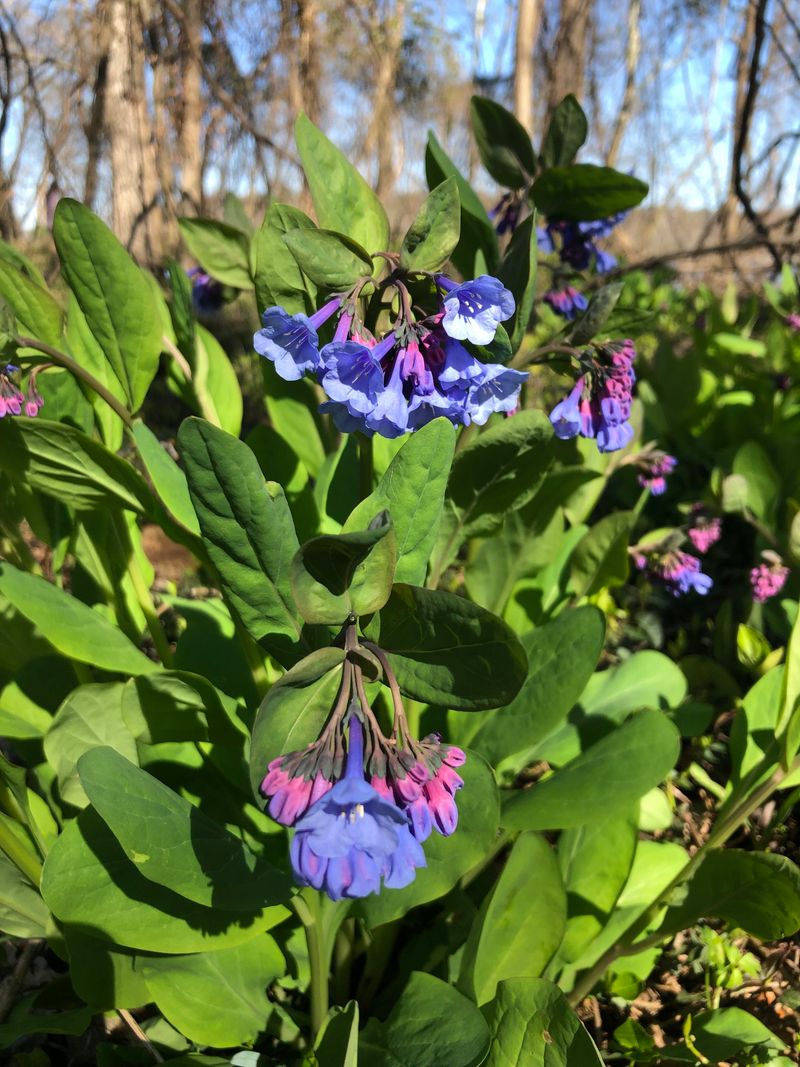
The smartest companion plant is the one that takes over after bluebells disappear.
Virginia bluebells are spring ephemerals. Their leaves rise early, flowers follow, seed develops, and the top growth fades as the tree canopy closes and summer arrives.
That cycle leaves a visible opening unless another plant is ready to occupy the space.
Use ferns as the taller backup.
Ostrich fern, cinnamon fern, or another moisture-loving fern can add broad texture after the bluebell foliage retreats. Keep the final size in mind so a vigorous fern does not overwhelm a young colony.
Sedges can cover the lower layer.
A shade-tolerant sedge gives the soil a green finish through summer without a giant leaf canopy. Solomon’s seal also works well because its arching stems add height and structure after the blue flowers leave.
Hostas can fill the same role in a conventional shade garden.
Ferns, hostas, Solomon’s seal, and other shade perennials are commonly paired with spring ephemerals because their later foliage covers the openings left behind.
Place companions beside the bluebell crowns rather than directly on top of them. That lets each plant occupy its own root space while foliage overlaps visually above ground.
Use labels during the first few seasons.
Once the bluebells vanish, the exact crown location becomes surprisingly easy to forget.
This layered approach turns dormancy from a problem into part of the design.
The bluebells open the season. Ferns, sedges, and later perennials carry the bed through summer.
Nobody has to stay on stage all year for the garden to look complete.
5. Summer Dormancy Leaves Room For Later Perennials
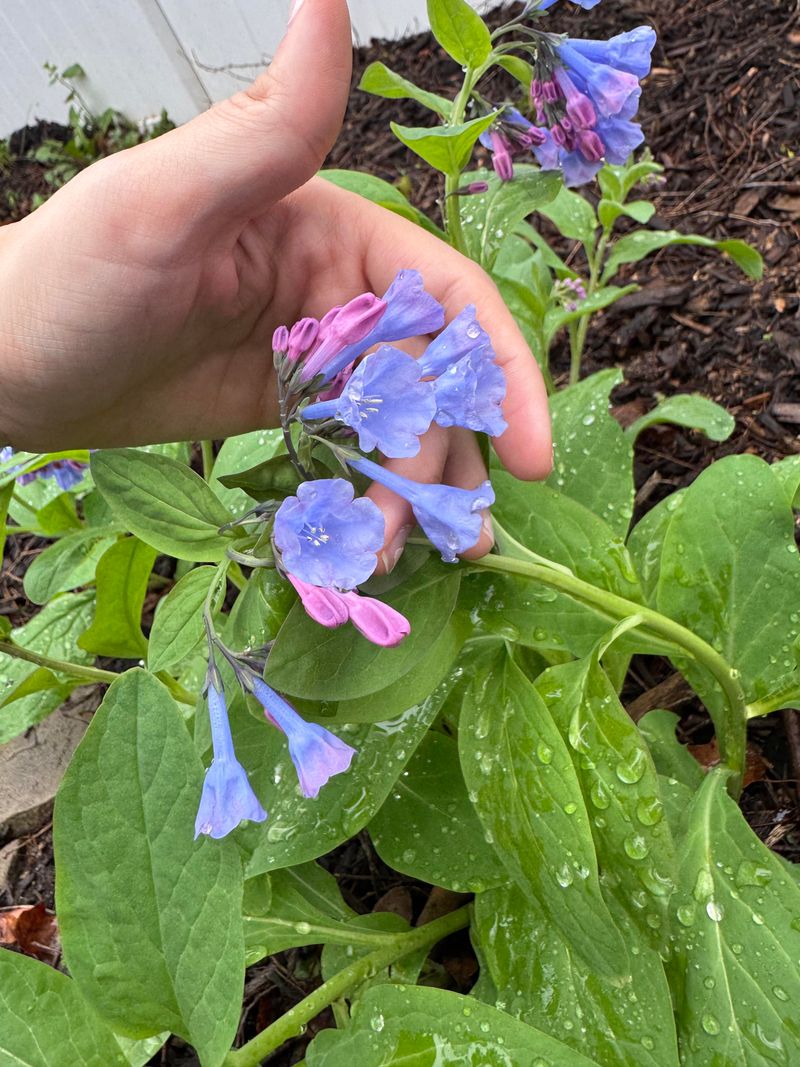
By early summer, a healthy bluebell patch can look like it quietly packed up and left.
That disappearance is normal.
Virginia bluebells complete most of their above-ground work early. Once flowers fade and seed forms, the leaves yellow and the plant enters dormancy beneath the soil until the next spring.
Do not pull the fading foliage too soon.
Let the leaves finish their cycle and lose color naturally. Those leaves still support the underground plant before dormancy. A hard cleanup while they remain green removes that final stretch of work.
Use the fading period as your cue to watch companion plants fill the gap.
Ferns can open wider. Sedges can soften the soil line. Hostas or Solomon’s seal can hide the retreat without any need to disturb the bluebell crowns.
Keep the summer shovel away from the marked area.
A dormant perennial is easy to forget when no stem or leaf remains above the soil. One misplaced shovel can undo several seasons of patience.
The empty-looking patch also does not need a summer annual stuffed directly into it.
Leave the crown undisturbed and let nearby foliage provide the cover.
Once you expect the disappearance, the plant becomes much easier to live with.
Virginia bluebells have not failed in July.
They are simply done with their shift.
The spring display is brief by design, and the rest of the shade garden gets the space back until next year.
6. Protect New Crowns With Leaf Mulch
Fallen leaves can do more for this bed than a bag of decorative mulch.
Use a light layer of shredded leaves around new bluebell crowns after fall planting. Michigan perennial beds can benefit from leaf mulch because it moderates soil moisture, suppresses weeds, and returns organic material to the bed over time.
Keep the layer loose.
Whole leaves can mat together, especially after rain and snow. A mower pass or a quick shred creates smaller pieces that settle around plants without one heavy sheet over the bed.
Aim for roughly two to three inches across the open soil.
Pull the material back slightly from the crown rather than pile it into a wet mound directly over the plant. The purpose is insulation and moisture balance, not burial. A two- to three-inch mulch layer is generally enough to help conserve soil moisture.
Use what the yard already provides.
Maple, oak, and mixed deciduous leaves can become useful bed material once shredded. Keep diseased plant debris separate from clean mulch material.
Do not remove every leaf the moment spring arrives.
A thin, broken-down layer can remain as bluebell shoots emerge, provided the new growth can move through it easily. Gently shift any thick clumps away from tender shoots.
This is one fall chore that rewards a little laziness.
The trees drop the material for free.
You only need to keep it light, loose, and useful around the crowns.
7. Skip Dry Spots Beneath Thirsty Trees
A shady spot can still be far too dry for Virginia bluebells.
Large trees can create that trap. Dense roots compete for water, while a broad canopy intercepts rain before much reaches the soil below. The result looks shady enough on paper but feels dusty around the roots by late spring.
Test the soil before you commit the colony.
Check several inches down after a normal rain. A cool, moist root zone suits bluebells. Dry, root-packed ground that sheds water needs a different plant or a site farther from the trunk.
Virginia bluebells naturally favor moist woodland and floodplain soils.
Avoid deep excavation beneath an established tree.
Large planting holes can damage important roots. Use small nursery plants, modest holes, and gentle hand work around existing tree roots. Do not raise the soil level over a mature root system just to manufacture a woodland bed.
Move toward the outer canopy where practical.
A spot near the drip line or beyond the densest root mass can offer better moisture and still provide partial shade. Every tree and yard differs, so use the actual soil as your guide.
New bluebells still need supplemental water during establishment when rain falls short.
Keep that support focused on the root zone rather than flood the whole bed.
Shade alone is not enough.
Virginia bluebells want the cool side of the garden, but they also want reliable spring moisture.
Give them both, and the colony has a much better chance to return instead of a slow retreat beneath a tree that drinks first.
8. Let Fall Planting Set Up Spring
Early fall gives a Michigan perennial a useful start without the shock of summer heat first.
Spring and early fall are generally the best times to establish rooted perennial material in Michigan because moderate temperatures and seasonal rain reduce stress on new plants. That makes September a practical target for potted Virginia bluebells once suitable nursery stock becomes available.
Plant before the ground turns cold and hard.
Set the crown at the same depth it held in the nursery container. Backfill gently, firm the soil with your hands, and water thoroughly so the root ball and surrounding soil make good contact.
Keep moisture steady through the remaining mild weeks.
Fall rain may handle much of that work, but a dry spell still deserves a check. New roots should not enter winter in powder-dry soil.
Add a light layer of shredded leaves after the bed settles.
Then mark the location.
The plant may offer no visible reminder through winter, and that tiny label can save the crown from a spring shovel.
Do not expect the first flower show to match a mature colony.
A newly established plant may need time before it produces the broad blue patch that makes this species memorable.
Leave the site undisturbed and let future seedlings slowly add to the display. Virginia bluebells can self-seed and form colonies under favorable conditions.
Fall planting is not magic.
It simply gives the plant a quieter introduction.
Do the careful work now, and next spring can begin with blue bells instead of another empty patch beneath the trees.