One October Oversight Can Set Newly Planted Georgia Trees Back
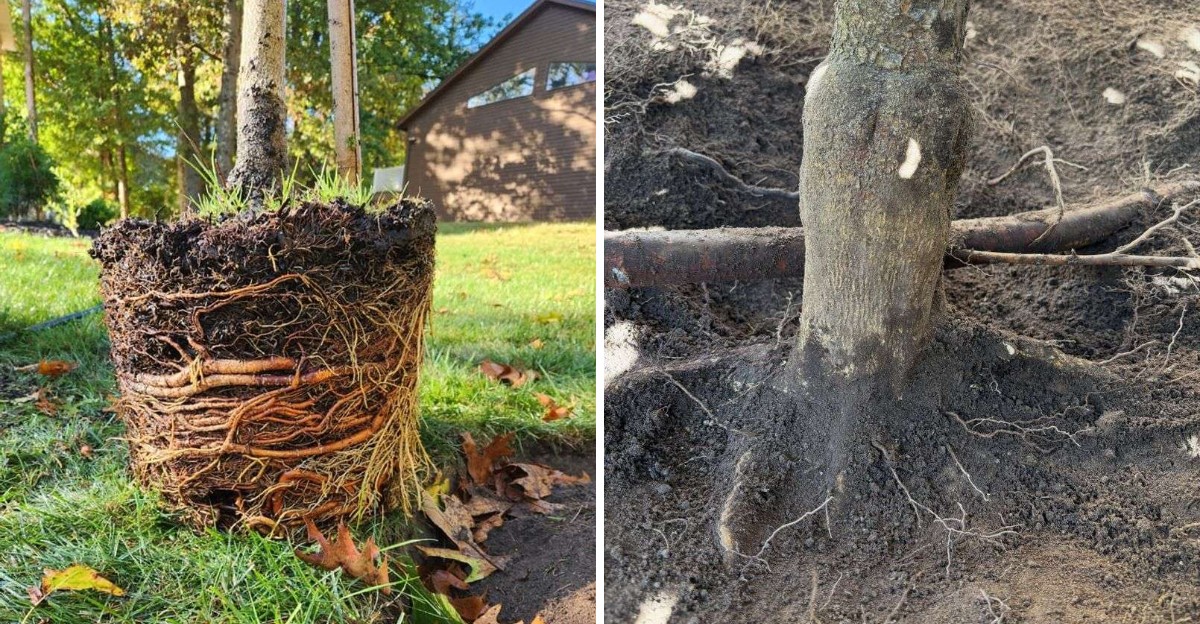
Newly planted trees may look settled by October, but a buried root flare can create problems that remain hidden for months.
Planting too deeply can leave the root flare below the surrounding soil. That puts trunk tissue and major roots where they should not be.
Check where the trunk begins to widen into the main roots instead of assuming the nursery soil line marks the correct planting depth.
Trees planted this fall are easier to adjust now, before their roots spread farther into the surrounding Georgia soil. Keep the root flare at or slightly above the surrounding grade.
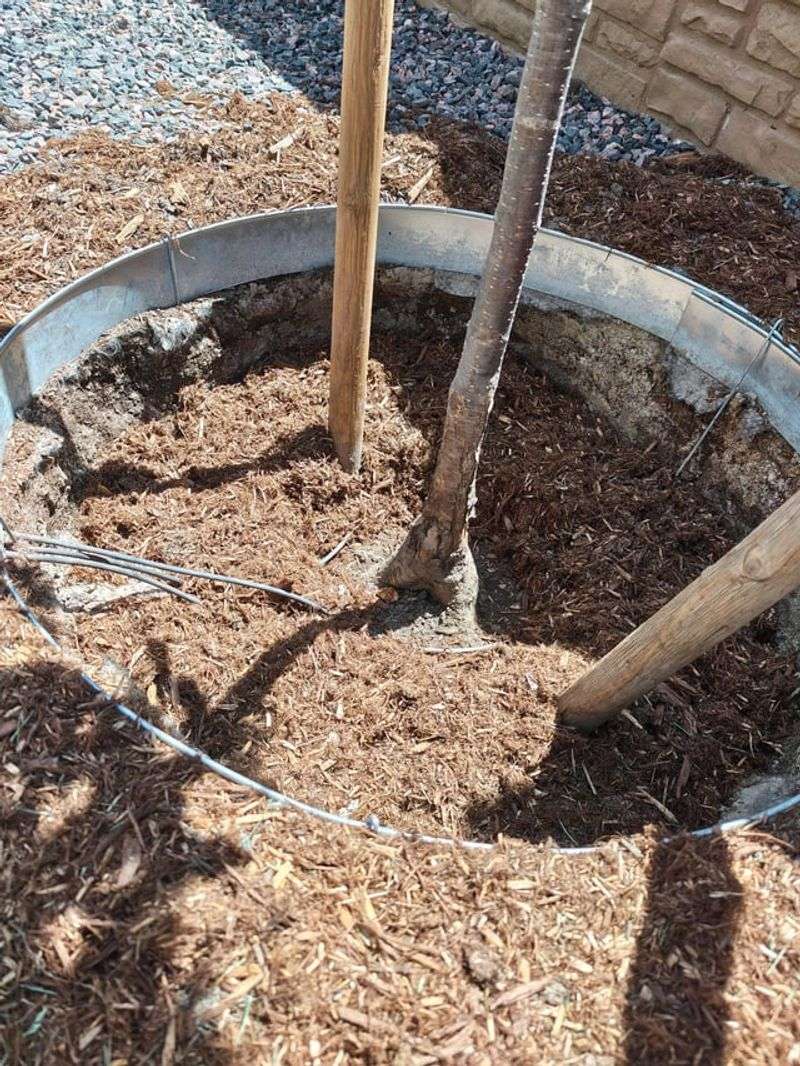
Pull mulch back from the trunk so it does not cover the flare.
Checking the planting depth now can prevent a buried root flare from becoming a long-term problem as the tree establishes.
1. A Tree Can Look Perfectly Fine For Months Before Trouble Shows
Healthy leaves can fool you. A tree planted in October may hold its color, drop its leaves on schedule, and leaf out again in spring with no obvious warning signs.
Trouble often waits until the first long, hot summer arrives.
So what is the hidden mistake? In most cases, it is planting the tree too deep and burying the root flare, the spot where the trunk widens into the roots.
Nurseries, extension agents, and arborists across Georgia point to this as one of the most common planting errors in home landscapes. It is easy to make because the soil line looks tidy and the tree seems stable.
Underground, though, the roots may be sitting lower than they would like.
Deep roots can struggle to get enough oxygen, especially in dense clay that holds water after rain. Growth may slow, and stress symptoms can creep in gradually over a season or two.
Watch for thin canopies, small leaves, early fall color, or damaged twigs in later years.
Not every slow tree has a depth problem, since drought, pests, and poor drainage can cause similar signs. Checking the base of the trunk is a quick first step that rules out the most common cause, and it costs nothing but a few minutes.
2. The Trunk Should Widen Into Roots Right At Soil Level
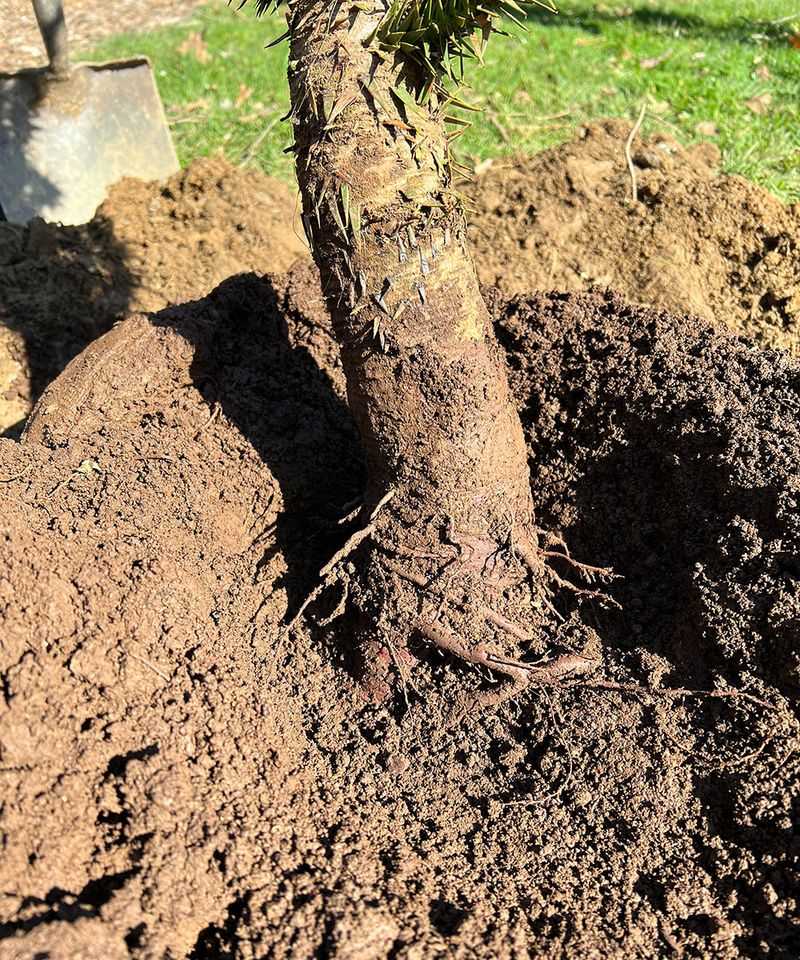
Look at any old oak in a park and you will notice its trunk spreading outward like a foot before it meets the ground. That gentle bulge is the root flare, and it belongs above the soil.
Young trees have the same shape, just on a smaller scale.
When planted correctly, the flare sits right at the soil surface or slightly above it. In heavy Georgia clay, some extension guides suggest setting it an inch or two higher than the surrounding grade to allow for settling.
A tree that looks like a straight pole going into the ground is a red flag.
Straight trunks with no visible widening usually mean soil or mulch is covering the flare. Sometimes the cover is only an inch, but in other cases it can be several inches deep.
Your Georgia Garden Changes Every Week. Your Plan Should Too.
Gardening in Georgia changes quickly throughout the season. Every Friday you’ll receive a simple weekly plan showing exactly what to plant, prune, fertilize, harvest, and protect so you never miss the right timing.
Mulch counts too, so keep it pulled back a few inches from the bark.
Spread mulch two to three inches deep in a wide ring, but leave a small bare space around the trunk. Piled mulch volcanoes are common in parking lots and yards, yet they can create many of the same problems as buried soil.
Getting the height right at planting sets the stage for steady growth over the next several years.
3. Nursery Pots Often Hide Extra Soil Above The Flare
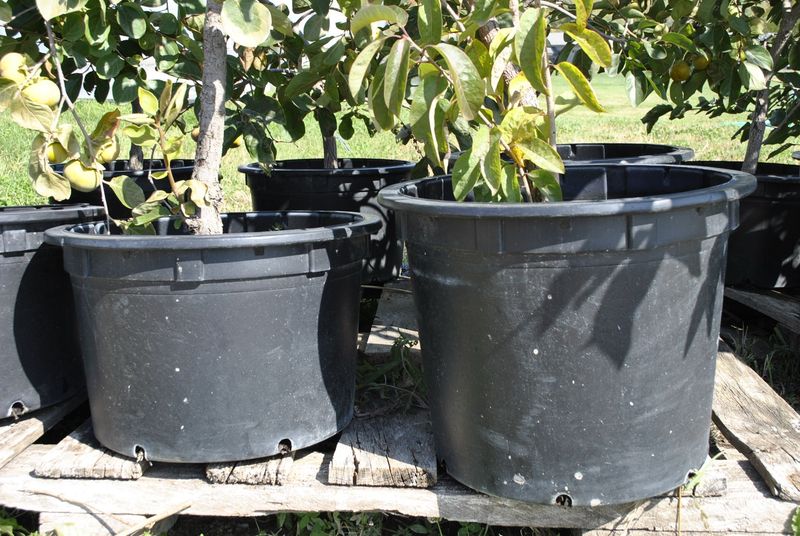
Surprise number one comes straight from the garden center. Container trees frequently arrive with the flare already buried inside the pot.
Growers sometimes add potting mix during repotting, and that extra layer slowly builds up above the original root level.
You might buy a tree that looks fine, set it in the hole at pot level, and still end up planting it too deep. It happens to careful gardeners all the time, simply because the soil surface in the pot looks like the right line.
Before planting, slide the tree out and check the top few inches.
Use your fingers or a small trowel to brush away mix until you find the first large roots coming off the trunk. Sometimes they appear within an inch, while other pots may hide them two or three inches down.
Balled and burlapped trees can have the same issue under the wrapping.
Once you find the flare, measure from it to the bottom of the root ball. Dig your Georgia planting hole to match that depth rather than the full height of the pot, and make it two to three times wider than the root ball.
A few extra minutes of checking can save years of slow, disappointing growth.
4. Buried Bark Can Stay Wet And Start To Rot
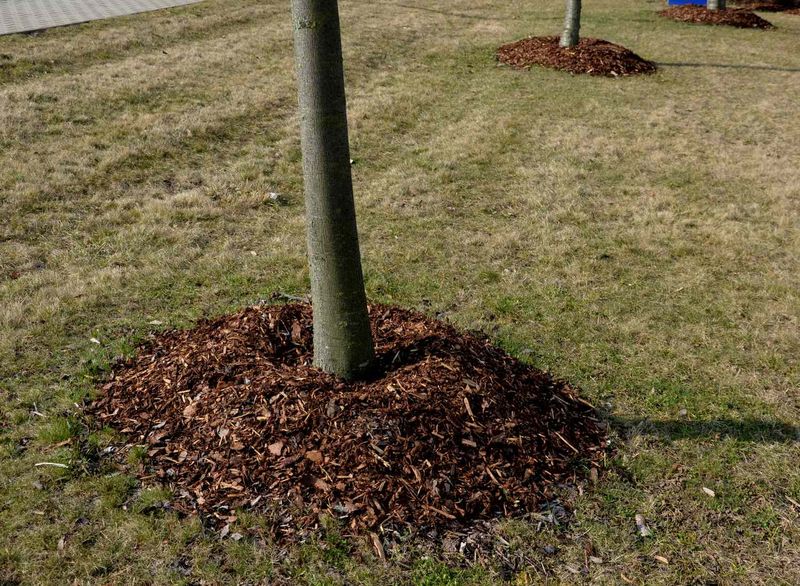
Bark is built for air, not for being packed in damp dirt. Trunk tissue above the flare is meant to stay mostly dry between rains.
When soil or mulch sits against it, moisture can linger for long stretches.
Georgia fall and winter rains, combined with clay that drains slowly, can keep buried bark soggy for weeks at a time. That steady dampness may soften the bark and invite fungal problems or decay organisms.
Damage here matters because the inner bark carries sugars from the leaves down to the roots.
If that layer weakens, roots may not get the energy they need to grow. The tree might not show any change right away, which is why the problem often goes unnoticed until later.
Rodents and insects can also hide in deep mulch piled against trunks.
Voles, in particular, may chew bark when cover is thick and close. Keeping the base clear makes the area less appealing and lets you see the trunk easily during regular yard checks.
How much harm happens depends on tree species, soil type, and how deeply things are buried. Some trees tolerate a little extra cover, but clearing the trunk is a simple habit that lowers the risk.
5. Circling Roots Need Attention Before The Tree Goes In
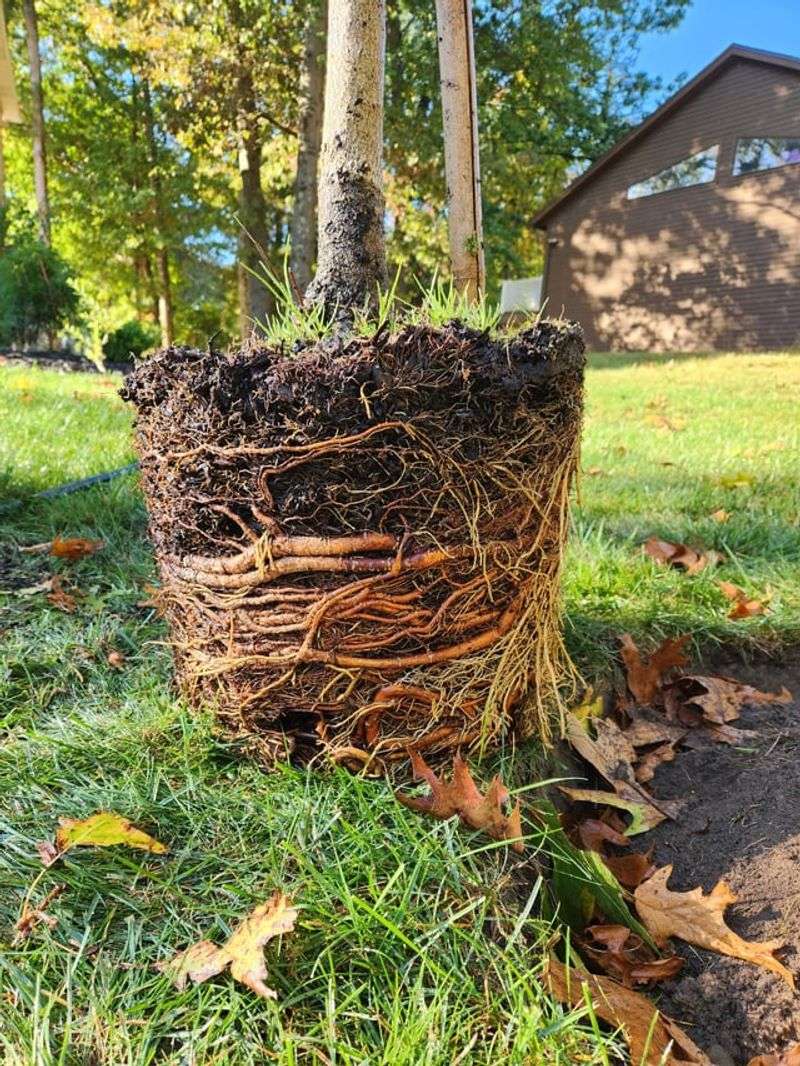
Pull a tree from its pot and you may find roots wrapped around the outside like a coiled hose. Long stretches in a container often cause this pattern.
Left alone, those roots can keep growing in a circle after planting.
Over many years, some circling roots wrap tightly around the base of the trunk. Arborists call these girdling roots, and they can choke the flow of water and nutrients as both trunk and root thicken.
Planting depth and circling roots are often connected, since extra soil in the pot can hide both.
Gently tease outer roots loose with your fingers so they point outward. For thicker roots that will not straighten, a clean cut with sharp pruners encourages new roots to branch in a better direction.
Some Georgia nurseries recommend shaving the outer inch of a badly root-bound ball.
That method, often called root ball shaving, removes the circling layer and exposes fresh root tips. It can look harsh, yet many trees recover well when they are watered consistently through fall and winter.
Results vary with species and how bound the roots were, so expect some trees to grow a bit slower at first.
6. Gently Scrape Away Soil To Find Where The Flare Begins
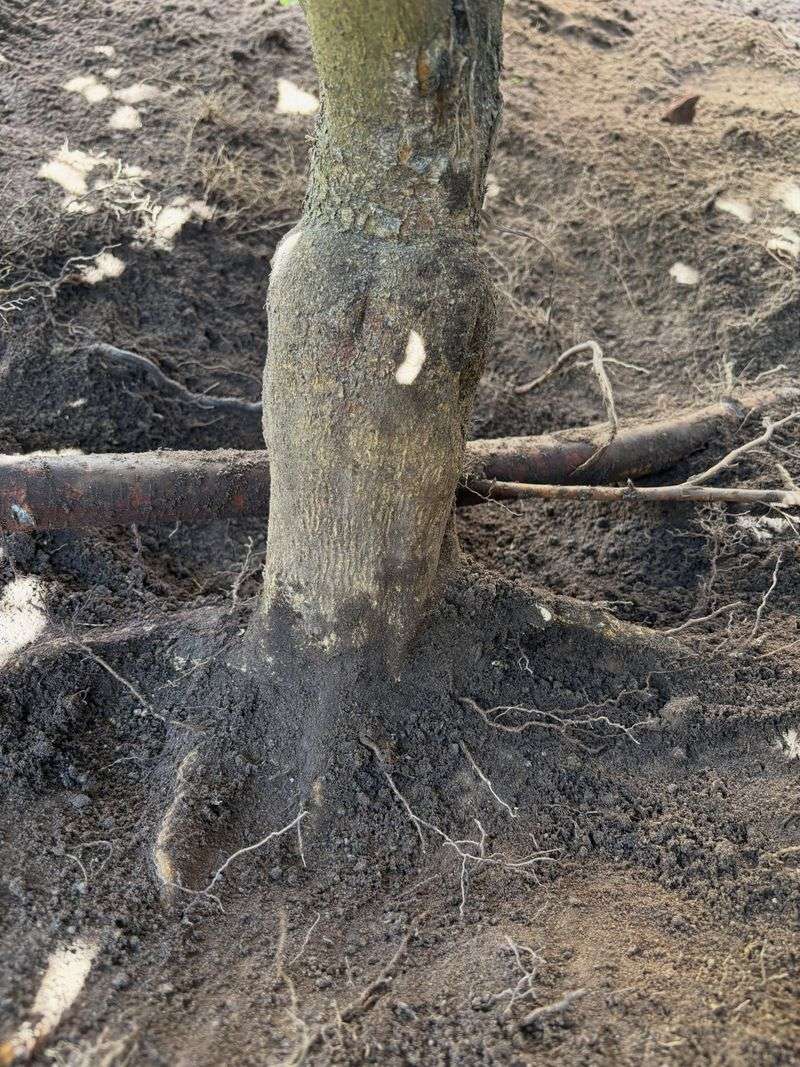
Already planted your tree this fall? You can still check its depth without digging it up.
Start by pulling mulch back from the trunk in a circle about a foot wide.
Next, use your hands, a small trowel, or a soft brush to remove soil slowly from around the base. Go carefully, because young bark and shallow roots can scrape easily.
Keep going until you see the trunk begin to widen or the first main roots appear.
If the flare shows up within an inch or so, you can usually just leave the soil pulled away. Many trees settle a little after planting, so a small amount of exposed flare is normal and helpful.
Deeper burial calls for a closer look.
When the first roots sit three or more inches down, scraping alone may not be enough. Some Georgia homeowners choose to replant, while others carefully remove soil in a wide, shallow bowl around the trunk.
Avoid creating a deep pit that traps rainwater against the bark. Sloping the soil gradually away from the trunk helps water drain instead of pooling.
If the tree is large or you feel unsure, a certified arborist can use an air tool to expose the flare safely.
7. Fixing The Depth Is Far Easier In The First Season
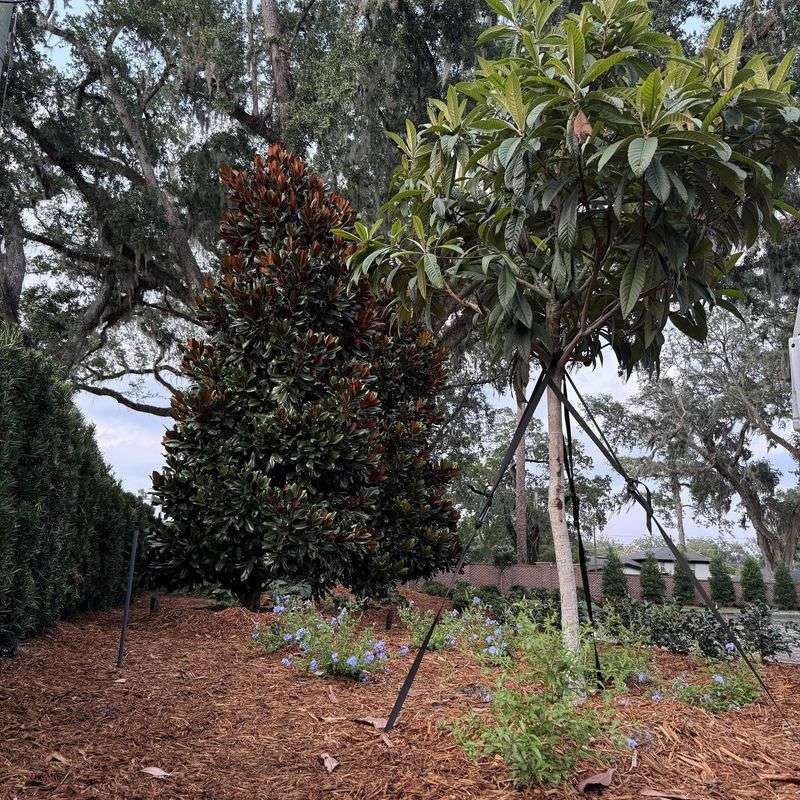
Timing works in your favor right now. A tree planted in October has barely started sending roots into the native soil.
That makes lifting and resetting it much less stressful than waiting a year or two.
Dig around the original root ball and lift the tree by the ball, not the trunk. Add firm native soil to the bottom of the hole, then set the tree back with the flare at or slightly above grade.
After replanting, water slowly and deeply to settle the soil and remove air pockets. Skip heavy fertilizer for now, since roots need time to settle before pushing new growth.
Keep watering during dry spells through winter, because cool weather does not mean the soil stays moist.
Wait too long and roots spread into the surrounding ground, making a move riskier and more work. Larger trees can also become too heavy to lift by hand.
Even a corrected tree may grow slowly for a season while it adjusts. Weather, soil, and follow-up care all affect how quickly it bounces back, but a properly set tree has a much better shot at strong growth.