These Texas Mushrooms Should Be Left Alone In Your Yard
In Texas, one good rain can change a yard overnight. After months of heat and dry soil, a soaking fall storm wakes up fungi that have been waiting underground.
By morning, mushrooms are popping up in the lawn, around tree roots, and in flower beds.
Some are tiny and easy to overlook. Others are big, bright, or oddly shaped enough to stop you in your tracks. A few even grow in perfect circles across the grass.
As fascinating as they are, some of these backyard mushrooms are toxic. Dogs, in particular, tend to sniff and snack first and ask questions later, and young kids aren’t far behind. Even adults can mistake a harmful mushroom for a safe one.
Not every mushroom needs to be pulled, though. Most simply mean your soil is healthy and full of life. The key is knowing which ones deserve a wide berth.
1. Green-Spored Parasol
Ask any poison control worker in Texas about lawn mushrooms, and the green-spored parasol will likely come up first.
It is one of the most common causes of mushroom poisoning in North America. It also happens to love Texas yards.
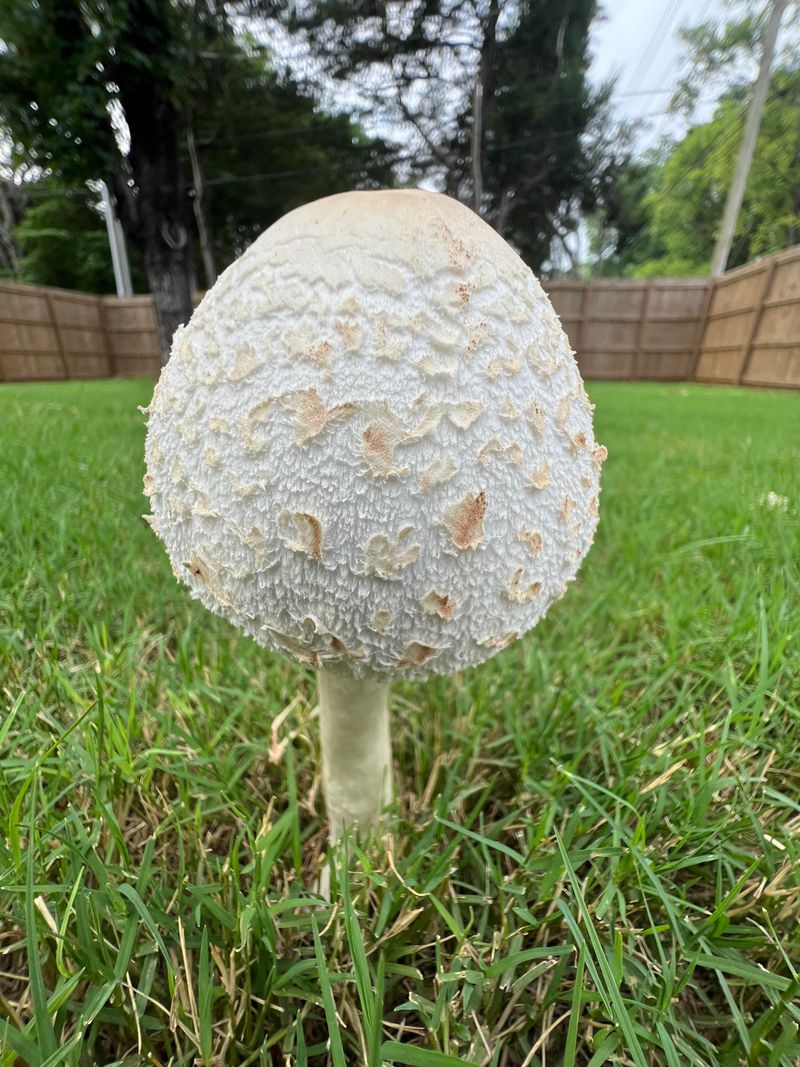
The mushroom is big and eye-catching. Its cap can grow wider than a dinner plate, and it is white with brownish scales on top. Young ones look like round white eggs. As they grow, the caps open up like small umbrellas.
You will often see them in large circles called fairy rings. They tend to appear after summer and fall rains, sometimes almost overnight. A whole ring can pop up in one spot of your lawn and vanish a week later.
So why is it a problem? Eating it causes severe vomiting and diarrhea that can last for hours. Some people end up in the hospital because they lose so much fluid. Dogs can get very sick too.
Part of the danger is that it looks a lot like some edible mushrooms. People sometimes pick it thinking it is a safe parasol mushroom.
One clue is the gills under the cap. On older mushrooms, they turn a dull greenish color, which is where the name comes from.
Here is a smart plan for your yard. Wear gloves and pull up the mushrooms when you see them, then toss them in the trash.
Do this before kids or pets find them. Mowing over them will not hurt the grass, but it may spread pieces around, so picking them up is better.
Remember, the fungus lives underground. The ring may return each year, and that is perfectly normal.
2. Destroying Angel
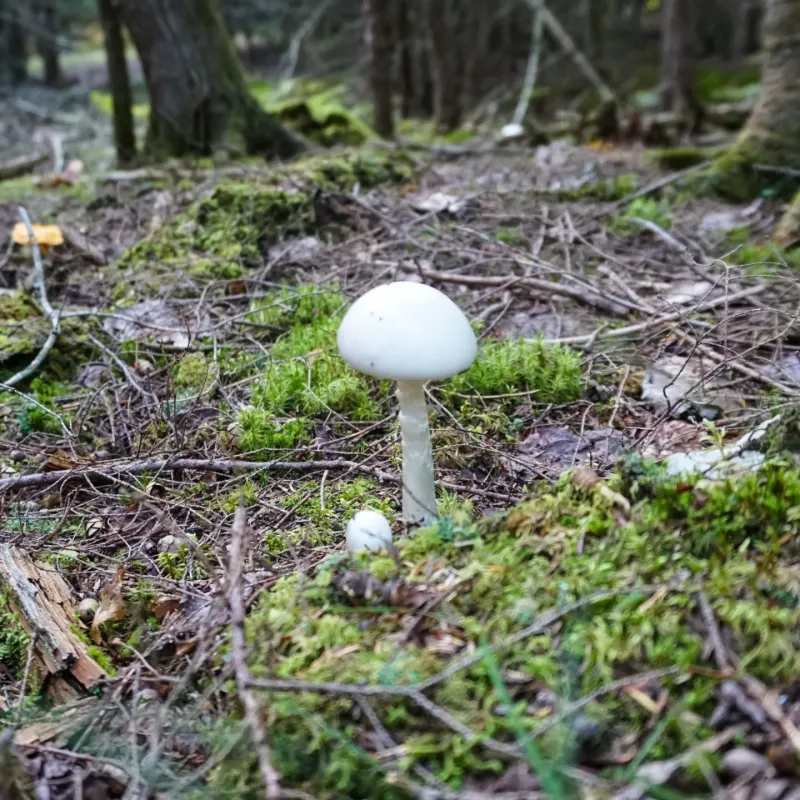
Few mushrooms have a name as fitting as this one. The destroying angel looks clean and lovely, almost like something from a fairy tale. Yet it is among the most toxic mushrooms on the planet.
Destroying angels belong to the Amanita group. They are white from top to bottom, with a smooth cap, white gills, and a tall stem.
Many have a thin ring around the stem, like a little skirt. At the base, there is often a cup-like sack hidden in the soil.
Your Texas Garden Changes Every Week. Your Plan Should Too.
Gardening in Texas changes quickly throughout the season. Every Friday you’ll receive a simple weekly plan showing exactly what to plant, prune, fertilize, harvest, and protect so you never miss the right timing.
In Texas, these mushrooms show up mostly in East Texas and other wooded areas. They like to grow near trees, especially oaks. If your yard has big shade trees, keep an eye out after wet weather.
The toxins inside can cause liver failure. What makes it even scarier is the delay. A person may feel fine for six to twelve hours, or even longer, before symptoms start. By then, the toxins have already been at work.
Because of this, never taste a white mushroom just to see what it is like. Even a small bite can be serious.
If anyone in your home might have eaten one, call Poison Control at 1-800-222-1222 right away. Do not wait for signs of sickness.
Removing them takes a little care. Wear gloves, dig up the whole mushroom including the base, and bag it before throwing it out. Wash your hands well afterward.
A fun fact for the curious: experts often say the safest rule is to treat every pure white mushroom in Texas as off-limits. That simple habit protects a lot of families.
3. Jack-O’-Lantern Mushroom
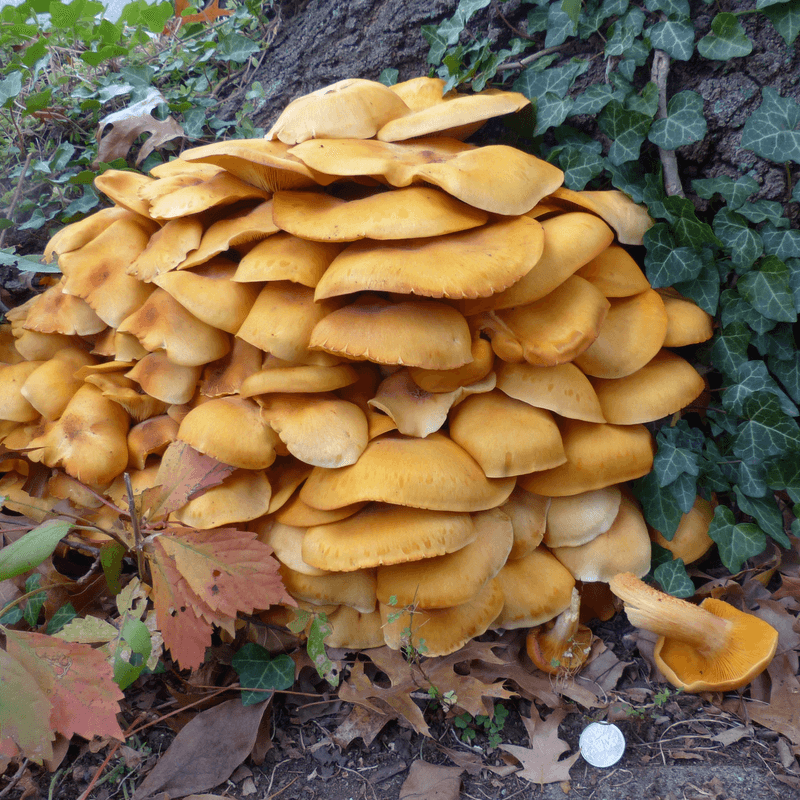
Spot a big bunch of glowing orange mushrooms on an old stump, and you might think you found treasure. Sorry to break it to you, but that is probably a jack-o’-lantern mushroom. It is a true trickster of the fungus world.
These mushrooms grow in tight clusters, often with dozens of caps together. They are bright orange, almost like a pumpkin. You will usually find them on stumps, dry trees, or buried roots, and oaks are a favorite spot.
Foragers sometimes confuse them with chanterelles, a tasty wild mushroom. Mixing them up is a big mistake.
Jack-o’-lanterns cause severe stomach upset, with cramps, vomiting, and diarrhea that can be rough for a day or two.
How can you tell them apart? Jack-o’-lanterns grow in clusters from wood. Chanterelles usually grow alone from the soil.
Jack-o’-lanterns also have sharp, true gills, while chanterelles have blunt ridges that look melted. Still, the best move for most people is to skip eating any orange mushroom from the yard.
Now for the cool part. Did you know these mushrooms can glow? Their gills give off a faint green light in total darkness.
It is called bioluminescence, and it is the same kind of glow fireflies make. You need a very dark night and patient eyes to see it.
If they show up in your yard, they may come back each year from the same stump. Grinding the stump out can help. Otherwise, knock them down with a gloved hand or a shovel and toss them in the trash.
4. Galerina
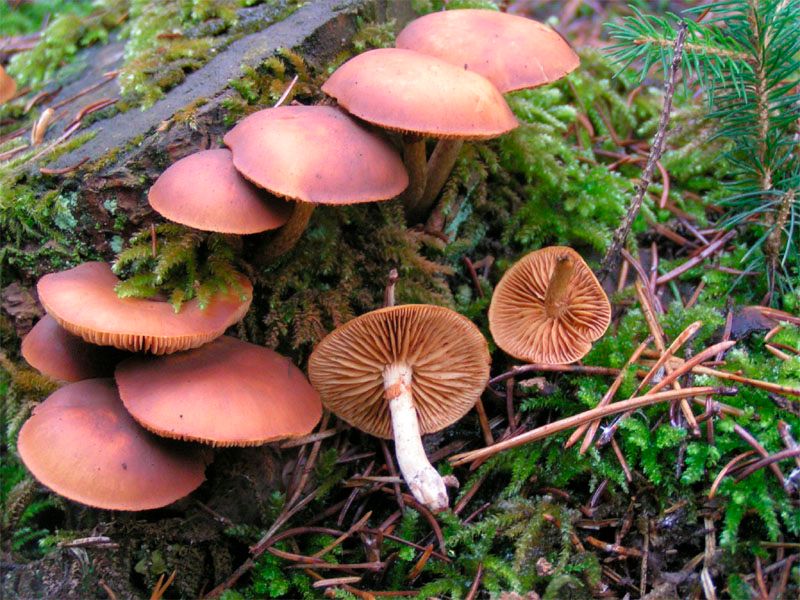
Some of the most dangerous things look totally boring. The galerina is a perfect example. It is a small brown mushroom that most people would walk right past.
Its cap is tan to brown and usually only an inch or two wide. The stem is thin and often has a faint ring near the top. Nothing about it shouts danger, and that is exactly the problem.
Galerina grows on rotting wood. You can find it on old stumps, fallen logs, and even wood mulch in flower beds. Since so many Texas homes use mulch, it can show up closer to your back door than you might expect.
Here is the scary part. It carries the same toxins found in destroying angels. These toxins can badly harm the liver, and symptoms may not appear for many hours after eating. A small handful could be enough to cause serious trouble.
People sometimes mistake it for edible honey mushrooms or other little brown mushrooms.
Even trained foragers are careful around it. That is why experts often call small brown mushrooms LBMs and suggest leaving them all alone.
So what can you do? Check mulch beds after rain, especially if kids play nearby. Remove any small brown mushrooms with gloves and put them in the trash. Teach little ones a simple rule: if it grows from the ground or wood, hands off.
Pet owners should watch closely too. Dogs love sniffing around mulch. If you think your dog ate one, call your vet or an animal poison hotline right away, even if your pup seems fine.
5. Earthball
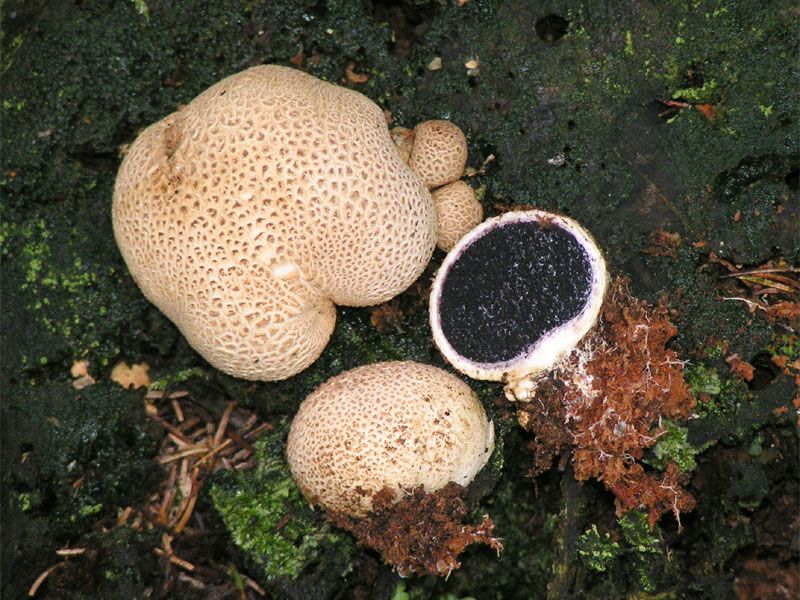
Kids love kicking puffballs and watching the brown dust fly. Earthballs look a lot like puffballs, but they are a different story. Eating one is a quick ticket to a bad stomachache.
Earthballs are round and lumpy, often about the size of a golf ball or a bit bigger. Their skin is thick and tough, and it is usually yellowish or brown with cracks or scales. They show up in lawns, along sidewalks, and under trees.
Many people mix them up with edible puffballs. The easiest test is to slice one in half. A young edible puffball is pure white and soft inside, like a marshmallow. An earthball is firm and turns dark purple or black inside as it gets older, often with white streaks.
Eating an earthball can cause serious stomach upset. Think nausea, vomiting, and cramps. Some people also feel dizzy or sweaty. It is not worth the risk.
Here is a helpful trick for parents. Show your kids what the inside of an earthball looks like. Once they see that dark middle, they will remember it. It makes a great backyard science lesson too.
Fun fact: earthballs often team up with tree roots. They trade nutrients with the tree, which helps both of them grow. So if you see them near your oak or pine, that tree is likely getting a little help.
When it comes to removal, gloves are a good idea. Older earthballs can burst and release spores, so try not to stomp on them. Pick them up gently and toss them in the trash.
6. Common Inky Cap
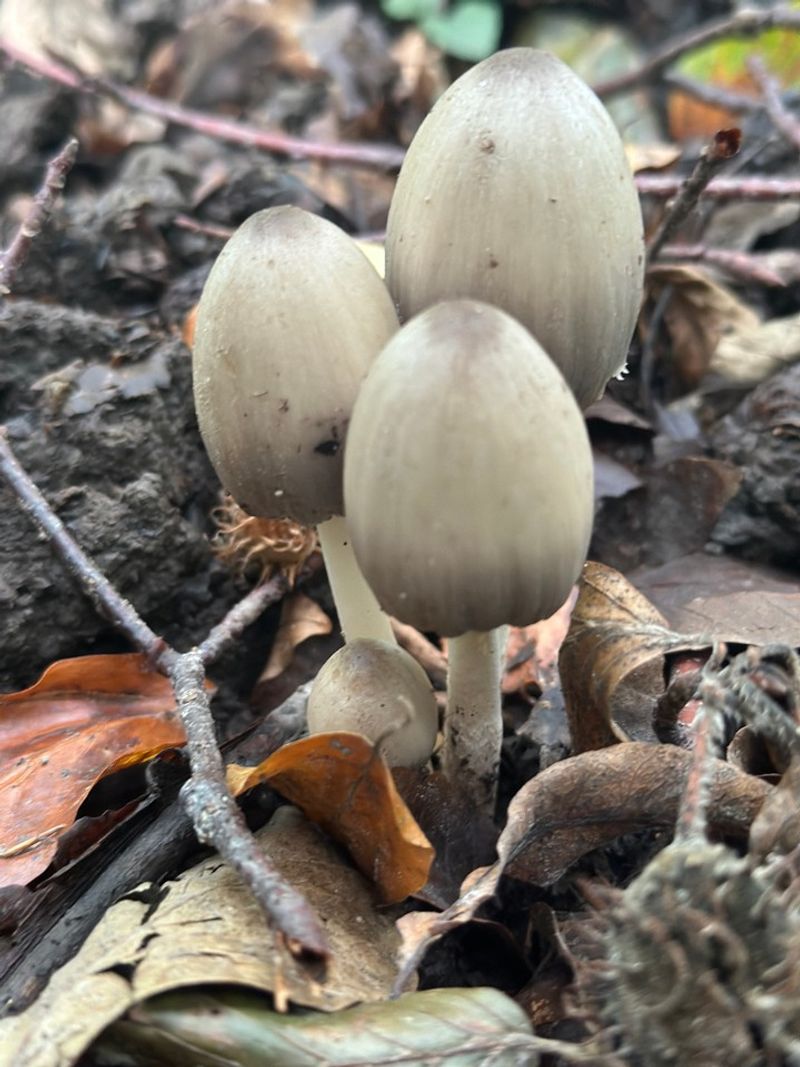
Here is a mushroom with a strange party trick. As the common inky cap ages, its gills melt into a black, inky goo. People long ago even used that liquid as real writing ink.
The inky cap is gray and shaped like a bell or a little egg. It grows in clusters in lawns, mulch, and spots where old wood is buried underground. You might see a bunch of them pop up after rain, then turn into dark puddles within a day or two.
So what makes it a problem? On its own, some people do eat it. But it has a sneaky side. If you eat it within a few days of drinking alcohol, your body can react badly.
The reaction can include a red, flushed face, nausea, vomiting, and a racing heartbeat. It can even happen if the alcohol comes a day or two after the mushroom.
That is because a chemical in the mushroom stops your body from breaking down alcohol the normal way.
For most families, the safest plan is to simply leave it alone. There is no good reason to eat mushrooms from your yard, especially ones that come with fine print. Kids and pets should stay away from them too.
If you find a cluster, wear gloves and pull them up early, before they turn to ink. The black goo can stain sidewalks, shoes, and patio furniture. A quick cleanup now saves scrubbing later.
Also, check where they are growing. A patch that keeps returning may mean there is old wood or a buried stump underneath.
7. Mower’s Mushroom
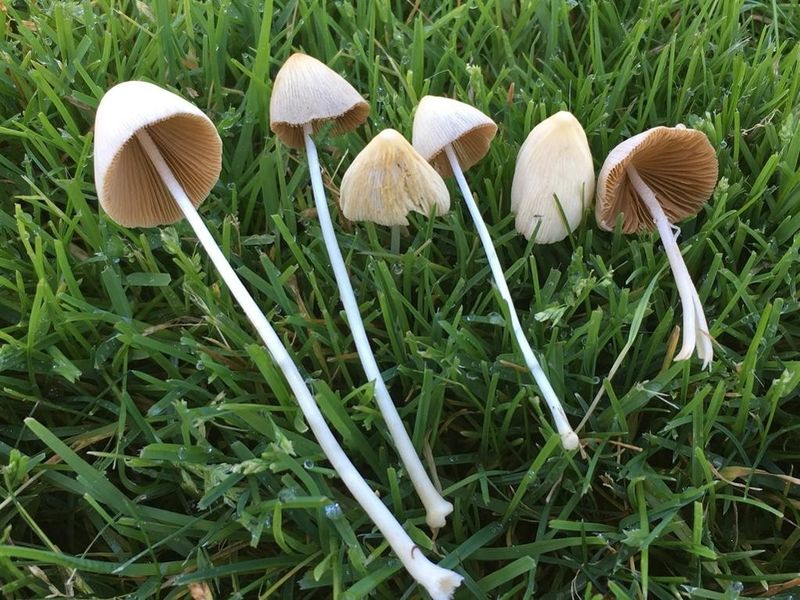
If you mow and water your lawn, you have probably met this one already. The mower’s mushroom is one of the most common lawn mushrooms around. It loves fresh-cut, damp grass.
It is small and brown, with a bell-shaped or rounded cap about an inch wide. The cap often changes color as it dries, going from dark brown to a lighter tan. The stem is thin and fragile, and it breaks easily.
You will often notice these mushrooms the morning after mowing and watering. They pop up scattered across the yard rather than in big clusters. Many people barely notice them at all.
The good news is that mower’s mushrooms are usually not very dangerous. The not-so-good news is that they are not safe to eat.
They can cause mild symptoms like an upset stomach, and they sometimes contain small amounts of compounds that can affect how a person feels.
Small children are the biggest concern. Toddlers explore with their mouths, and a tiny brown mushroom in the grass looks like an easy thing to grab. If your little one eats one, stay calm and call Poison Control at 1-800-222-1222 for advice.
Want fewer of them? Try watering your lawn early in the morning instead of at night. Grass that stays wet overnight is a perfect home for mushrooms. Better drainage and less thatch can help too.
A quick sweep of the yard before playtime is an easy habit. Pick up any mushrooms you see and toss them out. It only takes a few minutes and gives you peace of mind.