These Purple Berries Dangling From Tall Stems In California Yards Deserve A Closer Look
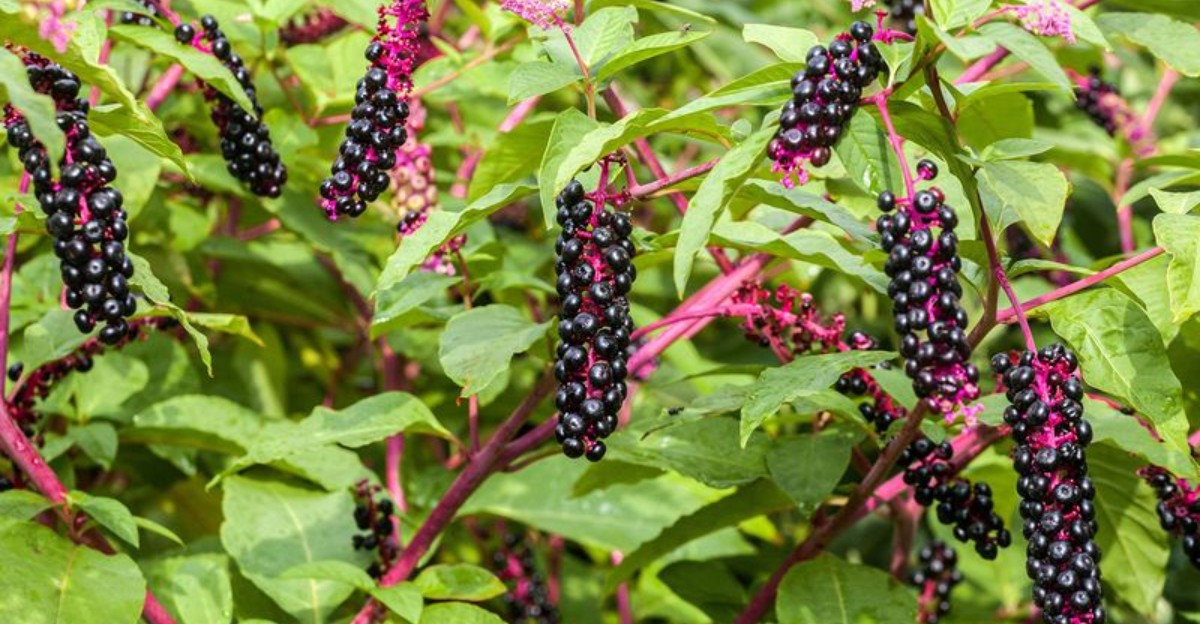
Late summer sometimes delivers a surprise to the back corner of a California yard. A plant shoots up taller than an adult almost overnight, with glowing magenta stems and long strings of shiny dark berries swaying in the breeze.
It looks striking enough to photograph, and plenty of people do.
Behind that pretty display, though, sits a plant that deserves careful attention, especially in homes with curious kids or pets.
Birds adore it, which explains how it often appears without anyone planting it.
Learning to recognize this visitor, tell it apart from harmless look-alikes, and handle it safely keeps the yard beautiful while sending an uninvited guest politely on its way.
Meet Pokeweed, The Tall Purple Berry Plant
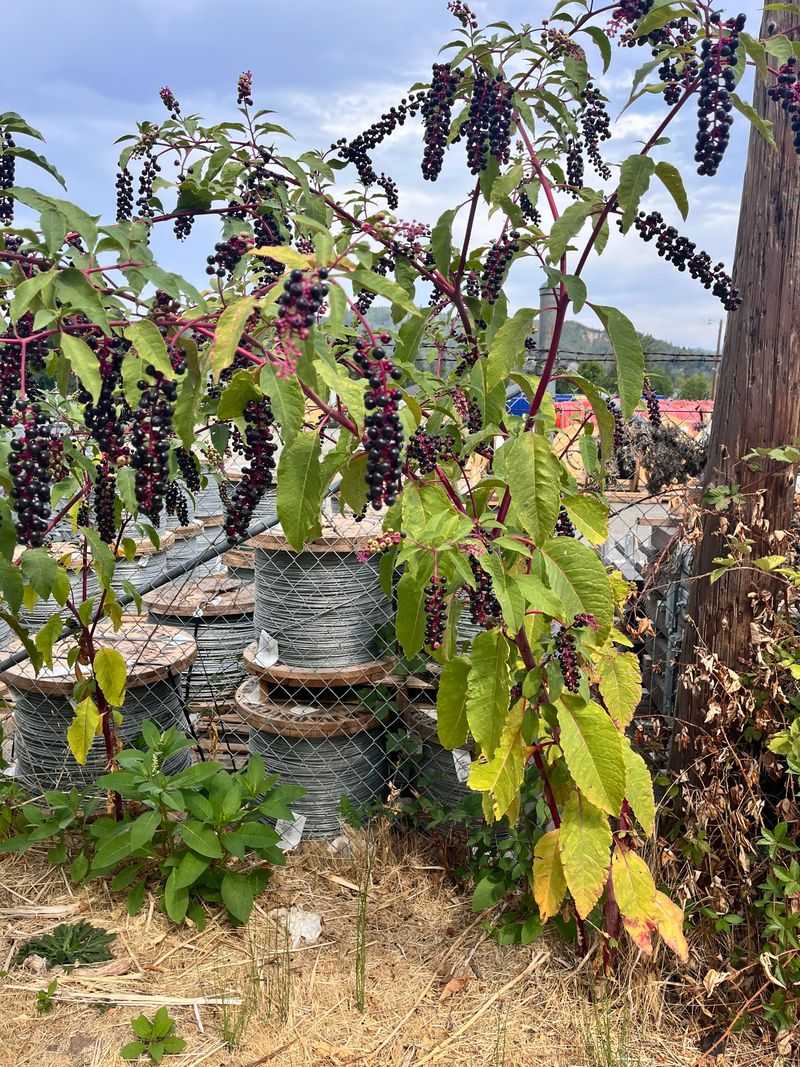
Late August often brings a surprise guest to California gardens. One week the corner by the shed looks normal, and a few weeks later, a leafy giant stands there loaded with dangling purple fruit.
That giant is American pokeweed. It’s native to the eastern United States, where it grows wild in fields, clearings, and along roadsides.
UC IPM describes it as an occasional weed in California. That polite label simply means it shows up where nobody invited it.
Pokeweed appears in many parts of the state. It grows in the Central Valley and along the coast from Mendocino down to San Diego.
It also turns up in the Sierra Nevada, mostly below about 4,000 feet. Gardens, orchards, fence lines, and shady edges of wooded spots all make comfortable homes for this tall visitor.
As a perennial, pokeweed returns year after year from its root. Each spring, fresh green shoots push up from the ground.
By summer, the plant forms a bushy tower that can dwarf nearby shrubs. Late summer then brings ripening berries that grab everyone’s attention.
Once cold weather arrives, the tall stalks collapse after frost and turn brown. Many people assume the plant is gone for good.
Underground, however, the fleshy root rests and waits. Spring brings new stems, often bigger than before, and understanding that cycle helps with timing removal efforts later.
Red Stems And Drooping Clusters Give It Away
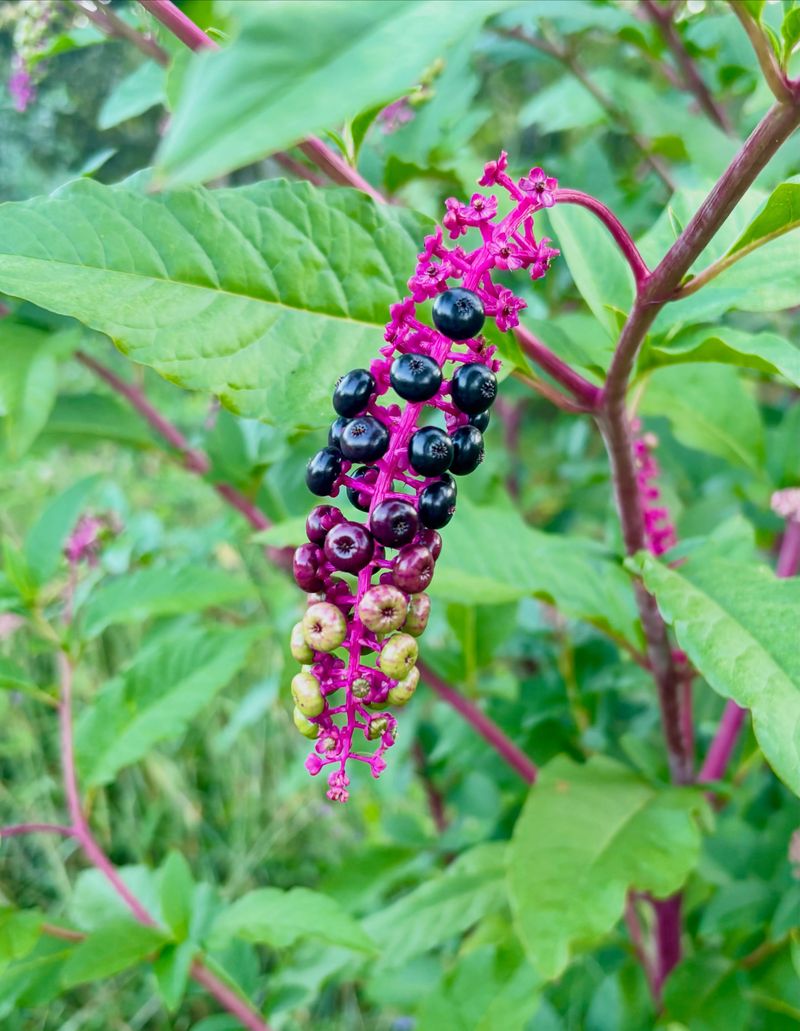
A stem the color of beet juice usually points straight to pokeweed. Those red or purple stems rank among its loudest clues, smooth and thick and often branching near the top.
Size offers another giveaway. UC IPM describes pokeweed as an upright plant reaching 4 to 10 feet tall and spreading 3 to 5 feet wide.
One plant can fill an entire garden corner. Few backyard weeds grow this big in a single season, which makes it hard to miss.
The leaves add more evidence. They’re large, smooth, and shaped like long ovals with pointed tips, with some stretching close to a foot long.
Leaves grow one at a time along the stem rather than in matching pairs. The fruit, however, steals the show.
Small white or pinkish flowers line long stalks in summer. Those flowers turn into green berries that slowly ripen to glossy purple-black by late summer.
Your California Garden Changes Every Week. Your Plan Should Too.
Gardening in California changes quickly throughout the season. Every Friday you’ll receive a simple weekly plan showing exactly what to plant, prune, fertilize, harvest, and protect so you never miss the right timing.
Each berry looks slightly flattened, like a tiny pumpkin or a squished bead. Most important of all, the clusters droop rather than stand upright.
They hang from the branches in long, loose strings, sometimes several inches in length. A single plant may hold green, ripening, and ripe clusters at once, resembling a decorated holiday tree.
A thick, fleshy taproot hides below the soil, explaining why the plant keeps returning. Stems, size, leaves, and hanging fruit together make identification nearly certain.
Every Part Of The Plant Is Toxic
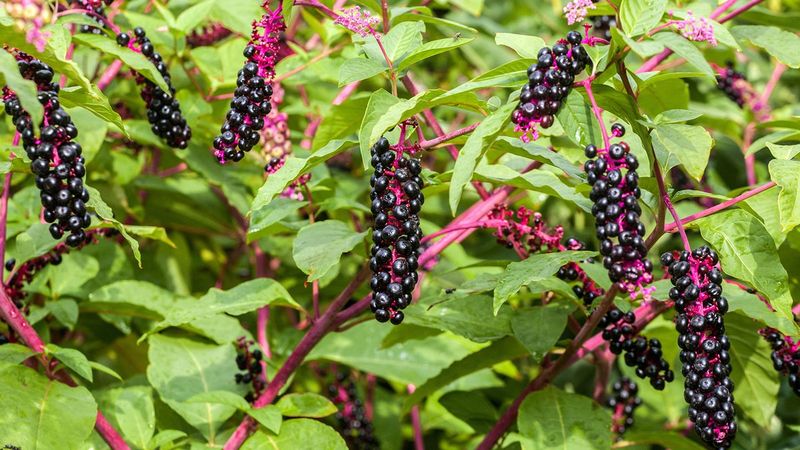
Pretty plants can still pack a punch, and pokeweed proves it. Roots, stems, leaves, and berries all contain toxic compounds, so no part of the plant counts as a safe snack for people or animals.
The root ranks as the worst offender. UC IPM points to it as the most toxic part of pokeweed.
That thick, white, fleshy taproot can resemble a parsnip or horseradish, which helps explain the trouble it causes. Dug-up roots are best bagged right away rather than left lying where someone might pick them up.
Leaves and stems carry toxins, too, as do the seeds inside the berries. Mature plants tend to be more toxic than tiny new shoots.
Still, no size, age, or season makes careless handling safe. Skin can react as well.
Sap leaking from broken stems and crushed leaves may irritate bare skin. Some people notice redness or itching after pulling plants with bare hands.
Berry juice also stains skin and clothing a deep purple that resists quick washing. Early settlers once used that juice as an ink and dye, which shows just how strong the color runs.
Today, it mostly ends up on gardeners’ sleeves by accident. A pair of gloves protects both skin and a favorite shirt.
Some online sources discuss eating pokeweed, advice that’s best ignored entirely. The whole plant works best admired from a distance, photographed, and removed with care rather than brought anywhere near the kitchen.
Berries Can Tempt Kids And Pets
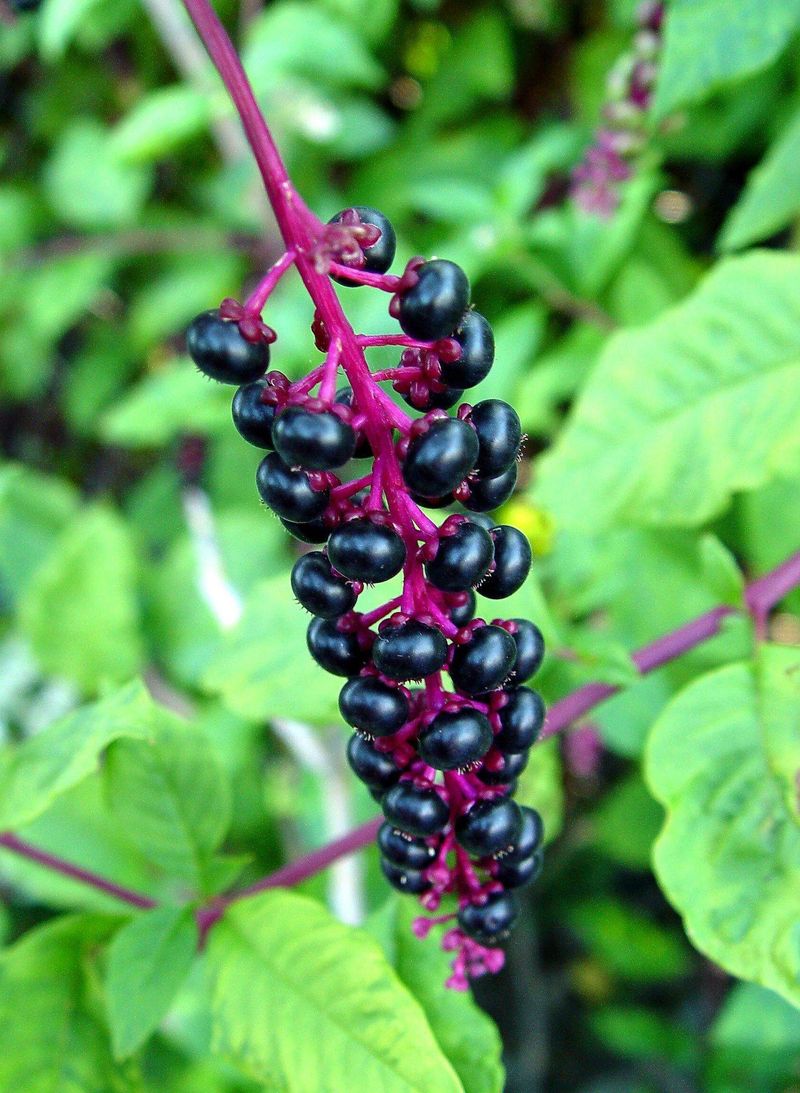
A five-year-old playing tag near the fence might spot a cluster of shiny purple berries hanging right at eye level. They look just like a bunch of grapes, and grabbing a handful takes only a second.
That grape-like look explains why pokeweed worries parents and pet owners. The berries are juicy, colorful, and easy to reach, and curious dogs may sample them, too.
National Capital Poison Center guidance notes that a child who eats one or two berries is unlikely to develop symptoms.
Eating several berries, however, can cause stomach pain, nausea, vomiting, and diarrhea. Larger amounts or other plant parts, especially the root, raise the risk.
Any swallowing of pokeweed by a person calls for a quick phone call to Poison Help.
The line is free, confidential, and answered by experts around the clock. A photo of the plant and an estimate of how much was eaten help the call go smoothly.
Pets need fast help as well. A veterinarian or animal poison control service can advise right away when a dog or cat chews on pokeweed.
Details like drooling, vomiting, or diarrhea help guide the response.
Prevention works better than panic. A simple family rule, with no berries from the yard eaten before an adult checks them, protects young kids.
A late-summer walk to remove low clusters near play areas helps, too. Fencing off a problem patch can buy time until the plant is gone.
Birds Eat The Berries And Spread The Seeds
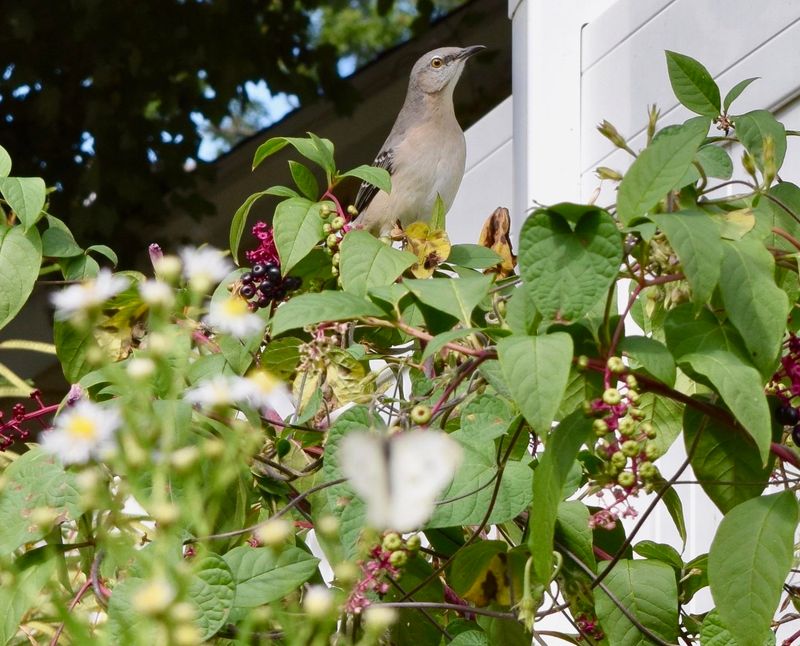
Pokeweed often appears in yards where nobody ever planted it. The answer usually sits on wires and fence tops overhead, where feathered neighbors act as unpaid gardeners.
Birds love pokeberries. Mockingbirds, robins, and many other species gobble them up in late summer and fall.
They eat the fruit with little harm, while the same berries would upset a human stomach. The seeds then pass right through.
Those seeds drop wherever the birds happen to rest. Fence lines, utility lines, tree edges, and wooded areas collect the most.
That explains why new pokeweed plants often line up neatly beneath a wire or along a backyard fence. The pattern makes a helpful clue for spotting seedlings.
Each plant can make a huge number of berries, and every berry holds several seeds. Those seeds are tough little travelers.
UC IPM notes that they can remain viable in soil for many years, waiting for the right moment to sprout. A single plant left alone can seed a problem that lasts a long time.
Disturbing the soil by tilling or digging a new bed may bring buried seeds to the surface. A fresh crop of seedlings often follows.
None of this makes birds the bad guys, since they’re simply snacking and sharing.
A spring check under perches, along fences, and beneath trees, with tiny seedlings pulled while they’re small, keeps gardeners a step ahead while still enjoying their winged visitors.
Dig Out The Taproot While Plants Are Small
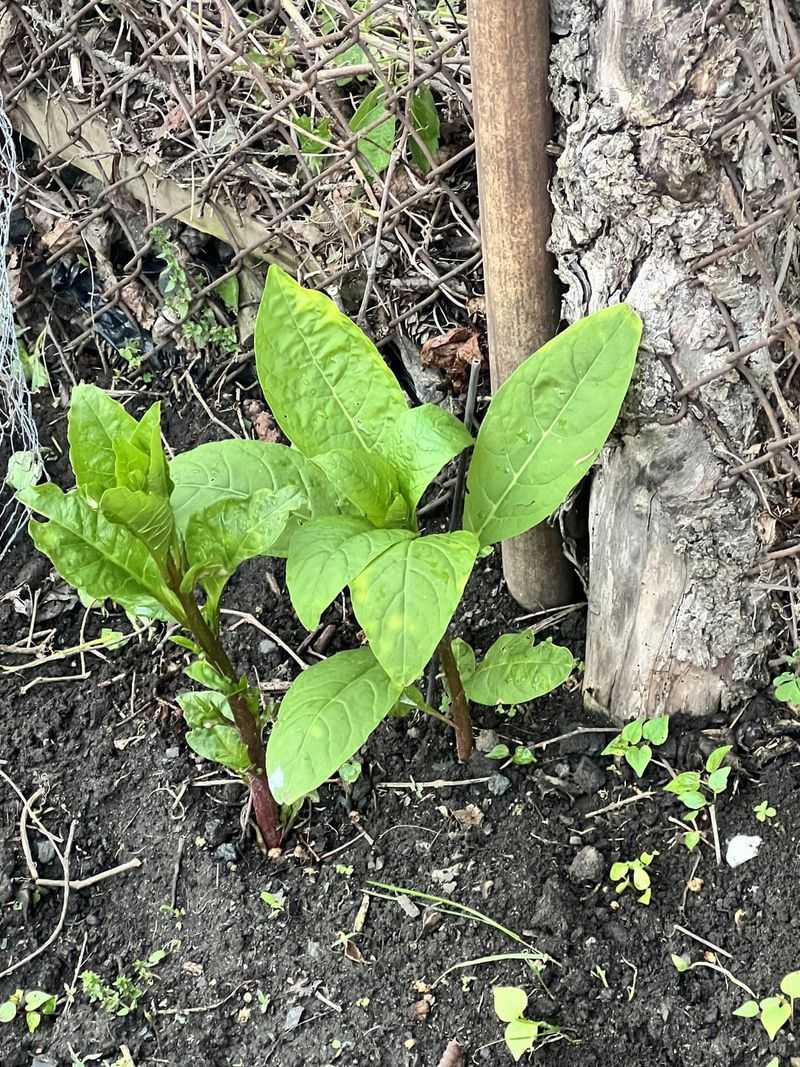
Spring serves as a secret weapon against pokeweed. Young plants stay short and soft, far easier to remove than summer giants, and a little effort now saves plenty of sweat later.
Protective gear comes first. Sturdy gloves, long sleeves, and long pants shield skin from the irritating sap, while eye protection helps when working near the face.
Washing hands and tools afterward finishes the job safely.
Tiny seedlings often pull right out of moist soil. A firm grip low, near the ground, and a gentle tug usually work.
Watering the area the day before loosens soil and makes the job smoother. Larger plants need more muscle.
A shovel or garden fork worked around the base lifts out the whole taproot. That thick, fleshy root can grow surprisingly deep and wide.
Big chunks left behind can send up new shoots, so thorough digging matters.
Vinegar or similar organic sprays tempt plenty of gardeners. UC IPM notes these only affect small seedlings, usually burning the leaves of established plants while the root stays healthy underground.
Large, stubborn plants may call for other options, and UC IPM guidance lists chemical choices. Anyone using them needs to follow label directions exactly and keep kids and pets away from treated areas.
Dug roots deserve careful handling, bagged right away so nobody mistakes them for a vegetable. A follow-up check a few weeks later catches any sneaky regrowth before it gains ground.
Cut Stalks Before Berries Ripen And Bag Them
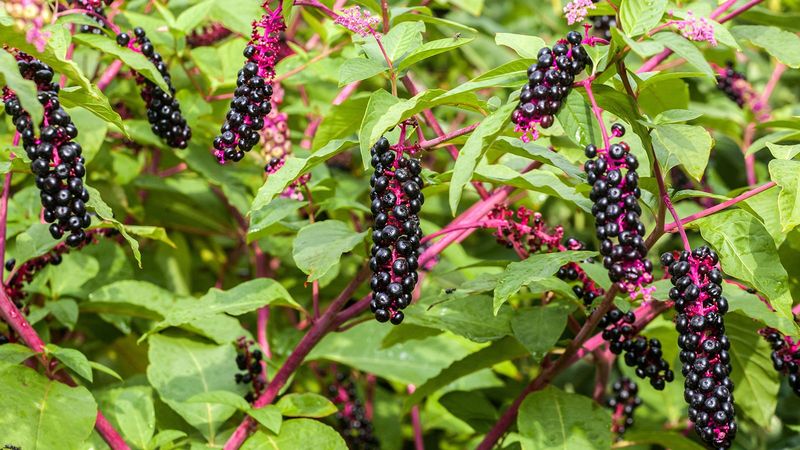
Green berries work like a ticking clock. Once they turn purple-black, birds swoop in and carry the seeds away, so early action stops next year’s crop before it starts.
Pokeweed plants deserve a check in early to midsummer. Flower stalks and clusters of hard green berries mark the target.
Pruning shears snip those stalks off neatly while the fruit stays unripe. Repeating the job every week or two keeps up with new clusters as they form.
Gloves and long sleeves stay on for this task, too. Ripe berries squish easily and leave stubborn purple stains.
A bag held open right under each cluster lets the fruit drop straight in. That simple trick keeps berries off the ground.
Disposal matters a great deal. Sealed bags in the trash or the city green waste bin handle the job well.
Home compost piles are best avoided for pokeweed berries. Backyard compost often doesn’t get hot enough to disable the seeds, which could spread pokeweed across garden beds.
Cutting berry stalks controls seeds without removing the plant itself. Digging out the taproot, ideally in spring while soil stays soft, completes the job, and combining both steps works best.
Seeds already in the soil can sprout for many seasons, so old spots deserve a note on the calendar.
A spring walk along fence lines to pull newcomers, done with patience and consistency, lets the yard finally say goodbye to its purple party crasher.