How To Keep California Tomatoes From Cracking During This Week’s Extreme Heat
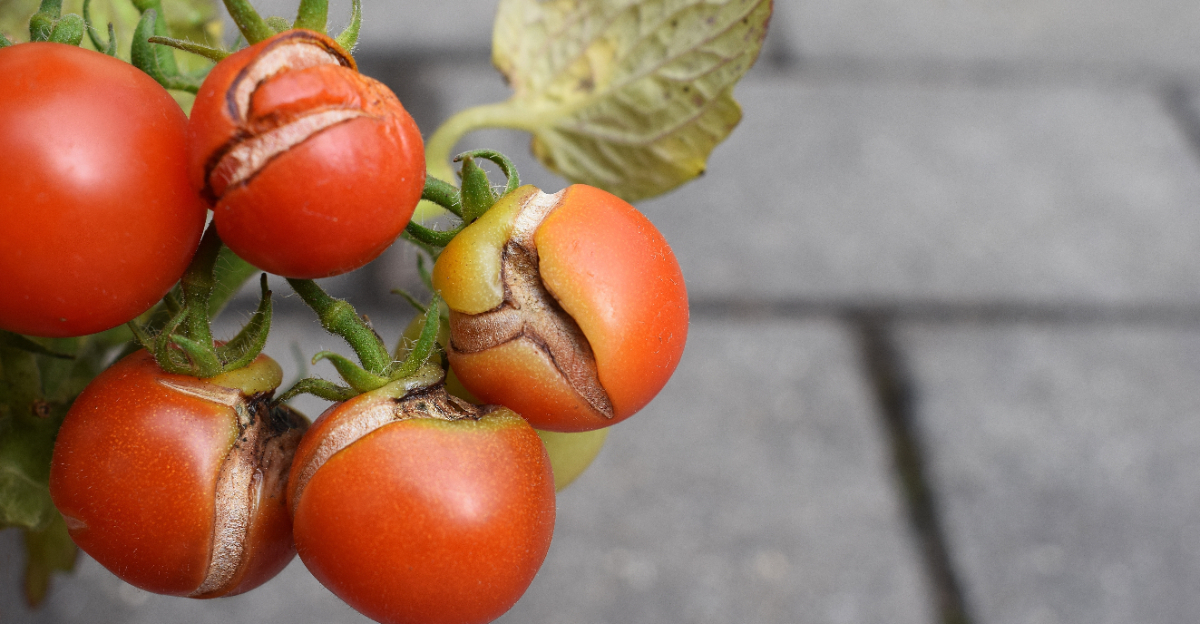
Extreme heat can make a nearly ripe tomato split just when it looks ready for picking. The damage often shows up after a sudden change in growing conditions, when the fruit takes in water faster than its skin can stretch.
California’s summer weather can make that balance especially difficult to manage, because hot soil dries quickly and irrigation habits often become less consistent during a heat wave.
Cracking does not always mean the plant is unhealthy, but it can shorten storage life and leave fruit more vulnerable once the skin opens.
The best prevention starts before the split appears. Paying attention to soil moisture, harvest timing, and how quickly the plant is rehydrated can help fruit develop more evenly through a hot spell.
A few adjustments this week may save the tomatoes that are closest to ripening.
1. Keeping Soil Moisture Steady Through The Heat
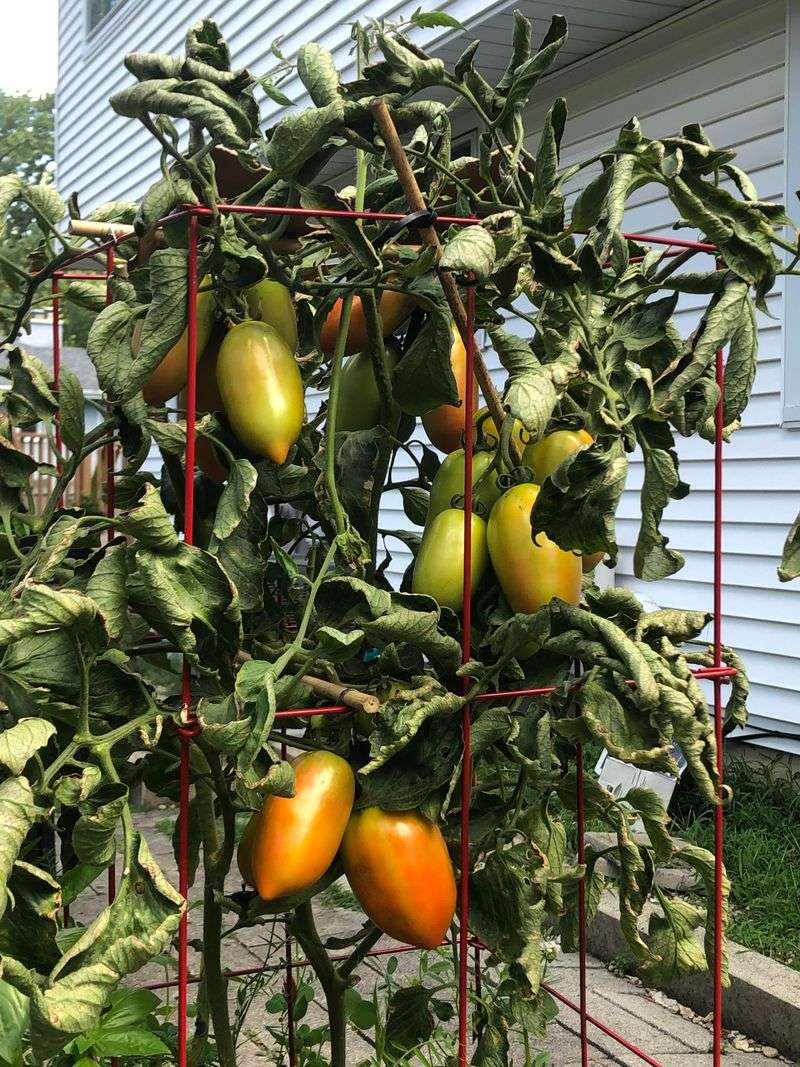
Steady soil moisture is the single most powerful thing you can do to stop tomatoes from cracking in hot weather. When the soil stays consistently moist, the fruit grows at a steady pace.
That even growth keeps the skin from splitting under pressure.
Think of it like blowing up a balloon slowly versus all at once. Slow and steady keeps everything in balance.
A sudden rush of water after dry soil causes the tomato to expand too fast inside, and the skin cannot keep up.
During a California heat wave, soil dries out much faster than usual. You may need to check moisture levels every single day instead of every few days.
Stick your finger about two inches into the soil. If it feels dry at that depth, it is time to water.
Try to water at the same time each day. Morning watering works best because the water soaks in before the hottest part of the day hits.
Evening watering is okay too, but wet leaves overnight can lead to fungal problems.
A simple soil moisture meter from a garden store can take the guesswork out of this. They are inexpensive and very easy to use.
Consistent moisture is not about overwatering. It is about keeping the soil from swinging between bone dry and soaking wet during these extreme temperature days.
2. Skipping The Bone-Dry To Soaked Roller Coaster
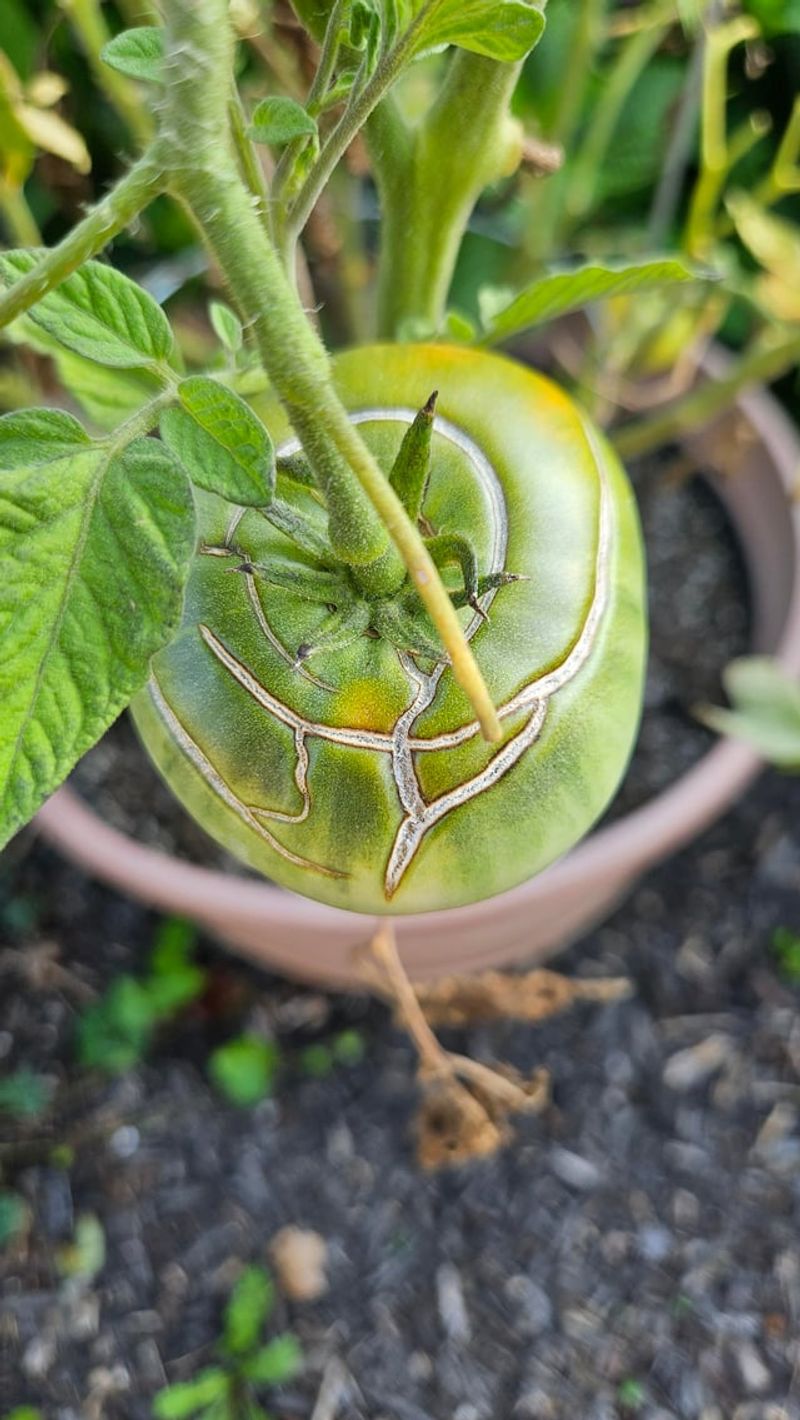
The classic mistake that leads to cracked tomatoes is letting the soil get completely dry and then flooding it with water. That cycle is hard on the fruit and almost always causes splitting.
Tomatoes cannot handle those wild swings. Hot weather speeds up that cycle. The sun bakes the soil dry faster, and gardeners sometimes overcompensate by dumping in too much water at once.
The tomato absorbs all that moisture quickly, swells up, and the skin gives out.
Breaking this cycle is easier than it sounds. The goal is to never let the soil get completely dry in the first place.
Check on your plants more often during a heat wave. Do not wait until the leaves are wilting to water.
Wilting is a sign you are already behind.
Your California Garden Changes Every Week. Your Plan Should Too.
Gardening in California changes quickly throughout the season. Every Friday you’ll receive a simple weekly plan showing exactly what to plant, prune, fertilize, harvest, and protect so you never miss the right timing.
If you have missed a watering and the soil is very dry, do not dump in a huge amount of water all at once. Add water slowly and in smaller amounts over a couple of hours if possible.
This gives the plant time to absorb it more gradually.
Drip irrigation systems are excellent for avoiding this problem because they release water slowly and consistently. Even a simple soaker hose can help smooth out those moisture swings.
Avoiding the dry-to-drenched roller coaster is one of the easiest ways to protect your fruit during a brutal heat stretch.
3. Watering Deep Before Tomatoes Start Splitting
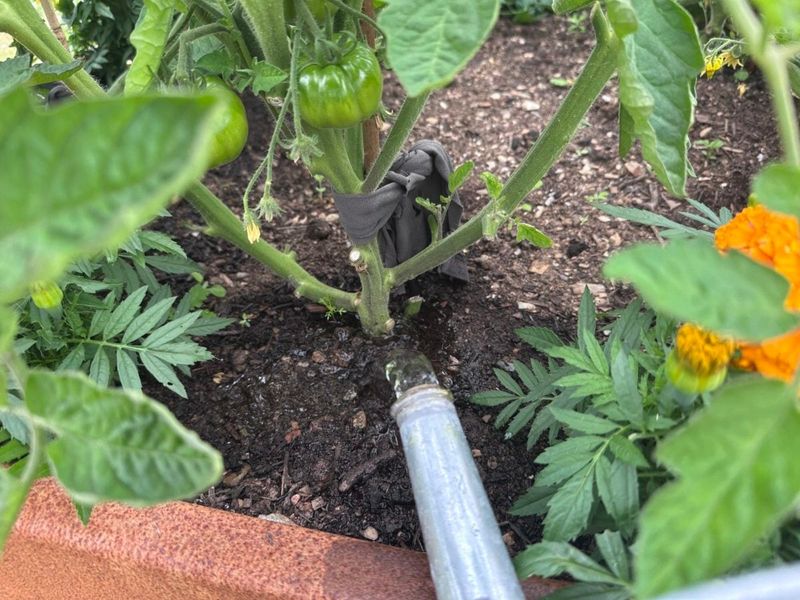
Deep watering encourages tomato roots to grow further down into the soil, where moisture stays more stable even on the hottest days. Shallow watering only wets the top layer, which dries out very quickly in extreme heat.
When roots are shallow, plants are more vulnerable to sudden moisture swings. Deep roots can access water that is stored lower in the soil, which helps keep the plant hydrated even between waterings.
That steady hydration is what keeps the fruit from swelling too fast and splitting.
To water deeply, let the water run slowly at the base of the plant for several minutes. You want the water to reach at least six to eight inches down into the soil.
A slow trickle for a longer period works much better than a quick heavy splash.
You can check how deep your water is reaching by digging a small hole near the plant after watering. If the soil is only wet at the top two inches, you need to water longer or more slowly next time.
Deep watering also reduces how often you need to water because the soil holds moisture longer at lower depths. During a heat wave, aim to deep water once a day in the morning.
Getting water down to the roots before the hottest part of the day gives your tomatoes the best chance of staying healthy and crack-free all week.
4. Mulching Before The Soil Bakes Hard
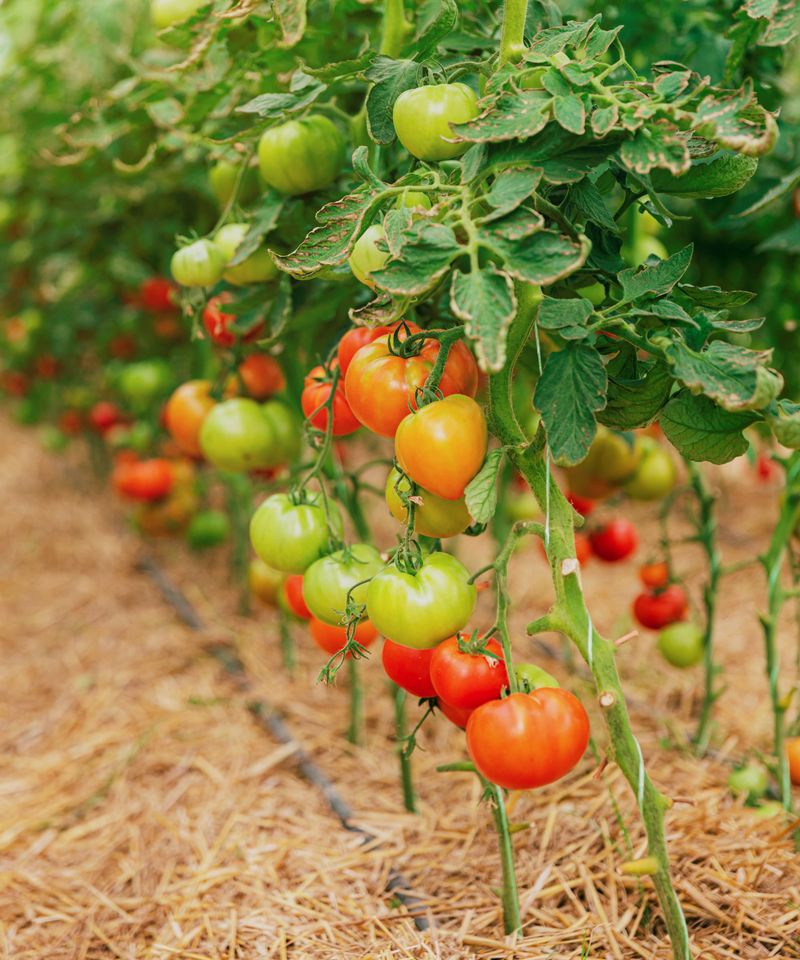
Mulch is like a protective blanket for your garden soil. It blocks the sun from hitting the soil directly, which keeps the ground cooler and slows down how fast moisture evaporates.
During extreme heat, that protection makes a huge difference.
Without mulch, soil can heat up dramatically on a hot afternoon. That heat pulls moisture out of the ground fast, leaving your tomato roots without a steady water supply.
Mulching keeps the soil temperature lower and more consistent throughout the day.
Straw is one of the best mulch options for tomato plants. It is light, easy to spread, and does a great job of holding in moisture.
Wood chips and shredded leaves also work well. Aim for a layer about three to four inches thick around each plant.
Keep the mulch a few inches away from the main stem of the plant. Mulch piled directly against the stem can trap too much moisture there and cause rot.
Spread it out in a wide circle instead, covering as much of the root zone as possible.
If you have not mulched yet, do it before the hottest days hit this week. Even a thin layer of mulch is better than bare soil.
Gardeners who mulch consistently tend to have far fewer problems with cracking because their soil moisture stays much steadier through temperature swings and heat spikes.
5. Picking Nearly Ripe Fruit Before A Big Drink
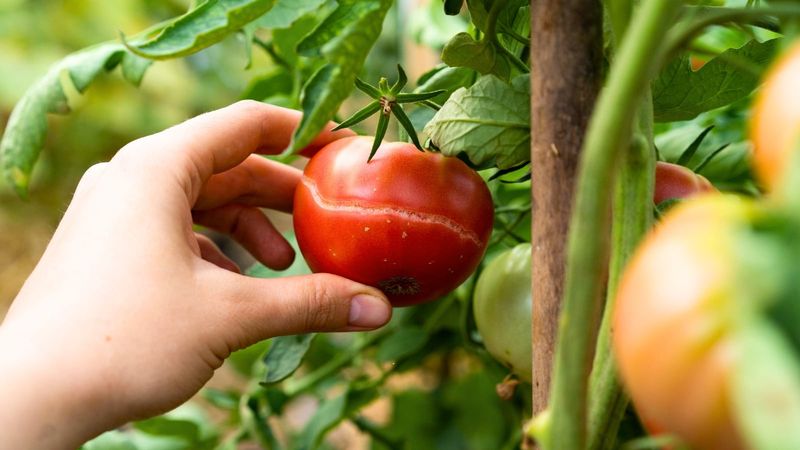
Here is a trick that many experienced California gardeners swear by: pick your tomatoes just before they reach full ripeness, especially when a big watering session or a rainstorm is coming. Fruit that is already mostly ripe is the most vulnerable to cracking.
Once a tomato is close to its final color, the skin has already stretched about as far as it can go. Any sudden rush of water at that point can push it right over the edge.
Picking it early and letting it ripen on your kitchen counter avoids that risk entirely.
Tomatoes ripen just fine off the vine as long as they have started to change color. A tomato that is turning orange or pink will finish ripening indoors within a few days.
The flavor is very close to vine-ripened, and you save the fruit from splitting in the field.
Check your plants before a predicted heat spike or before you do a heavy watering session. Look for any fruit that is more than halfway through its color change. Those are the ones to pull first.
This approach is especially helpful if you have been a little behind on watering and the soil is quite dry. Harvesting the most vulnerable fruit before adding a lot of water reduces your losses significantly.
A little early picking goes a long way during a rough heat week in the garden.
6. Avoiding Heavy Watering After A Dry Spell
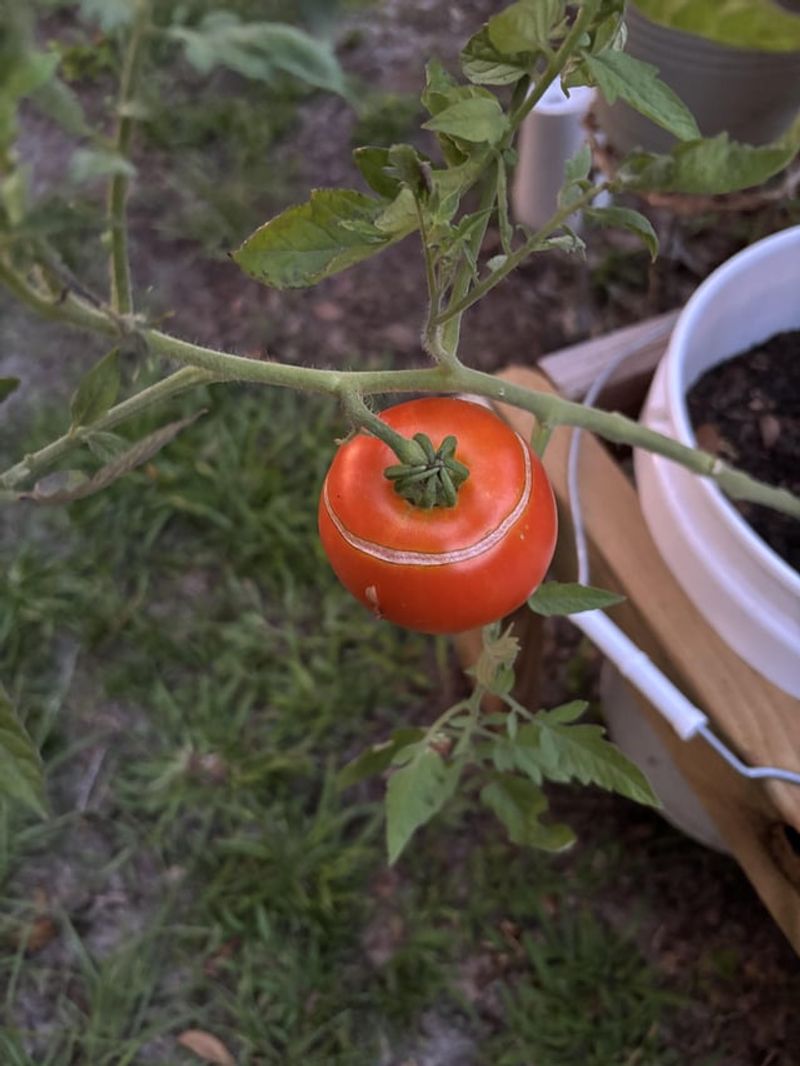
After a stretch of hot, dry days, it is very tempting to give your tomatoes a big, generous soaking to make up for lost time. That instinct is understandable, but it is exactly what causes cracking.
A sudden flood of water after dry soil is a recipe for split fruit.
The tomato plant absorbs water quickly when it has been thirsty. All that moisture rushes into the fruit, which swells rapidly.
The outer skin, already a bit stressed from the heat, cannot stretch fast enough and it tears. That is the crack you find the next morning.
Instead of one massive watering session, spread smaller amounts of water across a few hours or even a full day. If you have a drip system, turn it on at a low rate for an extended period.
If you are hand watering, water once in the morning, let it soak in, and water again lightly in the late afternoon.
The goal is to rehydrate the soil gradually rather than all at once. Think of it like giving a very thirsty person small sips of water instead of handing them a full pitcher.
Gradual rehydration is gentler on the plant and the fruit.
Being patient during dry recovery periods pays off. Gardeners who slow down their rewatering after a dry spell consistently see fewer cracks and healthier harvests, even during the most punishing summer heat weeks.
7. Checking Containers Twice On Brutal Days
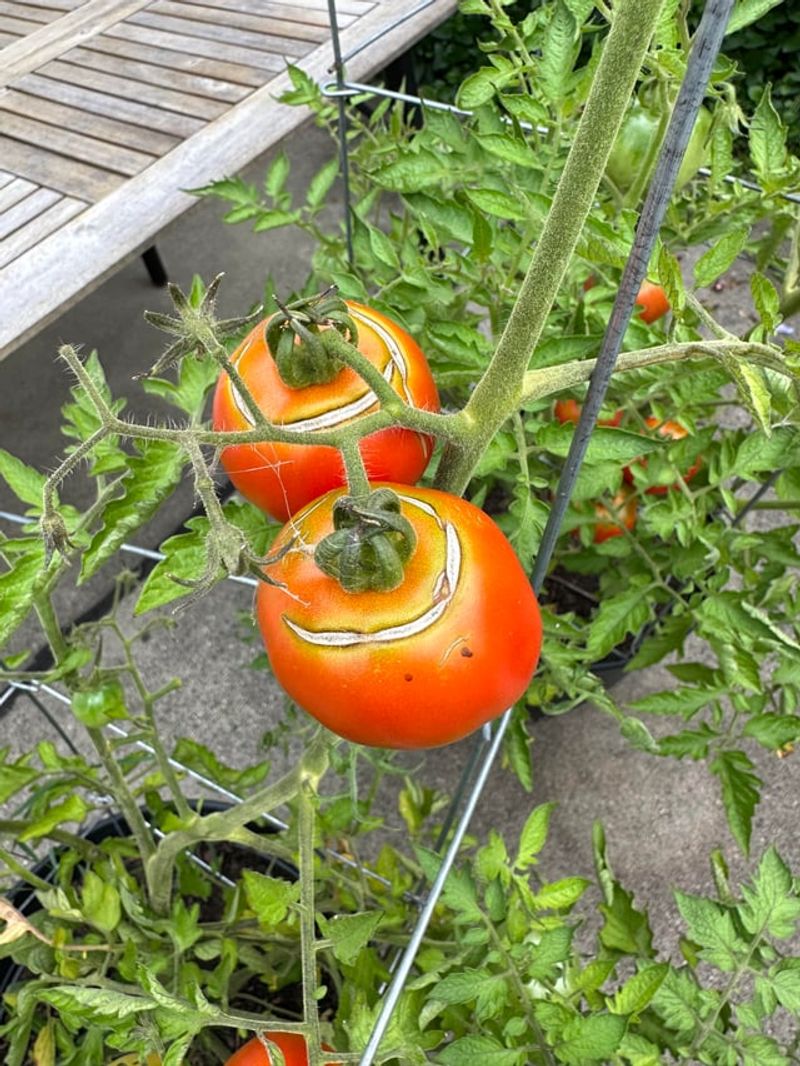
Container-grown tomatoes have a much harder time in extreme California heat than plants in the ground. Pots heat up fast, and they dry out much more quickly than garden beds.
On a brutal day, a container can go from moist to bone dry in just a few hours.
That rapid drying creates exactly the kind of moisture swing that causes cracking. The plant gets stressed from dryness, then when you finally water, it absorbs everything at once.
The fruit pays the price with splits and cracks. During a heat wave, check your container tomatoes at least twice a day. Once in the morning and once in the late afternoon is a good routine.
Stick your finger into the soil to feel for dryness. If the top inch or two is dry, add water right away.
Larger containers hold moisture longer than small ones. If you are using small pots, consider moving them to a slightly shadier spot during the hottest part of the afternoon.
Even an hour or two of afternoon shade can make a big difference in how quickly the soil dries out.
Light-colored pots absorb less heat than dark ones. If you have dark containers, wrapping them with a light-colored cloth or burlap can help keep the soil cooler.
Small adjustments like these can protect your container tomatoes through even the toughest heat stretches of the summer season.
8. Giving Roots A Slow Soak Instead Of A Flood
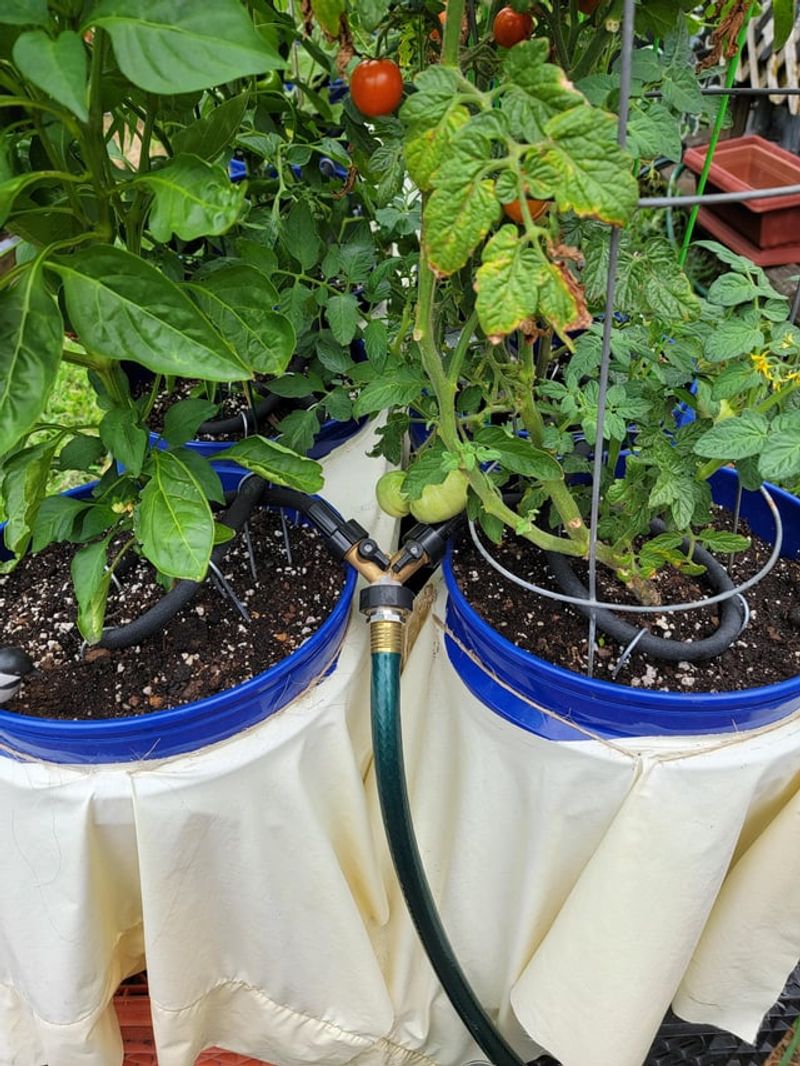
A soaker hose or a drip line is one of the best tools you can use during a heat wave. These systems release water slowly right at the root zone, which is exactly where tomato plants need it most.
Slow, steady moisture delivery keeps the soil hydrated without shocking the plant.
Flooding the base of a plant with a fast stream of water is less effective than it looks. A lot of that water runs off the surface or pools around the stem without actually reaching the deep roots.
Slow soaking gives water time to move down through the soil to where the roots are.
You can create a simple slow soak without any special equipment. Fill a five-gallon bucket with a small hole in the bottom and set it near the plant.
It will drip water slowly over an hour or two, giving the soil time to absorb it evenly.
Soaker hoses are inexpensive and widely available at garden centers. They are easy to set up and can be connected to a timer so your plants get watered automatically during the coolest part of the morning.
That kind of consistent, low-stress watering is the gold standard for preventing cracks.
Slow soaking also encourages roots to grow deeper, which makes plants more resilient during heat waves.
Deeper roots mean steadier moisture access, and steadier moisture means far fewer cracked tomatoes on the vine all season long.