Plant These Arizona Natives Along Your Wash This Fall And Keep Monsoon Runoff From Carving Your Yard
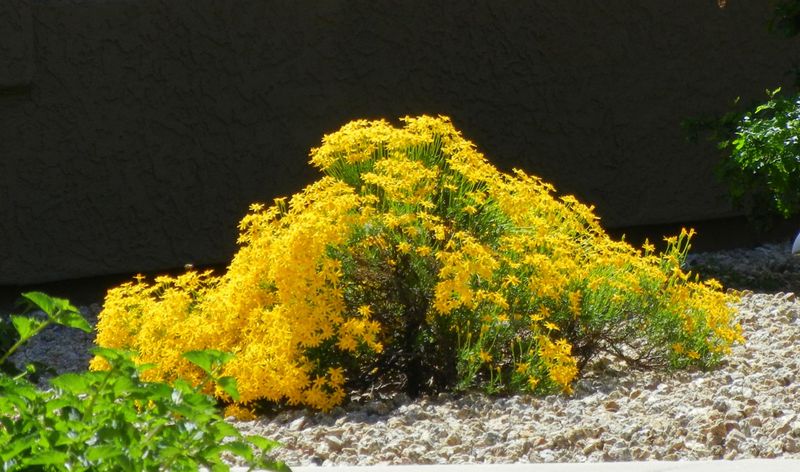
Every summer, monsoon storms dump a lot of water fast, and a backyard wash can turn into a muddy little river overnight. That rushing water can cut deep grooves, steal topsoil, and undermine paths and walls.
The good news is that the right native plants can hold soil in place with tough, deep roots while feeding birds, bees, and other helpful wildlife. Fall is the best time to plant them in the low desert, so now is your chance to get ahead of next year’s storms.
1. Alkali Sacaton
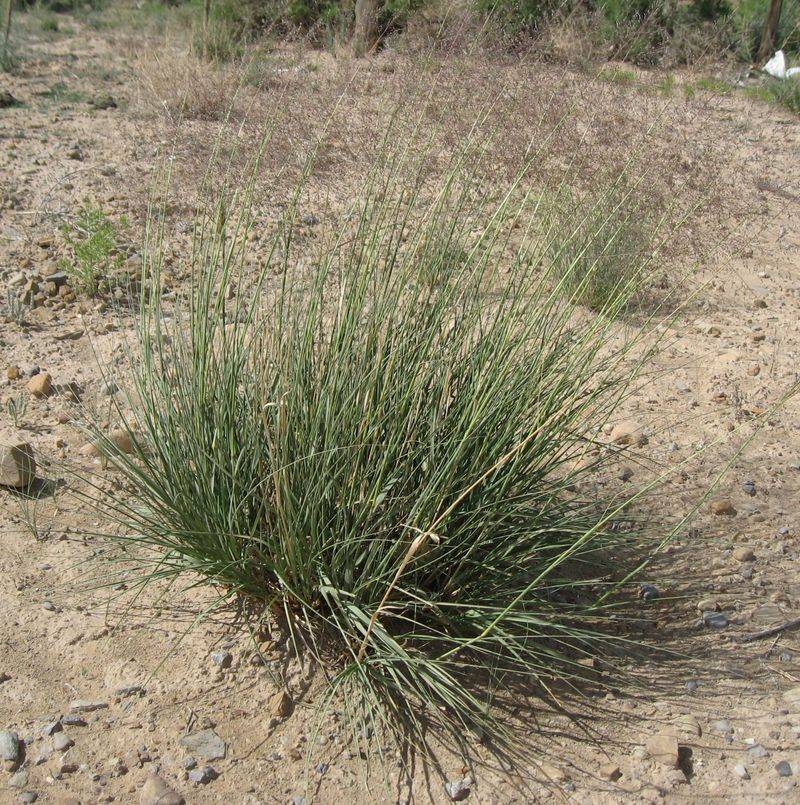
Picture a wild grass that laughs at floods and shrugs at salty, crusty soil. Alkali sacaton grows in big, dense clumps that can reach about three feet tall, and its fibrous roots spread wide and deep into the ground.
When monsoon water races through, those roots act like a net that keeps sand and silt from washing downstream.
Plant it right along the edges of your wash, where water hits hardest. It handles alkaline and caliche soils better than most grasses, which makes it a natural fit for Phoenix and Tucson yards.
Once settled in, it can get by on rainfall plus an occasional deep soak during long dry spells.
Wildlife loves it too. Quail and sparrows tend to forage for the seeds, and the thick base offers cover for small birds.
Lizards often hang out nearby, and they may help keep insect numbers in check.
Set plants about three feet apart in October or November, water deeply every week or so through winter, then taper off. Cut the clumps back to a few inches in late winter if they look shaggy, and fresh green blades will follow in spring.
2. Deer Grass
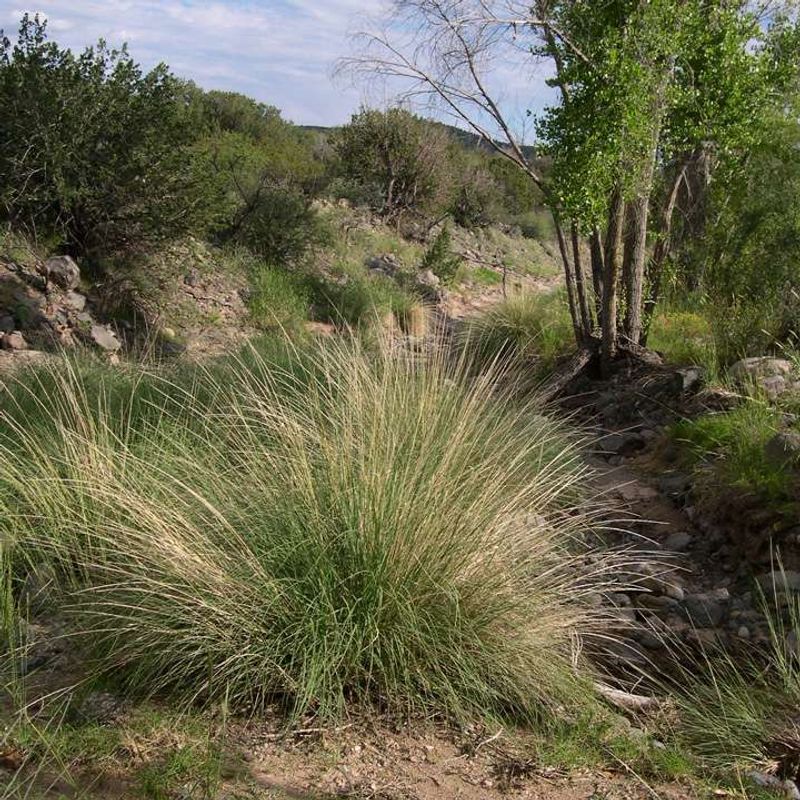
Ever watched a storm flatten a garden? Deer grass bends low under rushing water, then springs right back up once the flow passes.
Its graceful fountain shape hides a seriously stubborn root mass underneath.
Muhlenbergia rigens, as plant folks call it, is one of the toughest members of the muhly family. Mature clumps can spread four feet across, so a few plants go a long way toward lining a wash bank.
Water slows down as it pushes through all those blades, which means less scouring and more soaking into the ground.
Slow water is the real goal here. The more runoff that sinks in, the less damage it does and the more moisture your other plants get for free.
Birds use the dry leaves as nesting material in spring, and the tall seed spikes in fall attract finches. Small creatures find shade at the base during brutal summer afternoons.
Plant deer grass in fall from one or five gallon containers, spacing them four feet apart. Full sun is best, though it tolerates a bit of afternoon shade.
After the first year, a monthly deep drink in summer usually keeps it happy, and a hard trim every couple of winters refreshes the clump.
3. Desert Willow
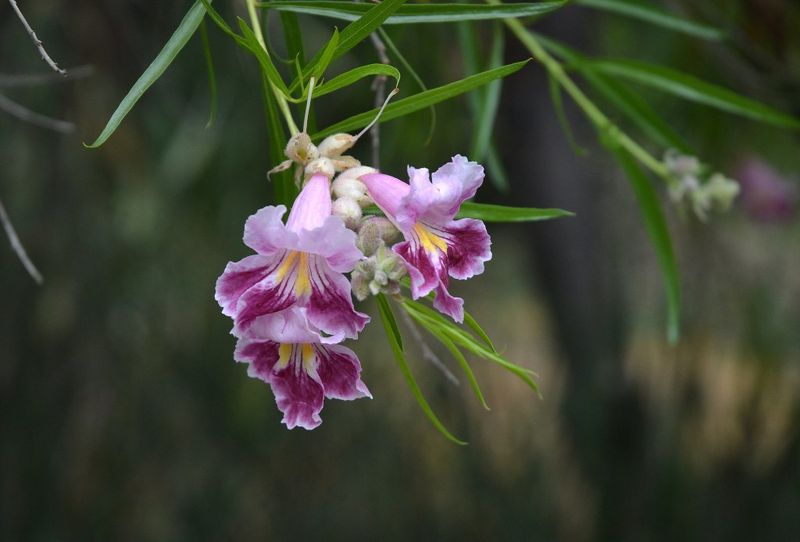
Nature already planted desert willow along Arizona washes long before any of us showed up. Drive past a dry creek bed outside Tucson and you will often spot these slender trees with orchid-like pink and purple blooms hugging the banks.
Your Arizona Garden Changes Every Week. Your Plan Should Too.
Gardening in Arizona changes quickly throughout the season. Every Friday you’ll receive a simple weekly plan showing exactly what to plant, prune, fertilize, harvest, and protect so you never miss the right timing.
Despite the name, it is not a true willow. Chilopsis linearis is related to catalpas, and it earned its nickname from those long, narrow leaves.
Its roots dig deep toward underground moisture, anchoring wash banks against even heavy monsoon flows.
Here is where it really pulls its weight. Hummingbirds zip between the trumpet flowers from late spring into fall, and native bees crowd in for nectar.
You also get light, filtered shade that cools a patio or path without blocking all the winter sun, since the tree drops its leaves when it gets cold.
Plant it in fall on the higher edge of the wash, not in the deepest channel. Give it deep weekly water the first summer, then stretch that out to every two to three weeks.
Trees reach about 15 to 25 feet tall, and pruning lower limbs in winter creates a nice canopy shape. Seedless varieties like Bubba or Timeless Beauty skip the messy pods.
4. Blue Palo Verde
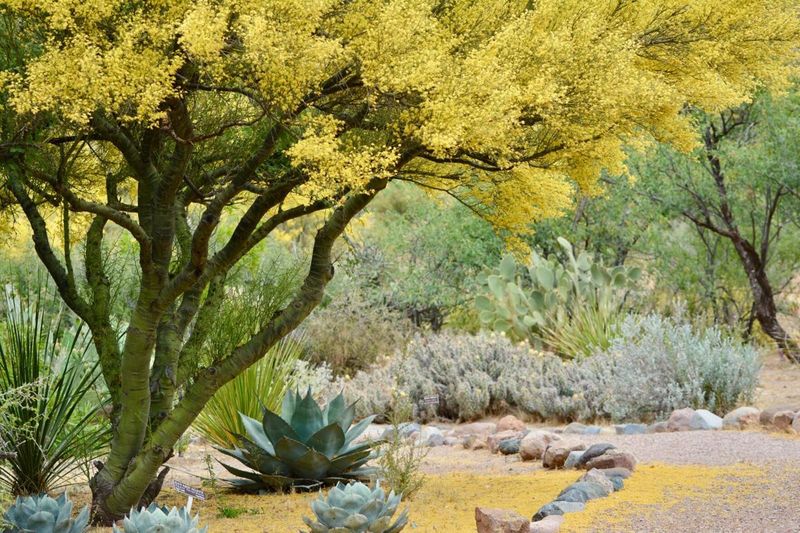
Green bark is the giveaway. Blue palo verde can actually make food through its trunk and branches, so it keeps working even after dropping its tiny leaves during drought.
Arizona’s state tree is right at home near washes. In the wild, blue palo verde grows along desert drainages where runoff collects after storms.
Its wide, spreading root system grips soil across a big area, helping protect wash banks and nearby slopes from washing away.
Shade is the bonus everyone notices. When it hits 110 degrees in July, a mature palo verde casts a cool patch where you, your dog, and a family of Gambel’s quail can all escape the sun.
Each spring the tree explodes in yellow flowers that bring in carpenter bees, native bees, and plenty of birds.
Bats and nighttime insect eaters often roam areas with rich native trees, which may help reduce mosquito numbers around your yard. Results vary, but more habitat usually means more helpers.
Plant in fall, set back a few feet from the channel center. Water deeply every week through the first year, then only during long dry stretches.
Choose a thornless hybrid like Desert Museum if kids play nearby.
5. Fairy Duster
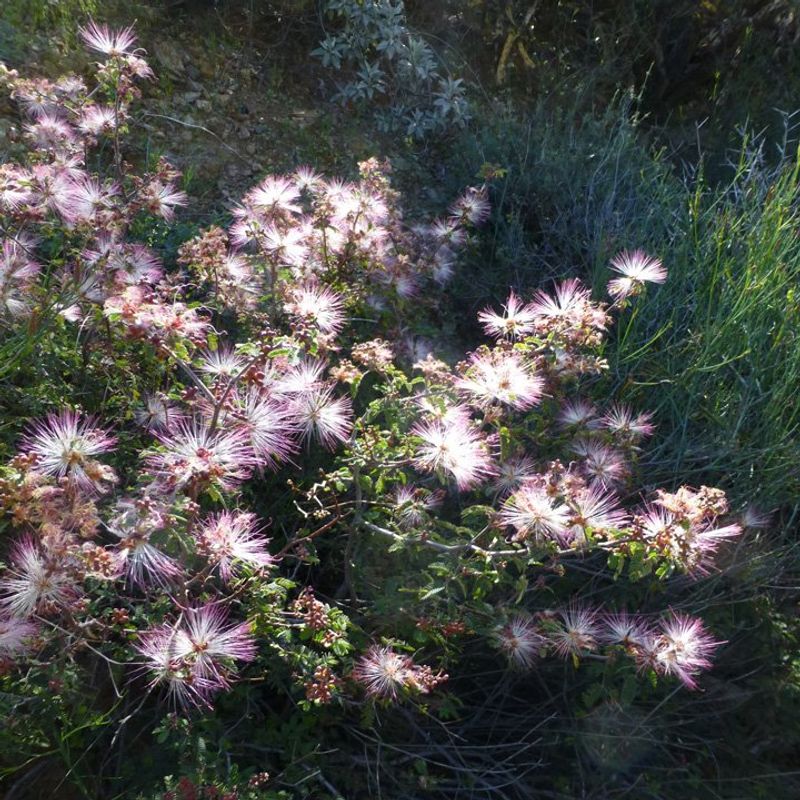
Tiny pink puffballs that look like a party exploded in your yard? That would be fairy duster, and hummingbirds go wild for it.
Calliandra eriophylla stays low, usually one to three feet tall, which makes it perfect for wash edges and sloped banks. Its roots spread through loose, rocky soil and help lock it down when stormwater rolls past.
Plant a cluster of five or six and you create a living border that keeps gravel and dirt in place.
Hummingbirds are the headliners here. They visit the feathery blooms from late winter into spring, and often again after monsoon rains bring a second flush.
Native bees and butterflies stop by as well, so this little shrub punches well above its size in pollinator value.
Fun fact: those fluffy pom-poms are not petals at all. They are clusters of long pink stamens that brush pollen onto visiting birds.
Fairy duster loves full sun and well-drained soil, so skip spots where water pools for days. Fall planting gives it time to root before summer heat.
Water twice a week at first, then cut way back once it is established. Quail and rabbits may nibble young plants, so a small wire cage helps the first season.
6. Desert Globemallow
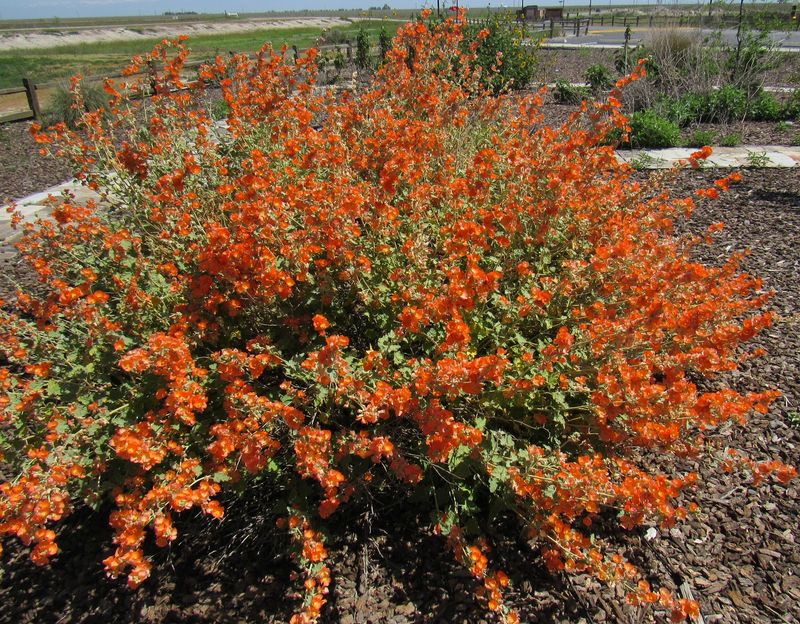
Bright orange cups popping up on bare, rocky ground often mark one of the desert’s best fixers. Desert globemallow moves into disturbed soil fast, and that is exactly what a wash bank needs after a rough monsoon.
Sphaeralcea ambigua grows quickly into a mounding shrub about three feet tall and wide. Its taproot reaches down while side roots knit the top layer of soil together.
It handles poor, rocky, and alkaline ground without any fuss, and it reseeds itself into nearby gaps.
That reseeding is a gift on a wash. New seedlings fill bare patches where runoff might otherwise carve fresh channels.
Native bees are big fans, especially specialist bees called globemallow bees that depend on this plant. Butterflies and small beetles visit too, turning the shrub into a busy pollinator stop from late winter through spring.
Plant in October or November in full sun, and water every few days until new growth shows. After that, it barely needs anything from you.
Prune it back by about a third after spring bloom to keep it tidy. Flowers also come in pink, red, and lavender if orange clashes with your house.
7. Lemon Dalea
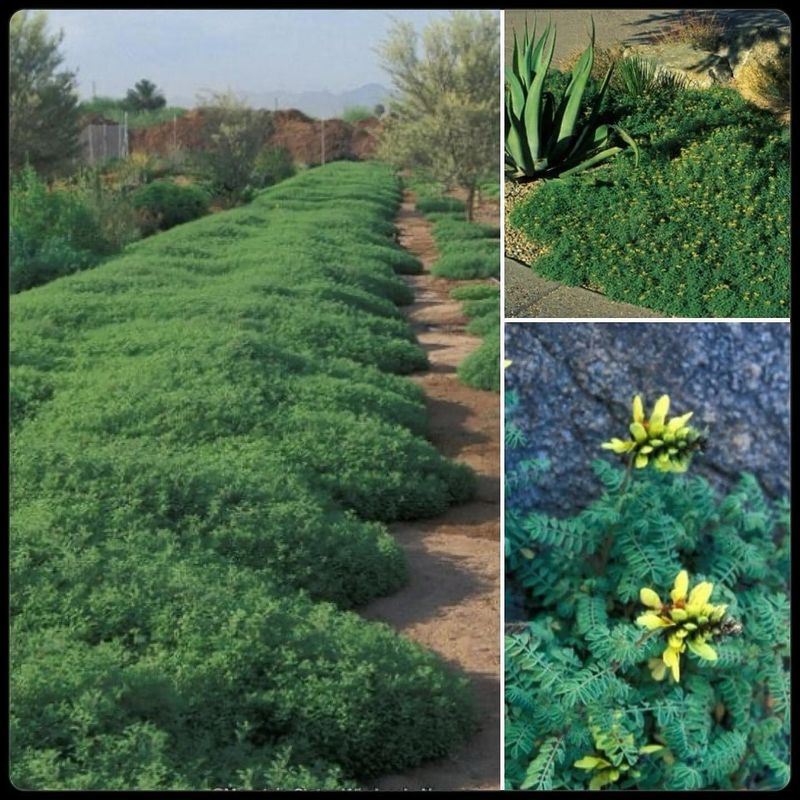
Brush your hand across lemon dalea and you will catch a bright, citrusy scent. Gardeners love that aroma, and some find that strongly scented plants near patios can make the area feel less inviting to certain bugs.
Dalea capitata spreads low and wide, often eight inches tall and up to three feet across. That flat, carpet-like growth covers bare dirt on gentle slopes leading into your wash.
Raindrops hit leaves instead of soil, which cuts down on splash erosion and small rills forming before water even reaches the channel.
Covering bare ground matters more than most people think. Every patch of exposed dirt is a spot where a monsoon can start digging.
In fall, the plant covers itself in small yellow flowers that bees visit eagerly. The fine, feathery foliage stays evergreen in mild winters, so your slope looks finished year-round.
Space plants about three feet apart and let them grow together. Fall planting works beautifully, with water every few days at first, then once a week through winter.
It tolerates reflected heat near walls and driveways. A light shearing in late winter keeps it dense and fresh.
8. Damianita
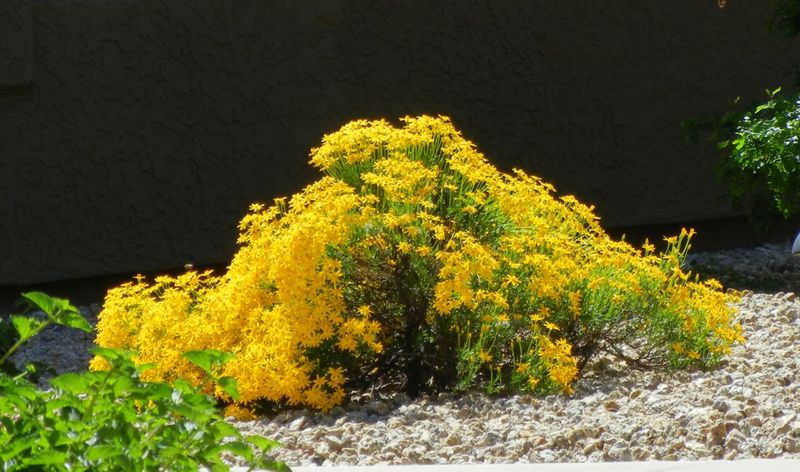
Some plants whisper. Damianita shouts, smothering itself in golden daisy-like blooms each spring until you can barely see the leaves.
Chrysactinia mexicana forms tight little mounds about 18 inches tall and three feet wide. That compact size makes it a smart pick for the upper edges of a wash, where you want color and soil protection without blocking the flow of water.
The needle-like foliage is evergreen, so the ground stays covered all year.
Leaves give off a resinous, piney scent when crushed. Rabbits and javelina tend to leave it alone, which is a relief if hungry critters have wiped out other plantings.
Butterflies and small native bees gather on the flowers, and a second round of blooms sometimes shows up after late summer storms. It is a cheerful way to bring life back to a bare wash bank.
Drainage is the one rule. Damianita hates soggy roots, so tuck it into rocky, fast-draining soil above the high-water line rather than in the channel bottom.
Plant in fall, water lightly once or twice a week until it settles, then reduce. Avoid fertilizer completely, since rich soil makes it floppy and short-lived.
9. Parry’s Agave
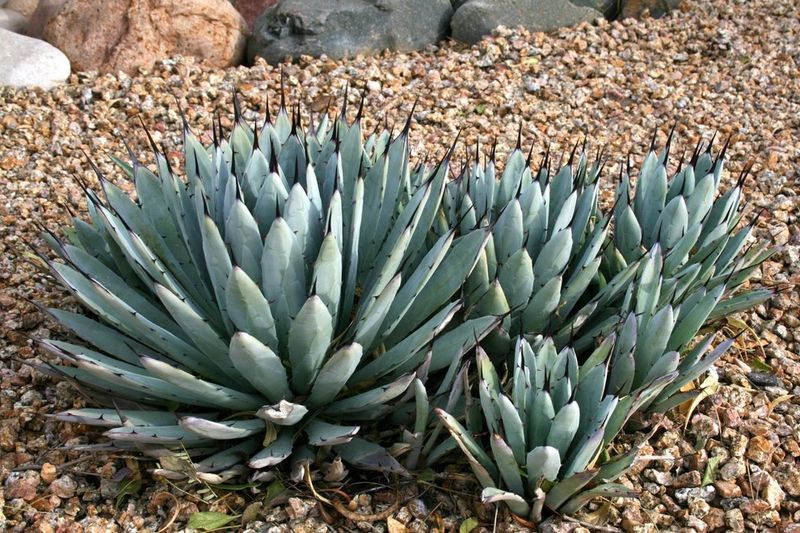
Planted in a group, Parry’s agave works like a row of natural sandbags with personality. Each silvery rosette stays about two feet across, and together they guard slopes where water likes to cut corners.
Agave parryi is tough enough to handle blazing summer sun, winter frost, and thin, rocky soil. Its shallow but wide roots grab the top layer of ground, holding it firm when runoff sheets across a bank.
Many plants also send out pups, slowly filling space and strengthening the soil hold.
Wondering about wildlife? After many years, the plant sends up a towering flower stalk loaded with yellow blooms.
Bats, hummingbirds, and orioles visit for nectar, and nectar-feeding bats are a special treat for desert yards. After blooming, the main rosette fades while its pups carry on.
Place agaves on the upper bank and around large rocks, away from walkways, since those leaf tips are sharp. Fall and late winter are ideal planting times.
Set them slightly high so water drains away from the crown, water every couple of weeks the first season, then mostly leave them alone. Add boulders between plants for extra erosion protection.
10. Desert Marigold
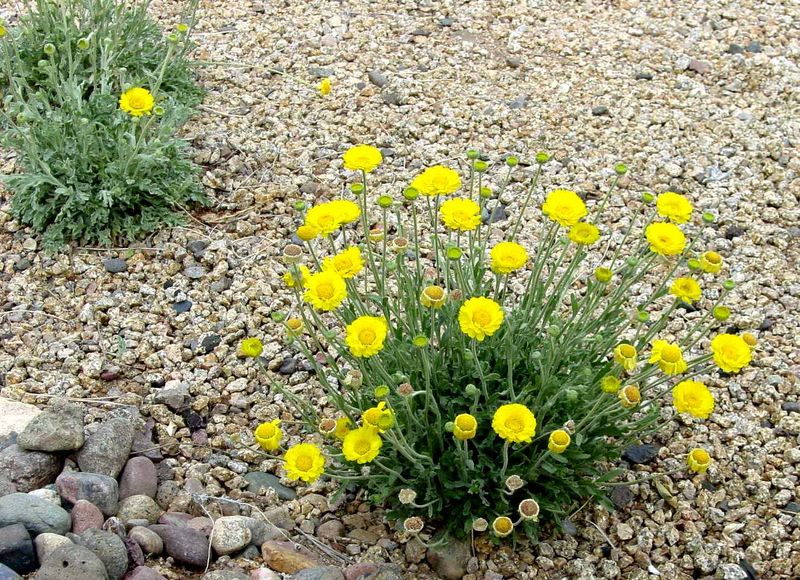
Think of desert marigold as the gap filler that never takes a vacation. Bright yellow flowers show up almost year-round in the low desert, and new plants pop up wherever seeds land.
Baileya multiradiata stays small, around a foot tall and wide, with soft gray-green leaves. Scattered between grasses, shrubs, and boulders, it covers little bare spots that would otherwise invite erosion.
The seeds tend to settle right where water slows, so it naturally fills the areas that need help most.
Pollinators adore it. Native bees, butterflies, and tiny wasps visit constantly, and finches nibble the seeds once flowers dry.
A healthy mix of beneficial insects can help keep garden pests in balance, giving your yard a more natural defense.
Got a mix of plants from this list? Desert marigold ties them all together, adding steady color while the grasses and trees do the heavy lifting.
Scatter seeds or plant small starts in fall, right before cooler weather and winter rains. Water lightly until seedlings take hold, then let nature mostly handle it.
Avoid overwatering, which shortens its life. Leave a few spent flowers so the plant can reseed, and your wash will stay covered for years.