This Striped Night Visitor Is One Georgia Homeowners Should Give Plenty Of Space
Small, cone-shaped holes scattered across the lawn some mornings can point to a visitor that shows up after dark.
Its black and white stripes are easy to recognize, but plenty of homeowners never actually see it. Most of its digging for grubs happens late at night.
Fall tends to bring more of that activity, since the animal is building reserves before winter.
Surprising one near the porch or trash cans is a common way for a Georgia evening to go wrong.
Spraying is its main defense, and it usually gives a warning first by stamping its feet or raising its tail. Keeping your distance from then on protects you and your pets.
Some situations call for more than distance, and knowing which ones can keep an encounter from turning serious.
1. A Bold Black-And-White Coat Is Meant As A Warning
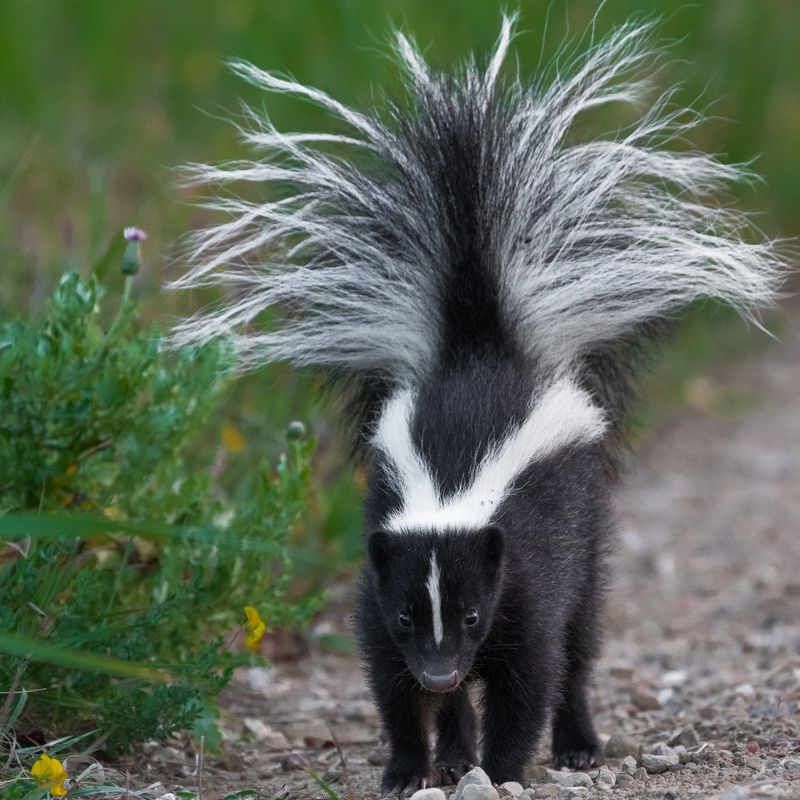
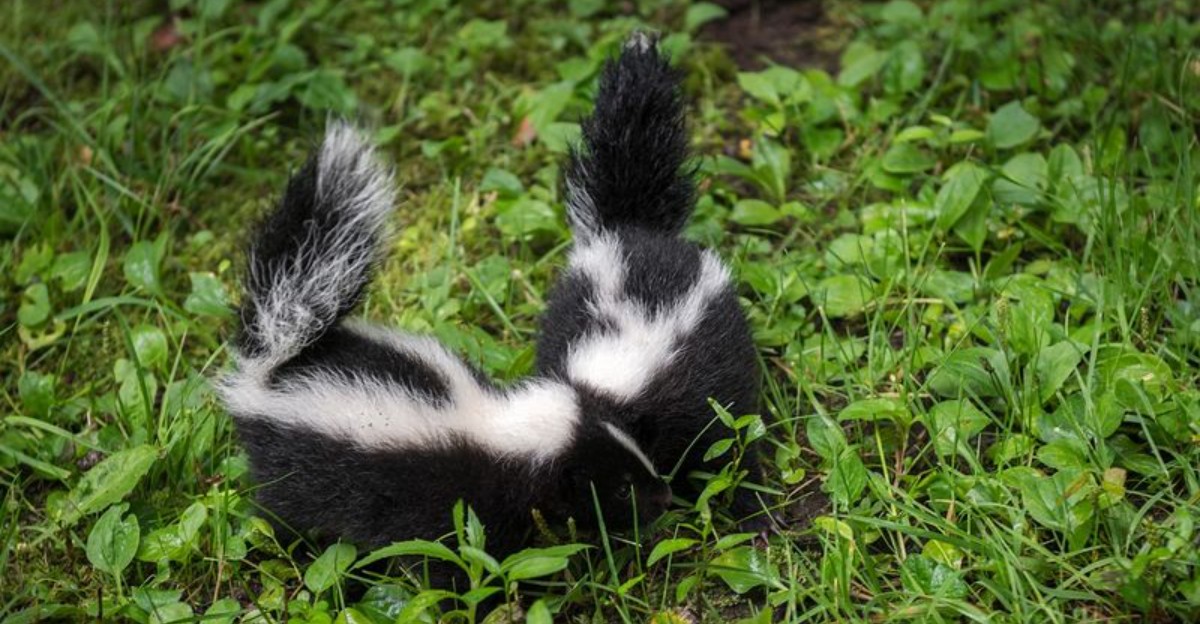
Nature rarely hands out a clearer message than those bright white stripes. Bold colors on a striped skunk, Mephitis mephitis, help signal to other animals that it carries a smelly defense.
You can find this species in nearly every county across Georgia, from mountain foothills to coastal neighborhoods.
Each skunk wears a slightly different pattern, though most show two white stripes running down the back. Some have wide stripes, while others look mostly black with only thin white lines.
Predators that have been sprayed once tend to remember the look and steer clear afterward.
Size is another clue worth knowing. Adults are roughly the size of a house cat, with a small head and a big fluffy tail that often looks larger than the body.
Spotting one in your yard is not automatically a problem, since skunks often pass through while searching for food.
A calm, slow retreat is usually your best move when you notice that striking coat. Backing away quietly gives the animal room to keep walking and lowers the chance it feels cornered.
Flashlights help when you take out the trash or let the dog out after sunset. A quick sweep of the yard lets you spot black and white shapes before you walk right into one.
Treat that coat as a polite sign asking for personal space.
2. Small Holes In The Lawn Often Mean Grub Hunting Overnight
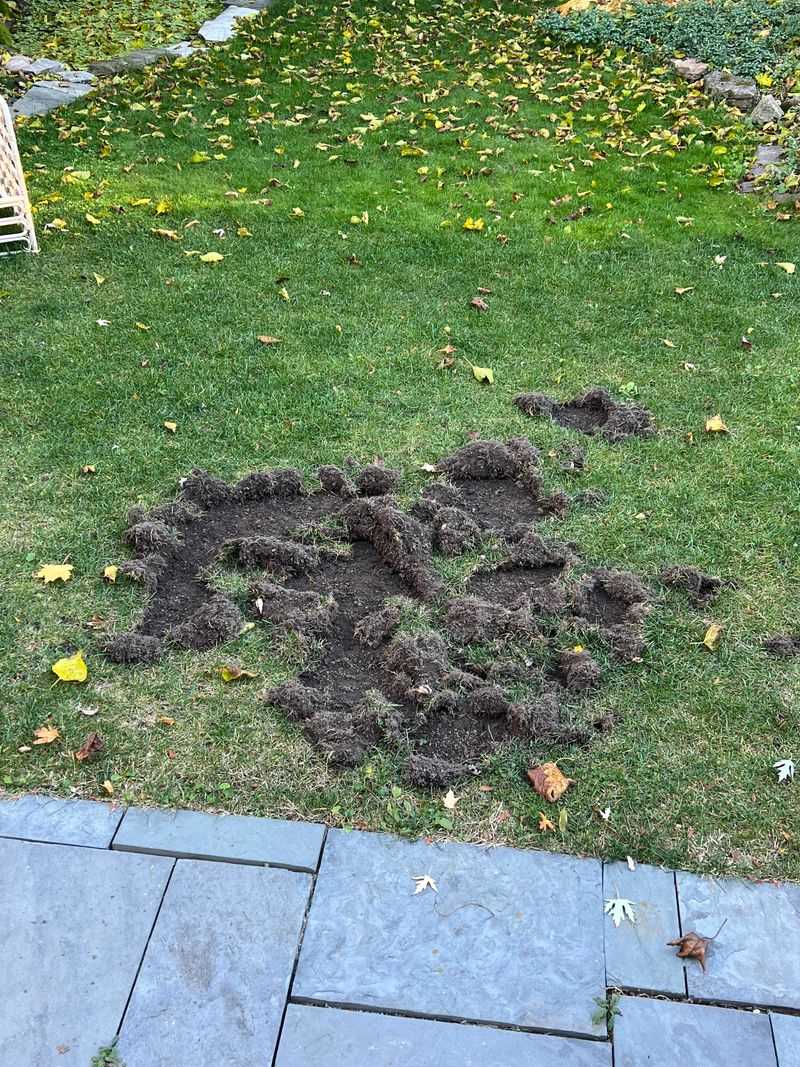
Woke up to tiny holes scattered across the grass? A skunk may have spent the night digging for grubs and beetle larvae under your turf.
Holes tend to be shallow, small, and roughly cone shaped, often a few inches wide.
Skunks use their front claws and sharp noses to find insects close to the surface. In Georgia, digging often picks up in late summer and fall, when many grubs feed near the roots.
Damage usually looks worse than it is, and grass often fills in again with regular care.
A grub problem is often the real reason skunks keep coming back. You can check by cutting a small square of turf and peeling it back to look for white, C-shaped larvae.
Finding several grubs in one spot may mean your lawn is an easy buffet for night visitors.
Your Georgia Garden Changes Every Week. Your Plan Should Too.
Gardening in Georgia changes quickly throughout the season. Every Friday you’ll receive a simple weekly plan showing exactly what to plant, prune, fertilize, harvest, and protect so you never miss the right timing.
Treating grubs can reduce digging over time, though results depend on soil, timing, and the product used. A local extension office can help you pick a method that fits your yard and season.
Watering less often may also help a little, since moist soil can draw grubs closer to the surface.
Raccoons and armadillos dig too, so tracks or other signs can help you sort out who caused the damage.
3. Foot Stomping And A Raised Tail Come Before The Spray
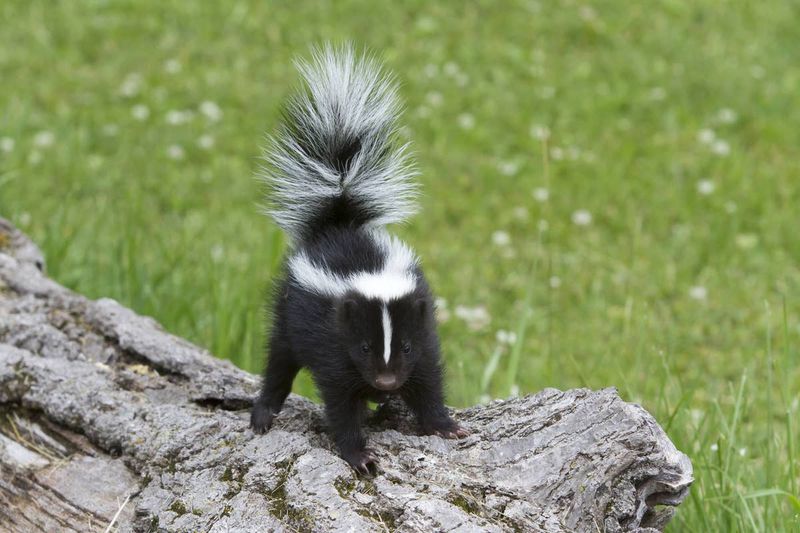
Skunks would rather bluff than spray. Their scent supply takes time to refill, so they usually try other warnings first.
Watch for stomping front feet, which can sound like soft patting on the ground.
Some skunks also hiss, charge a few steps forward, or click their teeth. A raised tail is a strong sign that the animal is getting serious about defending itself.
At that moment, slowly backing away matters more than anything else you do.
Spraying often happens when the skunk twists its body into a U shape, so both its face and rear point toward the threat. If you see that curve, you are already much too close.
Avoid sudden movements, yelling, or throwing things, because those actions can push a nervous skunk over the edge.
Dogs ignore these signals far too often. Keeping pets on a leash during evening walks in Georgia neighborhoods helps you pull them away before a standoff turns smelly.
Young skunks may spray with less warning, since they are still learning how to handle danger.
Teaching kids about these signs is smart too. A simple rule like walk away when you see stomping is easy for young children to remember and follow.
4. That Spray Can Reach Farther Than Many People Expect
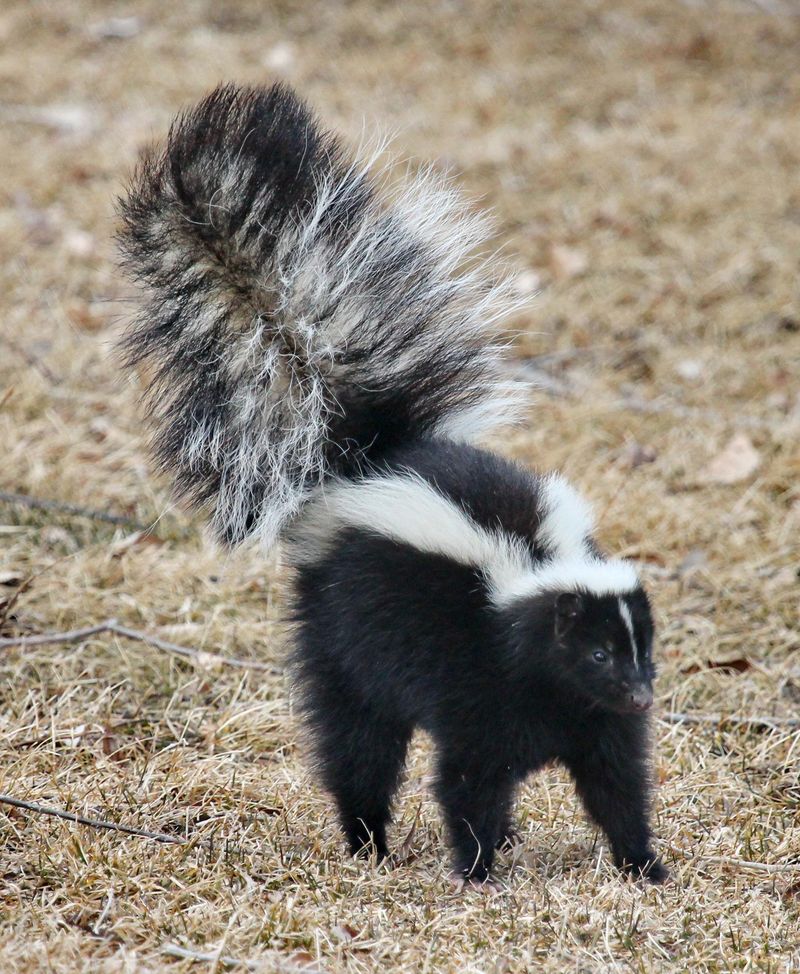
Ten feet might feel like a safe gap, yet it often is not. A striped skunk can aim its spray several feet with good accuracy, and some sources report reaches of 10 feet or more.
Exact range depends on wind, the skunk’s size, and how threatened it feels.
Spray comes from two glands under the tail, and the animal can direct it fairly well. Eyes are a common target, which is why a direct hit to the face can sting and cause watery, burning eyes.
If spray gets in someone’s eyes, rinse them with cool water for several minutes and call a doctor if the pain continues.
Smell travels even farther than the liquid. On a still, humid Georgia evening, you might notice the odor from a long way off, sometimes even indoors.
Giving extra space is the safest choice, especially in tight places like sheds, garages, or under decks.
Cornered skunks have fewer escape routes and may spray sooner. Leave a clear path open so the animal can leave without passing near you or your pets.
Patience pays off here, since most skunks will wander away on their own once things calm down.
5. Unusual Daytime Behavior Is A Reason To Keep Your Distance
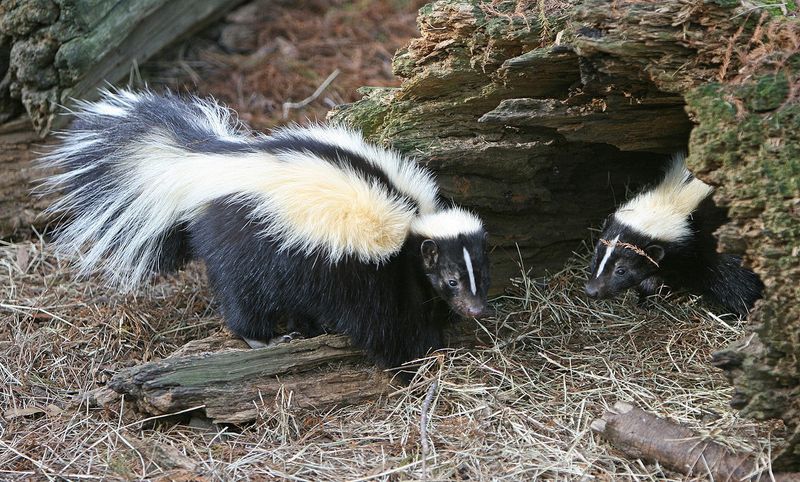
Daylight sightings are not automatically a red flag. Mother skunks sometimes forage during the day in spring, and a hungry skunk may also be out early.
Behavior matters far more than the time on the clock.
Skunks are one of the animals that can carry rabies, a serious virus spread mainly through bites. Signs that something may be wrong include stumbling, circling, odd boldness, or seeming confused.
A skunk walking toward people or pets without fear deserves extra caution.
Never try to feed, catch, or handle a skunk that is acting strangely. Keep children and pets indoors and watch from a window if you need to track where it goes.
In Georgia, your county animal control office or the Georgia Department of Natural Resources can give advice on next steps.
Keeping dogs and cats current on rabies shots adds a strong layer of protection. Check with your veterinarian if you are unsure about your pet’s vaccine schedule.
If a person or pet is bitten or scratched, wash the wound with soap and water right away.
Calling a doctor or vet quickly after any bite is the wise move, even if the wound looks minor.
6. Pets That Get Sprayed Need A Special Wash, Not Tomato Juice
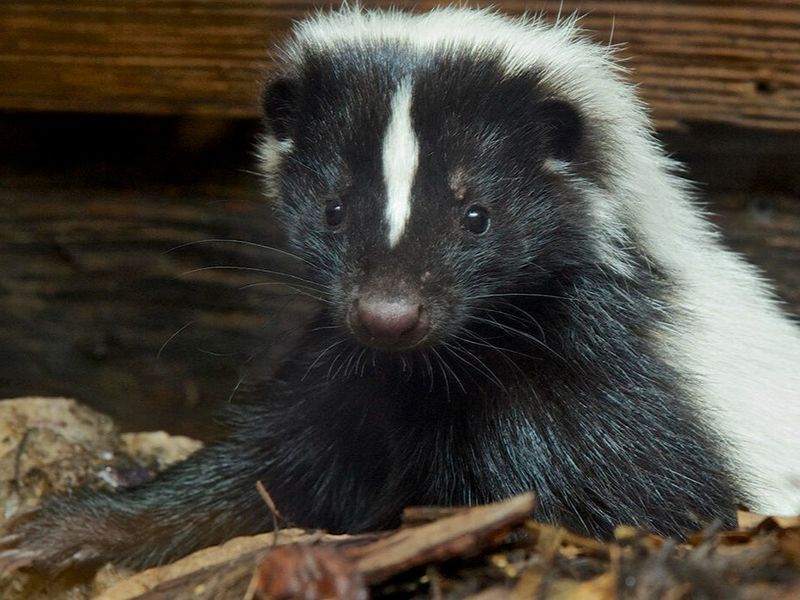
Tomato juice is an old trick that mostly just covers the smell for a short time. Skunk spray contains oily sulfur compounds, and juice does little to break them down.
A homemade mix tends to work better for many pet owners.
Widely shared recipes call for one quart of 3 percent hydrogen peroxide, a quarter cup of baking soda, and one teaspoon of dish soap. Mix it fresh in an open container, because it should not be stored or sealed.
Wear gloves and work the mixture into the coat, keeping it away from your pet’s eyes, nose, and mouth.
Let it sit for about five minutes, then rinse well with lukewarm water. Repeat if the odor lingers, though some smell may hang around for a while.
Peroxide can lighten fur slightly, so dark-coated dogs may show some color change.
Washing outside is smart in warm Georgia weather, since it keeps the stink out of your home. Old towels you do not mind tossing will make cleanup easier.
Check your pet’s eyes for redness or squinting after the spray.
A call to the vet is worthwhile if irritation lasts, or if your pet seems sick after the encounter. Store-bought enzyme cleaners made for skunk odor are another option worth keeping on hand.
7. Sealing Crawl Spaces After They Leave Discourages A Return
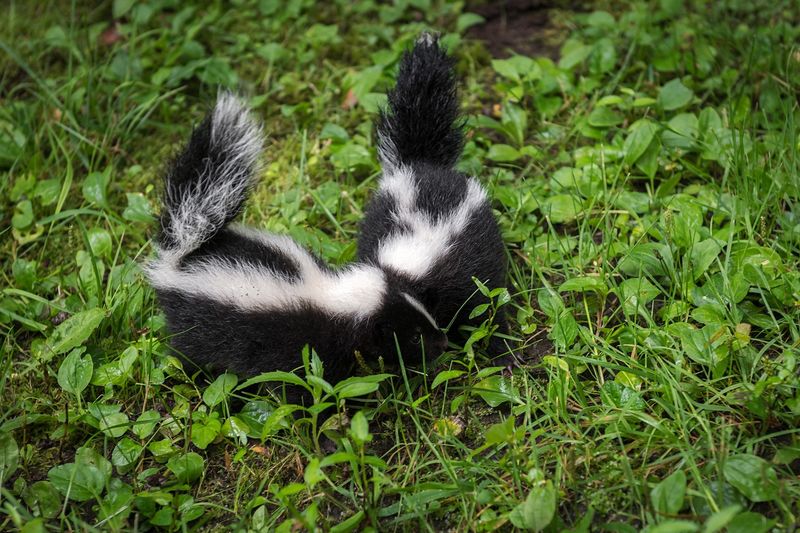
Timing is everything when closing up a crawl space. Sealing the opening while a skunk is still inside can trap it, and a trapped skunk creates a much bigger mess.
Make sure the animal has left before you block anything.
An easy test is to sprinkle flour near the entry at dusk and check for tracks heading out the next morning. Repeat for a few nights to feel more confident nobody is still living there.
Spring is baby season in Georgia, so young skunks may be hidden inside from roughly April through June.
During that window, waiting a few weeks often makes more sense than rushing. A licensed wildlife removal pro can help if you suspect a family is under your house.
Once the space is empty, cover gaps with sturdy hardware cloth or welded wire.
Burying the mesh about a foot deep, or bending it outward in an L shape, can help stop digging. Skunks are not strong climbers, so most work focuses on low openings near the ground.
Removing easy food sources also helps, like fallen birdseed, open trash, and pet bowls left outside overnight.
No plan works every time, but these steps make your home far less inviting to a striped night visitor.