Virginia’s Most Dangerous Venomous Species To Watch For This Fall
Crunchy leaves underfoot feel like the best part of autumn, until something in the pile moves. Fall in Virginia brings a surprising rush of wildlife activity.
Snakes are heading toward winter dens, while wasps and hornets guard nests at their biggest. Some creatures earn their scary reputations, and others are mostly rumor.
Only three of the state’s native snakes are venomous, and black widows are the only venomous spider established here. Knowing who is who can turn a nervous hike into a confident one.
You’ll meet sneaky snakes, grumpy stingers, and a few misunderstood critters along the way. Each one comes with simple tips to keep your family, pets, and picnic safe.
1. Copperheads, The State’s Most Common Venomous Snake
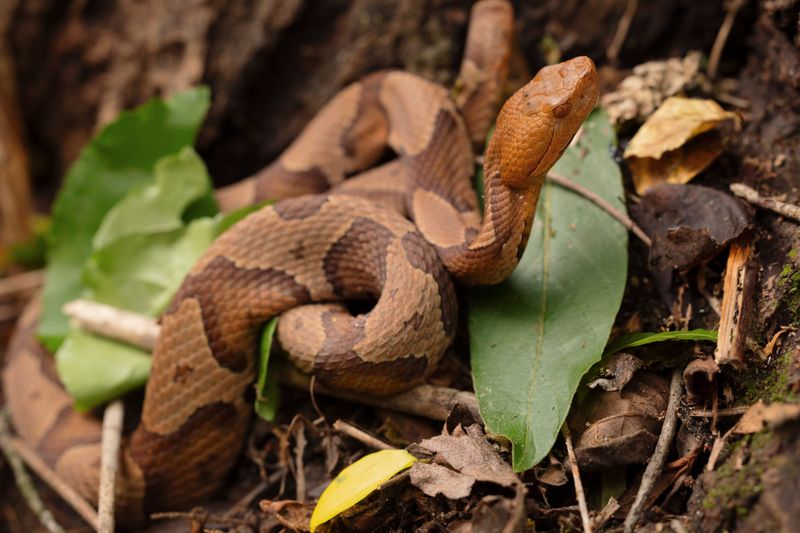
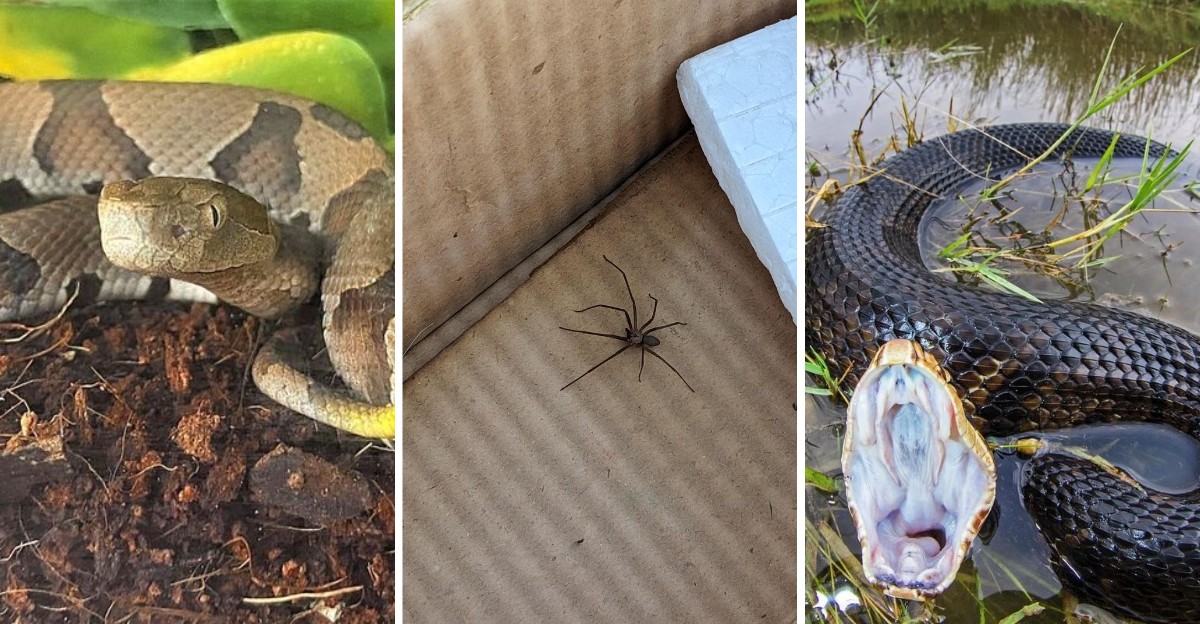
Picture a snake wearing a perfect autumn costume of copper, tan, and chestnut brown. Copperheads look like they were painted to match a pile of October leaves.
Across Virginia, copperheads cause dozens of bites each year each year. Most of those bites happen between May and October, so fall still counts.
You can find them nearly everywhere in the state, except the barrier islands. Old fields, wooded hillsides, rocky outcrops, and even suburban gardens make fine homes.
Look for hourglass-shaped bands that are wide on the sides and narrow on the back. Their heads are coppery and shaped a bit like a spade.
Here is the good news about their attitude. Copperheads are not aggressive and usually freeze rather than flee.
Trouble starts when someone steps on one or reaches blindly into a hidden spot. A defensive strike is their last-ditch way of saying back off.
Bites are rarely life-threatening, but they hurt and need a doctor’s care right away. Stay calm, keep the bitten limb still, and head to an emergency room.
Skip old tricks like cutting the wound, sucking out venom, or using ice. Those methods can cause more harm than the bite itself.
During mild fall days, copperheads shift to being active in daylight. Wear closed shoes, use a flashlight at dusk, and watch where you place your hands.
Wear sturdy gloves when moving firewood or clearing brush. Small habits like these prevent most bites before they ever happen.
2. Newborn Copperheads Hiding In Leaf Litter
Late summer is baby season for copperheads, and it surprises plenty of homeowners. Females give birth to live young in August and September, not eggs.
Newborns measure only 7 to 9 inches long. Even so, they arrive fully equipped with fangs and working venom.
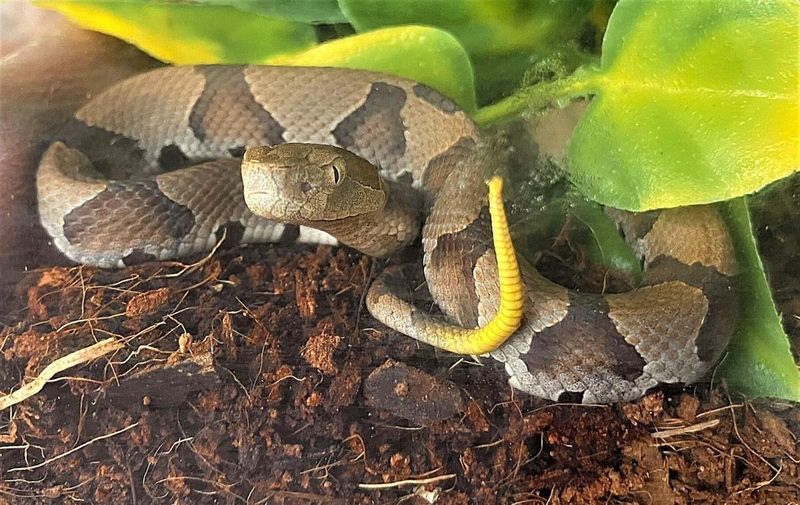
Spotting one takes a sharp eye. Babies wear the same hourglass pattern as adults, just in a smaller size.
Their giveaway is a bright yellow or greenish tail tip. Young snakes wiggle that tail like a worm to lure frogs and lizards close.
Fun fact: the yellow tip fades as the snake grows older. By adulthood, the tail matches the rest of the body.
Mama copperhead offers no babysitting after birth. Each little snake heads off alone to find food and shelter right away.
Your Virginia Garden Changes Every Week. Your Plan Should Too.
Gardening in Virginia changes quickly throughout the season. Every Friday you’ll receive a simple weekly plan showing exactly what to plant, prune, fertilize, harvest, and protect so you never miss the right timing.
Life is tough for these youngsters. Many young copperheads don’t survive their first winter.
For people, the risk comes from how well they hide. Leaf piles, mulch beds, and garden edges make perfect hiding places for tiny snakes.
Rake leaves with a long-handled tool instead of scooping them by hand. Kids should skip jumping into leaf piles near wooded edges in early fall.
Keep grass trimmed and move woodpiles away from your house. Fewer hiding spots means fewer surprise meetings near your door.
Found a tiny snake indoors? Place a bucket over it and call a wildlife removal professional for help.
3. Timber Rattlesnakes Heading Back To Rocky Dens
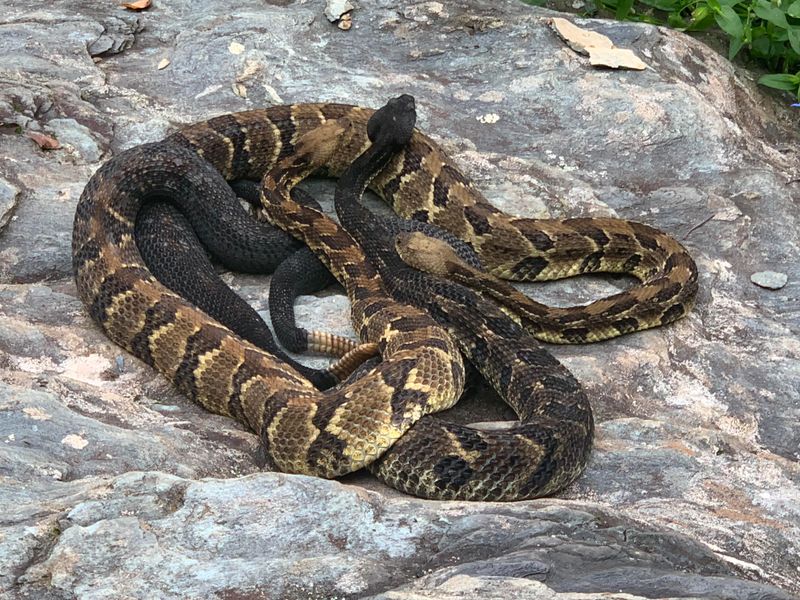
Hikers in the Blue Ridge know a special sound that makes everyone freeze. That dry, buzzing rattle belongs to the timber rattlesnake.
Timber rattlers are one of three venomous snake species found in the state. They are the largest of the trio, sometimes reaching five feet long.
Look for dark, zigzag chevron bands on a yellow, tan, or nearly black body. The tail ends in a black tip and a rattle made of keratin.
As fall temperatures drop, these snakes travel back to rocky dens. Many share the same den year after year, sometimes with dozens of neighbors.
Inside those crevices, they rest through winter in a sleepy state called brumation. Rocks hold steady temperatures that protect them from the cold.
Here is where hikers need extra care. Snakes often bask on sunny ledges near den entrances during cool autumn afternoons.
Watch your step on rocky trails in western Virginia and the mountains. Avoid sitting on ledges or reaching into gaps without looking first.
Hear a rattle? Stop, find the snake with your eyes, then slowly back away.
Give the snake at least six feet of space. Rattlers are calm and would much rather stay hidden than strike.
Timber rattlesnakes are protected in parts of their range and play a big role in controlling rodents. Snap a photo from far away and leave them be.
4. Cottonmouths In Southeastern Wetlands
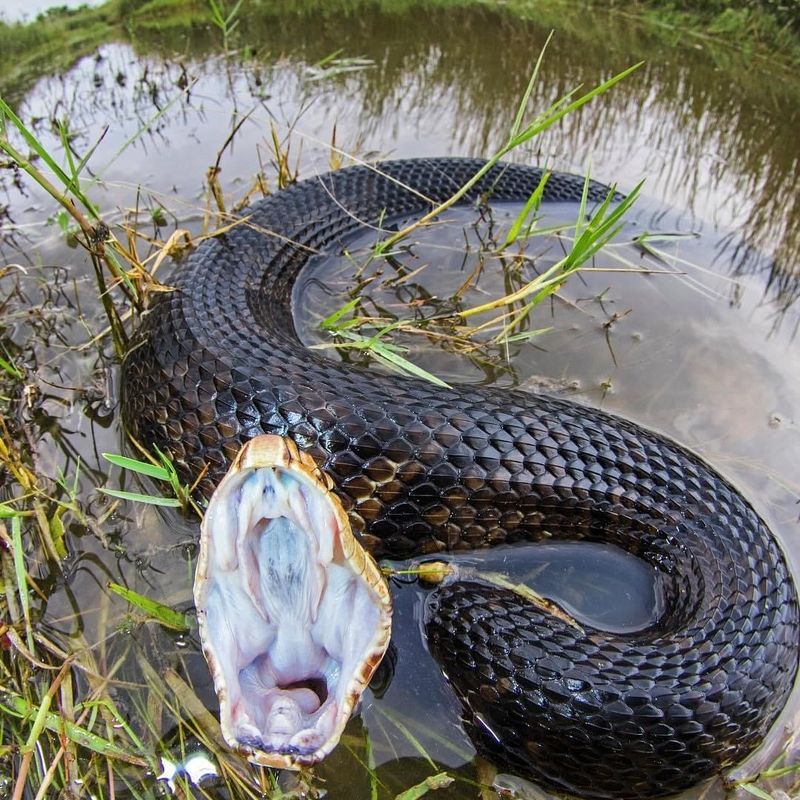
Paddle through a quiet swamp near Virginia Beach and you might meet a snake with a famous smile. The inside of a cottonmouth’s mouth looks bright white, like cotton.
Also called water moccasins, these snakes live only in the southeastern corner of the state. Places like the Great Dismal Swamp and Back Bay suit them perfectly.
They love slow water, marshes, ditches, and damp low spots. Ponds with fallen logs and thick plant cover make ideal hunting grounds.
Adults are thick-bodied and usually dark olive, brown, or nearly black. Younger snakes show clearer bands and a yellowish tail tip, like baby copperheads.
Like other pit vipers, cottonmouths have heat-sensing pits between their eyes and nostrils. Those pits help them find warm prey in the dark.
When nervous, a cottonmouth may gape its mouth wide open. Consider it a loud warning, not an invitation for a closer look.
Many reported sightings are really harmless water snakes. Real cottonmouths are less common than copperheads, even in their home region.
Still, treat any dark snake near water with respect. Keep your distance and enjoy the view from your kayak or the trail.
Wear tall waterproof boots when wading through marshy areas in fall. Use a walking stick to tap ahead in thick grass.
Fishing near the bank? Check logs and roots before you grab them or sit down.
5. Black Widows, The Only Venomous Spider Established Here
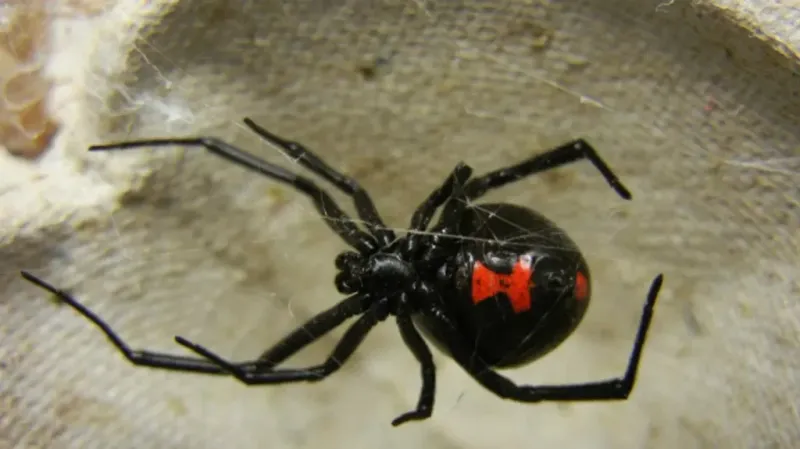
Shiny, black, and marked with a red hourglass, this spider looks like a villain from a cartoon. Black widows have earned that dramatic reputation.
The southern black widow is the main species found in Virginia. It is the only spider here considered medically important.
Females wear the classic glossy coat with a red hourglass on the belly. Males are smaller, paler, and rarely cause trouble.
These spiders love dark, quiet corners. Woodpiles, sheds, garages, crawl spaces, and old flower pots top their list.
Fall chores put people right into their favorite spaces. Hauling firewood and pulling out patio furniture are classic times for a bite.
Their venom affects the nervous system. Symptoms can include strong pain, muscle cramps, sweating, and nausea.
Bites are rarely fatal for healthy adults, but they can be very painful. Kids and older adults may react more strongly, so get medical help quickly.
Wash the bite with soap and water and add a cool cloth. Then call a doctor or poison control right away.
Prevention is simple and cheap. Wear gloves when moving wood, boxes, or yard decorations stored over summer.
Shake out shoes and work gloves left in the garage. Keep firewood stacked away from the house and bring in only what you need.
A quick sweep with a broom clears webs from quiet corners. Black widow webs look messy and tangled, which helps you spot them.
6. Yellow Jackets Getting Pushy Around Food
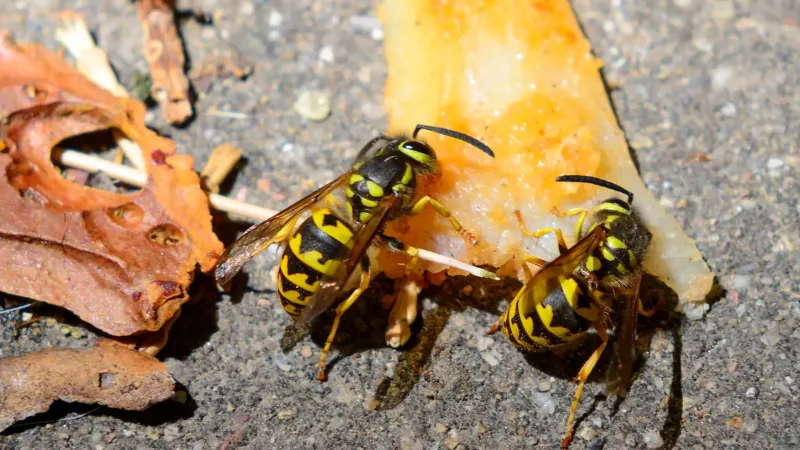
Nothing ruins a fall tailgate faster than a buzzing guest who refuses to leave. Yellow jackets seem to show up the moment a soda opens.
There is a reason they act so bold this time of year. Colonies hit their largest size in fall, while natural food grows scarce.
Hungry workers start hunting sugar and protein wherever they can. Picnics, trash cans, and apple orchards become their buffet.
Unlike honeybees, yellow jackets can sting more than once. Their sting burns, and a few angry workers can quickly become a crowd.
Many nests sit underground in old rodent holes. Mowers and string trimmers often stir them up by accident.
For most people, a sting brings pain, redness, and swelling. Allergic folks can have serious reactions needing emergency care.
Watch for hives, trouble breathing, or swelling of the face. If any of those happen, call 911 and use an epinephrine pen if prescribed.
Smart habits keep these pests away. Pour drinks into cups with lids and use straws instead of open cans.
Cover food dishes and toss scraps into sealed trash bins. Clean sticky spills on tables and decks right away.
Swatting tends to make things worse. Move slowly and calmly away when one gets too curious.
Hanging a fake nest does little against yellow jackets. Store-bought traps placed away from your seating area work much better.
7. Bald-Faced Hornets Defending Peak-Size Nests
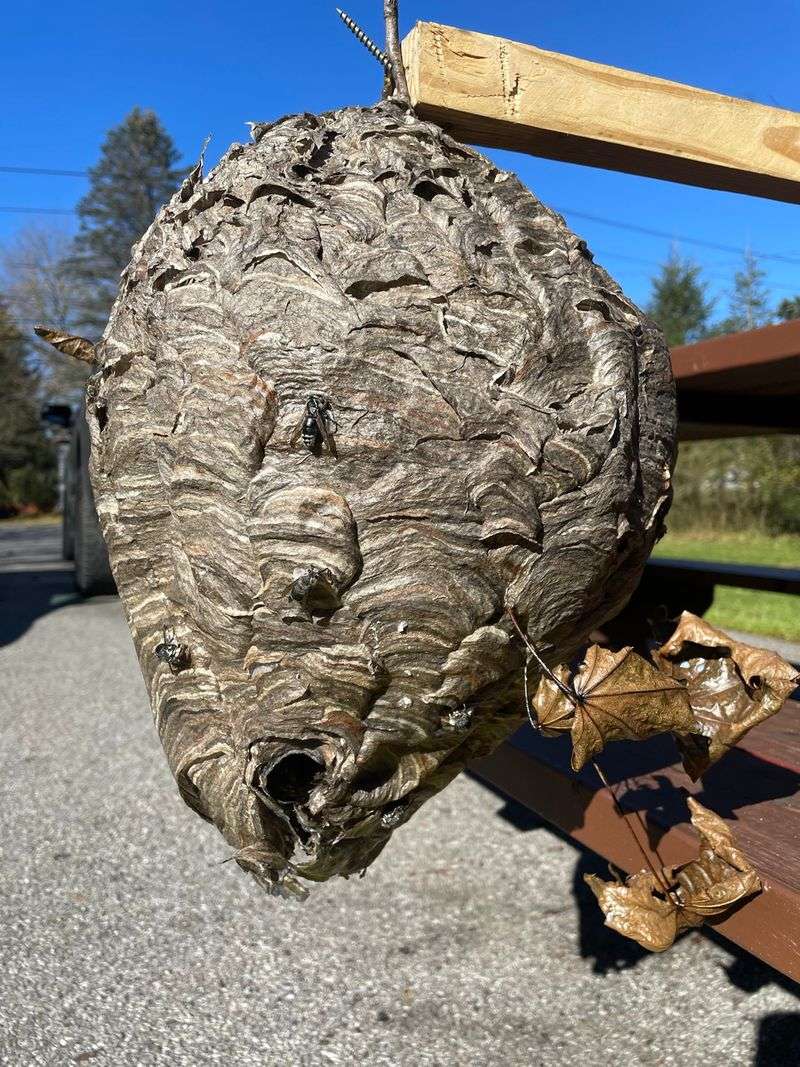
Leaves drop in October, and suddenly a giant gray paper ball appears in the tree. Surprise, it has been there all summer, and it is packed.
That nest belongs to bald-faced hornets. Despite the name, they are actually a type of yellow jacket.
Spot them by their bold black-and-white faces and bodies. Their colors look a bit like a tuxedo.
Nests are shaped like footballs or teardrops and can grow bigger than a basketball. By late summer and fall, one nest may hold hundreds of hornets.
Guards stay on duty at the entrance. Get too close, and they launch a fast, group defense with repeated stings.
Vibrations bother them, so loud tools are risky. Leaf blowers, hedge trimmers, and ladders near a nest can trigger an attack.
Here is a helpful bit of nature trivia. Bald-faced hornets abandon their nests after the first hard freeze.
Only new queens survive winter, tucked away in logs or under bark. The old nest stays empty and is not reused.
If a nest hangs high and away from doors, waiting it out may be your safest choice. Mark the area and keep kids and pets away.
Nests near walkways or windows need a pro. Pest control experts have protective suits and tools for the job.
Got stung? Wash the area, apply a cold pack, and watch for allergic reactions.
8. Red Imported Fire Ants Spreading Through Southern Counties
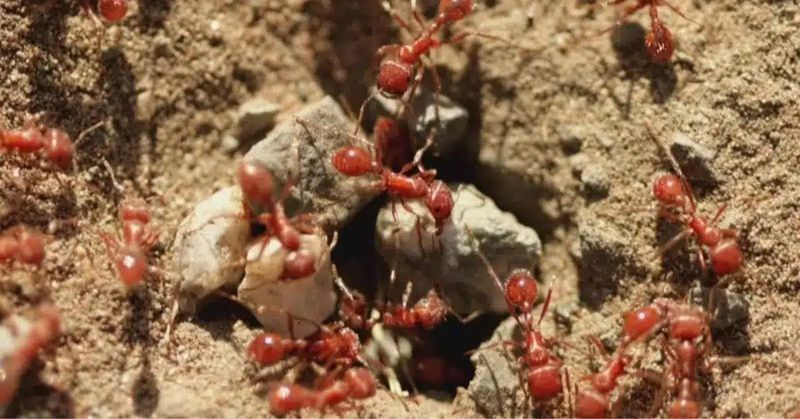
Step on the wrong dirt mound, and dozens of tiny ants rush up your leg in seconds. Then the burning starts, which is how fire ants got their name.
Red imported fire ants came from South America and have spread across the South. In Virginia, they mostly show up in southern and southeastern counties.
The Virginia Department of Agriculture and Consumer Services tracks their spread. Quarantine rules limit moving soil, sod, and plants from affected areas.
Their mounds look fluffy and loose, with no opening on top. You will often find them in sunny lawns, fields, ballparks, and roadsides.
Fall rains can push ants to rebuild mounds quickly. Fresh mounds may pop up overnight after a storm.
Each ant grips your skin and stings again and again. A day later, small itchy pustules often appear.
Try not to pop those bumps. Clean them gently to lower the chance of infection.
Small children, pets, and allergic people face the biggest risk. Many stings at once can cause serious swelling or allergic reactions.
Teach kids to avoid kicking dirt mounds. Check the ground before setting down blankets, chairs, or picnic baskets.
If ants climb on you, brush them off quickly instead of using water. Fire ants hold on tightly, so a firm wipe works best.
Suspect fire ants in a new area? Report them to your local extension office.
9. Harmless Look-Alikes Like Rat Snakes And Water Snakes
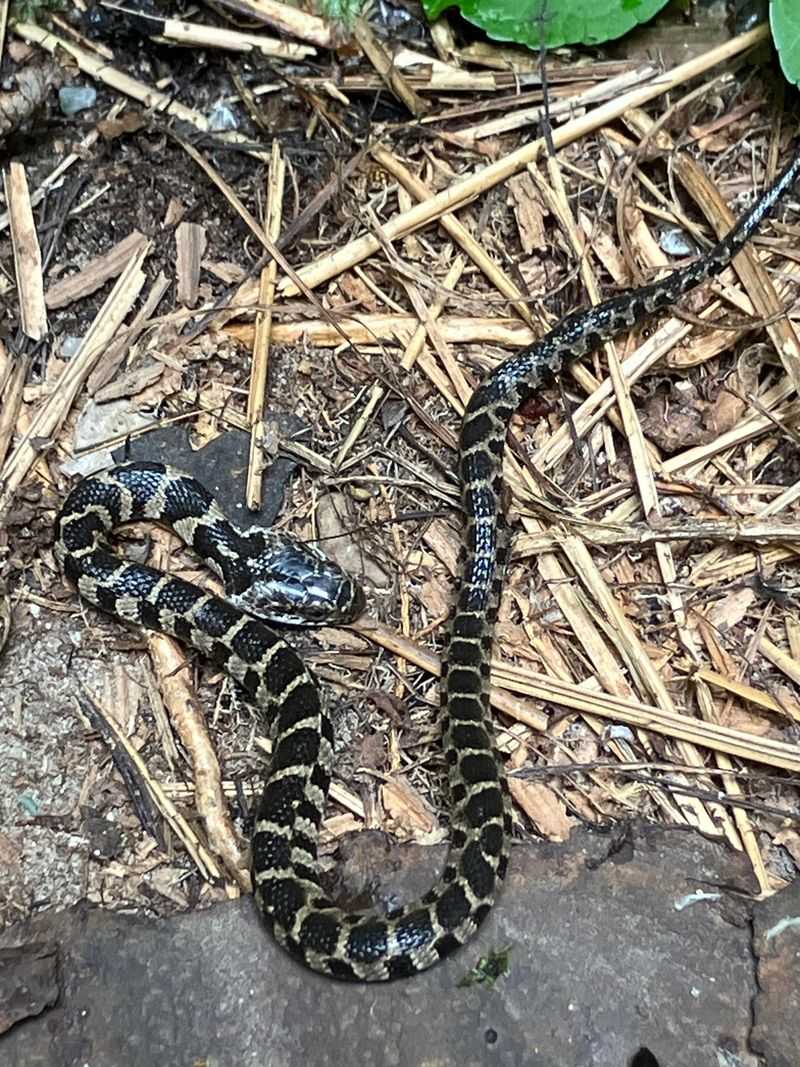
Plenty of snakes reported as copperheads turn out to be total fakes. Most snakes you meet in Virginia are completely harmless helpers.
Eastern rat snakes are a classic example. Adults are glossy black, but young ones wear gray and brown blotches.
Those baby blotches confuse a lot of people. Rat snake blotches sit on the back and do not form true hourglass bands down the sides.
Rat snakes are fantastic neighbors. They eat mice and rats around barns, sheds, and homes.
Northern water snakes cause the next big mix-up. Because they live near water, people often call them cottonmouths.
Water snakes have slimmer heads and round pupils. Venomous pit vipers have cat-like pupils and heat-sensing pits near the nose.
Behavior offers clues too. Water snakes usually dive or swim off fast, while cottonmouths float high on the surface.
Fair warning, water snakes may bite if grabbed. They are not venomous, but the bite can still sting and bleed.
Not sure what you are looking at? Snap a photo from a safe distance and ask a local expert.
Groups like the Virginia Herpetological Society share helpful ID guides online. Learning a few key features can calm many backyard panics.
Leaving harmless snakes alone helps your yard. Fewer rodents and pests is a pretty good trade.
10. Brown Recluses, Far Rarer Than The Rumors Suggest
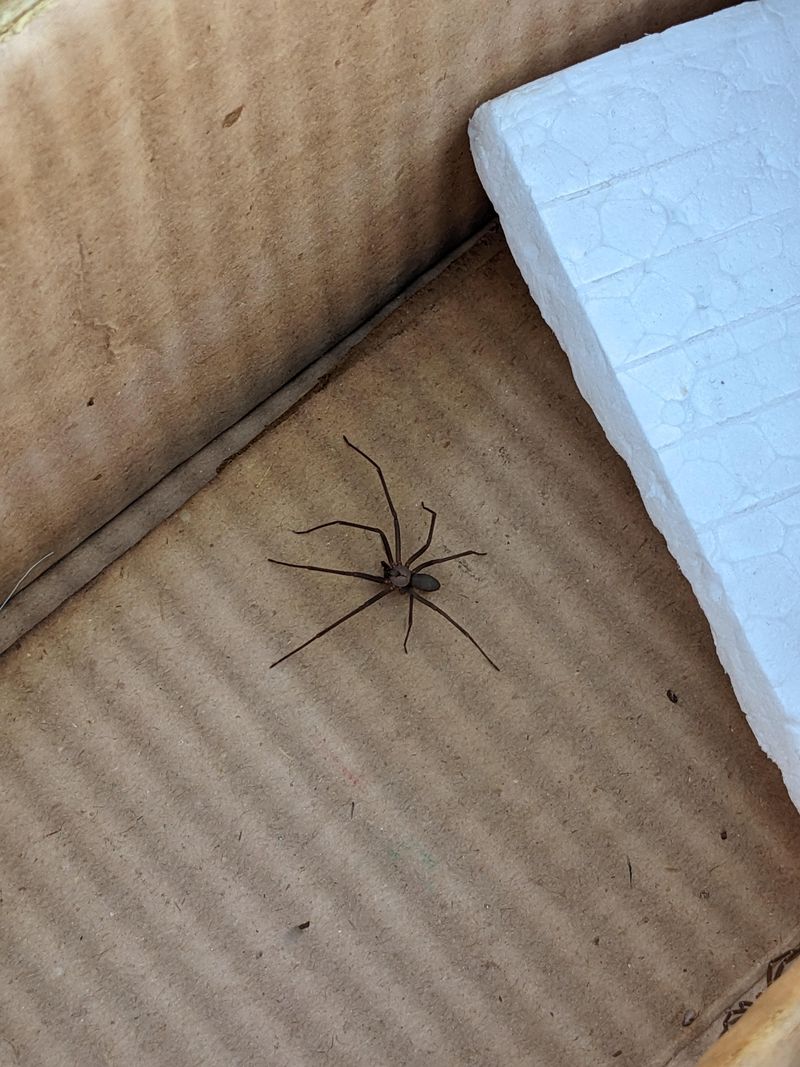
Ask around, and someone will swear a brown recluse bit their cousin. The story spreads fast, but the facts tell a different tale.
Brown recluses are not considered established in Virginia. Their true home range sits mostly in the south-central United States.
States like Missouri, Arkansas, and Oklahoma host them in large numbers. Virginia sits outside that core zone.
Once in a while, a single spider hitches a ride in moving boxes or furniture. Even so, breeding groups have not been found here.
So what causes those scary skin sores people blame on spiders? Doctors say infections, like MRSA, often look very similar.
Other causes include skin reactions, insect bites, and certain health conditions. Calling every sore a spider bite can delay proper treatment.
Real brown recluses are tan with a dark violin shape on their back. They also have six eyes arranged in pairs, which takes a magnifier to see.
Plenty of harmless brown spiders get mistaken for them. Wolf spiders and grass spiders top the list of innocent suspects.
Got a strange wound that grows or spreads? See a doctor and let them test for infection.
Catch any spider you are worried about in a sealed jar. An extension office can identify it and settle the debate.
Fall brings real critters worth watching. Knowing which ones are rumors lets you focus on the ones that matter.