This Sweet-Smelling White Vine Is Blanketing California Fences This Month
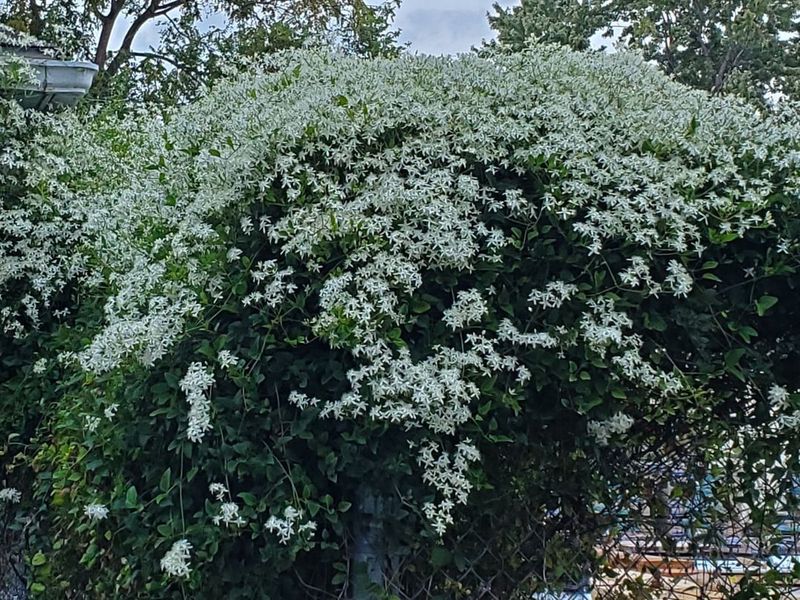
October brings a surprise to many California fences, arbors, and trellises. Just as most summer flowers fade, a wall of tiny white stars appears, glowing softly in the evening light.
A sweet, vanilla-like fragrance drifts across the yard, and bees hum steadily through the blooms.
The plant behind this late show asks for very little care, making it a favorite among gardeners who want a second act after summer.
That easygoing nature comes with a bold streak, though. Fast growth and a generous supply of seeds call for a watchful eye.
With the right support, a well-timed trim, and a little attention each spring, this fragrant climber can turn plain wood and chain link into clouds of white.
Meet Sweet Autumn Clematis, The Fall Vine
Late in the year, many gardens start to look tired. Summer annuals droop and roses slow down, and then one vine suddenly bursts into a white cloud, as if it waited all year for the spotlight.
That late bloomer is sweet autumn clematis. Some nurseries sell it under an older name, so the same plant may carry two different tags.
It’s a deciduous vine, dropping its leaves in winter and growing fresh stems each spring. That cycle makes it easy to manage.
The plant comes from Japan and other parts of eastern Asia. Gardeners have grown it in America for well over a century, mostly for its late-season show.
Its leaves are glossy and dark green, made of several leaflets on each stem. Unlike many climbers, it skips suction pads and clinging roots.
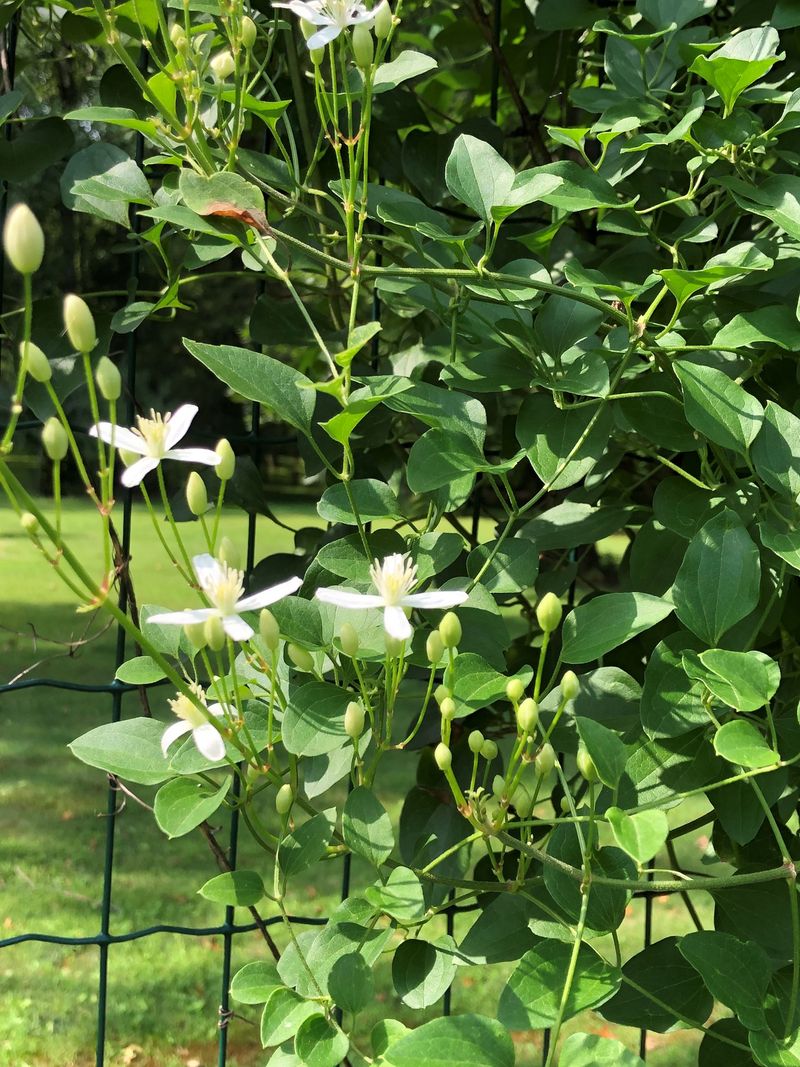
Instead, it twines. Leaf stalks wrap around wires, lattice, and thin posts like tiny green fingers, so anything slim offers a perfect handhold.
For most of the year, the vine works as a quiet green screen. It hides an unattractive fence, shades a patio, or softens a bare wall.
Late summer then arrives, and blooms appear so heavily that the leaves almost disappear. The transformation feels almost magical.
That timing makes it a smart pick for gardens that peak in spring and fade by fall. A single plant gives the yard a second act right when it’s needed most.
Fragrant White Blooms Cover Fences
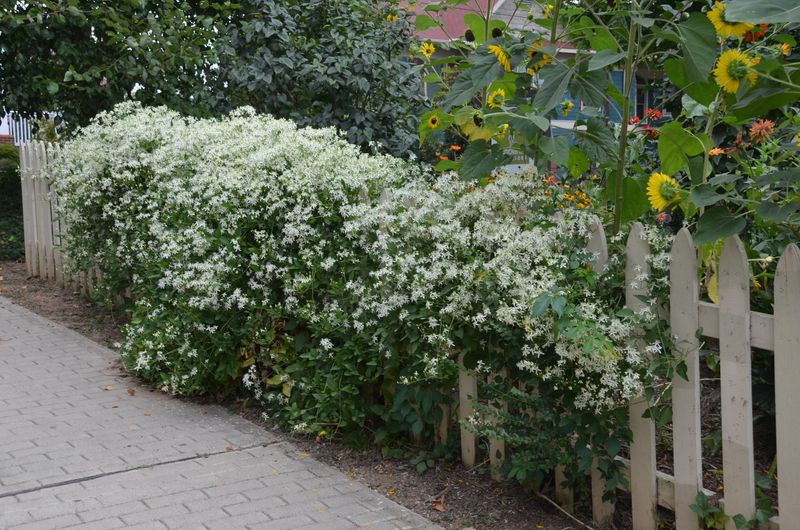
A sweet autumn clematis in full bloom resembles a snowstorm that stopped halfway down the fence. Up close, that snow turns into thousands of tiny flowers.
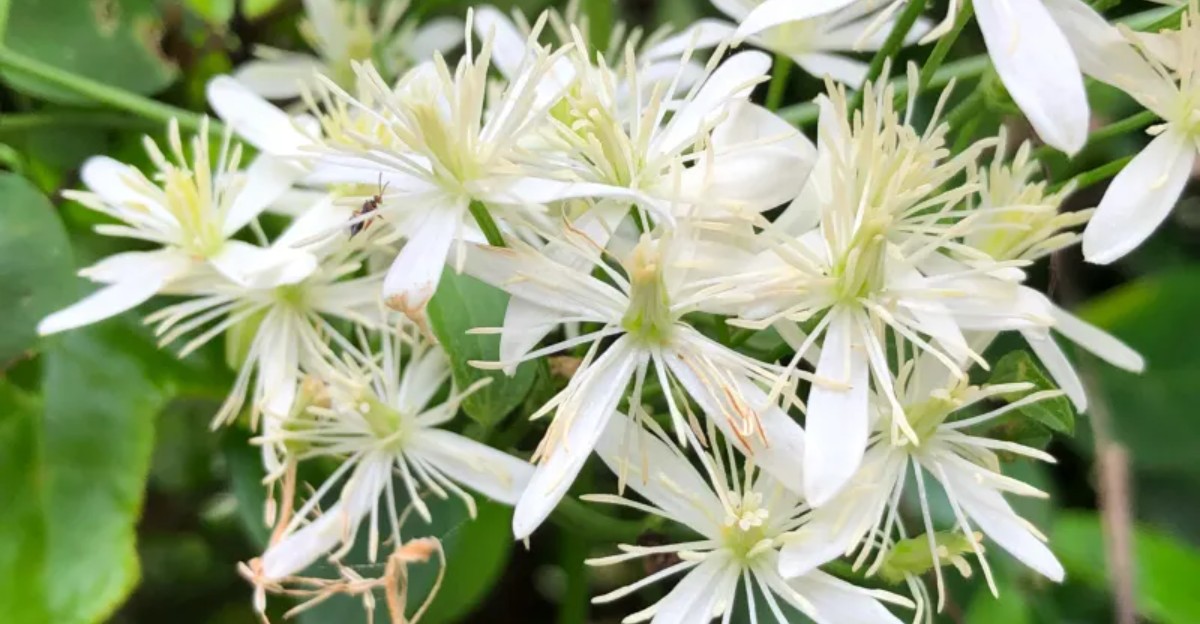
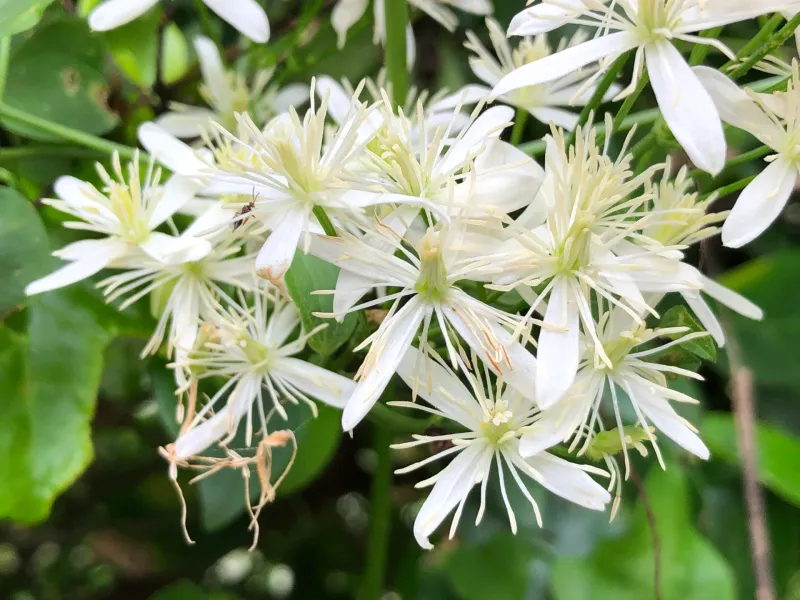
Each bloom measures only about an inch wide. Four narrow white petals, which are really sepals, form a star shape around a puff of creamy stamens.
That center gives every flower a soft, fuzzy look. Blooms appear in loose clusters along the stems.
Because the vine grows so thick, those clusters pile up into a solid sheet of white. Chain link, split rail, and old wooden fences all vanish beneath the bloom.
The show usually begins in late summer, often in August or September. In much of California, it continues into October, and warm fall weather can stretch it a little longer.
Your California Garden Changes Every Week. Your Plan Should Too.
Gardening in California changes quickly throughout the season. Every Friday you’ll receive a simple weekly plan showing exactly what to plant, prune, fertilize, harvest, and protect so you never miss the right timing.
Sunlight drives the best display, especially in cooler coastal gardens. Several hours of direct sun usually means more flowers.
Water during long dry spells helps while buds form in late summer. A thirsty vine may bloom less than a well-watered one.
White flowers also shine at dusk. They catch the last light and seem to glow after sunset.
A vine planted near a patio or back porch turns evening dinners outside into something special.
Few vines put on such a bright show so late in the year, and that soft twilight glow makes the effort feel well rewarded.
Silvery Seed Heads Follow The Flowers
The party isn’t quite over once the petals fall. Fluffy silver seed heads take their place, almost as if the vine decided to grow a fuzzy beard.
Each seed head forms a cluster of seeds with long, feathery tails. Those tails curl and twist, catching light like spun silk.
Seen together, they give the vine a soft, smoky look through late fall. Morning sun makes them sparkle like frost.
Backlit in the afternoon, they almost shimmer. Many gardeners enjoy this stage nearly as much as the flowers, since it adds texture after bloom fades.
Those feathery tails serve a purpose, though. They help seeds ride the wind to brand-new spots.
Birds and breezes can carry them across a yard or over a fence into a neighbor’s garden. That travel explains the surprise seedlings that appear later, often far from the original vine.
The silvery show still deserves enjoyment, paired with a watchful eye. Some gardeners snip a portion of the seed heads before they fully dry and drift away.
Early cuts mean far fewer surprise seedlings next spring. A few fluffy stems also make lovely indoor arrangements alongside dried grasses or fall leaves.
That simple trick provides a pretty decoration while fewer seeds blow loose outside.
By winter, leaves drop and stems turn brown, and that bare tangle signals that pruning season is coming soon.
Vanilla Scent Draws Bees And Butterflies
The fragrance often arrives before the flowers come into view. On a warm afternoon, the scent can drift across an entire yard, described as sweet with hints of vanilla, honey, or almond.
Scent runs strongest on warm days and in the evening. Still air helps it linger around a patio, almost like a candle someone forgot to blow out.
A vine planted near a gate, path, or seating area offers every whiff up close. People aren’t the only fans, though.
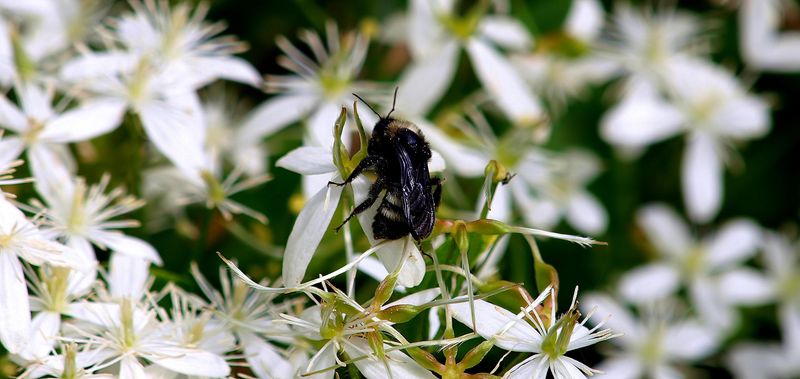
Bees swarm the open flowers, gathering pollen and nectar. Honeybees, bumblebees, and smaller native bees all visit, creating a steady, happy buzz on sunny days.
Butterflies stop by, too. Late-season blooms matter to them, since fewer flowers stay open in fall.
A big clematis works like a roadside diner for hungry insects passing through. That role makes it valuable well beyond its beauty.
Pesticides on or near the vine during bloom are best avoided. Even gentle sprays can harm bees, and a few chewed leaves make a small price for a busy pollinator buffet.
Families with kids can turn the vine into a mini science lesson. Counting the kinds of bees that land in five minutes or watching which flowers butterflies choose makes learning fun.
A simple look-but-don’t-swat rule keeps everyone comfortable, since the buzzing crowd prefers minding its own business. Sweet smells, busy wings, and a little learning make a fine fall afternoon.
It Blooms On New Growth, So Prune Hard
Pruning this vine takes very little hesitation. Sweet autumn clematis ranks among the easiest vines to prune, since it blooms on new growth, with this spring’s stems carrying this year’s flowers.
Gardeners sort clematis into pruning groups. This one belongs to the group that flowers on fresh stems.
Old wood from last year doesn’t hold flower buds. Cutting it back costs nothing in terms of blooms.
Late winter or early spring makes the best timing, before new shoots really take off. In much of California, that means roughly February or early March, with swelling buds near the base offering a helpful signal.
Many gardeners trim the whole vine down to about one to two feet tall. Cuts placed just above a pair of healthy buds work best.
That may sound harsh, yet the plant bounces back fast and fills in by summer. Hard pruning helps in several ways.
It clears out the tangled brown mass from last year and keeps the vine smaller and easier to manage. It also prevents heavy old growth from weighing down the fence.
A skipped year causes no lasting harm. The vine still blooms, though it may look messy and top-heavy until a firm cut the following late winter.
Trimmings belong in green waste. Gloves help, too, since the sap can bother sensitive skin.
A quick, bold cut sets the stage for another fragrant fall.
Fast Growth Needs A Sturdy Support
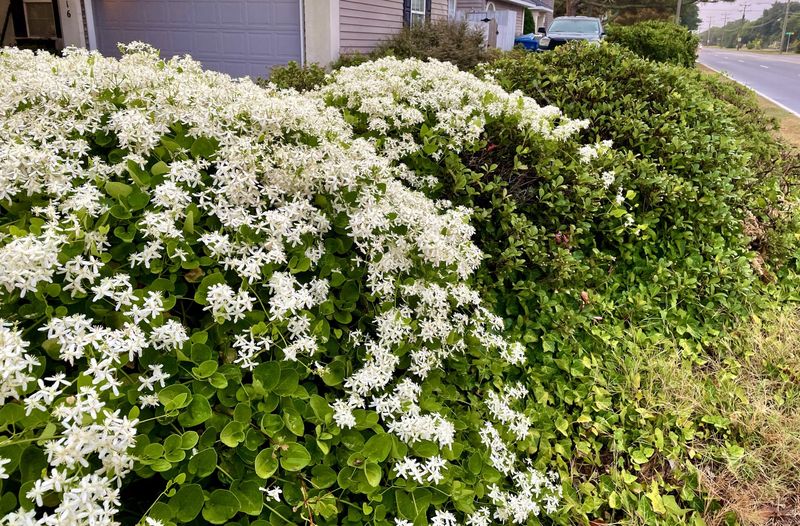
A small pot planted in spring may require a ladder to reach the top by fall. Sweet autumn clematis grows that quickly, with mature vines often stretching 15 to 30 feet in a single season.
All that growth adds up to serious weight. A thick vine, damp with rain and loaded with flowers, can bend a flimsy trellis.
Cheap lattice may sag, crack, or pull loose from the wall. A support built to carry the load makes all the difference.
A sturdy wooden or metal fence handles the job well. Solid arbors and pergolas with thick posts work, too, as does heavy-gauge wire or cable stretched between strong anchors.
Thin supports actually help the vine climb, since leaf stalks twine around narrow pieces. Wide boards and flat walls offer nothing to grab.
Wire or garden netting added to smooth surfaces gives the vine a grip. That small upgrade transforms a blank wall into climbing territory.
A vine this eager will happily wander onto nearby shrubs, small trees, and even gutters. Stray stems guided back onto the support every few weeks during summer stay in line.
Runaway stems are best snipped before they wrap too tightly. Generous spacing at planting time helps, too.
A few feet of distance from windows, roofs, and electrical lines prevents tangled headaches later. A strong frame plus a little guidance turns all that energy into a beautiful wall of blooms rather than a green mess.
Self-Seeding Calls For Watching Seedlings
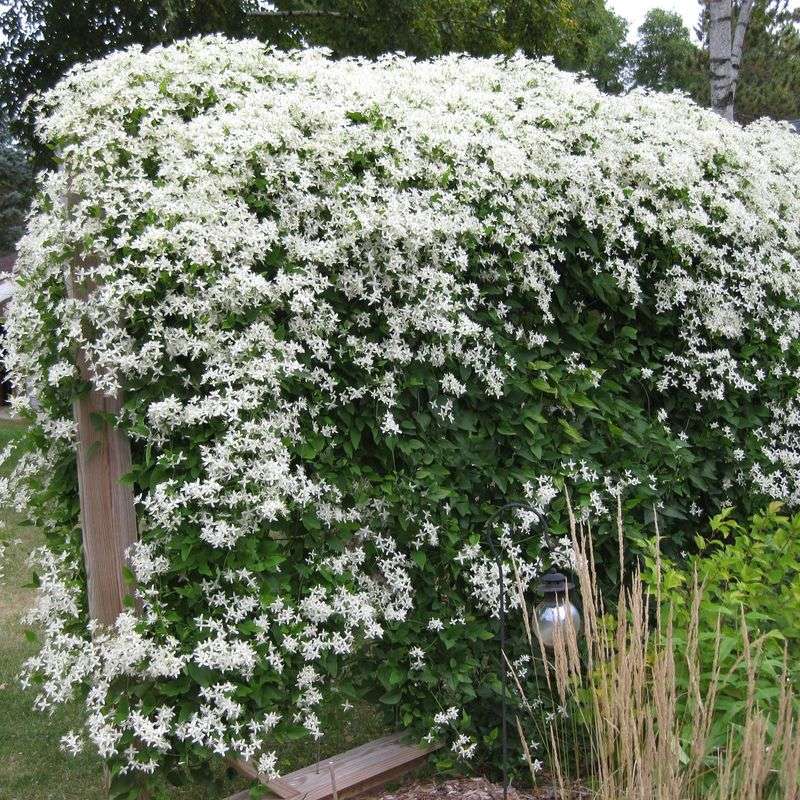
Spring often brings a surprise or two. Tiny clematis sprouts may pop up in flower beds, along the fence line, or even in a neighbor’s yard, courtesy of last fall’s fluffy seed heads.
Sweet autumn clematis self-seeds freely. In parts of the eastern and midwestern United States, it has escaped gardens and spread into woods and roadsides.
Some states there treat it as an invasive problem. California tells a different story.
Cal-IPC, the group that tracks invasive plants in the state, doesn’t list it as a wildland invader here. Even so, it works best treated as an assertive self-seeder that needs a firm hand.
Seedlings are easy to spot once the look becomes familiar. Young plants carry small, glossy leaves made of a few leaflets.
They often sprout near the parent vine or beneath spots where birds perch. Pulling them while small works best.
A gentle tug near the soil line brings up the root, too. Moist soil after a rain makes the job quick, and young seedlings come out far easier than older ones with deep roots.
Checks every few weeks in spring and early summer catch new sprouts early. A layer of mulch under the vine helps limit some germination, while trimming seed heads in fall cuts the crop even more.
Spots beside wild open spaces or creeks are best avoided for planting. Keeping the vine close to home lets gardeners enjoy the flowers without sharing extras with the wild.