How Blue Jays Are Secretly Planting Oak Trees In Pennsylvania Yards
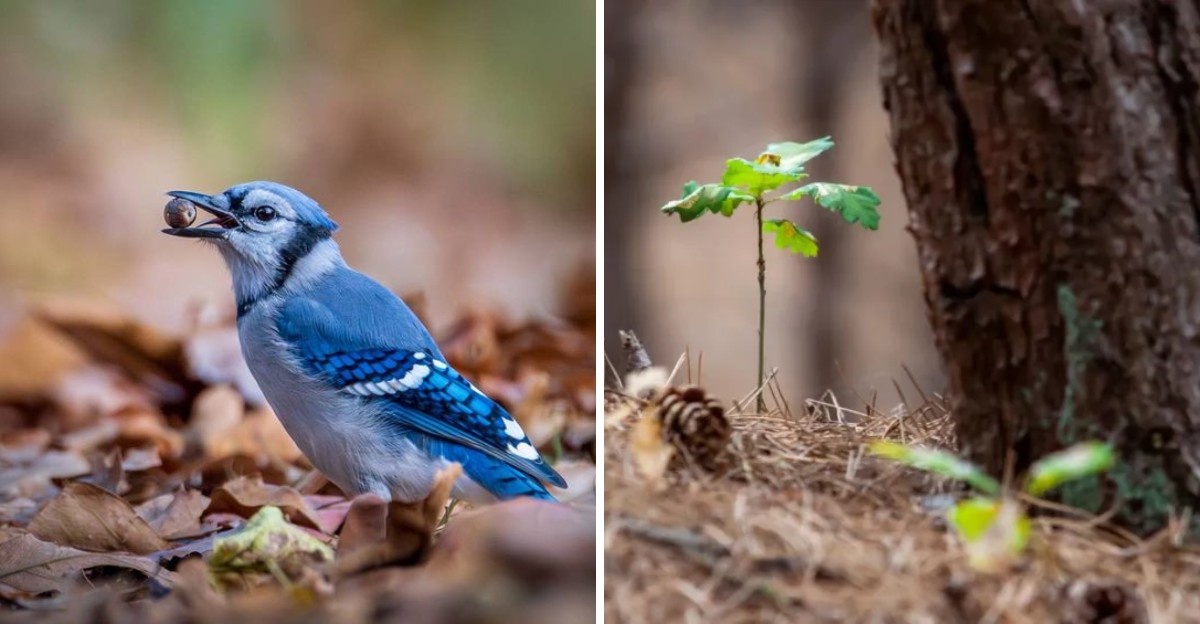
A single blue jay can bury thousands of acorns in one fall. It stuffs several into its throat and beak at once and flies off, sometimes more than a mile away.
There, it tucks each one into the ground or under fallen leaves. Then it forgets a few.
Those forgotten acorns are where the magic happens. Come spring, some of them sprout into tiny oak seedlings, often far from the tree that dropped them.
If you’ve ever found a young oak popping up in a flower bed or along the fence, there’s a good chance a jay put it there.
These noisy, flashy birds turn out to be some of the best tree planters around.
Blue Jays Are Busy Acorn Collectors In Fall
Fall in Pennsylvania brings crunchy leaves, cool mornings, and a whole lot of blue jay noise. If your yard suddenly sounds like a busy playground, the jays have probably started their acorn season. From September to November, they work almost nonstop.
Their goal is simple. Blue jays collect acorns from oak trees and hide them so they have food when winter arrives.
Snow can cover the ground for weeks, and insects become hard to find. A hidden pantry of acorns helps the birds stay strong until spring.
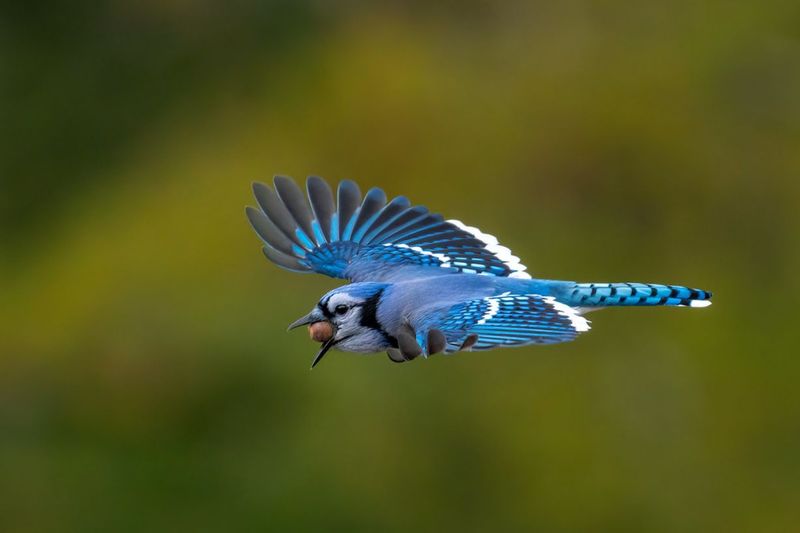
You will often spot jays flying back and forth in a steady pattern. They grab acorns from a nearby oak, then zoom to an open patch of lawn, a garden bed, or the edge of a field.
After a quick stop, they head right back for more. Some people say it looks like a tiny delivery service.
Want to watch the action yourself? Early morning is usually the best time. Grab a warm drink, sit by a window, and look toward any oak trees near your home.
Count how many trips one jay makes in ten minutes. The number might surprise you.
Blue jays also get a little sneaky. If they notice another bird or a squirrel watching, they may pretend to bury an acorn and then carry it somewhere else. Smart move, right?
Fun fact: blue jays are related to crows and ravens, which are some of the smartest birds on Earth. That brainpower helps them plan ahead for winter.
So the next time you hear that loud jay call in October, you will know it is not just chatter. A hardworking bird is getting ready for the season ahead.
Their Throats Work Like Built-In Grocery Bags
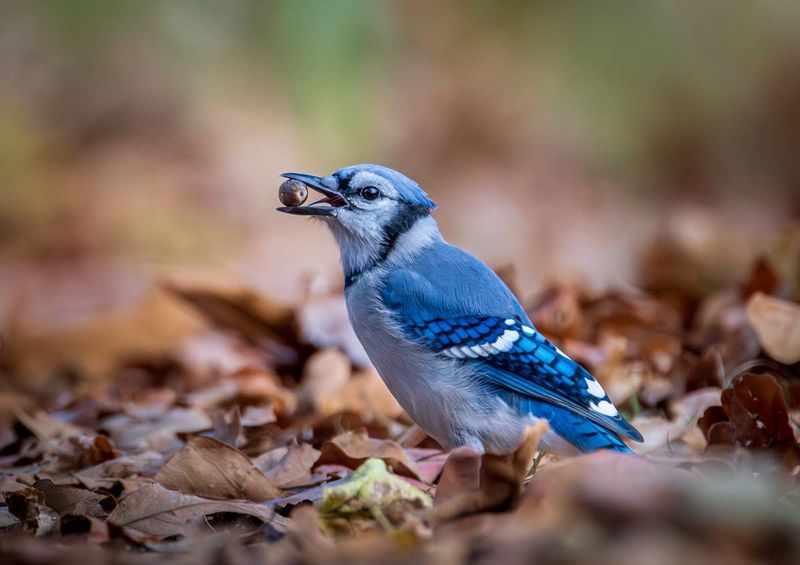
Three, four, even five acorns in one trip. That is how much a single blue jay can haul when it is in a hurry. For a bird that weighs about as much as three AA batteries, that is a pretty impressive load.
So how does it pull off such a trick? Blue jays have a stretchy pouch in their throat, sometimes called a gular pouch.
They swallow a few acorns and store them there for the trip. Then they hold one more acorn in the tip of their bill, like a cherry on top.
Your Pennsylvania Garden Changes Every Week. Your Plan Should Too.
Gardening in Pennsylvania changes quickly throughout the season. Every Friday you’ll receive a simple weekly plan showing exactly what to plant, prune, fertilize, harvest, and protect so you never miss the right timing.
When the jay reaches its hiding spot, it simply brings the acorns back up one by one. It sounds a little gross, but it works great. Fewer trips mean less energy wasted and more food stored before winter.
Scientists have studied these birds closely, and the numbers are wild. In one well-known study, a small group of blue jays moved about 150,000 acorns in a single fall.
That works out to thousands of acorns per bird! No wonder they seem so busy. Here is a cool thing to try at home. Watch a jay carefully as it leaves an oak tree.
Does its neck look a bit puffy? That bulge is a sign the pouch is full. Bird watchers love spotting this, and binoculars make it much easier.
Kids can turn it into a game, too. Keep a simple notebook and write down the date, the time, and how full each jay looks.
Over a few weeks, you will build your very own science journal about the amazing grocery bag birds in your backyard.
Long Flights Take Acorns Far From Home
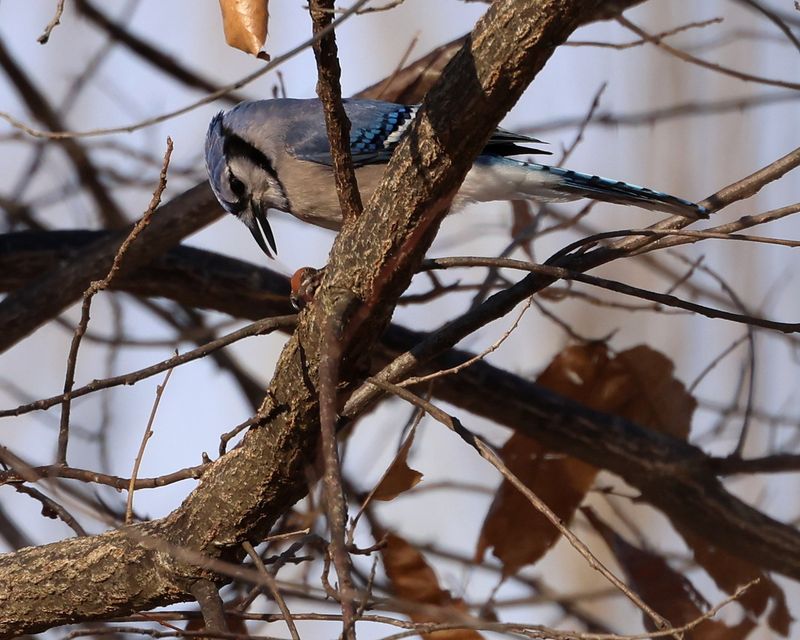
Oak trees have a big problem. Acorns are heavy, so when they fall, they usually land right under the parent tree.
Down there, the baby trees get stuck in deep shade and have to compete with their own giant parent.
Enter the blue jay, nature’s long-distance courier. Jays often carry acorns a good distance before burying them.
Some trips stretch more than a mile! Researchers have even recorded jays flying a few miles with their tasty cargo.
Why travel so far? Part of the reason may be safety. Squirrels, mice, and other birds hang around oak trees looking for snacks. By hiding acorns far away, a jay keeps its stash out of reach from hungry neighbors.
It is a bit like hiding your candy in a different room.
Those long flights help oaks move into brand new places. Acorns end up in open fields, sunny yards, roadside edges, and empty lots.
Many of these spots have no oak trees nearby at all. Without blue jays, an oak might take hundreds of years to spread that far.
Pennsylvania has lots of mixed land, with towns, farms, and woods all close together. That makes it perfect for jays to carry acorns from forest patches right into your neighborhood.
If you find an oak sprout in your yard and no oak tree in sight, a blue jay is a likely suspect. Here is a helpful tip. Look around your street and map out where the closest oak trees stand.
Then compare that with where little oak sprouts show up. You might discover the hidden flight paths your local jays use every single fall.
They Bury Acorns Like Expert Gardeners
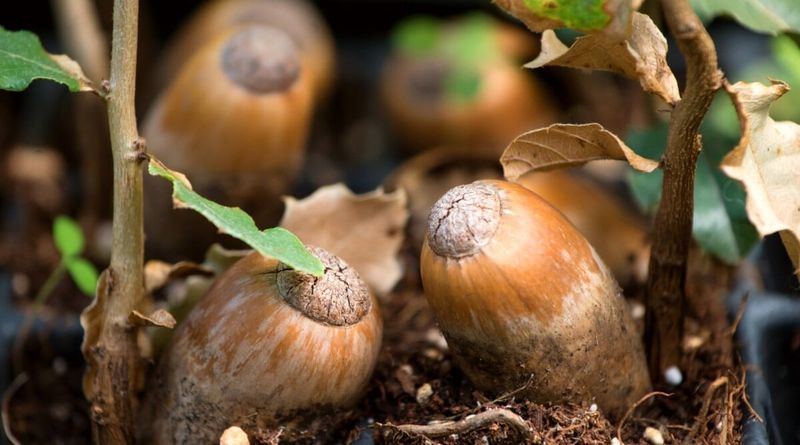
Any Pennsylvania gardener will tell you that planting seeds takes skill. Plant them too deep, and they struggle to reach the light. Plant them too shallow, and they dry out or get eaten. Somehow, blue jays get it just right.
A jay usually buries one acorn at a time. It pokes the nut about an inch into the soil or tucks it under a layer of fallen leaves. Then it often covers the spot with a leaf, a pebble, or a bit of dirt. Neat and tidy!
That shallow depth happens to be great for sprouting. The soil keeps the acorn moist, and the leaves act like a cozy blanket during winter. When spring warms the ground, the acorn is in a perfect position to grow roots.
Jays are also picky shoppers. They tend to pick healthy, solid acorns and skip the bad ones. Some acorns have tiny weevil larvae living inside, which eat the nut from within.
Jays seem able to tell the difference, possibly by weight or by the sound the acorn makes when they shake it.
That choice gives each buried acorn a much better chance of becoming a tree. In a way, jays are quality control workers for the forest.
Want to test your own acorn-picking skills? Try the float test. Gather some acorns and drop them in a bowl of water. Good ones usually sink, while damaged ones often float.
You can plant the sinkers in a pot of soil about an inch deep, just like a jay would. Keep them outside over winter, and you might see a sprout by spring.
Forgotten Snacks Turn Into Baby Oaks
Nobody is perfect, not even a genius bird. Even with a sharp memory, a blue jay will not dig up every acorn it buries. And honestly, the forest is glad it does not.
Think about it. One jay might hide thousands of acorns in a single fall. Some of those birds find plenty of other food over winter, like seeds from feeders, berries, and insects.
Others move away or simply lose track of a few spots. Whatever the reason, lots of acorns stay hidden in the ground.
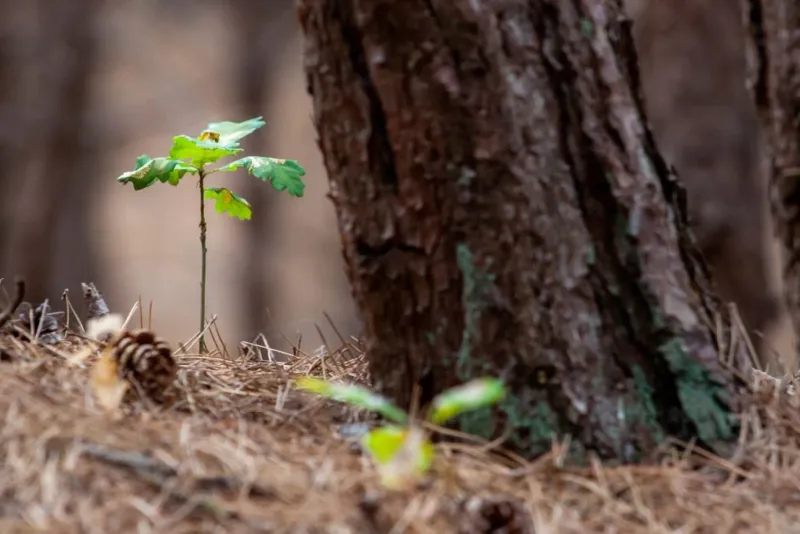
Come spring, those leftover acorns wake up. A small root pushes down first. Then a thin stem rises, with a few bright green leaves on top. Just like that, a forgotten snack becomes a baby oak tree.
Scientists believe this simple habit has shaped whole forests. After the last Ice Age, oak trees spread north across eastern North America faster than expected.
Heavy acorns cannot roll that far on their own, so researchers think birds like blue jays gave them a lift. Pretty amazing for a bird that fits in your hand!
In Pennsylvania, oaks are some of the most important trees in the woods. Deer, turkeys, bears, and squirrels all depend on acorns. Hundreds of kinds of caterpillars feed on oak leaves, which then feed baby songbirds.
So keep your eyes on the ground in April and May. Oak seedlings often have wavy or pointy leaves and a small acorn shell near the base.
When you spot one, take a moment to thank the forgetful jay that planted it. Your yard just became part of a forest story thousands of years old.
Simple Ways To Help Your Backyard Tree Planters
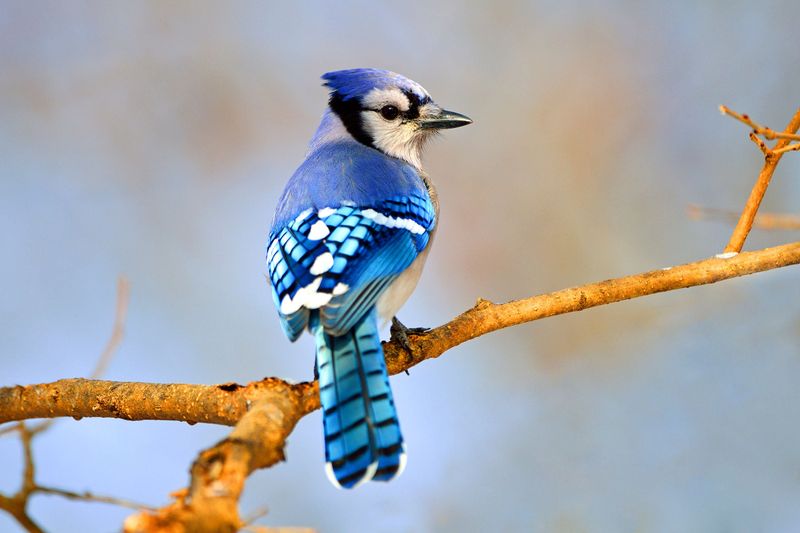
Good news for nature lovers: helping blue jays is easy, cheap, and fun for the whole family. A few small changes can turn your yard into a favorite stop for these flashy blue gardeners.
Start with the trees themselves. Planting a native oak gives jays a reliable acorn supply for years. White oak and northern red oak both grow well in Pennsylvania. Pin oak and swamp white oak are great picks for wetter spots.
Local nurseries and county conservation districts often sell young oaks at low prices in spring.
Next, go easy on the leaf blower. Leaving some fallen leaves under shrubs or along fence lines gives jays soft places to tuck their acorns.
Those leaves also protect butterfly eggs, fireflies, and other helpful bugs. Your garden gets free compost, and you get less raking.
Everybody wins. You can also offer extra treats. Many jays love whole peanuts in the shell.
Put them on a flat tray feeder, and you may watch jays practice their hiding tricks right before your eyes. A shallow birdbath with fresh water helps, too.
Finally, become a seedling detective each spring. Walk your yard and look for little oak sprouts in garden beds and lawn edges.
Some might be in bad spots, like right next to your house. Others could be perfect for shade someday.
Mark the keepers with a small stake so nobody mows them down. If one sprouts in the wrong place, you can carefully dig it up and move it while it is still small.
Share extras with neighbors, and watch your street slowly grow greener thanks to you and your feathered helpers.