Pink Muhly: The Airy Fall Grass Phoenix and Tucson Yards Can Grow on Low Water
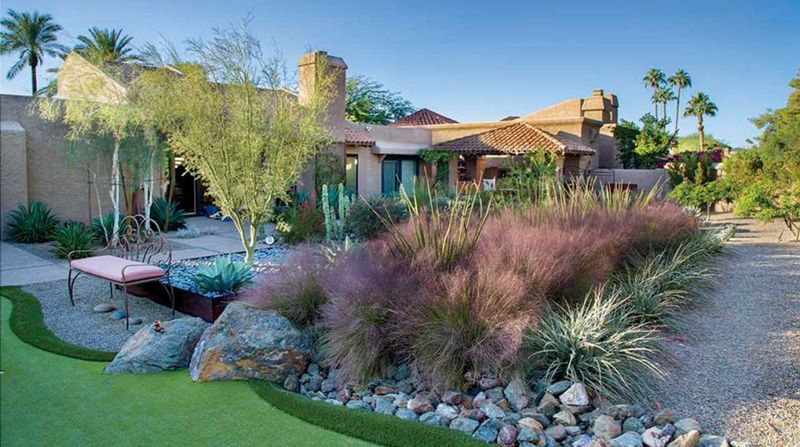
Every fall, pink muhly sends up clouds of rosy plumes that glow when the sun hits them. Many Arizona gardeners spot it and want it right away.
But the grass is not an Arizona native, and it is not water-free. Here is what it really offers a desert yard, and how to decide if it fits yours.
Pink muhly is ornamental here, not Arizona native
Pink muhly (Muhlenbergia capillaris) can grow in Arizona yards, but it did not start here. The Arizona Municipal Water Users Association lists its native range as Texas and the southeastern United States, and range data from Kew’s Plants of the World Online does not include Arizona.
So the catchy idea of a native desert grass does not hold up. Think of pink muhly as an ornamental, a plant chosen for looks that happens to handle our climate well.
That label is not a verdict against it. A plant being nonnative does not automatically make it a bad pick for a yard.
It just means you should not count on it for native-plant benefits, and you should judge it on what it actually does: put on a fall show without demanding much once settled in.
Fall is when pink muhly earns its space
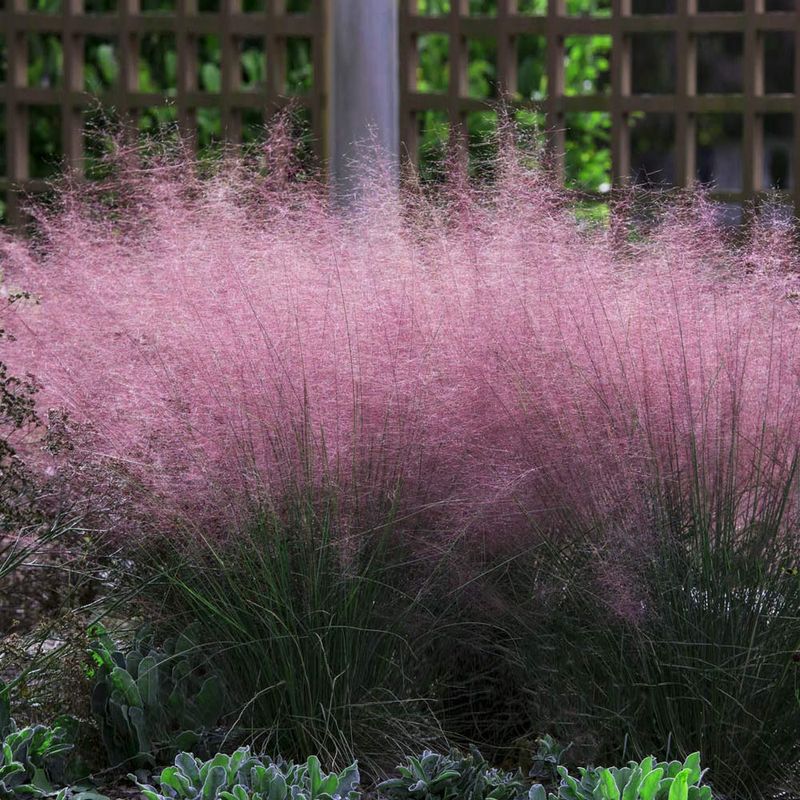
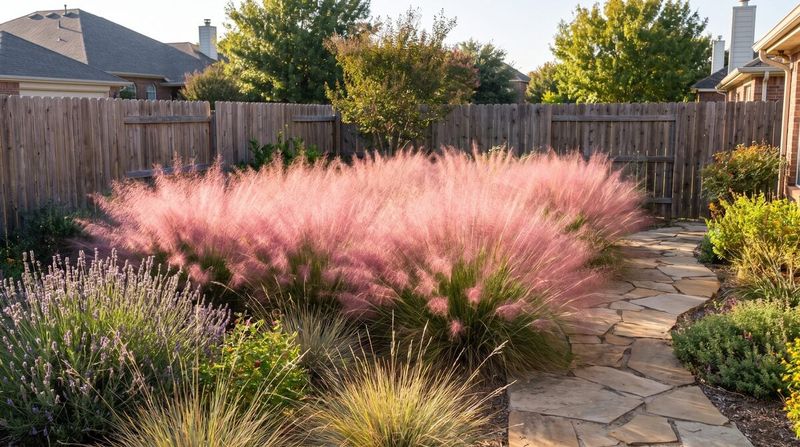
For most of the year, pink muhly is a tidy, fine-textured mound of green. Then fall arrives, and slender stems lift clouds of airy pink plumes above the foliage.
The Arizona Municipal Water Users Association describes a plant that reaches roughly three feet tall and wide, and it does well in full or partial sun. That size suits a border, a spot along a walkway, or a cluster of several plants for a bigger drift of color.
Be realistic about the effect. One or a few clumps will give you a lovely focal point, not a pink makeover of the whole yard.
Bloom density can also differ from one site to the next, so your haze may look fuller or sparser than a neighbor’s.
Low-water does not mean water-free
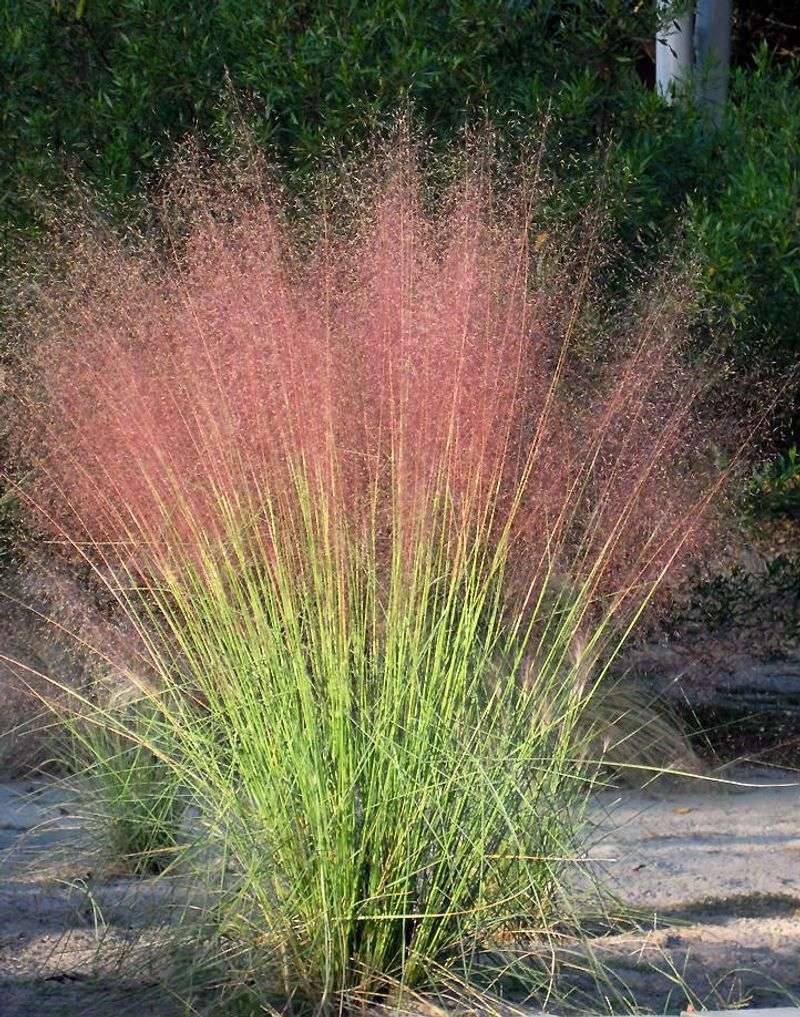
Low-water is a relative label. The Phoenix-area low-water-use plant list gives pink muhly a rating of 2.
That is low compared with the other plants on that list, not a promise of negligible use. The same list notes that most plants need regular irrigation while they establish.
Once settled, pink muhly uses little water. The Arizona-Sonora Desert Museum says it still appreciates extra irrigation in summer.
That extra water may also pay off in blooms. The University of Arizona Campus Arboretum says the grass tolerates drought but flowers more with additional water, though results vary with site and care.
Because soil, sun, and weather differ across yards, there is no single schedule that fits everyone. Watch the plant, and adjust.
A backlit spot shows off the plumes, with room from the house
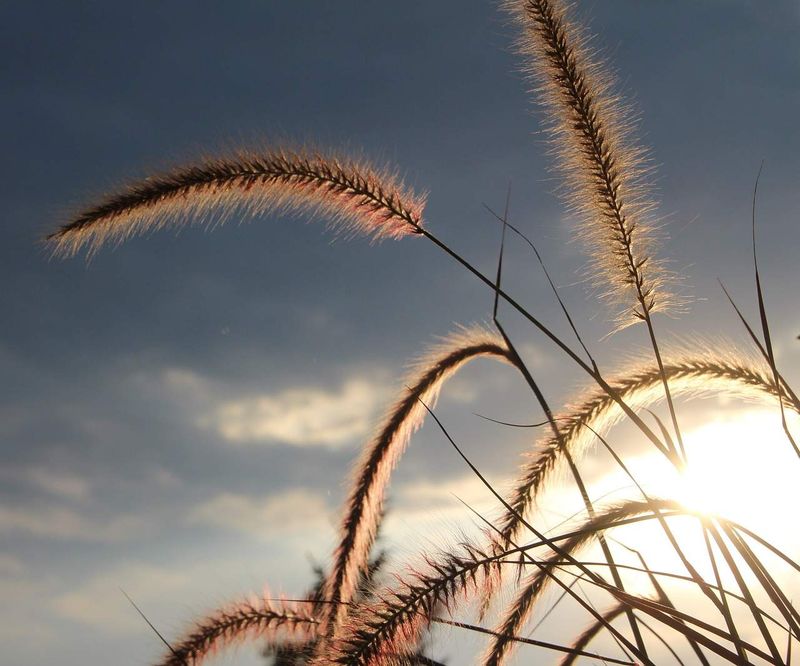
Sunlight makes these plumes glow. The Arizona Municipal Water Users Association suggests placing the grass where light can backlight it, so low morning or evening sun shines through the pink haze.
Your Arizona Garden Changes Every Week. Your Plan Should Too.
Gardening in Arizona changes quickly throughout the season. Every Friday you’ll receive a simple weekly plan showing exactly what to plant, prune, fertilize, harvest, and protect so you never miss the right timing.
Full or partial sun works.
Walk your yard near sunrise or sunset and notice where the light lands. A spot with that glow, seen from a patio or window, is hard to beat.
Then think about distance. University of Arizona Extension advises using ornamental grasses sparingly within five feet of structures, because they can be highly flammable.
So skip the planting bed hugging the house wall. Set it a bit out in the yard instead, where it can be admired from the house without sitting against it.
Autumn is the best time to plant
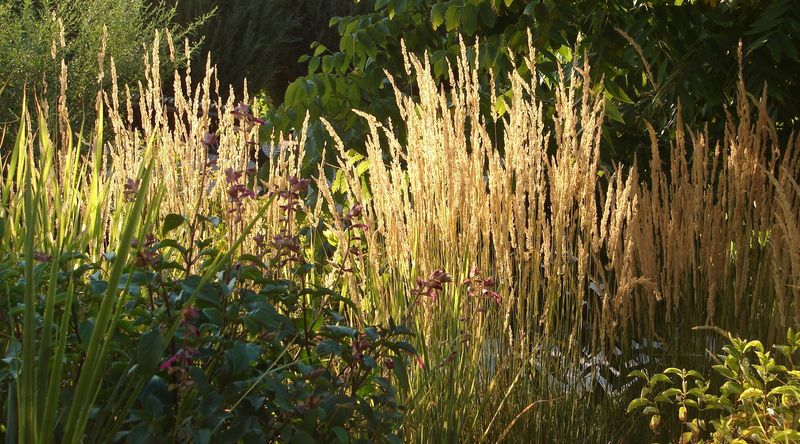
Fall gives new plants a gentler start. The University of Arizona Campus Arboretum says autumn is the best time to plant pink muhly.
Roots can grow while the heat eases off.
If you plant in spring instead, plan on watering until the plant is established.
For a sense of how establishment watering generally works, University of Arizona Extension guidance for newly planted desert-adapted plants starts with more frequent watering, then stretches the gaps over time. It adjusts for weather and soil.
Treat that as general advice, not a pink-muhly recipe.
Check the soil, watch the plant, and let site conditions guide you. A windy, sunny slope will dry faster than a sheltered bed.
A late-winter cutback clears away the old growth
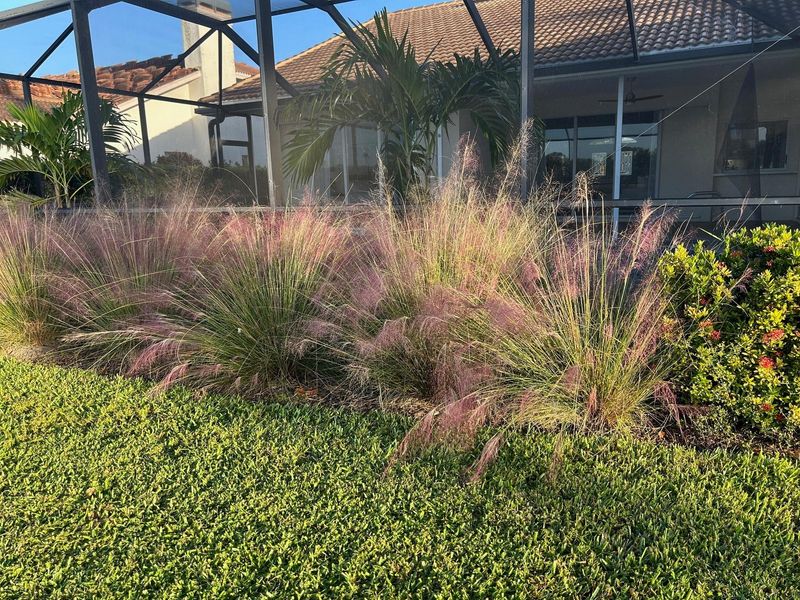
Once the show fades, the clump turns tan and scruffy. The Arizona-Sonora Desert Museum recommends cutting pink muhly to the ground in late winter or early spring.
The job is simple. Removing the brown leaves and spent flowers clears the way for fresh growth.
Grab sharp shears or a hedge trimmer, gather the clump if it helps, and cut it low. Do it before new green shoots start, so you are not trimming tender growth.
Then rake up the clippings and let the plant begin its next cycle.
The seed plumes offer a modest wildlife bonus
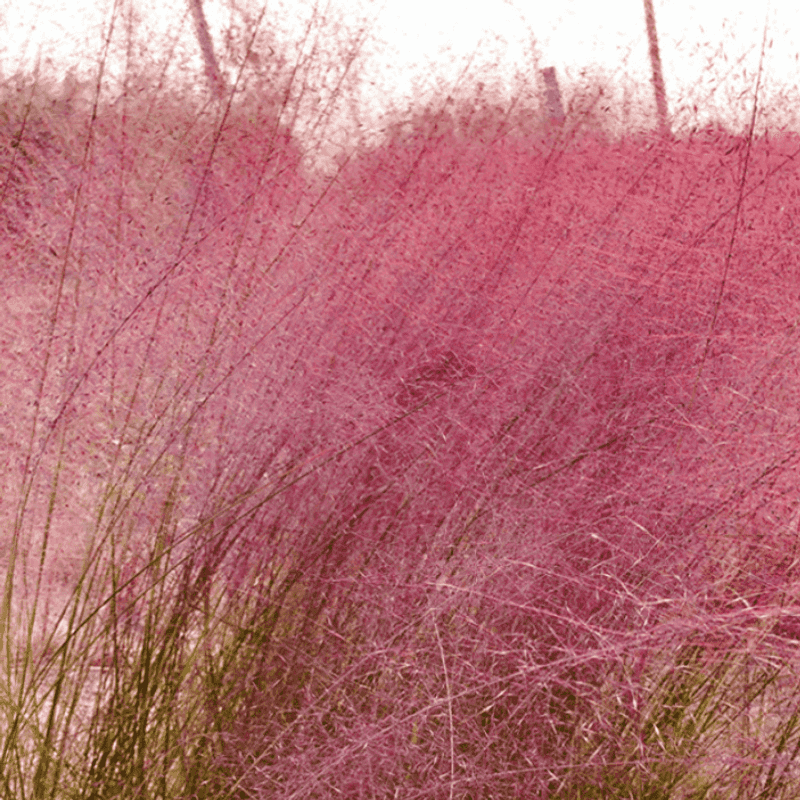
Beyond looks, the plumes may do a little good. The Arizona-Sonora Desert Museum says the seed plumes provide food for birds and attract ladybugs.
That is the documented extent of it. Treat it as a possible bonus rather than a promise.
Visits depend on your neighborhood, nearby plants, and plenty of other factors.
It does not mean the grass will control pests or draw in other particular creatures. Enjoy any birds or ladybugs that show up as a pleasant extra, and choose the plant mainly for its fall color.
Choose it for fall color, not a no-water or native-plant promise
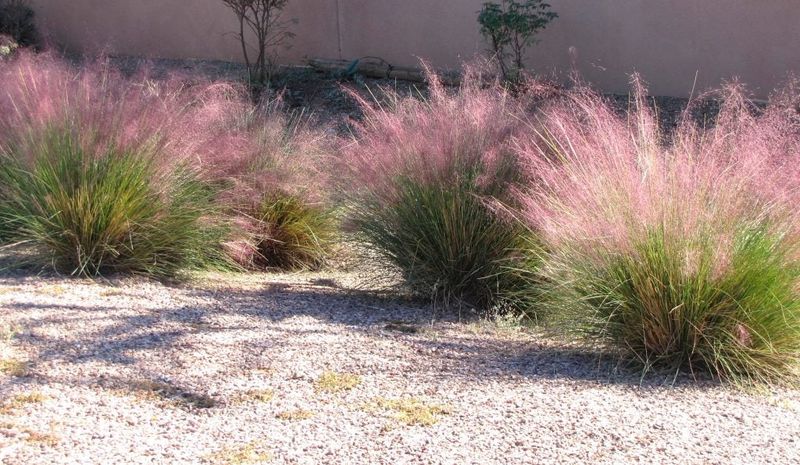
Here is a quick test. If you want an airy pink display in fall, have a sunny spot with some space around it, and can look after the plant while it settles in, pink muhly may suit you.
If you want a true Arizona native, look elsewhere. As the Arizona Municipal Water Users Association notes, this grass comes from Texas and the Southeast.
And while the Phoenix-area plant list rates it low relative to other plants, low water is not no water.
Results will differ from yard to yard. Pink muhly is a fall show worth planning for, not a miracle.