Vivid Purple Berries Along Alabama Roadsides Come With A Mosquito-Repelling Reputation
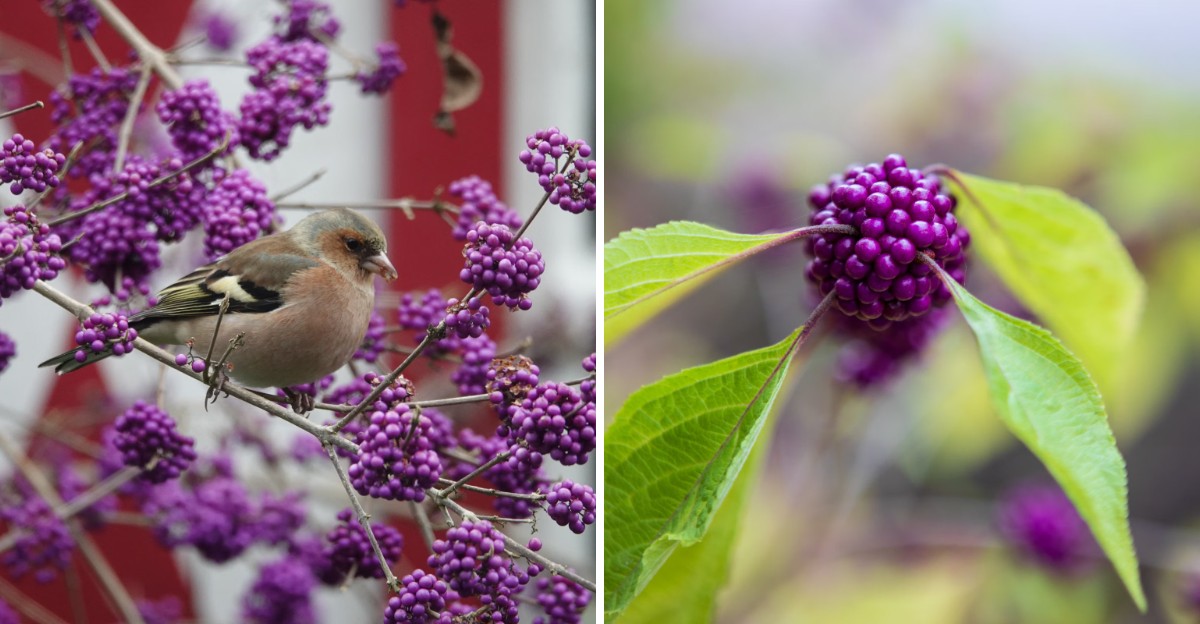
You pass a shrub in Alabama and its berries glow like neon. Slow down and you meet American beautyberry, a roadside plant with a surprising secret.
Rub a leaf between your fingers and you release a sharp, grassy scent. Your grandparents wiped those leaves along their arms before dusk.
Scientists in a USDA lab isolated callicarpenal, the compound mosquitoes avoid. Ticks and fire ants backed away in later trials.
Some lab tests found purified compounds performed near DEET, the repellent you apply to skin. Now you know a roadside plant holds some lab-tested promise.
Berries ripen in autumn across Alabama, so you can spot them early. Test a small patch of skin before you trust any homemade rub.
Evidence sits in published lab studies, and you can read it first. Rinse a leaf, rub it gently, and judge for yourself.
A Native Shrub With Mosquito-Repelling Compounds
Beautyberry is not a tested replacement for store repellents, so use proven products where mosquito-borne illness is a concern. Southern farmers relied on its leaves long before spray cans existed.
They crushed fresh leaves and rubbed them on their skin and on their mules to keep biting bugs away.
The secret lives in the leaves, not the berries. Compounds found in the leaves deterred mosquitoes and ticks in lab tests.
Scientists at the USDA tested these old claims in the mid-2000s. They found chemicals called callicarpenal and intermedeol that pushed bugs away in lab tests.
Those results supported part of what grandparents had claimed for generations. Years of lab work gave folk wisdom partial backing.
You can try the trick yourself on an evening walk. Rinse a handful of leaves from a plant away from busy roads, crush them between your palms, and rub the juice on your arms.
The smell is sharp and green, a bit like a mix of herbs. Some people love it, while others wrinkle their noses at first sniff.
Test a small patch of skin before covering yourself in leaf juice. Some folks may react to plant oils, so caution is wise.
Field tests of crushed leaves showed little repellent effect, so rely on proven products for long evenings outdoors.
A beautyberry bush near your patio offers a handy supply through the season. Picking a few leaves takes seconds and costs little.
Think of it as a garden plant with a long folk-use history. It also looks gorgeous in autumn. Pairing a leaf rub with light clothing and a shaded porch gives you a gentler routine for long evenings outdoors.
October Color Along Southern Country Roads
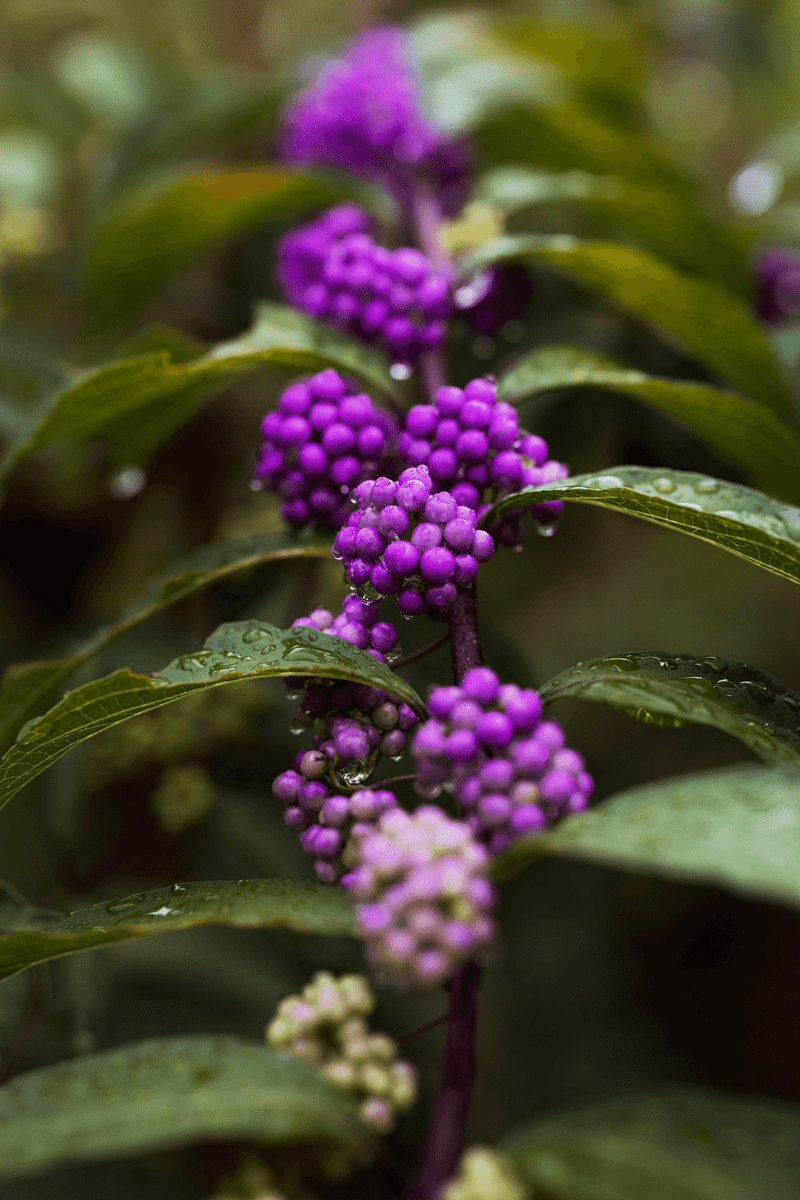
Picture a gray fence line suddenly dotted with glowing grape-colored beads. That scene plays out across Alabama each autumn, and October often brings the peak show.
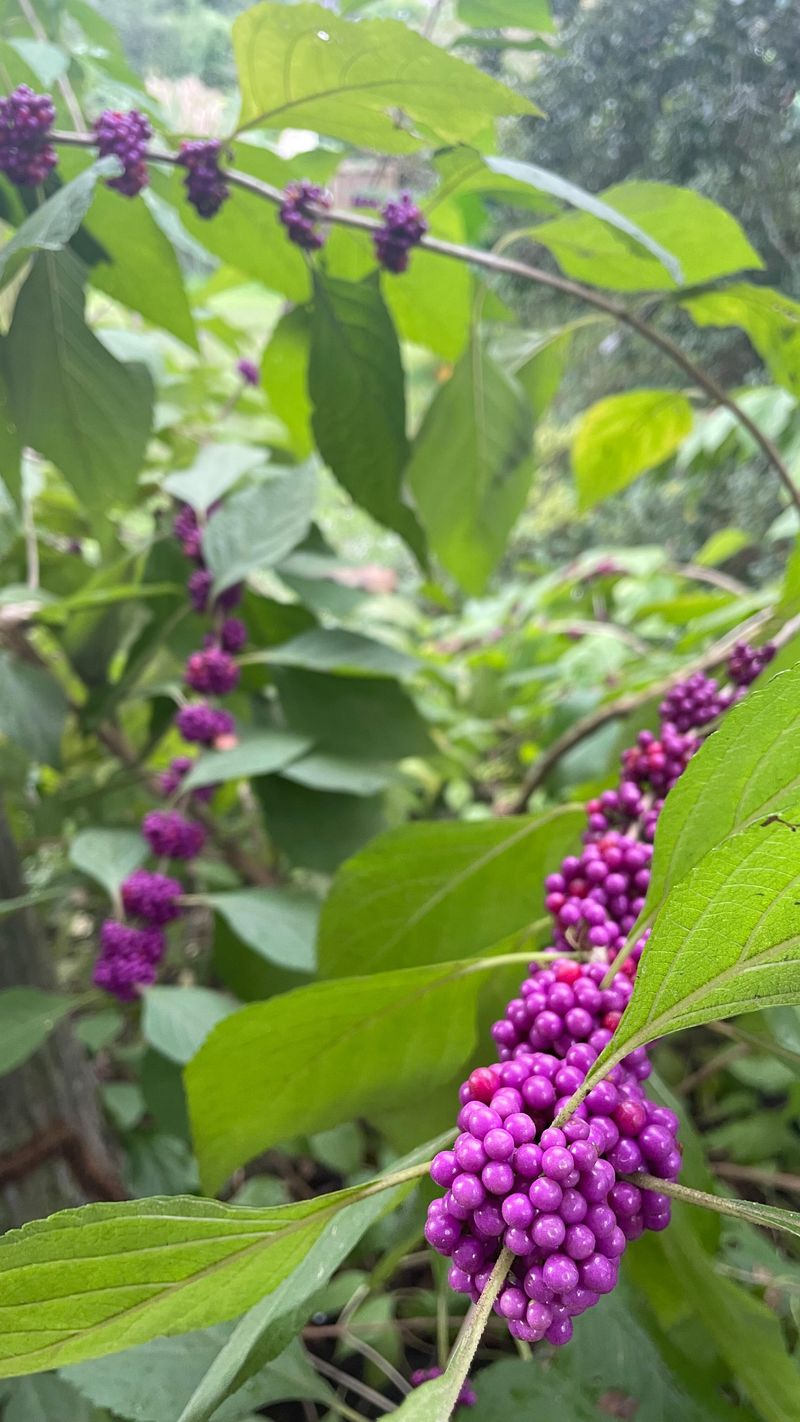
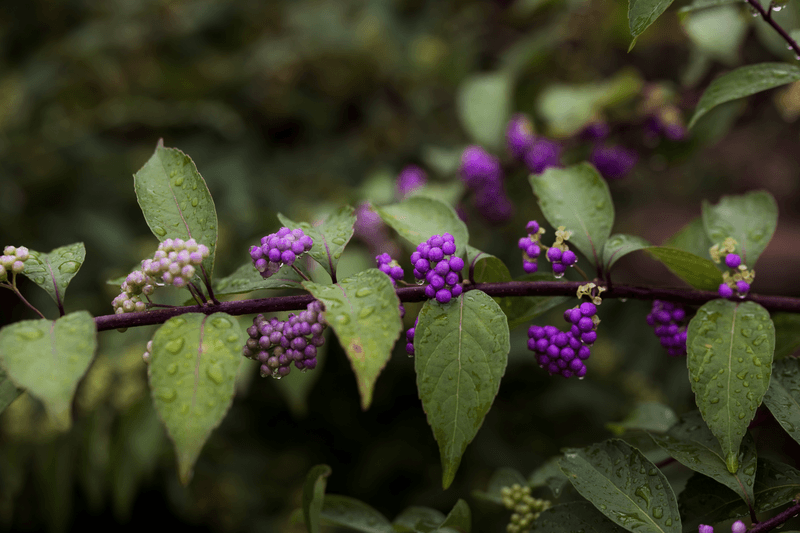
The berries form tight clusters that wrap around the stems like bracelets. Each cluster sits right where a pair of leaves meets the branch.
Small pink flowers appear in early summer and get little attention. By late August, green berries start turning lavender, then deep violet.
Your Alabama Garden Changes Every Week. Your Plan Should Too.
Gardening in Alabama changes quickly throughout the season. Every Friday you’ll receive a simple weekly plan showing exactly what to plant, prune, fertilize, harvest, and protect so you never miss the right timing.
Once the leaves drop in late fall, the berries look even brighter. Leafless stems make the purple clusters pop against brown woods.
You will spot beautyberry along forest edges, pine woods, and ditches. The plant likes partial shade but tolerates sunny spots too.
Look for arching branches about three to eight feet tall. Leaves are wide, soft, and slightly fuzzy on the underside.
The color lasts for weeks unless hungry wildlife gets there first. Many bushes stay showy into November or early December.
Bring a camera on a drive this month to capture the glow. Morning sun makes the berries shine like tiny polished gems.
The genus name Callicarpa comes from Greek words for beautiful fruit. The name fits the plant.
Few native plants deliver such a bold fall surprise. The purple stands out against brown autumn woods.
Photographers like the soft light of early morning, when dew clings to the clusters and the colors deepen.
The Pruning Mistake Many Gardeners Make
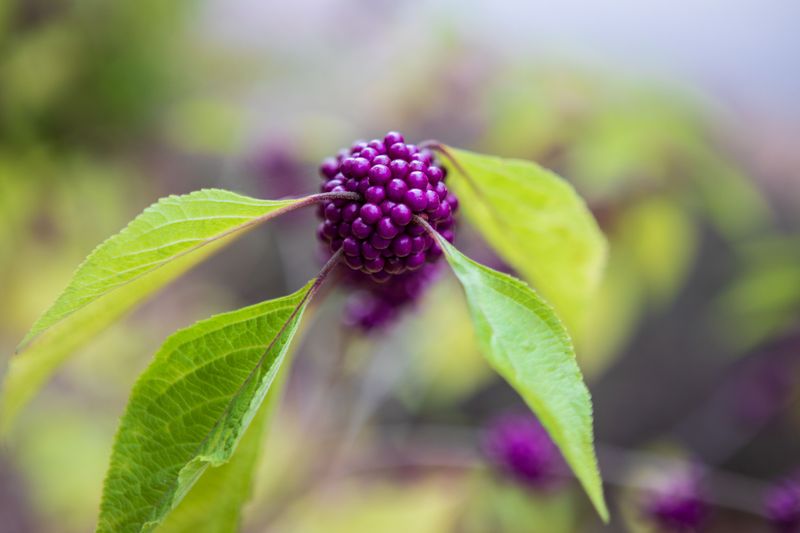
Consider a common pruning slip. A gardener trims her beautyberry in spring to keep it tidy, then wonders why fall brings so few berries.
The problem is timing, plus a little confusion about how the plant grows. Beautyberry blooms and fruits on new wood, meaning this season’s fresh stems.
Trimming in late spring or summer cuts off those growing branches. You end up snipping away the flower buds before they ever open.
The fix is simple and rather satisfying. Prune in late winter, roughly February in Alabama, before new leaves appear.
Many gardeners cut the whole shrub down to about one foot tall. It sounds drastic, yet the plant bounces back fast with dense growth.
That deep cut creates a rounder shape and more berry clusters. Unpruned bushes can get leggy, floppy, and sparse in the middle.
Another slip is feeding the shrub too much fertilizer. Rich food pushes leafy growth while berries take a back seat.
Beautyberry prefers lean soil and modest care. A layer of compost or mulch in spring usually gives enough nutrition.
Waterlogged soil can cause trouble too, so let the ground dry slightly between drinks once the plant settles in.
Treat this shrub as a low-maintenance plant that needs little fussing. Give it one bold winter trim, then let it do its thing.
A tidy shape also makes the shrub easy to enjoy near walkways, where visitors admire the clusters.
Planting Beautyberry In Your Own Yard
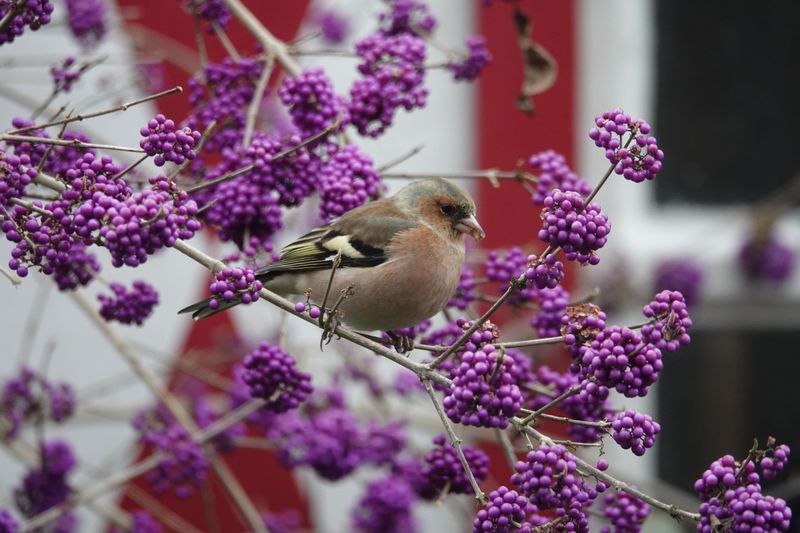
Fall is a great season to plant one in the Deep South. Cool air and autumn rain help roots settle before summer heat arrives.
Start by choosing a spot with morning sun and afternoon shade. Full sun works too, though the shrub may need extra water.
Dig a hole twice as wide as the root ball. Keep the depth the same so the top of the roots sits level with the ground.
Fill the hole with native soil rather than fancy mixes. Beautyberry adapts well to sandy, loamy, or clay ground across Alabama.
Water deeply right after planting, then weekly through the first season. A two-inch layer of shredded bark keeps moisture steady.
Give each shrub plenty of elbow room, about five feet apart. Mature plants spread wide with graceful, arching branches.
Local native plant nurseries often carry healthy potted shrubs. You can also grow new plants from seeds or cuttings with patience.
To try seeds, mash ripe berries and rinse away the pulp. Sow them outdoors in fall and let winter weather handle the rest.
White-berried varieties exist for anyone craving something different. Mixing purple and white shrubs makes a striking garden border.
Once established, the plant tolerates drought and needs little care. Busy families will appreciate a shrub that asks for so little.
Neighbors often share cuttings, so a friendly conversation over the fence can start your own planting for free.
A Food Source For Birds And Backyard Wildlife
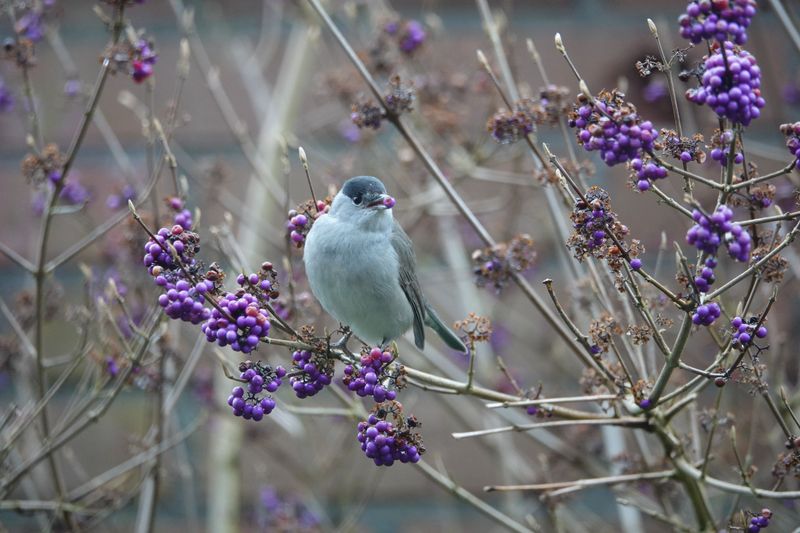
Watch a beautyberry bush for ten minutes and you might see a busy diner. Mockingbirds, cardinals, and brown thrashers drop in for purple snacks.
Many bird species eat these berries. Northern bobwhite quail, robins, and towhees join the crowd as winter nears.
The fruit often hangs on through late fall when food grows scarce. That timing makes the shrub a useful food source for migrating songbirds.
Deer browse the leaves and twigs during warmer months. Raccoons, opossums, and foxes also nibble berries that fall to the ground.
Summer flowers attract bees and small butterflies looking for nectar. Your yard gains pollinator power before the berry show even starts.
Gardeners hoping to support wildlife will find few better choices. The dense branches give small birds safe places to hide from hawks.
Skip chemical sprays near the shrub to keep visitors healthy. Bugs on the leaves become protein for growing baby birds.
A water dish nearby turns the area into a full rest stop. Birds love a quick bath after a berry breakfast.
Humans can eat ripe berries too, though the taste is mild and mealy. Many Southern cooks turn them into a pink, floral jelly.
Eat only small amounts raw, since they can upset tummies. The birds, it seems, got the better end of this deal.
Planting a few shrubs together gives songbirds a bigger buffet and gives you a closer view of the visitors.
Smart Habits For Careful Leaf Use And Healthy Shrubs
Old remedies deserve respect, plus a dose of common sense. A few smart habits keep both you and your shrub in great shape.
Pick leaves only from plants growing away from busy roads. Roadside foliage can collect dust, exhaust, and herbicide spray.
Rinse the leaves before crushing them for skin use. Clean hands and clean plant material lower the chance of irritation.
Keep leaf juice away from eyes and mouths, especially with kids. Grown-ups should help younger children apply it safely.
Homemade sprays circulate online, but no strong evidence shows they work. A fresh leaf rub is the better-documented folk method.
Harvest gently so the bush keeps growing strong. Taking a few leaves from several stems beats clearing one branch of its leaves.
Check your shrub each spring for crowded or broken stems. Clearing old growth lets light and air reach the center.
Healthy plants tend to grow fuller as they mature. Treat yours kindly, and it can offer leaves and berries for many years.
Share these habits with family and friends so others enjoy the plant with confidence and care.