How To Get Plumeria Ready For Its Winter Rest In California
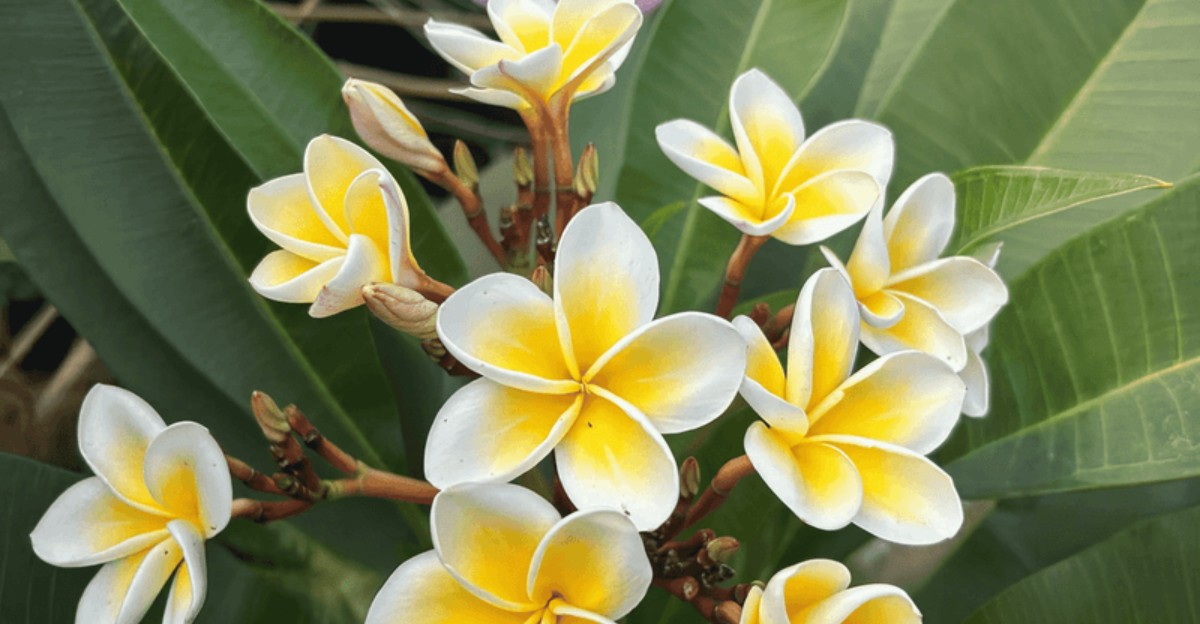
Autumn brings a quiet turning point for one of California’s beloved tropical plants. Long, glossy leaves begin to yellow at the edges, and crisp evenings hint that a change is underway.
Uncertainty often follows. A watering can hovers, a bag of fertilizer waits on the shelf, and the right next step feels unclear.
The answer is simpler than most people expect. This plant has its own way of handling cooler weather, and working with that rhythm matters more than fighting it.
Coastal gardens, inland valleys, deserts, and northern yards each add their own twists.
A thoughtful routine from fall through spring keeps everything on track.
A peaceful winter now can set the stage for a summer full of fragrant blooms.
1. Stop Fertilizing In Early Fall
October feedings give this tropical plant a burst of energy right when it should be winding down. Soft new growth follows, and that tender growth handles cold poorly.
The last feeding fits best in late summer or very early fall. Around September works well for most of California.
After that, fertilizer can stay on the shelf until spring. Hot inland areas might stretch the last feeding a few weeks later, though the cool months are best left alone.
Timing matters because fertilizer pushes leaves and stems to grow. As temperatures drop, the plant needs to harden its branches and store energy in its thick stems.
Extra nitrogen works against that natural process. The plant ends up confused about the season, growing when it should rest.
Leftover fertilizer can also build up in the soil of a pot. Once the plant stops drinking much water, those salts stay put and can burn roots that are already resting.
Skipping fall feeding keeps the soil cleaner for winter. Roots rest more comfortably as a result.
Slow-release pellets deserve extra thought. Many keep feeding for three to six months, so pellets added in summer may still be working in November.
Checking the label and planning backward from the first cool nights prevents surprises. A plant that looks hungry in autumn isn’t asking for food.
It’s simply getting ready for bed.
2. Let Leaves Drop Naturally
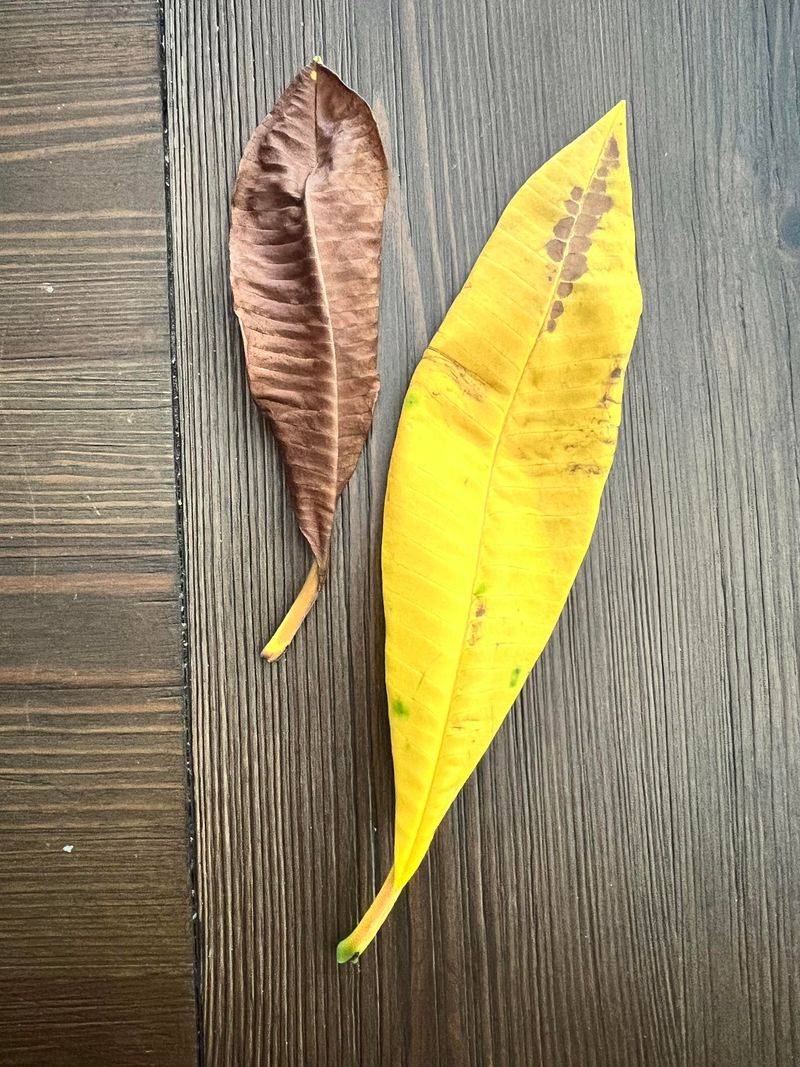
Yellow leaves piling up around the pot can look alarming. Many new owners assume something has gone terribly wrong, yet leaf drop simply marks the plant’s way of saying goodnight.
As days shorten and nights cool, plumeria pulls nutrients back from its leaves into its stems. Leaves turn yellow, then brown, and then fall away.
Before long, bare, thick branches appear, looking a little like antlers or fingers. That sculptural shape carries its own quiet winter charm.
Leaves that are still green are best left in place. They continue sending stored food back into the plant.
Pulling them early can tear stem tissue and leave small wounds. Those openings give fungus and rot an easy way in during damp weather.
A gentle tug test helps. A yellow leaf that lets go with almost no pressure is ready, while one that resists deserves another week or two.
Your California Garden Changes Every Week. Your Plan Should Too.
Gardening in California changes quickly throughout the season. Every Friday you’ll receive a simple weekly plan showing exactly what to plant, prune, fertilize, harvest, and protect so you never miss the right timing.
Fallen leaves are best swept up and discarded. Old leaves can carry rust, a common plumeria fungus that shows up as orange powder on the undersides.
Leaving them on the soil lets spores linger until spring. Clean pots and tidy surroundings make a healthier start next season.
Some plants near the mild coast keep a few leaves all winter, while others go bare by December. Both patterns are normal, depending on local weather.
Letting the plant set its own pace works best.
3. Move Pots Under Cover Before Frost
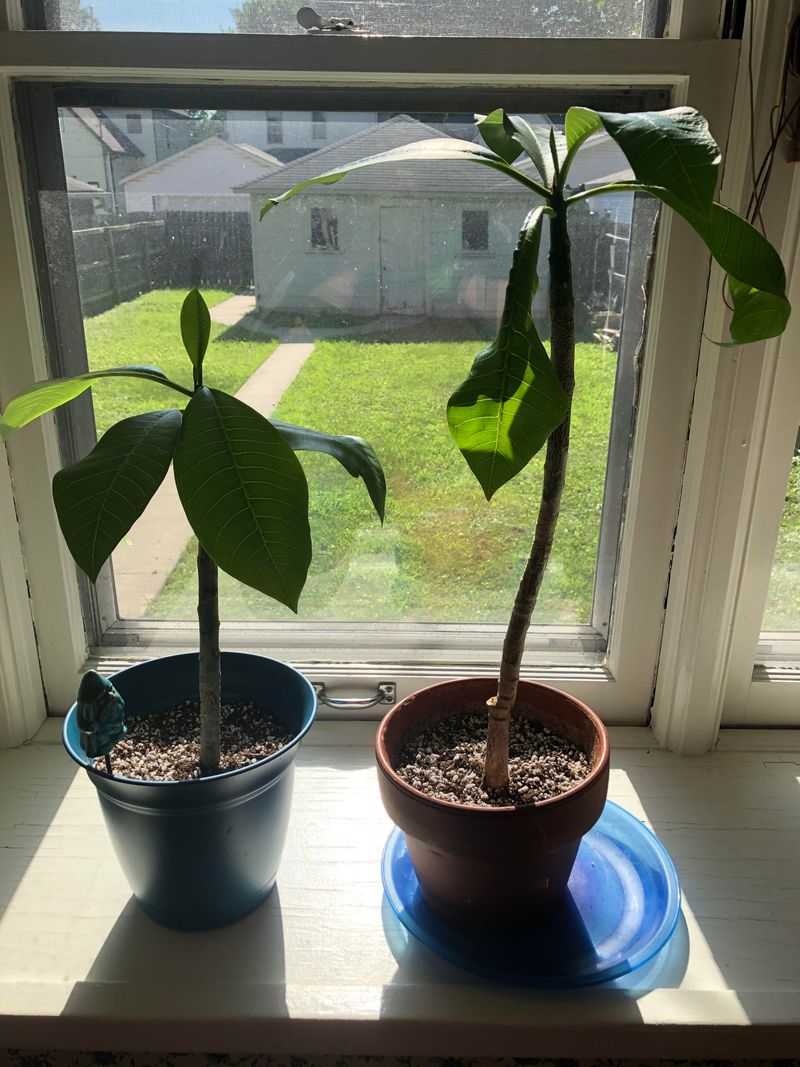
One clear, still night can do serious damage. Frost settling on branches can turn tips mushy and black by morning, and since plumeria is frost-tender, prevention beats repair.
Close attention to the forecast pays off from November on. Damage often begins when temperatures reach the low 30s, and freezing temperatures can seriously harm the plant.
Many California gardeners start moving pots once nights fall into the low 40s. That habit leaves a comfortable safety margin.
Location changes the plan. Coastal Southern California rarely sees frost, so a spot under an eave or patio cover may suffice.
Inland valleys, the high desert, the Central Valley, and Northern California run colder. Gardeners there usually need a garage, shed, or other enclosed space.
Big pots get heavy, especially with damp soil. Rolling plant caddies save backs and make moves easy.
Drier soil lightens pots, too, another reason to cut back water early.
In-ground plants can’t be moved. Frost cloth draped over them on cold nights, reaching all the way to the soil, traps ground heat effectively.
Removing the cover in the morning once temperatures rise prevents overheating. Old-style incandescent holiday lights strung under the cloth add a little extra warmth.
A sudden cold snap rarely waits for a convenient weekend. Clearing and preparing shelter space by early November allows quick action when frost threatens.
October makes a great month to start that cleanup.
4. Cut Back Water As Nights Cool
A pot that stays soggy for a week under weaker sun and colder air spells trouble. Roots sitting in wet, chilly soil invite rot, the top winter troublemaker for plumeria.
Once night temperatures start dipping into the 50s, easing off the watering can makes sense. A gradual change works better than stopping all at once.
Twice-weekly summer watering can shift to once a week. Later, the gap can stretch to every ten days or more.
The soil offers the best guidance. A finger pushed two or three inches into the pot reveals whether moisture remains.
Damp soil calls for waiting. Dry soil gets a modest drink, with extra water draining freely out the bottom.
Fall weather in California can swing wildly. A hot Santa Ana wind might bring a few warm, dry days in November.
Potted plants may need a small extra sip during those spells, then return to the slower schedule once cool weather comes back.
Plants in the ground follow similar rules. Drip lines feeding them can be reduced or switched off.
Fall rain may cover in-ground plumeria near the coast entirely. Nature handles much of the work there.
A gradual cutback sends a clear signal. Less water plus cooler nights tells the plant that rest season has arrived.
It responds by slowing growth and preparing to shed its leaves, much like dimming the lights before naptime.
5. Keep Resting Plants Nearly Dry
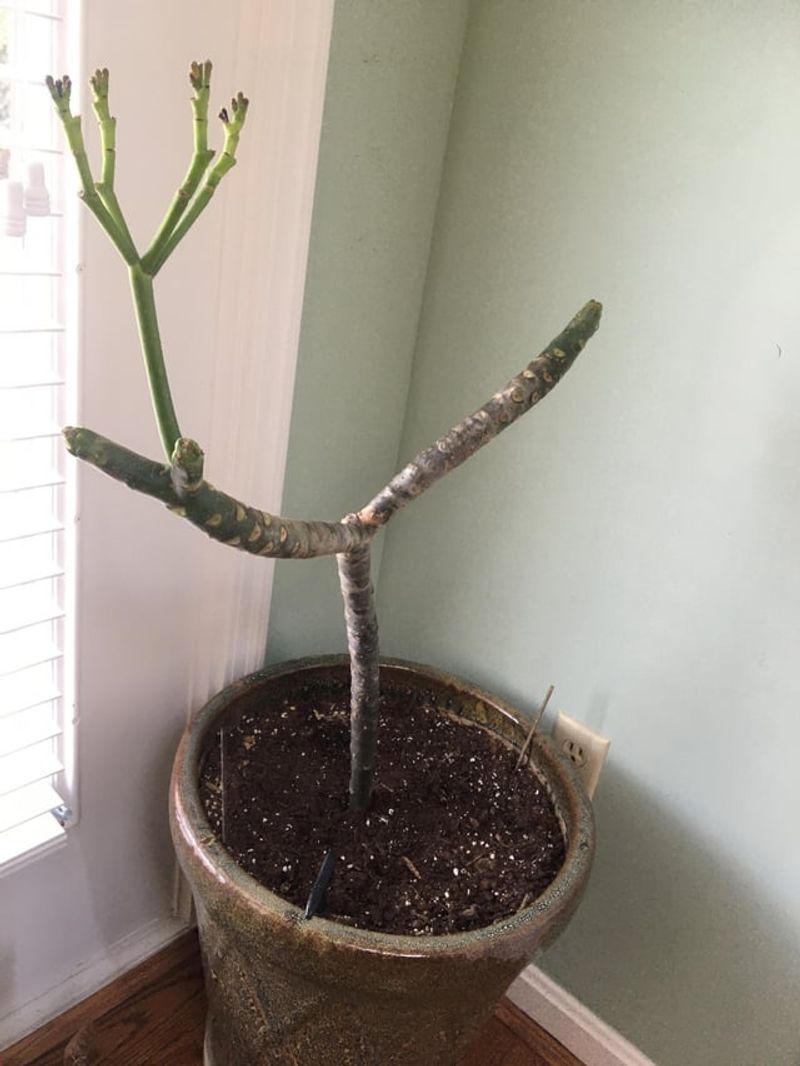
Many gardeners are surprised to learn that a dormant plumeria may need almost no water for weeks or even months. With no leaves, it loses very little moisture, and its fat stems act like built-in water tanks.
Overwatering causes far more winter trouble than thirst. Cold, wet soil invites root rot and stem rot.
Once rot reaches the base of the plant, it can spread quickly and prove very hard to stop. Prevention matters far more than any cure.
Nearly dry soil suits the plant best while it rests. In a cool garage or shed, many potted plumerias do well with no water at all.
Some gardeners give a small splash once a month when the soil turns bone-dry and stems start to wrinkle. A cup or two suffices for a medium pot.
Plants left outdoors under cover in mild coastal areas may catch blowing rain. Pots that drain freely, kept out of saucers of water, stay much safer.
Tipping out standing water after storms helps, too. A quick check after each rain takes only moments.
Bare-root plumerias stored out of their pots need no water at all. Gardeners in colder regions sometimes dig plants up and store them dry, since the stems carry enough moisture to last until spring.
Much like a camel crossing a desert, a resting plumeria packs its own supplies. Those thick, sturdy stems do their job well, so the watering can stays parked for the season.
6. Store Bare Plants In A Cool Frost Free Spot
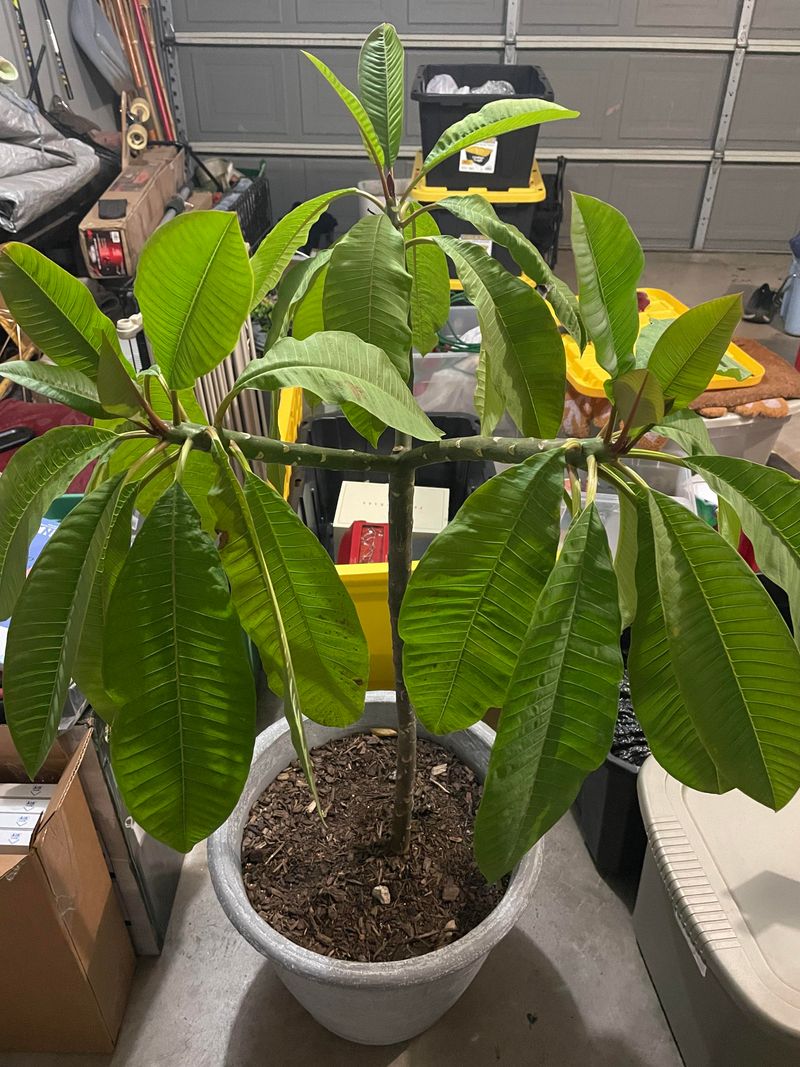
A cluttered garage might make the best winter hotel for this tropical favorite. Cool, dark, and dry sounds odd, yet it matches exactly what a resting plant wants.
Bright light and warmth matter much less during dormancy.
A spot that stays above freezing all winter makes the right choice. Many growers aim to keep plumeria at 40 degrees or warmer for safety.
An attached garage often holds heat better than a detached shed. A simple wall thermometer helps track cold nights.
Darkness works fine for a leafless plant. Without leaves, it isn’t making food from sunlight anyway, so a nearby window counts as a bonus rather than a must.
A dry space with a little room between plants works best. Good airflow helps prevent mold and mildew on stems.
Pots crowded against cold outside walls or placed beside a drafty door face more risk. A bit of spacing protects them.
Indoor living rooms can work in a pinch, though they bring problems. Warm air may wake the plant too early, causing weak, stretched growth.
The coolest room, away from heater vents, makes the better choice.
Bare-root plants can rest on their sides or in boxes lined with newspaper. Labels with each name and color simplify spring planting.
Some collectors keep a small notebook, too. Once a garage turns into a plant dormitory, a little organization goes a long way.
7. Check Stems For Firmness Each Month
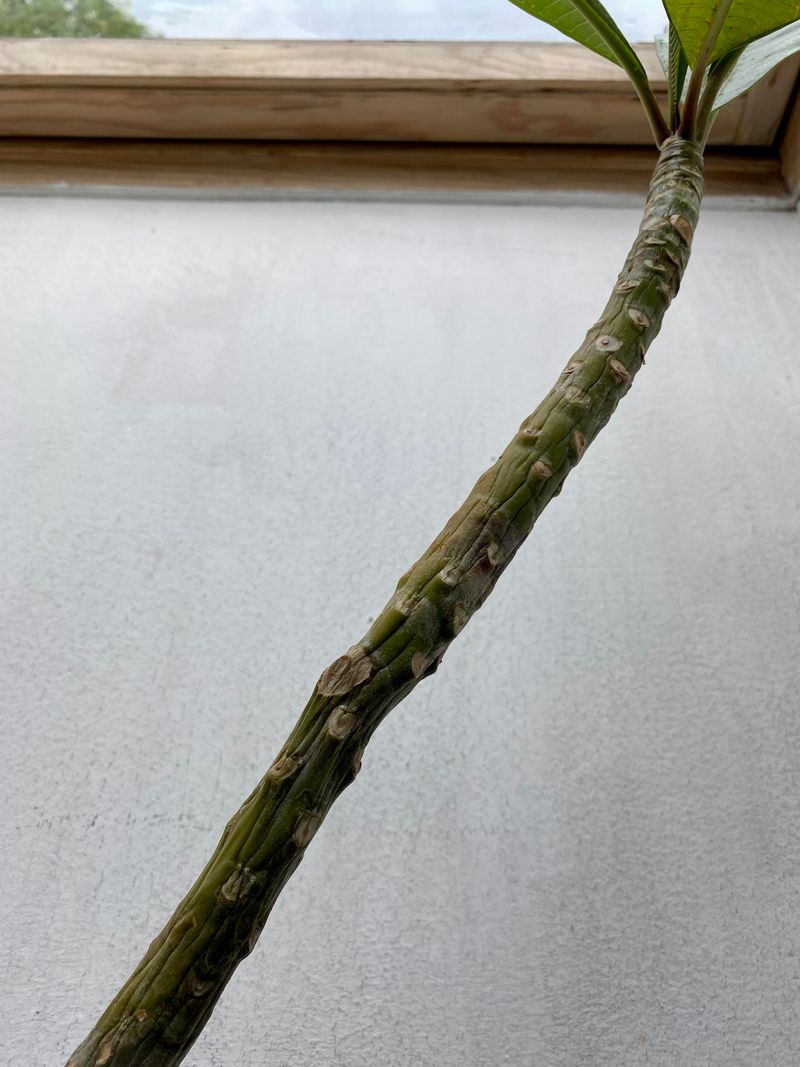
A gentle squeeze on each branch, much like testing an avocado at the store, offers the best winter checkup. A healthy plumeria stem feels firm and solid.
A monthly reminder, perhaps on the first day of each month, keeps the habit consistent. Each visit to the stored plants, checking stems from tip to base, takes just a few minutes.
Firm and smooth means good news. Slightly wrinkled but still hard usually means the plant feels a little thirsty, and a small drink can help, though a light hand works best.
Soft, mushy, or dark spots signal trouble. They often point to rot from too much water or cold damage.
Quick action makes a difference. Clean, sharp pruners cutting away the soft section, continuing until firm, white, healthy tissue appears inside, stop the problem from spreading.
The cut end needs several days to dry and seal. Some gardeners dust it with a little sulfur or cinnamon.
Pruners wiped with household disinfectant between cuts help prevent spreading problems. That simple step protects healthy plants nearby.
Pests sometimes hide in branch joints, too. Mealybugs and scale respond well to a cotton swab dipped in insecticidal soap, which removes small groups easily.
Notes on each monthly check reveal patterns over time, such as one plant that always wrinkles or another stored too close to a cold wall.
That monthly squeeze becomes valuable know-how by spring.
8. Resume Watering As Spring Warms
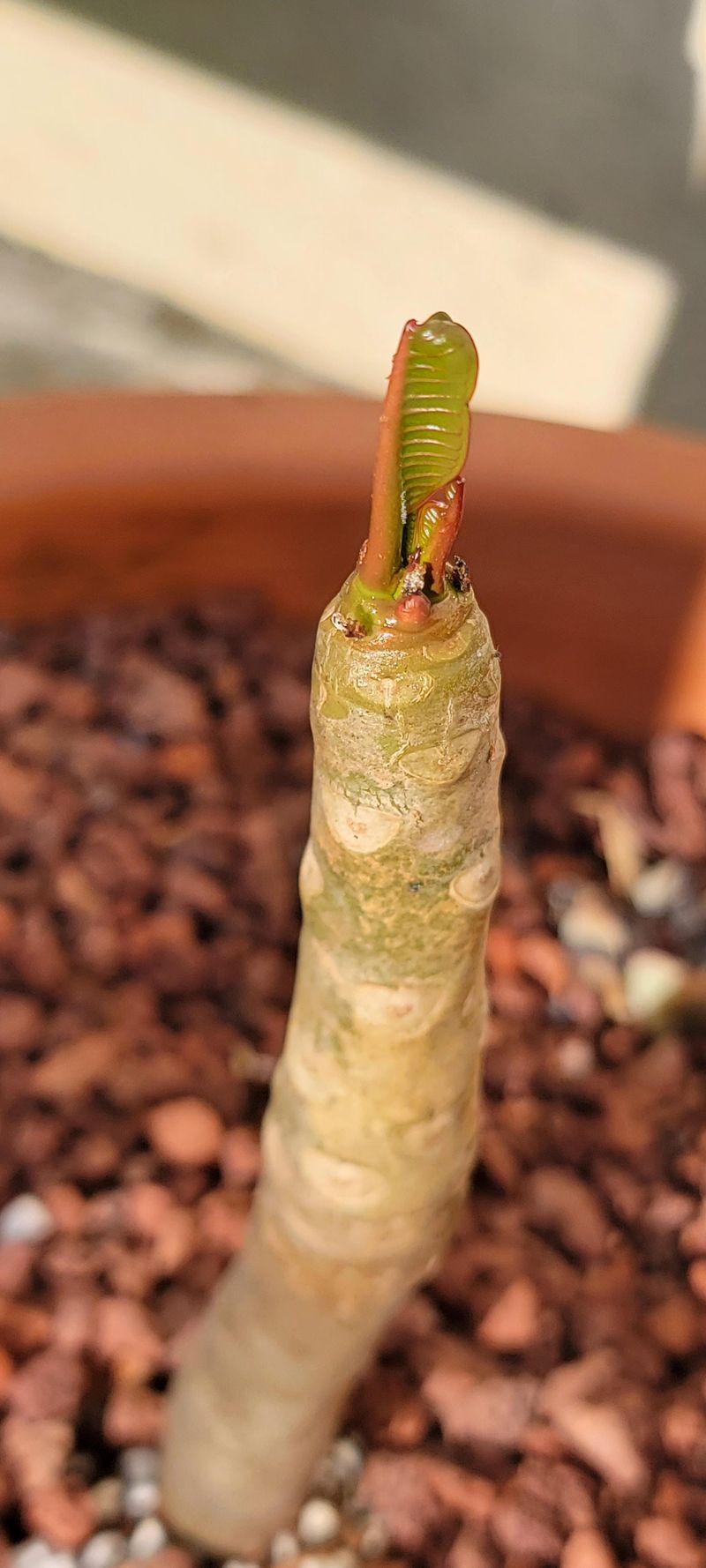
Tiny green tips poking out of branch ends signal the moment every grower waits for all winter. The plant is stretching and yawning, and spring has officially arrived.
Timing depends on location. Coastal Southern California plants may wake in March, while colder inland and northern spots often wait until April or May, depending on how quickly nights warm.
Plants can move outdoors once nights stay above about 50 degrees and frost danger has passed. A gradual return to sunlight works best.
Weeks in a dim garage leave stems sensitive. Morning sun or bright shade for a week or two, followed by a shift into full sun, prevents scorched bark.
Sudden harsh light can burn tender tissue quickly. Patience during this transition pays off with healthy, unblemished stems.
Watering restarts gently, too. A light drink when new leaves appear and the soil is dry an inch or two down makes a good beginning.
As leaves grow bigger and days get hotter, watering can increase. Roots need time to wake up before handling a full soaking.
Fertilizer waits until the plant carries several healthy new leaves. Feeding then resumes according to label directions.
A fertilizer with phosphorus can help support those famous fragrant blooms.
The first flower buds often appear by early summer. Sweet-smelling clusters reward a careful winter, and the patio soon smells like a tropical vacation.