The Fuzzy White Tufts On Your Arizona Prickly Pear May Be Bugs Hiding Red Dye
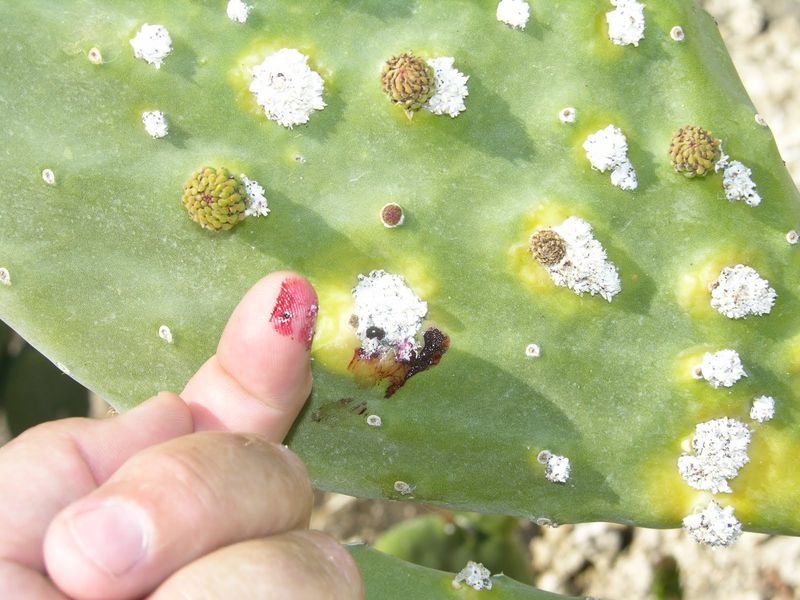
You walk past your prickly pear and spot a patch of white fluff that looks like a bit of cotton snagged on the spines. For some cacti in Arizona, that fluff may be hiding a tiny insect with a bright red secret.
The same red pigment has been used to color foods and cosmetics. Here is how to tell what you might be looking at, and what to do about it.
A cottony patch may conceal a scale insect
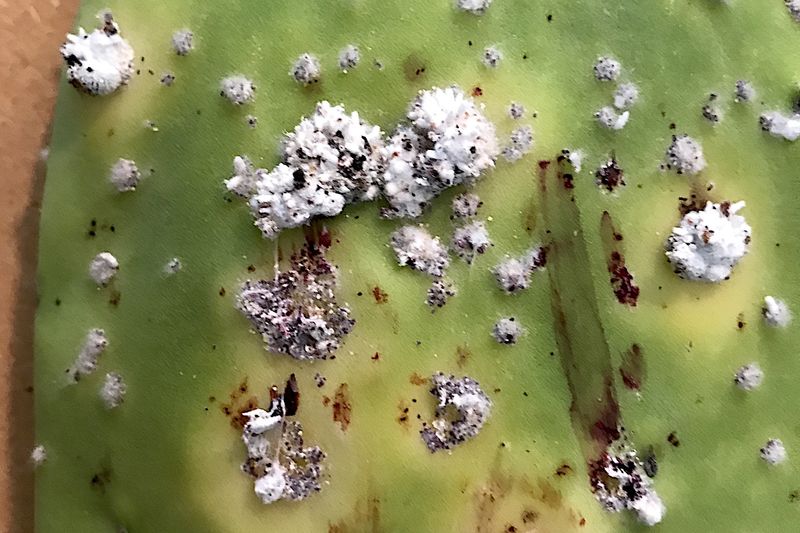
Cottony white blotches on a prickly pear pad can stop a gardener mid-stride. One possible explanation is cochineal scale, a small sap-feeding insect that settles on cactus pads and covers itself with a waxy white coat.
That wax is made by the insects themselves. As described in University of Arizona Extension guidance on cochineal scale, the fluffy material shelters the bodies underneath, which makes a colony look like a little tuft of cotton.
Notice the word possible, though. Not every white patch on a cactus is wax, and not every patch hides an insect.
Other things can look similar, so the fluff is a clue, not a final answer. The real question is what lies under it.
The red color comes from the insect
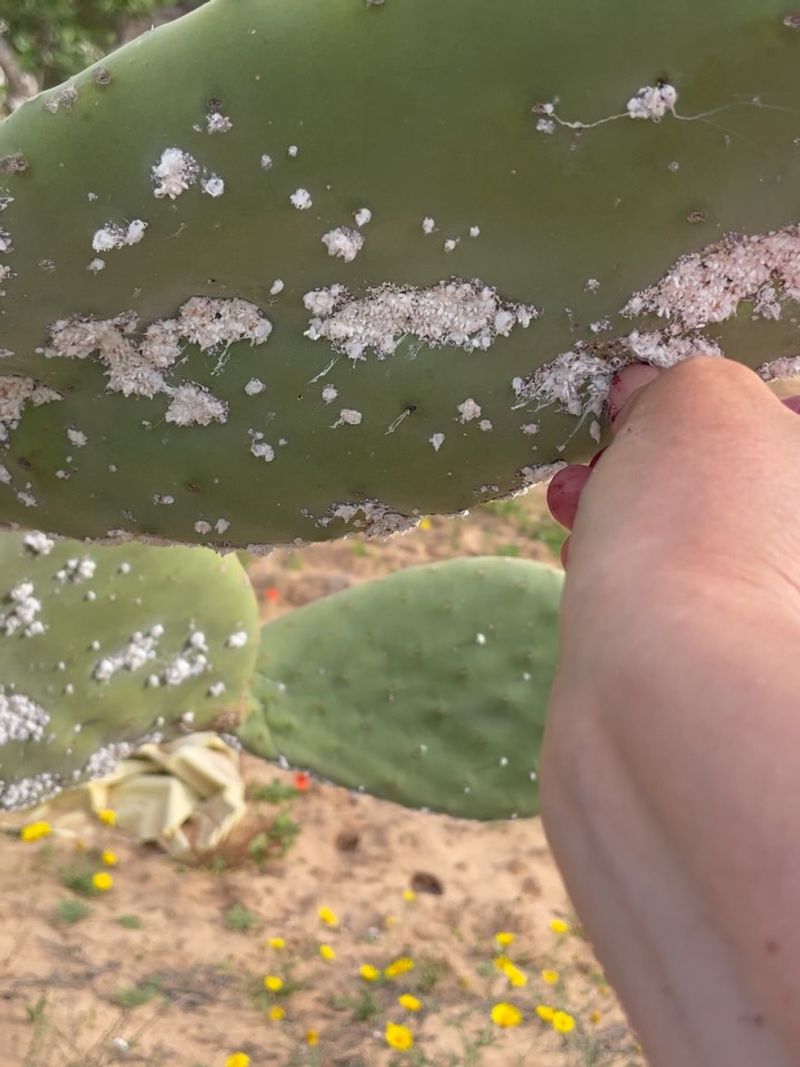
Picture a pale puff on a green pad, and then a streak of deep crimson beneath it. The wax covers soft-bodied insects and their eggs, and the bodies are red inside.
When one is crushed, the color smears like bright ink.
That color belongs to the insect, not the plant. The pigment is carminic acid, a compound the insects produce, and a 2025 review of cochineal insects describes it as the source of the dye.
So it is not cactus blood, and the cactus is not bleeding.
Knowing the stain exists is different from going out to collect it. Pulling at a pad bare-handed is a good way to collect glochids instead, and the red smear is best left as a diagnostic curiosity.
White marks do not confirm cochineal
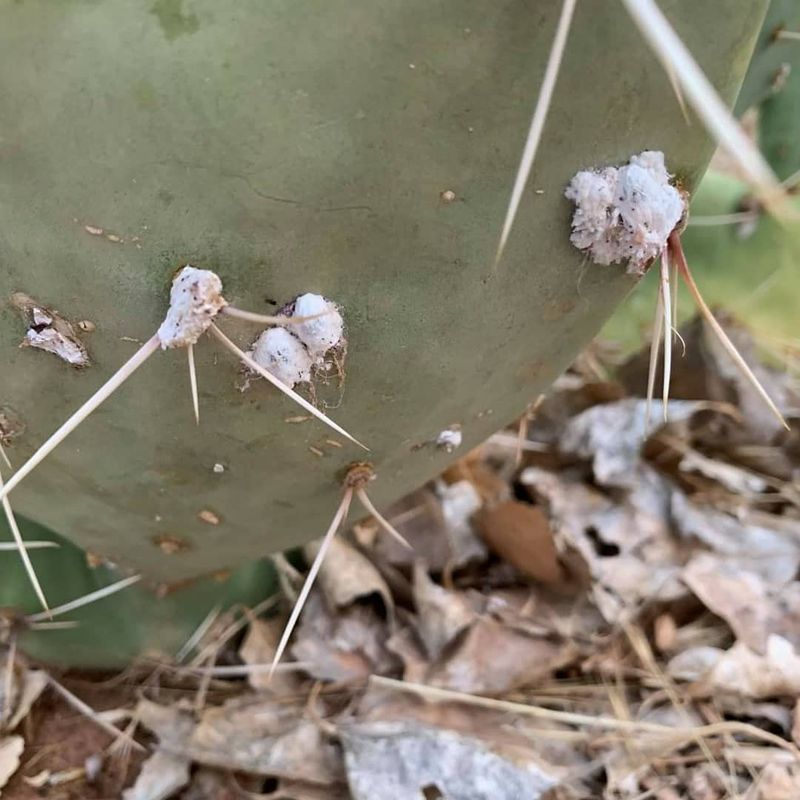
Plenty of things look white on a cactus. Arizona prickly pear can host more than one kind of cochineal, and researchers report that Dactylopius confusus and D. opuntiae both turn up on local plants.
Telling them apart can take an expert, so a yard specimen should never be labeled as the famous dye species from looks alone.
Lookalikes add to the puzzle. UC IPM describes cactus spine scales that can be mistaken for cochineal, and New Mexico State guidance notes that some cacti naturally grow white hairs.
If you want a quick check, one option is to scrape a tiny bit of wax onto paper and see whether it smears red. Use tongs and thick gloves, since prickly pear has tiny glochids that are easy to miss.
Treat the result as a hint, not proof of species.
Carmine is made from carminic acid
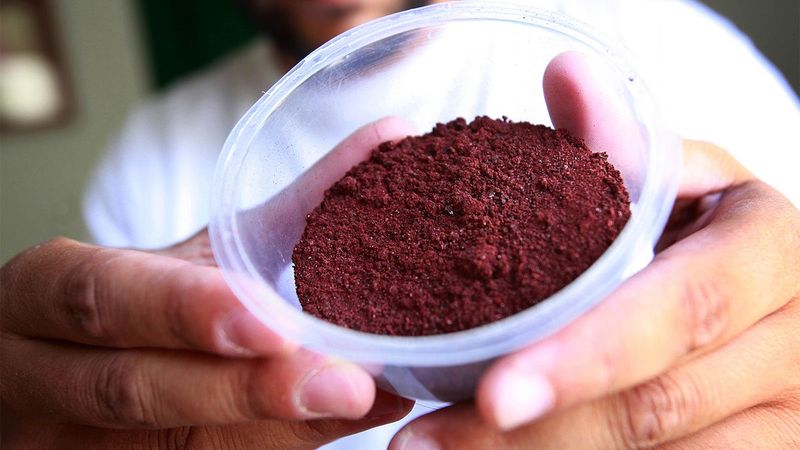
Two similar words cause plenty of mix-ups. Carminic acid is the red compound inside the insect.
Carmine is the dye that people make from it, which has long served as a source of red color.
Your Arizona Garden Changes Every Week. Your Plan Should Too.
Gardening in Arizona changes quickly throughout the season. Every Friday you’ll receive a simple weekly plan showing exactly what to plant, prune, fertilize, harvest, and protect so you never miss the right timing.
The best-known cultivated source is Dactylopius coccus, as covered in the cochineal review. The insects on Arizona prickly pear are related but are not that same species, so a local colony should not be assumed to be the commercial one.
That is also why this is a look-and-learn story rather than a craft project. Turning insects into dye takes specialized processing, and nothing here suggests a safe kitchen method.
Appreciate the connection from a respectful distance.
A colony does not automatically threaten the cactus
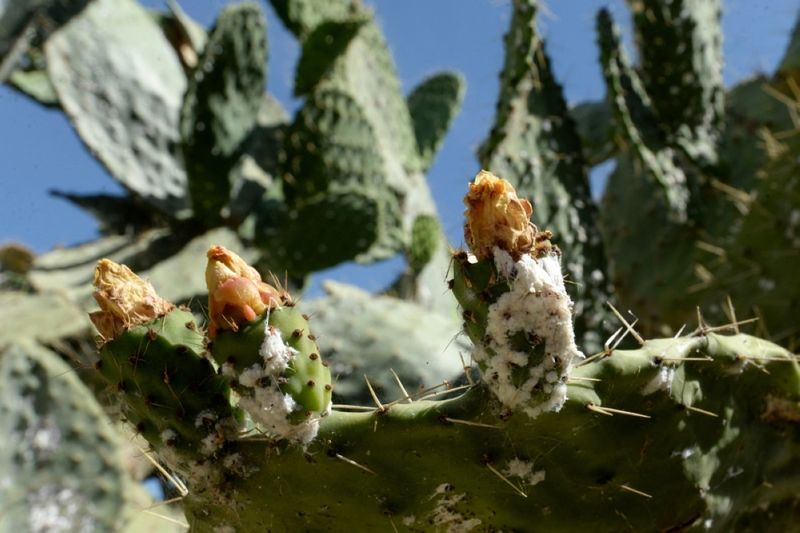
Spotting white tufts does not mean your cactus is in trouble. University of Arizona Extension says the damage from cochineal is usually negligible.
A few patches on an otherwise green, plump plant often call for nothing more than watching.
The picture changes when colonies are abundant and feeding goes on for a long time. Then pads can yellow, shrivel, or look worn out, and heavy feeding can contribute to decline, as UC IPM notes.
A practical check is to compare. Are the patches scattered and small, and is the plant still growing new pads?
Or are many pads blanketed and sagging? Those two situations deserve very different responses.
Treat a declining plant with care
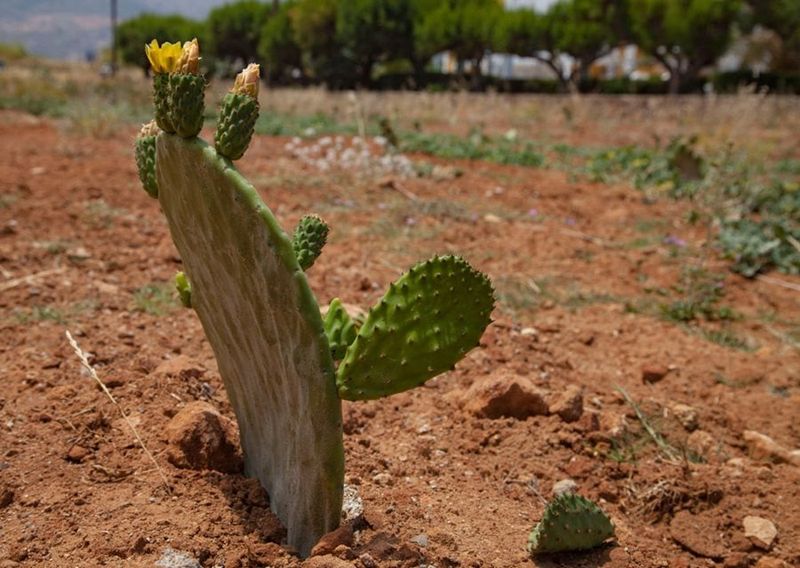
Only a heavily colonized, declining cactus needs action. Start by pruning the worst pads at their joints, as UA Extension suggests.
Then rinse the remaining colonies with a forceful hose spray, but keep the pressure low enough that you do not damage the pads.
If insects remain exposed, a labeled insecticidal soap is an option, and UC IPM covers it. Follow the product label and skip improvised household mixtures.
Handle every pad with care. Glochids are easy to miss, so use tongs and thick gloves for pads or fruit, as UA’s prickly pear guide advises.
A small colony may need nothing at all. Sometimes the best desert gardening move is simply to look closely and leave it be.