Screech Owls Near Your Ohio Home May Help Keep Voles In Check This Winter
Snow blankets the lawn, and underneath it a tiny crew of tunnelers munches through your grass roots, one blade at a time.
Spring brings the bill. Brown trails crisscross the turf, bark gets stripped off young trees, and a few shrubs never leaf out.
Most Ohio homeowners blame bad luck or reach for poison.
A small night worker may already be on the case right over your head. It hunts in total silence.
It works for free. It rarely gets credit, since almost nobody ever sees it.
A few details in your yard decide where it settles for the winter, and most of them cost nothing to fix.
Step outside after dusk this week and listen for a soft, trembling whistle. The sound tells you more than any trap ever could.
The Eastern Screech Owl Is One Of Ohio’s Most Common Owls
Here is a surprise for many Ohio families. The owl most likely living near you is about the size of a soda can.
The Eastern Screech Owl is the most common owl in the state, and it shows up in every single county.
Bird watchers who go looking for them often find several in just a few hours. That tells you just how plentiful they are.
Still, most people go years without spotting one because these birds are masters of hiding.
Part of their success comes from their size. A small owl needs less food and less space than a big one.
It can tuck itself into a tree hole that a larger owl could not squeeze into.
So why should you care? A healthy owl population means more natural pest control around your yard.
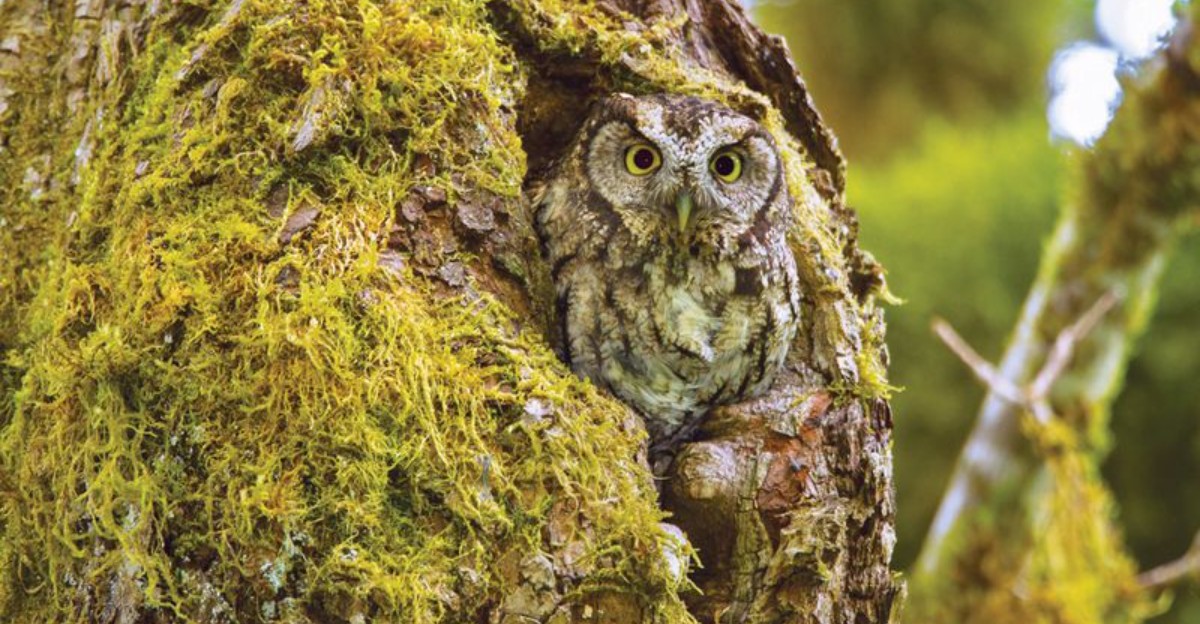
When you know these birds are common, you start to notice the signs, like a round face peeking out of a hollow maple.
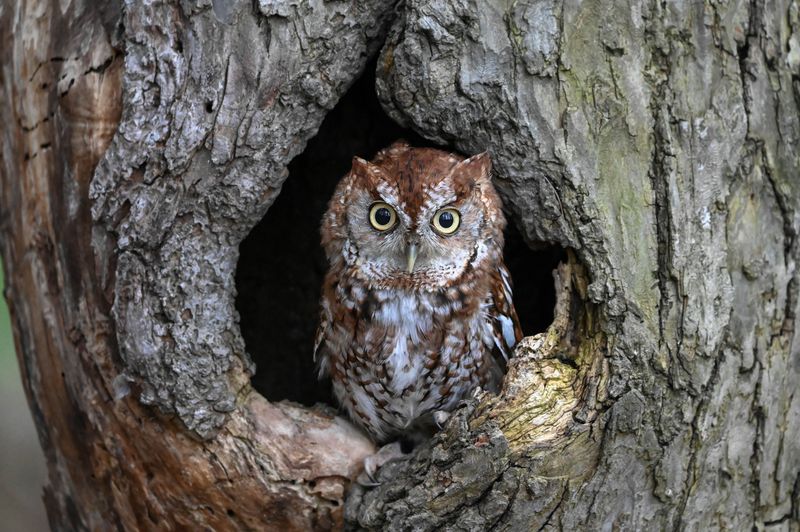
Try this simple tip. On a calm winter afternoon, walk your neighborhood and scan older trees for holes about three inches wide.
Look for a small gray or rusty face filling the opening. You may be amazed at how close your new neighbor has been living all along.
It Stays Close To Home All Winter
Some birds pack up and fly south when the leaves fall. Not this one.
The Eastern Screech Owl sticks around all year, braving icy winds and snowy nights right in your neighborhood.
Scientists call this being non-migratory. Each owl keeps a home territory and patrols it through every season.
A mated pair may even use the same tree hole in both winter and summer, like a cozy cabin they refuse to sell.
That loyalty is great news for your garden. When most other predators are gone or sleeping, this little hunter keeps working.
Voles and mice stay active under the snow, and the owl is there to meet them.
Very harsh weather can push an owl to wander a bit in search of food. Even then, most return to familiar trees once things calm down.
They know where the best hunting spots and hiding places are.
Your Ohio Garden Changes Every Week. Your Plan Should Too.
Gardening in Ohio changes quickly throughout the season. Every Friday you’ll receive a simple weekly plan showing exactly what to plant, prune, fertilize, harvest, and protect so you never miss the right timing.
You can help by leaving a few older trees standing if they are safe. Hollow trunks and broken limbs make perfect winter hideouts.
A tidy yard looks nice, but a little wildness gives these steady neighbors a reason to stay. Think of it as keeping the porch light on for a friend who visits every night.
Voles Are On The Menu
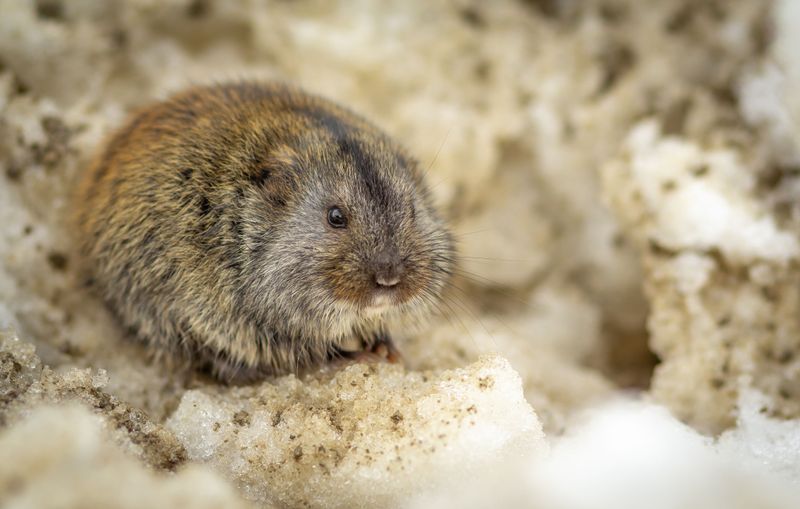
Chewed tulip bulbs. Bark nibbled off young apple trees.
Winding paths across the lawn when the snow melts. If that sounds familiar, you have likely met the vole, a small, chubby rodent that loves to snack all winter.
The good news is that screech owls find voles tasty. Meadow voles are one of their most important prey animals.
In some studies, voles made up a big share of the mammals these owls caught and ate.
Owls hunt by sitting quietly on a low branch or fence post. They listen for tiny rustles in the grass, then swoop down with silent wings.
Their sharp hearing helps them find a vole moving under a thin layer of snow.
Mice and shrews also end up on the menu. That means one owl can help with several kinds of small critters around your home.
It is like having a night guard who works for free.
Want to give owls a better shot? Skip rodent poisons in your yard.
Poisoned rodents can make owls sick if they eat them. Instead, keep mulch pulled back a few inches from tree trunks and let the owls handle part of the job.
Nature often does a fine job when we give it room.
Its Diet Is One Of The Most Varied Of Any North American Owl
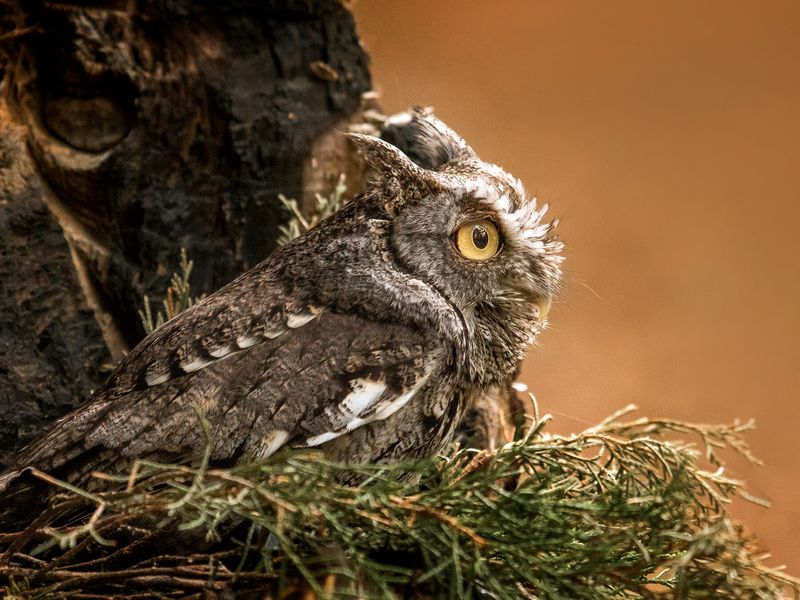
Imagine a dinner guest who will happily eat anything you serve. Crayfish?
Sure. Earthworms?
Why not. Spiders, frogs, moths, and even small bats?
Bring them on.
The Eastern Screech Owl has one of the widest menus of any owl in North America. Experts call it an opportunistic hunter, which simply means it eats whatever is easy to find.
Mice, moles, small birds, snakes, salamanders, and insects all count.
Its meals change with the seasons. In summer, the owl snacks on lots of bugs, like beetles and big moths.
When winter arrives and insects vanish, it switches to more animals with backbones, such as voles and mice.
This flexible appetite is a big reason the species does so well. When one food source runs low, the owl just picks another.
Picky eaters struggle in hard winters, but this bird adapts like a pro.
Fun fact: screech owls have been seen carrying live blind snakes back to their nests. The snakes eat insect pests in the nest, helping keep things clean for the chicks.
Talk about a clever roommate!
For homeowners, this means a backyard with a creek, a brush pile, or a patch of tall grass can feed an owl year round.
It Thrives In Suburban Woods And Neighborhoods
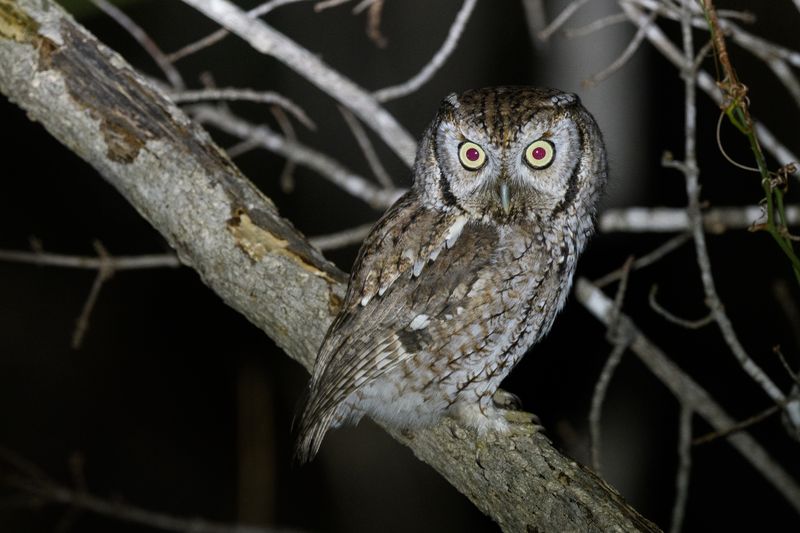
You do not need to live deep in the forest to have an owl neighbor. Plenty of Ohio suburbs, with their big shade trees and leafy parks, are perfect owl country.
Screech owls handle people surprisingly well. They live in busy towns and even crowded cities as long as there are scattered large trees.
Many seem unbothered by cars, barking dogs, or kids playing outside.
Here is something interesting. Studies suggest suburban owls sometimes do better than their country cousins.
Yards and gardens offer plenty of food, and there may be fewer large predators around to bother them.
Think about what your street offers. Bird feeders draw in mice and small birds.
Lawns and flower beds are home to voles and insects. Old oaks and sycamores give the owls safe places to rest during the day.
To make your yard even friendlier, try a few easy changes:
Leave some leaf litter under shrubs so insects and small critters have shelter. Plant native trees that will grow tall over time.
Dim bright outdoor lights when you can, since owls hunt best in the dark.
Small steps like these turn an ordinary yard into a welcome spot. You might hear an owl calling from your maple soon.
It Sometimes Stashes Extra Prey In Tree Cavities
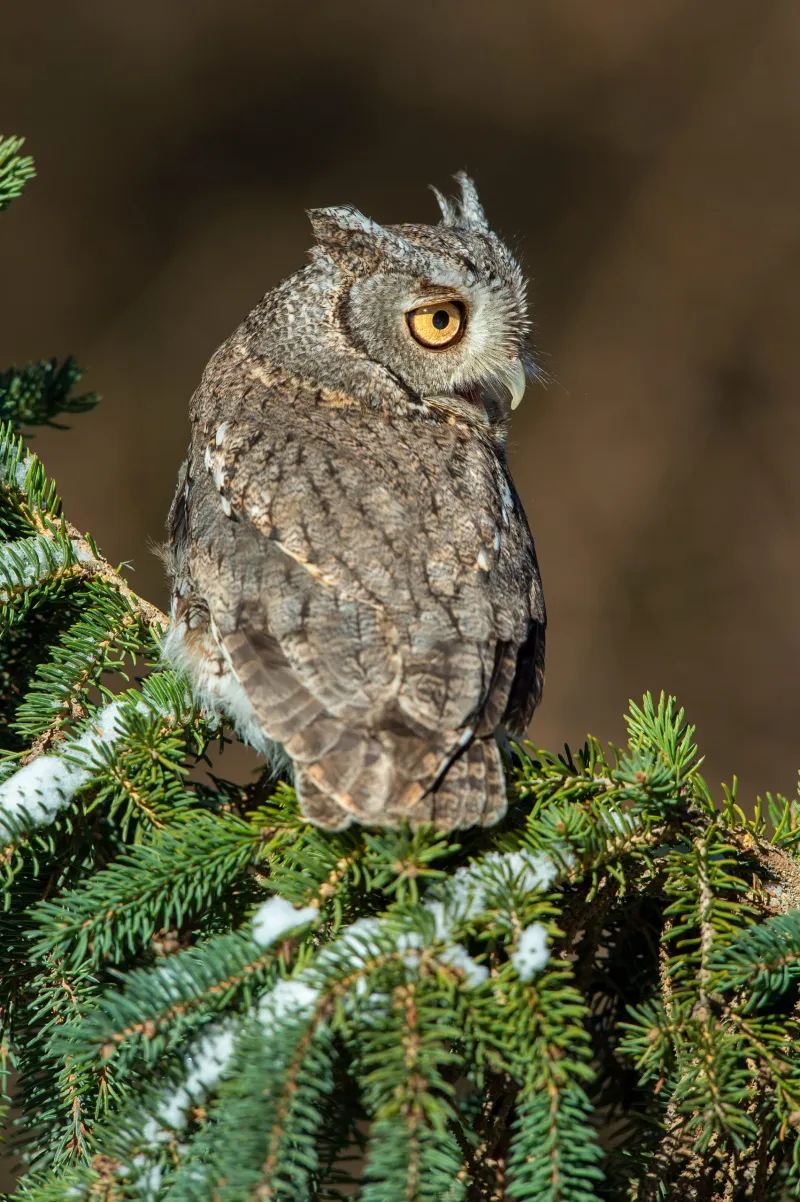
Squirrels are famous for hiding acorns, but they are not the only ones who save snacks for later. Screech owls keep a secret pantry too.
When hunting goes well, an owl may catch more than it can eat. Instead of wasting the extra food, it tucks the prey inside a tree hole.
Scientists call this caching, and it works like a backyard refrigerator.
Winter is a great time for this trick. Cold air keeps the stored food fresh for longer.
On stormy nights when hunting is tough, the owl can simply grab a meal from its hidden stash.
Owl parents use caching in a smart way, too. When young owls are learning to hunt, the adults sometimes clear out the stored food.
An empty pantry nudges the youngsters to practice catching their own dinners.
What does this mean for your yard? An owl that stores food may be catching more voles than it needs on a single night.
That extra hunting adds up over a long winter.
If you ever peek into a nest box and find a mouse inside, do not worry. It is just the owl’s leftovers.
Close the lid gently and let your thrifty neighbor enjoy its savings later.
Listen For A Trill Or Whinny, Not A Screech
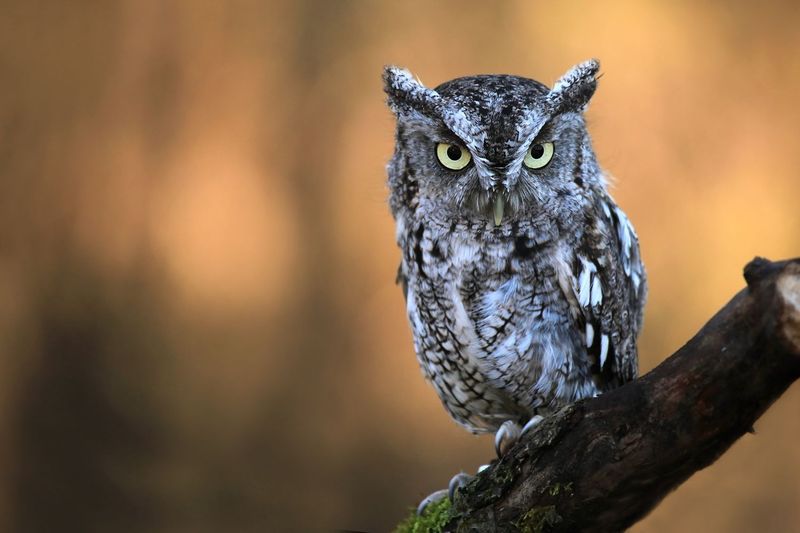
Step outside on a still winter night and you might hear something odd. It sounds a bit like a tiny horse neighing from the treetops.
Meet the screech owl, which rarely screeches at all.
Its name is a bit misleading. The most common call is a soft, falling whinny that slides down in pitch.
Another is a steady trill, like a gentle purr on one note.
Mates often trill back and forth to stay in touch. It is their way of saying hello across the yard.
Harsh screeches are mostly saved for defending a nest or young owls.
Listening is the easiest way to find these birds. Since they hide so well during the day, your ears will do more work than your eyes.
Late winter evenings are an excellent time to try.
Here is how to give it a go:
Pick a calm night with little wind. Turn off loud music and stand quietly near your trees for ten minutes.
Listen for that wobbly whinny or soft trill.
Please skip playing owl calls on your phone over and over, since it can stress the birds. Just enjoy the natural music.
Once you learn the sound, you will hear it often.
Look For Gray Or Reddish-Brown Feathers
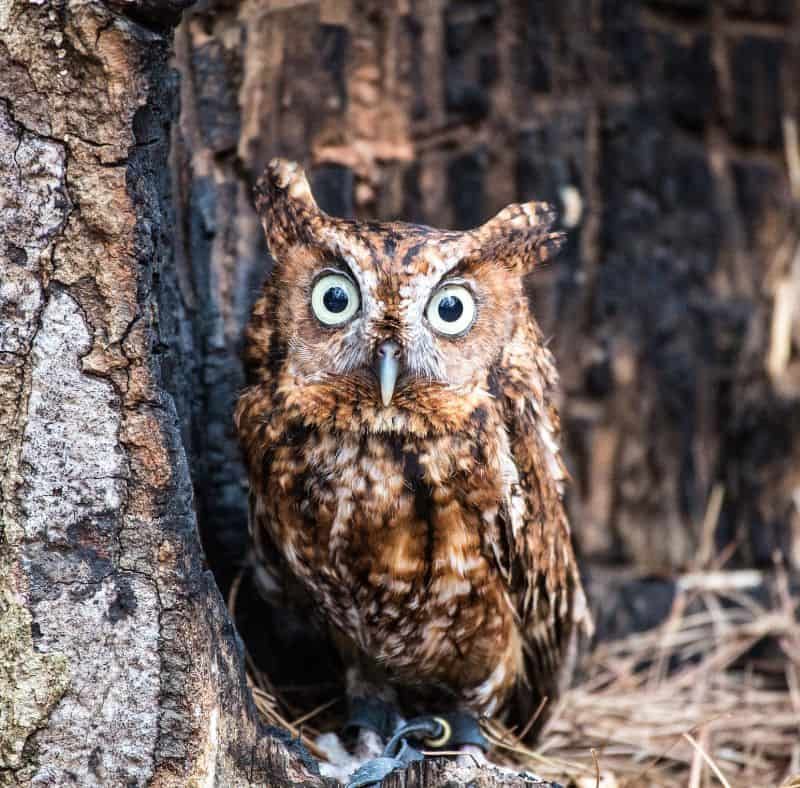
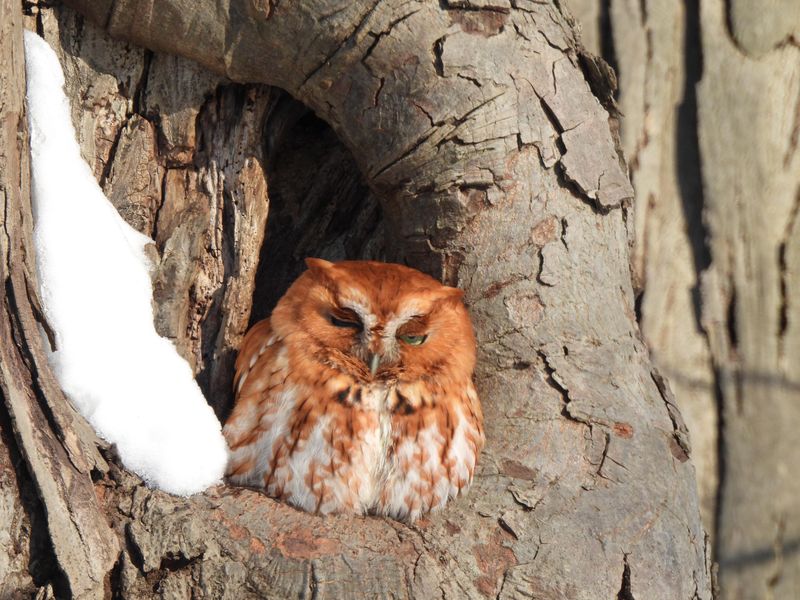
Two owls of the same kind can look like totally different birds. One might wear a cool gray coat, while the other sports a bright reddish-brown outfit.
Both are Eastern Screech Owls.
Scientists call these color types morphs. The gray morph blends in with pale bark, like ash or beech trees.
The rufous, or reddish-brown, morph matches darker trees and autumn leaves.
Ohio has both kinds, plus a much rarer brown version. The colors have nothing to do with age or whether a bird is male or female.
Even owl chicks in the same nest can come in different shades.
Each feather pattern is full of streaks and bars. These marks break up the owl’s outline so it melts into the tree.
When it stretches tall and raises its ear tufts, it can look just like a broken branch.
Spotting one takes patience. Scan tree holes, thick evergreens, and spots where branches meet the trunk.
Look for a small bird with yellow eyes and pointed tufts.
Bring binoculars and keep a respectful distance. If the owl stares back or stretches thin, it feels nervous, so give it space.
Enjoy the view, snap a quick photo, and let it rest.
A Nest Box Can Give It A Winter Roost
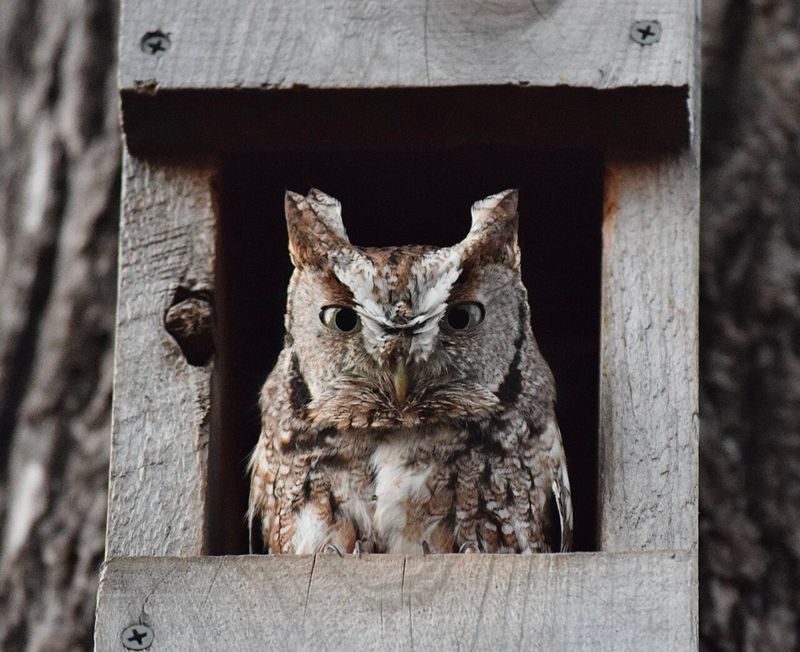
Want to roll out the welcome mat for your new neighbor? A simple wooden box might be the best gift you can give.
Screech owls need holes to rest and raise their young, but they cannot dig their own.
In the wild, they move into old woodpecker holes and natural hollows in trees. Sadly, many older trees get trimmed or removed.
A nest box fills that gap and offers a snug spot to wait out cold winter days.
Here are a few tips for success:
Choose a box with an entrance hole about three inches wide. Mount it ten to thirty feet high on a sturdy tree trunk.
Face the opening away from strong winter winds.
Add two or three inches of wood shavings or pine needles inside. Owls do not build nests, so this soft layer keeps eggs and chicks comfy.
Skip sawdust, which can get too dusty.
Fall is an ideal time to hang the box, so owls can find it before breeding season. Be patient, since it can take a season or two to attract a resident.
Once an owl moves in, you will have a front-row seat to nature and a helpful partner against voles.