The One Thing New York Gardeners Should Do To Crape Myrtles Before Fall Ends
The leaves are crunching, wood smoke is drifting through the neighborhood, and your garden is basically yawning its way into winter.
Tempting as it is to toss your gloves in a drawer and call it a season, your crape myrtle has one tiny favor to ask first.
Good news: this job takes under an hour and costs next to nothing, especially if you use your own raked leaves. Your wallet will barely notice.
Here is the sneaky part. Your shrub might look totally fine right now, but New York winters love doing their dirty work underground, where nobody is watching.
So grab a warm drink and get comfy. You are about to learn what to do, when to do it, and why your spring self will be sending you a thank-you card.
1. New York Sits On The Edge Of Crape Myrtle Country

Crape myrtles come from Asia and became beloved Southern favorites, where winters are short and mild. Bringing them north is a bit like sending a beach lover to a ski lodge.
New York State spans USDA zones 3 through 7, with the New York City area in zones 6 and 7. Many crape myrtles are rated for zone 7, which means places like New York City and Long Island are right on the line.
Upstate gardeners face an even bigger challenge. Towns near Albany or Buffalo can see winter lows that dip well below zero, and that is rough on a shrub built for warmer places.
Here is the fun part, though. These plants are tougher than they look, especially below the soil line, where the roots often survive even when the top suffers.
Many gardeners treat crape myrtles almost like perennials. The branches may pull back after a hard winter, but healthy roots can push up fresh shoots in spring and still bloom later that summer.
That bloom timing is the secret. Crape myrtles flower on new growth, so a plant that regrows from its roots can still give you a colorful show the same year.
So the real question is not whether the branches survive. It is whether the roots come through the cold in good shape.
Protect the roots, and you give your plant a strong second chance every spring. That simple idea sets up everything that follows.
2. Strong Roots Are Your Crape Myrtle’s Winter Lifeline
Think of the roots as your crape myrtle’s savings account. All summer long, the plant stores sugars and energy down there for the lean months ahead.
When winter hits New York, the branches go quiet. The roots, however, keep that stored energy safe until warm weather returns.
Trouble starts when the soil swings between frozen and thawed. Those swings can crack roots, tear fine root hairs, and even push small plants up out of the ground.
Gardeners call that last problem frost heave. Young crape myrtles planted in the past year or two are the most likely to suffer from it.
Roots that sit in steady, cold soil fare much better than roots that freeze and thaw ten times a season. Consistency is the goal, not warmth.
Your New York Garden Changes Every Week. Your Plan Should Too.
Gardening in New York changes quickly throughout the season. Every Friday you’ll receive a simple weekly plan showing exactly what to plant, prune, fertilize, harvest, and protect so you never miss the right timing.
Here is a quick fact many people miss. Plant roots are often less cold hardy than the stems above them, because they are used to the cozy shelter of soil.
That is why a plant can lose its top in a bitter winter and still return. As long as the crown and roots stay healthy, new growth has a place to start.
Your job this fall is simple. Help the soil stay evenly cold and protected, so those stored reserves are ready to fuel a fresh burst of green in May.
3. Timing Your Mulch Matters In New York
Timing plays a big role with this chore, and it surprises plenty of people. The goal is to mulch once your crape myrtle has settled into its winter rest.
A good clue is the first few hard frosts. Once the leaves have dropped and nights stay near freezing, your plant is heading into dormancy.
That is a smart time to spread mulch. Sources vary on exact dates, so let your local weather guide you rather than the calendar alone.
Upstate gardens usually reach that point sooner, while New York City and Long Island often get there later in the season.
Once in place, mulch acts like a blanket over the root zone. It helps buffer the soil against the sharp temperature swings that winter brings.
Keep an eye on the forecast. If a long stretch of frozen weather is coming, try to get the job done before the soil turns hard as a sidewalk.
A handy trick is to bag your raked leaves early. Shredded leaves make a great free mulch, and having them ready means you can act fast.
Write a reminder on your calendar now. Busy autumn weekends slip by quickly, and this one small task matters more than most.
4. A Few Inches Of Mulch Goes A Long Way

More is not better here, and that may sound odd for a cold climate. A thick blanket feels protective, yet piling on too much can cause its own headaches.
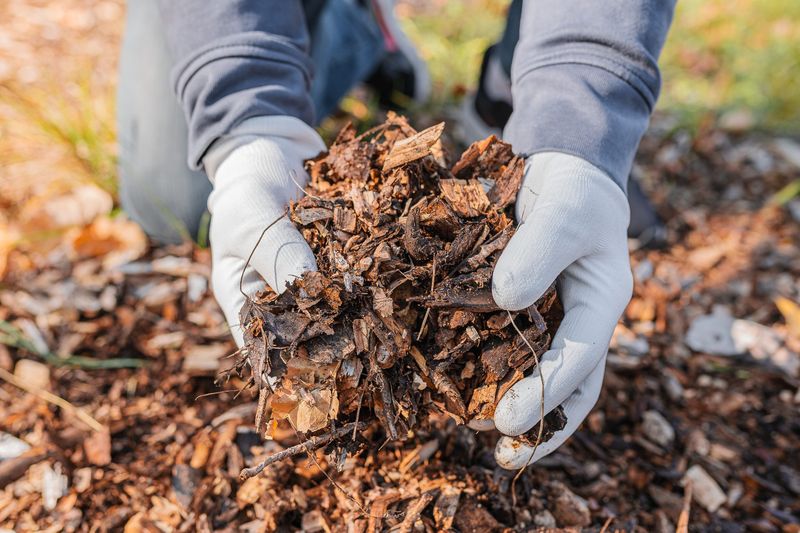
For crape myrtles in New York, aim for about 3 to 4 inches of mulch over the root zone.
Spread it wide, too. Try to cover at least the area out to the edge of the branches, since the roots spread widely beneath the plant.
Shredded hardwood, pine bark, pine needles, and chopped leaves all work well. Straw is another fine choice, though it can attract mice looking for a winter home.
Avoid fresh grass clippings. They mat down, stay soggy, and can start to smell by midwinter.
Loose, airy mulch tends to insulate better than a dense, packed layer, so fluff it up a bit as you spread it.
Once spring arrives, pull some of the extra mulch back. Leaving a thinner layer helps the soil warm up so your plant wakes on schedule.
A measuring stick or ruler makes this easy. Poke it into the mulch in a few spots, and adjust until the depth looks even all the way around.
5. Mulch Belongs Away From The Trunk
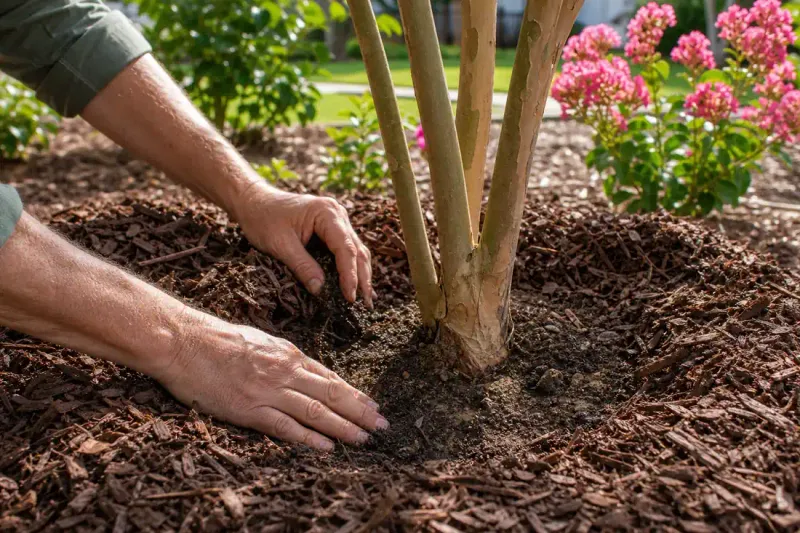
Ever seen a tree wearing a mulch volcano? It looks tidy, but that tall cone hugging the bark is one of the most common garden mistakes around.
Mulch piled against the trunk traps moisture right where the bark needs to breathe. Over a soggy New York winter, that damp spot can invite rot, fungus, and peeling bark.
Hungry critters are another worry. Voles and mice love to tunnel through deep mulch and nibble on tender bark when food is scarce.
The fix is easy. Leave a gap of about 2 to 3 inches between the mulch and the trunk, so it looks like a donut instead of a volcano.
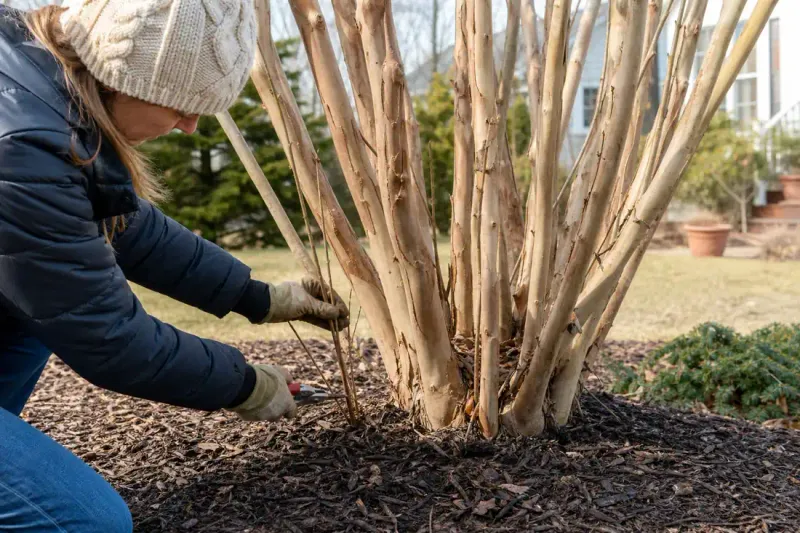
Multi-stem crape myrtles need the same care. Clear a small space around each stem and keep the center open to air.
Gardeners in snowy parts of the state sometimes add a ring of hardware cloth around young trunks. It is a cheap way to stop chewing pests before they start.
Walk around the plant after windy storms. Mulch shifts more than you might expect, and a quick sweep with your hand puts it back in place.
Getting this right takes only a minute. Your crape myrtle’s smooth, colorful bark is one of its best features, so it is worth keeping it healthy all year.
6. Fall Pruning Can Invite Winter Damage
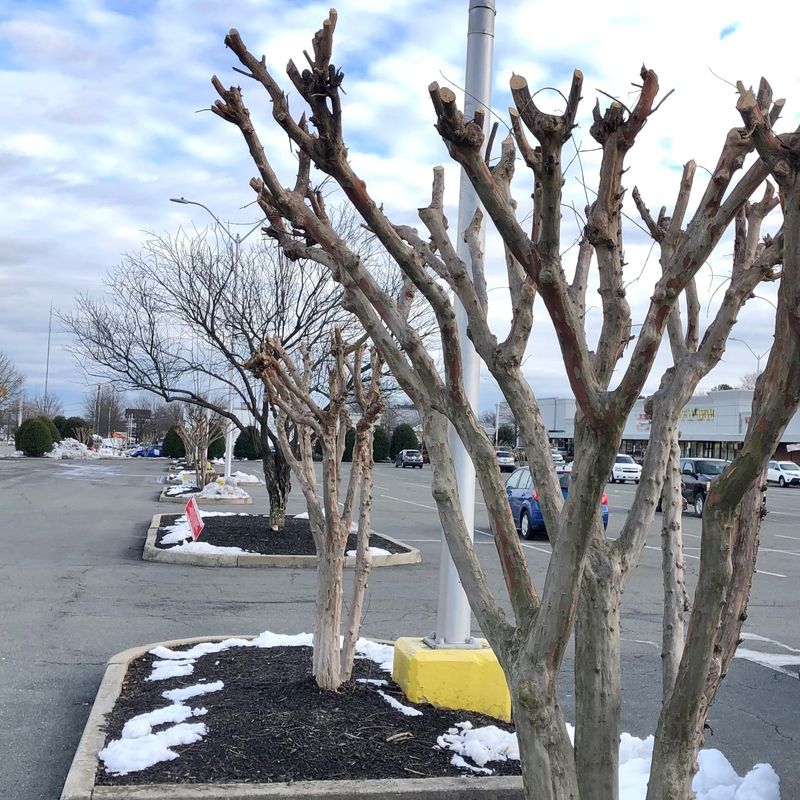
Those dry seed heads might look messy, and the urge to tidy up is real. Still, put down the pruners for now.
Cutting crape myrtles in fall can wake up buds that should be resting. Any tender shoots that pop out will get hit hard by the first deep freeze in New York.
Fresh cuts also respond slowly in cold weather. Open wounds give winter wind and moisture an easy path into the wood.
Here is a nice bonus for waiting. Leftover branches and seed pods hang on through winter and add a bit of texture to a snowy yard.
Light pruning works best in late winter or early spring, before new growth begins. In New York, though, winter damage is not always obvious that early.
If you are unsure which branches made it, try a scratch test. Gently scrape the thin bark with a fingernail, and look for green underneath.
You can also wait until spring growth shows which parts are alive, then remove any winter-damaged wood at that point.
When you do prune, skip the harsh chopping that some people call crape murder. Simply remove weak, crossing, or damaged stems and leave a natural shape.
If a branch snaps during a fall storm, you can trim that one clean. Just keep major shaping for later.
Patience pays off with these shrubs. A little restraint now often means stronger branches and more flowers when summer rolls around again.
7. Too Much Fall Watering Can Trigger New Growth
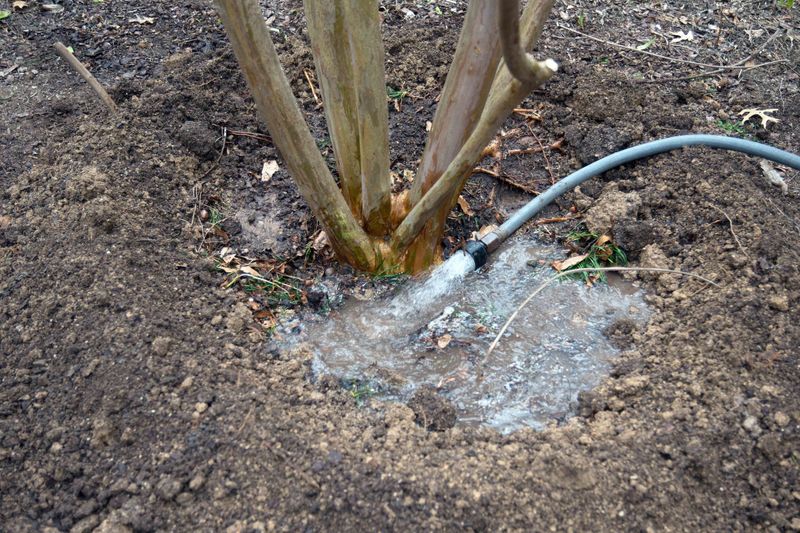
Watering seems like the kindest thing you can do for a plant. In autumn, though, a heavy hand with the hose can backfire.
Lots of water plus a warm spell can tell a crape myrtle it is time to grow. Soft new shoots have no time to toughen up before frost arrives in New York.
That does not mean you should let the soil turn bone dry. Roots heading into winter still need some moisture to stay healthy.
A good rule is to water deeply but less often. Once every week or two during a dry fall is plenty for an established plant.
Push a finger about two inches into the soil. If it feels dry, give a slow, deep soak, and if it feels damp, wait a few more days.
Hold off on fertilizer, too. Feeding after midsummer pushes tender growth that winter weather will not treat kindly.
Newly planted crape myrtles are the exception that needs extra attention. Their small root systems dry out faster, so check them more often until the ground freezes.
One last deep drink right before you mulch is a smart move. Moist soil holds warmth better than dry soil, and the mulch helps keep that moisture in place all winter long.
8. Cold-Hardy Hybrids Give You A Head Start In New York
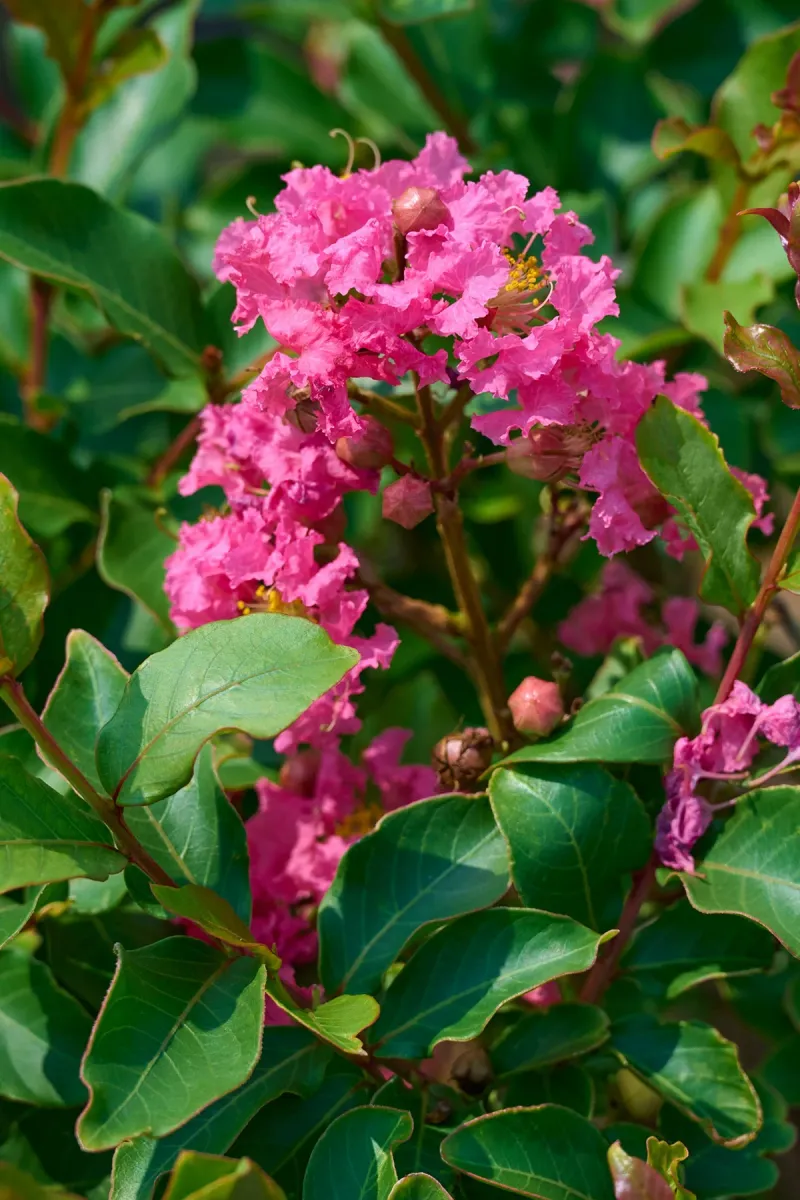
Back in the early 1960s, a scientist at the U.S. National Arboretum started crossing crape myrtles with a tougher Japanese cousin, Lagerstroemia fauriei.
The results changed what northern gardeners could grow.
Many of those hybrids carry Native American tribe names, like Natchez, Tonto, Acoma, and Hopi. The New York Botanical Garden notes that hybrids such as Sioux, Tonto, Yuma, and Zuni are very reliable in zone 7.
Here is a catch, though. Not every crape myrtle with a tribe name is a hybrid.
Older types like Catawba and Cherokee have only the common crape myrtle in their background, and they are especially sensitive to cold.
The easy fix is to read the plant tag. Look for “indica × fauriei” or ask the nursery to confirm the variety is a hybrid.
Size can help too. Shorter hybrids like Hopi and Tonto are easier to mulch and protect than tall tree forms.
Planting spot matters as well. Give your crape myrtle full sun, but skip spots right against a south-facing wall, since winter warm spells there can wake the plant up too early.
Good drainage helps a lot. Crape myrtles dislike sitting in soggy, icy soil, so avoid low spots where water pools in spring.
Shopping tip: ask your local nursery which varieties have done well nearby. Staff often know which plants have pulled through recent winters.
Even the toughest hybrid still benefits from that fall layer of mulch. Pair a hardy variety with good root care, and you can enjoy summer flowers year after year.