Those Tiny Striped Insects On Georgia Fall Flowers Aren’t Bees At All
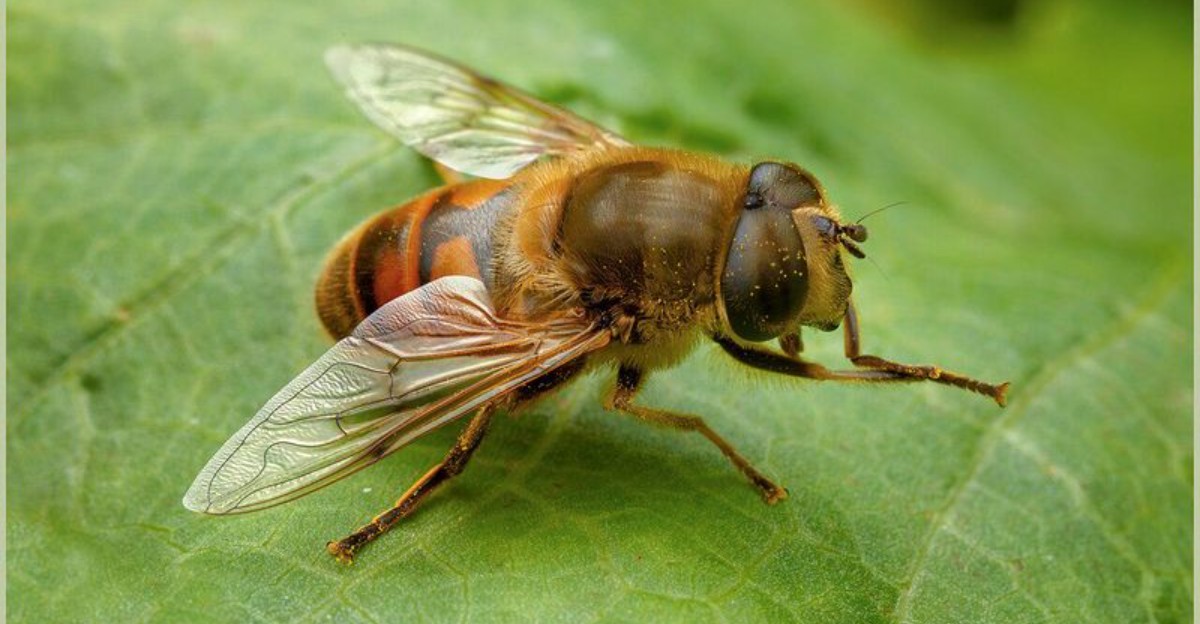
Those tiny striped visitors hovering over fall flowers can easily be mistaken for bees, especially when they dart between blooms.
Their yellow and black markings make the resemblance convincing. Yet the way they pause in midair offers a clue that something different is visiting your garden.
Take another look before assuming every striped insect near your flowers has a stinger.
In Georgia, these visitors may remain active during mild fall weather when flowers are still available. They often hover briefly before landing to feed.
Their presence can be good news for your garden, even if you cannot identify them immediately.
Some help pollinate flowers, while their young may feed on aphids that gather on garden plants. Recognizing the difference can change how you see these busy little visitors throughout fall.
1. Meet The Flower Flies Hiding In Plain Sight
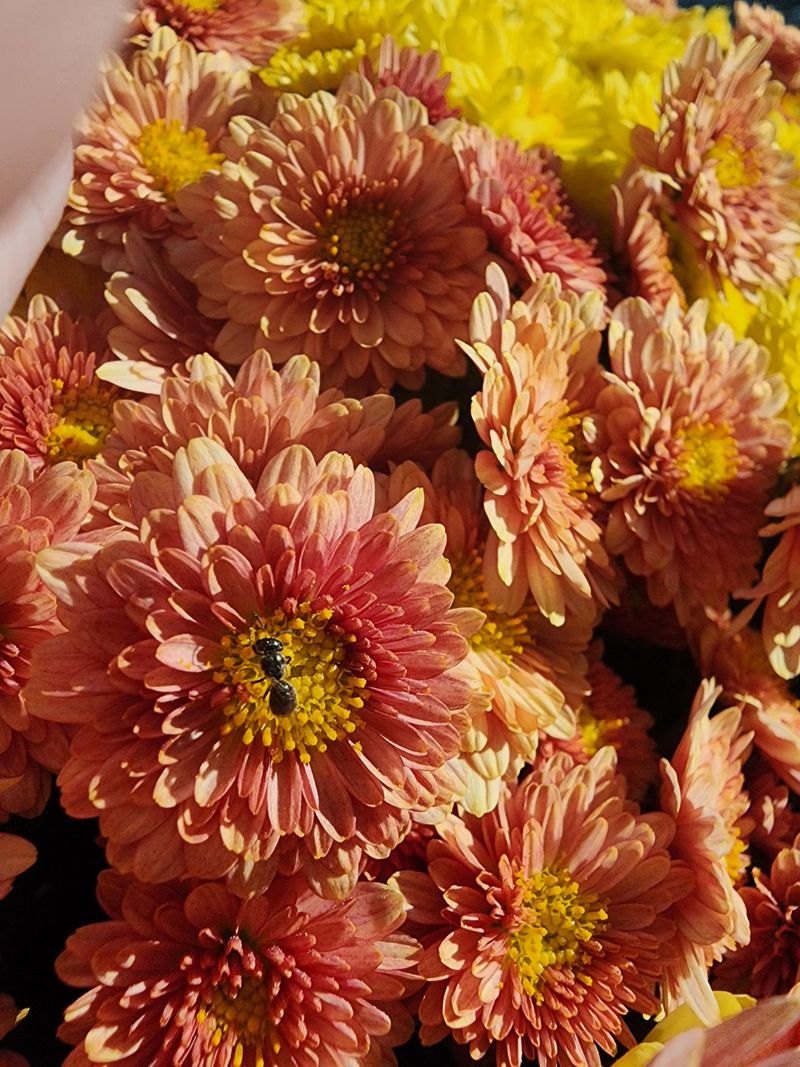
That small yellow-and-black insect on your aster is most likely a fly. Gardeners across Georgia mix it up with tiny bees every fall, and it is an easy mistake to make.
Scientists call these insects syrphid flies, though most people know them as hover flies or flower flies.
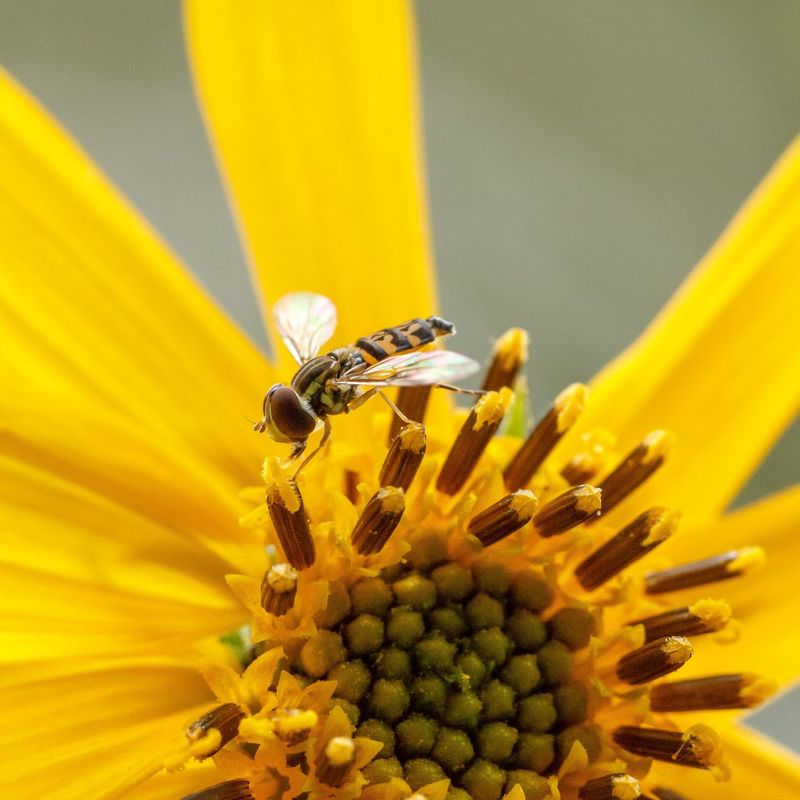
Some of the smallest ones belong to a group called Toxomerus. They are barely longer than a grain of rice and carry bright bands across a slim body.
Their stripes are a clever trick that copies the warning colors of bees and wasps.
Birds and other predators tend to avoid anything that looks like it might sting. Hover flies borrow that look without carrying any sting at all.
Adults mostly feed on nectar and pollen, so they spend much of their time right where you are looking.
You will usually find them on sunny days, drifting between blooms or resting on petals for a quick sip of nectar.
Once you learn to spot them, they seem to be everywhere. A single patch of goldenrod or asters can host dozens on a warm afternoon, depending on the weather and what is blooming nearby.
Getting to know them is a small step that can change how you see your whole garden, and it costs nothing but a closer look.
2. How To Tell A Hover Fly From A Bee
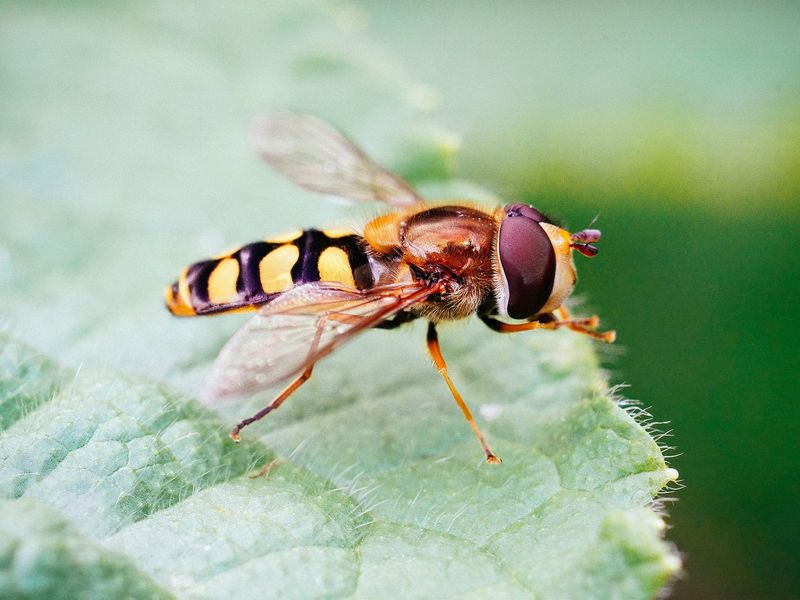
Count the wings, and the mystery usually solves itself in a few seconds.
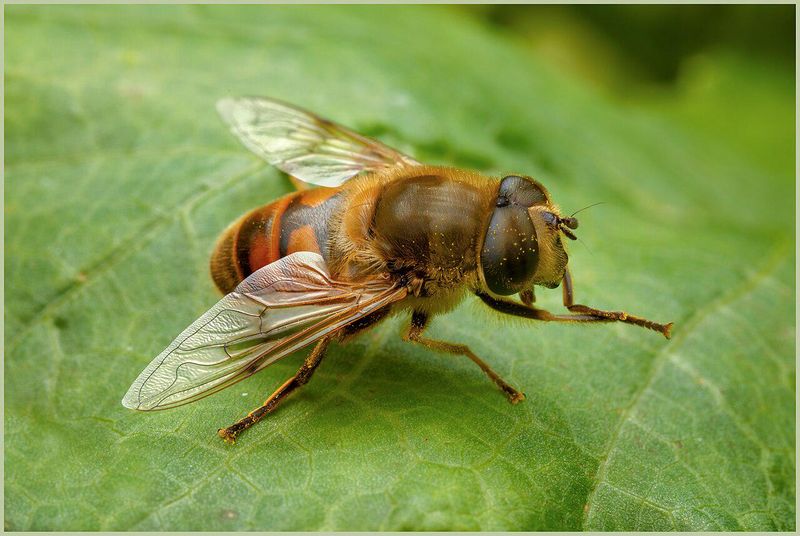
Bees have four wings, while hover flies have only two. Up close, a hover fly’s wings often rest flat or angled out to the sides like a tiny jet.
Next, look at the head. Hover flies have huge eyes that cover much of their face, and their antennae are short and stubby.
Bees tend to have longer, elbowed antennae that stick out in front.
Body hair is another clue worth checking. Most bees look fuzzy, especially honey bees and bumble bees, while numerous hover flies look smooth and shiny.
Behavior offers the clearest hint, since hover flies can hang perfectly still in midair and then dart sideways in a flash.
Bees rarely do that. They tend to bounce from flower to flower with a steadier, buzzier flight.
Your Georgia Garden Changes Every Week. Your Plan Should Too.
Gardening in Georgia changes quickly throughout the season. Every Friday you’ll receive a simple weekly plan showing exactly what to plant, prune, fertilize, harvest, and protect so you never miss the right timing.
Some hover flies are hairy and look a lot like bees, so no single trait works every time.
In Georgia gardens, the tiny slim ones on fall flowers are the easiest to identify. A magnifying glass or a zoomed phone photo can make the wings and antennae much easier to see.
Take a few photos and compare them side by side, and after a week or so the differences start to jump out.
3. Why They Show Up On Fall Blooms
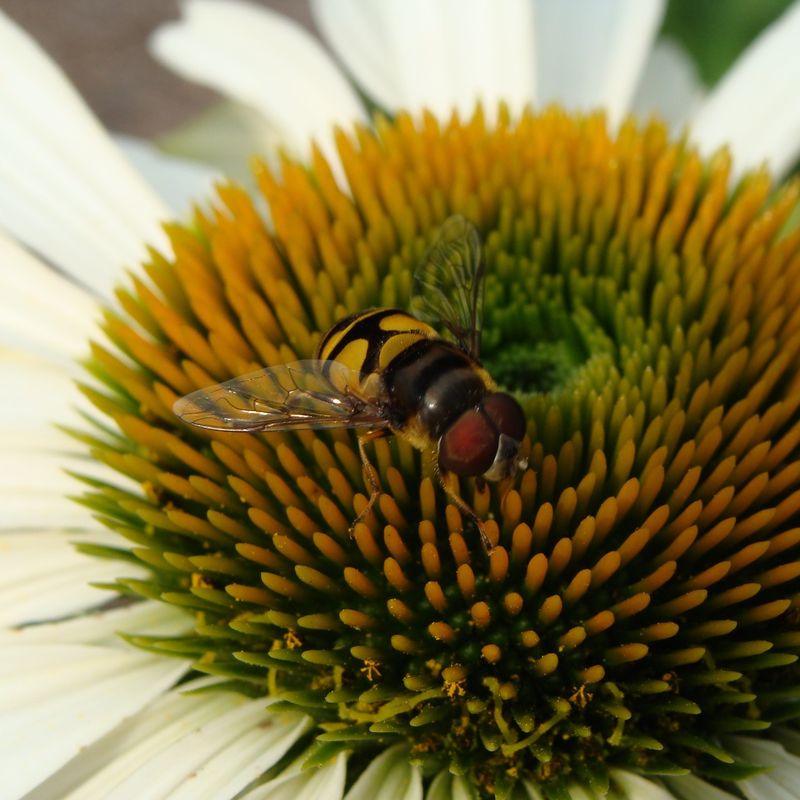
Fall is rush hour for flower visitors, and hover flies join the crowd.
Late-season plants like goldenrod and asters produce plenty of open, easy-to-reach flowers. Small flies with short mouthparts can feed from them without much effort.
Hover fly numbers can build up over the summer as new generations hatch. In some years, that means a noticeable crowd by September and October.
Weather plays a big role, so a dry spell or an early cold snap can thin them out quickly.
Across Georgia, fall bloom times shift from the mountains down to the coast. Gardens in the north often see activity fade sooner than yards in the southern part of the state.
Adults need sugar from nectar for energy and protein from pollen to make eggs.
Fall flowers give them both at once. That makes a patch of asters something like a busy roadside diner for small insects.
Some hover fly species also migrate, though how much that happens in the Southeast is not well understood.
If your flowers seem quiet one year and busy the next, that swing is normal. Insect numbers rise and fall with rain, temperature, and what is blooming around your neighborhood.
Patience usually pays off on a calm, sunny afternoon.
4. Favorite Fall Flowers To Watch In Your Yard
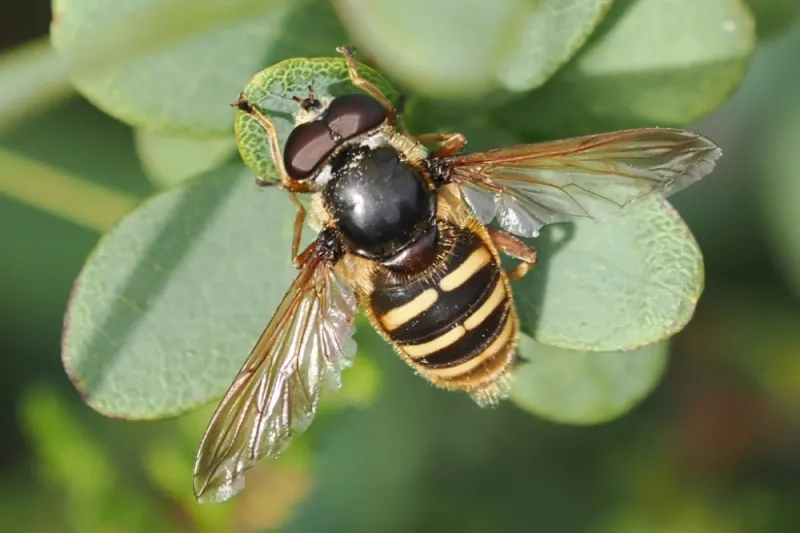
Want to see hover flies up close? Plant something flat, open, and full of tiny blooms.
Goldenrod tops the list for numerous gardeners. Its bright yellow sprays attract a wide range of small insects from late summer into fall.
Asters come next, with their daisy-like heads in purple, blue, and white.
Native options such as aromatic aster and smooth blue aster grow well in much of Georgia. They usually bloom from early fall until frost, depending on location.
Blue mistflower forms fluffy clusters that small flies seem to enjoy.
Late boneset offers white, flat-topped blooms in the same season. Both prefer moist spots and can spread, so give them some room.
Sweet alyssum and zinnias can draw visitors in mixed beds, though results vary.
Shape matters more than color in most cases. Shallow flowers suit their short mouthparts far better than deep, tube-shaped blooms.
Grouping plants in clusters, rather than scattering single stems, can make it easier for insects to find food. A sunny spot with some shelter from wind tends to work best.
Check with your local Extension office for native plant lists suited to your county.
Spend ten quiet minutes near a blooming clump, and you may spot more flies than bees, especially around midday when the air is warm.
5. Their Young Are Hungry Aphid Hunters
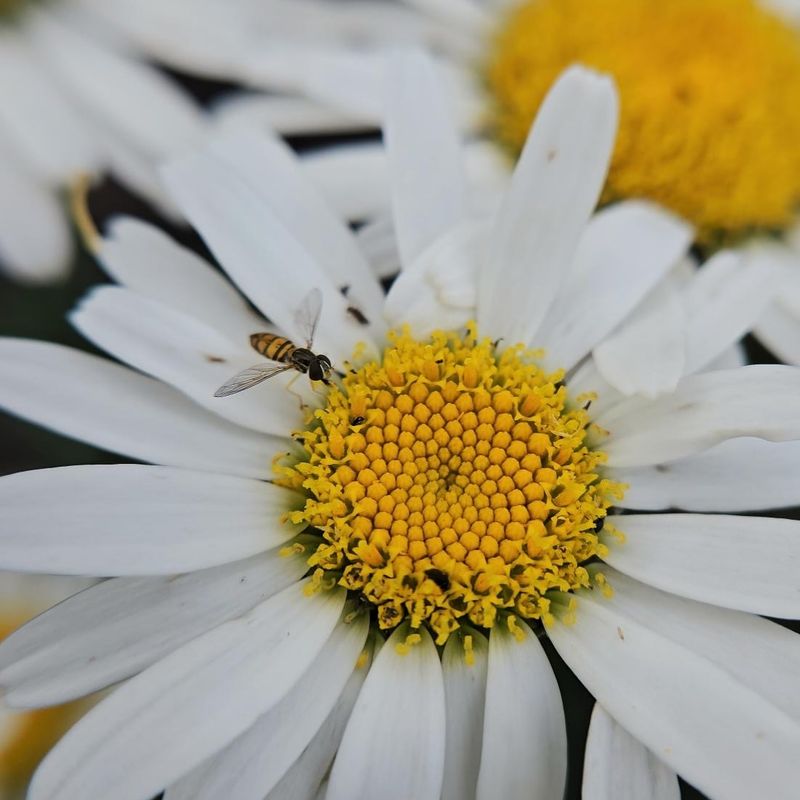
Here is the twist that surprises most gardeners. Larvae of numerous hover fly species eat aphids by the dozen.
Each larva looks like a small, legless slug, often green, tan, or nearly see-through.
They crawl along stems and leaves, grabbing aphids and draining them. One larva can eat hundreds of aphids as it grows, though totals vary by species.
Adult females often lay eggs near aphid colonies, giving their young a meal right away.
Not every species hunts. Some larvae feed on decaying plant matter or live in wet places instead.
In Georgia, aphids can show up on milkweed, roses, and vegetables during spring and fall.
Spotting a slimy little larva among aphids is a good sign. Before reaching for a spray, take a closer look to see who is already working.
Sprays, even gentle ones like insecticidal soap, can harm larvae that are in direct contact.
Lady beetles and lacewings do similar work, so several helpers may share the job in a healthy garden.
Leaving some aphids alone for a while can feel strange. Still, it gives these helpers a reason to stay and breed.
Hand-squishing heavy clusters or spraying them off with water is a gentler option when numbers get out of hand.
6. They Pollinate More Than You Think
Bees get most of the credit, but flies quietly pitch in on numerous flowers.
Hover flies visit flowers to eat pollen and drink nectar. As they move around, grains stick to their bodies and travel to the next bloom.
Watching closely, you may notice yellow pollen dusted across their legs and belly.
They are not as efficient as bees for most crops, partly because they carry less pollen. Even so, they add to the overall work, especially on small, open flowers.
Some flies stay active on cool, cloudy days when certain bees slow down.
That extra coverage can matter in fall. Georgia mornings in October and November can turn chilly, and every pollinator counts on those days.
Their small size also lets them reach tiny florets that larger insects might skip.
Hover flies are no substitute for bees in a vegetable garden. Think of them as helpful backup that fills small gaps.
A yard with a mix of pollinators tends to be more stable over time, since one group can pick up slack when another struggles.
Seeing flies on your flowers is a sign that the garden is feeding more than one kind of helper. That variety is worth protecting.
7. Other Striped Look-Alikes On Goldenrod
Not every striped visitor is a hover fly, either. Goldenrod in fall draws a whole cast of bee mimics and actual stingers.
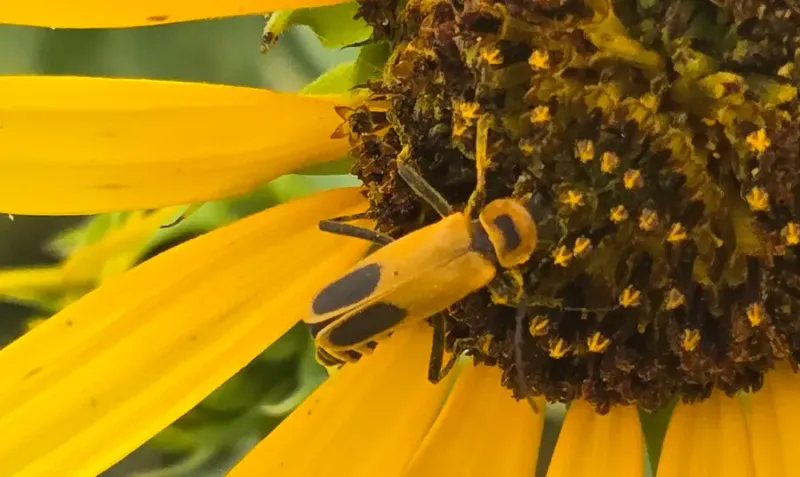
Goldenrod soldier beetles are orange or yellow with black spots on their wing covers.
They crawl more than they fly and often gather in pairs on flower heads. Like hover flies, their larvae can eat other soft insects.
Locust borers, a black-and-yellow beetle, also feed on goldenrod pollen in early fall. Their larvae tunnel in black locust trees, not garden flowers.
Paper wasps and yellowjackets visit fall flowers for nectar as well.
Unlike flies, wasps can sting, so give them space and avoid swatting. Their narrow waists and long, folded wings help set them apart.
Wasps are not all bad news, since they hunt caterpillars and other pests in your yard.
Bee flies, which are fuzzy flies with a long straight beak, sometimes appear as well.
Real bees join the party too, from honey bees to small sweat bees that glint green in the sun.
Sorting them out takes practice, even for longtime gardeners in Georgia. A field guide or a free app like iNaturalist can help match photos to names.
When unsure, admire from a short distance and let the insect go about its business before moving on.
8. Simple Ways To Keep Hover Flies Around
Keeping hover flies around takes less work than you might think, and most of it saves you time.
Start by planting a range of flowers that bloom at different times. A steady food supply from spring through fall gives adults a reason to stay.
Cut back on broad-spectrum insecticides, which can harm flies and their larvae along with pests.
Leave some leaf litter and plant stems standing over winter. Certain species may shelter there, though habits vary a lot from one species to another.
A few aphids on a plant are rarely a crisis, and they can feed the next generation of larvae.
Water helps too. A shallow dish with pebbles lets small insects drink without drowning.
Native plants suited to your part of Georgia often do the best job with the least fuss.
Gardens in the Piedmont, coastal plain, and mountains each have slightly different needs. Local nurseries and Extension offices can suggest good choices for your soil and light.
Clover and other small blooms along a lawn edge can offer extra food in spring.
Mowing less around the edges can also leave room for wildflowers that flies visit.
Most of all, slow down and look before reacting. That striped visitor might be the best helper in your garden.