Why Skunks Are Suddenly Digging Up Michigan Lawns Right Now
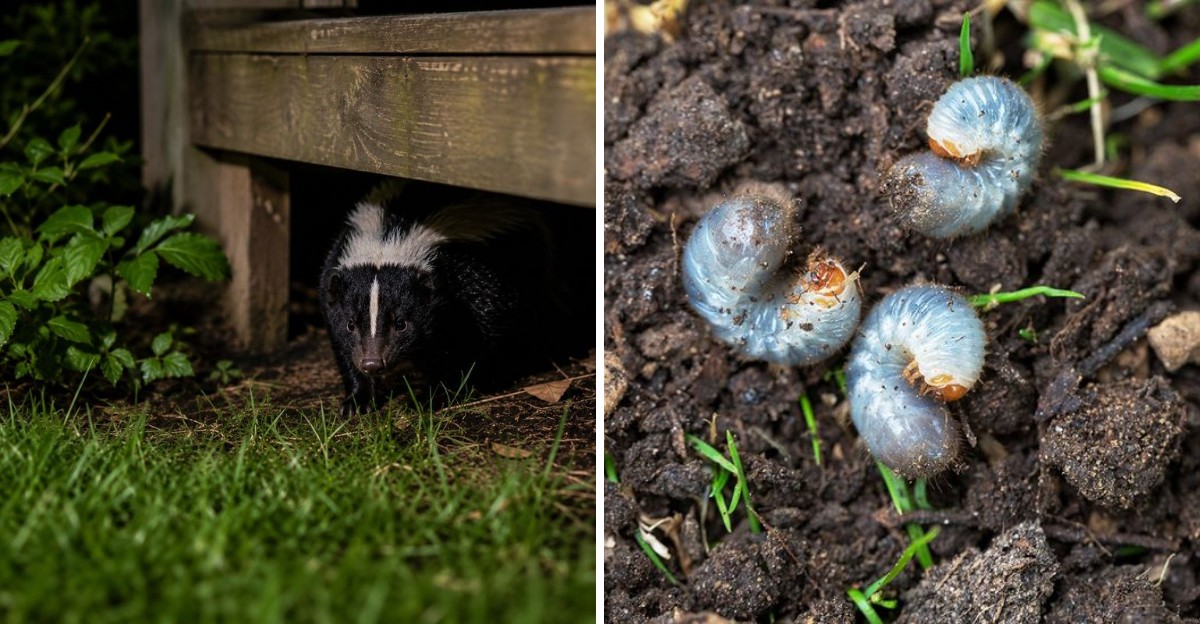
You wake up to a lawn dotted with small, cone-shaped holes. Little flaps of torn turf sit loosened around the edges. It looks like vandalism, but the culprit is a skunk.
Fall is when these animals feed heavily to build fat for winter. Their favorite meal lives right under your grass. Lawn grubs, the larvae of beetles, are plump, juicy, and easy to reach.
The more grubs a yard has, the more skunks show up to dig. That means the digging is really a sign of something below the surface. Chasing the skunk away without dealing with the cause only moves the problem.
Understanding what draws them helps you make smart choices. Fix the food supply, and the diggers will move on.
1. They’re Hunting For Grubs
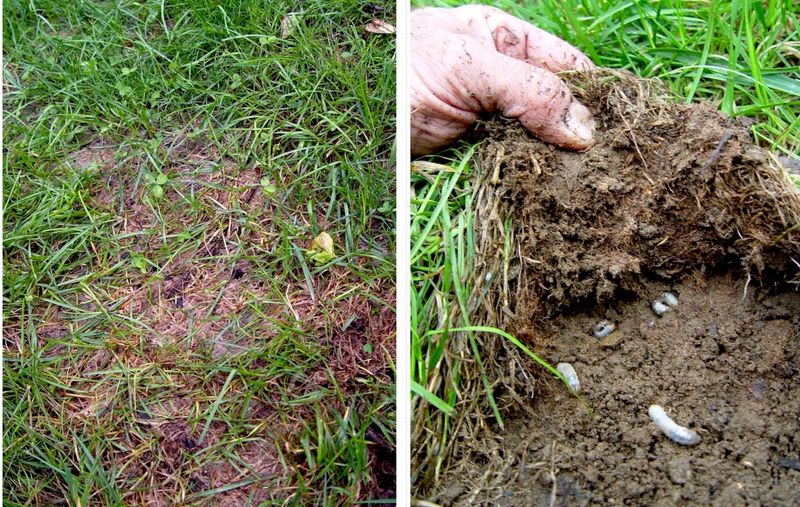
Under your grass, a hidden buffet might be waiting. Striped skunks have a terrific sense of smell, and they can sniff out white grubs wiggling a few inches below the surface. Those grubs are the young form of beetles like Japanese beetles and European chafers.
To a hungry skunk, a grub is a perfect snack. Each one is soft, packed with fat and protein, and it cannot run away. A single lawn can hold hundreds of them, which makes your yard feel like an all-you-can-eat restaurant.
So how can you tell a skunk did the digging? Look for small, cone-shaped holes about 3 to 4 inches wide sprinkled across the lawn. They usually show up overnight, since skunks do most of their foraging after dark.
You will often see loosened soil and little flaps of torn grass around the edges, almost like someone poked the ground with a garden trowel again and again.
Raccoons can damage lawns too, but they tend to roll back large strips of sod like carpet. Skunks are neater and more precise. Their holes are scattered and shallow, which is a helpful clue when you are trying to figure out who the night visitor was.
Michigan lawns are a favorite target for good reason. European chafers and Japanese beetles are both common pests across the state, especially in the Lower Peninsula.
Their grubs chew on grass roots, which already weakens your turf before any skunk arrives.
Spotting those telltale holes early is a smart move. The digging is a signal that grubs are present, and catching that problem sooner can save your lawn from bigger trouble down the road.
2. Grubs Are Close To The Surface In Fall
Timing explains a lot about those sudden holes. In late summer and early fall, grubs hang out right near the soil surface, munching on tender grass roots. For a skunk, that means dinner is just a quick scratch away.
As the weather turns colder, grubs start to burrow deeper into the soil to stay safe through winter. Before that happens, though, there is a window of several weeks when they are easy to reach. Skunks know it, and they make the most of every night.
Want to find out how many grubs you have? Grab a flat shovel and head to an area with damage or brown patches. Cut three sides of a square about one foot wide, then gently peel the sod back like opening a book.
Your Michigan Garden Changes Every Week. Your Plan Should Too.
Gardening in Michigan changes quickly throughout the season. Every Friday you’ll receive a simple weekly plan showing exactly what to plant, prune, fertilize, harvest, and protect so you never miss the right timing.
Count the grubs you see in the soil and roots. A few grubs are normal and nothing to worry about. Most healthy lawns can handle small numbers without much harm.
Treatment usually makes sense only when counts climb higher, often more than about five to ten grubs per square foot.
Checking a few different spots gives you a better picture of your whole yard. Grubs tend to gather in sunny areas, so look there first. Afterward, press the sod back down and water it well so it can root again.
Across Michigan, grub feeding near the surface peaks in late summer and early fall. That is exactly when many homeowners notice skunk damage jumping overnight.
Doing a quick grub check at this time helps you decide whether your lawn needs help or just a little patience.
3. Skunks Are Fattening Up For Winter
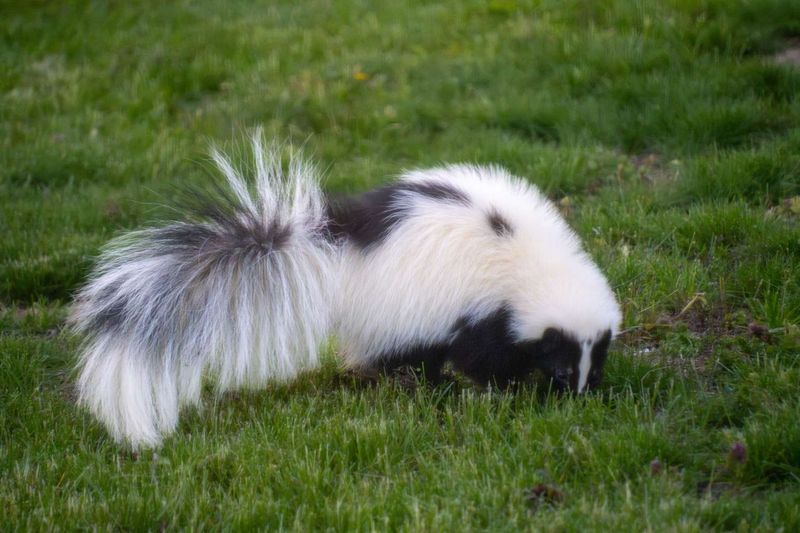
Think of fall as a skunk’s busy season at the snack bar. Before the cold settles in, these animals eat as much as they can to pack on extra weight. That fat will carry them through the long, chilly months ahead.
Many people believe skunks hibernate, but that is not quite true. Instead, they spend long stretches resting in dens when the weather gets harsh. They may sleep for days at a time, waking up and wandering out only on milder nights.
Because they eat so little in deep winter, a skunk needs a solid fat reserve. Grubs, beetles, crickets, and other easy foods help them bulk up fast. Your lawn, if it has plenty of grubs, becomes one of the best feeding spots around.
Here is what you can expect. Digging often rises sharply in early fall, when skunks are hungriest and grubs are close to the surface. Then, as the ground cools and eventually freezes, the holes slow down and finally stop.
Knowing this pattern can ease your mind a little. The damage you see now will not last all year. Still, it is wise to repair holes by pressing the turf back down and adding a bit of seed if needed, so your lawn heads into winter in good shape.
Michigan winters can stretch on for months, with snow covering lawns well into spring. That makes fall feeding extremely important for local skunks. They simply cannot afford to skip it, which is why your yard may suddenly feel like their favorite hangout.
4. Moist Soil Makes Digging Easy
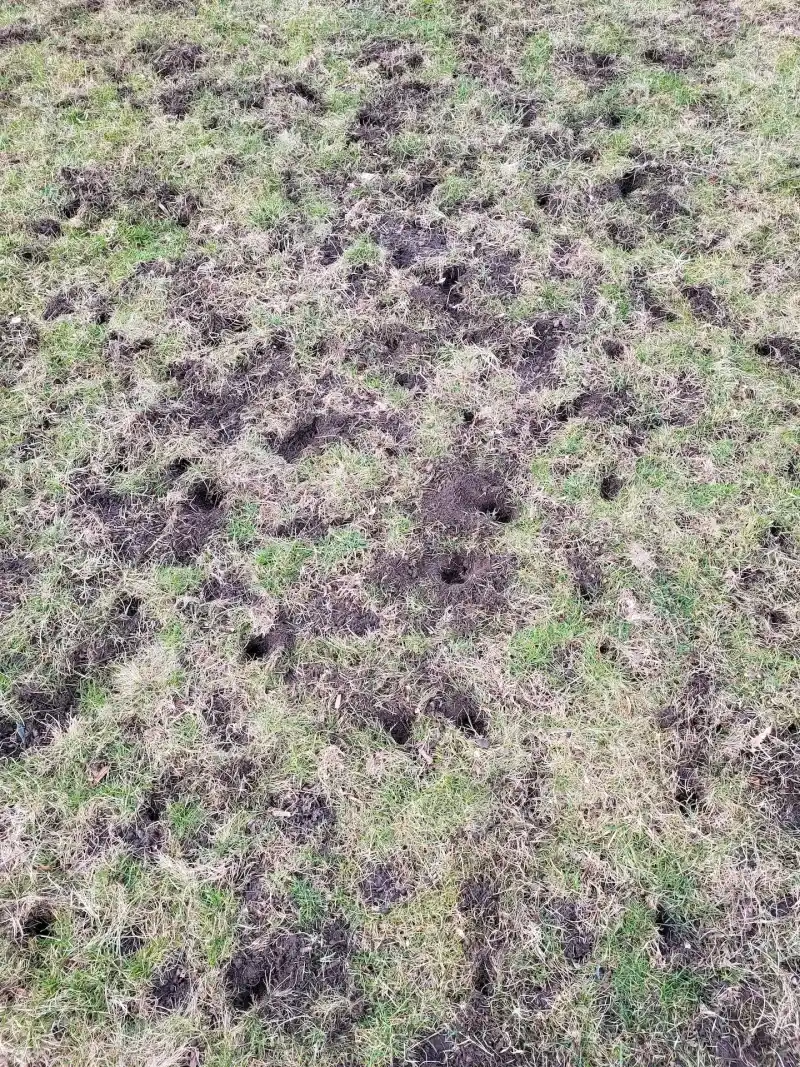
Ever notice new holes the morning after a big storm? Rain does more than water your grass. It softens the ground and turns your lawn into an easy dig site.
Hard, dry soil takes real effort to scratch through, even for a skunk with strong front claws. Once the ground is damp, those same claws slide right in.
On top of that, wet weather pulls grubs and earthworms closer to the surface, so the food is nearer and the work is lighter.
Your watering habits play a part, too. Light sprinkling every day keeps the top layer of soil constantly moist, which can invite skunks back night after night. It also encourages shallow grass roots that grubs damage more easily.
A better plan is to water deeply but less often. Aim for about one inch of water per week, including rain, given in one or two longer sessions. Early morning watering works best, since the grass dries during the day and the soil surface is less soggy by nightfall.
Keep an eye on your yard after rainy stretches. Fresh holes that pop up after wet weather point you straight to problem areas where grubs are gathering. Mark those spots with a stick or flag so you can check them for grubs later.
Fall in Michigan often brings steady rains, sometimes several days in a row. Many homeowners are surprised when skunk digging suddenly spikes after one of those soggy weeks.
Smart watering and careful watching help you stay one step ahead of your nighttime visitors.
5. Other Food Sources Draw Them To Your Yard
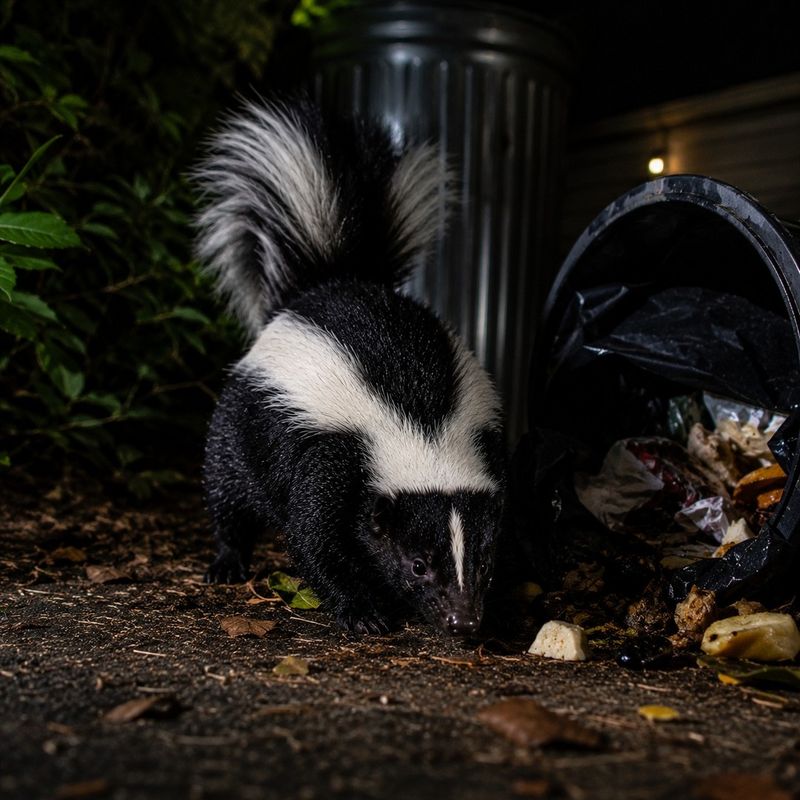
Skunks are not picky eaters. In fact, they will happily munch on almost anything they can find. Insects, grubs, earthworms, fallen fruit, bird seed, pet food, and even garbage all make the menu.
A yard with just one food source might get an occasional visit. A yard with several, though, can become a regular stop on a skunk’s nightly route. Once it learns your place is full of treats, it will keep coming back and digging while it is there.
Good news: cutting off these extras is pretty simple. Start by feeding pets indoors, or bring bowls inside before evening. A dish of kibble left on the porch is basically an open invitation.
Next, check your garbage cans. Choose cans with tight-fitting lids, and use bungee cords or latches if critters have knocked them over before. Putting trash out the morning of pickup instead of the night before also helps.
Bird lovers can still enjoy their feathered friends. Just sweep up spilled seed under feeders often, or add a tray to catch it. If you have fruit trees, gather fallen apples, pears, and plums before they pile up on the ground.
Compost bins need attention as well. Use a closed bin with a secure lid, and avoid adding meat, dairy, or greasy scraps that create strong smells.
For Michigan homeowners, these small changes add up. Removing extra food makes your property far less appealing, which lowers skunk activity overall. Fewer visits mean fewer chances for digging, so your lawn gets a well-earned break.
6. They May Be Living Nearby
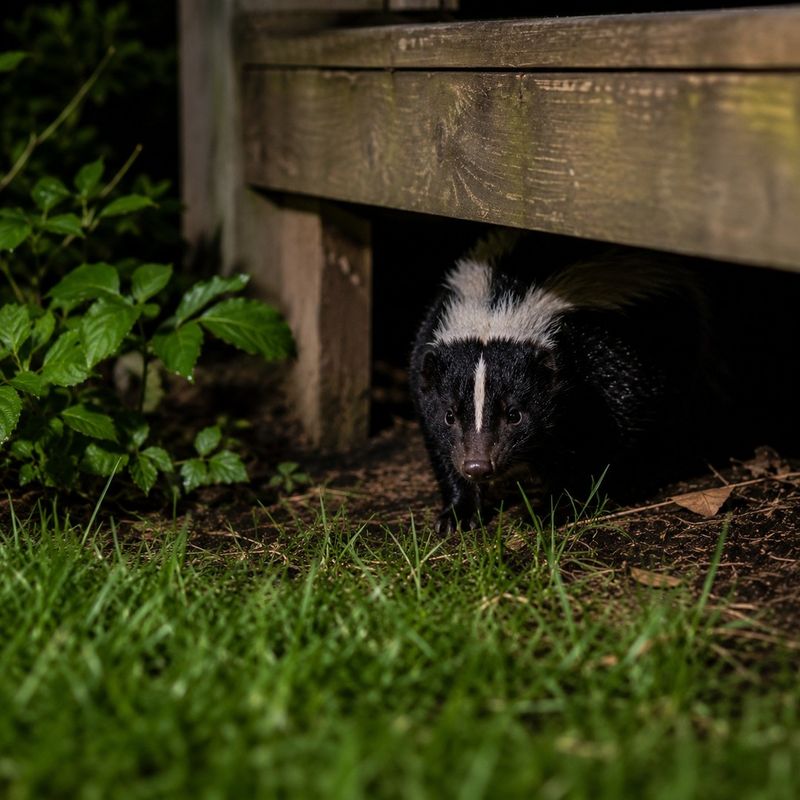
Your lawn might not just be a feeding spot. It could also be right next door to a skunk’s home. Skunks like to stay close to their food, and a cozy den nearby makes every nightly meal easier.
Favorite hiding places include the dark spaces under decks, porches, sheds, and woodpiles. These spots stay dry, feel safe, and offer protection from wind and snow. A skunk living under your deck will simply step out each night and start digging a few feet away.
Start by walking around your property during the day. Look for holes about four to six inches wide near structures, along with loose dirt, tracks, or a faint musky smell. These signs can tell you whether someone has moved in.
Before sealing anything, make sure no animals are inside. One easy trick is to loosely stuff the opening with newspaper or leaves and check it the next day. If the material has been pushed aside, the den is still in use.
Be extra careful in spring and early summer, when mother skunks may have young tucked inside.
Once the space is empty, close it off with sturdy hardware cloth. Bury the bottom edge several inches into the ground, and bend it outward in an L shape so skunks cannot dig underneath. Secure the top firmly to the structure.
In Michigan, skunks start hunting for sheltered den sites as fall weather cools. Blocking openings now means fewer winter tenants and much less lawn damage next season.
7. Managing Grubs Reduces The Digging
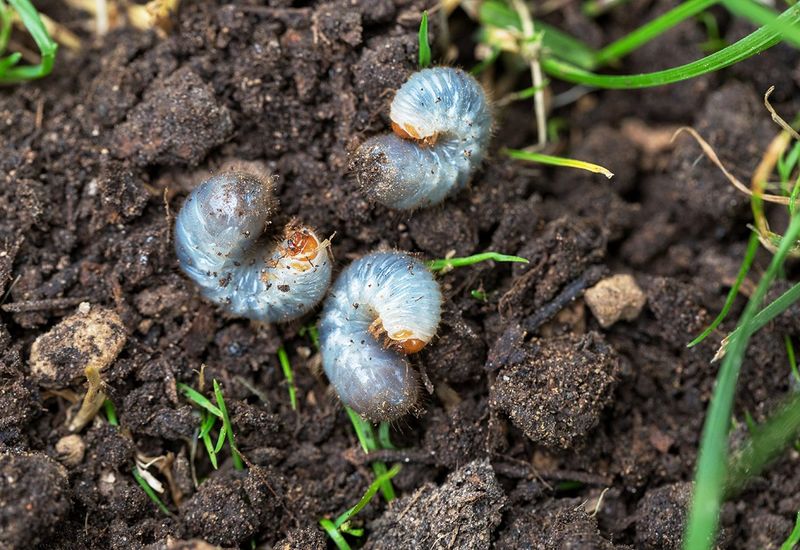
Fixing holes is nice, but stopping them is even better. The most effective long-term answer to skunk digging is controlling the grubs that lure them in. Take away the food, and your lawn quickly loses its charm.
When grub numbers drop, skunks find slim pickings and move on to easier spots. Digging slows down, and your grass has time to heal. It is a simple idea that works because it targets the root of the problem.
You have two main options. Curative grub products work best in late summer to early fall, while grubs are still small and feeding near the surface.
Preventive products go down in late spring to early summer, and they protect your lawn from the next batch of grubs later that year.
Whichever you choose, read the label carefully and follow the directions exactly. Many products need to be watered in to reach the soil where grubs live. Keep kids and pets off treated areas for as long as the label says.
A strong, healthy lawn bounces back faster from any damage. Mow at about three inches tall, since taller grass grows deeper roots. Water deeply but not too often, and give your lawn a fall feeding to help it recover before winter.
Michigan homeowners get the best results when they time grub control just right. A treatment applied too late misses the window, and skunks keep coming back each fall.
With the right timing and good lawn care, your yard can stay smooth, green, and hole-free year after year.