This Tough Groundcover Is Becoming A Smarter Mulch Alternative In Michigan Shade Gardens
Mulch under shade trees can feel like a chore that never ends.
You spread it in spring, smooth it around trunks and shrubs, and admire the clean look for about five minutes.
Then rain washes it downhill. Squirrels kick it into the lawn. Fallen leaves bury it by October. By the next spring, the bare soil is back, and the whole routine starts again.
Michigan shade gardens make that cycle especially familiar.
Maples, oaks, hemlocks, and other mature trees create beautiful canopy, but they also create tricky ground-level conditions.
The soil can be dry, root-filled, dim, and hard to keep covered. A living groundcover can change that pattern, but only when it matches the site and gets enough time to settle in.
The right plant will not replace mulch overnight.
It starts slowly, spreads steadily, and eventually creates a leafy layer that returns each spring without another stack of bags from the garden center.
So which tough native groundcover is becoming a smarter mulch alternative in Michigan shade gardens?
Start with the woodland plant that already knows how to live beneath trees.
Choose Canadian Wild Ginger
Canadian wild ginger is the groundcover worth considering.
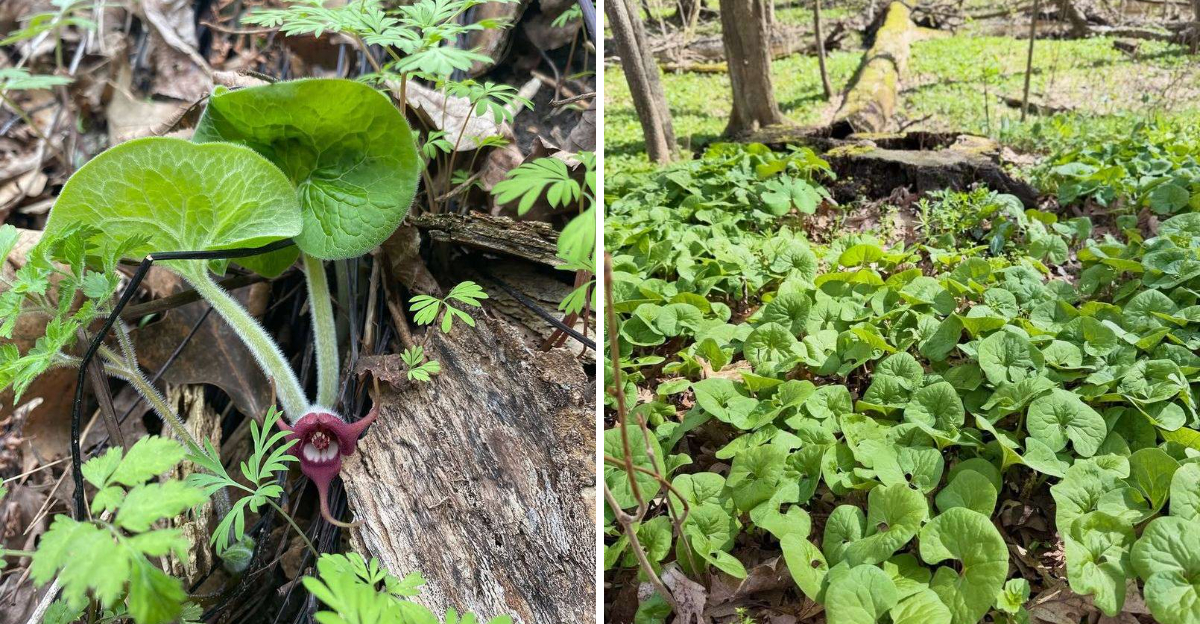
Known botanically as Asarum canadense, this Michigan native perennial grows naturally in rich, shaded woodland settings.
That gives it a major advantage under trees, along north-facing beds, and in quiet corners where many sun-loving groundcovers fade out fast.
The look is soft but sturdy. Each plant produces broad, heart-shaped leaves that sit on fuzzy stems.
The height stays low. Mature plants usually reach around six to eight inches tall, which makes them useful beneath taller shrubs and trees.
The leaves create the main show. Their deep green color and rounded shape give shade beds a lush, finished look.
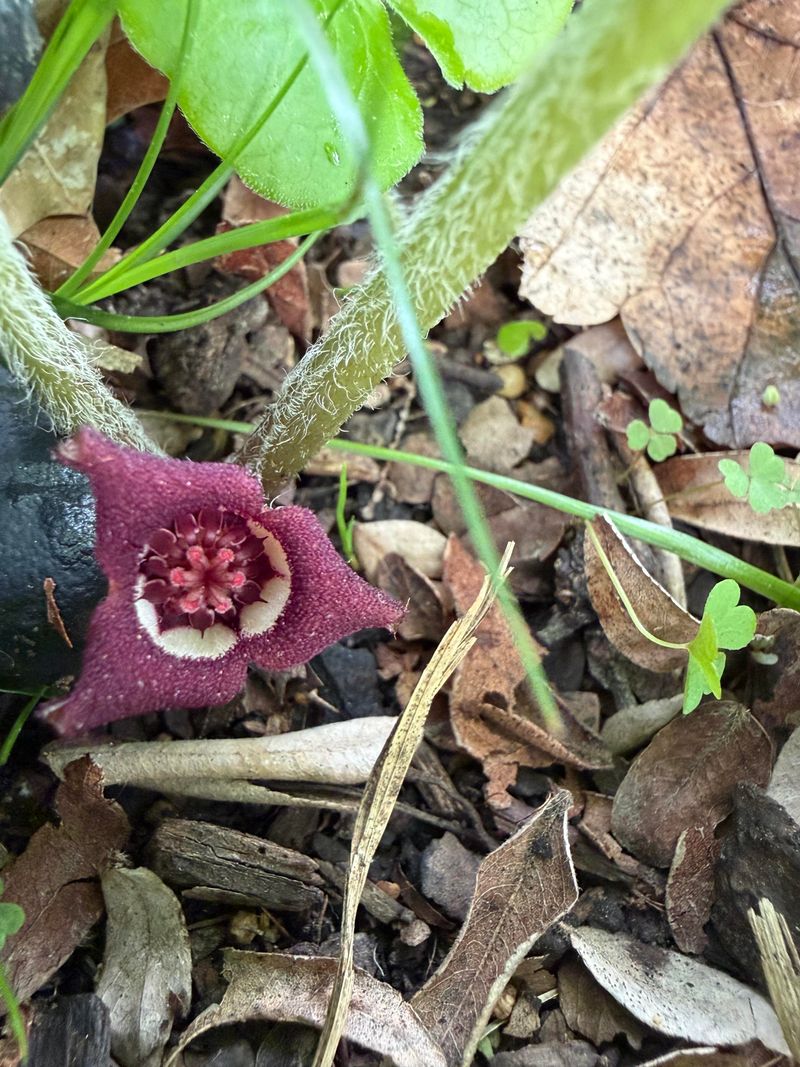
The flowers are easy to miss. They bloom in spring near the soil surface, tucked beneath the leaves.
That hidden bloom habit fits the plant’s woodland nature. It is more about foliage coverage than floral drama.
This is not culinary ginger. The common name comes from the root’s scent, but the plant belongs in the landscape, not the kitchen.
It spreads by underground rhizomes. The growth is steady rather than explosive.
That slow spread is useful in shade gardens. It fills space without behaving like an aggressive runaway in most well-managed beds.
The best sites mimic a Michigan forest floor.
Give it shade, moisture, organic matter, and time, and Canadian wild ginger can begin doing the job mulch never does on its own: returning every spring.
Let Broad Leaves Cover Bare Soil
The leaves are the real mulch alternative.
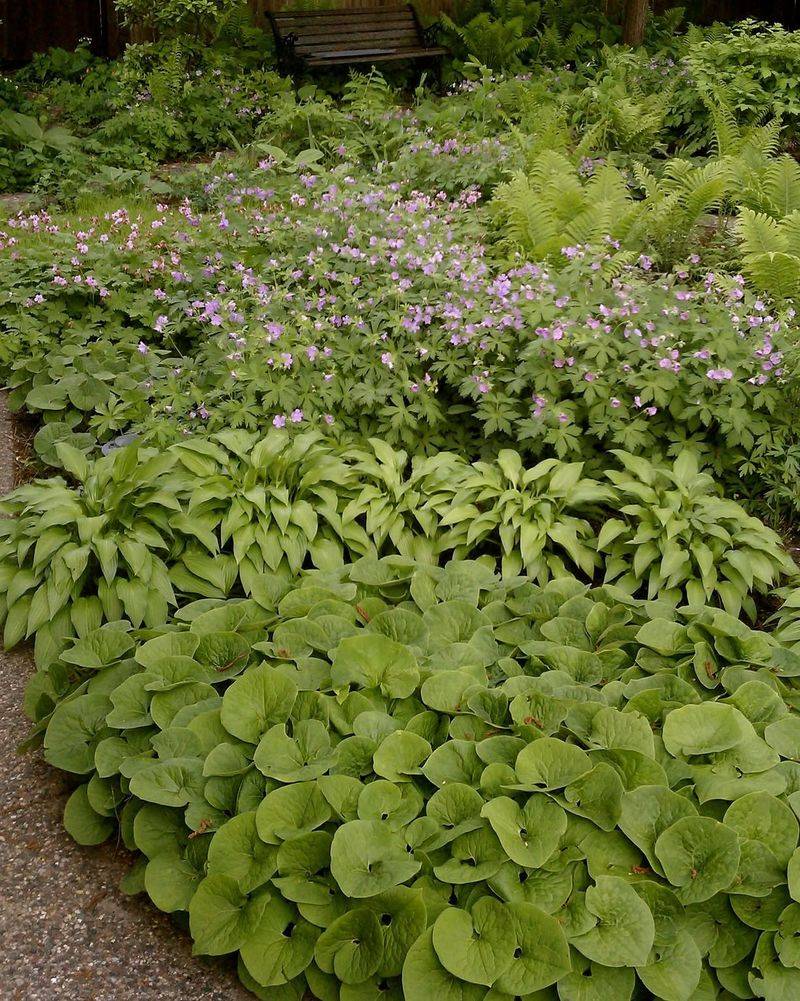
A mature planting of Canadian wild ginger creates a low canopy that shades the soil surface. Instead of relying only on wood chips or shredded bark, the bed gains living coverage from spring through fall.
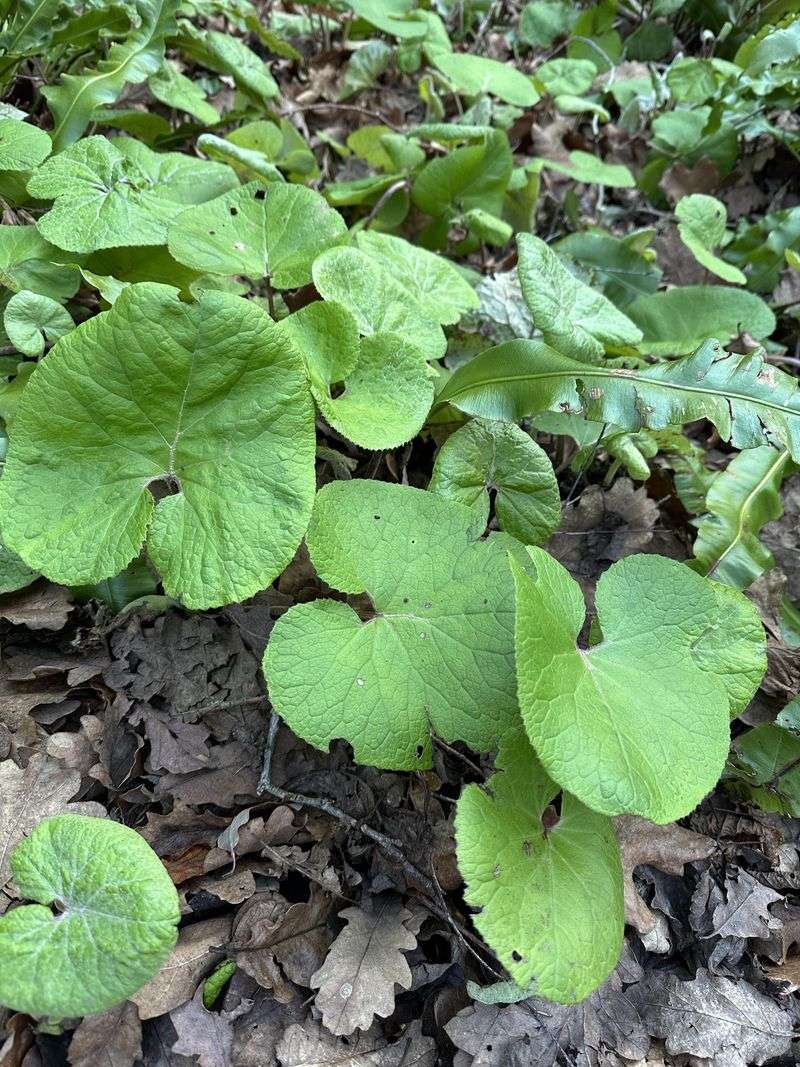
Each leaf is broad. Many reach several inches across, large enough to overlap neighboring leaves.
That overlap matters. It creates a continuous surface that protects the soil below.
Rain hits leaves first. That softens the impact before water reaches the ground.
Your Michigan Garden Changes Every Week. Your Plan Should Too.
Gardening in Michigan changes quickly throughout the season. Every Friday you’ll receive a simple weekly plan showing exactly what to plant, prune, fertilize, harvest, and protect so you never miss the right timing.
Bare soil crusts more easily. A leafy cover helps reduce that pounding effect.
The canopy also reduces exposed light. Weed seeds sitting at the surface have less encouragement to sprout.
The coverage stays in place. Unlike loose mulch, it does not wash downhill during every hard rain.
It also renews itself. New leaves emerge each spring without hauling, spreading, or refreshing.
Young plantings will not cover the ground right away. Gaps between plugs need care during the first few seasons.
Use light mulch between young plants. That protects bare soil until the colony fills in.
Do not pile mulch over the crowns. The plants need air and room to send up new growth.
Canadian wild ginger works best as a long-term cover.
Once the leaves overlap, the bed begins looking less like a mulched problem area and more like a settled woodland planting.
Shade Out Small Weed Seedlings
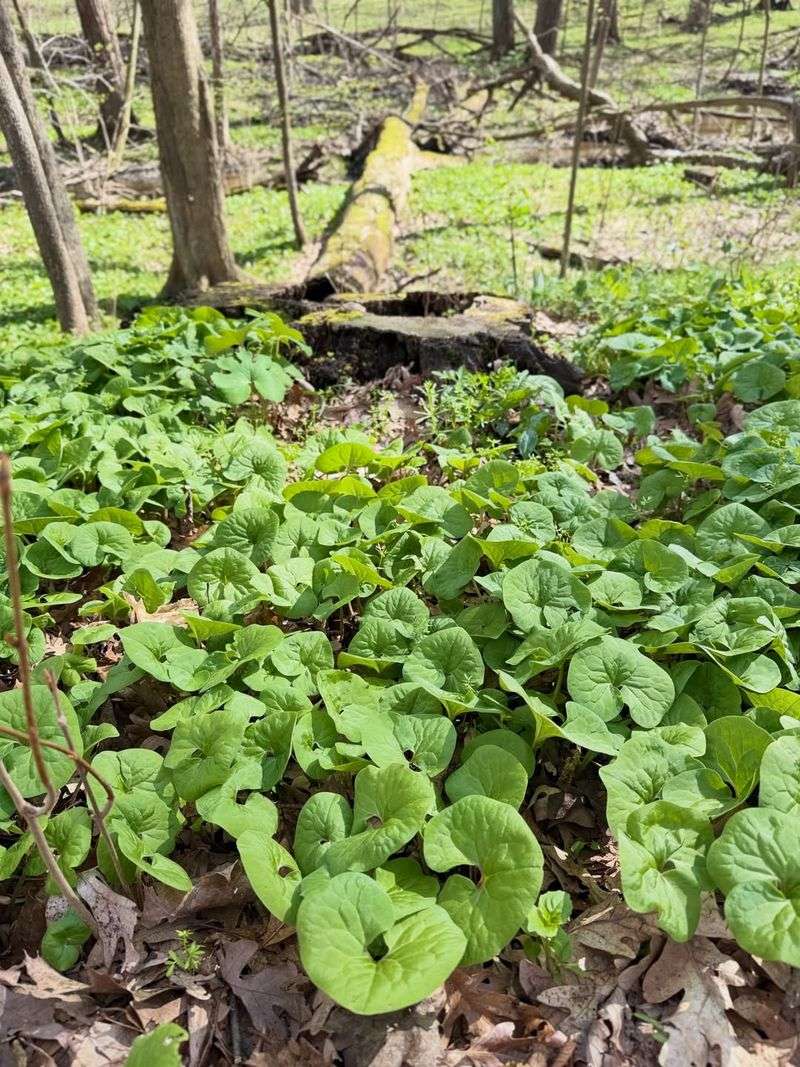
A closed canopy gives weeds less opportunity.
Canadian wild ginger does not erase every weed, but an established patch can reduce the constant flush of tiny seedlings that appear in bare or thinning mulch. The dense leaves block light where many annual weeds try to germinate.
That effect improves with age. A sparse first-year planting still leaves open pockets.
By year three or four, a healthy colony can shade much more of the soil.
Small seedlings are the easiest to suppress. They need light, space, and a quick start.
The groundcover makes that harder. Its leaves sit low and overlap near the surface.
Established perennial weeds are different. Creeping Charlie, ground ivy, thistles, and other rooted weeds can push through young colonies.
Remove those before planting. Do not expect wild ginger to smother a strong weed problem that already owns the bed.
Weed early and often during establishment. A few minutes each week prevents competition from getting ahead.
Hand-pulling is safest around young rhizomes. Deep cultivation can disturb the very growth you want to encourage.
Mulch gaps lightly during the first years. That gives young plants backup while they spread.
After the canopy closes, maintenance usually becomes easier.
The goal is not a weed-free fantasy. The goal is fewer bare patches, fewer seedlings, and less repetitive mulch-and-pull work under shade trees.
Hold Moisture Around Tree Roots
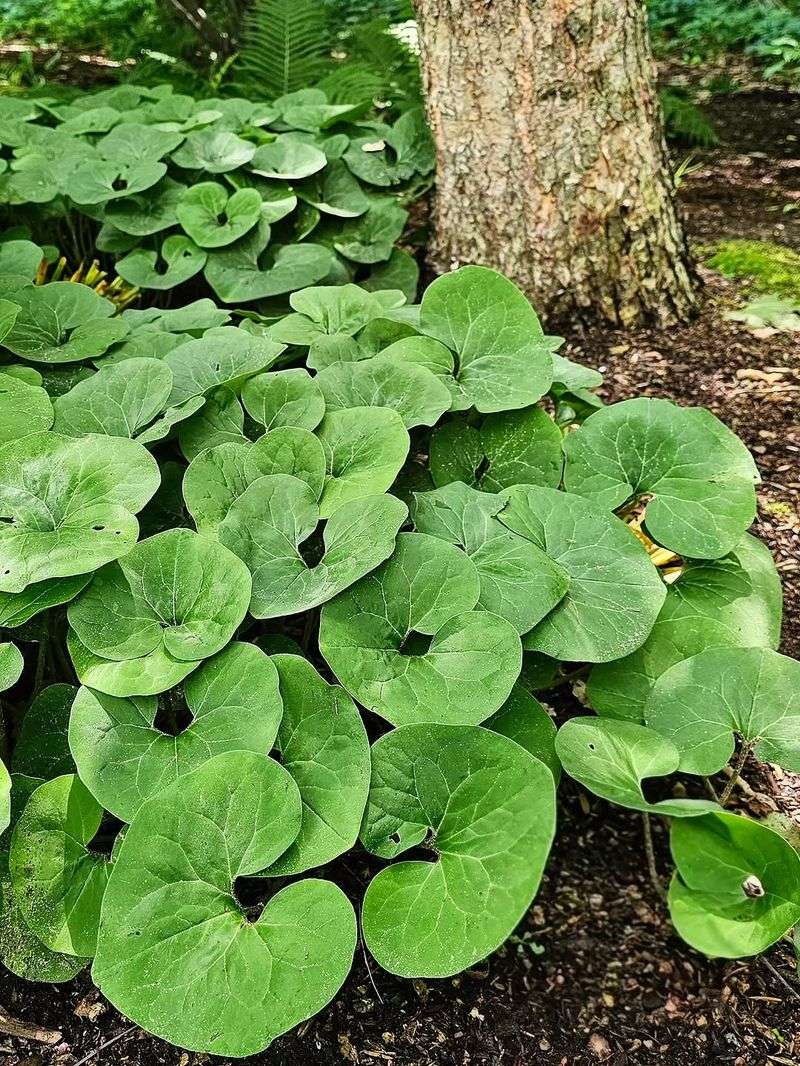
Shade does not always mean moist soil.
Michigan gardeners know this well. The soil under mature trees can dry out quickly because tree roots compete for moisture near the surface. A bed may look cool and shaded, yet still leave smaller plants thirsty during July and August dry stretches.
Canadian wild ginger helps by shading the soil. Its broad leaves reduce direct evaporation from the surface.
Cooler soil loses moisture more slowly. That steadier moisture benefits the groundcover and nearby plant roots.
The living canopy also softens wind at soil level. Less exposed soil means less drying.
Mulch can do this too, but mulch thins and shifts. A living colony keeps replacing its own cover during the growing season.
New plants still need water. During the first season, roots are too limited to compete well with established trees.
Water deeply during dry spells. A shallow sprinkle will not help much under thirsty canopy trees.
Check the soil by touch. The top may be dry while lower soil still holds moisture, or the opposite may happen near tree roots.
Afternoon wilt can appear during drought. Slight wilting may recover by evening, but persistent limp leaves mean the colony needs water.
Avoid constant sogginess. This plant likes moisture, not waterlogged soil.
A settled colony can handle normal dry periods better than a new planting.
By keeping the soil shaded and cooler, Canadian wild ginger makes the whole bed less vulnerable to sudden late-summer dryness.
Reduce Repeated Mulch Top Ups
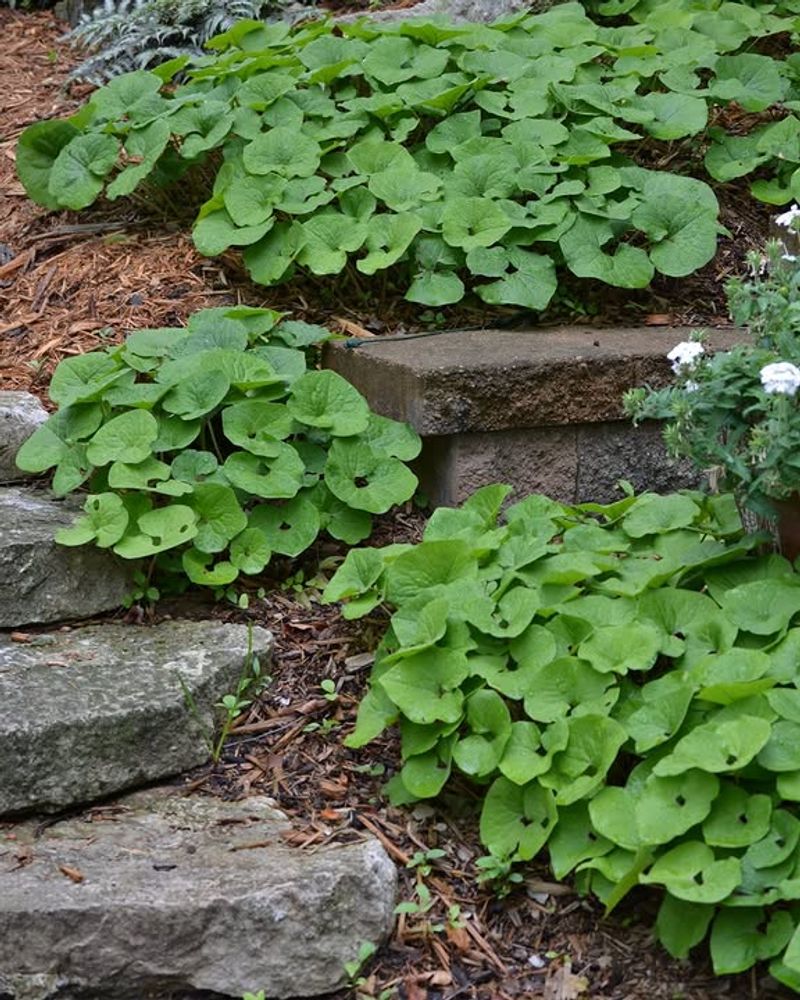
Annual mulch hauling gets old fast.
Large shade beds can swallow bags of mulch every spring. By midsummer, the layer thins. By fall, tree leaves mix through it. The money, labor, and time keep repeating.
Canadian wild ginger changes the long-term math. Once it fills in, the living cover reduces the need to keep topping up the entire area.
That does not happen in year one. The establishment phase still needs support.
You may need light mulch between plugs. That protects soil while the plants spread.
Expect an upfront investment. Plugs, divisions, or nursery plants cost more at the start than a few bags of mulch.
The payoff comes later. A mature patch returns without annual purchase and spreading.
Its own leaves contribute organic matter. When they fade in fall, they help feed the soil below.
Tree leaves can help too, in moderation. A light natural layer suits a woodland bed.
Thick leaf mats can smother young plants. Heavy oak, maple, or beech leaves may need gentle thinning.
Do not strip the bed completely. Removing every leaf defeats part of the woodland system.
Rake lightly when needed. The goal is preventing suffocation, not creating bare soil.
Mulch may still be useful along paths and new edges.
But a mature wild ginger colony can take over much of the soil-covering job that bagged mulch used to handle alone.
Use It In Rich Woodland Soil
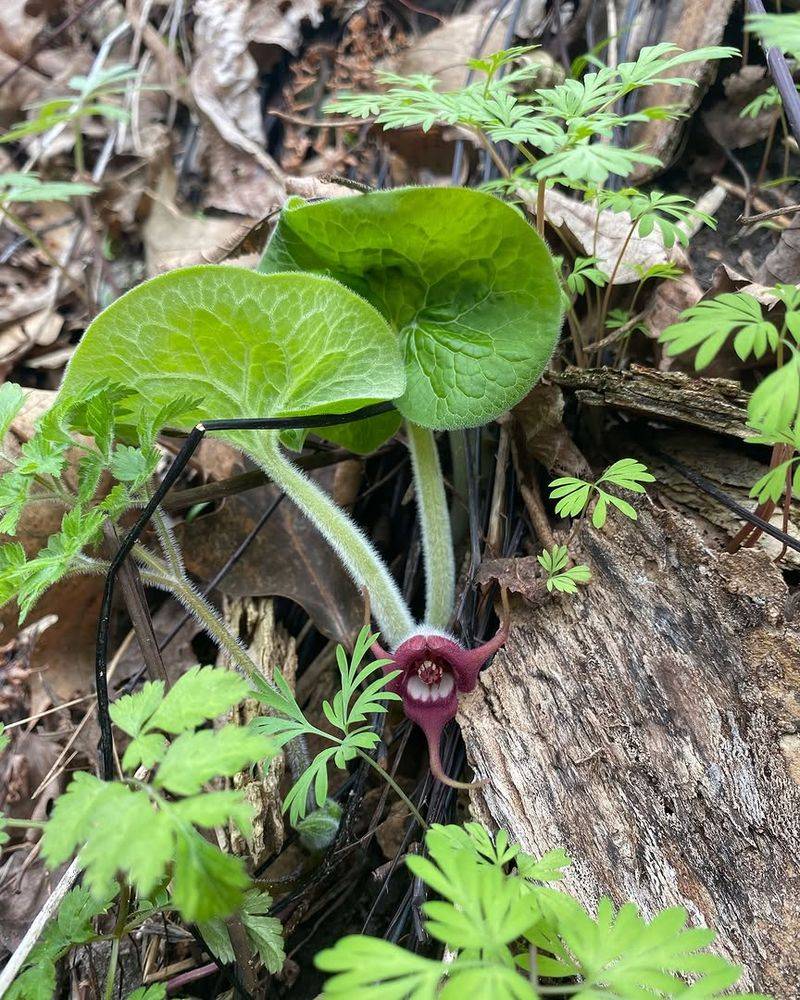
The right soil makes all the difference.
Canadian wild ginger performs best in soil that resembles a healthy woodland floor: rich, organic, moist, and well-drained. It does not need luxury treatment, but it does need conditions that let rhizomes spread without drying hard or sitting in muck.
Compost helps before planting. A modest amount worked into the top layer can improve poor soil.
Do not dig deeply around tree roots. Large roots should stay intact.
Top-dressing works well in established beds. Compost spread on the surface feeds the soil slowly.
Moisture should be steady. Soil that dries to dust every summer will slow the planting down.
Drainage still matters. Wet clay that stays soggy can stress roots.
Sandy soil may need more organic matter. It drains fast and may not hold enough moisture for easy establishment.
Compacted soil needs attention. Hard ground makes it difficult for rhizomes to expand.
Avoid heavy fertilizer. Lush, forced growth is not the goal in a woodland groundcover.
Leaf mold is helpful. Decomposed leaves create the kind of organic texture this plant likes.
Do not expect it to thrive in poor fill dirt. Shade tolerance does not cancel soil needs.
A good start pays off for years.
With rich, breathable soil, Canadian wild ginger can settle in and form the dense mat gardeners want beneath trees.
Give Colonies Time To Fill In
Patience is part of the planting plan.
Canadian wild ginger spreads slowly compared with aggressive groundcovers. That slower pace is a strength once the bed is established, but it can feel underwhelming at first.
First-year plants may look small. Most of the important work happens underground.
Rhizomes expand gradually. Each season, the colony pushes a little farther outward.
Spacing affects the timeline. Closer planting fills faster but costs more.
Six-to-eight-inch spacing creates quicker coverage. Wider spacing saves money but leaves weeds more time to move in.
Divisions may establish faster than tiny plugs. A piece from a mature colony often has more root mass.
Locally grown plants are a smart choice. They are usually better matched to regional conditions.
Protect the young planting. Foot traffic can crush leaves and disturb rhizomes.
Mark the bed during dormancy. Wild ginger disappears in winter, and bare soil can make gardeners forget where it lives.
Do not dig into it in early spring. New shoots may still be waiting below the surface.
By the third or fourth year, the difference becomes obvious.
A well-cared-for colony begins looking less like individual plants and more like one continuous woodland carpet.