8 Instagram-Famous Houseplants With Unusual Charm
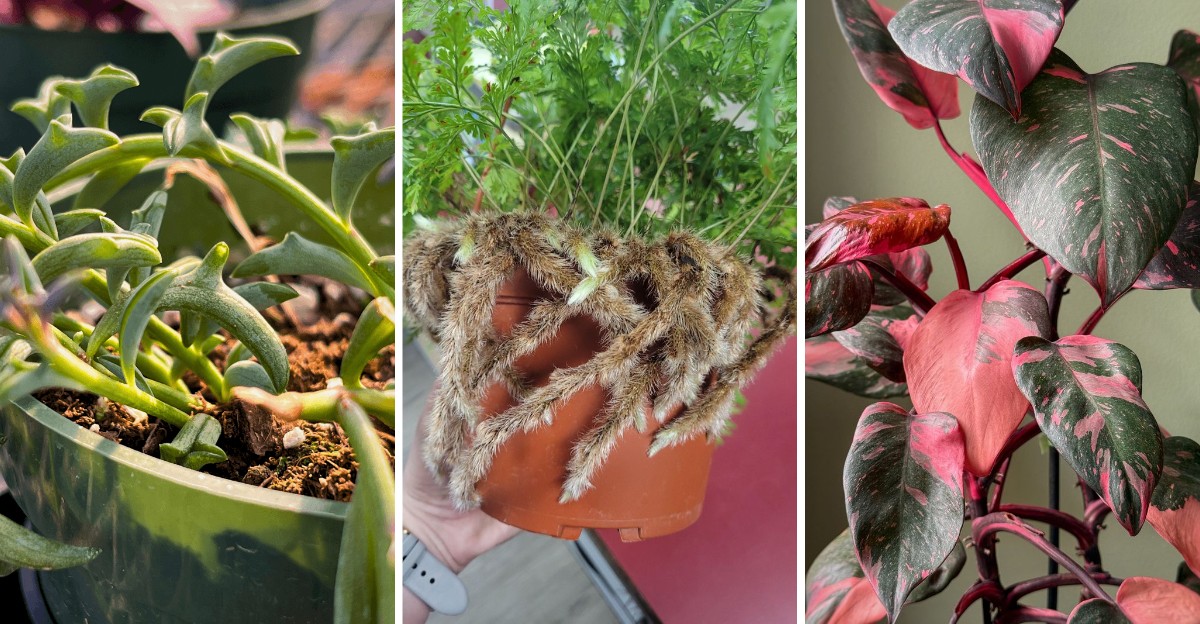
You scroll past a pot of pebbles, then one blooms bright yellow. Another post shows leaves shaped like dolphins, and you lean closer.
Fuzzy feet crawl over a pot rim, and you wonder what you are seeing. Pink splashes on dark leaves make you reach for your phone.
These oddities share a secret you can use at home. Their needs differ, yet you can meet them with simple habits.
Notice light first, since stretched stems tell you a room runs dim. Test the soil with a fingertip before you pour any water.
Then match your plants to a spot, from a bright window to a humid bathroom. Air plants skip soil, so you can display them on driftwood.
Some species ask for patience, so you may wait weeks before new growth appears. Your brightest window already has a favorite waiting.
1. Lithops Hiding As Pebbles
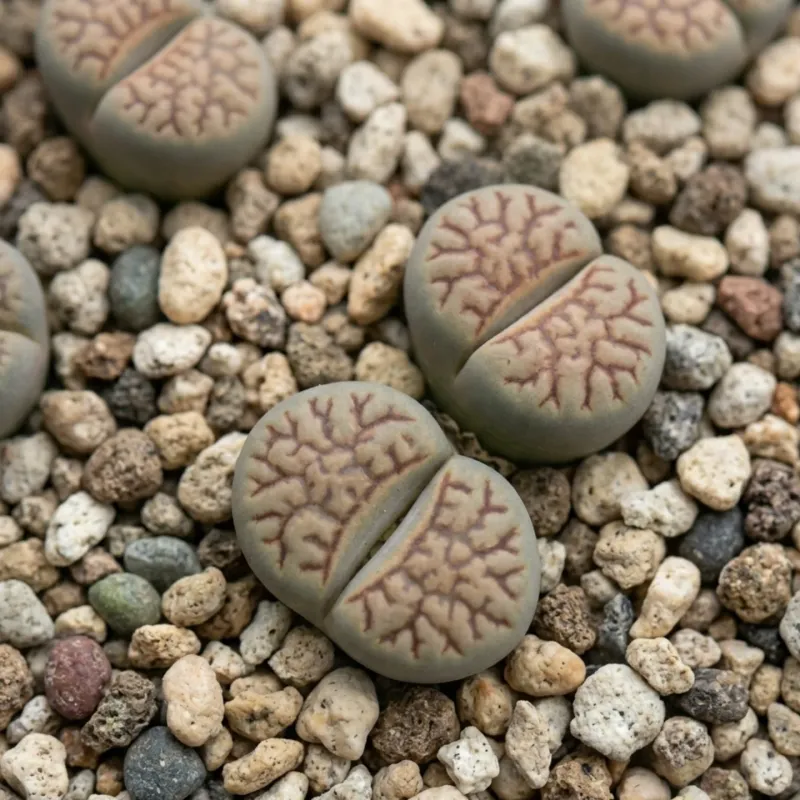
Picture a pot of tiny gray stones, then watch one split open and bloom a bright yellow flower. Living stones show off that feature in fall, right around now.
Native to the dry deserts of southern Africa, they evolved to blend in with rocks. That pebble disguise may hide them from curious animals searching for a juicy snack.
Watering is where many beginners go wrong, even in a humid Florida kitchen, because these plants dislike soggy feet. Give them a deep drink just when the soil is very dry.
During winter, an old pair of leaves shrivels while a new pair grows inside. Resist the urge to water then, since the new leaves drink from the old ones.
Bright light matters a lot, so a sunny south window works well. Without enough sun, they stretch tall and lose their adorable squat shape in a hurry.
Use a gritty cactus mix with extra sand or pumice for drainage. On Instagram, people group several colors together, creating a pot that looks like a candy dish.
Patience pays off with these slow growers. A happy plant can live for decades, quietly sitting on your shelf like a tiny, flowering rock.
Photographers love these plants for their quiet drama. Try placing a few pots on a light gray tray and shoot from a low angle, so the tops look like a pebble beach. Soft window light brings out the subtle stripes, freckles, and window-like patches.
2. Hoya Kerrii, Heart-Shaped Charmer
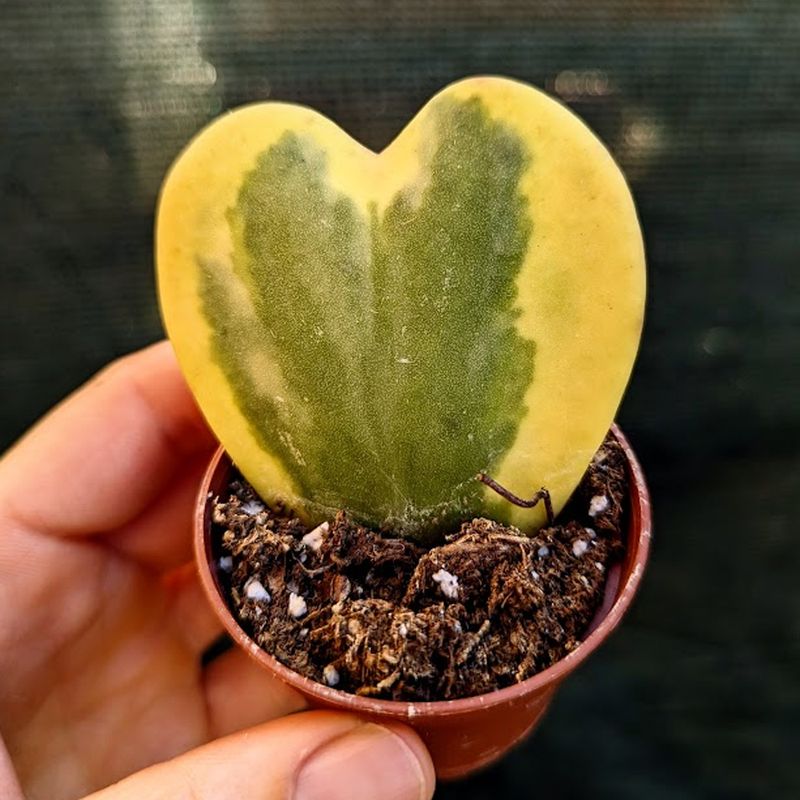
Around February, grocery stores sell single heart-shaped leaves in tiny pots as Valentine gifts. Many buyers later discover their sweet leaf refuses to grow, and that surprise has a reason.
A single leaf cutting without a piece of stem often sits still for years. To get a full vine, look for a plant with real stems and multiple leaves.
The sweetheart hoya comes from Southeast Asia, where it climbs trees in warm forests. Its thick, waxy leaves store water, so it forgives forgetful plant parents.
Bright, indirect light keeps it happy and growing. Let the soil dry out between waterings, then soak it thoroughly and let it drain.
Mature plants can produce round clusters of star-shaped flowers that look like they are made of porcelain. The blooms often smell sweet at night, like a fancy candle.
Leave the old flower stalks in place, even after blooming ends. New flowers grow from the same spots year after year.
Variegated versions with cream or pink edges are especially popular online right now. Pair one with a cute pot and you have a gift that can outlast a bouquet.
Patience rewards you with a plant that grows more charming as seasons pass. Give the vine a small trellis or a hoop, and the stems will wind upward in tidy spirals. A snug pot encourages more flowers, so resist upsizing the container too soon.
3. String Of Dolphins Leaping Free
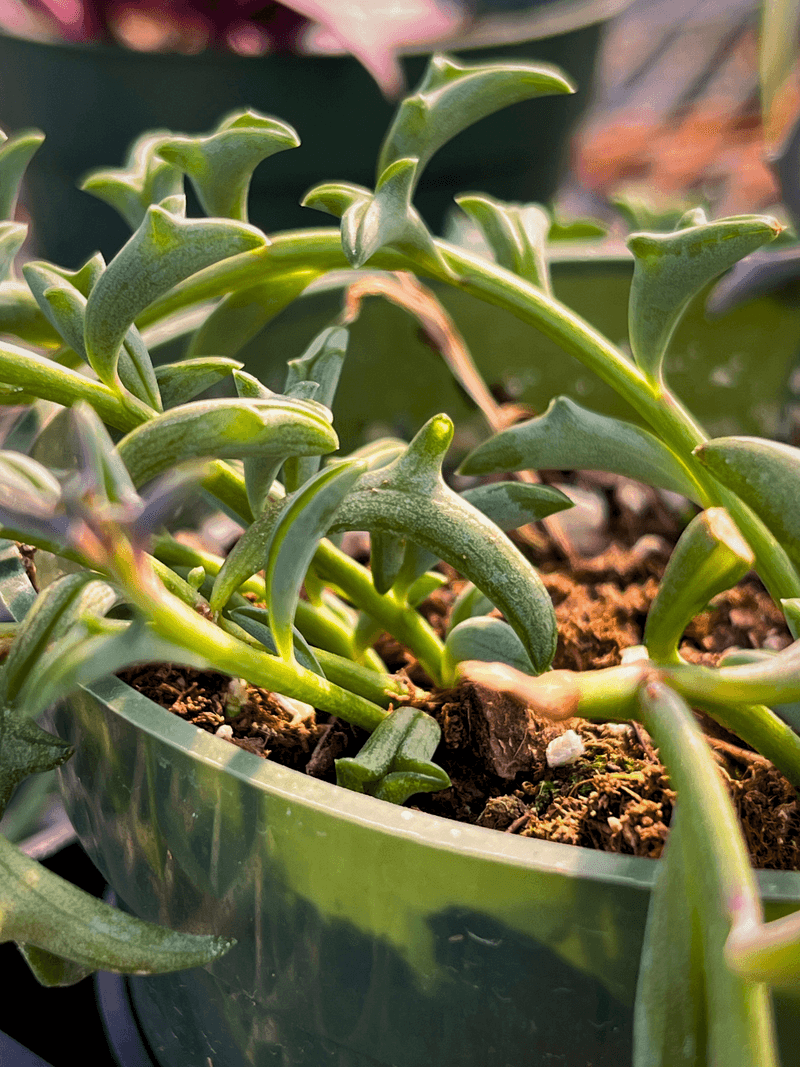
If you love the ocean, a pod of tiny dolphins can now swim across your bookshelf. Each plump leaf has little fins and a curved nose, just like a leaping dolphin.
The plant is a hybrid of a candle plant and a string of pearls. Its trailing stems can reach a few feet in length, making them a good fit for hanging baskets.
Give it bright, indirect light for much of the day. A little morning sun keeps the leaves plump and helps those dolphin shapes stay crisp.
Water when the top inch of soil feels dry, then let extra water drain away. Soggy roots turn mushy fast, and the dolphins start to look deflated.
Fall is a pleasant season for this succulent, since small, cinnamon-scented flowers can appear then. Yes, your little sea creatures may actually smell like a bakery.
Propagation is wonderfully easy, even for curious beginners with limited experience. Snip a few inches of stem, lay it on damp soil, and new roots appear within weeks.
Keep it away from cats and dogs, because the leaves can be harmful to pets. Those cute fins are best admired from a safe, high shelf.
Styling this succulent is half the fun. Let the stems cascade from a high shelf or a macrame hanger, and give them space to swing.
Neutral pots in white or terracotta make the green leaves pop, so the little dolphins draw attention in photos.
4. Thai Constellation Monstera Under Starry Skies
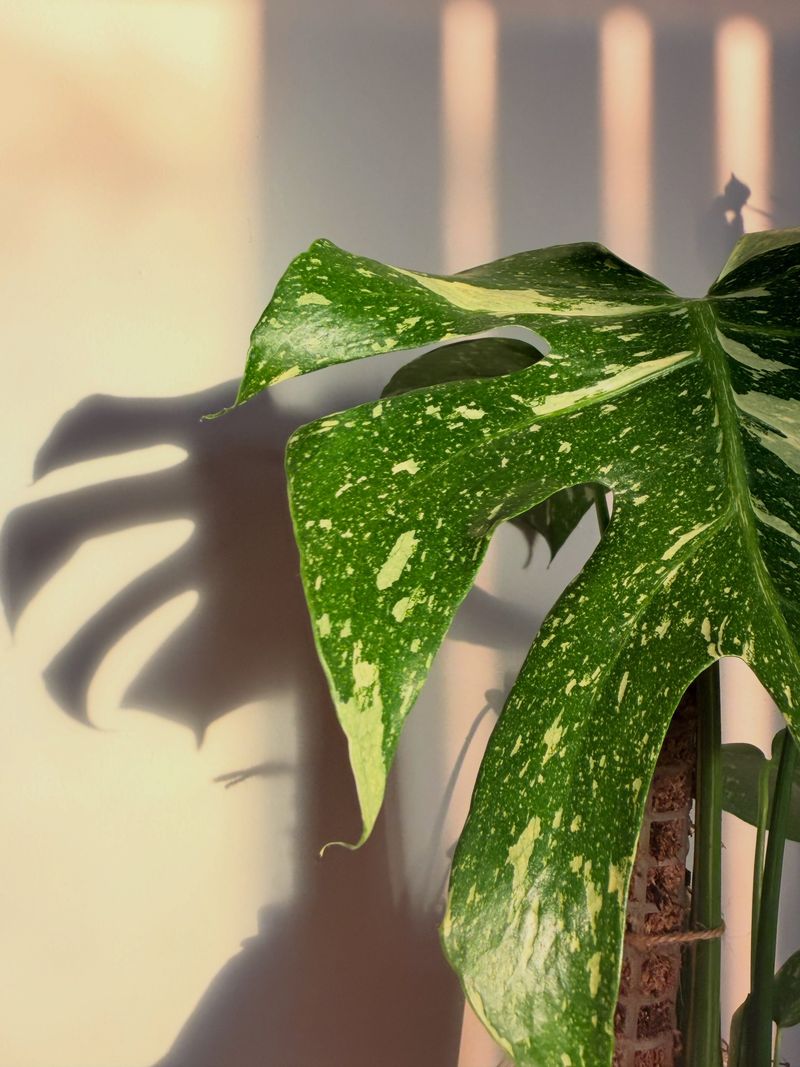
Imagine a night sky splashed across a giant green leaf. That is the vibe of the Thai Constellation monstera, a plant that looks hand-painted with cream speckles.
It is widely said to have been developed in a lab in Thailand through tissue culture. Each leaf has a slightly different pattern, so plants look quite different from one another.
A few years ago, this beauty cost hundreds of dollars and was hard to find. Big growers now produce more, so prices have dropped to a friendlier level.
Those pale speckles cannot make food for the plant, so it grows slower than a regular monstera. Bright, indirect light helps make up for the missing green.
Hot afternoon sun can brown the cream areas, leaving crispy spots. An east-facing window or a spot a few feet from a bright window works great.
Water when the top two inches of soil feel dry. A moss pole gives it something to climb, which encourages bigger leaves with more dramatic splits.
Wipe the leaves with a damp cloth about twice a month to keep them glossy. Dust-free leaves soak up more light and look stunning in photos.
Collectors often track new leaves like they are waiting for a surprise gift. A fresh leaf unfurls slowly and reveals its pattern as it opens. Snap a photo of each new leaf, and you will build a record of the different patterns.
5. Pink Princess Philodendron Dipped In Bubblegum
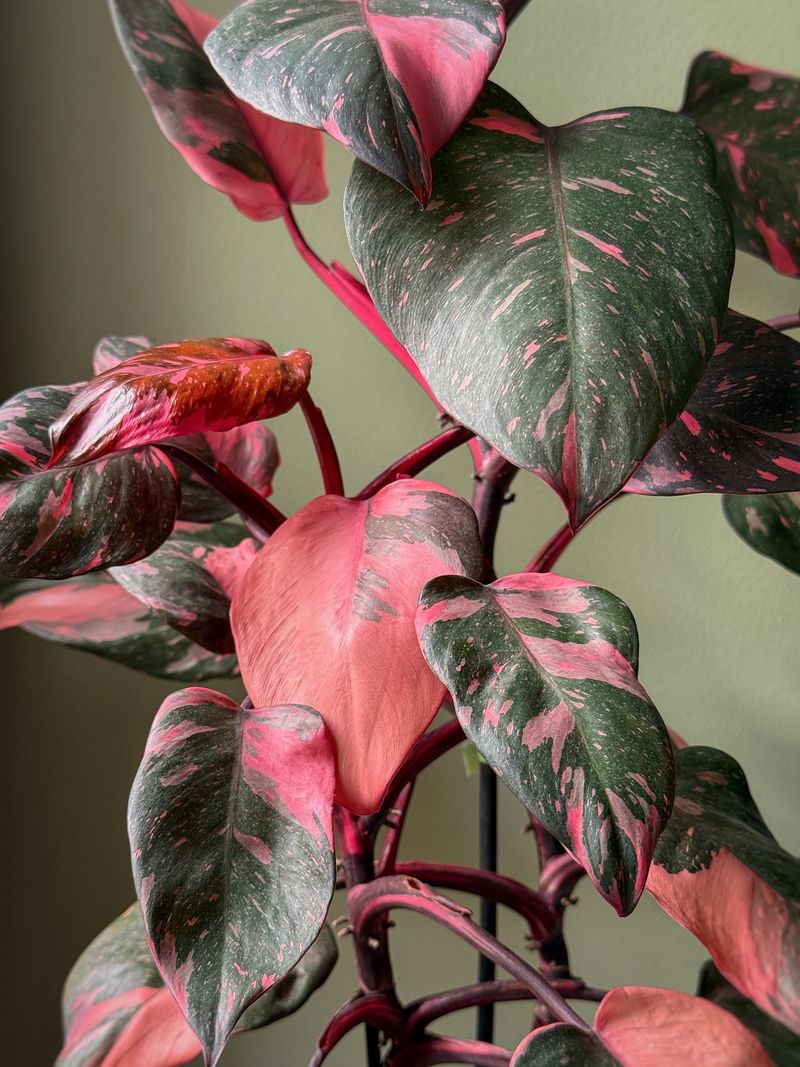
Who knew a plant could look like it wandered out of a candy shop? Bubblegum-pink splotches on dark, almost black leaves make the Pink Princess an eye-catching star.
Fresh leaves are a surprise, since the pink can show up as tiny freckles or big bold halves. Some leaves even unfurl half pink and half green, which collectors call a half-moon.
Light is the secret to keeping that color strong. In dim rooms, the plant grows more green leaves and slowly loses its pink charm.
Fully pink leaves look amazing but often brown quickly, because they lack the green needed to make food. Enjoy them while they last, and stay calm.
Water when the top inch of soil feels dry, and use a chunky mix with bark and perlite. Its roots love air almost as much as moisture.
If the pink fades, try trimming the stem just above a leaf that shows good variegation. New growth from that spot often brings the color back.
October humidity drops as heaters turn on, so a small humidifier nearby helps. Happy leaves stay smooth and glossy instead of crispy at the edges.
Cuttings make this plant easy to share. Snip below a node that shows both an aerial root and a healthy leaf, then place it in water or damp moss.
Within a few weeks, white roots appear. Keep the plant away from pets, since philodendrons can irritate mouths.
6. Rabbit’s Foot Fern Showing Furry Feet
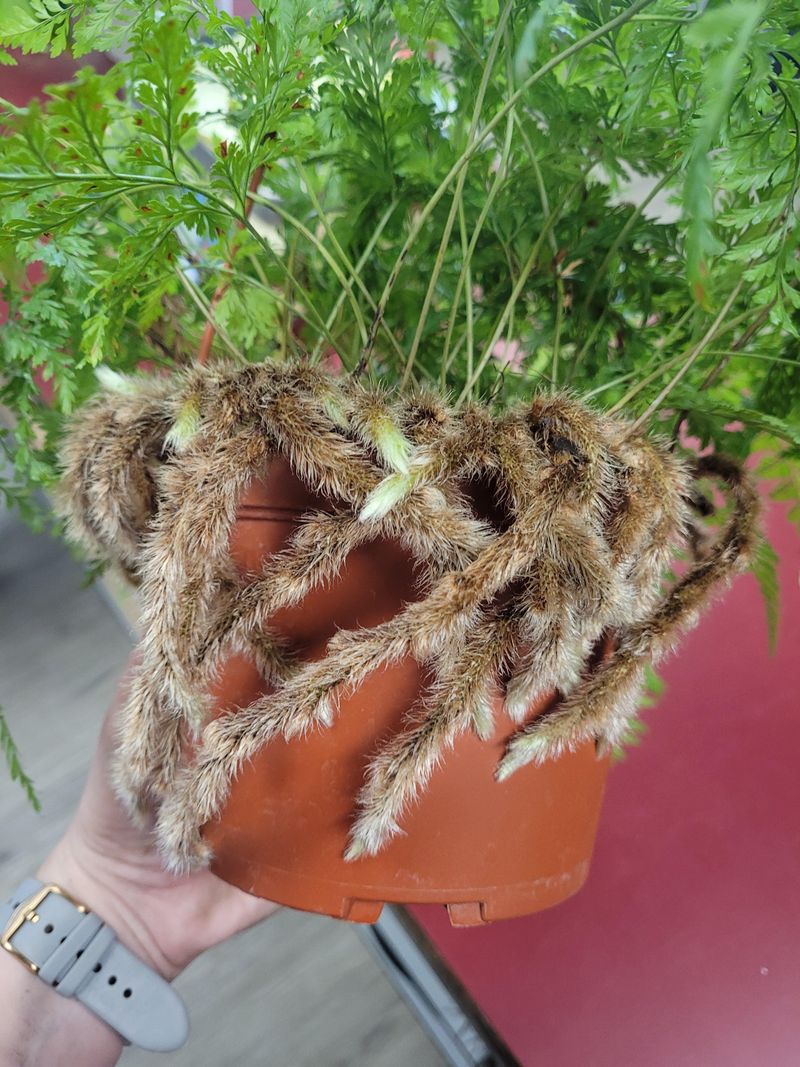
Some plants hide their stems underground, but this one shows them off like a fluffy pet. Fuzzy brown rhizomes creep over the pot edge, looking just like tiny furry paws.
Those furry parts are called rhizomes, and they store water and anchor the fern to its surface. People online love posting close-ups where the plant looks ready to scurry away.
Davallia ferns, as experts call them, grow on trees and rocks in parts of Asia and the Pacific. That background explains why they prefer shallow pots and airy soil.
Do not bury the furry feet, or they may weaken. Let them crawl freely over the soil and spill down the sides of a hanging basket.
Unlike many ferns, it handles a little dryness without reacting badly. Mist the rhizomes now and then, and water when the top of the soil feels dry.
Medium to bright indirect light keeps the lacy fronds full and green. A bathroom with a window makes a great home, thanks to the steamy air.
Kids often enjoy touching the soft feet, and the plant is listed as safe around cats and dogs. It makes a friendly first fern for young plant fans.
Repotting is a quick job. Choose a wide, shallow bowl and fill it with orchid bark mixed with a little potting soil.
Rest the rhizomes on top and pin them gently with small stones, so the furry feet can grip the surface and spread.
7. Alocasia Dragon Scale, Rich Textures
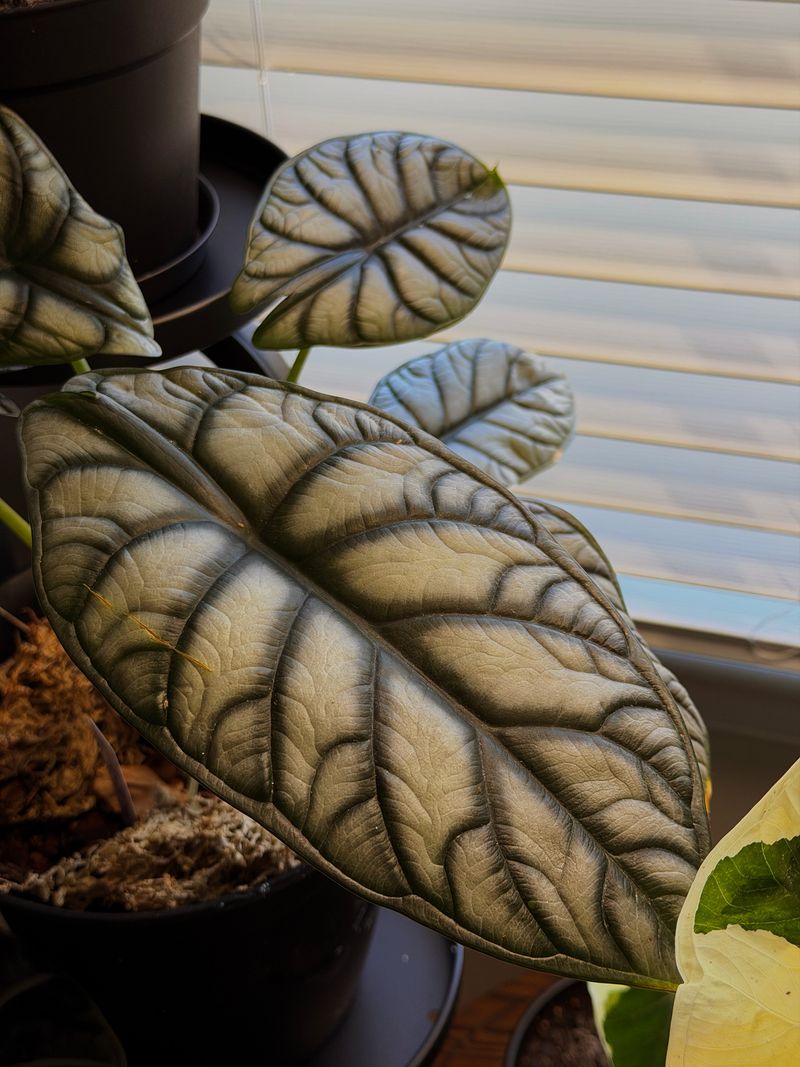
Run a finger across one leaf and you might expect to feel a reptile. The silvery green surface is textured with dark veins, looking like real dragon scales.
The plant comes from the rainforests of Borneo, where it grows in shaded, rocky spots. Its stiff, thick leaves help it handle humid jungle air and dappled light.
Fall can bring a common change for brand new owners. As days shorten in October, the plant may drop leaves and appear to decline.
Relax, because it may simply be going dormant. If leaves keep dropping, check for overwatering, cold, or pests. Cut back on water, keep it warm, and new leaves should return in spring.
During the growing season, it loves high humidity and bright, filtered light. Water when the top inch of soil dries, but avoid letting the pot sit in water.
Spider mites commonly affect this plant, especially in dry indoor air. Check the undersides of leaves weekly and wipe them with soapy water if you see webbing.
Keep it away from pets and small children, because the sap can irritate mouths and skin. A tall stand gives it a strong display spot in a bright room.
Humidity matters here, so a bright, steamy bathroom in a Florida home suits it well.
Group this plant with other leafy friends, or set its pot on a tray of pebbles with a little water below the pot base. The extra moisture may help keep the leaf edges smooth and the silvery sheen bright.
8. Tillandsia Xerographica, All Silver Curls
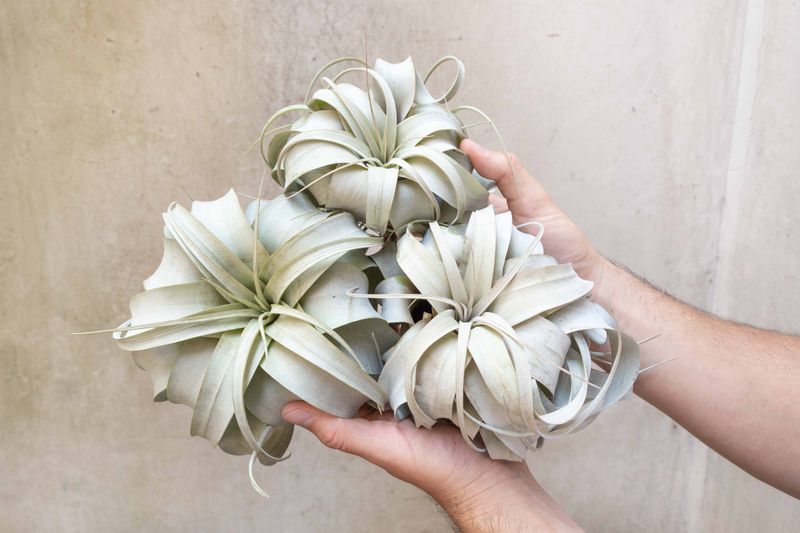
Forget pots, soil, and any messy cleanup. The king of air plants grows silvery leaves that curl like ribbons on a fancy, oversized gift box.
Native to dry forests in Mexico and Central America, it clings to branches instead of rooting in dirt. Tiny scales on its leaves catch water and nutrients from the air.
Many plant fans in Florida and beyond enjoy displaying it in glass bowls, on driftwood, or tucked into bookshelves. Its sculptural shape looks like living art, especially in clean, modern rooms with lots of light.
Despite its name, an air plant still needs regular water to stay healthy. Dunk it in a bowl for about twenty minutes once a week, then shake it gently.
Turn it upside down for a few hours, since water trapped in the center can invite trouble. Good airflow helps keep it healthy.
Bright, indirect light keeps the leaves silvery and plump. When it feels thin and the curls tighten too much, it is thirsty and needs a longer soak.
Growth is slow, but a healthy plant can live for many years. Eventually it may bloom with a tall pink and purple flower spike that steals the show.
Display ideas multiply once you start. Hang a few plants at different heights near a bright window, or perch one on a shelf beside a favorite book.
Group them with shells and smooth river stones, and your quiet corner turns into a tiny gallery.