How To Prune Storm Damaged Trees In California Without Making The Damage Worse
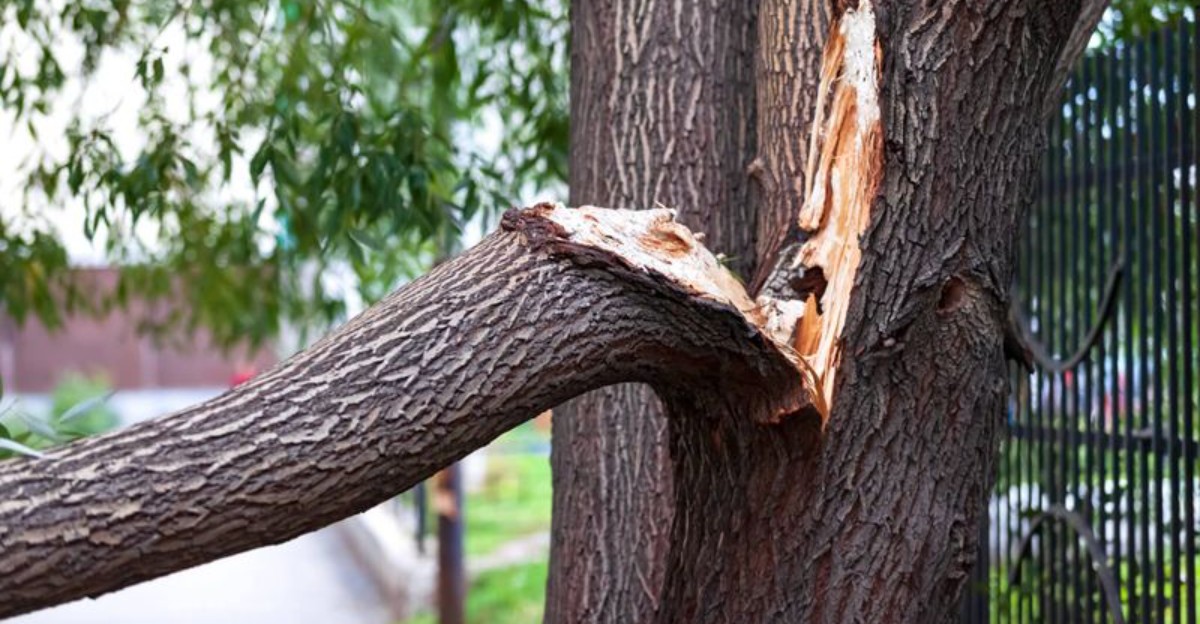
The morning after a big storm often reveals a yard in disarray, with scattered leaves, snapped twigs, and the occasional limb hanging at an awkward angle.
The pull toward immediate repair runs strong, and a saw can seem like the obvious answer.
California’s storms, from soaking winter systems to dry offshore gusts, can leave trees badly hurt, yet the order of the cleanup matters as much as the cuts themselves.
Some tasks deserve attention right away, others are best saved for later, and a few belong to trained professionals.
A tree that loses several limbs can often recover beautifully with thoughtful care.
One handled in haste rarely grows back the same, so a calm, methodical plan pays off for years.
1. Put Safety Ahead Of Any Cutting
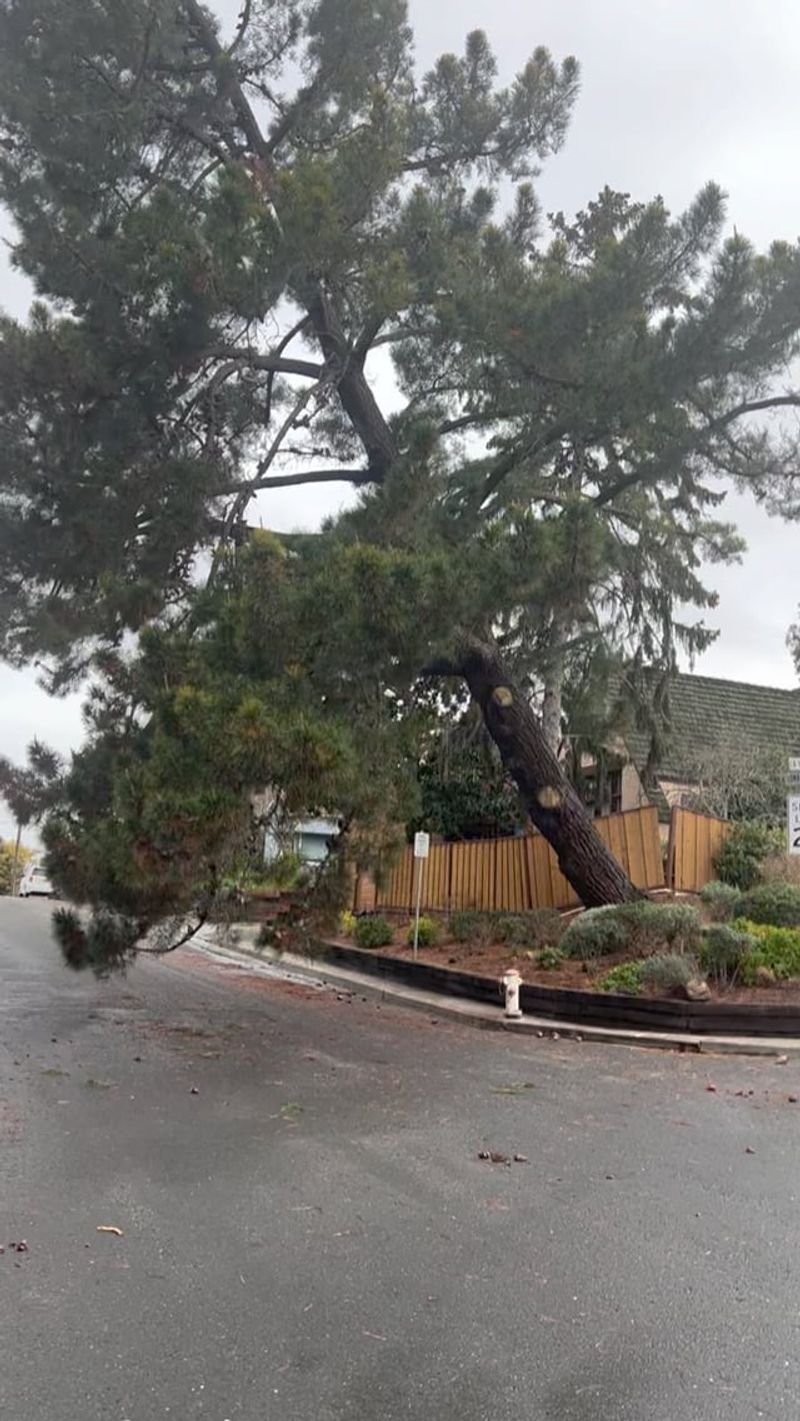
A split limb can look calm and still drop without warning, so the first task involves no saw at all. A slow walk around the tree, looking up, then down, then all around, sets the foundation for everything else.
Cracked trunks, hanging branches, lifted soil near the roots, and a new lean all deserve attention.
A tree that suddenly tilts after heavy rain may have loose roots in soggy ground, and children and pets belong well away from that zone, which rope or lawn chairs can mark off.
Proper gear comes next. A hard hat, safety glasses, sturdy gloves, long sleeves, and boots with good grip all help, along with hearing protection for chainsaw work.
Wet bark and muddy ground make slips more likely, so an unhurried pace matters.
Working with a helper is far safer than working alone. A second person can watch for falling debris, steady equipment, and call for help if needed, and a simple signal such as a shout of “clear” before each cut keeps everyone coordinated.
Climbing a damaged tree is best avoided. Tree professionals warn homeowners against climbing storm-damaged trees or running chainsaws from branches, and ladders on soft ground can sink or slide.
Any limb out of reach of a pole saw from the ground belongs with a professional.
The forecast deserves a final check, since another windy day can bring more limbs down. A calm, dry morning, with plenty of rest and focus, makes the best time to begin.
2. Stay Far From Power Lines
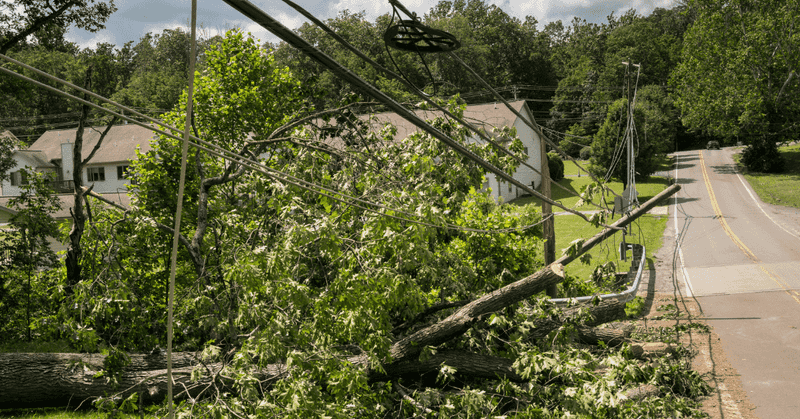
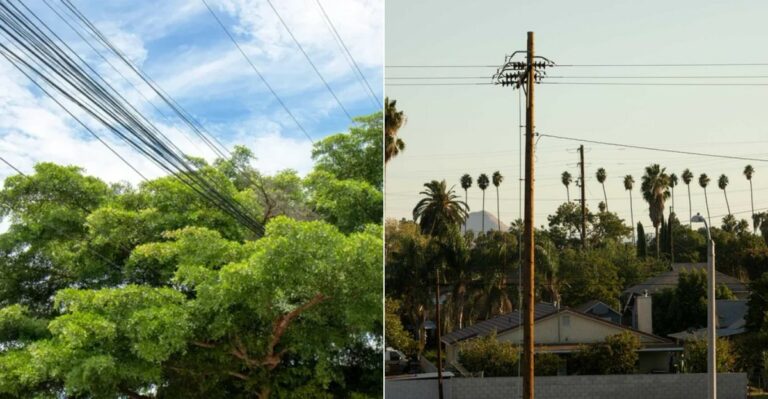
A eucalyptus limb resting across a sagging wire after a storm can look as harmless as a twig on a clothesline. That appearance misleads badly, since the risk involves live electricity.
Current can travel through wood, especially wet wood. A branch touching a line can carry electricity into anything it contacts, including the surrounding ground, so serious injury can happen without touching the wire at all.
Even standing nearby can be dangerous.
Every downed or sagging line deserves treatment as live. Staying at least 10 feet away from the wire and anything touching it, and farther when possible, protects everyone.
Pushing a branch off a line with a pole, rake, or ladder is best avoided entirely. Pets and children are best kept indoors until the utility arrives.
Your California Garden Changes Every Week. Your Plan Should Too.
Gardening in California changes quickly throughout the season. Every Friday you’ll receive a simple weekly plan showing exactly what to plant, prune, fertilize, harvest, and protect so you never miss the right timing.
A prompt call to the utility comes next. Across much of California, that means PG&E, Southern California Edison, SDG&E, or a municipal utility, and many clear branches tangled in their wires at no charge.
A line that’s down and sparking calls for 911 first.
Branches near the service lines running to a house need the same caution. Only qualified line-clearance arborists should work within reach of electrical wires, since ordinary tree crews and homeowners lack the training and insurance for that kind of job.
A simple rule keeps things clear. Any branch close to a wire belongs to the professionals, leaving homeowners free to focus on safer corners of the yard.
3. Remove Broken Hanging Limbs First
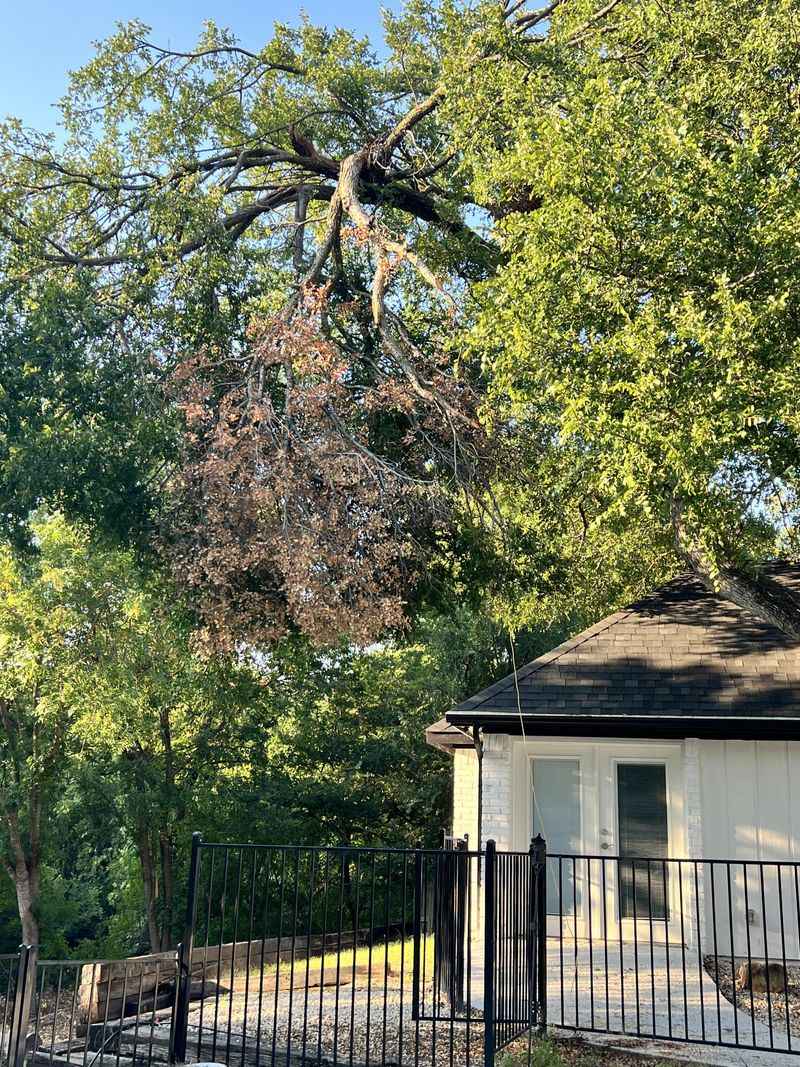
Arborists call broken branches stuck up in a tree hangers, and the nickname fits. A hanger can sit quietly for days, then fall on a perfectly calm afternoon.
These loose pieces deserve attention first, since they pose the biggest threat to people, cars, and roofs. Trimming healthy wood while hangers remain overhead resembles mopping a floor while the sink still overflows.
A careful scan of the canopy reveals limbs that are cracked, twisted, or dangling by bark. Some catch on lower branches and shift as wind moves the tree.
Noting where each one would land if it dropped helps plan the work. Photos of each hanger help when describing the job to an arborist or insurer.
Small, reachable hangers can come down from the ground with a pole saw or pole pruner. Standing to the side rather than directly underneath, with an escape path planned and the helper well clear, keeps the job safer.
Large hangers tell a different story. A heavy limb wedged high up can swing, bounce, or roll unpredictably, and those situations call for a trained arborist with ropes and rigging gear rather than a rope tied to a truck.
Broken stubs where limbs snapped off also need attention, since ragged ends invite decay and insects. Proper finishing cuts come later in the process.
The immediate goal is simply a yard safe to walk through again. Once overhead hazards are gone, the real pruning can begin.
4. Use The Three Cut Method On Heavy Branches
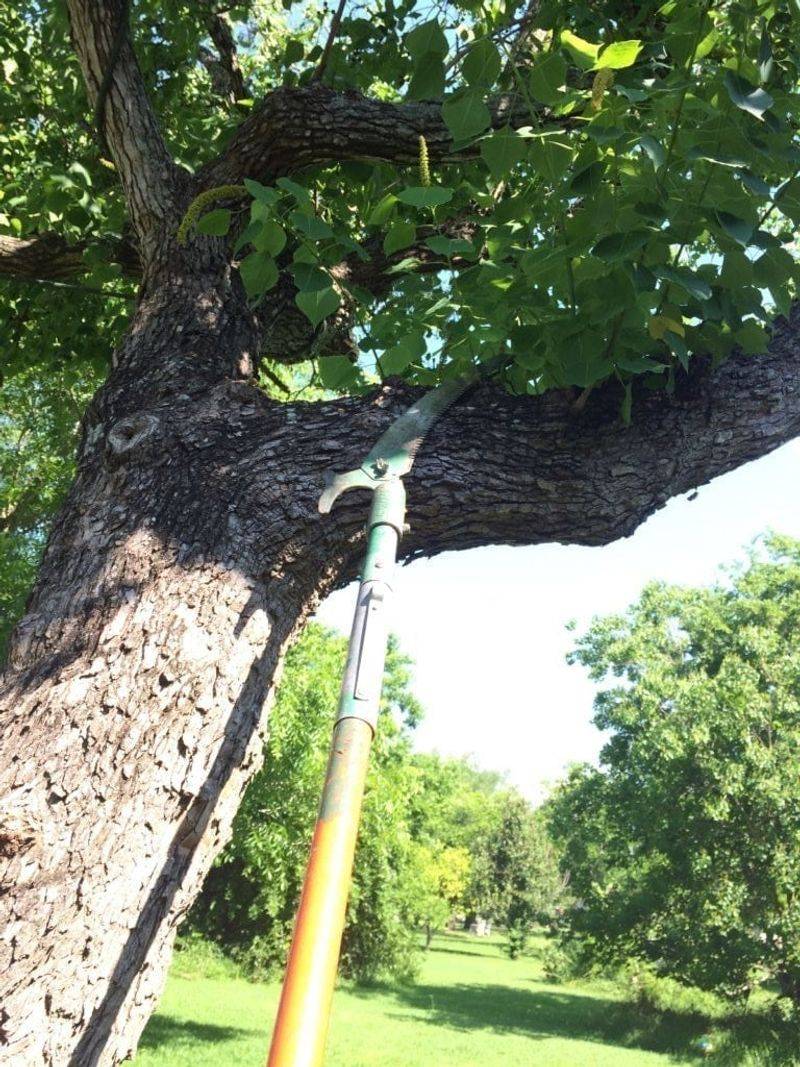
Bark peeling down a trunk like a strip of tape usually means a heavy limb tore away before the saw finished. The three-cut method prevents that tear.
The first cut, an undercut, starts about 12 to 18 inches out from the trunk. Sawing upward from the bottom of the limb roughly one third of the way through, then stopping before the blade pinches, creates a notch that keeps bark from ripping back toward the trunk.
The second cut, from the top, sits an inch or two farther out than the undercut. Sawing down until the limb breaks free lets the weight drop cleanly, with any split stopping at the undercut.
What remains is a short, light stub. That stub weighs far less, so the final cut stays controlled.
The third cut removes that stub just outside the branch collar. With the weight gone, a smooth, careful cut becomes easy, free of tearing.
A few habits help. A sharp pruning saw slices rather than chews, and keeping out of the drop zone protects the person cutting.
Limbs often bounce or roll when they land, so a clear landing area matters. Protective eyewear matters here, since sawdust and bark fly when limbs drop.
This method suits limbs within reach from the ground. Any branch thicker than an arm, high in the canopy, or hanging over a roof belongs with a professional, and three careful cuts beat one big mistake nearly every time.
5. Cut Back To The Branch Collar
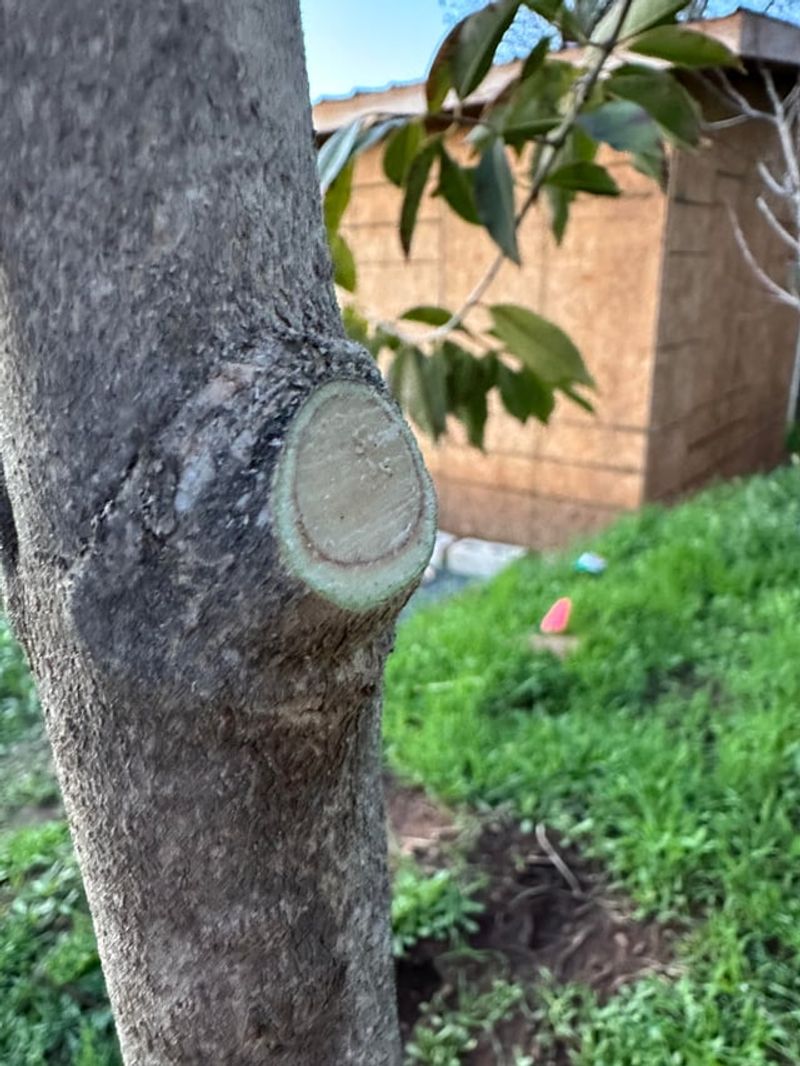
A close look where a branch meets the trunk often reveals a slightly swollen ring of bark, like a cuff around a wrist. That bump, the branch collar, does a surprisingly important job.
Tissue inside the collar helps the tree seal off a wound. After a good cut, a ring of new wood gradually grows over the opening, while a cut into the collar strips away much of that natural defense.
Two common mistakes cause trouble. A flush cut slices tight against the trunk and removes the collar, leaving a larger wound that decay can enter easily.
A long stub creates the opposite problem, since stubs often decay rather than close, and that decay can creep into the trunk.
The sweet spot lies in between. The branch bark ridge, the dark raised line in the crotch above the branch, offers a guide, with the final cut placed just outside the collar and angled slightly away from the trunk.
The collar itself stays whole and undamaged. A healthy collar left intact often shows a doughnut-shaped roll of new wood within a season or two.
Some trees hide their collars well. On those, following the angle of the bark ridge and keeping the cut close, yet short of flush, works best.
Wound paint and tar are best skipped. UC guidance notes that pruning sealers fail to prevent decay and can even trap moisture, so a clean cut in the right spot provides all the protection a tree needs.
6. Clean Up Ragged Tears With A Sharp Saw
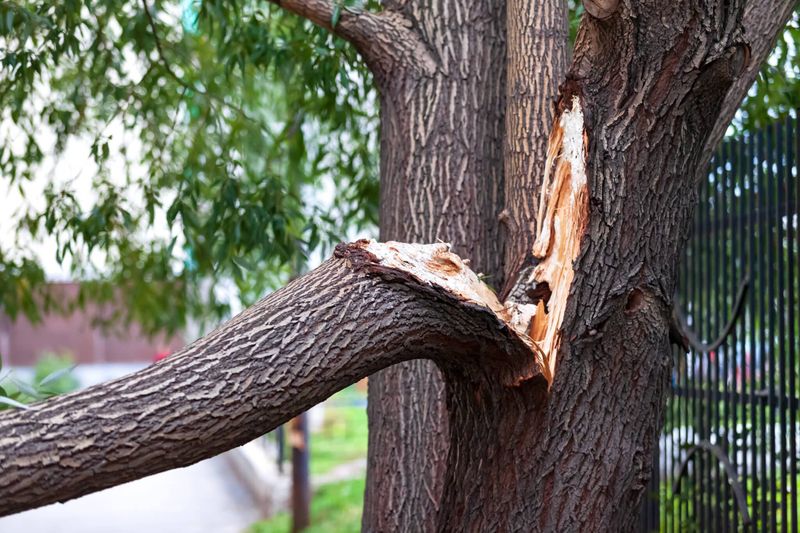
Storms rarely prune neatly. Wind twists limbs until they splinter, leaving jagged ends and long strips of torn bark, and those messy breaks are exactly where fungi and insects like to move in.
Tidying them gives the tree a better chance at sealing the wound. A sharp, clean pruning saw or loppers make the difference, since a dull blade crushes and shreds fibers while a fresh one glides through and leaves a smooth face.
A snapped branch with a splintered stub can be cut back to the branch collar or to a healthy side branch. That side branch should measure at least one third the diameter of the piece removed, which keeps the limb growing naturally.
Torn bark on the trunk calls for a lighter touch. A sharp knife can trim loose, dangling bark at the wound edges, without widening the injury or carving into healthy wood.
Shaping wounds into large ovals is outdated advice that tends to cause more harm than good.
Tools deserve cleaning between trees, especially when one looks diseased. A wipe with household disinfectant or a diluted bleach solution works well, followed by drying and a light coat of oil to prevent rust.
Neat work now pays off later. A smooth cut is far easier for the tree to wall off than a frayed, chewed edge, and sharp tools make that result much more likely.
7. Wait On Major Reshaping
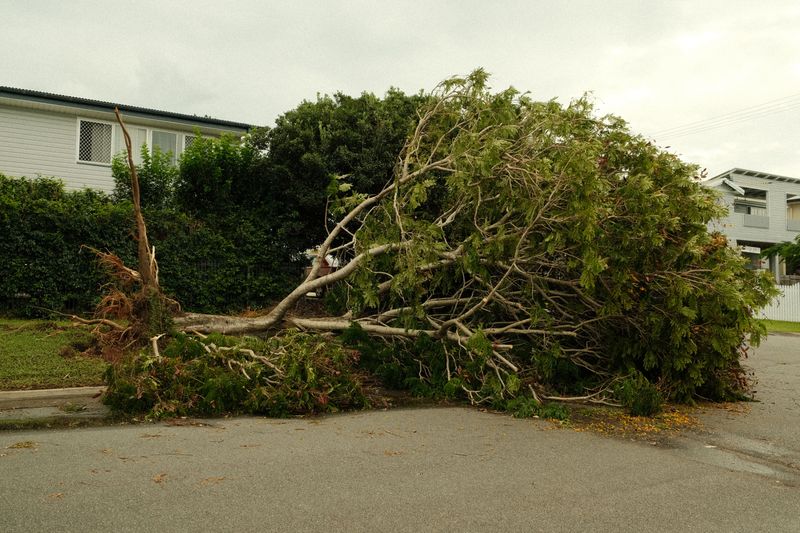
A lopsided tree after a storm can frustrate even the most patient gardener. One side looks full while the other looks bare, and the itch to even things out runs strong.
Injured trees need their leaves. Leaves produce the food that powers repair and new growth, so heavy pruning right after a storm strips away that energy source when the tree needs it most.
That adds stress on top of stress.
Safety and clean cuts deserve the focus for now. Broken, hanging, or dangerous wood can go, while healthy branches stay put, even when the shape looks odd, giving the tree at least a full growing season to recover.
Many trees surprise their owners. New shoots fill gaps, and the canopy often balances out over time. Deep watering during dry spells and a layer of mulch support that recovery.
Some sprouts grow fast and crowded near old wounds, and a trained arborist can thin those gradually over several years so the strongest ones remain.
Topping is best avoided entirely. Chopping main limbs back to stubs to shrink a tree draws warnings from both UC and ISA guidance, since topped trees push out weak, crowded sprouts that break easily in the next storm and decay faster.
Patience serves as a pruning tool too. A fresh look next year, once regrowth shows its pattern, leads to far better choices, since good shaping unfolds as a slow conversation rather than a single cut.
8. Hire A Certified Arborist For Big Jobs
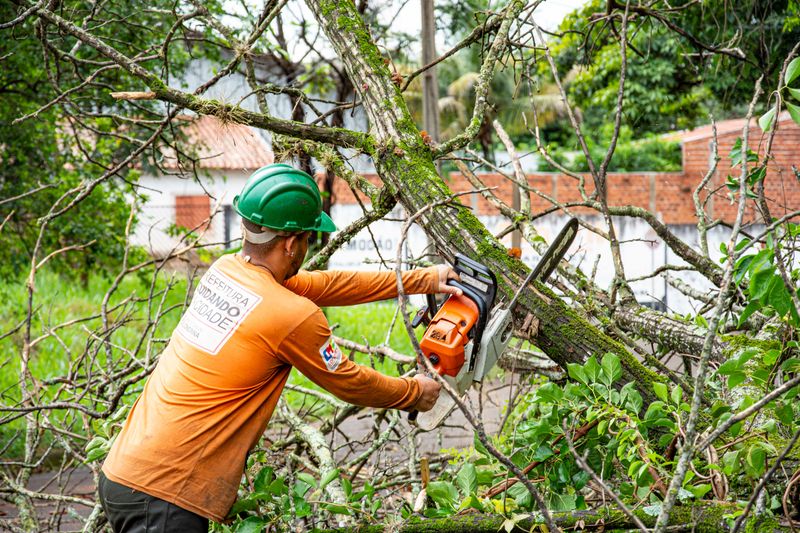
Some jobs outgrow a pole saw and a free Saturday. A cracked trunk, a split main limb, a leaning tree, or heavy branches over the house all belong with a professional.
An ISA Certified Arborist has passed an exam covering tree biology, safe pruning, and risk assessment. Many also hold a Tree Risk Assessment Qualification, which helps when the question becomes whether a tree should stay at all.
The ISA website offers a search tool for finding certified arborists nearby.
A few smart questions help before hiring. Proof of liability and workers’ compensation insurance matters, and California requires a state contractor’s license for tree work above a set dollar amount, so a quick license check through the Contractors State License Board makes sense.
A written estimate listing exactly what will be cut protects both sides.
Certain red flags deserve attention. Door-to-door offers of cheap, fast work after a storm warrant caution, as does anyone suggesting topping or using climbing spikes on a tree that isn’t being removed, since spikes wound living trees.
A good arborist may also recommend cabling, bracing, or simply waiting. Sometimes the honest answer is that a tree is too damaged to keep safely, advice that protects the home and everyone in it.
Paying for skill often saves money later. A well-pruned tree stands stronger in the next storm, while a botched job can lead to costly repairs or a fallen tree on the roof.