What To Do, And What To Never Do, When A California Fruit Tree Leans After A Windstorm
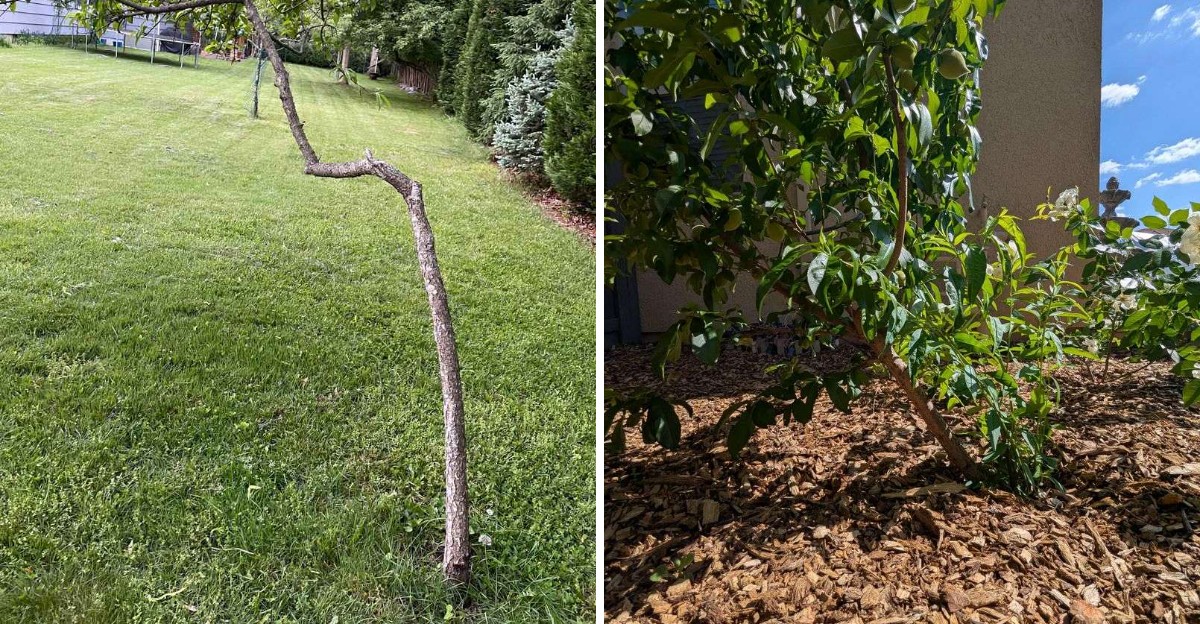
Wind can rearrange a backyard overnight, and young fruit trees often take the hardest hit. A trunk that stood straight at bedtime may greet the morning at a tilt, with a telltale crack in the soil nearby.
The instinct to fix it on the spot runs strong, and the next few hours do matter.
Some responses give a tree its best chance at a full recovery, while others, however well meant, leave lasting harm below the surface.
The difference often comes down to patience, gentle hands, and knowing where the limits of a home fix lie.
Size matters, since a small sapling and a mature tree call for different approaches.
A careful first look sets the stage for everything that follows.
1. Check For Lifted Soil And Broken Roots
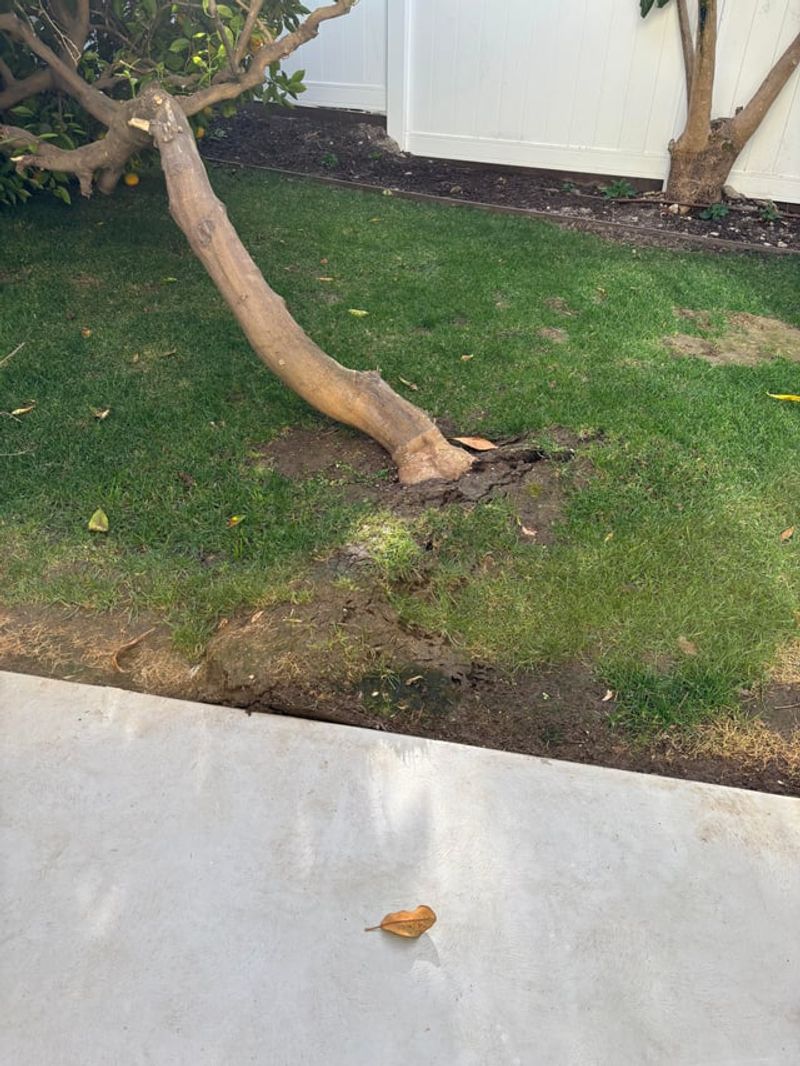
Ground level, rather than the branches, makes the right starting point. The soil around the trunk tells the real story of what the wind did underground, and a slow walk around the tree before touching anything reveals plenty.
The side opposite the lean deserves the closest look. A raised hump or curved crack in the soil means roots have shifted and possibly lifted, and gaps between soil and trunk offer another clue.
Small exposed roots that look torn, frayed, or snapped point to damage below the surface.
Gentle pressure on the soil, by hand or foot, adds more information. Spongy, loose ground often means roots have pulled free, while firm soil with only a slight tilt usually signals better odds.
Wet winter soil makes this especially common in California, since soggy ground loosens its grip during storms. Dry Santa Ana gusts can also topple young trees with shallow or circling roots.
The trunk itself deserves inspection too. Split bark, cracks near the base, or a sharp bend instead of a smooth tilt can signal deeper trouble.
Photos from several angles help track changes over the following weeks.
This first look works like reading the tree’s diary. A young tree with a small lift and mostly intact roots has a good chance of standing tall again, while one with a large lifted root plate or many snapped roots needs a more careful plan.
Knowing which situation applies shapes every choice that follows.
2. Straighten Young Trees Soon After The Wind
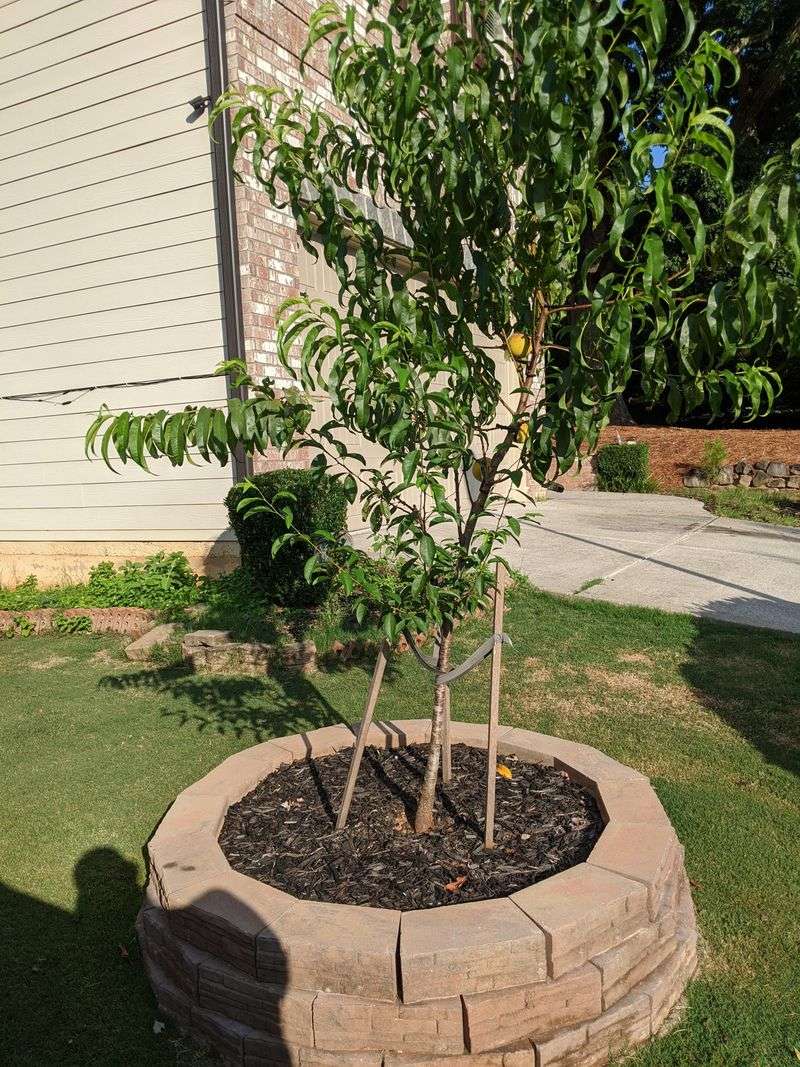
Timing matters more than muscle here. A small tree knocked over by wind is easiest to save within the first day or two, while soil stays soft and roots remain mostly attached.
Waiting weeks lets roots settle into their new, crooked position.
Slow, steady hand pressure works best. Pushing the trunk back toward upright from the low side, a little at a time, while a helper presses soil firmly into gaps on the lifted side, gives roots the best chance.
Forcing the tree quickly can snap roots that survived the storm.
A perfect vertical stance isn’t necessary. Getting close to upright suffices for most young trees, and a slight tilt often corrects itself as new roots grow in spring.
Once the tree stands, gentle firming of the soil by foot and a deep watering settle the ground and close air pockets around damaged roots. A layer of mulch kept a few inches from the trunk helps keep the root zone cool and steady.
Your California Garden Changes Every Week. Your Plan Should Too.
Gardening in California changes quickly throughout the season. Every Friday you’ll receive a simple weekly plan showing exactly what to plant, prune, fertilize, harvest, and protect so you never miss the right timing.
Small trees generally mean anything comfortably held and moved by hand, often with a trunk just a few inches thick. Citrus, figs, and stone fruit planted within the last couple of years usually fit this group.
Anything larger belongs in a different conversation, covered later on. Trees with circling roots from their nursery pots may benefit from a closer look at replanting, since those roots often explain why they tipped.
3. Use Wide Straps And Two Stakes
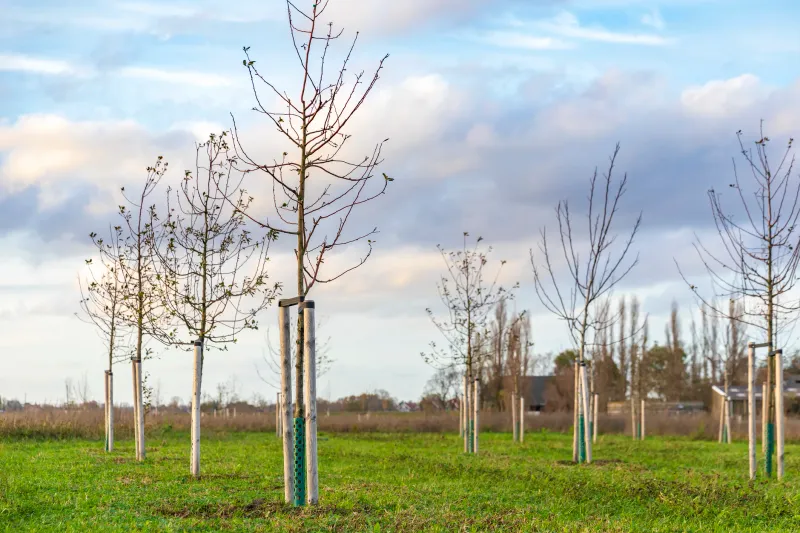
Thin wire wrapped around a trunk turns into a slow-motion disaster. As the tree grows, wire bites into bark and can girdle the trunk, while wide, soft straps spread the pressure and protect tender bark.
Two stakes set on opposite sides of the tree, outside the root ball, provide balanced support. Lining them up so one faces the prevailing wind works well, whether that means ocean breezes or canyon gusts from the east.
The stakes belong firmly in undisturbed soil rather than the loose dirt near the roots. Stakes driven through the root ball can wound the very roots the tree needs to recover.
Straps attach low on the trunk, only as high as needed to hold the tree upright. A simple test finds the lowest point where the tree stays standing when released, and the ties go there rather than near the top.
Staking too high keeps the trunk from building strength. UC ANR guidance also favors placing stakes so they don’t rub branches or bark.
Good strap materials include rubber tree ties, wide cloth webbing, or old bicycle inner tubes. Bare rope, wire, and zip ties are best avoided.
Each strap runs from stake to trunk in a loose loop or figure-eight so nothing rubs.
Two stakes deliver balanced support without trapping the tree. A single stake on one side can pull the trunk off center and create rubbing wounds, which defeats the whole purpose.
4. Keep Ties Loose Enough To Flex
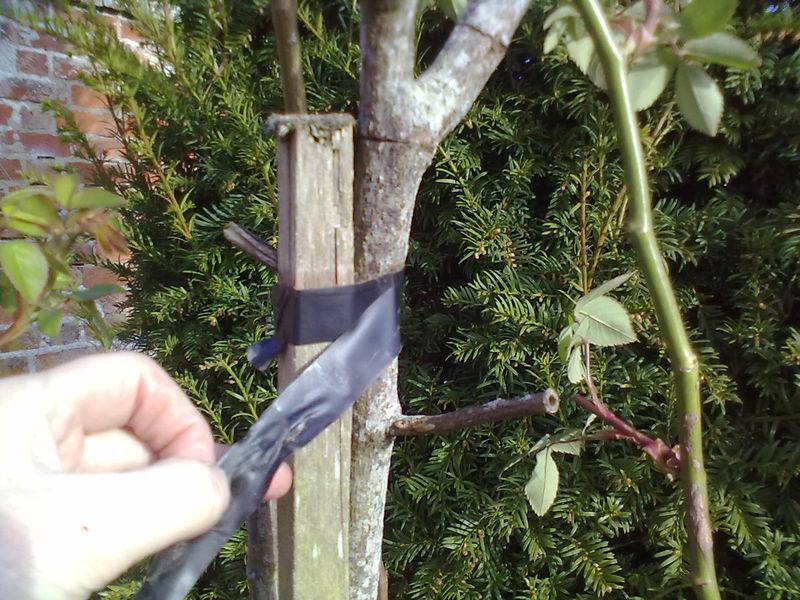
A little wiggle is a good thing. Trees build stronger trunks and deeper roots when they sway in the breeze, while a trunk locked in place grows weak, skinny, and dependent on its supports.
Enough slack to let the trunk move an inch or two in the wind works well. The straps should catch the tree before it tips too far rather than hold it frozen, acting more like a seat belt than a brace.
Regular checks every few weeks matter, especially in spring when growth takes off. Trunks thicken faster than many people expect, so a strap that fit in February can pinch by June.
Any tie pressing into bark deserves loosening or repositioning right away.
Rubbing offers another warning sign. A stake touching the trunk can wear bark thin and leave an open wound, so moving the stake or adding padding helps immediately.
Stakes come out as soon as the tree can stand on its own, often within one growing season for young fruit trees.
A simple test on a calm day reveals readiness. With straps untied, a trunk that stays upright and a root zone that doesn’t rock signal the job is done.
Forgotten stakes cause a common backyard problem, since a strap left for years may be swallowed by bark and leave a weak spot. A phone reminder keeps those supports from overstaying their welcome.
5. Never Yank A Tree Upright With A Vehicle
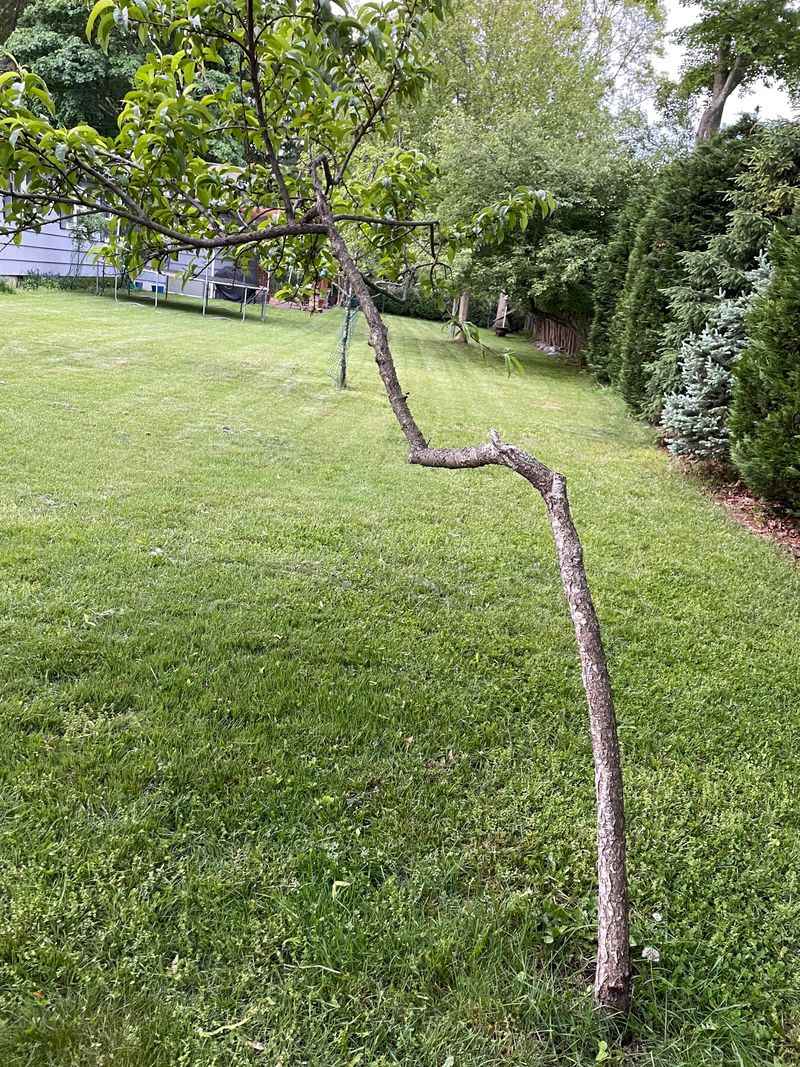
A chain, a pickup truck, and one big tug can look clever in online videos. In reality, that approach ranks among the worst choices for a leaning tree, since brute force rips roots rather than guiding them home.
Roots are surprisingly fragile, especially the fine feeder roots that absorb water. A vehicle pulls far harder than any tree can withstand, and in a second it can tear away the very roots needed for recovery.
The trunk may end up straight, while the support system underneath is shredded.
Chains and ropes also crush bark. Bark carries water and food up and down the tree, so a deep wound can cut off supplies to whole sections. Bark damage near the base of young trees is especially hard for them to outgrow.
Damage like that may stay hidden for months before branches suddenly wilt.
Safety concerns add up too. A chain under strain can snap and whip with dangerous force, and trunks can crack and swing unpredictably, causing injuries every storm season.
Gentle hand pressure works for small trees. A tree too heavy to move by hand is simply too large for a home fix.
A big leaning tree with a lifted root plate calls for a trained eye rather than horsepower. A call to a certified arborist makes a far better next step than reaching for the tow strap, and it protects both the tree and everyone nearby.
6. Never Bury Exposed Roots Under Heavy Soil
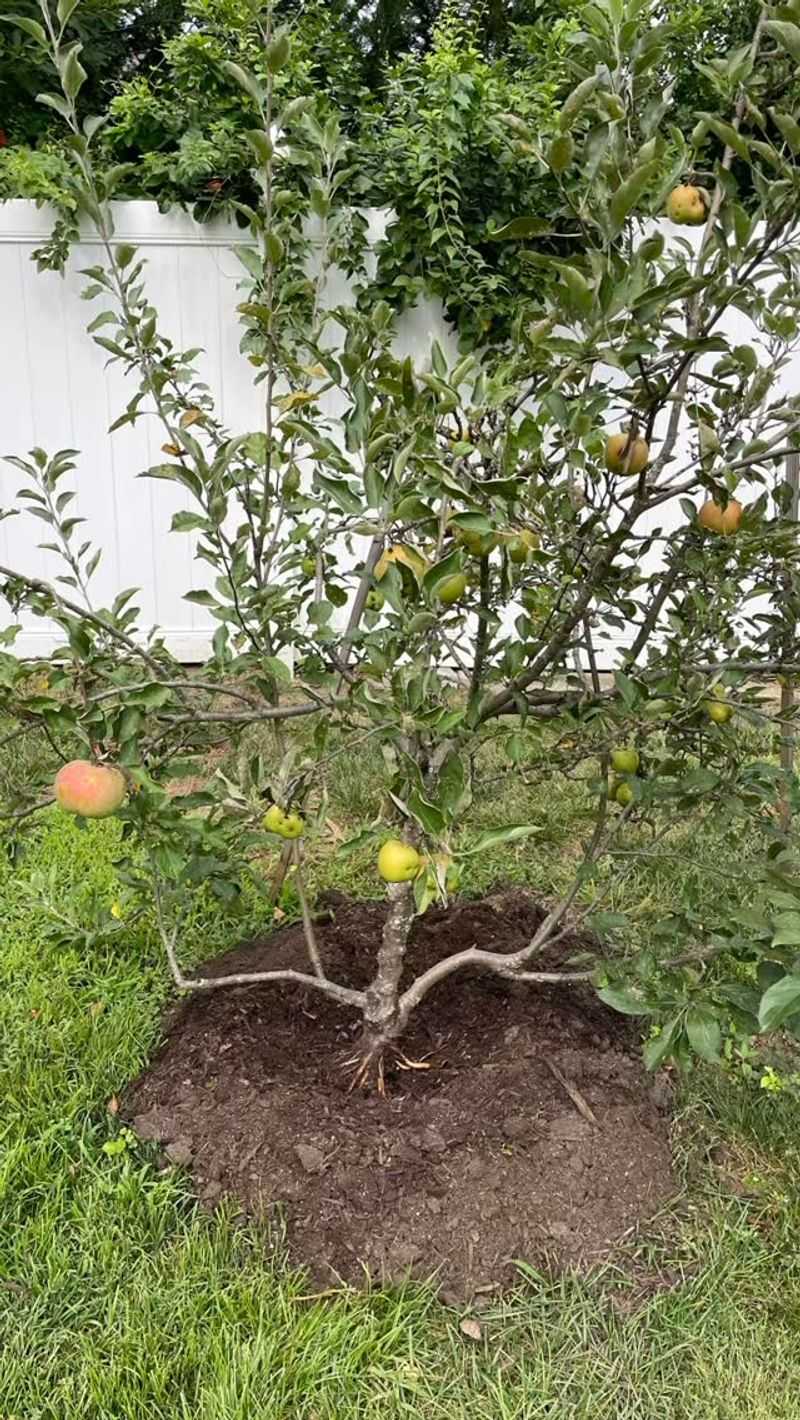
Exposed roots look alarming, so heaping dirt over them can feel like first aid. Unfortunately, a thick pile of heavy soil can cover the very roots needing help, and roots need air as much as water.
Soil packed deep over a root zone squeezes out oxygen. Roots short on air can’t take up water well and may begin to rot, while heavy fill piled against the trunk traps moisture against the bark and invites disease.
Citrus and stone fruit trees are especially sensitive to wet soil around the trunk.
For a young tree just straightened, pressing existing soil back into the gaps by hand simply returns the ground to its original level. The mistake lies in adding inches of new dirt on top or raising the grade around the trunk.
Roots still showing do better under a light layer of loose mulch or compost. It shades the roots and holds moisture while still letting air through, kept a few inches from the trunk itself.
Deep but infrequent watering helps. Soggy ground after a storm is part of why trees tip in the first place, so letting the top inch or two dry between waterings protects recovering roots.
A large tree with a big exposed root plate is a different situation, best left untouched by the shovel. Professional judgment matters there, since covering the problem doesn’t fix it.
7. Never Fertilize Or Prune Heavily Right Away
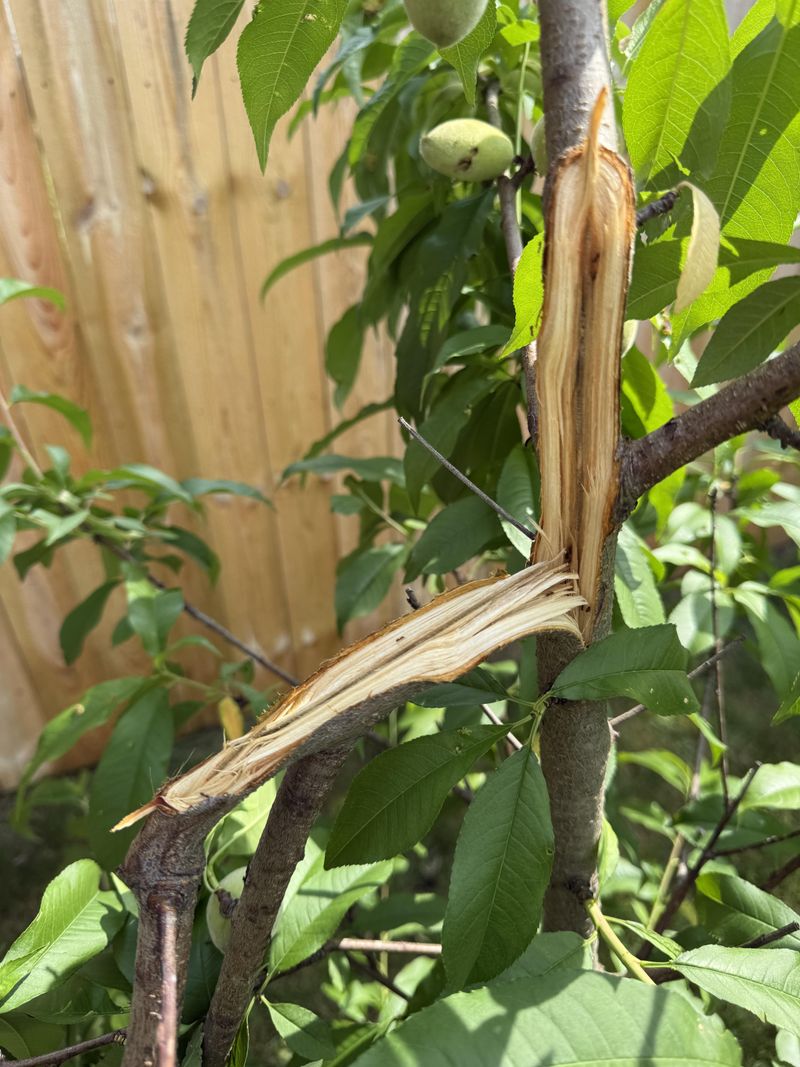
Kindness can backfire. A bag of fertilizer and a big pruning session seem like ways to help a stressed tree, yet both add strain at the worst moment, when recovery needs to come first.
Fertilizer, especially nitrogen, pushes fast new leaves and shoots. A tree with damaged roots struggles to support that extra growth, since new leaves demand more water than injured roots can supply, and some fertilizers can also burn tender, broken roots.
Heavy pruning brings its own problem. Leaves make the food a tree uses to grow new roots, so stripping away many branches cuts the energy supply needed for repair.
Large cuts also open fresh wounds for pests and fungi. Trees that lost many roots can sometimes benefit from a modest thinning to balance the canopy, a call best made by a certified arborist.
Light cleanup remains fine. Branches that are clearly broken, split, or hanging can come off with clean, sharp tools wiped with household disinfectant.
Smooth cuts belong just outside the branch collar, the slightly swollen ring where a branch meets the trunk.
Bigger shaping work waits for the tree’s usual pruning time. In California, many deciduous fruit trees get their main pruning during winter dormancy, while summer pruning helps control size, and a storm-shaken tree benefits from at least one season to settle.
Feeding can wait until healthy new growth and steady leaves appear. That patience isn’t lazy gardening, since it gives roots a fair head start toward a strong recovery.
8. Call An Arborist For Large Leaning Trees
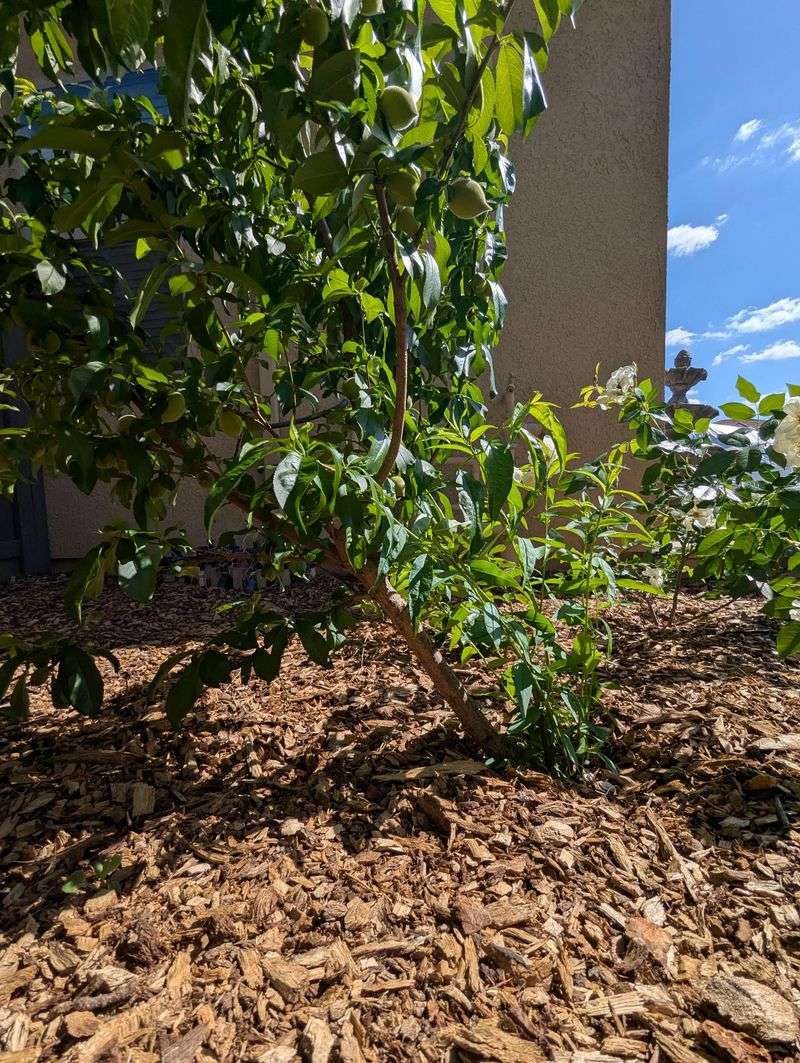
A mature avocado leaning toward the roof is no weekend project. Large trees carry tons of weight, and a sudden lean after a storm can mean the roots have failed, turning a beloved shade tree into a genuine hazard.
A lifted root plate, a large section of soil and roots raised on one side, signals serious trouble. Cracking soil, snapped roots, or a lean that worsens over hours or days are red flags, and a tree that never leaned before but now does deserves extra caution.
People, pets, and cars belong well outside the fall zone, at least as wide as the tree is tall. Climbing the tree or cutting it without training is best avoided entirely.
Power lines touching branches call for distance and an immediate call to the utility.
An ISA Certified Arborist is trained to judge root damage, trunk strength, and risk to homes or walkways, and some can perform a formal tree risk assessment.
Sometimes an arborist can brace, cable, or reduce a tree to save it, while other times removal offers the safest choice.
Homeowner’s insurance may cover some storm-related tree work, so photos and a quick call to the insurer can help. Either way, a solid professional answer beats guessing while a large tree leans over the house.