Can A Persimmon Seed Really Predict Your Virginia Winter? Split One Open And See
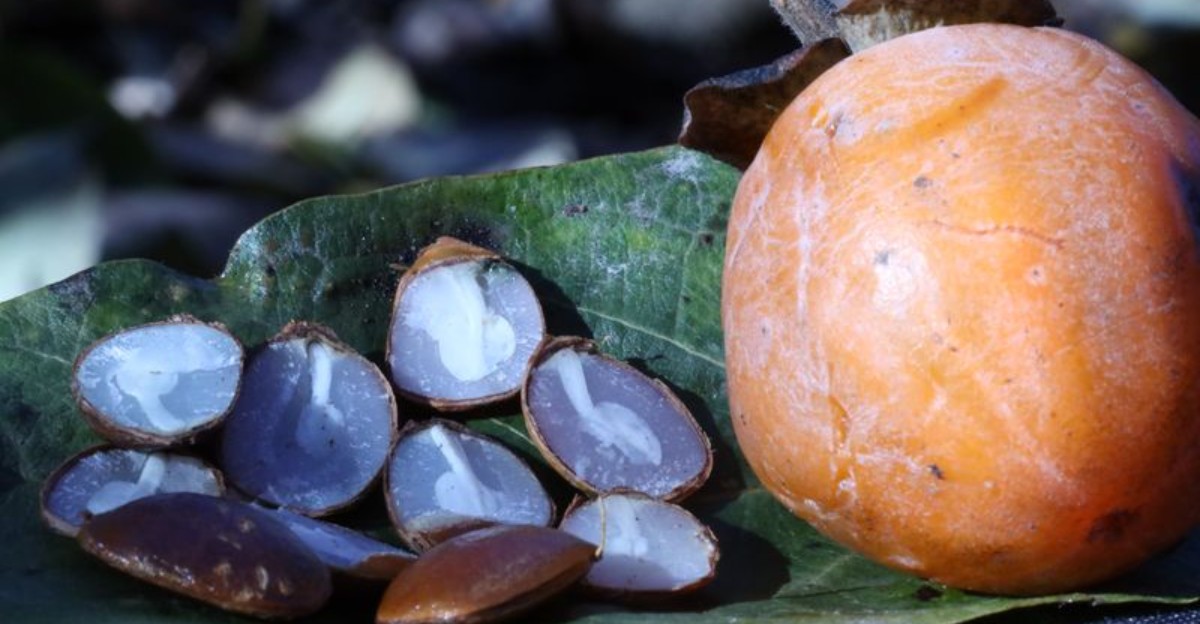
Forget the weather app for a minute, because your grandma might have trusted a tiny brown seed instead. Every fall across Virginia, folks gather soft, wrinkled wild persimmons and pop out the slippery seeds.
One careful slice reveals a little white shape inside, and old-timers say it forecasts the winter. A spoon means plenty of snow to shovel, a fork promises a mild winter, and a knife warns of biting cold.
Is it real weather wisdom or just charming Appalachian folklore? The answer might surprise you, and the method is easier than you’d think.
The guide below covers how to read the shapes and which persimmons to use. It also looks at what the science says.
The Spoon, Fork, And Knife Tradition Explained
Picture a chilly October evening in the Blue Ridge, with a family huddled around the kitchen table. Someone holds up a split seed and announces the winter forecast with total confidence.
Welcome to one of the South’s oldest weather customs. People split a ripe persimmon seed and study the small white sprout tucked inside.
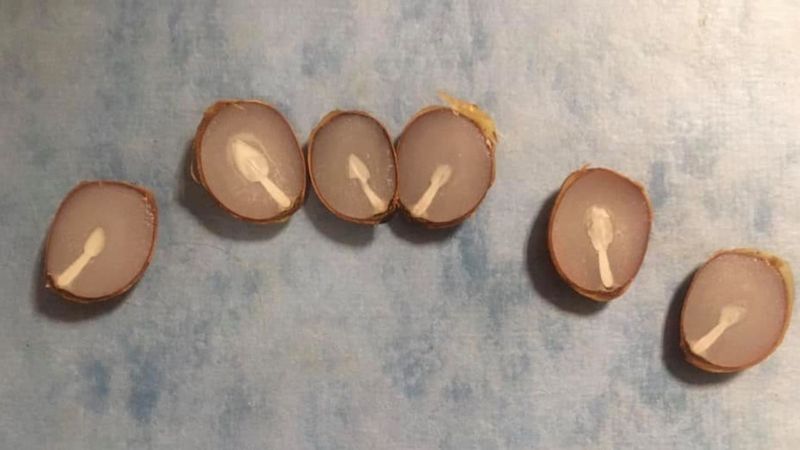
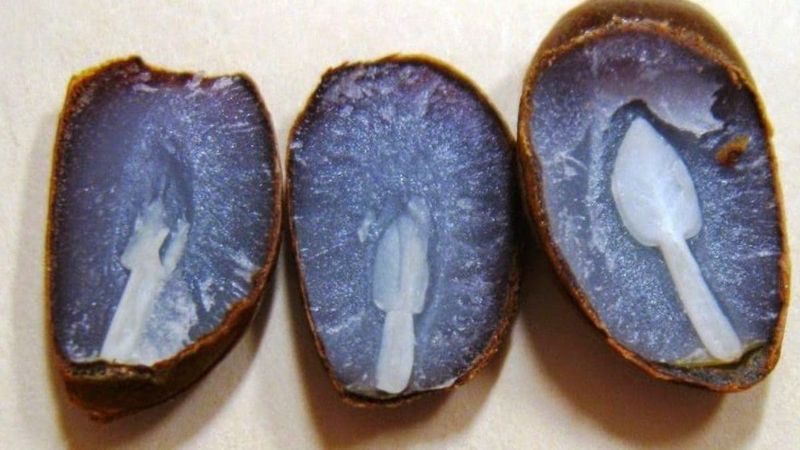
That sprout, called the cotyledon or embryo, takes on a shape. Folks usually read it as a spoon, a fork, or a knife.
Each shape points to a different kind of winter. A spoon hints at snow, a fork suggests mildness, and a knife signals biting cold.
The custom grew up in Appalachia and across the rural South. Families in farm communities have passed it down for generations.
Some historians believe Native American tribes noticed persimmon seeds long before settlers arrived. The fruit was a valued food source, so people knew it well.
Families passed the practice down like a favorite recipe. Grandparents taught kids, and those kids later taught their own children every autumn.
Here in Virginia, the tradition still pops up at fall festivals and in local newspapers. Extension offices even get calls asking what this year’s seeds are saying.
Fun fact: the persimmon’s scientific name, Diospyros, roughly means fruit of the gods. Ancient Greeks clearly thought highly of this sweet little treat.
Keep a notebook handy when you try it yourself. Writing down your seed results each year makes for a fun family record to compare later.
A Spoon Means Get Your Snow Shovel Ready
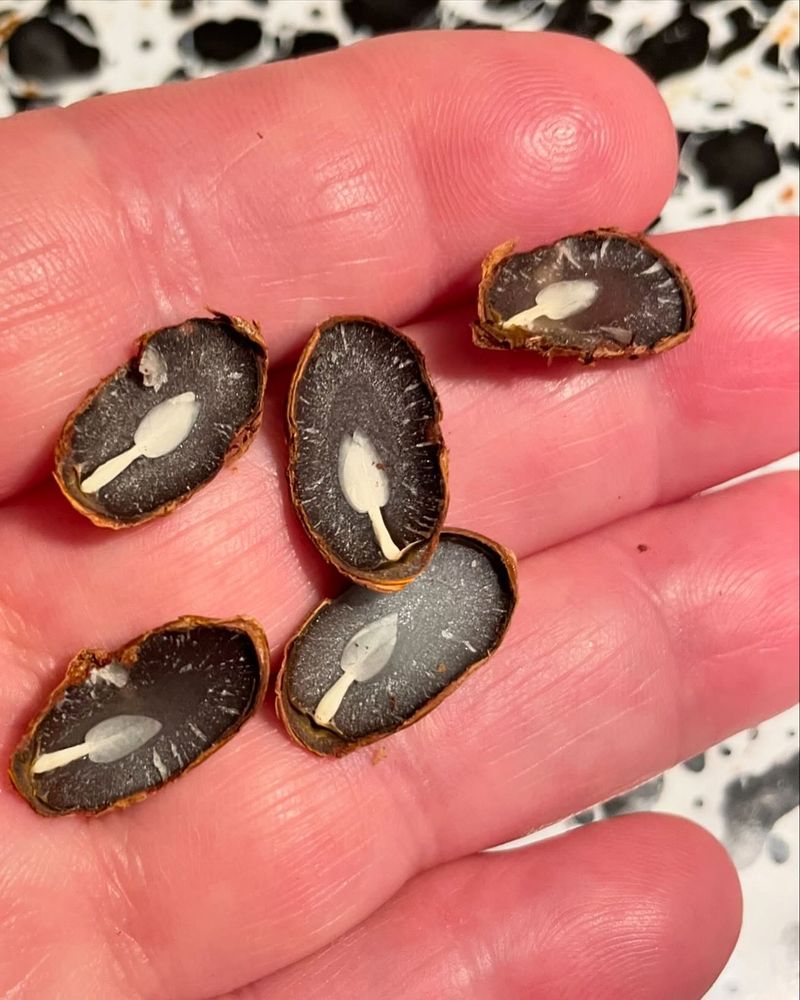
Spot a spoon, and you might want to check your garage. Old-timers say that rounded little shape looks just like a snow shovel.
According to folklore, a spoon means a heavy, snowy winter is on the way. Expect plenty of scooping, sledding, and school closing announcements.
The idea is pretty simple and kind of clever. A spoon scoops things up, so it suggests you will be scooping lots of snow.
In Virginia, snowfall varies a lot from place to place. Mountain towns like Blacksburg see far more snow than coastal spots like Norfolk.
So a spoon reading might feel more fitting in the western hills. Still, many families across the state treat it as a playful heads-up.
Spoons tend to show up often in seed reports. Many years, the Farmers’ Almanac notes spoons as a common result in several regions.
Your Virginia Garden Changes Every Week. Your Plan Should Too.
Gardening in Virginia changes quickly throughout the season. Every Friday you’ll receive a simple weekly plan showing exactly what to plant, prune, fertilize, harvest, and protect so you never miss the right timing.
Even if the seed is just guessing, getting ready is smart. Snow can sneak up on the state, especially in January and February.
Use a spoon reading as a fun reminder to prep early. Check your shovel, stock up on ice melt, and test your car battery.
Kids especially love finding a spoon. To them, it means possible snow days, hot cocoa, and snowball battles in the backyard.
Snap a photo of your spoon seed and save it. Come March, you can look back and see whether the little forecaster got it right.
A Fork Promises A Milder Winter
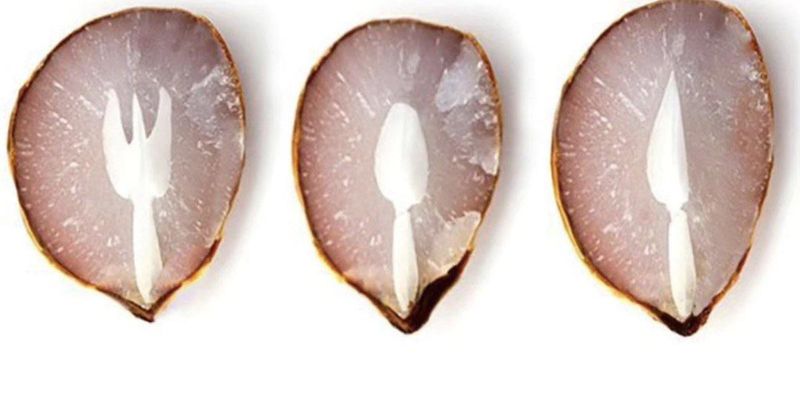
Good news might be hiding in that seed. Find a fork, and folklore says you can relax a little this season.
A fork shape traditionally points to a mild winter. Think gentler temperatures, fewer frigid mornings, and only light, powdery snow.
The pronged tips are what give it away. Look for a split or two little points at the top of the white sprout.
Some people joke that the fork means you will spend winter eating instead of shoveling. Honestly, that sounds like a pretty good deal.
Forks are often the hardest shape to find. Many seed splitters report them less frequently than spoons or knives.
Because of that, a fork can feel like finding a four-leaf clover. Families sometimes cheer when one finally turns up on the cutting board.
Winters can already be fairly mild in places like Richmond and Hampton Roads. A fork reading there might match what locals expect anyway.
Still, don’t pack away your heavy coat just yet. Even mild winters can surprise you with a sudden cold snap or ice storm.
A helpful tip is to look at the sprout under good light. Shapes can be tiny, and a magnifying glass helps you tell forks from spoons.
Gardeners might enjoy a fork reading most of all. A softer winter can mean pansies, kale, and collards keep growing longer in the yard.
A Knife Warns Of Icy, Cutting Winds
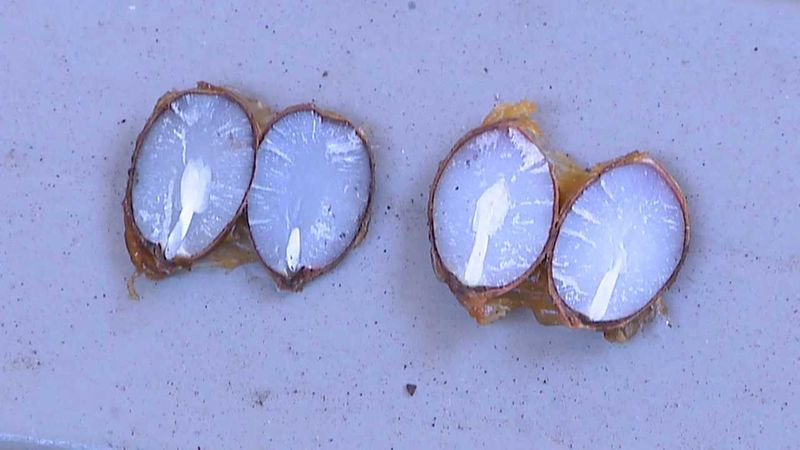
Brrr, here comes the sharp one. A slim, straight shape inside your seed is called the knife, and nobody really hopes to see it.
Folklore says the knife predicts a bitter, icy winter. The winds are supposed to cut right through you like a blade.
To spot it, look for a long, narrow sprout without any prongs. It often looks thinner and straighter than the rounded spoon.
In Virginia, ice can be trickier than snow. Freezing rain coats trees, power lines, and roads, causing outages and slippery drives.
Piedmont towns like Charlottesville and Lynchburg often see these messy ice events. A knife reading feels like a fitting warning for those areas.
Treat the knife as a nudge to winter-proof your home. Seal drafty windows, wrap outdoor pipes, and keep flashlights with fresh batteries handy.
Your car deserves attention too. Pack an ice scraper, a warm blanket, and some snacks in case you get stuck somewhere.
Pets need care during harsh cold as well. Bring outdoor animals inside on frigid nights and check that water bowls aren’t frozen.
Some families say the knife is the most dramatic shape to find. It certainly sparks the most groans around the kitchen table.
Whatever the seed says, preparing for ice is a wise move. Weather can flip quickly, and being ready brings real peace of mind.
Only Wild American Persimmons Work For The Test
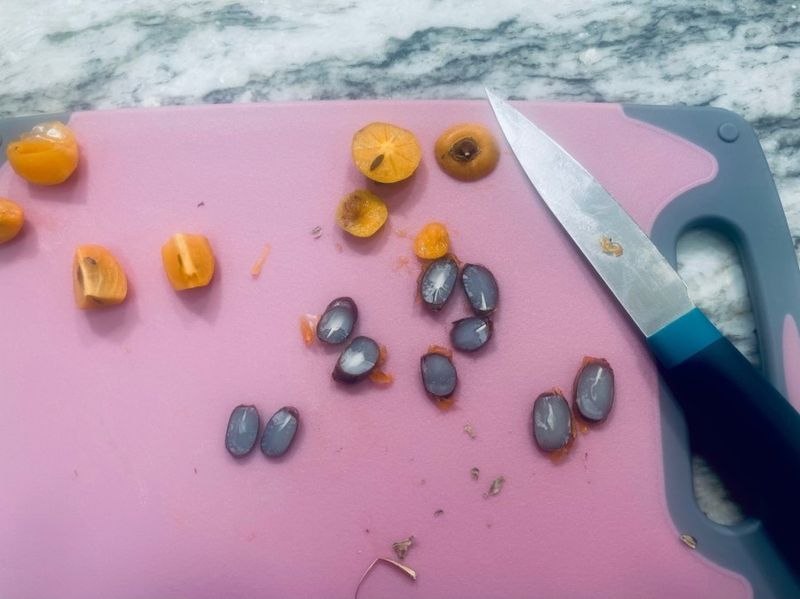
That big shiny persimmon from the grocery store won’t cut it. For this test, you need the small, wild kind growing along fences and fields.
The tradition calls for the American persimmon, known as Diospyros virginiana. Yes, the species name actually nods to Virginia.
American persimmons are about the size of a large cherry or small plum. They turn orange with a soft, wrinkly skin when ready.
Asian persimmons, called Diospyros kaki, are much bigger. Many popular kinds, like Fuyu and Hachiya, have few or no seeds at all.
Even when Asian fruit has seeds, they don’t reliably show the classic shapes. So stick with the native fruit for an honest reading.
Folk wisdom also says the fruit should be local. A seed from your own region supposedly reflects your own winter weather.
Luckily, wild persimmon trees are fairly common in the state. Look along country roads, old pastures, and the edges of woods.
The trees have dark, blocky bark that looks a bit like alligator skin. In late fall, bare branches dotted with orange fruit are easy to spot.
Always ask permission before picking on private land. Farmers markets and roadside stands sometimes sell wild persimmons, too.
Bonus tip: deer, foxes, and raccoons adore these fruits. If fallen persimmons vanish overnight, local wildlife probably beat you to the harvest.
Wait Until The Fruit Is Soft And Fully Ripe
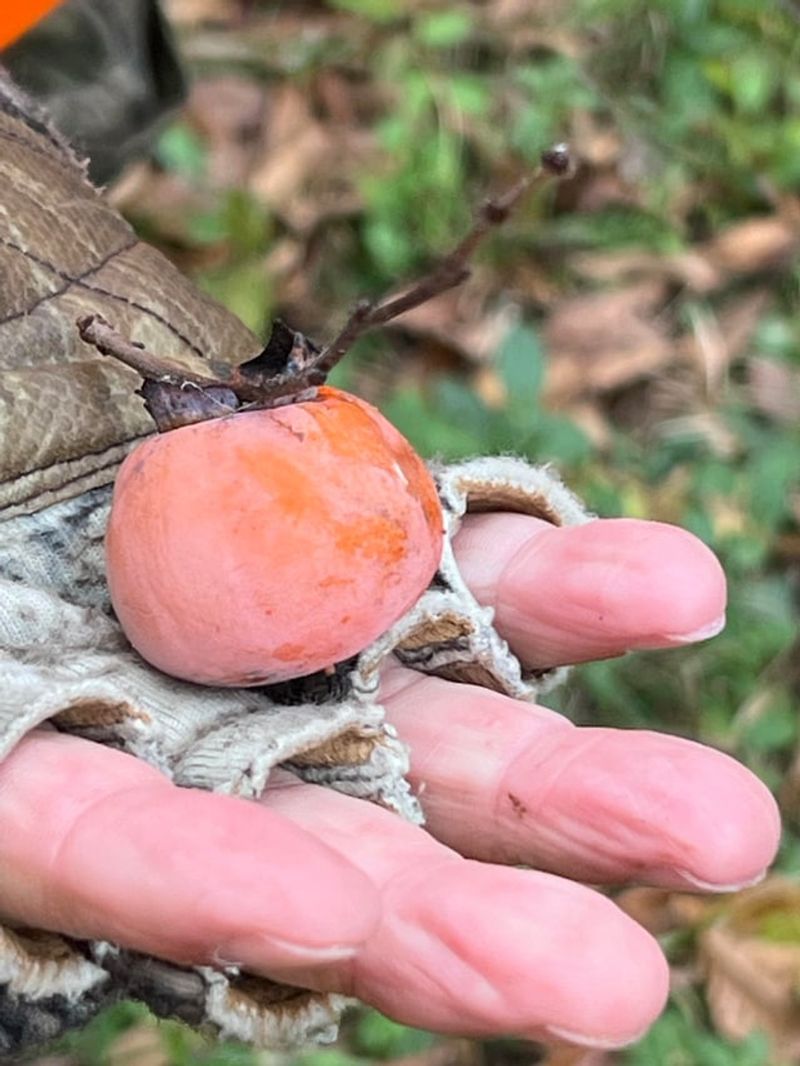
Ever bitten into an unripe persimmon? Your mouth puckers so hard it feels like you licked a sweater.
That fuzzy, dry feeling comes from tannins. Unripe persimmons are packed with them, and they make the fruit painfully astringent.
Patience pays off for flavor and for forecasting. Unripe fruit holds seeds that haven’t finished developing, so their shapes can be unclear.
A ripe persimmon feels squishy, almost like a water balloon. The skin may look wrinkled, darker orange, or even a little bruised.
Don’t let the messy look fool you. A sagging, soft persimmon is usually at its sweetest and most ready.
Many people say to wait until after the first frost. In Virginia, that usually lands somewhere between mid-October and early November.
Frost isn’t magic, though. The fruit simply needs enough time on the tree to soften and sweeten fully.
An easy trick is to gather persimmons that have already dropped. Ripe ones often fall on their own, so check the ground first.
If you pick slightly firm fruit, let it sit on the counter. A few days near a ripe banana or apple can speed things along.
Handle ripe persimmons gently, since they bruise and split easily. A shallow basket or egg carton keeps them from getting squashed on the way home.
Split The Seed Carefully Along Its Edge
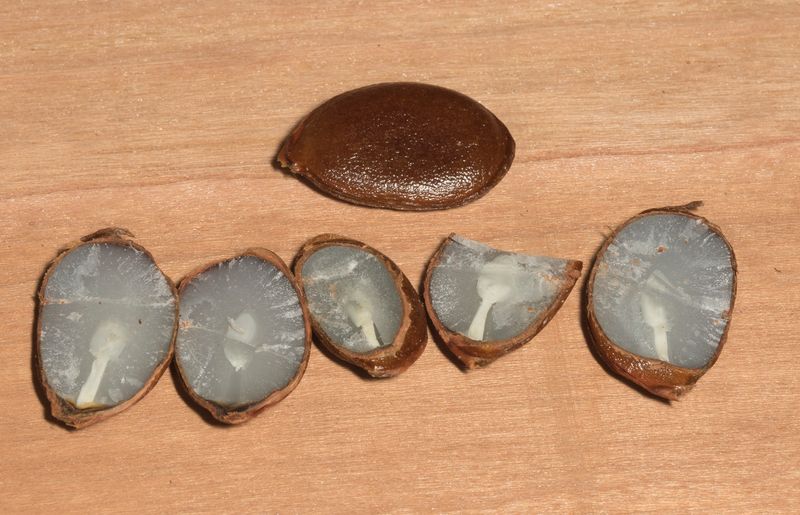
Persimmon seeds are tougher than they look. Think of them as slippery little brown stones that love to shoot across the counter.
First, squeeze the seeds out of the ripe fruit. Rinse them well and pat them dry so they won’t slide around.
Some folks let seeds dry for a day or two. A slightly dried seed can be easier to grip and cut.
Next, lay a seed flat on a sturdy cutting board. Find the thin, narrow edge running around the seed’s outer rim.
Here’s the key part: split it lengthwise, not across the middle. Cutting the wrong way can slice the sprout and ruin the shape.
Place a sharp knife along that edge and press down slowly. Gentle rocking works better than one big, forceful chop.
Safety matters a lot here. Grownups should do the cutting, or at least supervise kids very closely.
Try holding the seed steady with pliers or a folded kitchen towel. Your fingers stay safely away from the blade that way.
Once it opens, pry the halves apart. The white sprout should be resting in one half, ready for you to study.
If a seed cracks badly, don’t worry. Just grab another one, since most wild persimmons hold several seeds inside.
Count Every Seed Before You Make Your Call
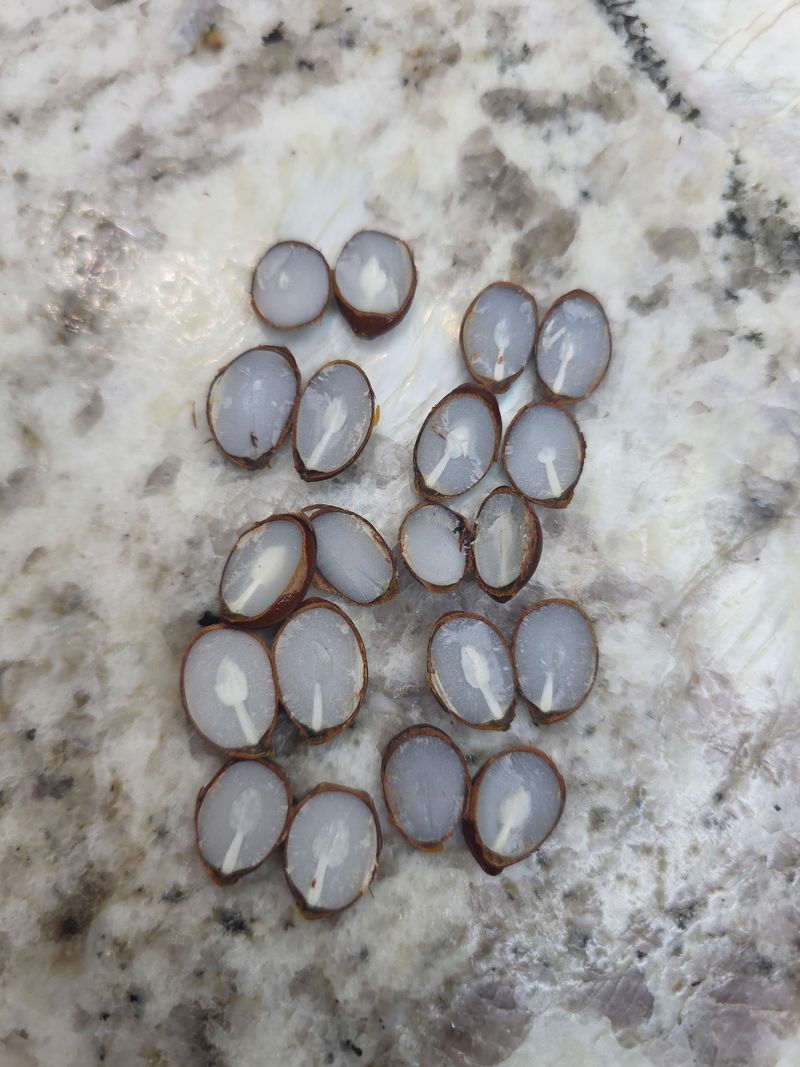
One seed is a guess, but ten seeds start to tell a story. Seasoned seed readers rarely trust a single result.
Folk tradition suggests splitting about ten seeds. You then count how many spoons, forks, and knives turn up.
Whichever shape appears most becomes your winter forecast. Mixed results might mean a season with a little bit of everything.
Some families add a fun twist. They say each seed represents one week of winter, read in the order you split them.
So three spoons, then a knife, might suggest early snow followed by a cold snap. It turns forecasting into a playful puzzle.
Here’s another smart move: gather fruit from different trees. Seeds from one tree often share the same shape because of genetics.
Collecting from a few spots around your town gives a broader sample. A tree by the creek might disagree with one near the road.
Keep a simple tally sheet nearby. Draw three columns labeled spoon, fork, and knife, then add a mark for each seed.
Kids enjoy this part the most. Counting and comparing turns a quick kitchen activity into a fun bit of math.
Share your tally with neighbors or friends online. Comparing results across the region makes the tradition feel like a community event.
Science Says It’s Folklore, Not A Forecast
Let’s be honest for a moment. Meteorologists aren’t swapping their radar screens for persimmon seeds anytime soon.
Modern science has not found any link between seed shapes and winter weather. The test is considered folklore, not a real forecast.
So what actually shapes that little sprout? Mostly genetics and the growing conditions the tree experienced during spring and summer.
In other words, the seed reflects the past, not the future. It can’t know whether a snowstorm will hit Roanoke in January.
Real winter forecasts use data like ocean temperatures and air patterns. El Niño and La Niña often play big roles in Virginia winters.
The National Weather Service and NOAA share seasonal outlooks each fall. Checking those alongside your seeds makes for a fun comparison.
Still, folklore has value beyond accuracy. It connects us to history, family, and the natural world right outside our doors.
Many old weather sayings started with careful observation. People watched plants and animals closely because their crops depended on it.
Try a little experiment this year. Record your seed prediction, then track how winter actually plays out where you live.
After a few seasons, you’ll have your own data. You might find the seeds right sometimes, which is part of the fun.
Either Way, You Get A Sweet Fall Treat
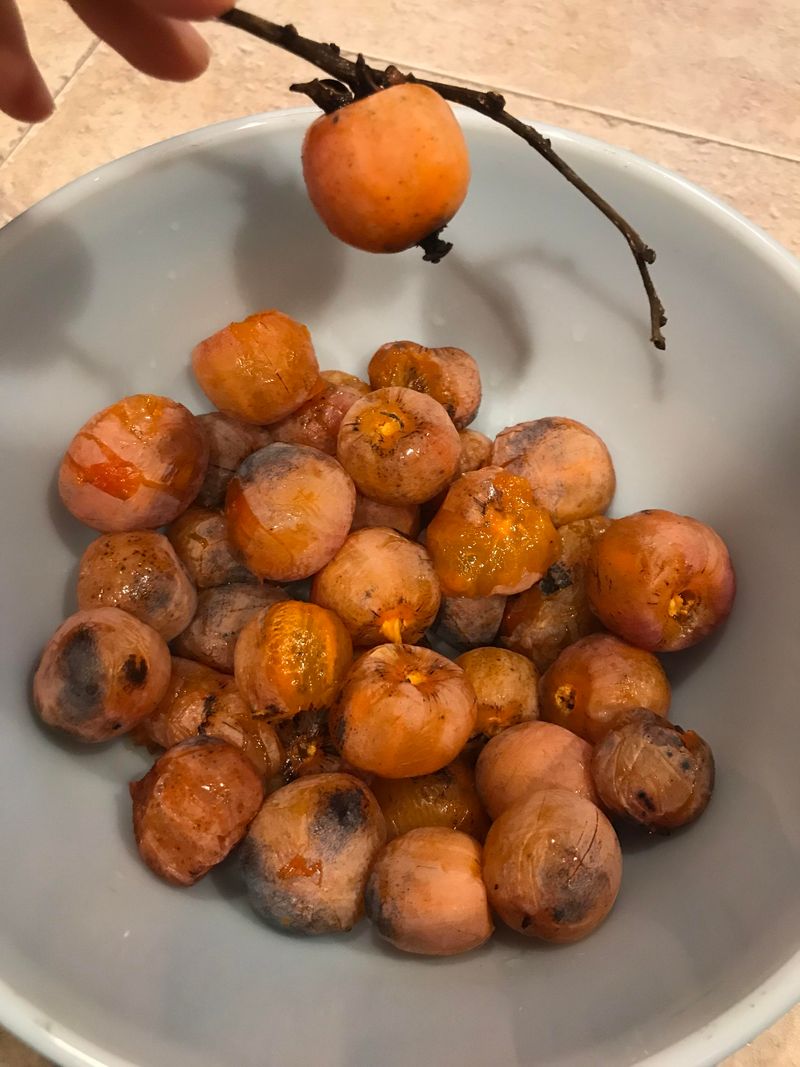
Spoon, fork, or knife, there’s a delicious bonus waiting. All that ripe fruit you gathered tastes amazing.
Wild American persimmons are rich and honey-sweet when fully ripe. Many people say the flavor reminds them of dates, apricots, or pumpkin.
Eating them fresh is the easiest option. Just squeeze out the soft pulp and enjoy, spitting out the seeds as you go.
Baking opens up even more choices. Persimmon pudding is a beloved Southern classic, dense and spiced like a cozy cake.
You can also stir pulp into muffins, bread, or pancakes. A little cinnamon and nutmeg makes the flavor shine.
To get pulp, press ripe fruit through a colander or food mill. The seeds and skins stay behind, leaving smooth orange goodness.
Here’s a handy tip: persimmon pulp freezes beautifully. Store it in small bags so you can bake treats all winter long.
The fruit packs nutrition, too. Persimmons offer vitamin C, fiber, and plenty of natural sweetness without added sugar.
Across the state, fall festivals sometimes feature persimmon desserts and contests. It’s a tasty way to celebrate an old native fruit.
So go ahead and split those seeds, laugh at the results, and grab a fork. Whatever winter brings, you’ll have something sweet to enjoy.