Georgia Loquat Trees Can Start Blooming Just As Other Trees Slow Down For Fall
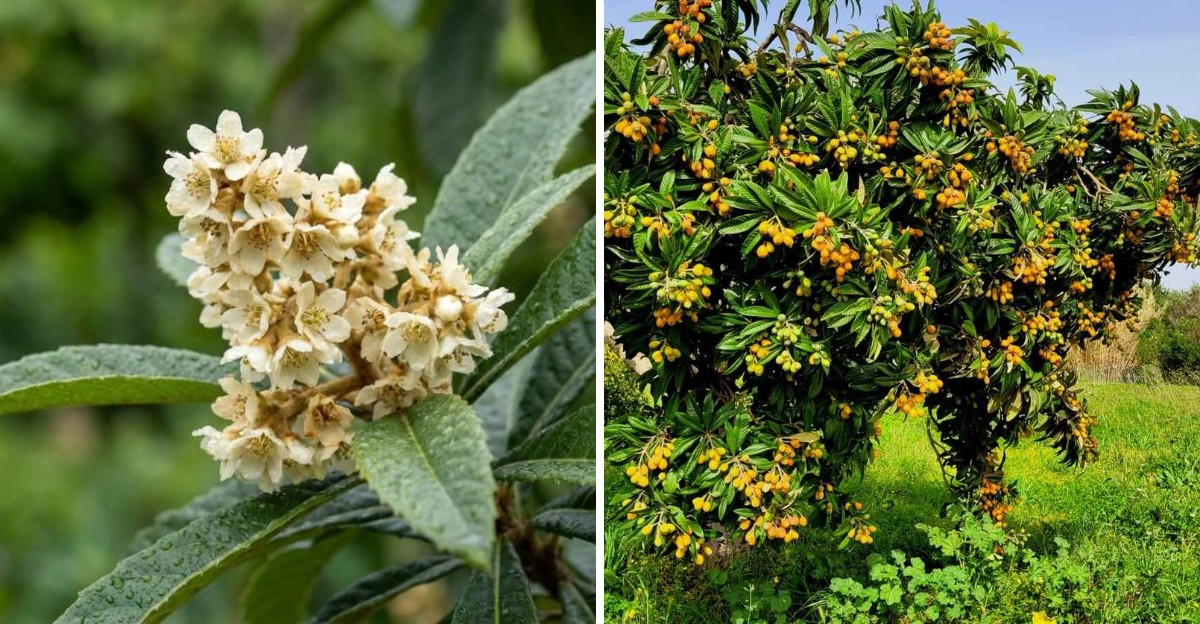
While other trees begin dropping their leaves, a loquat may be preparing to show off beautiful, fragrant flowers.
That surprises gardeners who expect trees to bloom mainly in spring. Loquats often flower in fall or early winter, depending on conditions.
Their timing also explains why flowers do not always lead to a dependable fruit harvest.
In Georgia, winter cold can damage blossoms and developing fruit even if the tree survives. If yours starts flowering now, enjoy the seasonal display without assuming every cluster will produce fruit.
Pay attention to the forecast when temperatures begin dropping, particularly for young trees.
Understanding its flowering season makes this evergreen easier to appreciate.
What looks like unusual timing is actually part of the loquat’s normal growth cycle, even when the weather interrupts the harvest.
1. Loquats Follow A Very Different Flowering Schedule
Flip the usual garden calendar upside down, and you get a loquat. While dogwoods and maples are shedding leaves, this evergreen tree is often just getting started with its flowers.
Loquats bloom in fall and early winter instead of spring.
That timing comes from the tree’s roots in mild parts of China, where winters tend to be gentle. In Georgia, the plant keeps that habit even though our winters can swing from warm spells to sharp freezes.
Bloom start dates shift from yard to yard and year to year.
A tree in Savannah may open flowers on a different schedule than one near Atlanta or farther north. Weather, tree age, variety, and overall health all play a part, so exact timing is hard to predict.
Young trees grown from seed may take several years before they flower at all.
Grafted named varieties usually bloom and fruit sooner than seedlings. If you want a more predictable plant, ask a local nursery whether their loquats are grafted and which variety they carry.
Keep a simple notebook or phone note each fall. Writing down when buds swell and flowers open helps you learn your own tree’s rhythm over a few seasons.
2. White Fragrant Flowers Open In Late Fall
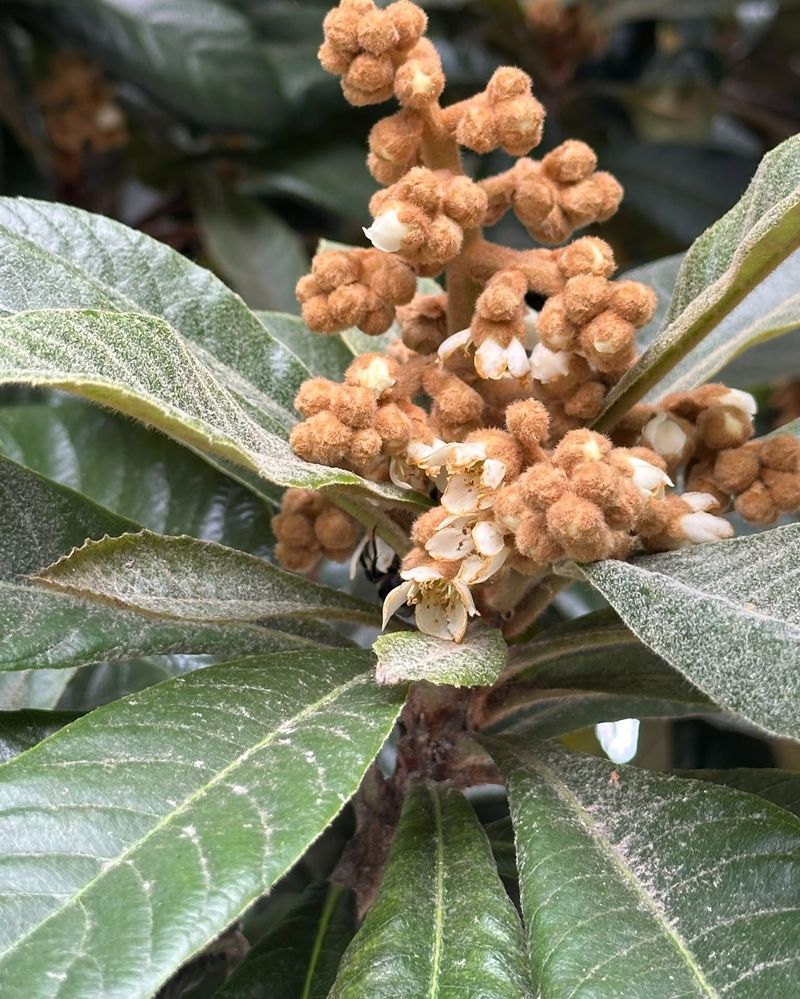
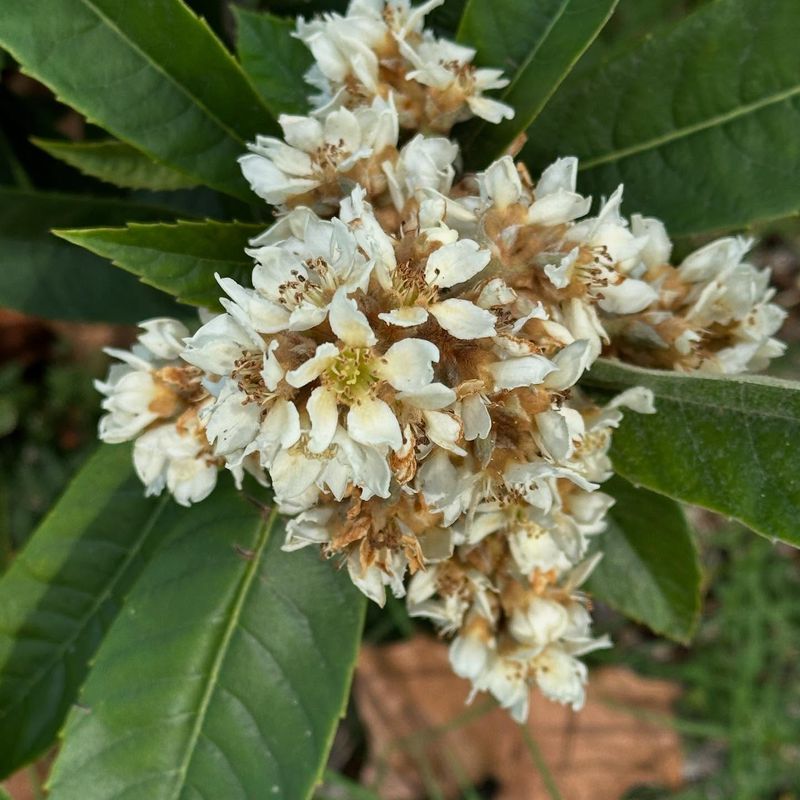
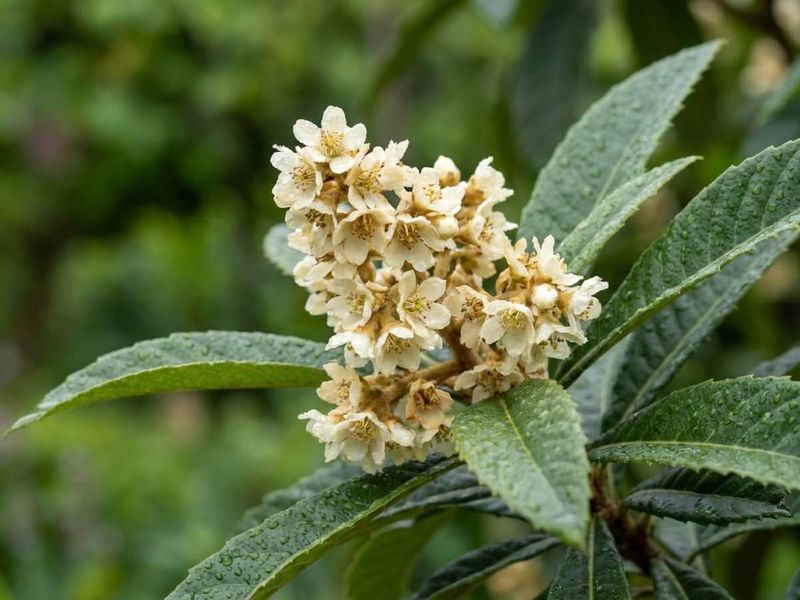
Step outside on a cool November afternoon, and you might catch a sweet scent before you even spot the tree. Loquat flowers are small and creamy white, but their fragrance carries surprisingly well.
People often describe the smell as honey-like or a bit like almonds.
Each blossom is modest on its own, with five petals and a fuzzy base. Up close, the tan, woolly buds are almost as interesting as the open flowers themselves.
Pollinators notice them too, especially on mild, sunny days.
Honeybees and other insects may visit when few other plants offer food. On chilly or rainy days, though, insect visits drop, and that can affect how much fruit sets later.
In Georgia yards, the flowers make a nice late-season surprise near patios and walkways.
Planting a loquat where you sit outdoors in fall lets you enjoy the scent without trying. A spot near a window works well, too, since you can watch for buds opening.
Your Georgia Garden Changes Every Week. Your Plan Should Too.
Gardening in Georgia changes quickly throughout the season. Every Friday you’ll receive a simple weekly plan showing exactly what to plant, prune, fertilize, harvest, and protect so you never miss the right timing.
Resist the urge to cut lots of flowering stems for vases. Each cluster you remove is one less chance for spring fruit, so enjoy most of them right on the branch.
3. Flower Clusters Form At The Ends Of Branches
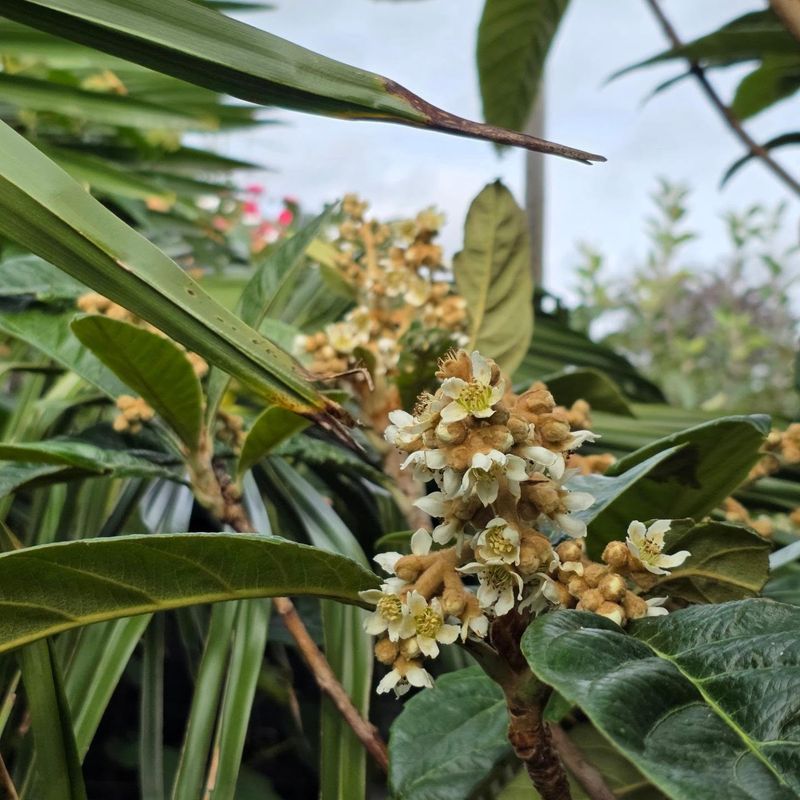
Look at the tips, not the trunk. Loquat flowers grow in upright, branching clusters called panicles right at the ends of the shoots.
Each cluster can hold dozens of tiny blossoms packed together.
Knowing where flowers form matters a lot when you pick up the pruning shears. If you trim branch tips in late summer or fall, you can remove the very wood that would have carried blooms.
Most growers suggest light pruning soon after the fruit harvest.
That window gives the tree time to grow new shoots during summer, and those shoots can set flower buds later in the year. Heavy cuts at any time may reduce flowering for a season.
Gardeners in Georgia sometimes shape loquats in fall out of habit, since that’s when other shrubs get tidied.
With this tree, holding off usually pays off. Remove only broken, crossing, or crowded limbs if they truly need attention.
Some fruit growers thin the clusters or the young fruit later on. Doing so can lead to larger individual fruit, though results depend on the variety and growing conditions.
4. The Evergreen Leaves Stay Green Through Winter
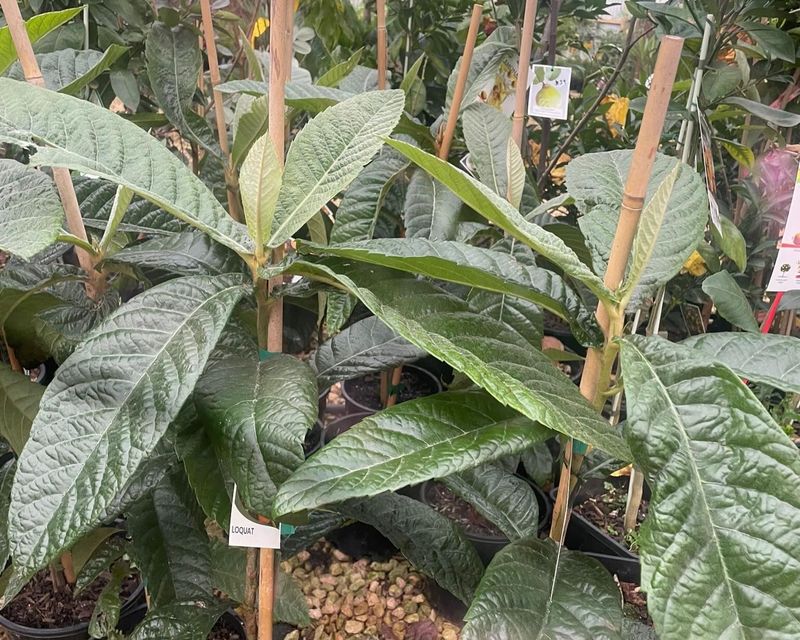
Bare branches everywhere, and then one tree still dressed in bold green. That’s a typical winter scene when a loquat grows in a mixed yard.
Loquat leaves are large, stiff, and glossy on top, with a fuzzy underside.
Their tropical look surprises people who don’t expect it in a Georgia winter. The leaves can add structure and color to a landscape that otherwise looks pretty plain from December to March.
Hard freezes can still scorch or brown the foliage.
Leaf damage often looks worse than it is, and trees may push out fresh growth in spring. Waiting until new leaves appear before removing damaged wood helps you see what actually survived.
Evergreen leaves keep working whenever the weather allows.
Because they stay on the tree, they can lose water during dry, windy winter spells. A deep watering during long dry periods may help, especially for young trees, but avoid soggy soil since loquats dislike poor drainage.
Older leaves drop gradually throughout the year. Raking them up now and then keeps beds tidy and reduces spots where leaf diseases might linger.
5. Cold Weather Can Damage Flowers And Young Fruit
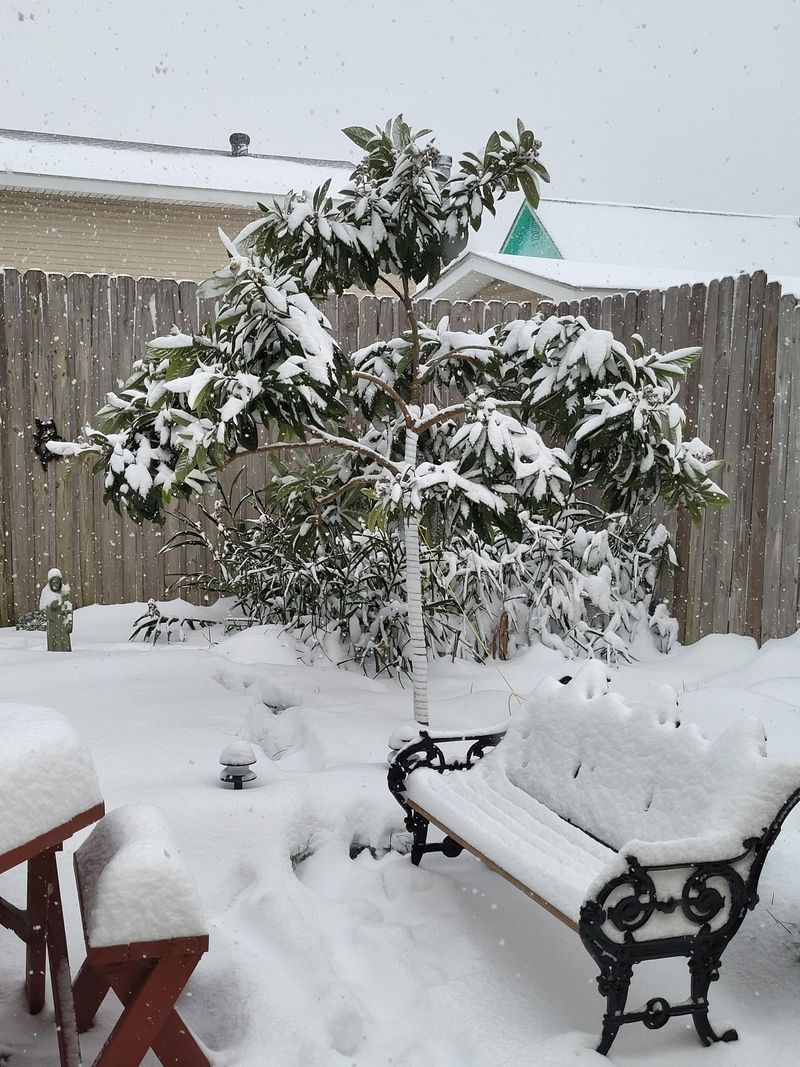
Here’s the catch with blooming in winter. The tree itself is fairly cold hardy, but its flowers and tiny fruit are far more tender.
A mature loquat may handle cold that would ruin its blossoms.
Open flowers and freshly set fruit are usually the most vulnerable parts. Tight buds tend to hold up a bit better, which is why a freeze may wipe out some clusters while sparing others.
Results vary widely from one winter to the next.
In north Georgia, a crop is often lost to freezes, so many gardeners there treat loquats mainly as ornamental trees. Coastal and southern areas usually have better odds, though no region is free from a surprise cold snap.
Browned or blackened flowers after a frost are a common sign of injury.
Young fruit may turn dark at the center or simply fall off. Don’t panic, though, because later flowers sometimes open after the cold passes and can still set fruit.
Watch local forecasts during bloom season. On a small tree, covering it overnight with frost cloth may offer some protection, but remove it once temperatures rise the next day.
6. Protected Spots Give Trees A Better Chance To Fruit
Location can make or break your harvest. Two loquats on the same street may perform very differently just because of where they were planted.
A spot near a south- or east-facing wall often stays a little warmer on cold nights.
Buildings, fences, and nearby trees can block harsh winds and hold some heat.
That small boost may be enough to save part of the bloom during a light freeze. Low areas are a different story.
Cold air sinks and settles in dips and valleys, so trees planted at the bottom of a slope may face harder frosts. Higher ground or the middle of a gentle slope usually drains cold air away better.
Gardeners across Georgia should also think about sun and soil.
Loquats do best in full sun to light shade with well-drained ground. Wet, heavy soil can lead to root problems, so raising the planting area slightly may help in clay-heavy yards.
Give the tree room to spread, since mature loquats can reach a good size. Check with your county Extension office for advice suited to your specific area.
Choosing the right spot now can make a noticeable difference when colder weather arrives. Even a few degrees of protection may help your loquat hold onto more flowers and improve its chances of producing fruit.
7. Spring Fruit Depends On Flowers Surviving The Winter
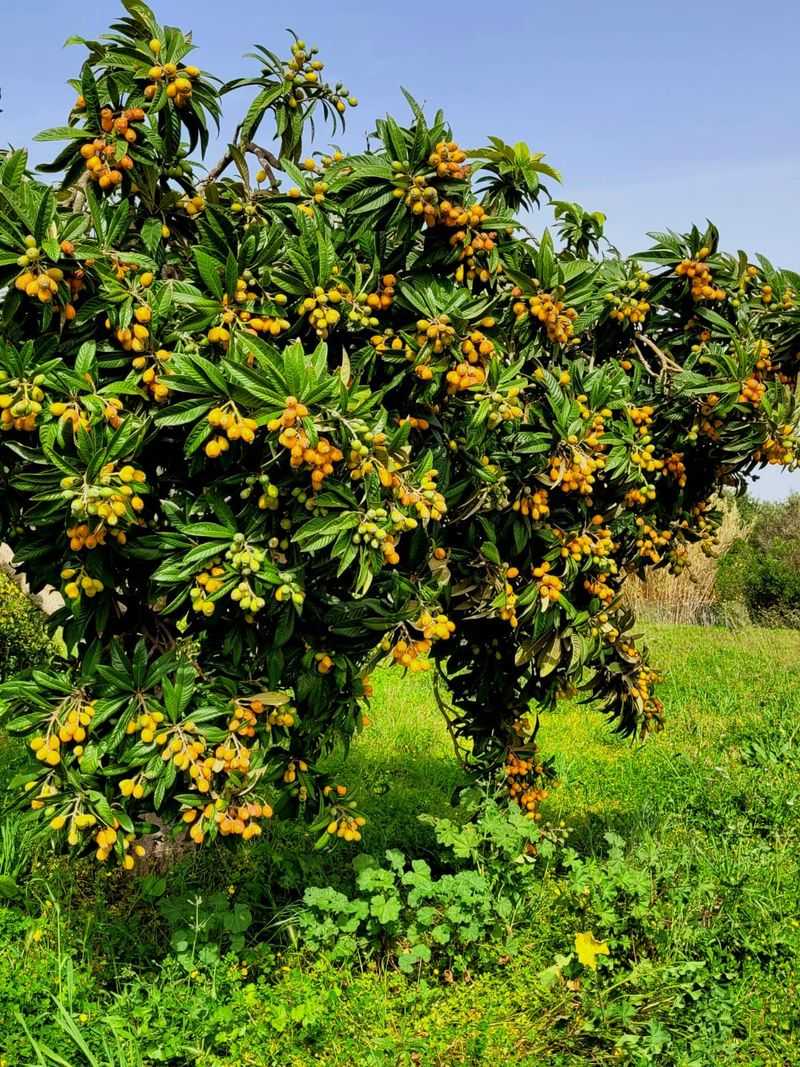
Patience gets rewarded, at least in a good year. If enough flowers and young fruit make it through winter, clusters of golden fruit usually ripen in spring.
Ripe loquats are small, oval, and yellow to orange, with sweet, tangy flesh.
Harvest timing in Georgia often falls somewhere in spring, depending on the weather and variety. Fruit picked too early tends to taste sour, so wait until it softens slightly and shows full color.
Some years bring a heavy crop, while others bring very little.
Winter cold is a major factor, but rain during bloom, pollinator activity, and tree health also matter. A thin harvest doesn’t always mean something is wrong with the tree.
Birds and squirrels love ripe loquats just as much as people do.
Checking your tree every couple of days near harvest helps you beat them to the best fruit. Light netting over smaller trees can help, though it takes some effort to install safely.
Fresh loquats bruise easily and don’t store long. Eat them soon after picking, or try them in jams, pies, or simple sauces before they soften too much.