Why Ocotillo Can Turn Green Within Days After Rain in Arizona
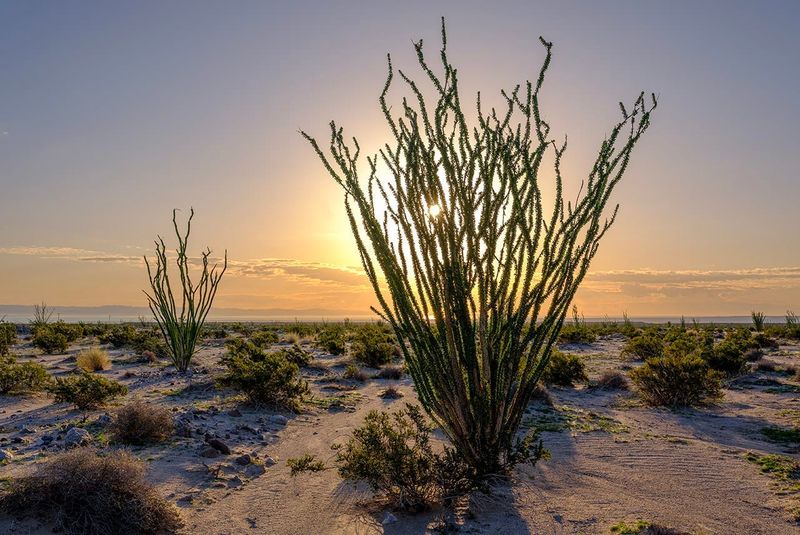
A bare, spiny ocotillo can look like a bundle of gray sticks, and then a good soaking brings a haze of green. The change can seem to happen overnight, though it usually takes a little longer.
Knowing what is going on helps you avoid wasting water and avoid reading too much into a fresh set of leaves. Here is how the plant pulls off its quick comeback and what it means for your yard.
Why ocotillo can leaf out after rain
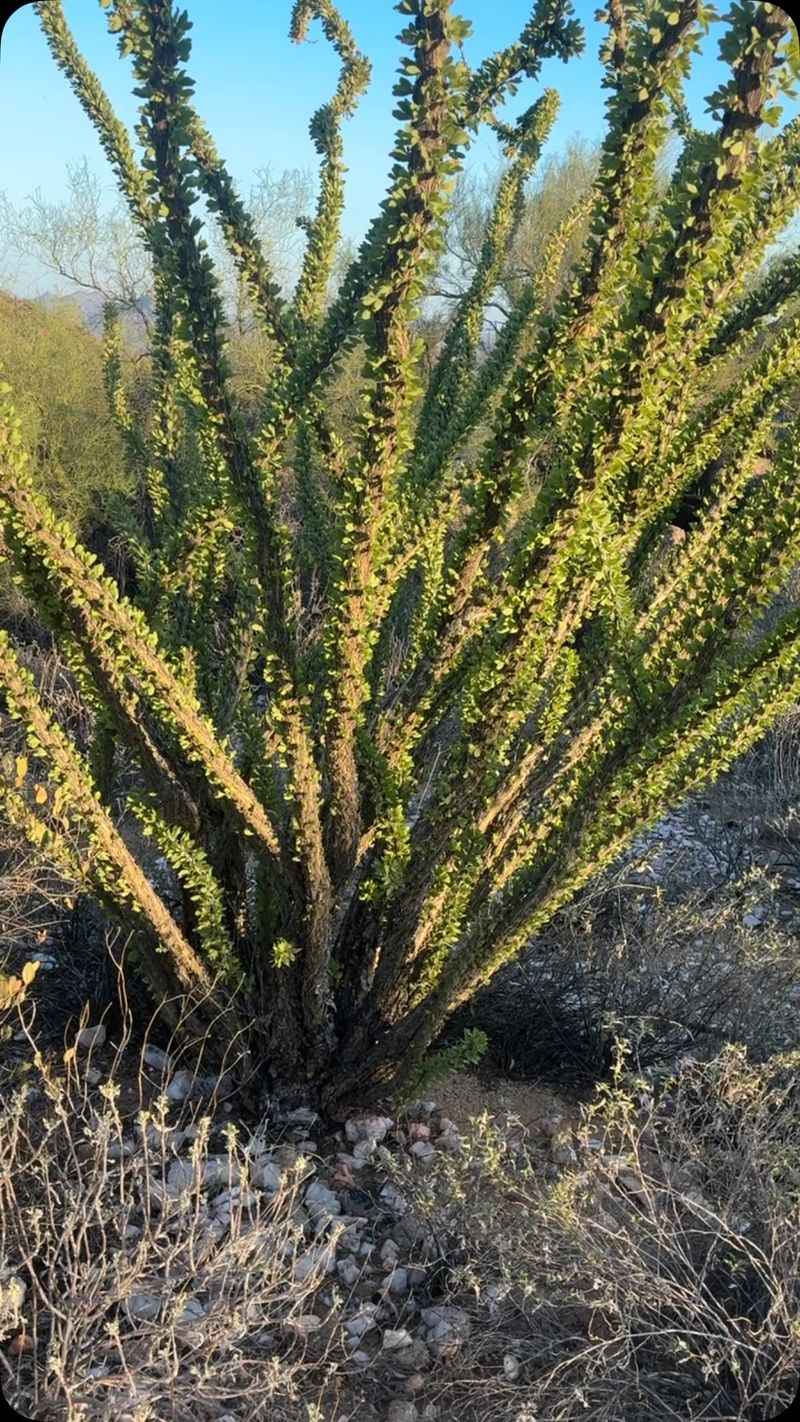
Ocotillo is not a cactus, and it plays by its own water rules. It is drought-deciduous, which means it drops its leaves when water runs short and grows a new set when moisture returns.
Most of the year, a typical plant stands leafless.
Dropping leaves is a smart move in a hot desert. Leaves lose water to the air, so shedding them cuts evaporative loss while the soil is dry.
University of Arizona Extension notes that ocotillos are leafless much of the year, that enough soil moisture is followed by profuse leafing, and that drought prompts leaf drop.
So the green you see after a storm is not growth from nothing. The plant already holds its canes and the ability to make leaves, and it simply switches that ability on when water is available.
It is a survival strategy, not a sign that the plant was struggling before the rain.
Some years, a plant may go through this on and off cycle more than once. That is normal behavior for a shrub built for unpredictable desert weather.
How fast is “overnight,” really?
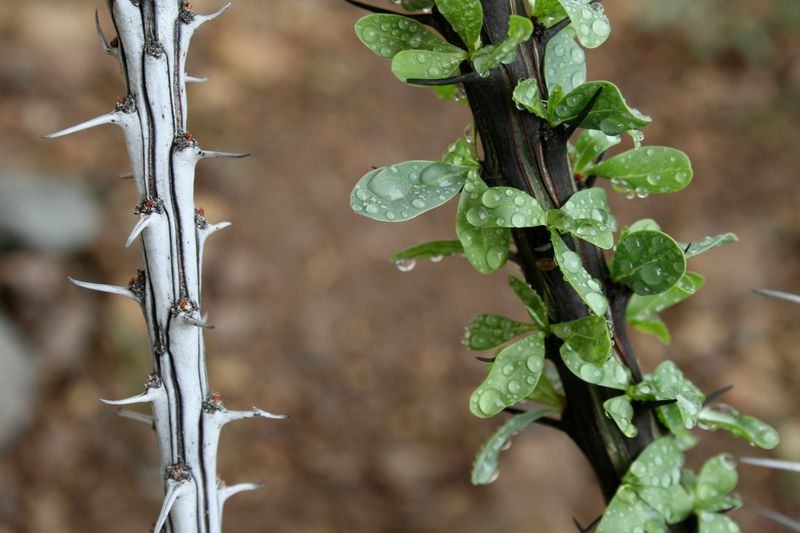
Plenty of people swear their ocotillo greened up in a single night. What you notice may be a plant that began leafing earlier, then crossed the point where the change became obvious.
The National Park Service describes the flush as happening in just a few days, so almost overnight is a fair impression but not a promise.
Lab and field work shows how much potential the plant has. A U.S.
Forest Service review says ocotillo can refoliate quickly after rain and can produce several leaf crops in a year. In one cited study, detached stems placed in water began leafing within 24 hours.
Those results show what the plant is able to do. They do not give a timetable for your plant after a particular storm.
Soil, temperature, and the plant itself all shape the pace, so check your canes over several days instead of expecting a result by morning.
A leafless ocotillo may still be alive
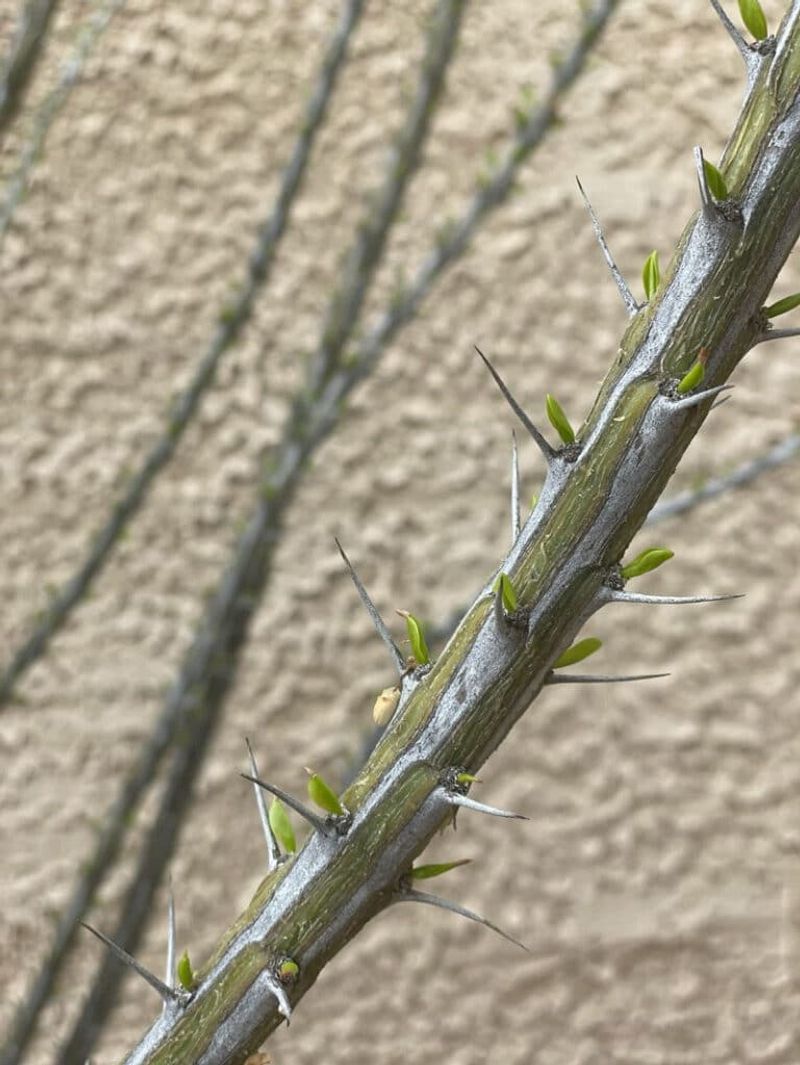
Walk past an ocotillo in June and you might swear it gave up. Hold off on the shovel.
Bare canes are the plant’s normal dry-season look, not a verdict.
Without leaves, the plant still feeds itself. The National Park Service explains that ocotillo can photosynthesize through its stems while leafless, so the canes keep working even when no green leaf is in sight.
There are a few clues to look for. Extension guidance says living canes stay pliable and look greenish.
Your Arizona Garden Changes Every Week. Your Plan Should Too.
Gardening in Arizona changes quickly throughout the season. Every Friday you’ll receive a simple weekly plan showing exactly what to plant, prune, fertilize, harvest, and protect so you never miss the right timing.
Try a gentle bend on a cane, and look closely at the color beneath the surface of the bark.
These signs are helpful hints, not a full health check. A brittle cane or a plant that looks off for a long stretch deserves a closer look, ideally from a local nursery or Extension office.
A plant that is simply bare during a dry spell is usually just doing what ocotillos do.
One storm will not green every ocotillo
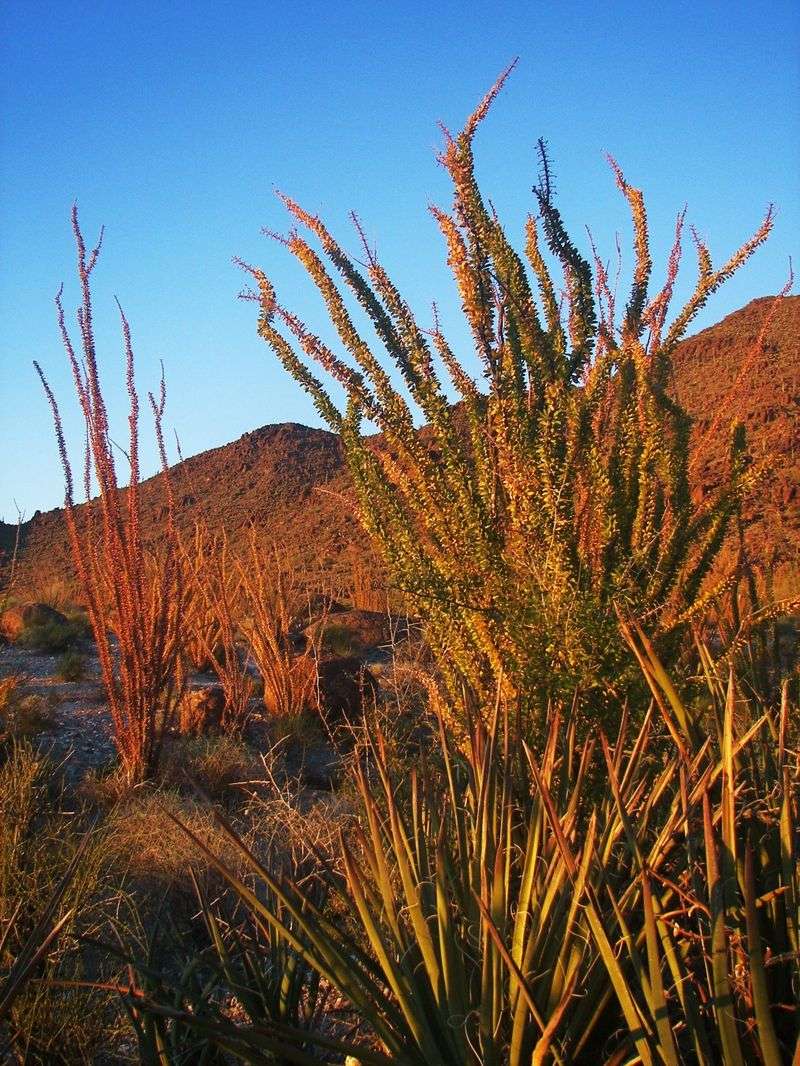
Picture two neighbors with ocotillos, one block apart. After the same storm, one plant is leafy and the other is still bare.
That is not unusual.
Soil moisture can come before a flush, and Extension describes profuse leafing following sufficient moisture. How much rain fell, how deeply it soaked in, and local conditions all change what you see.
A light sprinkle may do little.
It is also tempting to say the roots feel the rain and send a signal up the canes. Research does not back that as the only route.
Experiments reported in a National Park Service research record showed that leaf production can happen apart from root activity.
The takeaway is simple. Rain is a handy shorthand for what sets off leafing, but it is not a complete explanation and not a guarantee.
Treat each flush as a bonus, and do not worry if your plant waits for a bigger soaking.
A flush does not prove a transplant has established
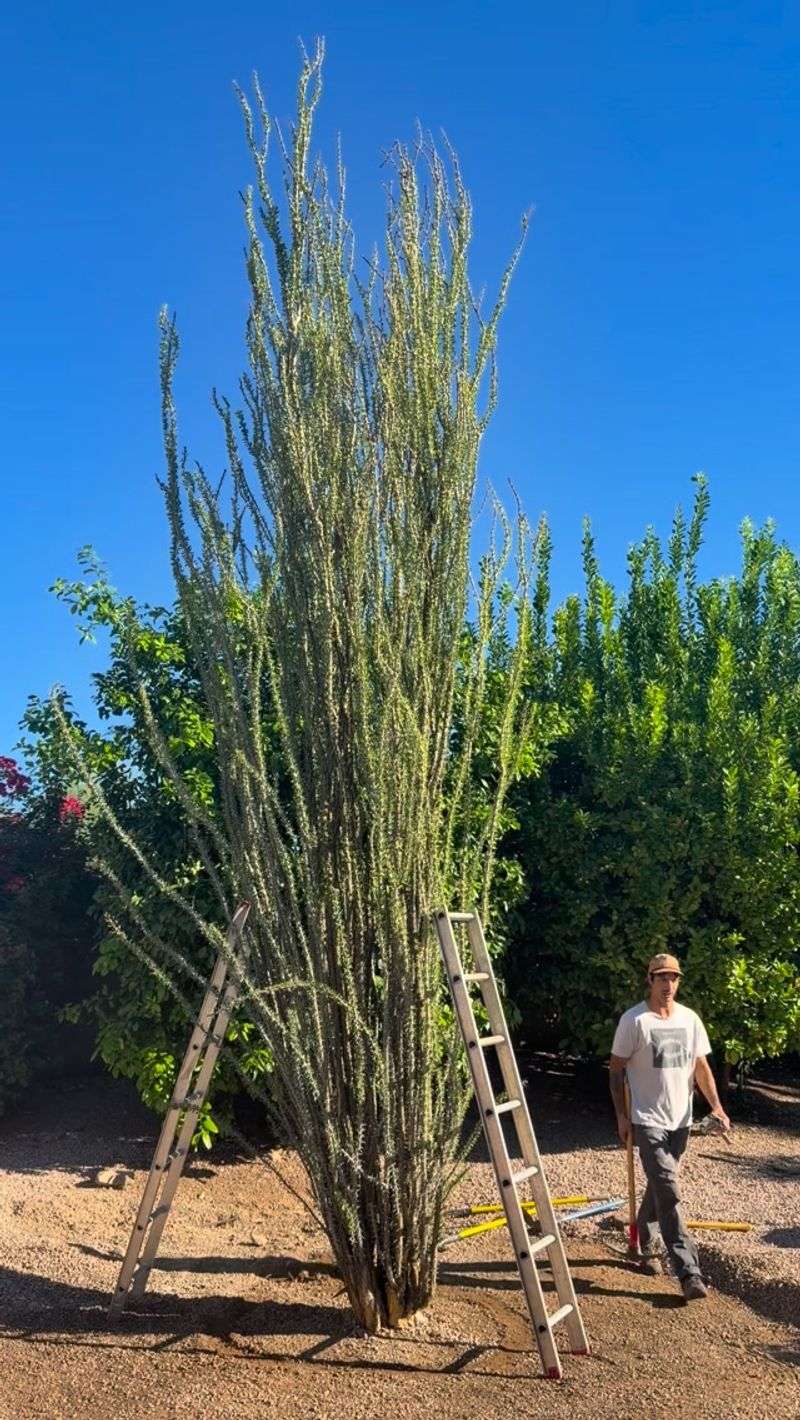
Fresh green on a newly planted ocotillo feels like good news, and it can be. It just is not proof of success.
The same research record mentioned earlier reports that detached stems with no roots produced leaves when supplied with water. If a stem with no roots can leaf out, then leaves on your transplant cannot tell you that new roots have taken hold in the ground.
Establishment takes longer. University of Arizona Extension says it may take 6 to 24 months, and it advises planting where surface water does not collect.
For a transplant, lean on Arizona-specific guidance for placement and care instead of reading the leaves as a green light to relax or to change how you handle it. Watch the plant over seasons, not days.
Steady, firm canes and sensible drainage matter far more than a quick burst of foliage.
Water for the plant, not for a green look
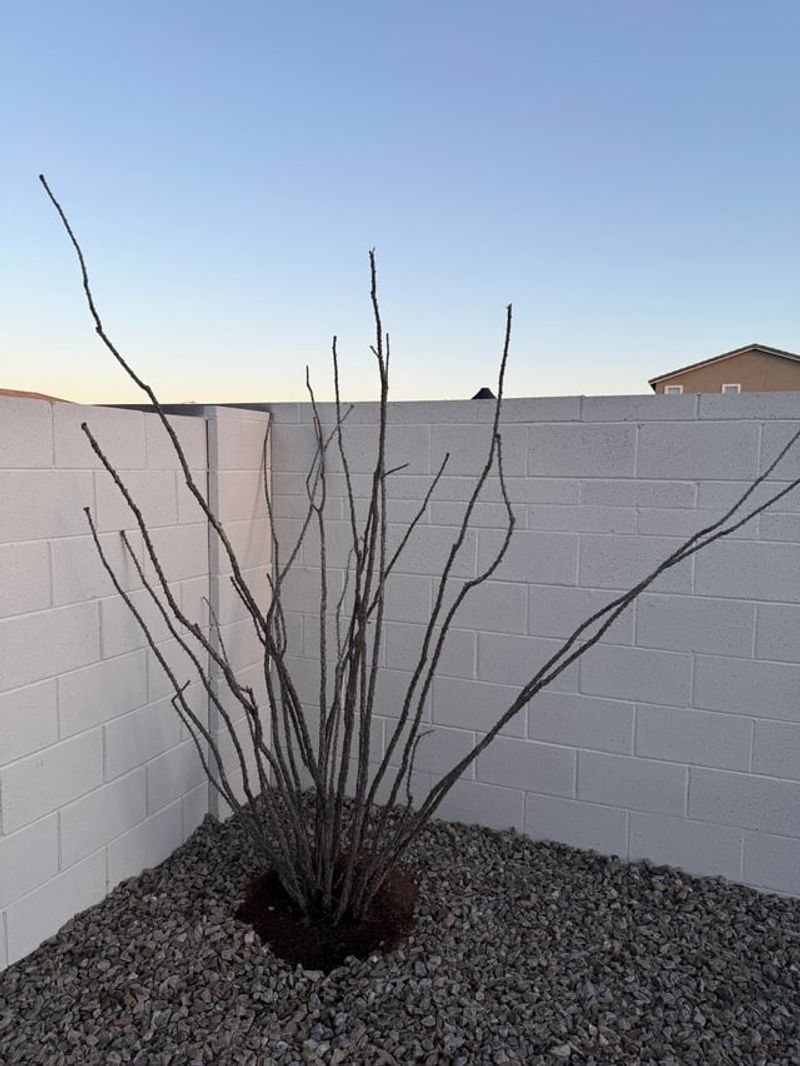
Established ocotillos need less help than most people expect. Extension’s general advice is to reduce supplemental irrigation for them, and it says most need no extra water in cooler months.
In the hottest part of summer, it suggests no more than every two to four weeks.
Transplants are a different story. The same guidance warns that too much irrigation after planting can harm ocotillos, so more water is not a safer bet.
Follow Arizona transplant guidance for a new plant.
Those numbers are general guidelines, not a schedule that fits every yard, soil, or plant. Treat them as a starting point and adjust to your conditions.
Do not irrigate an established plant just to force leaves. Bare canes in a dry stretch are normal, and a quick flush adds nothing to the plant’s long-term health.
If you want a payoff beyond the greenery, the red flowers can draw hummingbirds and bees.
A bare ocotillo is not asking for help, it is simply waiting.