That Fake Spiderweb Decoration Could Be Trapping Wildlife In Your New York Yard
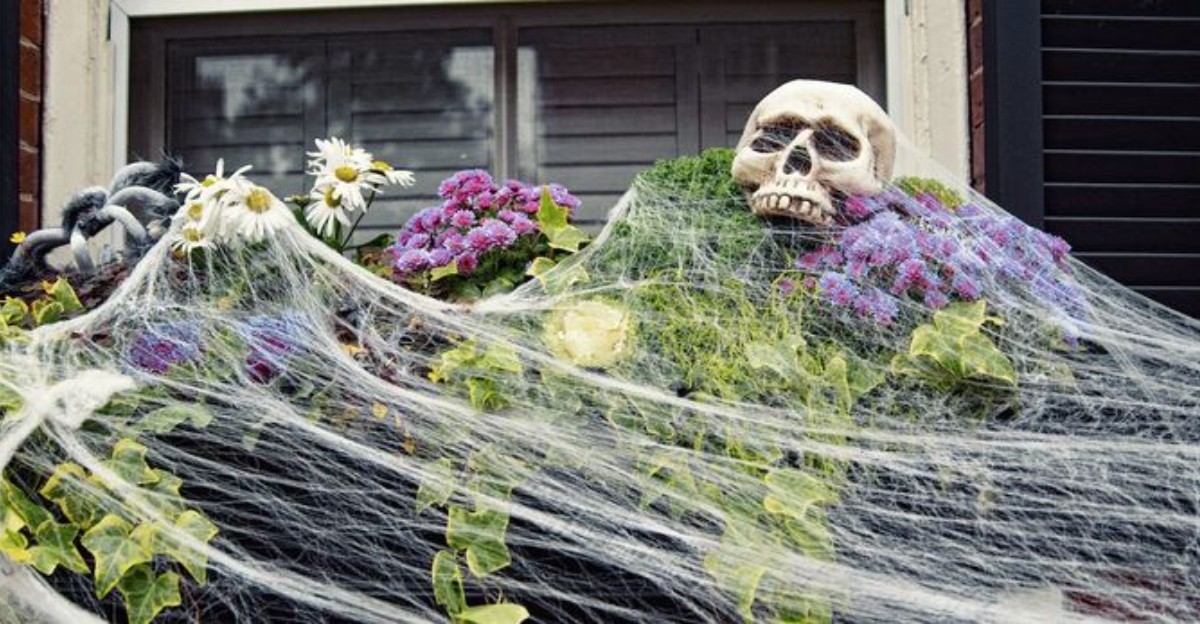
That spooky cobweb draped over your porch rail looks harmless. For the birds and bats in your yard, it can be a real trap.
Every October, yards across New York fill up with glowing pumpkins, plastic spiders, and stretchy fake webs. The cottony fluff feels soft in your hands, yet it hides surprising strength.
Birds, bats, and helpful insects can fly right into it and get tangled. Many can’t wiggle free without help, and wildlife rescuers see these cases every fall.
A few easy changes can keep your Halloween fun and still safe for your feathered neighbors. You don’t have to give up the spooky vibe at all.
Knowing why these webs cause trouble makes all the difference. Find out which animals face the biggest risk and what to do if you spot one tangled.
Stretchy Fake Webs Snag Birds And Bats
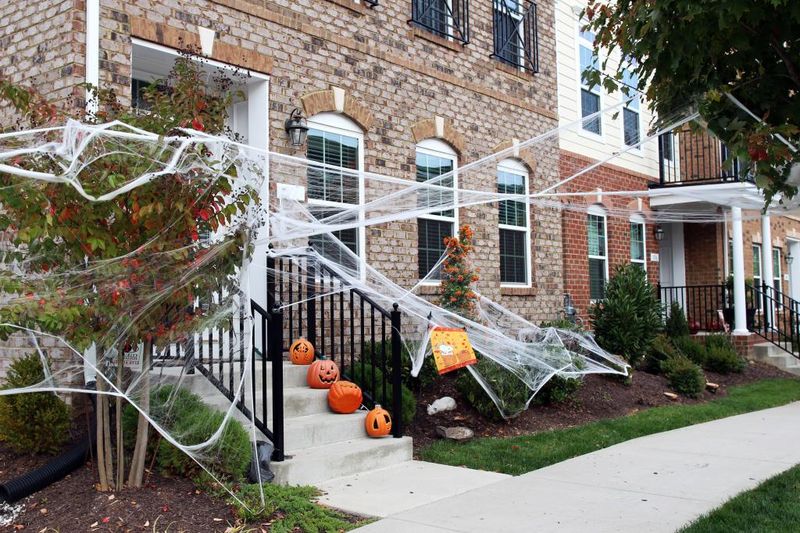
Pull a strand of real spider silk, and it snaps in a second. Fake webs behave in a totally different way.
Store-bought cobwebs are made from tough synthetic fibers like polyester. They stretch, cling, and hold on tight instead of breaking.
Wildlife experts have warned about these decorations for years. They see birds and bats caught in the fluffy strands every fall.
Once an animal brushes against the webbing, the fibers wrap around feathers, toes, and wings. Escape becomes really hard after that first touch.
Here is another problem many people miss. Fake webs do not break down in nature the way plant material does.
A clump blown into a hedge can stay there for months. It keeps catching creatures long after the candy is gone.
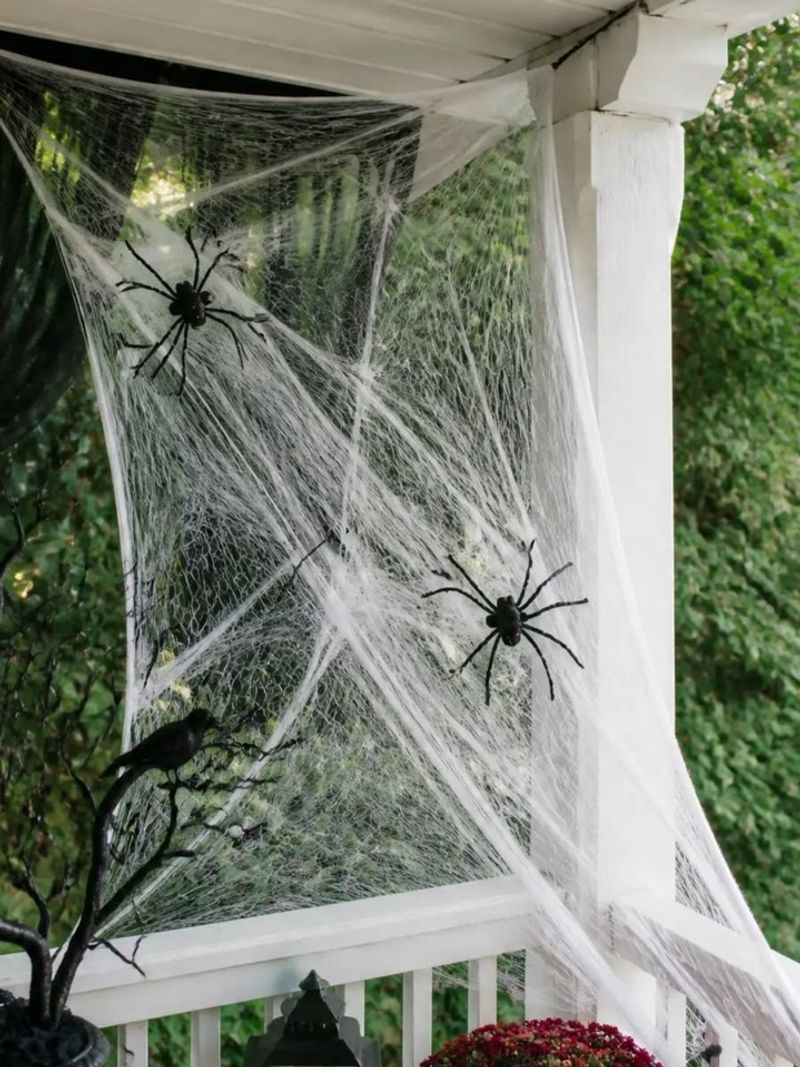
Think about how the stuff gets used outside. People stretch it across bushes, porch rails, fences, and tree branches.
Those are the exact spots where birds perch and bats swoop for snacks. Your decoration ends up sitting right in their daily flight path.
Try a simple test at home before you hang anything. Pull a small piece of the webbing between your fingers and watch it stretch.
If it bounces back instead of tearing, picture a tiny wing caught inside. Small animals have far less strength than your hands.
Knowing how the material works helps you make smarter choices. A little awareness now can spare a lot of suffering in your yard later.
Small Songbirds Get Tangled The Easiest
Picture a tiny chickadee hopping through your shrubs on a crisp October morning. One wrong hop into fake webbing can turn its day upside down.
Small birds face the highest risk from these decorations. Songbirds and hummingbirds weigh very little, so they lack the power to tear free.
The synthetic strands grab onto feathers almost like Velcro. Every flap and twist pulls the fibers tighter around the body.
Struggling often makes things worse for the little bird. Feathers can get damaged, and fragile bones can even fracture.
Tight strands may also squeeze legs and wings until blood flow slows. A bird that cannot fly properly struggles to find food or escape predators.
Your New York Garden Changes Every Week. Your Plan Should Too.
Gardening in New York changes quickly throughout the season. Every Friday you’ll receive a simple weekly plan showing exactly what to plant, prune, fertilize, harvest, and protect so you never miss the right timing.
Fall timing makes the danger even bigger. Many songbirds pass through New York during migration in September and October.
These travelers stop in yards to rest and grab bugs. Unfamiliar territory means they do not know your porch holds a hidden snare.
Common visitors at risk include sparrows, wrens, warblers, juncos, and chickadees. Late hummingbirds may also zip by on their way south.
Here is a helpful trick for bird lovers. Keep feeders and birdbaths well away from any Halloween display you set up.
Birds gather near food and water, so distance lowers the chance of contact. Even better, skip stretchy webs near shrubs where birds love to hide.
Small changes like these give songbirds a safer place to land. Your yard becomes a rest stop instead of a trap.
Bats Hunting At Night Can’t See It Coming
Bats are famous for their amazing sonar. So how could a creature with built-in radar fly straight into a fake web?
Echolocation works by sending out sounds and listening for echoes. Bats use it to find insects and dodge large objects.
However, bats do not use this sense at full power every moment. While commuting between spots, they may rely more on memory and sight.
Thin, fluffy webbing also sends back weak echoes. It can blend into the background until a bat is already caught.
Some bats hunt insects close to the ground or near plants. Fake webs on bushes sit right in those low hunting zones.
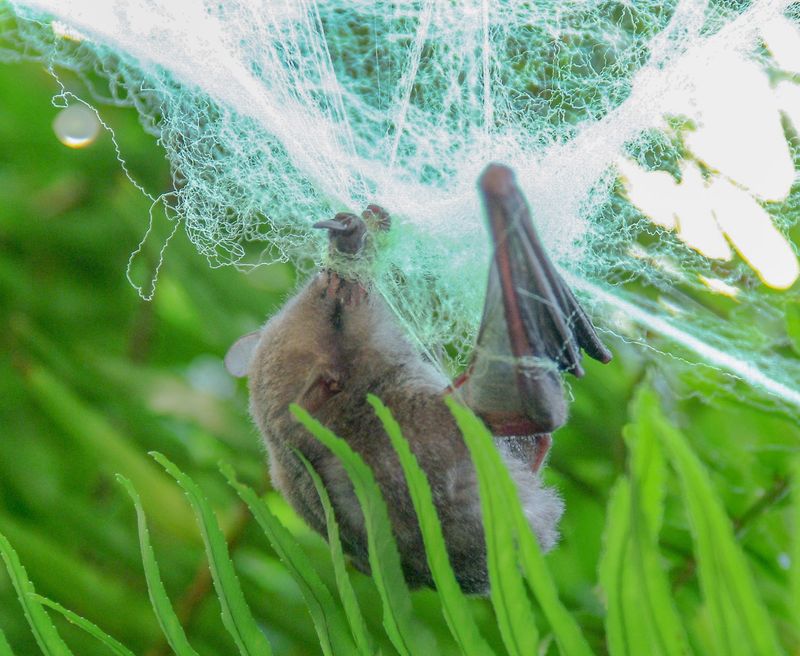
Rescuers have found bats with webbing wrapped around their mouths and wings. Those animals could not eat, fly, or groom themselves.
New York is home to several bat species, including the little brown bat and big brown bat. Many have already suffered big losses from white-nose syndrome.
Every single bat counts for these struggling populations. Losing even a few to decorations hurts local recovery.
Bats are also fantastic pest control partners. One little brown bat can eat hundreds of mosquito-sized insects in a single hour.
Fun fact: bats are still active in many areas well into October. Warm autumn evenings bring out moths, and bats follow the snacks.
If you enjoy fewer bugs at your summer barbecues, thank a bat. Keeping your Halloween decor web-free is a great way to return the favor.
Beneficial Insects Get Caught Too
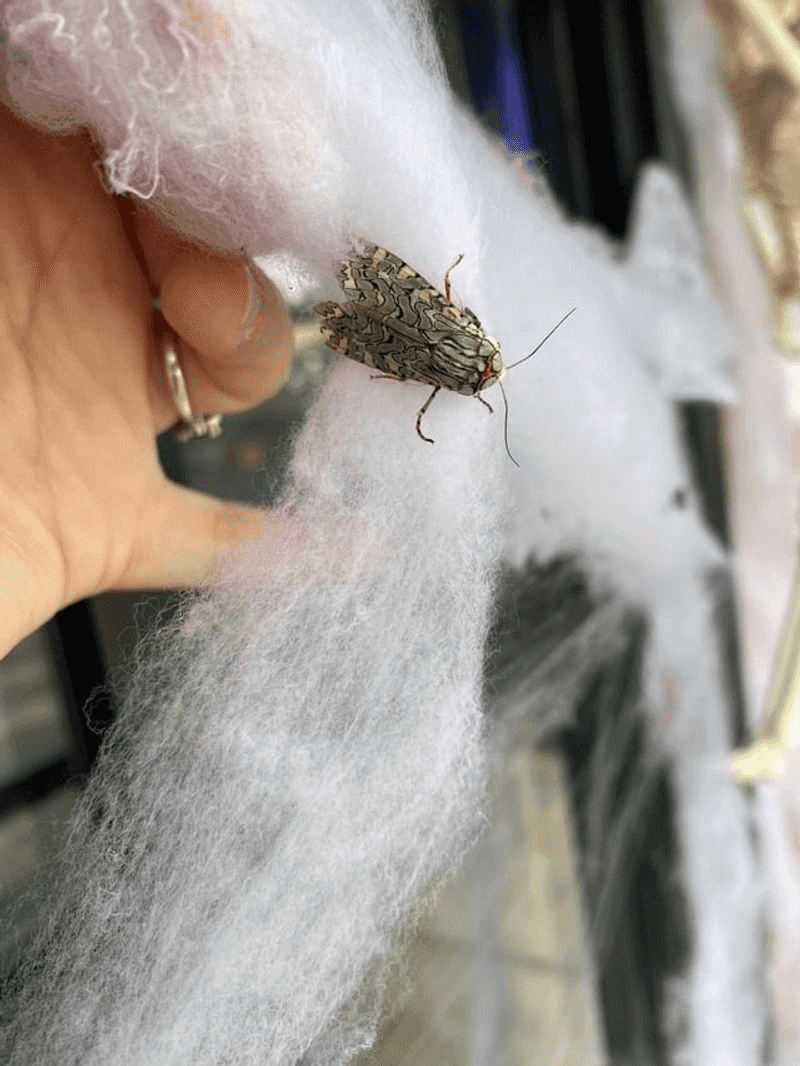
Birds and bats get most of the attention, but tiny helpers suffer too. Bees, butterflies, and moths can easily blunder into fake webbing.
Fall is a busy time for many pollinators. Bumblebees and late butterflies visit asters and goldenrod right up until frost.
If your fake web sits near those flowers, trouble follows quickly. The sticky fibers trap delicate legs and wings with little effort.
Nighttime brings a whole new crowd of visitors. Moths and beetles fly after dark and often head toward porch lights.
Spooky decorations usually glow near those lights. Insects drawn to the brightness can end up tangled in the strands nearby.
Here is where things get even more serious. A trapped insect looks like an easy meal to a hungry bird or bat.
Predators swoop in for the snack and get caught themselves. One small bug can set off a chain of victims in a single web.
Pollinators matter for your garden, local farms, and wild plants. New York apple orchards and pumpkin patches rely on healthy insect populations.
A practical tip is to keep decorations away from blooming plants. Also consider using yellow bug lights, which attract fewer night flyers.
Real spiders deserve credit, too. Their natural webs are part of a healthy food chain, while fake ones only cause harm.
Protecting the small creatures keeps your whole backyard ecosystem buzzing. Every bee saved helps next spring’s flowers.
Trapped Animals Often Need A Rescuer To Survive
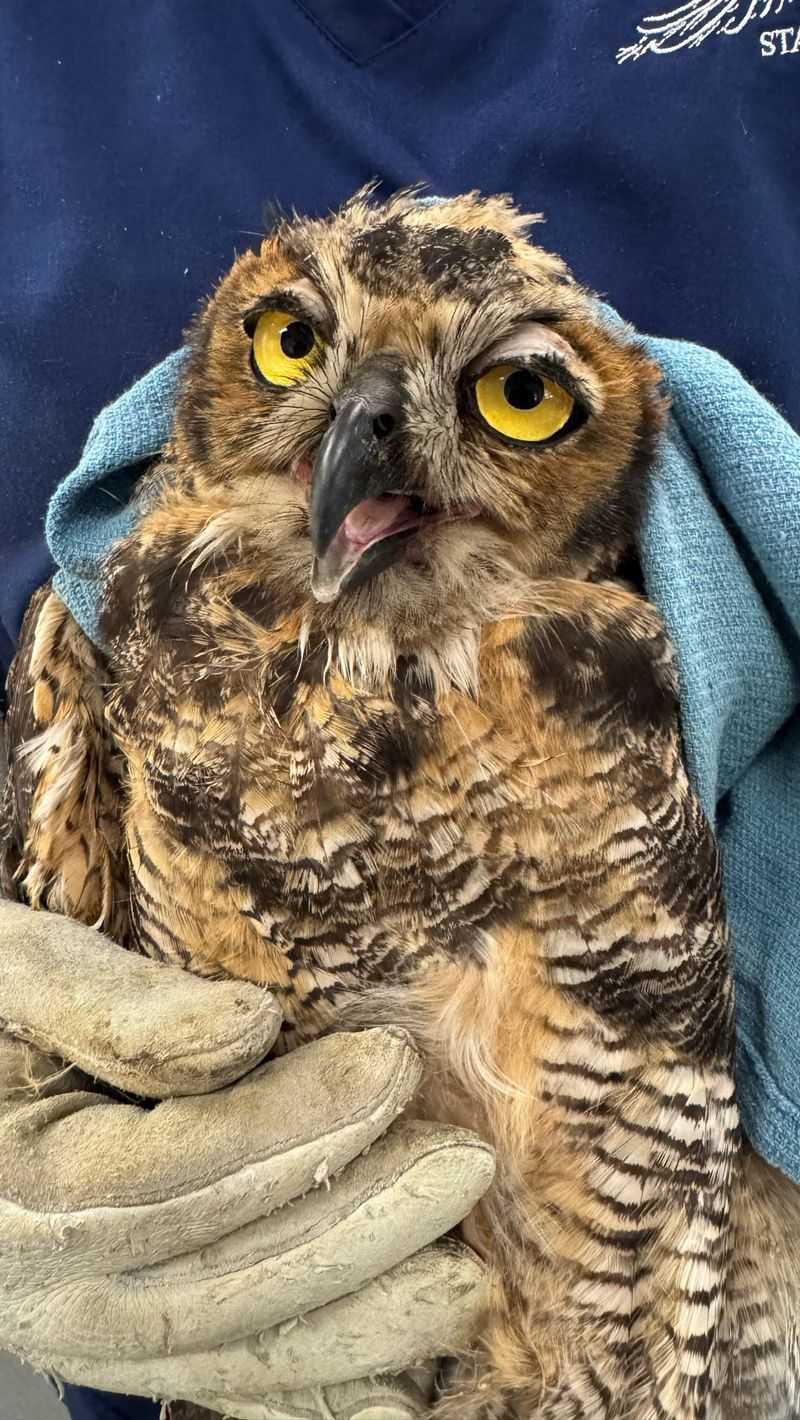
Ask any wildlife rehabber about Halloween, and you may hear a sigh. October often brings a wave of tangled patients through their doors.
Animals caught in fake webs rarely escape on their own. The harder they fight, the deeper the fibers dig into skin.
Injuries can pile up fast. Rescuers report cuts, broken bones, and limbs that lose blood flow from tight strands.
Skin under the webbing may begin to break down if the pressure lasts too long. Those wounds can become infected and very serious.
Removing the material takes patience and skill. Rehabbers often use magnification and tiny scissors to snip each fiber away.
Some strands are thinner than a hair and hide deep in feathers or fur. Missing even one can cause lasting harm.
Sadly, not every story ends well. At least one bat caught in artificial webbing did not survive despite care.
Recovery can take days or weeks for the lucky ones. Patients may need pain medicine, wound care, and practice flying before release.
Most wildlife rehab centers rely on donations and volunteers. Many in the state are small nonprofits run by dedicated people.
Want to help beyond your own yard? Consider donating old towels, paper towels, or a few dollars to a local rehab center.
Better yet, prevention saves everyone time and heartache. A web-free yard means fewer patients and more healthy animals flying free.
Keep Fake Webs Indoors Or Behind Glass
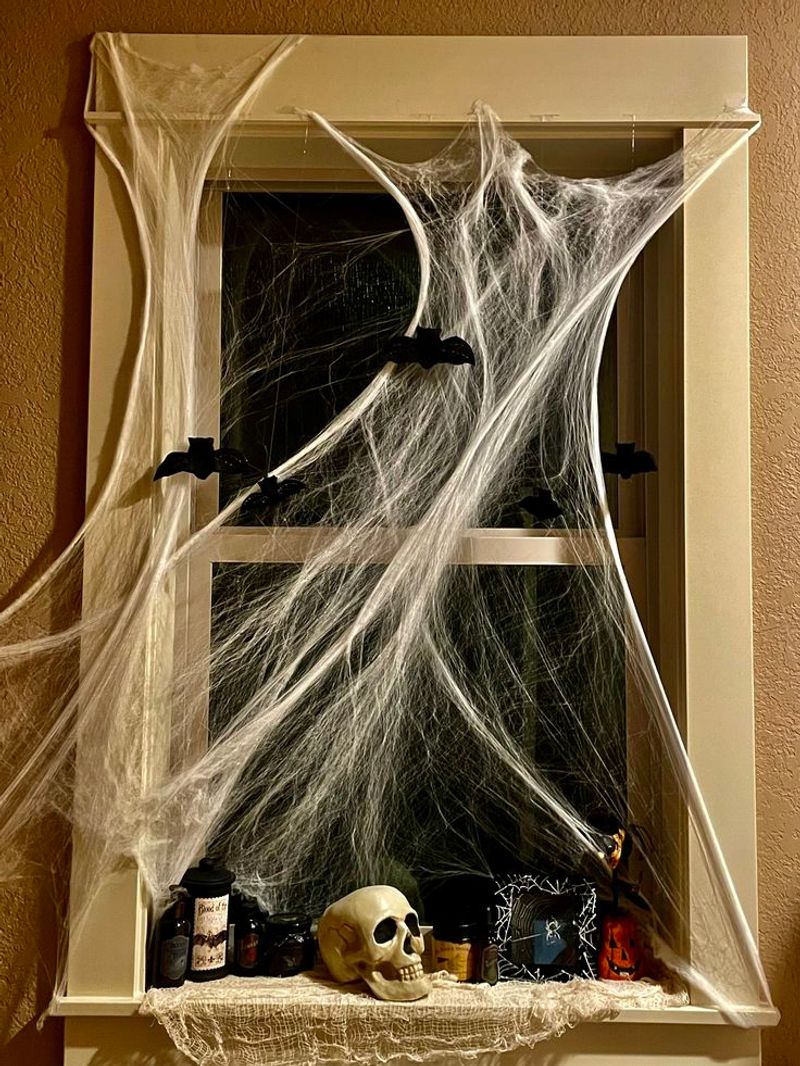
Love the creepy cobweb look? Good news, you can keep it with one simple switch in location.
Indoor spaces make the safest home for stretchy webbing. Drape it over bookshelves, mantels, doorways, or a spooky dining table.
Inside your house, birds and bats cannot reach it. Your guests still get the haunted feel without any risk to wildlife.
Windows offer a clever middle ground. Stretch webs against the inside of the glass so neighbors can admire them from the street.
Webbing inside the glass may help birds notice a window a little. For real protection, though, bird-safety groups recommend patterns on the outside of the glass, where reflections form.
Window strikes are a big problem in New York, especially during fall migration. Birds often see reflected trees and sky instead of solid glass.
Breaking up those reflections with patterns helps birds steer away. Your spooky decor might help a bit, but outside window markers do more.
For a strong effect, cover large picture windows and sliding doors. Those big panes cause many collisions.
Keep pets in mind when decorating indoors, too. Cats and dogs may chew webbing, which can upset their stomachs.
Place webs up high or out of reach from curious paws. A little planning keeps every member of your household safe.
Inside or behind glass, the webs look just as eerie. You get the full Halloween mood while local wildlife stays free.
Skip The Stretch And Use Solid Decor Outside
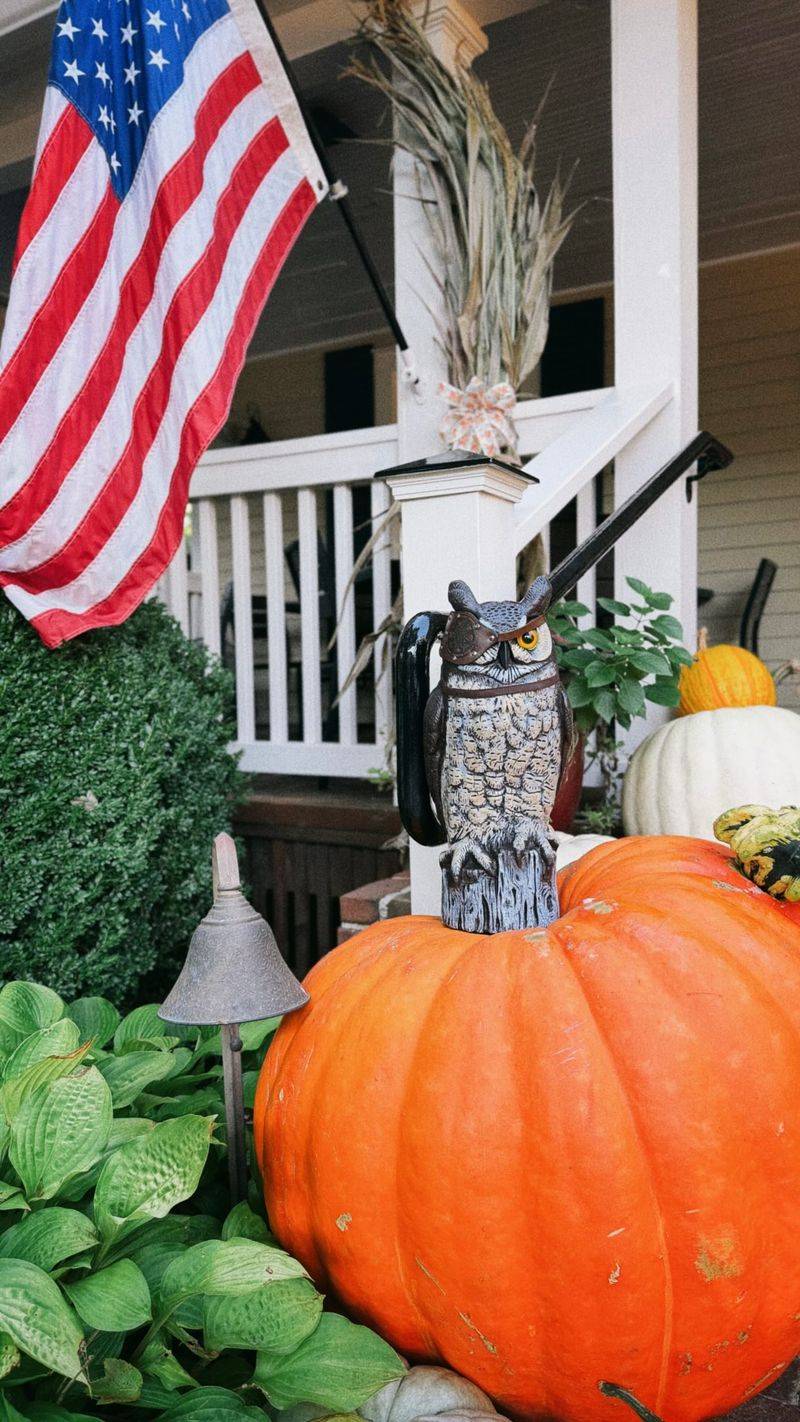
Carved pumpkins glowing on the steps, hay bales stacked by the door, a grinning skeleton on a bench. Who needs fake webs when your porch already looks this good?
Solid decorations are a smart swap for outdoor displays. Statues, tombstones, and large props give plenty of spooky style.
Animals bump into these items without getting stuck. They simply fly around them and carry on.
Natural materials work beautifully, too. Sticks, twigs, dried leaves, cornstalks, and straw create a cozy harvest feel.
Bonus: many of these items come free from your own yard. Autumn supplies plenty of crunchy leaves and fallen branches.
Pumpkins and gourds are another classic choice. Local farm stands across the state sell them in every shape and color.
Watch out for other risky materials, though. Mesh, netting, gauze, string, and loose wire can tangle animals just like webs.
Hanging ghosts made of thin cheesecloth fall into that category. Swap them for solid plastic or wooden versions instead.
Try painting a giant web on a piece of plywood. It gives the same creepy effect without a single loose strand.
Battery lanterns, light-up eyes, and paper bats add drama, too. Just secure everything so wind cannot scatter pieces.
With a little creativity, your yard can be the scariest on the block. The only thing frightened will be trick-or-treaters, not birds.
Take Decorations Down Right After Halloween
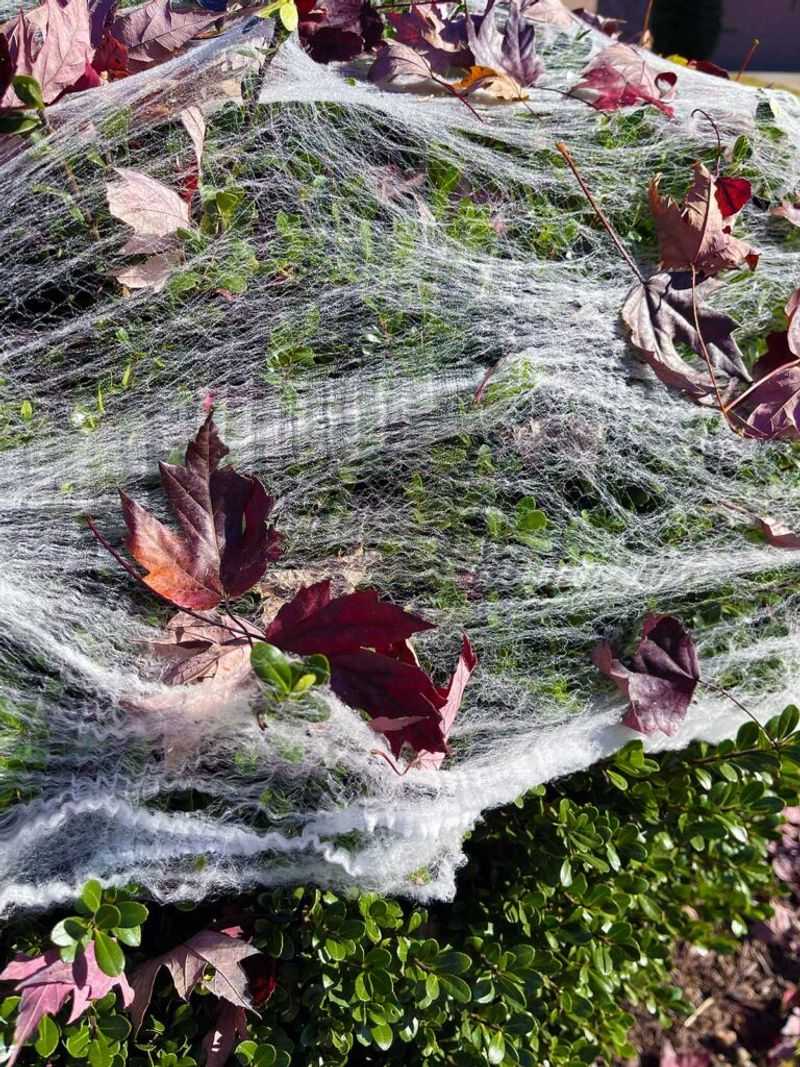
November 1st arrives, and the candy hangover kicks in. Packing up decorations might feel like a chore, but it matters a lot.
Leftover outdoor decor keeps posing risks long after the holiday ends. Webbing and loose pieces become hazards that linger for months.
Wind is a big troublemaker here. Strong gusts can carry stray strands into tall trees and thick shrubs.
Once tangled high in branches, the webbing is hard to spot or remove. Birds may land on it all winter without warning.
Crowded neighborhoods face extra trouble. Across busy parts of the state, loose decor from many homes can spread through parks and streets.
Plan a cleanup day right after Halloween. Recruit family members and turn it into a quick team project.
Check every shrub, fence post, and gutter for leftover bits. Small scraps cause problems just like large pieces do.
Wear gloves and bring a trash bag while you work. Look closely, since thin fibers blend into branches and dry leaves.
Compost carved pumpkins instead of leaving them to rot on the porch. Some local farms and towns even collect them for recycling.
If you used any webbing outdoors this year, toss it rather than storing it. Choosing safer decor next fall spares you the cleanup headache.
A prompt teardown means your yard is ready for winter birds. Juncos and cardinals will thank you with their cheerful visits.
Found A Tangled Animal? Call A Wildlife Rehabber
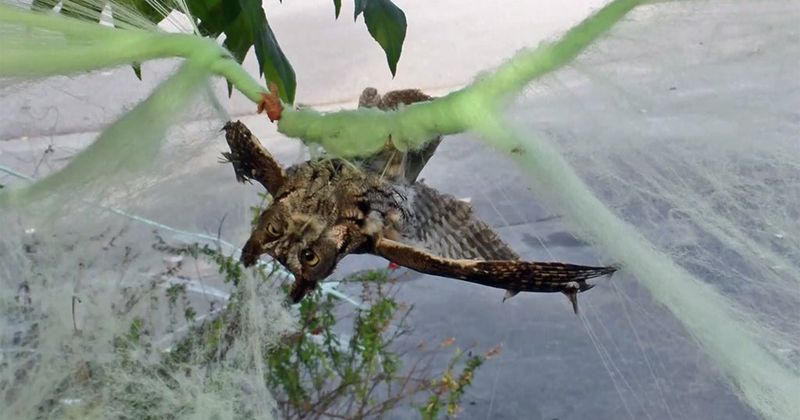
Spotting a bird or bat caught in webbing can make your heart race. Take a deep breath, because calm action helps the most.
Your first move should be calling a licensed wildlife rehabilitator. These trained pros know how to safely free tangled animals.
The New York State Department of Environmental Conservation keeps a helpful list online. Search for the DEC wildlife rehabilitator directory to find someone nearby.
Resist the urge to untangle the animal yourself. Pulling at fibers can cause more injuries and stress.
Safety matters for you, too. Bats and skunks can carry rabies, so do not touch them with bare hands.
Here is a safer method many rehabbers suggest. Carefully cut the section of web around the animal, leaving it attached.
Place the animal and webbing into a cardboard box with air holes. Line the bottom with a soft towel or paper towels.
Keep the box in a quiet, dark, warm spot. Darkness helps frightened animals stay calmer while you arrange help.
Skip offering food or water during the wait. Wrong foods can hurt wild animals, and rehabbers will handle feeding properly.
Save the rehabber’s number in your phone before Halloween. Having it ready saves precious minutes in a stressful moment.
Quick action gives a trapped animal its best chance. With your help, that bird or bat may soon fly through the sky again.