The Desert Bat That Carries Pollen Between Saguaro Flowers
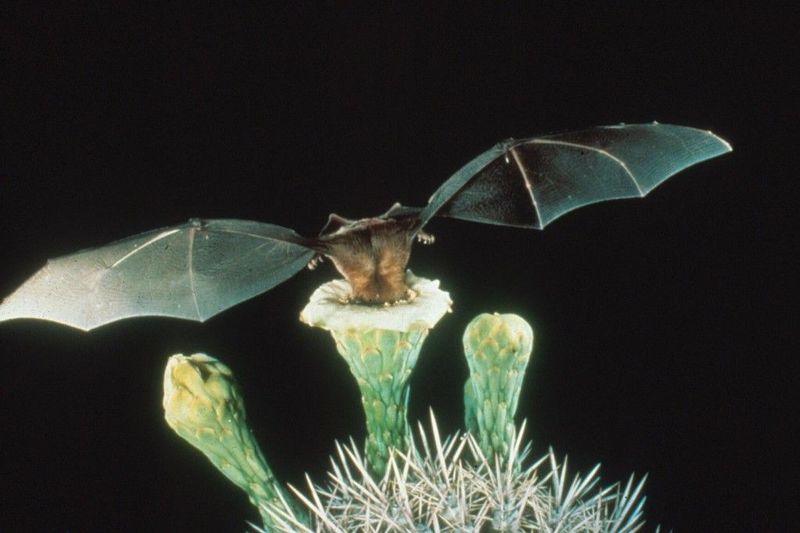
Picture a saguaro in late spring, its crown of white blooms glowing after dark. A small bat with a long snout swoops in, pokes its face into a flower, and laps up nectar.
Pollen sticks to its fur and may travel to the next bloom. That one nightly visit is part of a bigger, shifting story about how Arizona’s most famous cactus makes fruit.
Saguaro flowers open on a short night schedule
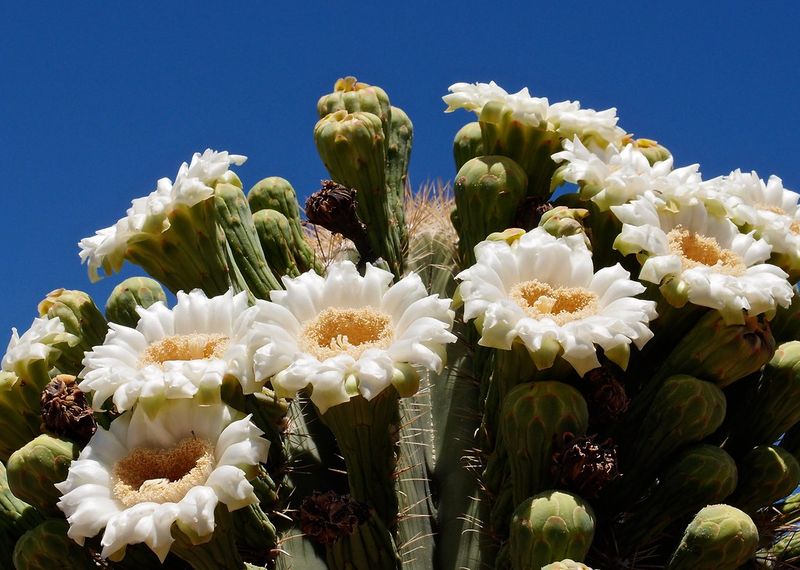
Saguaro blooms keep odd hours. The creamy white flowers open at night and stay fresh for roughly 18 to 24 hours, so each one has a very small window to be visited.
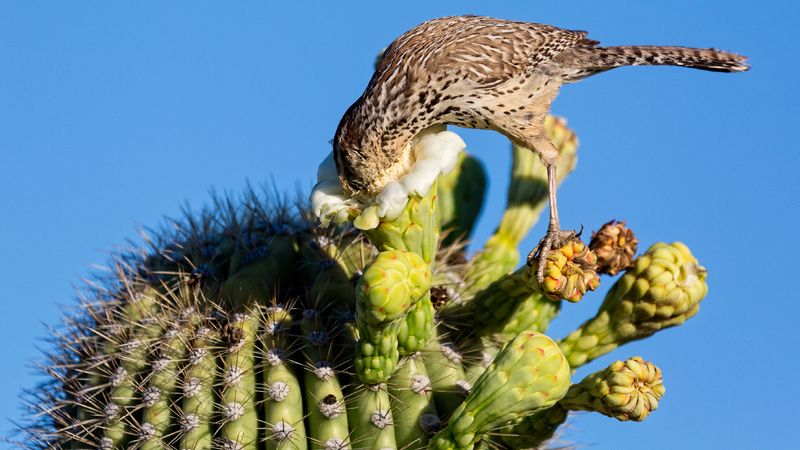
A U.S. Forest Service species review notes that birds, bats, and bees can all pollinate these flowers.
That short schedule shapes who shows up. Night visitors such as bats get the first shift, when the blooms are freshly open and full of nectar.
Once the sun rises, doves, other birds, and honeybees take over the same flowers.
Next time you walk a desert trail in May or June, look at the very top of a saguaro, where the blossoms cluster. Wilted flowers by midday are a clue that the cactus has already hosted a busy night and a busy morning.
The bat is one guest in a crowd, and a fascinating one.
The lesser long-nosed bat follows desert blooms
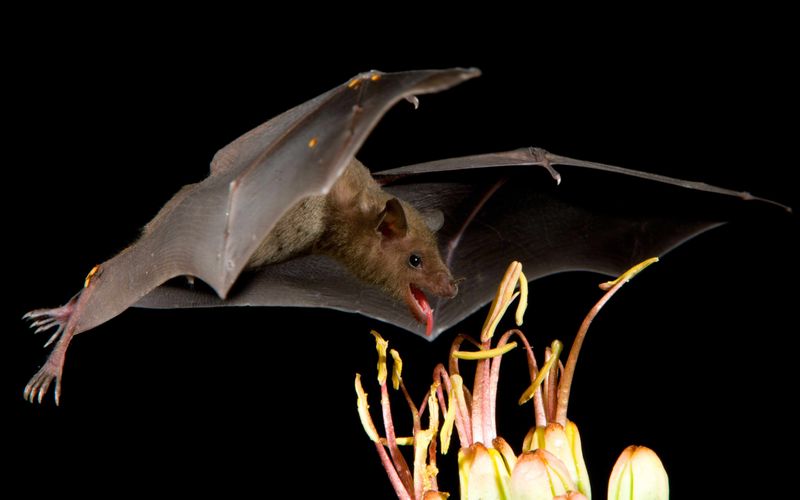
Few mammals are as tied to flowers as the lesser long-nosed bat. Its long snout and brushy tongue are built for reaching nectar, and its menu also includes pollen.
In some populations, these bats travel north as the season advances, following whatever cacti and agaves are in bloom, as described by Saguaro National Park.
Not every population moves the same way, so the exact route depends on which bats you are talking about. What stays consistent is the link to blooming plants through the warm months.
Flowers are only part of the picture. Later in the season, the bats also eat the fruit of saguaro and organ pipe cactus, according to Organ Pipe Cactus National Monument.
Sipping a flower and eating ripe fruit are different meals, and the bat takes both.
A nectar visit can carry pollen to another flower
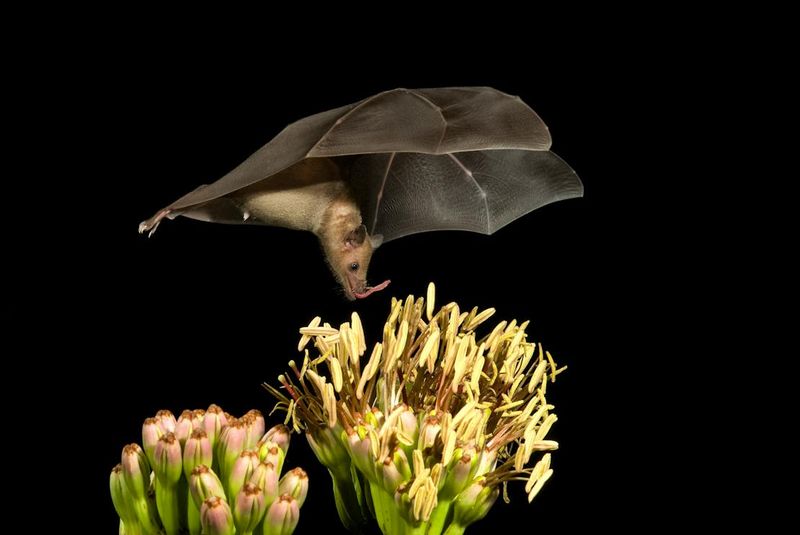
Watch the feeding closely and the mechanics become clear. To reach the nectar, a bat pushes its face deep into the wide flower.
Pollen brushes onto its head and fur, as National Park Service materials describe.
Then the bat moves on, often to another bloom on the same cactus or a nearby one. Some of that pollen can rub off on the next flower’s sticky center, which is how pollen gets moved around.
Nothing here requires the bat to know what it is doing. It is after a sugary meal, and the pollen is simply along for the ride.
The result is a handoff that happens as a side effect of dinner.
A bat can also groom itself and swallow some pollen, so not every grain makes it to a new flower. Moving pollen is something that can happen while a bat feeds, not something guaranteed with every visit.
Your Arizona Garden Changes Every Week. Your Plan Should Too.
Gardening in Arizona changes quickly throughout the season. Every Friday you’ll receive a simple weekly plan showing exactly what to plant, prune, fertilize, harvest, and protect so you never miss the right timing.
Other visitors share the saguaro’s pollination work
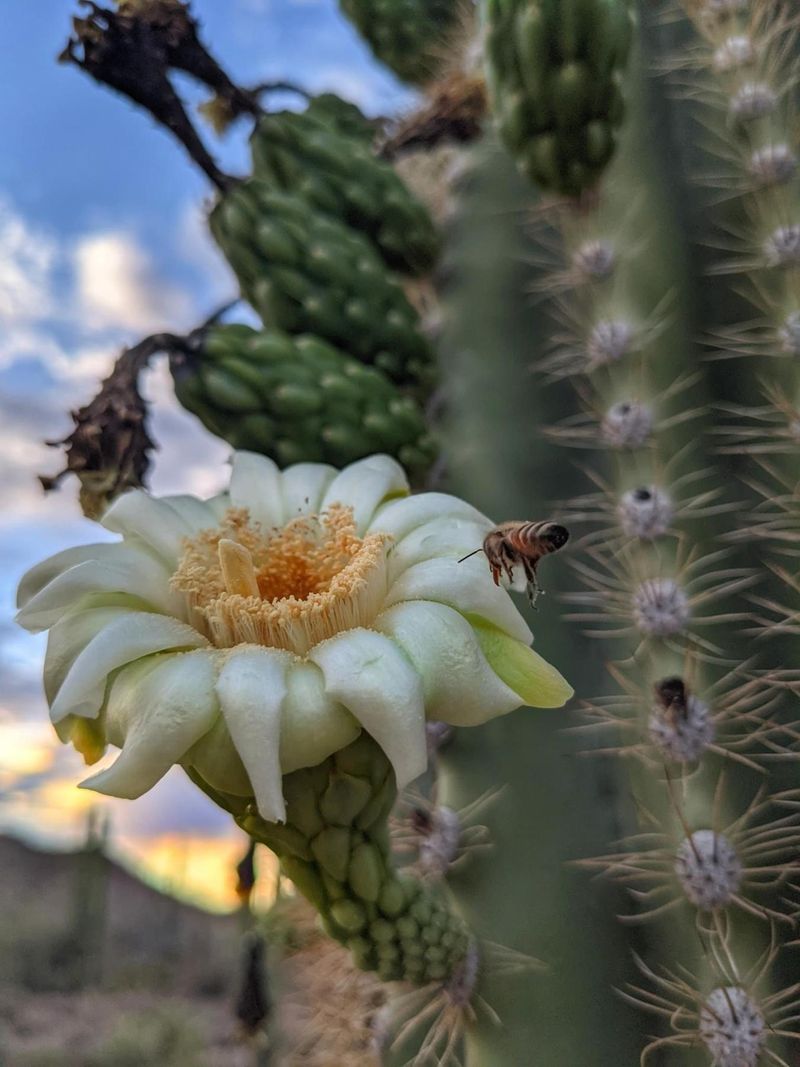
Saguaro pollination is a team effort. Birds, bats, and insects all take part, and the Forest Service review reports that the bat’s contribution can differ a lot from one year to the next.
A good example comes from an eight-year study near Bahía de Kino, Sonora. There, daytime visitors accounted for most saguaro fruit set in seven of the eight years.
Bats predominated in just one year. Honeybees and birds did the daytime work.
Keep those results tied to that place and those years. They do not give a number for every saguaro in Arizona.
Also, do not swap in another cactus. In the same research, bats mattered much more for fruit set in cardón than in saguaro.
For saguaros, the bat is one valued visitor among several.
A meaningful role is not the same as holding the desert together
Pollination matters because it leads to fruit and seeds. Those red fruits feed desert wildlife and people, and the bat’s visits are part of how many of them form.
Still, a bigger claim runs into a problem. In a classic cage study of saguaro, researchers who tested doves, bats, and honeybees concluded that pollination was not a limiting factor in saguaro repopulation.
In plain terms, young saguaros are not held back mainly by a shortage of pollen delivery.
That fits with the shared, shifting system described earlier, where several visitors cover the job in different years.
So the bat’s role is real and worth celebrating, but it does not mean bats alone keep saguaros alive, and it does not mean they sustain the whole Sonoran Desert. The desert depends on soil, rain, nurse plants, and countless other relationships too.
A recovered bat still needs room to thrive
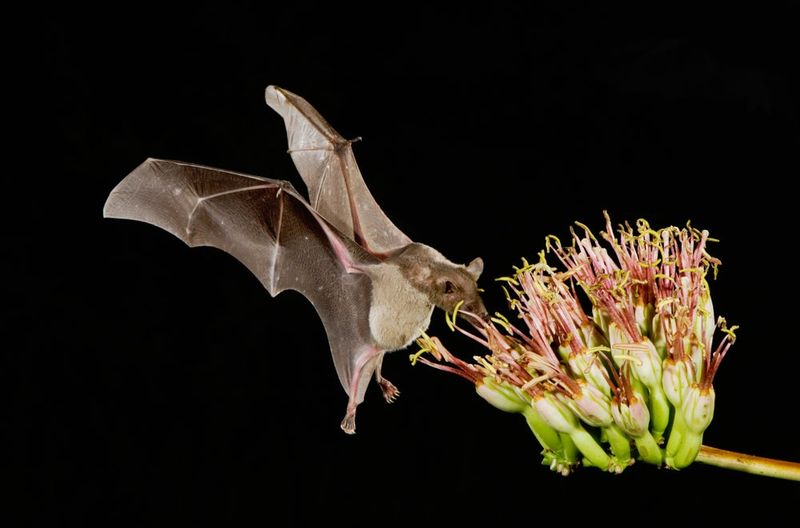
The lesser long-nosed bat was federally delisted after recovery, effective May 18, 2018, according to the U.S. Fish & Wildlife Service.
Delisting is good news, but monitoring and habitat conservation still matter.
If you see a bat, enjoy it from a distance and never handle it. Keep children and pets away from any sick or grounded bat.
If someone is bitten, seek medical care promptly and contact local health officials.
For roost worries or exclusion work, check Arizona Game & Fish guidance first, since Arizona bats are protected.
On a warm desert night, a small shadow slips past a pale flower, and a bit of pollen goes with it.