Swirling Clouds Of Birds Over Georgia At Dusk Have A Name And A Purpose
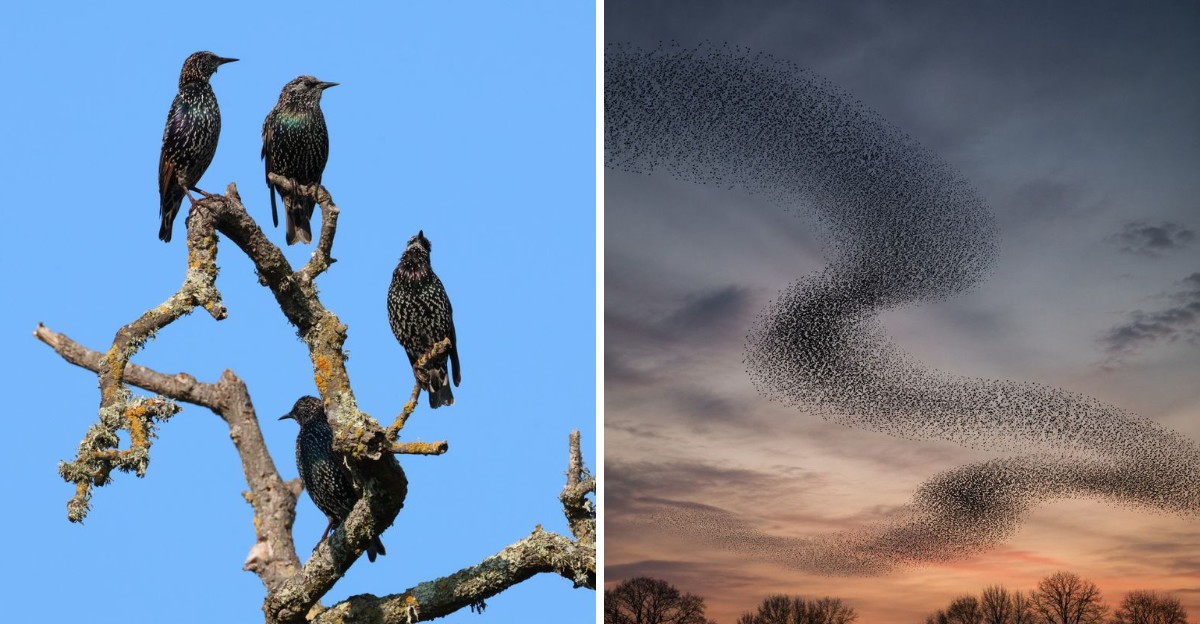
Thousands of small dark birds rising together near sunset can look more like one shifting shape than a flock. The whole mass bends, separates, and comes back together before suddenly changing direction again.
These swirling gatherings become especially noticeable in late fall and winter, when large numbers of birds gather at communal roosts in parts of Georgia.
From a distance, the movement seems almost impossible to follow.
You might notice a flock above an open field or near a wooded area just as daylight begins fading. Sometimes the birds spread across the sky before gathering into a much tighter formation.
The display can continue for several minutes, drawing attention from anyone who happens to be nearby.
Then the entire flock may suddenly descend toward its nighttime resting place. What looks like a chaotic rush of wings is actually a remarkable seasonal spectacle.
1. Those Shape-Shifting Flocks Have Their Own Special Term
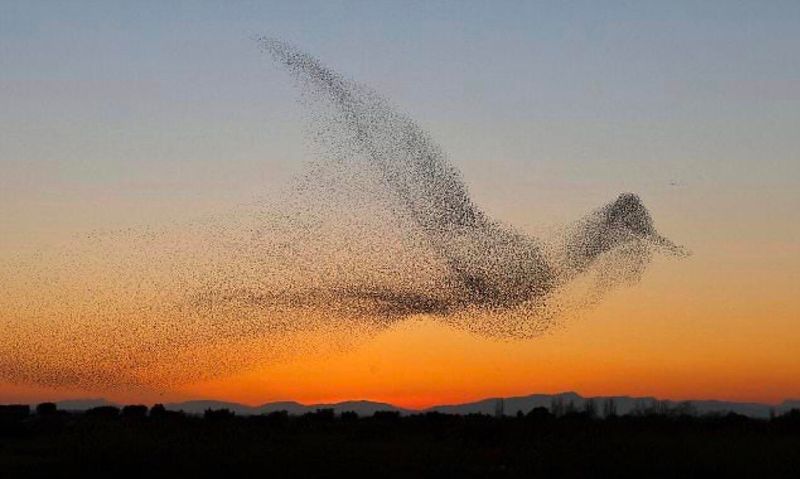
Call it a murmuration. That one word describes the swirling flight of large starling flocks just before they settle in to roost for the night.
Some people think the name comes from the soft rushing sound that thousands of wings make together.
Stand close enough to a big flock, and you may hear it yourself. It sounds a bit like a breeze moving through dry leaves, even on a still evening.
Birdwatchers often use the word loosely for other species that bunch up and wheel across the sky. Still, the classic murmuration belongs to starlings, and that is what most experts mean.
Knowing the right term helps when you want to learn more or report a sighting.
Search the word along with your county name, and you might find local posts with photos and times. Bird clubs and online groups in Georgia sometimes share these reports during the cooler months.
You can also use apps like eBird to log what you see. Your notes help others figure out where flocks are gathering each season.
Every murmuration looks a little different from the last one.
Shapes can stretch into ribbons, pinch into hourglasses, or spread into wide blobs. Weather, flock size, and nearby predators may all play a part in how a display looks on a given night.
2. European Starlings Are The Birds Best Known For This Behavior
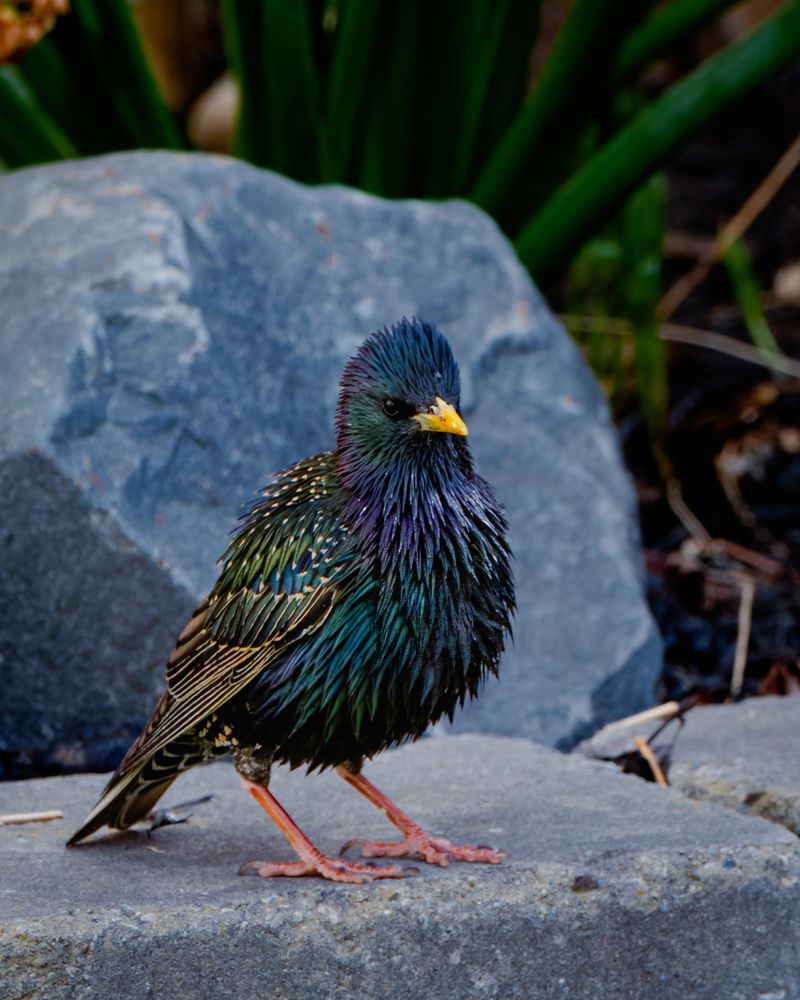
Glossy, speckled, and a little noisy, European starlings are the stars of the show. They are about the size of a robin but have shorter tails and pointed, triangle-shaped wings.
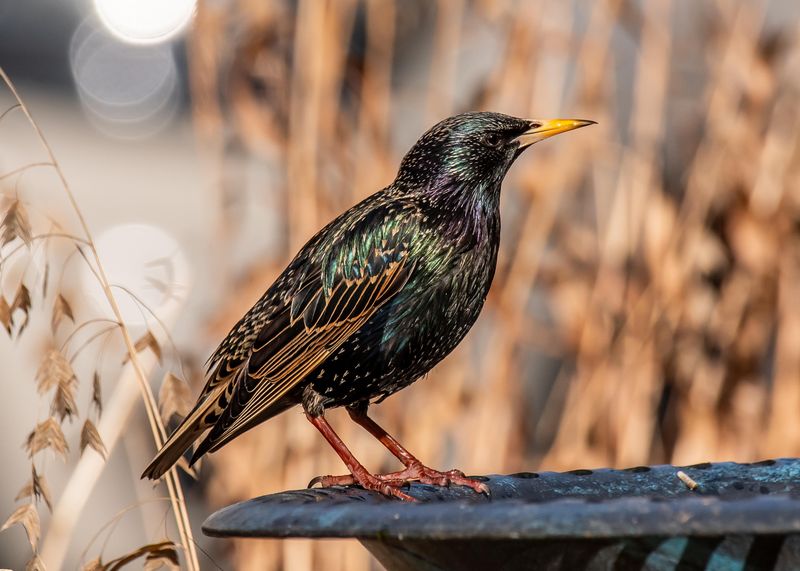
In fall and winter, their dark feathers carry bright white spots that look like tiny stars.
By spring, many of those spots wear away. Their feathers then shine purple and green in the sun, and their bills turn yellow.
Starlings are not native to North America.
People released them in New York in the 1890s, and the birds spread across most of the country within decades. Today they are common across Georgia in towns, farms, and parking lots.
Because they are an introduced species, starlings can cause problems. They compete with native cavity nesters like bluebirds and woodpeckers for nest holes.
Your Georgia Garden Changes Every Week. Your Plan Should Too.
Gardening in Georgia changes quickly throughout the season. Every Friday you’ll receive a simple weekly plan showing exactly what to plant, prune, fertilize, harvest, and protect so you never miss the right timing.
Large flocks can also damage crops or leave messes around roost sites.
Even so, watching them fly together is one of the more striking sights in the winter sky. You can enjoy the show while still understanding why the birds have a mixed reputation.
Blackbirds, grackles, and cowbirds sometimes join starlings in big mixed flocks.
Those groups may look similar from far away. Binoculars help you spot the starling’s short tail and pointy wings.
3. Displays Peak On Fall And Winter Evenings As Flocks Gather Near Roosts
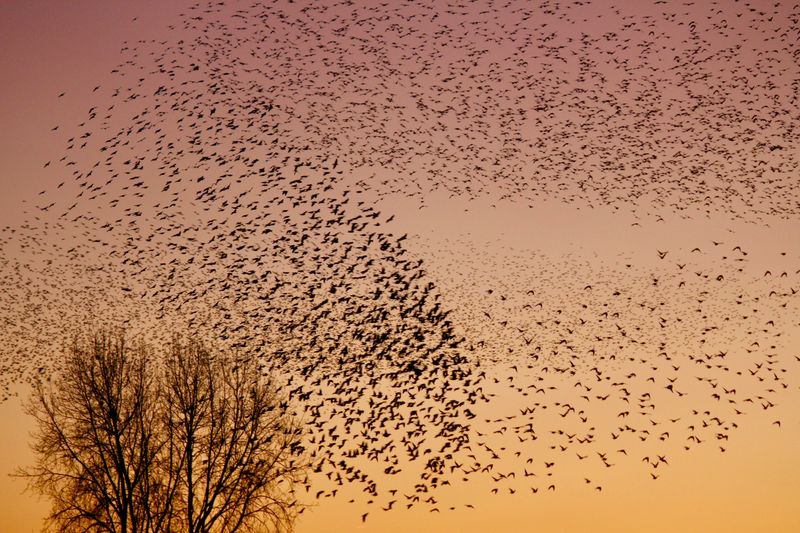
Timing matters more than luck here. Murmurations tend to be most common from late fall through winter, when starlings gather in large groups to spend the night together.
During spring and summer, the birds pair off and focus on nesting, so huge flocks are less likely.
Once breeding season ends, young and adult starlings start bunching up. Their numbers can swell as cooler weather settles in.
Evening is the time to watch.
Flocks often begin arriving near a roost in the half hour or so before sunset. Small groups stream in from feeding areas and merge into one larger cloud.
Not every evening brings a dramatic display, though. Wind, rain, and cloud cover can change how long the birds swirl before dropping into cover.
Some nights the show lasts several minutes, while other nights the flock simply drops straight in.
In Georgia, winter weather is milder than up north, which may draw migrating starlings from colder states. That can mean bigger flocks in some areas, though numbers vary from year to year.
Plan to arrive early and stay until the sky darkens.
Bring a warm layer, since evenings cool off fast once the sun goes down. Patience is often rewarded with a few unforgettable minutes.
4. Open Farmland And Marshes Near Roost Sites Make Good Viewing Spots
Wide skies make all the difference. A murmuration over a cluttered street is hard to follow, but over an open field you can watch the whole shape move.
Starlings often feed in pastures and crop fields during the day.
At dusk, they may head toward thick cover like marsh reeds, dense stands of trees, or even buildings and bridges. Roosts near farmland can give you a clear view of the flock coming in.
Across Georgia, look near large farm fields, wetland edges, and places with wide views of the western sky. Coastal marshes may also attract flocks, though exact spots change.
Roost sites can shift from season to season, so last year’s hot spot may be quiet this year.
Ask around before you go. Farmers, local birders, and park staff often notice where big flocks have been showing up lately.
Always respect private property and posted signs.
Pull fully off the road if you stop to watch from a car. Country roads can be narrow, and other drivers may not expect someone parked near a field at dusk.
Keep some distance from the roost itself. Getting too close can disturb the birds, and the view is often better from farther back anyway.
5. Each Bird Responds To A Handful Of Its Closest Flockmates
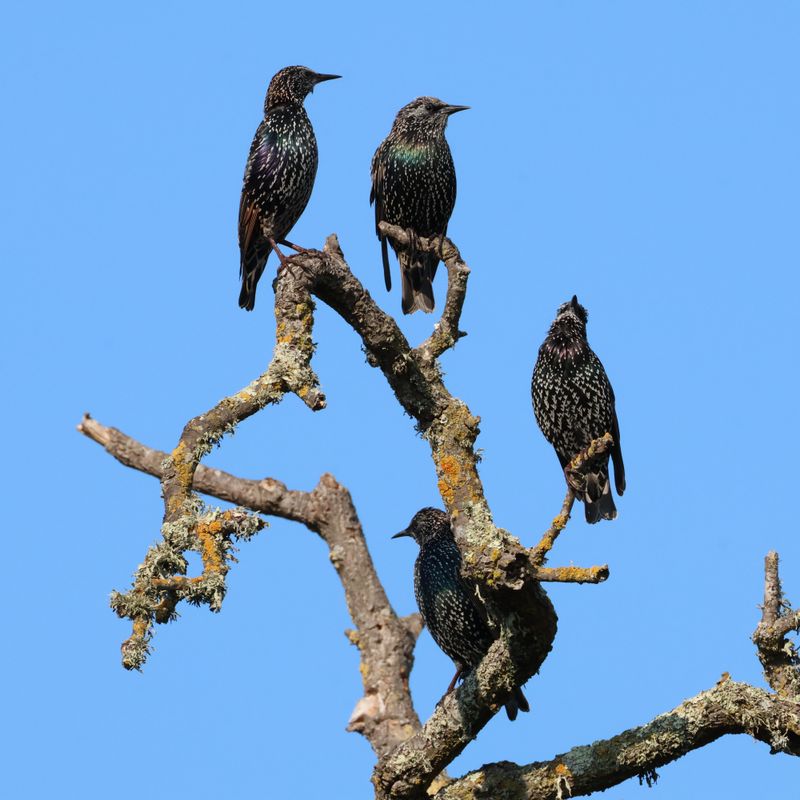
No leader runs the flock. Instead, each starling seems to pay attention to a small number of nearby birds and copies their speed and direction.
Scientists who studied flocks in Rome found that each bird tracked roughly six or seven neighbors.
That number did not change much whether birds were packed tight or spread out. What mattered was how many neighbors a bird watched, not how far away they were.
Think of it like walking in a crowded hallway at school.
You do not watch everyone in the building. You just react to the few people right around you, and somehow the whole crowd keeps moving without many bumps.
Starlings do something similar but much faster. Their quick reactions let thousands of birds turn almost as one.
Collisions do seem uncommon, though researchers are still learning the fine details.
Here in Georgia, you can test your eyes on this during a display. Pick one small edge of the flock and watch how a turn there spreads to birds beside it.
Binoculars can help, but a wide view with bare eyes works too.
Watching closely turns a pretty sight into a puzzle you can study. Kids often enjoy spotting where each new turn seems to begin.
6. Ripples Of Movement Can Travel Across The Whole Flock In Seconds
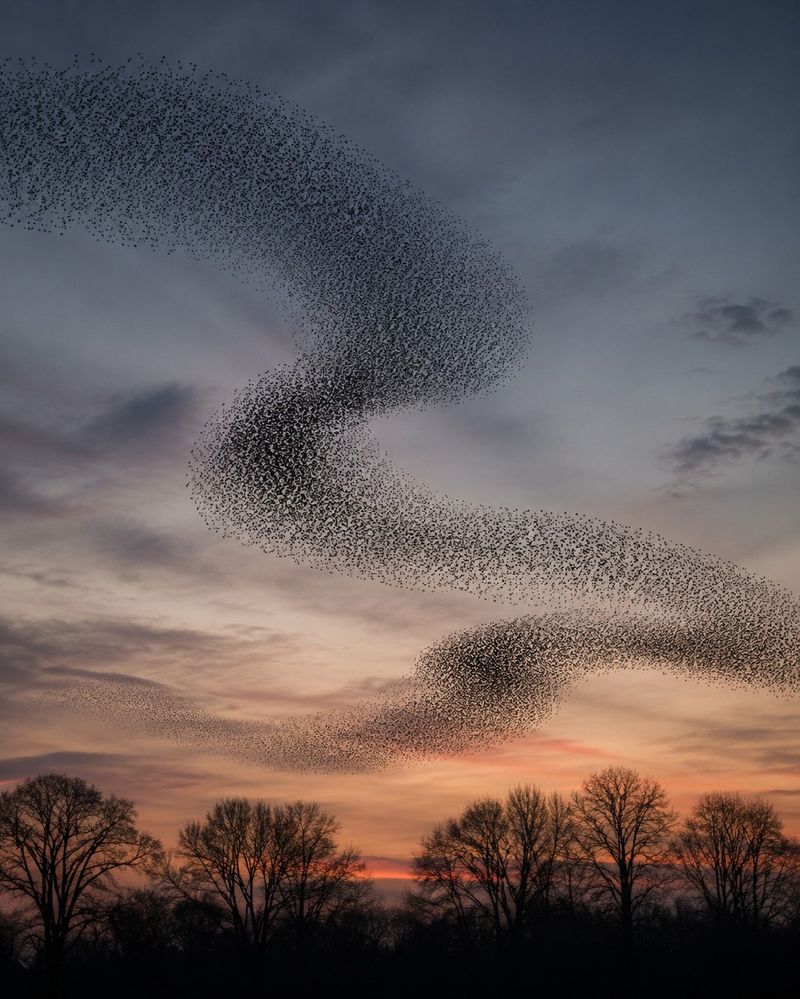
Watch for a dark wave rolling through the cloud. That ripple is a change in direction passing from bird to bird faster than you might expect.
When one area of the flock turns, nearby birds react, then their neighbors react, and the change spreads outward.
Researchers have found these waves can cross a large flock in under a second or two. Speed depends on the flock’s size and shape.
The dark band you see often happens because birds tilt their wings at the same moment. From the ground, more of their bodies or wings face you, so that part of the flock looks darker.
Scientists sometimes compare the effect to a wave in a sports stadium.
Each fan only stands up when the person beside them does. Together, though, the motion sweeps around the whole arena.
Some flocks seem to send waves away from a spot where a hawk dives in. That pattern may help birds get out of the way, though not every ripple has an obvious cause.
Try filming a display on your phone while visiting a Georgia field this winter.
Slowing the video down later can reveal waves you missed live. It is a simple way to appreciate how quickly the birds respond.
7. Safety In Numbers Against Hawks And Falcons Is One Likely Reason
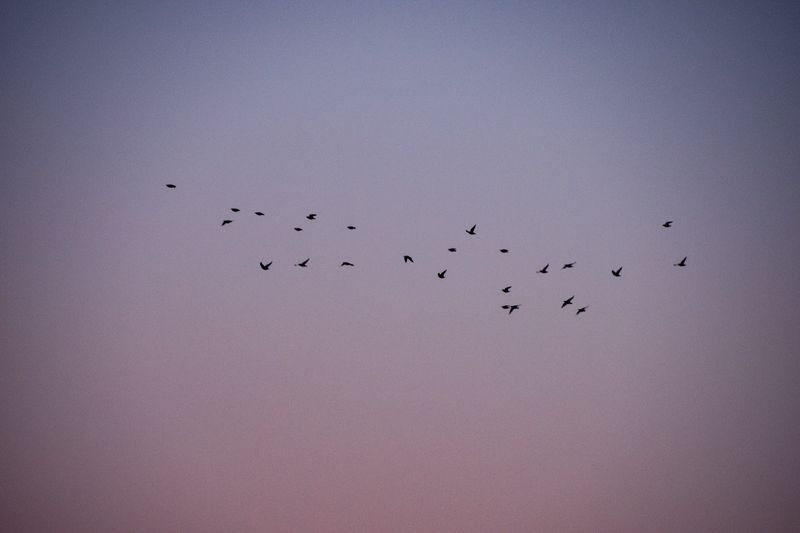
Hawks have a hard time picking one target out of a swirling crowd. Many scientists think that confusion is a big part of why murmurations happen.
Predators like peregrine falcons, Cooper’s hawks, and merlins hunt small birds in open air.
A lone starling is easier to chase down. Inside a huge moving flock, each bird has a lower chance of being the one caught.
Displays sometimes grow more intense when a raptor shows up. Birds may pack tighter or form sudden holes and waves as the hunter passes through.
Still, predators are not the full story.
Some experts suggest murmurations may help birds signal a roost location to others nearby. Big gatherings might also help them stay warm or share information about food, though those ideas are less certain.
Plenty of displays happen with no predator in sight. Weather, light, and flock size may all shape the behavior on any given evening.
Next time you are outside in Georgia at dusk, scan the edges of the flock for a larger, faster bird.
Spotting a falcon or hawk can explain a sudden twist in the cloud. Even if you see none, the swirl is still worth a few chilly minutes of your evening.