Halloween Hay Bales Can Bring Trouble Into Georgia Gardens Once They Become Mulch
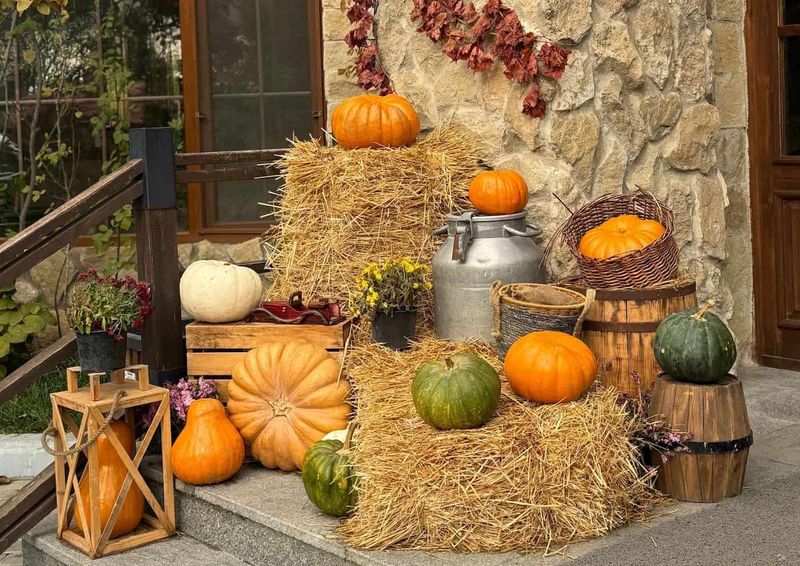
Hay bales stacked by the front steps for Halloween often end up spread across garden beds once November arrives.
Mulch made from leftover decorations sounds like a thrifty way to finish the season. Hay and straw are not the same, though, and the difference shows up later.
Hay is usually cut with seed heads attached, so one bale can scatter a surprising number of weed seeds.
Some bales also carry hidden problems from the fields where they grew, and those problems are impossible to spot by eye.
Vegetable beds tend to feel the effects most, sometimes months after the hay is tilled in or left on top.
Ask the seller where a bale came from before it touches your soil. One question can spare you a frustrating surprise when spring planting begins in your Georgia garden.
1. Spreading A Porch Bale Over Beds Can Sow Unexpected Problems
Free mulch sounds like a win until weeds start sprouting in rows you just cleaned up. A decorative bale can carry more than dried grass into your garden beds.
Hay is typically cut from pasture or forage fields, and those plants may already hold ripe seeds when they are baled.
Once you scatter that hay over soil, the seeds get a fresh place to settle in. Warm spells and rain in Georgia can wake some of them up sooner than you might expect.
Weeds are the most likely trouble, but they are not the only one. In some cases, hay comes from fields sprayed with herbicides that break down very slowly.
Those chemicals are designed to control broadleaf weeds in grass crops, so the grass itself grows fine.
Problems can appear later, when the hay or manure from animals that ate it ends up near vegetables. Sensitive plants may respond to very small amounts of residue.
None of this means every porch bale is a problem waiting to happen. Plenty of hay is clean enough, and plenty of gardeners use it with few issues.
Still, it helps to slow down before spreading it everywhere.
A simple first step is to keep decorative hay out of vegetable beds unless you know its history. Using it under shrubs or along a fence line is a lower-stakes way to put it to work.
2. Hay And Straw Are Not The Same Thing
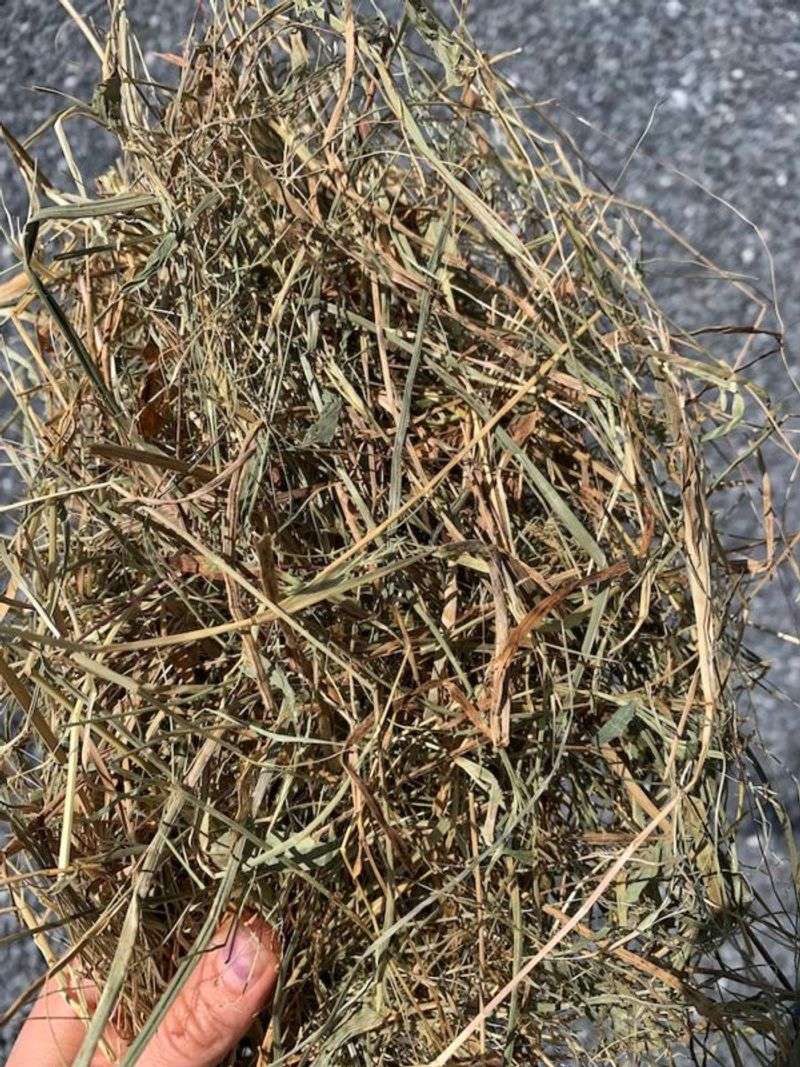
Plenty of folks use the words hay and straw like they mean the same thing. In the garden, the difference matters quite a bit.
Hay is grass or legume plants cut whole and dried to feed livestock.
Because hay is harvested for its leaves and nutrition, it often contains seed heads along with stems. Bermudagrass, fescue, and other forage grasses are common sources in Georgia and across the South.
Straw is a different product made from the leftover stalks of grain crops like wheat, oats, or barley.
Farmers harvest the grain first, which removes most of the seed. What remains is mostly hollow, golden stems that are tougher and lighter than hay.
Your Georgia Garden Changes Every Week. Your Plan Should Too.
Gardening in Georgia changes quickly throughout the season. Every Friday you’ll receive a simple weekly plan showing exactly what to plant, prune, fertilize, harvest, and protect so you never miss the right timing.
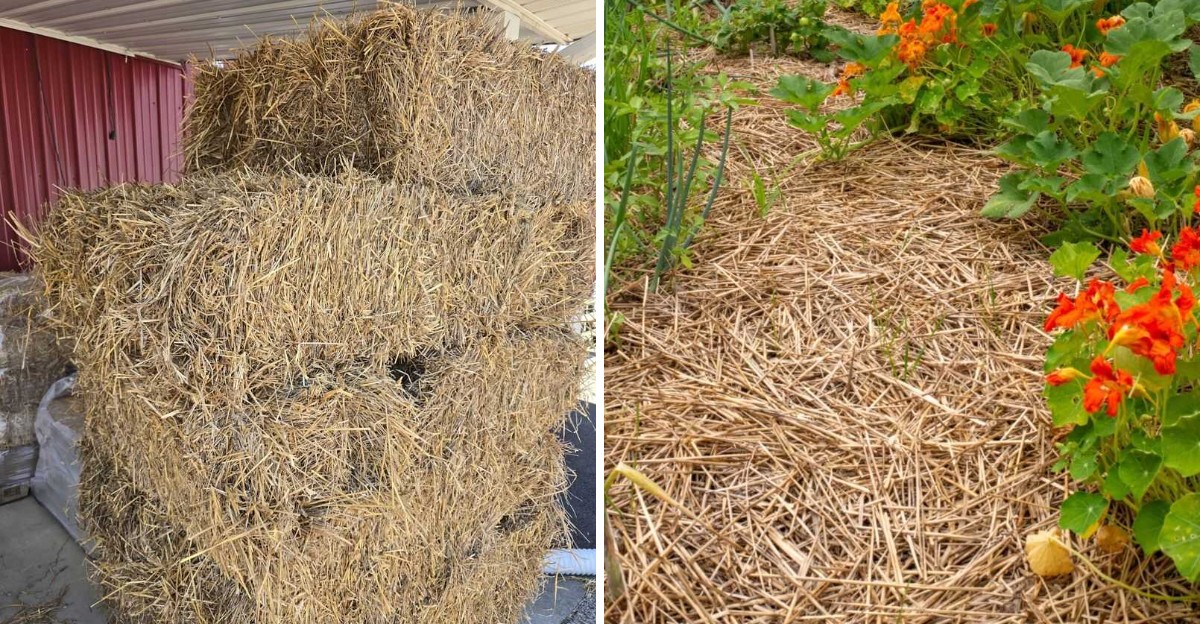
You can usually tell them apart by looking closely. Hay tends to look greener or tan, with leafy blades and soft texture, while straw is pale yellow and stiff.
Smell can help too, since hay often has a sweeter, grassy scent.
Store labels are not always reliable, and some decorative bales are sold simply as fall bales. Asking the seller what crop the bale came from can clear up the confusion quickly.
Knowing which one you have is the first step toward deciding where it belongs. Straw is generally the safer pick for vegetable beds, though it is not entirely free of weed seeds or residue concerns either.
3. Seed Heads Baled With Hay Can Fill Beds With Weeds
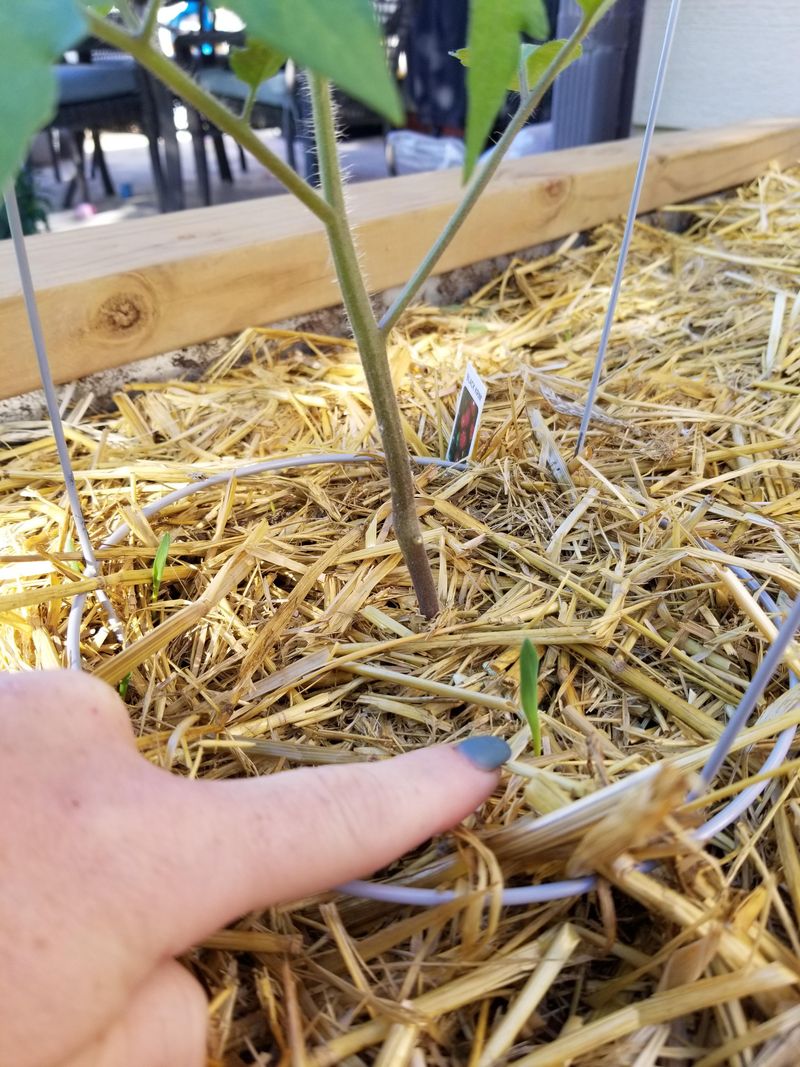
Picture a tidy bed in March suddenly covered in grassy sprouts you never planted. Hay mulch is a common culprit behind that kind of surprise.
Forage grasses are often cut at a stage when some plants have already formed seed heads.
Those seeds ride along inside the bale, tucked between leaves and stems. When you spread the hay, you are spreading the seeds too.
Not every seed will sprout, and results depend on the grass type, moisture, and how thickly you apply the hay. Still, even a modest number can turn into a chore.
Grassy weeds can be tough to pull once their roots settle in among your vegetables or perennials.
Georgia’s mild winters in the southern half of the state may give some weeds an early start. In the colder mountain areas, sprouting may wait until soil warms in spring.
A few habits can reduce the trouble without giving up on hay entirely.
Laying cardboard or several sheets of newspaper under the hay can help smother some sprouts. Checking beds every week or two lets you pull seedlings while they are small and easy to remove.
Some gardeners let hay sit and weather for a season before using it, which may allow some seeds to sprout and be removed first. Composting in a hot pile can also reduce seed survival, though home piles do not always heat evenly.
4. Some Bales Come From Fields Treated With Long-Lasting Herbicides
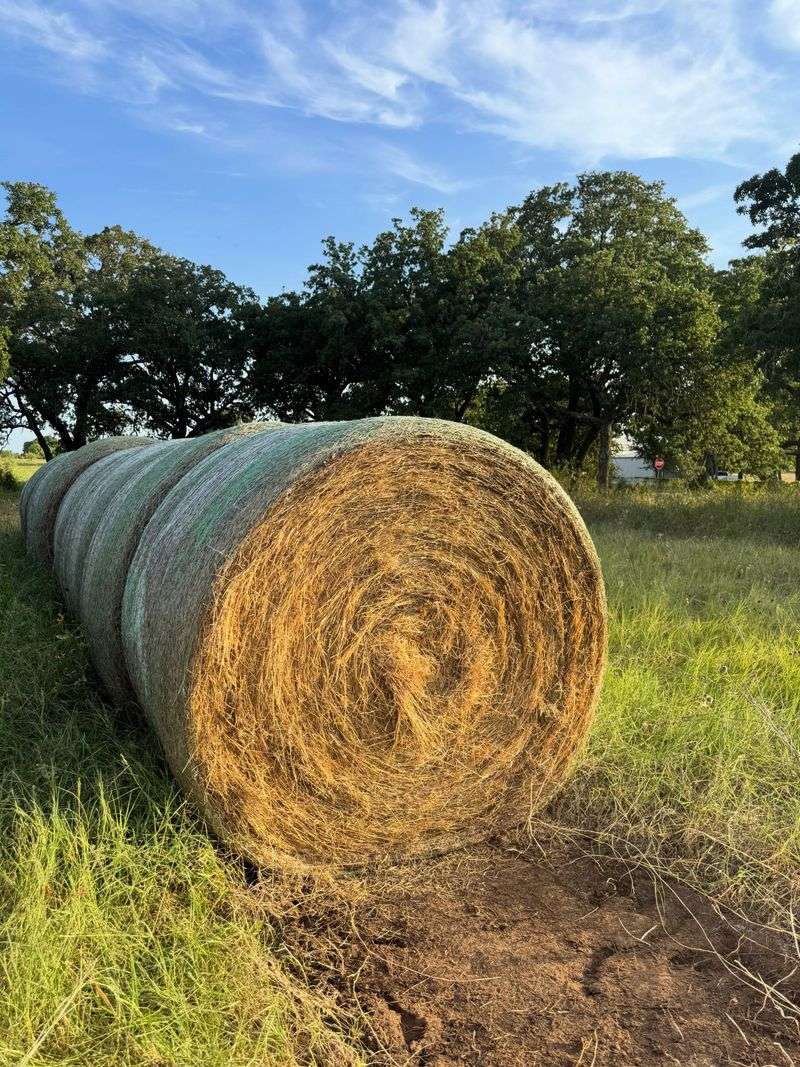
Weeds you can see. Herbicide residue you cannot, and that is what makes it tricky.
Some pasture and hay fields are treated with herbicides that target broadleaf weeds while leaving grasses unharmed.
A group of these products, sometimes called pyridine carboxylic acid herbicides, can persist in hay and plant material. Active ingredients in this group include aminopyralid, clopyralid, and picloram.
These chemicals do not break down quickly inside dried hay. They can also pass through livestock and remain in manure.
Composting does not reliably remove them, and residues may stay active for a long time depending on conditions.
Product labels for some of these herbicides warn against using treated hay, straw, or manure in gardens or compost for vegetables. That warning is part of why Extension specialists urge caution with hay of unknown origin.
Georgia has a large cattle and hay industry, so treated forage fields are part of the landscape here. That does not mean any single bale was sprayed.
Odds vary widely from farm to farm, and many growers use other weed control methods.
Since you cannot spot residue by looking at hay, the only practical options are asking the source or running a simple test. Both steps are covered later, and they can save a season of frustration.
5. Sensitive Garden Crops Like Tomatoes May Show Twisted Growth
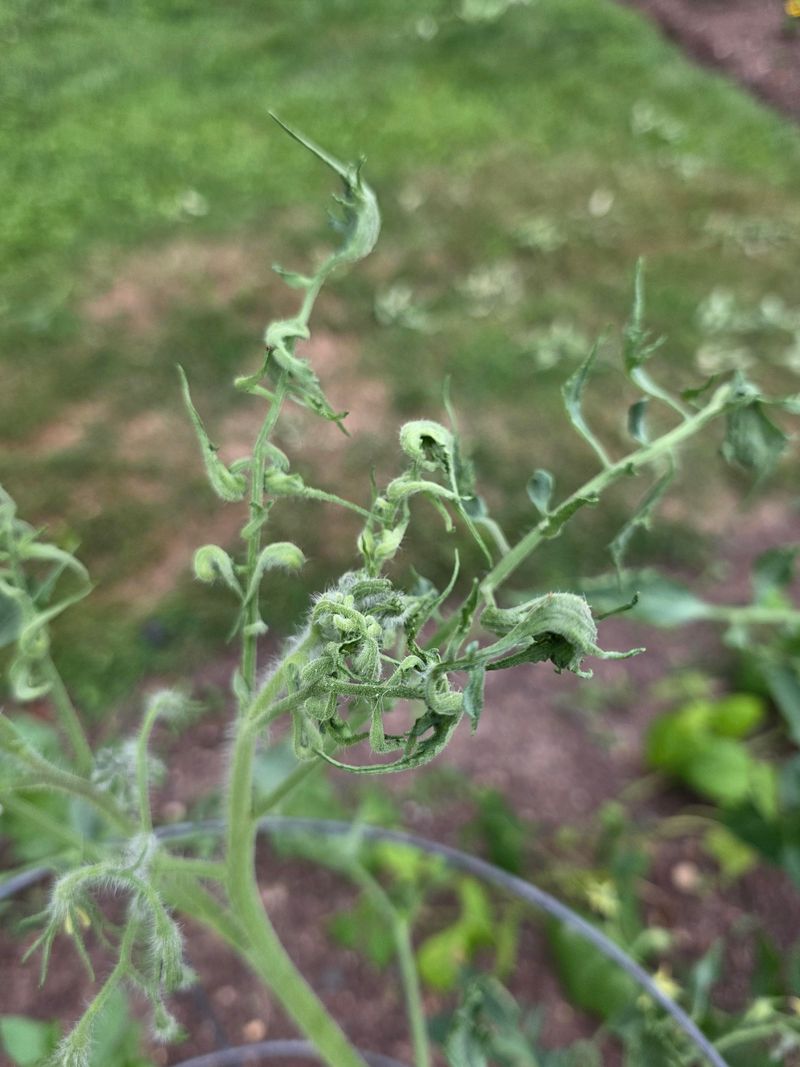
Curled, cupped tomato leaves can make a gardener assume the worst about disease. Herbicide residue is one possible cause that often gets overlooked.
Tomatoes, peppers, potatoes, beans, peas, and lettuce are among the crops known to react to pyridine herbicides.
Symptoms may include leaves that cup or roll, new growth that twists or looks stretched, and stems that bend oddly. Fruit set can drop, and plants may struggle to produce much at all.
Grasses and corn usually show little reaction, which is how residue can hide in a bed for a while.
Here is the catch. Twisted growth has other explanations too.
Viruses, drift from a neighbor’s lawn spray, heat stress, and some insects can cause similar symptoms. Looking at what changed recently in the bed helps narrow things down.
If damage appears soon after adding hay, hay-fed manure, or compost made with them, residue becomes a stronger suspect.
In Georgia, tomatoes are a favorite summer crop, so many gardeners first notice trouble there. Reaching out to your local county Extension office can help sort out the cause before you make big changes.
Removing contaminated mulch and planting less sensitive crops like corn or grasses for a while are options some specialists mention. Results depend on how much residue is present and your soil conditions.
6. Knowing The Bale’s Source Helps You Judge The Risk
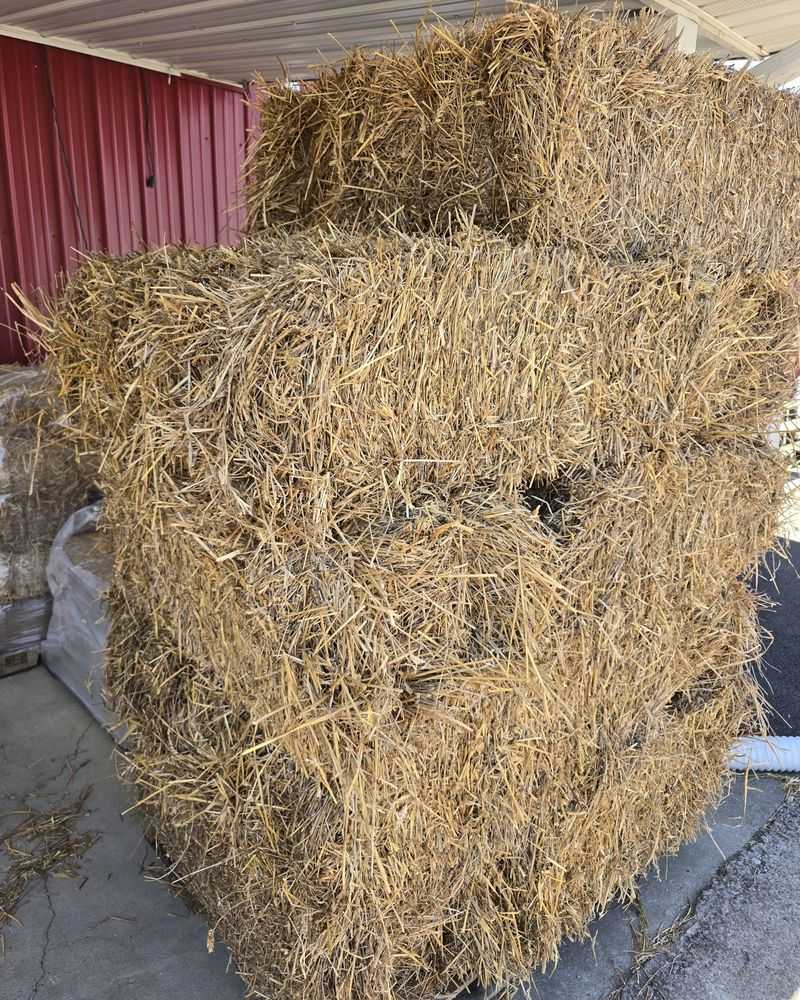
A quick question at checkout can tell you more than a close look at any bale. Where did this hay come from?
Bales sold at garden centers, grocery stores, and roadside stands in Georgia come from all kinds of farms.
Some sellers know their supplier well and can tell you whether the field was sprayed. Others simply buy decorative bales in bulk and may not have that information.
Try asking a few specific things. What crop is it, and was any broadleaf herbicide used on the field?
A farmer who grows their own hay is usually the best person to ask, since they know their spray records.
When answers are vague, a simple bioassay can help. Mix some hay or compost into potting soil, then plant a few pea or bean seeds in pots alongside a clean comparison pot.
Watch the seedlings for a few weeks after they form several sets of true leaves. Cupped or twisted growth in the test pots compared to the clean pots suggests possible residue.
A test like that is not perfect, but it is cheap and easy to set up indoors over winter.
If you still feel unsure, use the hay somewhere safer. Pathways, ornamental grass areas, and spots far from vegetables carry much less risk.
7. Wheat Straw Makes A Lower-Risk Choice For Garden Mulch
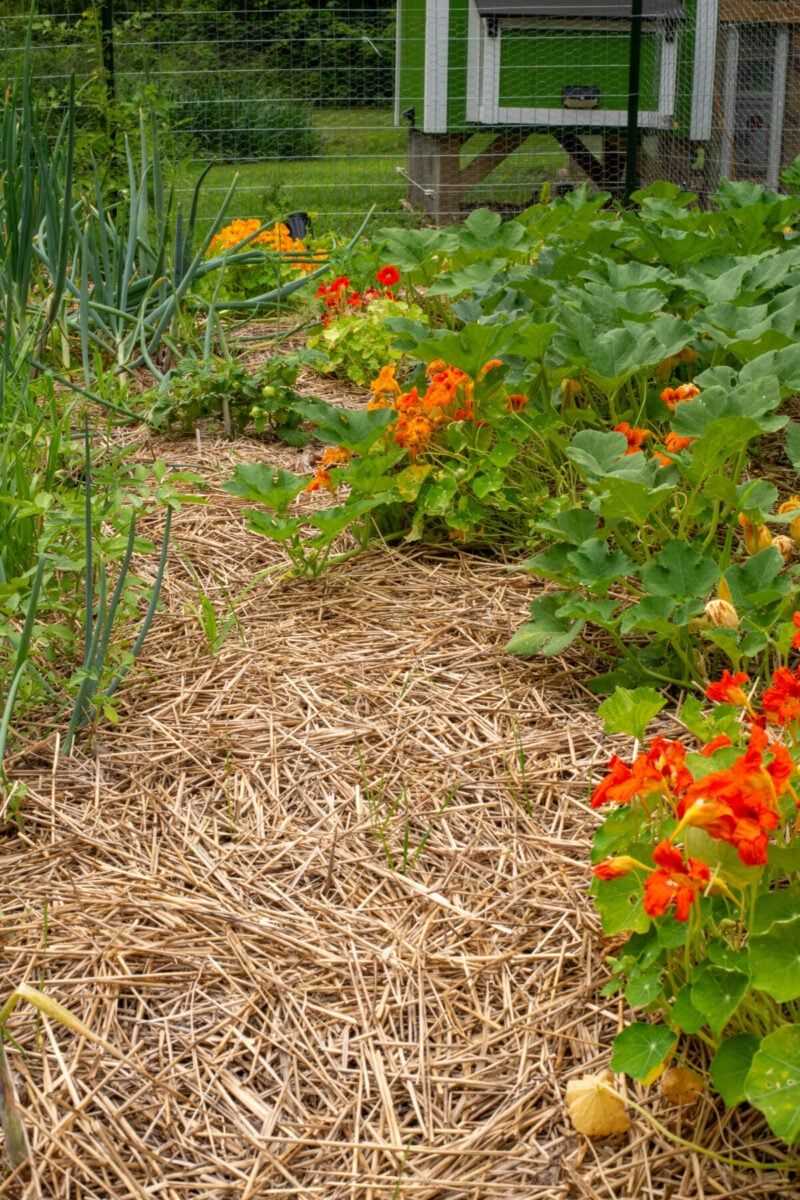
Golden, crunchy, and mostly seed-free, wheat straw has earned its spot in vegetable gardens. It is a popular mulch for good reasons.
Since the grain is harvested before baling, straw usually carries far fewer seeds than hay.
A few stray wheat seeds may sprout, but they tend to be easy to spot and pull. Oat and barley straw can work similarly.
Straw also lets water soak through while slowing evaporation from the soil surface. In hot Georgia summers, that can help reduce how often you need to water.
As it breaks down, it adds organic matter that improves soil over time.
Lower risk is not the same as zero risk, though. Grain fields can also be treated with certain herbicides, so asking about the source is still wise.
Pine straw is another common regional option, especially around shrubs and ornamental beds.
Spread straw a few inches deep around established plants rather than piling it against stems. Fluffing it lightly helps keep it from matting down after heavy rain.
Shredded leaves from your own yard are another free choice worth considering this fall.
If you want a Halloween display that doubles as mulch later, shop for labeled wheat straw bales from the start. That way, the porch decor can head to the garden with fewer worries come November.