Small Striped Snakes Are Hunting For Winter Hideouts Around Indiana Foundations
Some small striped snakes in Indiana spend the winter packed together by the dozens inside a single crack underground. I still find it amazing that one hole near a porch step can hold a whole crowd of reptiles.
Their move toward winter shelter usually picks up in October, once nights start dipping close to freezing across the state. You may notice them crossing driveways or sunning on warm concrete more often during these short fall weeks.
Many of them choose spots beside house foundations, where gaps in stone or block lead below the frost line. Old farmhouses in rural Indiana often have just the kind of loose mortar and rubble these reptiles prefer.
I believe a little understanding goes a long way when you spot one slipping under your siding this month. Is that tiny visitor a problem, or just a quiet neighbor looking for a safe place to sleep?
Shelter Below The Frost Line For The Cold Months
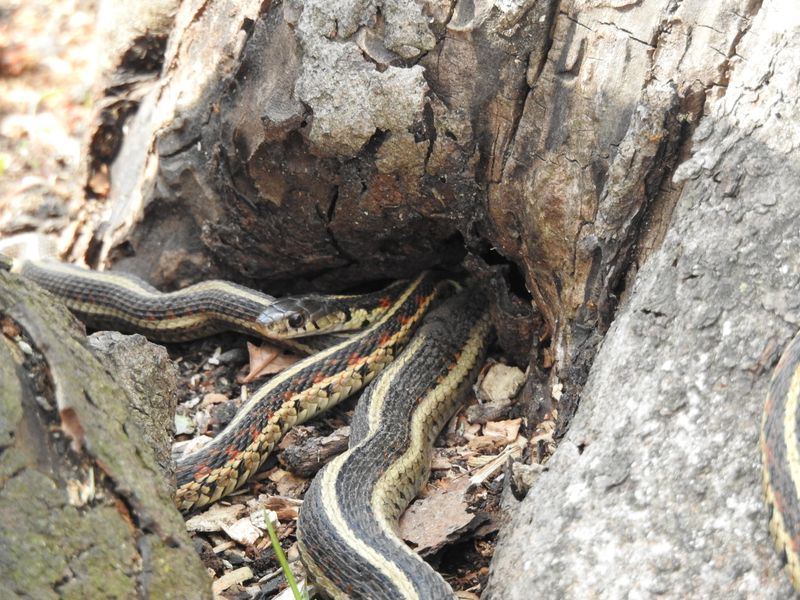
Garter snakes are the small striped snakes most Indiana homeowners notice near foundations as October weather turns cool. Like all reptiles, they cannot make their own body heat, so they need shelter that stays above freezing.
This winter rest is called brumation, a slowed state similar to hibernation. During brumation, the snake’s heartbeat and breathing drop sharply, and it rarely eats anything for several months.
The key goal is reaching soil below the frost line, which can reach about three feet deep in parts of Indiana. Natural spots include rock piles, rodent burrows, crayfish holes, and old stumps with rotting roots underneath.
Houses offer another option, because a foundation holds steady warmth from the basement and the ground around it. A crack near a footing can lead a snake straight down into that protected zone without much digging.
Garter snakes cannot dig well on their own, so they rely on openings that already exist in soil or stone. That habit explains why you might see one poking around steps, window wells, and porch slabs this month.
Most of them settle in by late October or early November, depending on how fast the cold arrives. On a warm afternoon, a few may still slip back out to bask before heading underground again.
Seeing one near your house in fall is normal behavior, not a sign that anything is wrong. They are simply doing what their species has done for thousands of years before the first hard freeze.
Three Pale Stripes Running Down The Body
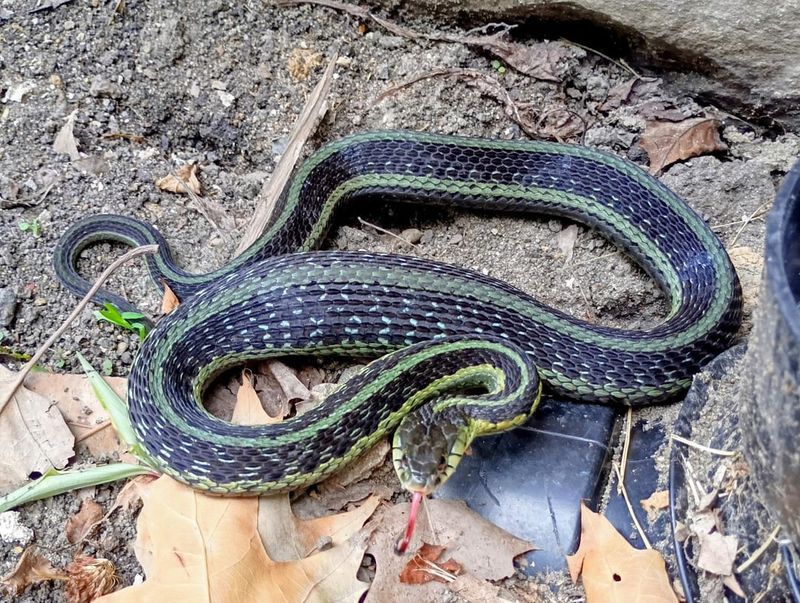
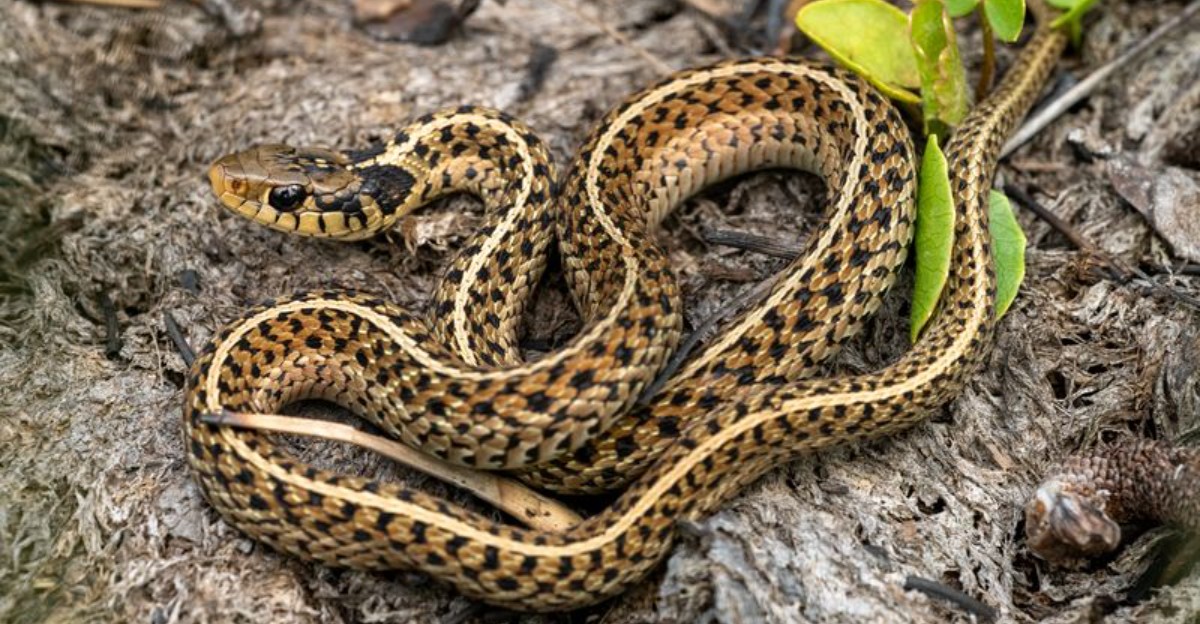
Look closely at a garter snake and you will usually find three light stripes running from neck to tail. One stripe runs down the middle of the back, while the other two run low along each side.
The stripes are often yellow, cream, or greenish, and the dark areas between them can show checkered spots. Adults of the common garter snake in Indiana usually measure about eighteen to twenty-six inches long.
Babies born in late summer can be only five to nine inches, so fall sightings often include tiny ones. Garter snakes give birth to live young instead of laying eggs, which surprises plenty of curious kids.
Your Indiana Garden Changes Every Week. Your Plan Should Too.
Gardening in Indiana changes quickly throughout the season. Every Friday you’ll receive a simple weekly plan showing exactly what to plant, prune, fertilize, harvest, and protect so you never miss the right timing.
Indiana also has the eastern ribbon snake, which looks similar but has a longer, thinner tail and body. Butler’s garter snake lives in parts of northern Indiana and has a smaller head than its common cousin.
The Indiana DNR lists Butler’s garter snake as a protected species, so handling or harming one is not allowed. Kirtland’s snake, another rare Indiana species, has dark blotches and a reddish belly rather than bold stripes.
A quick photo from a safe distance helps you identify the snake without stressing it or yourself. Many county extension offices and the Indiana DNR website offer free guides with clear pictures of each species.
Fun fact, a garter snake may release a strong musky smell when grabbed, which is its main defense. That stinky trick works well on predators and teaches most people to leave the little snake alone.
Foundation Cracks That Lead Underground
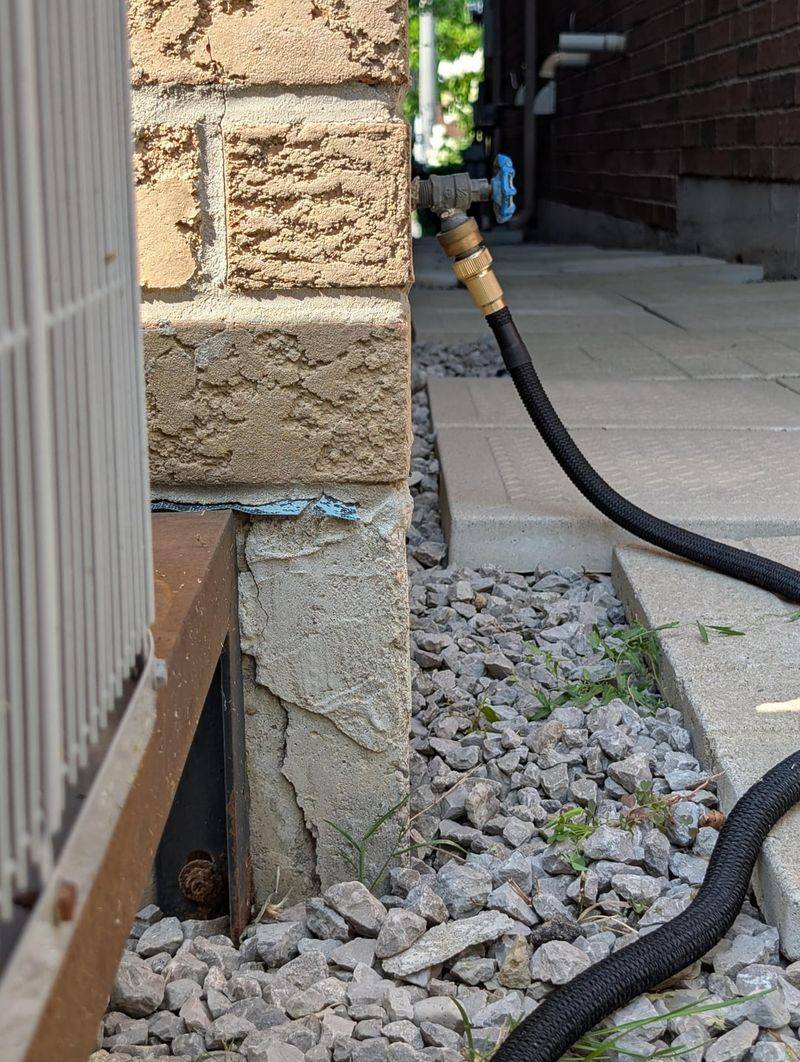
Walk around your house slowly with a flashlight, and you may find more tiny openings than you expected. A young garter snake can squeeze through a gap about a quarter inch wide, roughly the width of a pencil.
Common entry points include cracked mortar, gaps around pipes, loose basement windows, and spaces under door thresholds. Settling soil beside a foundation can also leave a narrow void that runs downward along the wall.
Those voids act like ready-made tunnels, letting snakes travel deep without digging a single inch themselves. Older stone foundations, common in many Indiana towns, tend to have more crumbling joints than poured concrete walls.
Most snakes that enter these gaps stay inside the wall or soil and rarely reach your living space. Once in a while, one wanders into a basement, especially in homes with dirt floors or crawl spaces.
Snakes found indoors are usually lost and looking for a way back to cool, damp shelter. You can gently guide one into a bucket with a broom, then release it near a woodpile outside.
Mark any crack where you see snakes coming and going, because that spot likely leads to their den. Wait to seal it until spring if snakes are already inside, since trapping them can cause odor problems later.
Many wildlife experts suggest this patient approach, because sealed-in snakes may also turn up inside the house. A simple notebook or phone photo helps you remember exactly which gaps need attention once the weather warms.
Large Groups Sharing The Same Winter Spot
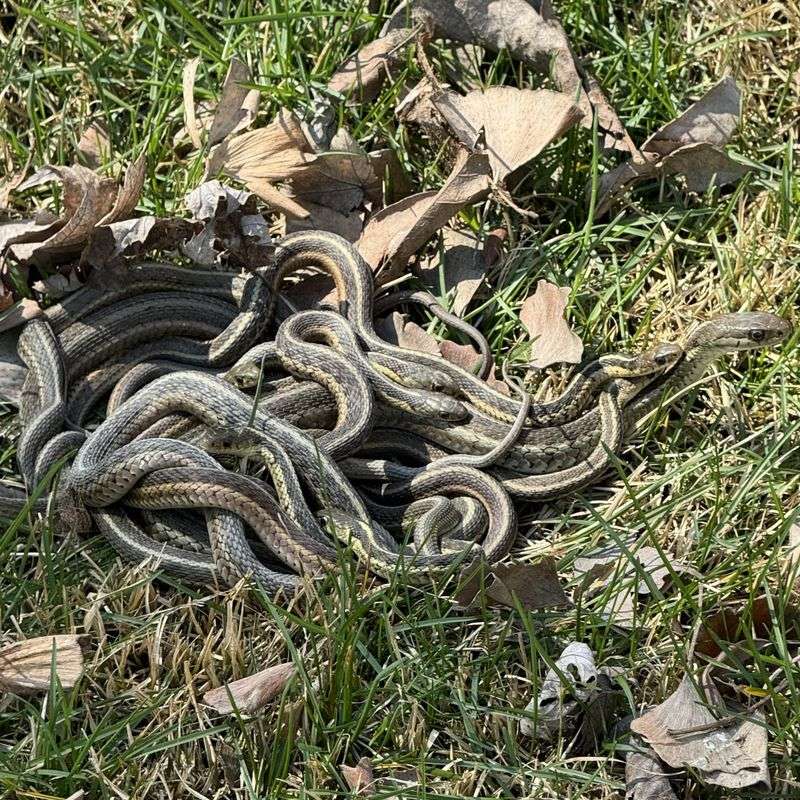
Here in the Midwest, one good winter den can attract dozens of garter snakes from the surrounding yards and fields. Scientists call these shared shelters hibernacula, and the same site may be used by snakes year after year.
Garter snakes follow scent trails left by other snakes, which helps them find a proven den each fall. That means a house with a known den may see snakes return around the same weeks every October.
Different species sometimes share one hibernaculum, so a garter snake might rest beside a brown snake or ribbon snake. Clustering together may help them hold moisture and avoid drying out during the long months without food or water.
The most famous example sits in Manitoba, Canada, where tens of thousands gather in limestone pits each year. Indiana dens are far smaller, and most backyard sites likely hold a handful to a few dozen snakes.
Exact numbers are hard to know, because researchers rarely dig into private foundations to count sleeping reptiles. If you notice several snakes near one spot this fall, you may be living beside a long-used den.
Spring brings a second wave of activity, when they emerge together around March or April to warm up. Mating often happens right near the den entrance, so a busy springtime cluster is part of their normal cycle.
Knowing this pattern helps you plan, because the best time to seal den openings is after spring emergence. For now, a little patience and a calm attitude make the cold season easier for everyone involved.
A Mild Neighbor That Feeds On Garden Slugs
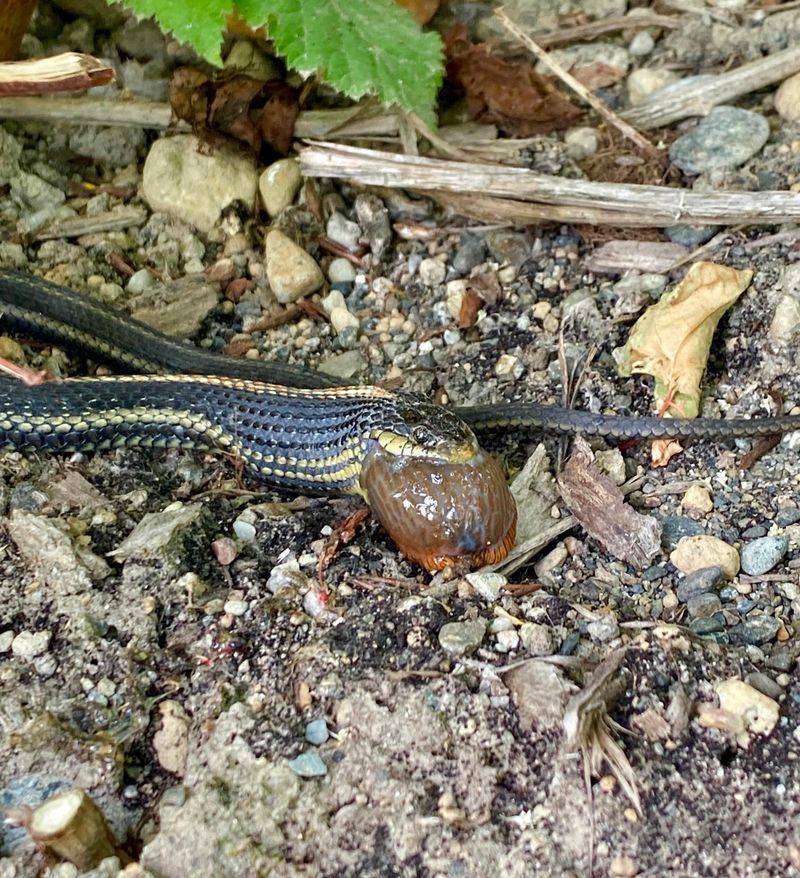
Gardeners who struggle with slugs on their hostas have a quiet ally slithering through the mulch beds all season. Garter snakes eat slugs, earthworms, small frogs, toads, and insects, which makes them useful garden visitors.
Most Indiana snakes help control pests and pose little threat to people or pets. Garter snakes are not considered dangerous, though a startled one may bite if someone picks it up.
Their saliva contains mild compounds that can cause slight itching or swelling in rare cases, but nothing serious. Washing a small bite with soap and water is usually all the care it needs, according to experts.
I love watching one hunt along a damp border after rain, flicking its tongue to track worm scent. That forked tongue carries scent particles to a special organ in the roof of the mouth.
In fall, garter snakes eat less as temperatures drop, since their bodies cannot digest food well when cold. Many eat little or stop feeding shortly before entering their den, so their stomachs are mostly empty for winter.
Leaving a brush pile or flat stone at the edge of your yard gives them shelter away from the house. Placing those features well away from foundations encourages snakes to stay in the garden instead of your walls.
Skipping slug bait near beds where snakes hunt also helps, since treated prey can harm the animals eating it. A healthy snake population is one of the cheapest forms of natural pest control a gardener can have.
Foundation Repairs That Keep Them Outdoors
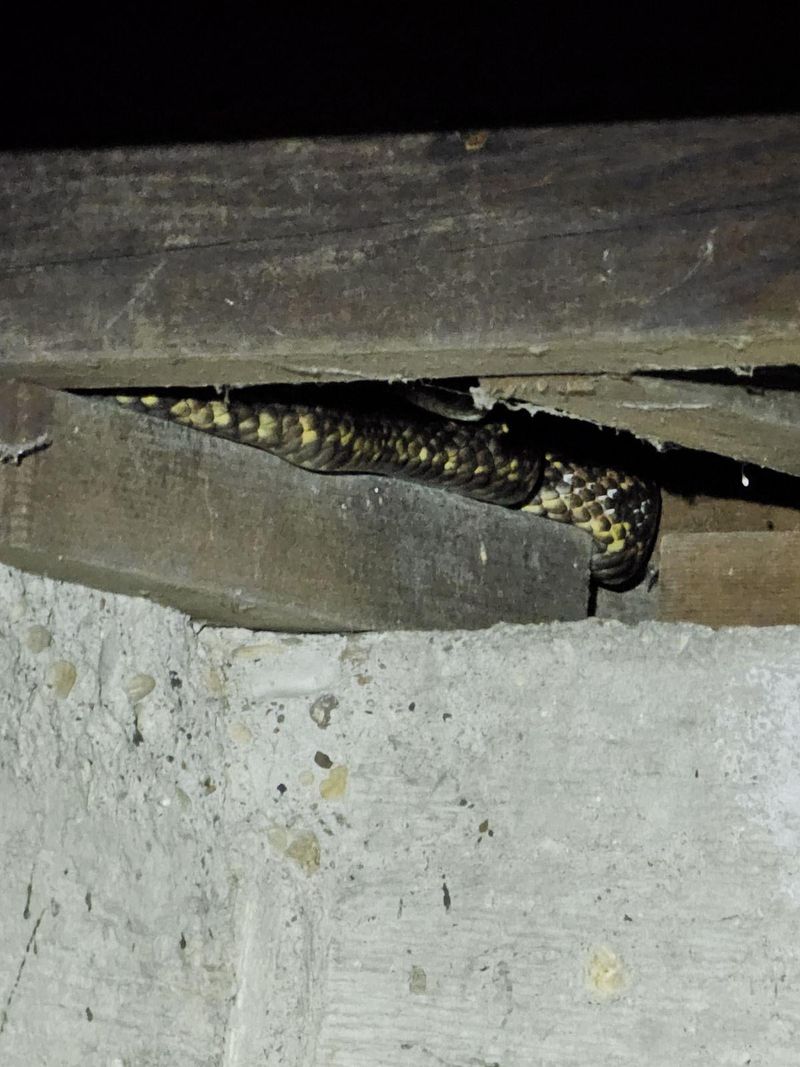
Sealing a house against snakes is mostly a matter of closing gaps, and October is a good time to start. Focus first on openings with no snake activity, since those can be closed right away without trapping anyone inside.
Mortar repair or masonry caulk works well for thin cracks in concrete block and stone foundations. Expanding foam or copper mesh can fill gaps around pipes, wires, and dryer vents that pass through walls.
Hardware cloth with quarter-inch openings makes a sturdy cover for crawl space vents and foundation openings. Door sweeps and tight weather stripping close the narrow spaces snakes sometimes use under garage and basement doors.
Openings with active snake traffic should wait until late April or May, after the snakes have left the den. Some homeowners attach a simple one-way funnel of mesh that lets snakes exit but blocks their return.
Yard cleanup matters too, so move woodpiles, rock piles, and thick mulch at least a few feet from walls. Keeping grass trimmed near the house removes cover that draws snakes, mice, and insects toward your foundation.
Snake repellent products sold in stores rarely show reliable results in tests, according to several university extension services. Sealing gaps and clearing clutter usually give better results for less money than sprinkling granules around the house.
If you need help, a licensed wildlife control operator in Indiana can inspect your foundation and suggest fixes. A few careful repairs now and in spring can keep these striped neighbors happily living outside your walls.