Why Sandhill Cranes Keep Coming Back To Southern Arizona Every Winter
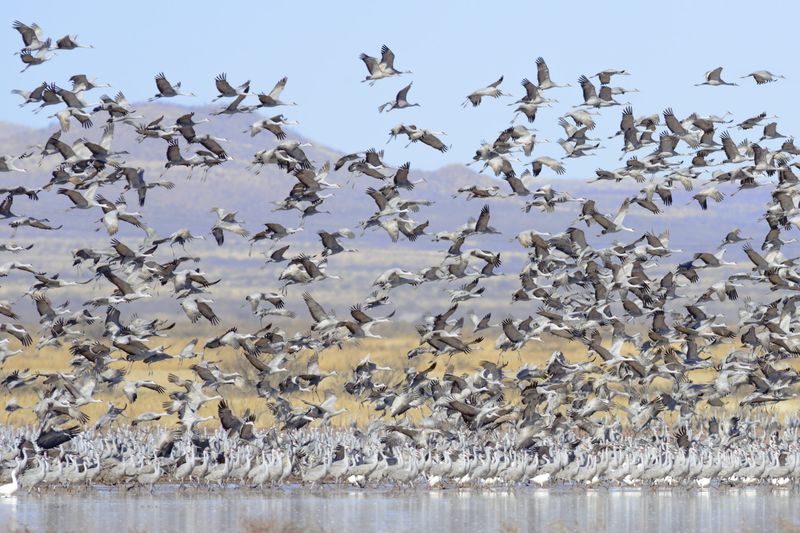
Each winter, tall gray birds with red foreheads fill the sky over the Sulphur Springs and Gila River valleys, and their rolling calls carry for miles. Many locals assume the same birds land in the same fields every year.
The real story is a little different, and it is even more interesting. Here is why the region works so well for cranes, and how to watch them without causing trouble.
The return is to a wintering region, not a proven set of fields
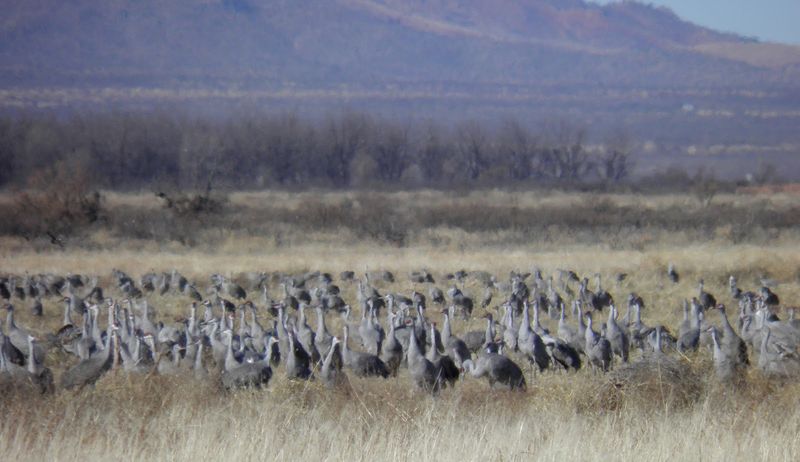
Ask around Cochise County and you will hear that the cranes come back to the same farm fields every year. It is a lovely idea, and part of it holds up.
Sandhill cranes do return to southeastern Arizona winter after winter, and Arizona Game and Fish describes traditional wintering and stopover areas used by these birds.
What the Arizona sources do not show is that the same individual cranes land in the same specific fields each year. That detail simply has not been established.
A flock in one field this January could be using a different field next January, depending on where food and water are available.
So the accurate version of the title is this: cranes keep coming back to a region, not necessarily to a particular patch of dirt. The valleys of southeastern Arizona have been dependable winter ground for these birds across many seasons.
That small correction opens the door to the better question. What does this region offer that keeps the species coming back?
The next section answers it.
A useful winter landscape pairs shallow roosts with food
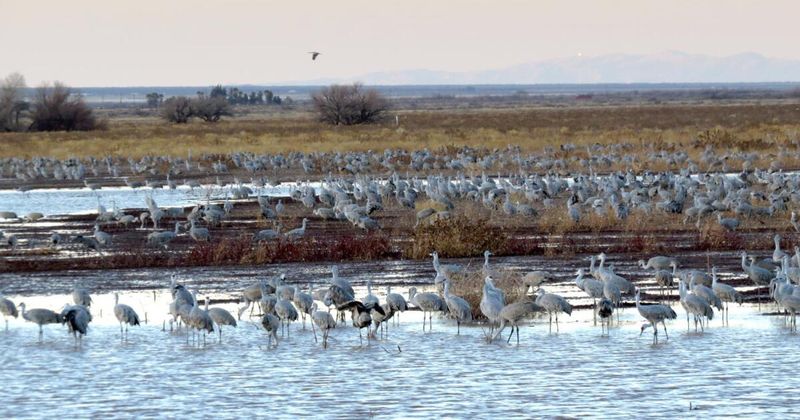
Cranes need two things close together: a safe place to sleep and a good place to eat. Southeastern Arizona supplies both.
Arizona Game and Fish notes that wintering cranes use shallow roost sites and stay near harvested grain fields.
Shallow, open water gives cranes a night-time buffer. Predators have a harder time sneaking up through water than across dry ground, and the birds can spot trouble from a distance.
Wetlands and playas fill that role in the valleys.
Food is the second half. The U.S.
Fish and Wildlife Service lists wetlands and harvested fields as winter habitat and names cultivated grains as a primary winter food source.
Grain alone does not explain the crowd, though. A field with no safe water nearby is a poor winter home.
Not every bird follows the same roost-and-field pairing either, so one flock may sleep at one wetland and feed miles from another group.
Daily movements connect roosts and feeding areas
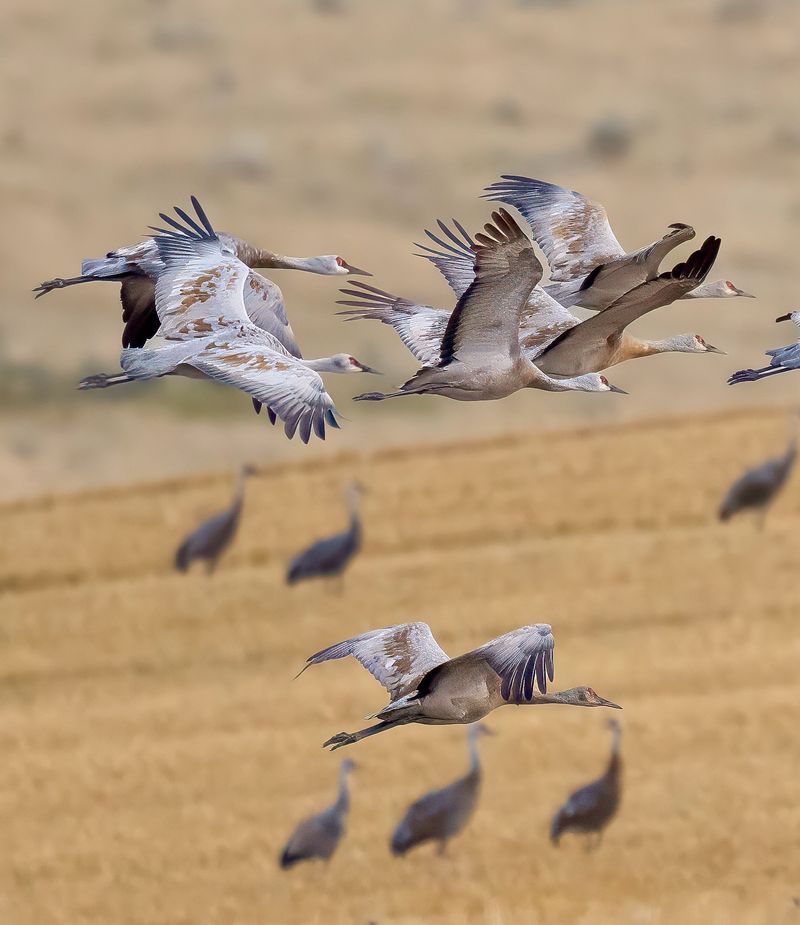
Spend a winter morning near Willcox and you can watch the pattern unfold. According to Arizona Game and Fish, cranes usually leave their roosts around sunrise and feed for several hours.
Afterward they return to the roost or to nearby loafing habitat.
That routine explains a common puzzle. One person sees cranes wading in water, another sees them walking through stubble, and both are right.
The birds simply shift between the two places over the course of the day.
Your Arizona Garden Changes Every Week. Your Plan Should Too.
Gardening in Arizona changes quickly throughout the season. Every Friday you’ll receive a simple weekly plan showing exactly what to plant, prune, fertilize, harvest, and protect so you never miss the right timing.
Think of the wetland as the bedroom and the field as the kitchen. A midday flock standing quietly in shallow water is often resting between meals.
Treat the schedule as a general pattern, not a promise. Weather, food supply, and disturbance can nudge birds to leave earlier, later, or in smaller groups.
If the field looks empty at ten, check the nearest water.
Whitewater Draw anchors a wider wintering network
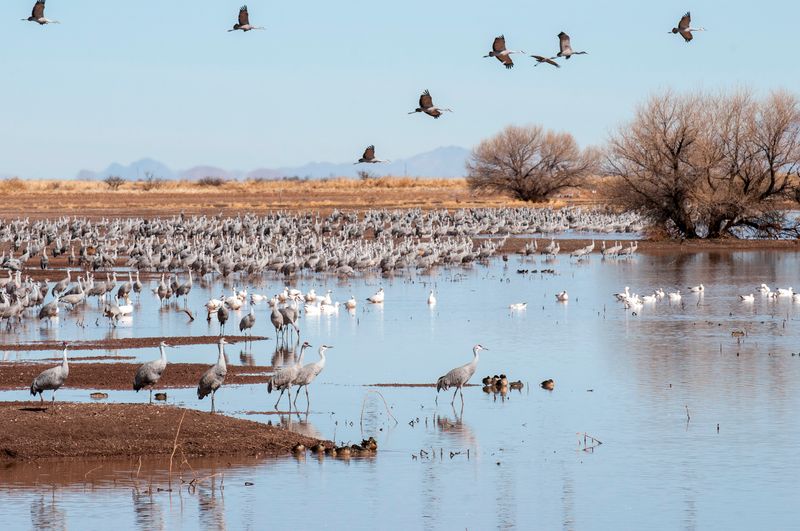
Whitewater Draw, near McNeal, is the name most visitors know. A 2025 Arizona Important Bird Areas plan describes it as a primary Arizona wintering area, with birds from both the Rocky Mountain and mid-Continent populations.
It is far from the only stop, however. Cranes also winter at other locations around the Sulphur Springs Valley and in the Gila River valley, so many birds never visit Whitewater Draw at all.
Arizona also hosts portions of three distinct crane populations. Rocky Mountain and mid-Continent birds winter in southeastern Arizona’s Sulphur Springs and Gila River valleys, while the Lower Colorado River Valley population winters along the lower Colorado River, as Arizona Game and Fish explains.
In other words, there is no single flock following one fixed route to one destination. Whitewater Draw is a major anchor in a larger web of wintering places.
A seasonal count is a snapshot, not a fixed flock size
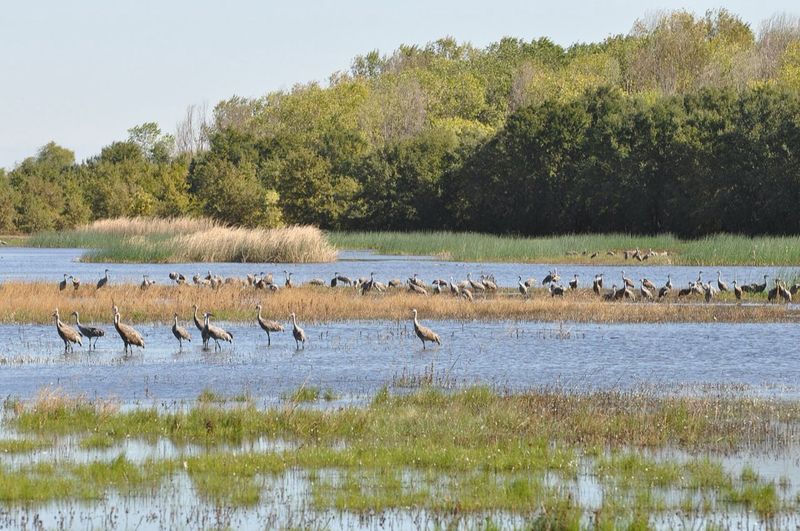
Big numbers grab attention, and this one deserves it. In January 2026, Arizona Game and Fish reported an estimate of more than 20,000 cranes wintering across the Gila River and Sulphur Springs Valley areas.
Look closely at where that number applies. It covers a broad stretch of southeastern Arizona, not Whitewater Draw alone.
A visitor standing at one wetland will see only a portion of the total, and probably nowhere near 20,000 at once.
Time matters too. It is an estimate for one month.
Cranes arrive, shift between valleys, and leave on their own schedules, so counts rise and fall through the season and from one year to the next.
Use the figure as a snapshot of scale. It tells you the region is a major winter home, but it is not a permanent total you can expect to see on any given morning.
Watch the daily movement without disturbing it
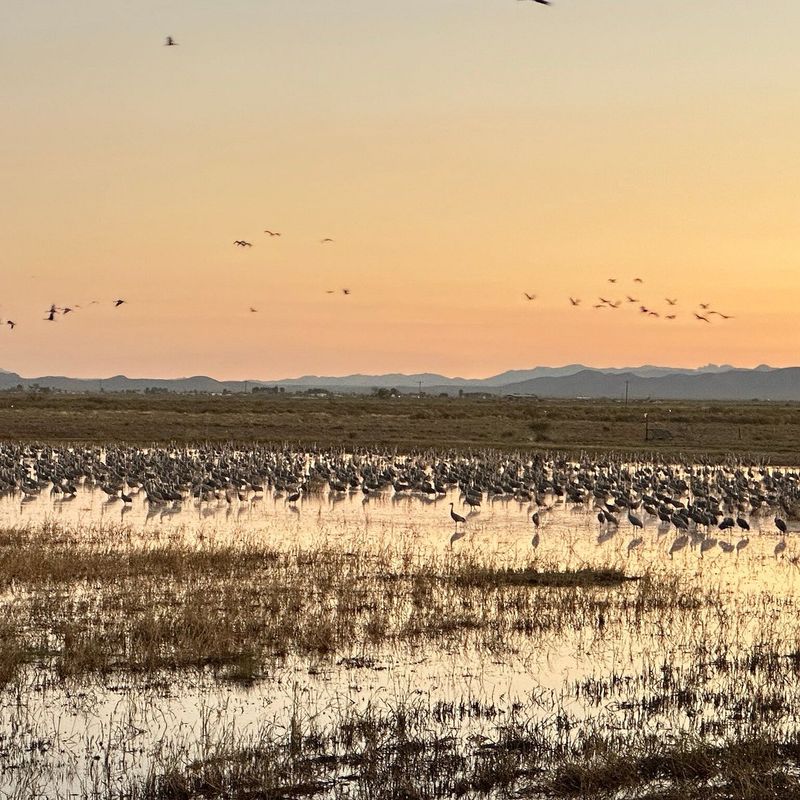
Plan to arrive early. Arizona Game and Fish’s Whitewater Draw FAQ points to the period around sunrise, when cranes leave to forage, and again in late morning as they return.
Those windows are approximate, and weather and the time of season can change what you see.
Bring binoculars or a spotting scope so you can stay back. The state’s wildlife viewing tips call for keeping your distance and never chasing or feeding animals.
Speak quietly and stay near your vehicle or the designated viewing areas.
Check for posted closures and current site rules before you go, since Arizona regulations close posted portions of Whitewater Draw to public entry on certain dates. Dogs must be leashed, and recreational and photography drones are not allowed on the property.
A calm crowd lets the birds keep to their routine, and that routine is the show.