The Christmas Cactus Blooming In Your Indiana Home Before Thanksgiving Might Be A Different Plant
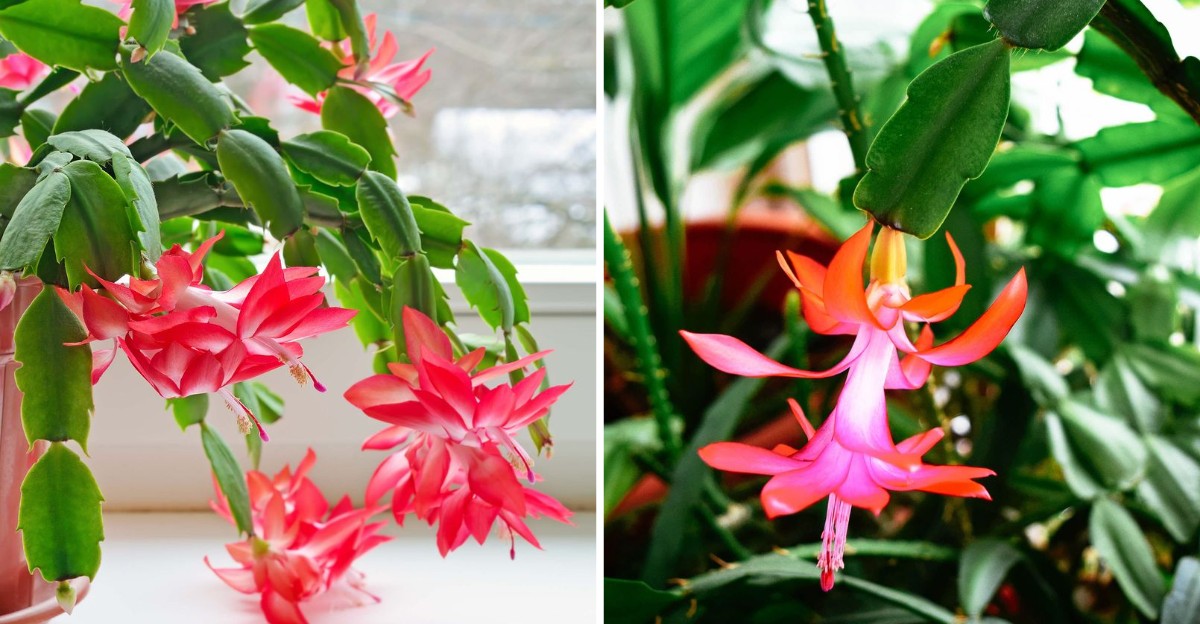
Many of the holiday cacti sold in stores each fall are Thanksgiving cacti, even when the tag says Christmas cactus. Growers ship them in October, and the buds are already set when they reach Indiana shelves.
The flowers usually open in mid to late November, which is a few weeks ahead of the December holidays. I noticed mine budding right after Halloween, when the nights had grown to well over twelve hours long.
The real giveaway hides on the leaf segments, where tiny pointed teeth curve outward like little crab claws. Even the color of the pollen inside each bloom can tell you which plant is sitting on your windowsill.
You need only a quick look at one stem to sort out the mystery in your own Indiana home. Who knew a houseplant from Brazilian mountain forests could keep such a well-hidden secret for so many years?
A Close Relative That Flowers Weeks Earlier
Chances are good that your early bloomer is a Thanksgiving cactus, known to botanists as Schlumbergera truncata. It belongs to the same genus as the true Christmas cactus, which carries the name Schlumbergera x buckleyi.
Both plants grow wild in the coastal mountain forests of southeastern Brazil, where they cling to trees and rocks. Plants that live on other plants this way are called epiphytes, and they gather water from rain and humid air.
Thanksgiving cactus often opens its first flowers in mid to late November, a few weeks before its cousin. True Christmas cactus mostly blooms in December, and some plants keep blooming into early January.
Bloom timing depends on long nights and cool temperatures, according to several university extension services across the Midwest. Both plants set buds when they get about twelve to fourteen hours of darkness for roughly six weeks.
Thanksgiving cactus simply responds to those signals a little sooner, so its buds appear by late October or early November. In an Indiana home, the shorter fall days and chilly windowsills often trigger buds without any special effort.
Many people have grown a Thanksgiving cactus for years while calling it a Christmas cactus the whole time. The early flowers are not a sign of trouble, and your plant is likely following its natural schedule.
A third holiday plant, the Easter cactus, blooms in spring and now belongs to a separate genus altogether. So if buds are forming on your plant this October, you can safely rule that one out.
Pointed Leaf Segments With Claw-Like Edges
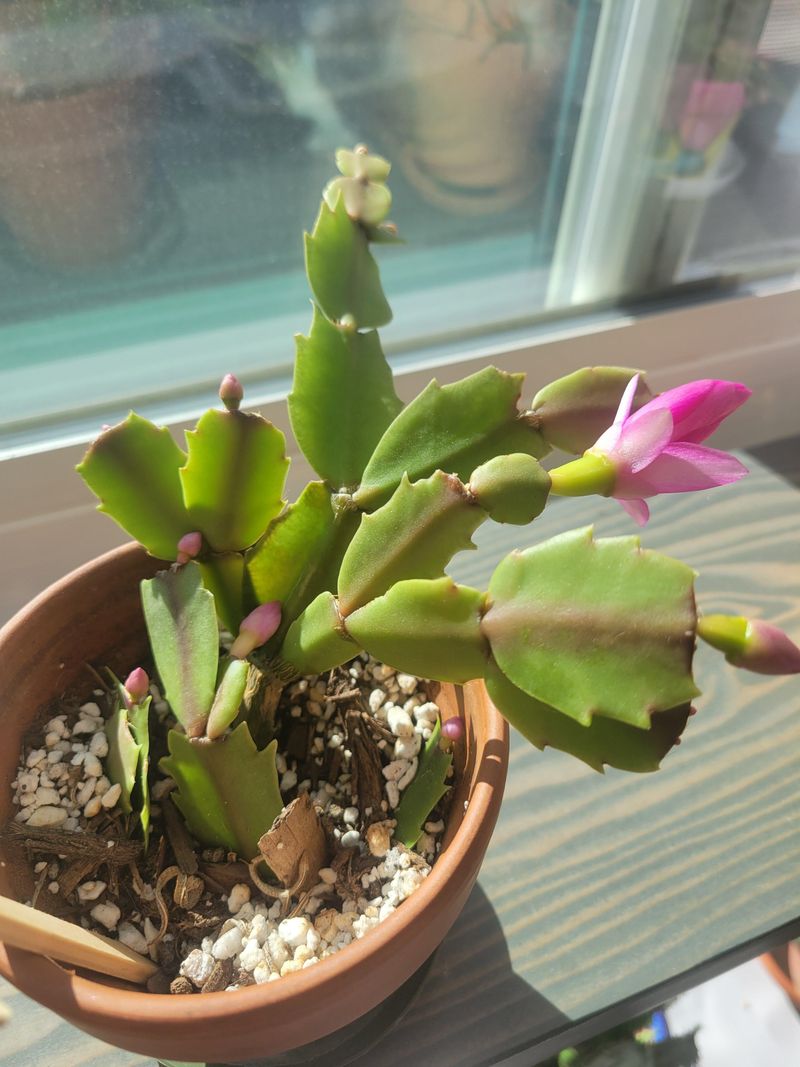
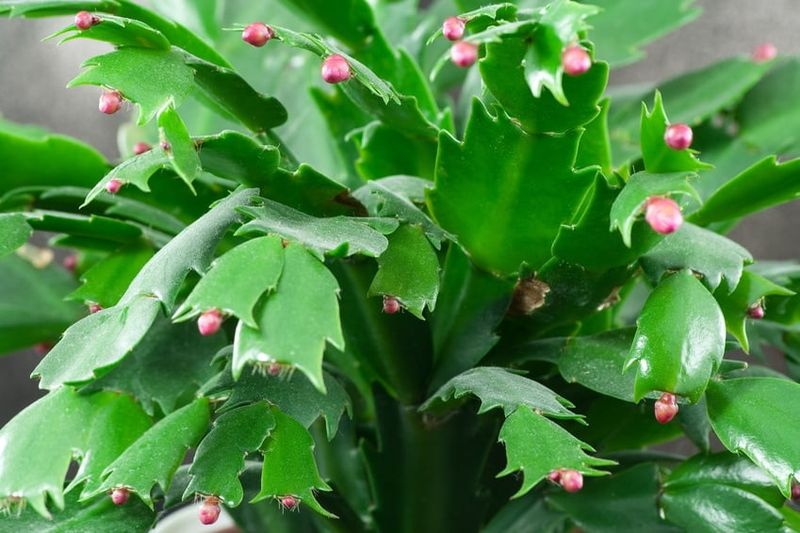
Grab one stem and run your finger gently along the edge of a flat green segment. On a Thanksgiving cactus, you will feel two to four pointed teeth along each side.
The claw-like shape of the segments is why some gardeners call it the crab cactus. The stems are not leaves at all, but flattened stem sections called cladodes or phylloclades that do photosynthesis.
Each segment on a Thanksgiving cactus looks a little like a lobster claw, with sharper corners than its relative. The teeth are fairly soft and rarely prick skin, so kids can usually check them with a gentle touch.
Your Indiana Garden Changes Every Week. Your Plan Should Too.
Gardening in Indiana changes quickly throughout the season. Every Friday you’ll receive a simple weekly plan showing exactly what to plant, prune, fertilize, harvest, and protect so you never miss the right timing.
Look at the very end of a segment, where the new growth or flower bud usually forms in fall. Thanksgiving cactus flowers often face outward or slightly upward, held fairly level instead of drooping down from the stem.
Blooms come in white, pink, red, salmon, purple, and yellow, thanks to many years of careful breeding by growers. Yellow and orange flowers are mostly found on Thanksgiving cactus types, so color can be a quick hint.
I like checking several segments, because one oddly shaped piece can fool you if it was damaged or pinched. Older segments near the base can lose some sharpness, so focus on the newer, brighter green pieces near the tips.
Once you spot those claw shapes, you can be fairly sure your early bloomer is a Thanksgiving cactus. Snap a photo now, and you will have a handy reference when shopping for more holiday plants later.
Rounded Scalloped Segments On A True Christmas Cactus
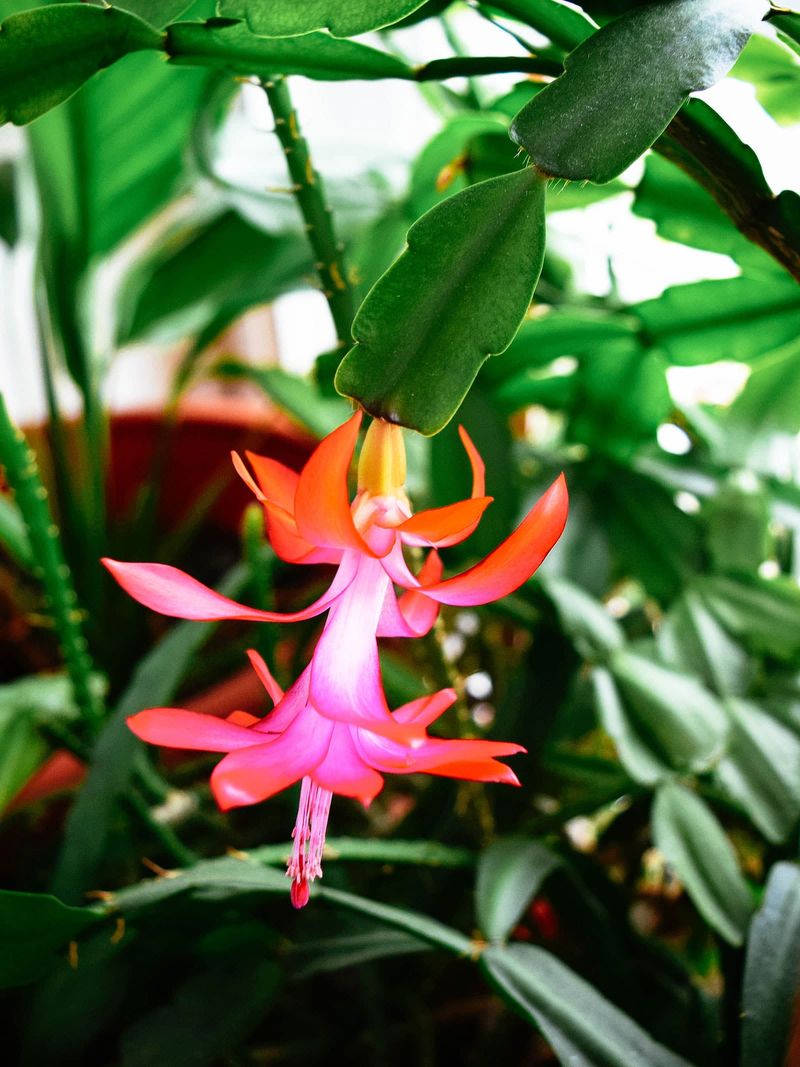
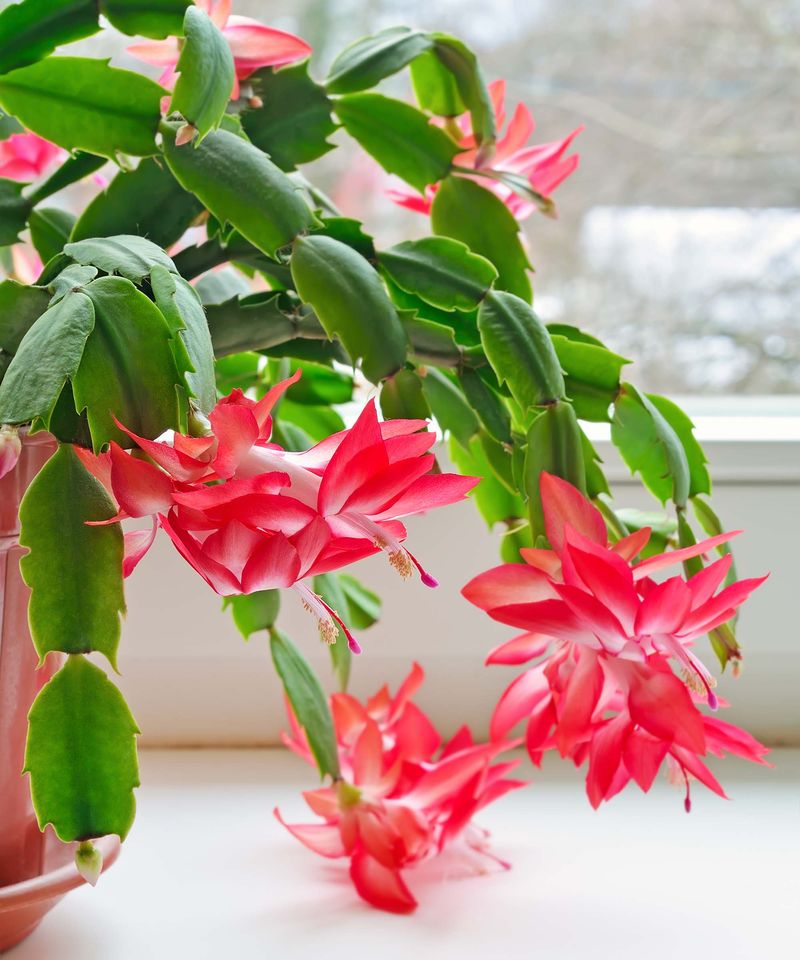
Holding a true Christmas cactus next to its cousin feels a little like comparing a teddy bear to a crab. The segments on Schlumbergera x buckleyi have smooth, rounded bumps along the edges instead of sharp, pointed teeth.
Gardeners often describe these edges as scalloped, like the curved trim on a pie crust or a seashell. The tips of each segment look blunt and soft, with no hooked corners reaching outward toward the next piece.
Flowers on a Christmas cactus usually hang downward, giving the whole plant a graceful, drooping look when it blooms. The blooms are often a rosy pink or magenta, and the petals curl back neatly toward the stem.
True Christmas cactus is a hybrid created in England in the 1840s by crossing two Brazilian Schlumbergera species. The name buckleyi honors William Buckley, a gardener linked to the early breeding work that produced this plant.
Many true Christmas cactus plants in homes today are old heirlooms passed down through families for several generations. Store shelves carry far fewer of them, because growers find the Thanksgiving type easier to time for fall sales.
If you own one, you may notice that it blooms later and more slowly than newer plants from shops. Buds on a true Christmas cactus often appear in late November and open around mid December in many homes.
Ask relatives if your plant came from a cutting, because older family plants are more likely to be true Christmas cactus. Rooting a few segments this fall is a sweet way to keep that family story growing for years.
Pollen Color As An Extra Clue
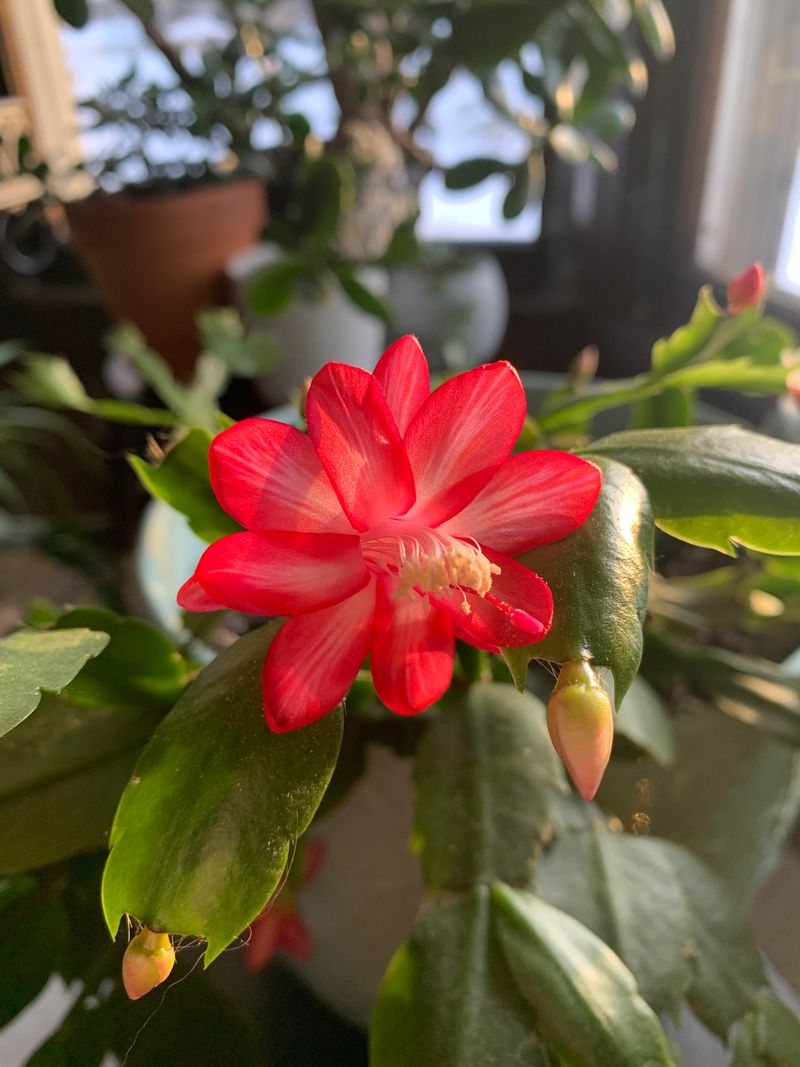
Botanists sometimes reach for a magnifying glass when the leaves alone do not settle the question of plant identity. Inside each holiday cactus flower sits a cluster of stamens, which hold the dusty pollen near the bloom’s center.
On a Thanksgiving cactus, the pollen is usually bright yellow, much like the dust you see on many garden flowers. A true Christmas cactus mostly carries pink or purplish brown pollen, which looks darker against the pale stamens.
You need an open flower to check this clue, so it works best once your plant is in full bloom. Gently tap a fresh flower over a white sheet of paper, and the pollen color will show up clearly.
A small hand lens or the zoom on your phone camera makes the tiny grains much easier to see indoors. Morning light near a window gives the most honest view, since natural light shows the true color best.
Keep in mind that breeders have crossed these plants many times, so some modern hybrids blur the usual rules. Pollen color works best as a backup clue alongside the segment shape, not as the only test you use.
Kids often love this step, because it turns a houseplant into a small science project on the kitchen table. Writing down the date, flower color, and pollen color each year helps you track your plant’s habits over time.
Wash your hands after handling pollen, since it can stain fingers and fabric with a faint colored smudge. Then compare your notes with the segment edges, and the identity of your plant should come into clear focus.
Store Labels That Mix Up The Names
Walk into many Indiana garden centers in late October, and you will likely see rows of budded holiday cacti. Most of them carry a tag that says Christmas cactus, even though the plants inside are usually Thanksgiving cactus.
Commercial growers favor Schlumbergera truncata because it blooms reliably, ships well, and comes in many bright flower colors. The plants are timed to reach stores before the holidays, and Christmas cactus is simply the name shoppers recognize best.
Some tags use the broader term holiday cactus, which covers both plants and avoids picking one specific name at all. Others list only the genus Schlumbergera, so you still need to check the segment edges for the real answer.
University extension services in several states note that these common names get swapped often in homes and stores. Mislabeling is usually a long-standing habit rather than a sales trick, since the names have been swapped since the plants became popular gifts.
Before buying, flip a stem gently and look for pointed teeth or rounded scallops along the flat segments. Choose plants with plump, firm segments and plenty of tight buds rather than flowers that are already wide open.
Avoid pots with soggy soil, limp stems, or many fallen buds sitting on the surface around the plant. A healthy plant from the store should feel sturdy, with green segments that show no soft brown spots near the base.
Ride home with the plant wrapped or in a warm car, because cold blasts can make buds drop quickly. Once inside, let it settle in a bright spot away from heater vents before you change anything else.
Similar Care For Both Holiday Cacti
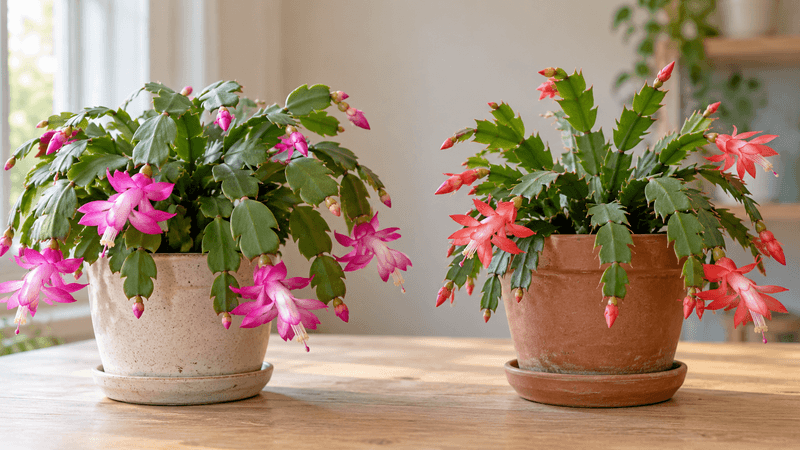
Whichever plant you own, the care routine is nearly the same, which makes life easier for busy plant parents. Both holiday cacti like bright, indirect light, such as an east window or a spot a few feet from sunnier glass.
Unlike desert cacti, these forest plants prefer soil that stays lightly moist but drains quickly after each watering. Water when the top inch of soil feels dry, and empty any extra water sitting in the saucer below.
Overwatering is a common cause of root rot, which often shows up as limp, wrinkled, or yellowing stem segments. A potting mix with added perlite or orchid bark helps extra water escape and keeps roots healthy through winter.
During fall, give your plant cool nights around fifty to sixty degrees Fahrenheit to encourage plenty of flower buds. Keep it away from street lights, lamps, and television glow at night, since extra light can delay bloom.
Once buds form, try not to move the plant around, because sudden changes in light or heat can cause bud drop. Drafts from doors and dry air from furnace vents are also common reasons buds fall before they open.
After flowering ends, let the plant rest for about six weeks with a little less water than usual. In spring, feed it with a balanced houseplant fertilizer about once a month through the summer growing season.
Both plants live for decades with simple care, and some family plants are older than the people tending them. Pinching a few segments in late spring creates a bushier plant with more tips for next year’s November or December blooms.