The November Project That Could Bring Barred Owls To Your Ohio Yard By Spring
Most Ohio yards sound the same by February: wind, a far-off dog, and not much else. Yours could sound like a jungle movie.
A barred owl hoots a call that sounds just like “who cooks for you,” and once one claims your trees, it tends to stay put for years.
The catch is timing. Barred owls scout nest sites months ahead of the season, and a big hollow is a rare find in a tidy suburban lot.
Old trees get cut down, and the owls get left out in the cold.
You can change that this month. A large nest box on a mature oak or maple in the woodsy part of your property puts you first in line while everyone else drags their feet..
The job costs one weekend, a drill, and a bag of wood shavings. The payoff beats any bird feeder on your block by a country mile.
Hang it before the first hard freeze and let nature work.
Barred Owls Start Courting In February
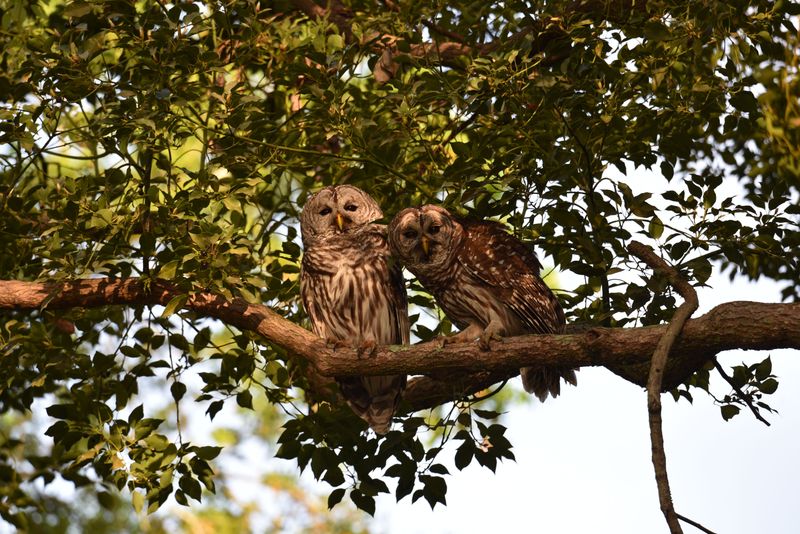
Valentine’s Day has nothing on a pair of barred owls. While people swap candy hearts, these birds are hooting love songs through the frozen Ohio woods.
Their famous call sounds like someone asking, “Who cooks for you? Who cooks for you all?” You will hear it most in February and March, when pairs claim their turf and get ready to raise a family.
Some even start their breeding season as early as December or January.
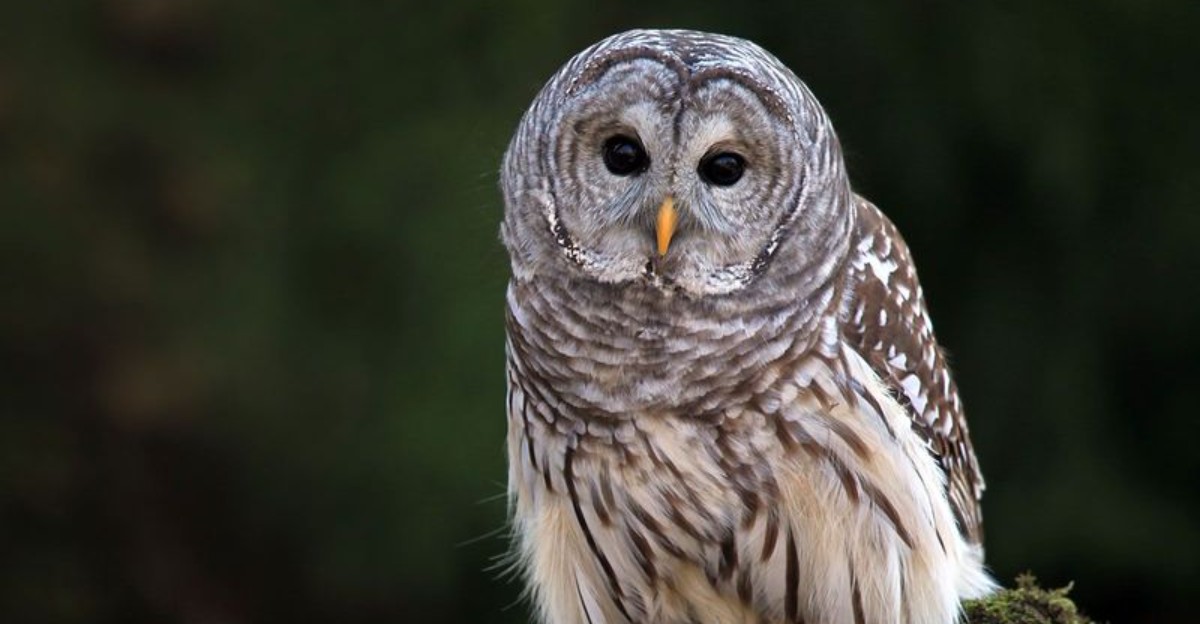
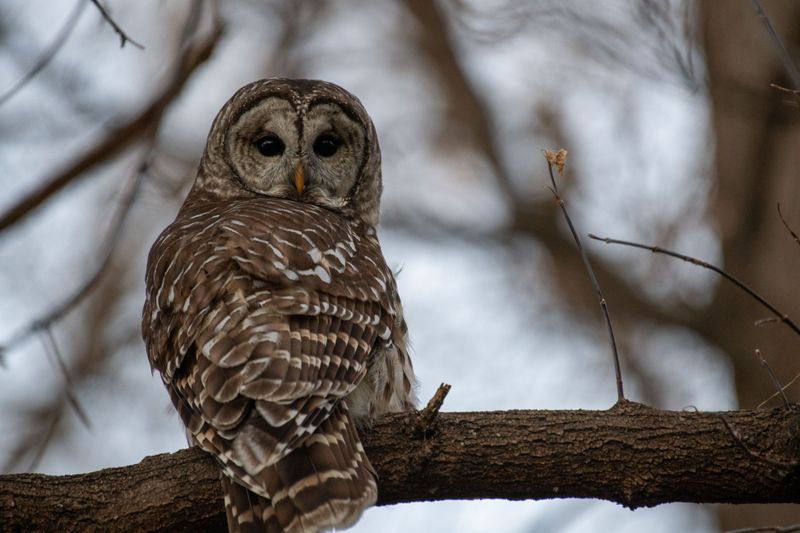
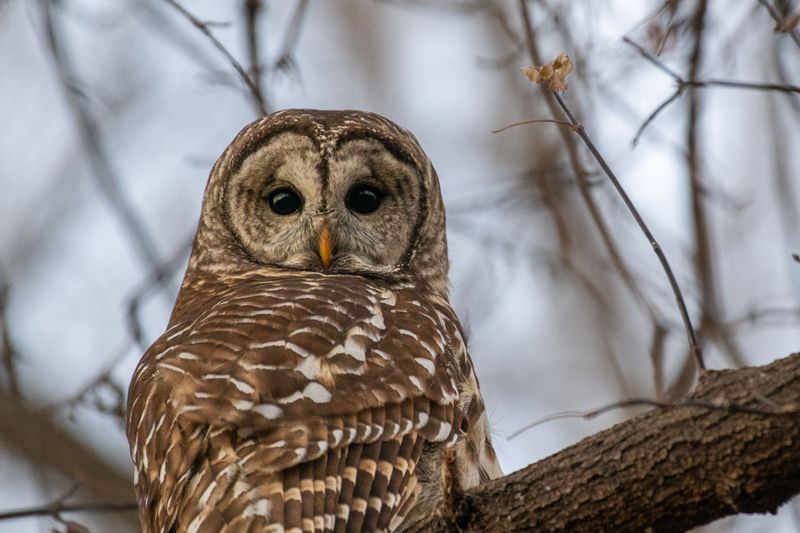
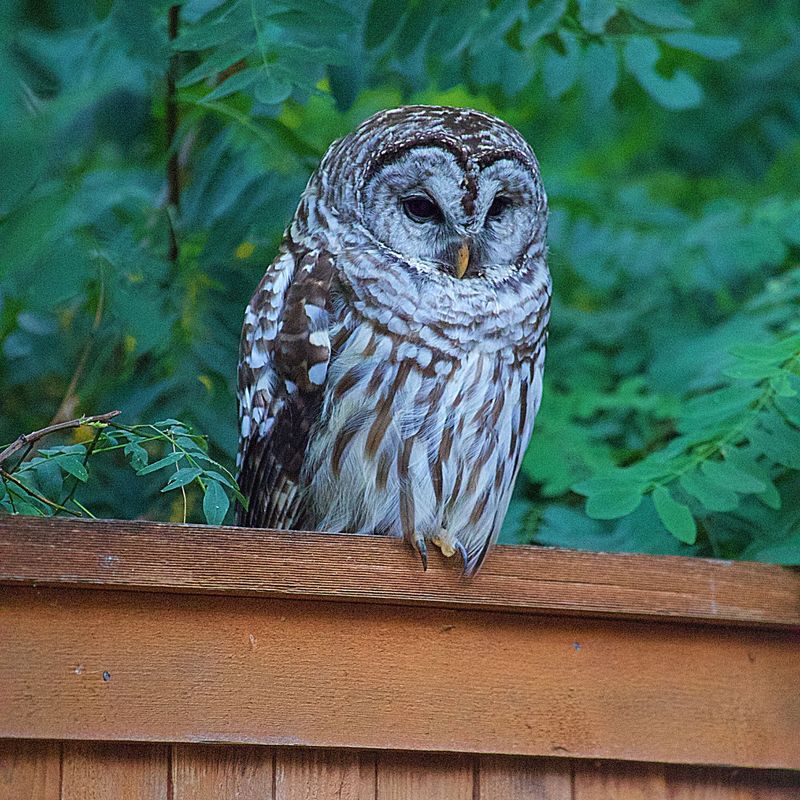
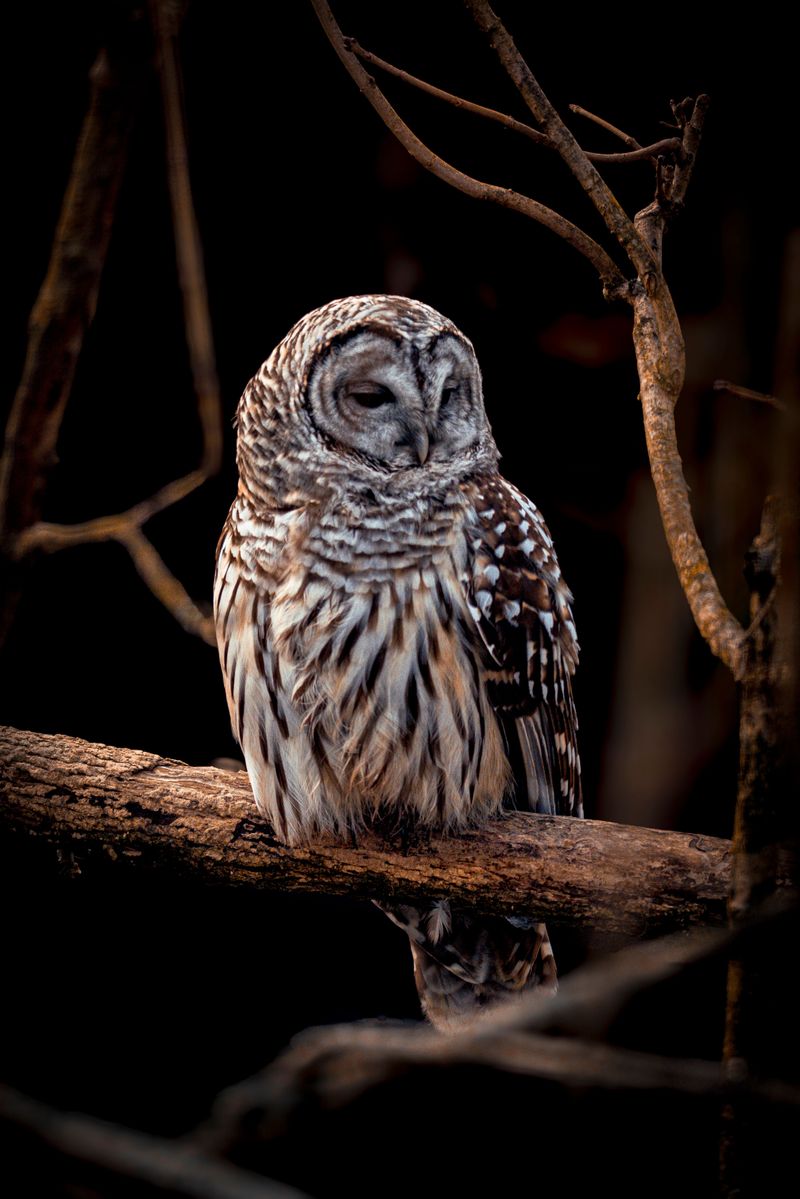
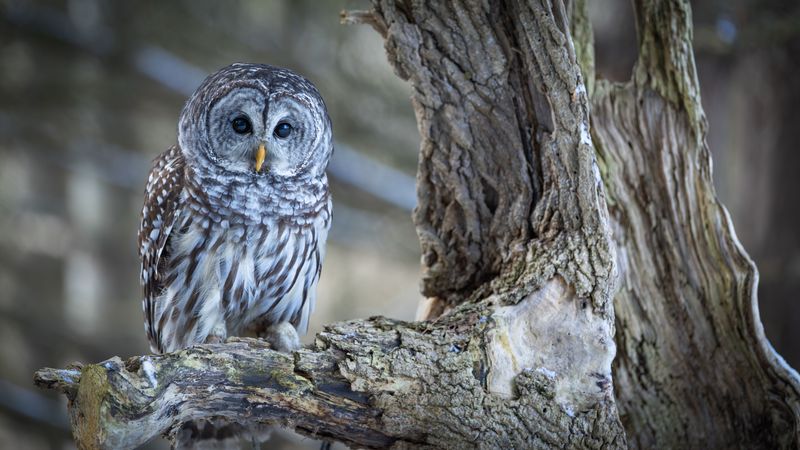
Barred owls are easy to spot once you know the clues. They have brown-gray feathers with white spots on the back, streaks on the belly, and bars across the neck and chest.
Unlike many owls, they have dark brown eyes and no ear tufts, so their heads look round and soft.
Here is a fun fact to share at dinner. Barred owls often mate for life and usually stay in the same area all year long, which means a pair you hear in winter could become longtime neighbors.
Why does courting season matter for your yard? Once a pair bonds, they start hunting for a nesting spot right away.
If a safe home is already waiting in your trees, you have a real shot at catching their attention before they settle somewhere else. Timing truly is everything with these birds.
ODNR Suggests Putting The Box Up In January
Think of it like getting a guest room ready before company shows up. Nobody wants visitors knocking while the paint is still wet.
The Ohio Department of Natural Resources suggests placing barred owl nest boxes in January, and says boxes that go up in fall have time to weather over winter. That advice makes sense once you learn that these owls can begin nesting activities that early in the year.
A box that goes up in March may simply be too late for the season.
Owls are picky house hunters. They scout spots ahead of time, checking out trees and hollows long before eggs arrive.
Your Ohio Garden Changes Every Week. Your Plan Should Too.
Gardening in Ohio changes quickly throughout the season. Every Friday you’ll receive a simple weekly plan showing exactly what to plant, prune, fertilize, harvest, and protect so you never miss the right timing.
A box that has been hanging for a few weeks also loses that brand-new feel and starts to blend into the woods.
Natural tree cavities are the barred owl’s first choice. Sadly, big hollow trees can be hard to find, especially in neighborhoods where older trees get trimmed or removed.
Your box fills that gap and gives a couple a ready-made option.
So what should you take away from this? Mark January on your calendar as the finish line, not the starting line.
If your box is secure and waiting by New Year’s, you are playing by the owls’ schedule instead of your own. That small shift can make a big difference come spring.
November Gives You Time To Build Or Buy One
Leaves are raked, the garden is put to bed, and the weekends suddenly feel wide open. November is basically a gift for anyone with a hammer and a free Saturday.
With January as your goal, this month gives you a comfortable window. You can build a box from scratch, ask a handy friend for help, or order one online without stressing about shipping delays.
Rushing a project like this rarely ends well.
Building your own is cheaper and kind of fun. Untreated lumber works best, and many free plans are available from wildlife groups and nature centers.
Kids can help measure, sand, and paint a name on the side, though the outside should stay a natural color.
Buying one is smart too, especially if tools are not your thing. Just double-check the sizes against the guidelines in this article before you click purchase.
Some boxes labeled for owls are really sized for smaller screech owls.
November also has another perk. The trees are bare, so you can easily see which branches are strong and which spots have clear paths for flying.
Scouting the perfect tree now is far easier than guessing when everything is covered in summer leaves. Use this quiet month wisely, and spring will thank you.
Go Big, With A 13-Inch Floor And 7-Inch Entrance
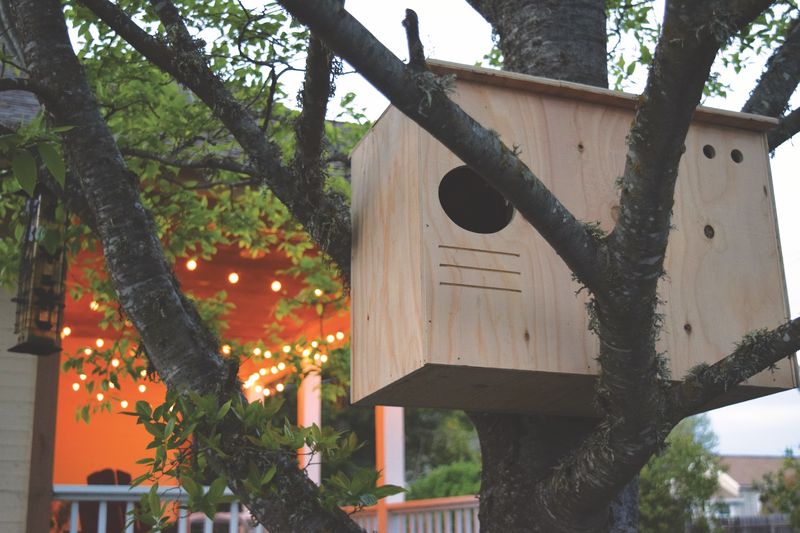
A barred owl is not a bluebird, and its house should not look like one. These are chunky birds with wide wings, so the box needs room to match.
Aim for a floor about 13 inches by 13 inches. Some plans use 13 by 12.25 inches, which works just as well.
That space lets a mother owl turn around, settle on her eggs, and later share the room with fluffy, growing owlets.
The entrance hole should be around 7 inches across. It can be round or a 7-by-7-inch square, depending on the design you like.
Anything much smaller and the adults may struggle to squeeze inside.
Placement of that hole matters more than you might guess. Set it about 12 to 18 inches above the floor.
A high opening keeps young owlets from tumbling out too early and adds a layer of protection from curious raccoons.
Here is a quick builder’s tip. Rough up the inside wall below the entrance with a saw or add a few small strips of wood.
Young owls use those grips like a ladder when it is time to peek out and explore. Bigger really is better here, so measure twice, cut once, and build a home fit for a forest giant.
Make The Box About 23 Inches Deep Inside
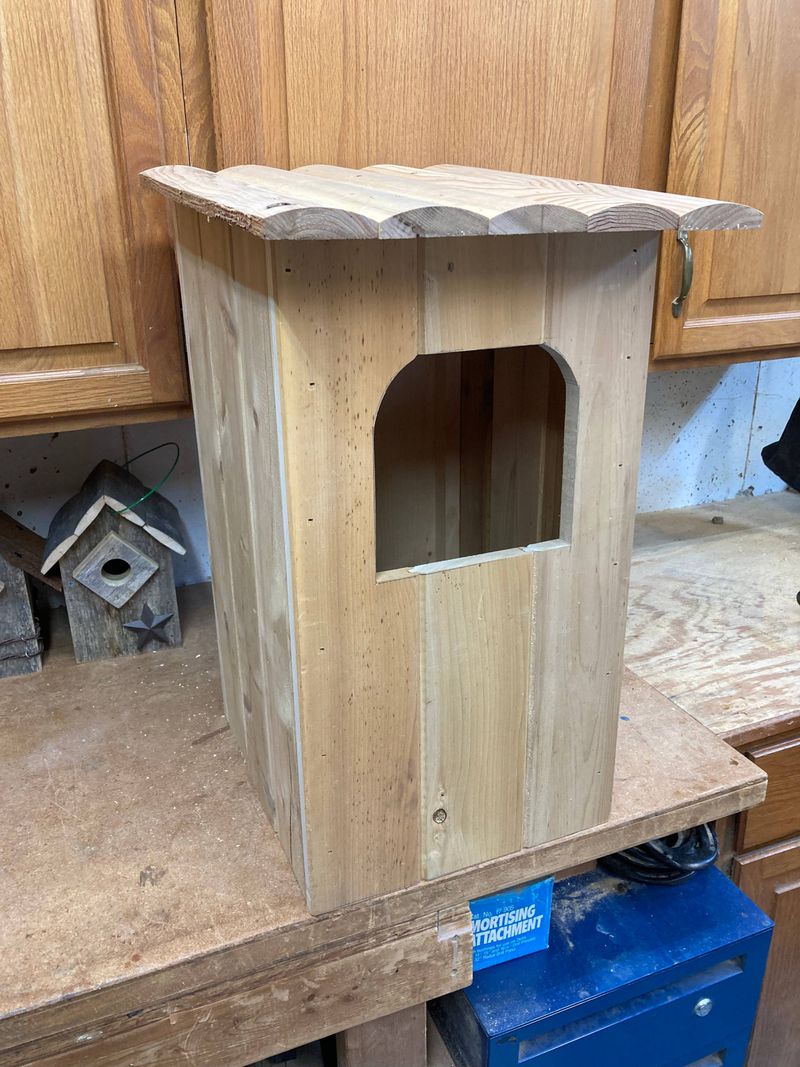
Imagine a cozy tree hollow, tall and snug, with shadows tucked deep inside. Building that feeling into your box is easier than it sounds.
The inside depth should measure about 23 inches. Some designs suggest around 22 inches from floor to ceiling, so a little wiggle room is fine.
What matters most is giving the owls a tall, sheltered space.
Why so deep? In the wild, barred owls nest in large natural cavities inside old trees.
A deep box copies that setup, keeping eggs and chicks tucked away from wind, rain, and prying eyes.
Depth also works together with that high entrance hole. When the opening sits well above the floor, owlets have a safe pit to rest in until they are strong enough to climb.
Parents can drop in and out while the babies stay protected below.
A few extra details help the box last. Drill small holes in the floor so water can drain out, and add vents near the top for airflow on warm spring days.
A sloped roof that hangs over the front will shed rain and snow. A hinged side panel also makes yearly cleaning simple.
Think of the box as a long-term home, and these small touches will keep it dry and welcoming for many seasons.
Mount It 20 To 30 Feet Up In Mature Hardwoods
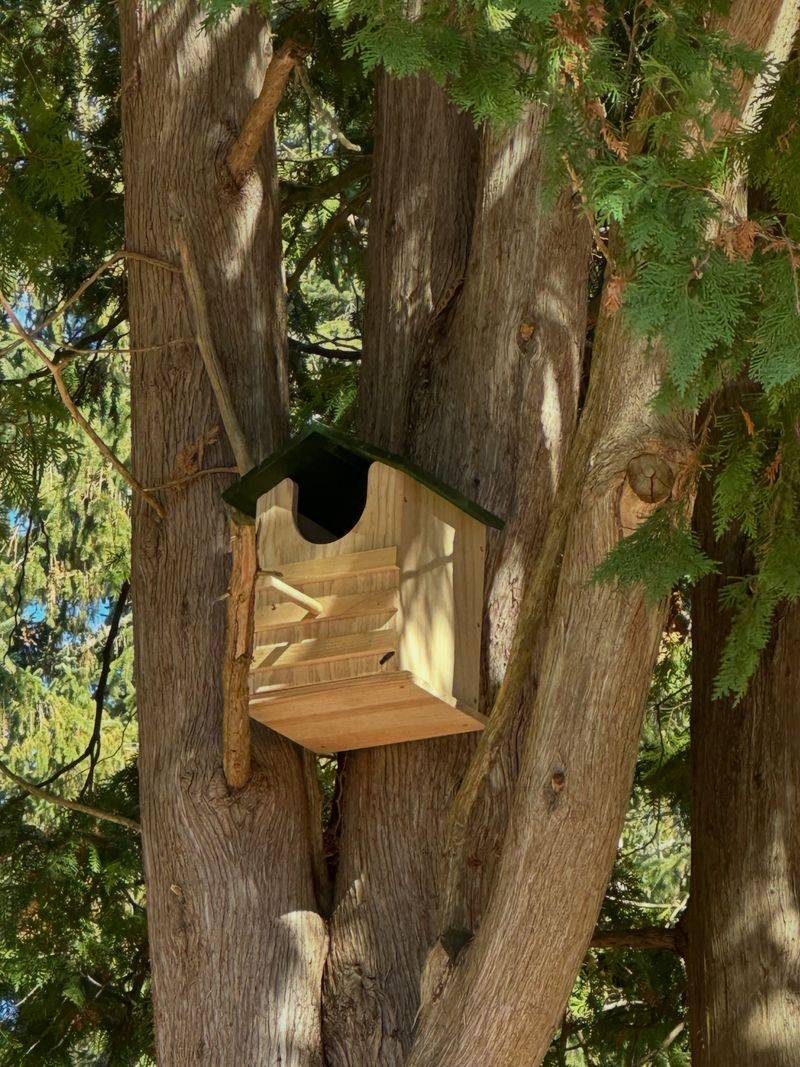
Owls like to live where the trees are old, thick, and full of stories. A skinny sapling at the edge of your lawn just will not cut it.
Mount your box between 20 and 30 feet above the ground. That height feels safe to the owls and keeps the nest out of reach from many ground predators.
It also helps the box stay hidden among the trunks.
Choose a spot in mature hardwood or mixed forest. Big oaks, maples, and beeches make excellent hosts.
Barred owls prefer large, unbroken woods, so try to avoid the edges of clearings or open fields. ODNR also advises keeping the box at least 150 feet from any house, so this project fits a wooded lot or acreage better than a tight suburban yard.
Safety comes first for you, too. Climbing 25 feet with a heavy wooden box is serious business.
Use a sturdy extension ladder, bring a helper, or hire a tree service with the right gear.
Attach the box firmly with lag bolts or strong straps so it will not sway in storms. Tilting it slightly forward can help rain roll off the entrance.
If your property has a wooded area well away from the house, that far corner might be the ideal location. Owls do not need fancy landscaping, just tall trees, quiet surroundings, and a solid home that feels secure.
Water Within 200 Feet Makes A Spot Even Better
Got a creek gurgling behind your house or a pond tucked past the tree line? Lucky you, because barred owls tend to love that kind of setting.
Placing a nest box within about 200 feet of water can make the spot extra appealing. Lakes, ponds, marshes, rivers, and swamps all count.
Many Ohio barred owls are found in wooded areas near streams and wetlands.
Interestingly, scientists think the owls may not need the water itself all that much. Wetter places often have older, less disturbed forests with the big trees owls prefer.
So water is a sign of great habitat, not just a drink stop.
Still, water areas come packed with snacks. Barred owls mostly eat small mammals like voles, shrews, and white-footed mice.
They also grab frogs, crayfish, fish, snakes, and insects, many of which live near water.
No pond in sight? Do not give up.
If you have mature trees and a quiet woodlot, the box may still attract interest. Water simply gives you bonus points.
Look around your property, note any wet spots or seasonal streams, and try to hang the box nearby. A little extra planning could turn an okay spot into a top choice.
Keep Branches And Leaves Away From The Entrance
Picture trying to walk through your front door with a coat rack blocking the way. That is how an owl feels when twigs crowd its entrance.
Barred owls need a clear flight path straight to the box. They glide in silently on wide wings, so branches and leaves in the way can make the box awkward or even unusable.
Take a look from the ground and imagine a big bird swooping in.
Trim any small limbs that stick out in front of the hole. Remember that summer leaves will fill in gaps you cannot see in November.
Give yourself a few feet of open space to be safe.
Here is the twist, though. A sturdy branch nearby is actually a bonus.
Owls like a perch where they can land, look around, and keep watch before heading inside. Just make sure that branch sits off to the side, not right across the opening.
Cornell Lab says entrance direction matters little for barred owls, so pick the one that gives the clearest flight path. Balance is the goal here, with open air in front and a handy perch close by.
Get it right, and your owls will have an easy runway home every single night.
Add 3 To 4 Inches Of Wood Chips
Owls do not haul in fluffy nesting materials like robins do. Whatever is on the floor when they move in is pretty much what they get.
That is why your final step matters so much. Spread 3 to 4 inches of bedding across the bottom of the box.
Wood chips, pine shavings, or pine needles all work well.
Pine shavings are a favorite among wildlife experts because they are safe and healthy for nesting raptors. The bedding gives eggs a soft cushion and keeps them from rolling around.
It also helps soak up moisture.
Skip cedar shavings, sawdust, and straw. Cedar has strong oils that may bother young birds.
Sawdust can get into tiny lungs, and straw tends to hold dampness and mold.
Plan on a quick cleanup each fall once nesting is over. Scoop out the old bedding, check for damage, and add a fresh layer.
November makes a perfect time for that yearly refresh, so this project can become a fun tradition.
After that, the hardest part is waiting. Listen on frosty evenings for that famous “who cooks for you” call.
With a little luck, you might soon hear little owlets begging for dinner too.