8 Small Trees That Shade an Arizona Patio Without Wrecking the Pavers
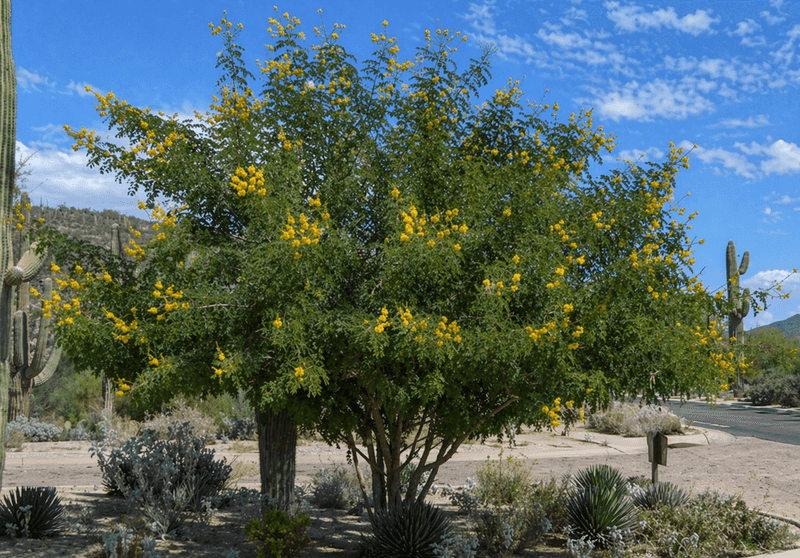
Sitting on your patio in July can feel like sitting on a griddle. A good tree can drop the temperature under its canopy by many degrees, but the wrong one can lift and crack your pavers with greedy roots.
The trick is picking compact, desert-tough trees that stay polite underground. Here are eight that cool your space, feed local wildlife, and sip water instead of guzzling it.
1. Desert Willow
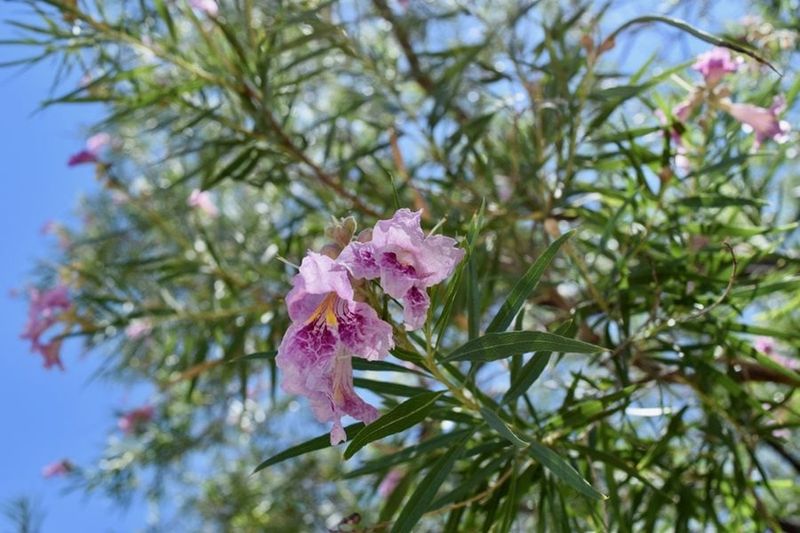
Picture a hummingbird zipping past your coffee cup at 6 a.m. while pink trumpet flowers sway overhead. That little scene plays out all summer under a desert willow, one of the friendliest patio trees in the low desert.
Despite the name, it is not a true willow at all. Chilopsis linearis is actually related to catalpas, and it is native right here in the Southwest.
It usually tops out around 15 to 25 feet, with a loose, airy canopy that lets breezes through while blocking the harshest rays.
Blooms in white, pink, or deep purple show up from spring well into fall. Hummingbirds, butterflies, and native bees treat it like a buffet, so your patio becomes a small wildlife stop without any extra effort from you.
Roots tend to run deep in search of water rather than spreading wide under hardscape, especially if you water slowly and deeply instead of with quick sprinkles. Plant it in fall, about 6 to 8 feet from the paver edge, and train it to a single trunk for a tidy look.
Once established, it needs only occasional summer soaks. Winter brings bare branches, which conveniently lets warm sunshine reach your patio when you actually want it.
2. Palo Blanco
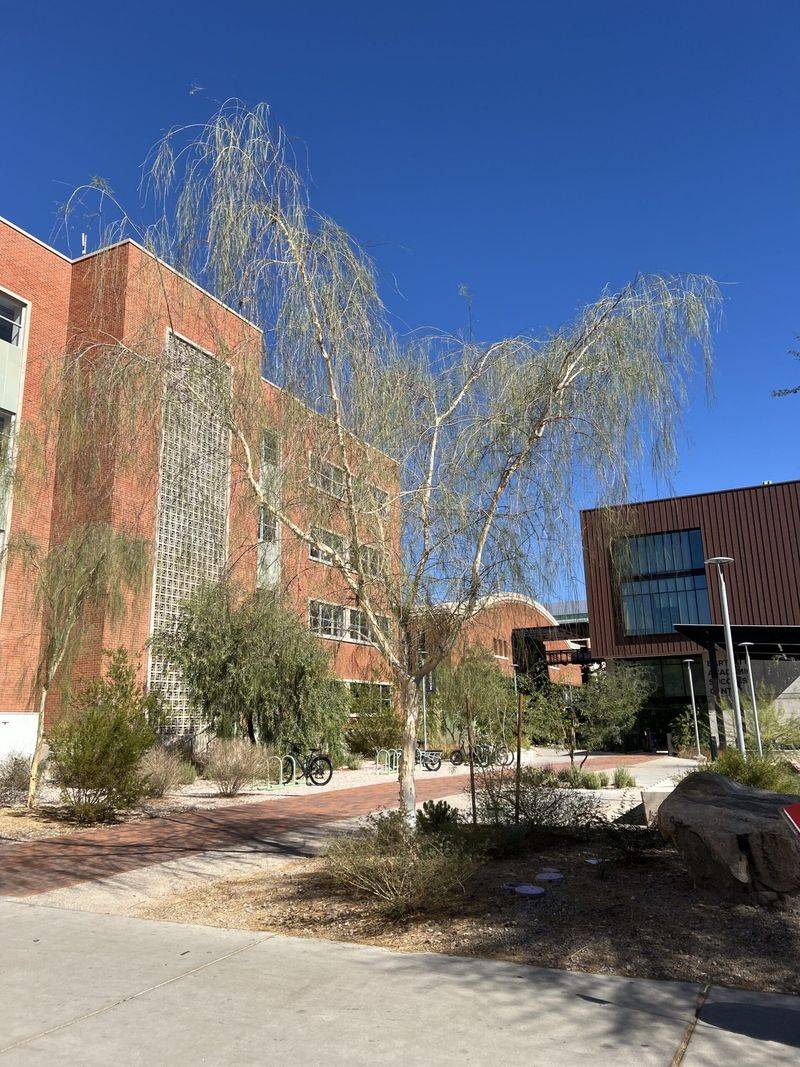
Some trees shout for attention. Palo blanco whispers, and somehow everyone still stops to stare at that ghostly white bark peeling in thin, papery strips.
Native to the Sonoran Desert of Mexico, Mariosousa willardiana grows slowly to around 15 to 20 feet. Its leaves are tiny and droop from long, slender stems, creating a soft, moving veil of filtered shade rather than a heavy canopy.
Here is the big win for patio owners. Palo blanco stays narrow and upright, never building the big lateral limbs or bulky trunk flare that cause trouble near walls and hardscape.
Landscapers often tuck it into tight courtyards and right beside seating areas for exactly that reason.
Because the shade is light, it pairs nicely with a few chairs where you want sun-dappled cool, not cave-like darkness. Grouping two or three together can boost coverage while keeping that elegant, modern desert look.
Water deeply every two to three weeks in summer once it settles in, and much less in winter. Protect young trees from hard frost on the coldest nights.
Fall planting gives roots a gentle season to establish before the next round of triple-digit days arrives.
3. Guajillo
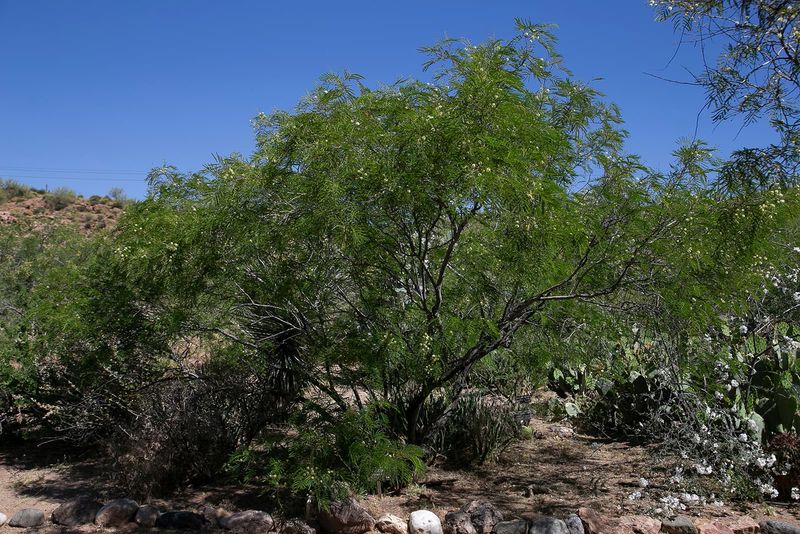
Fern-like leaves, creamy flower puffs, and a near-tropical vibe, all on a tree that shrugs at drought. Guajillo feels like a little vacation tucked into the corner of your yard.
Senegalia berlandieri usually reaches about 15 feet, which makes it ideal for smaller patios and courtyards. You can let it grow as a big shrub or prune it into a multi-trunk tree that frames a seating nook beautifully.
Your Arizona Garden Changes Every Week. Your Plan Should Too.
Gardening in Arizona changes quickly throughout the season. Every Friday you’ll receive a simple weekly plan showing exactly what to plant, prune, fertilize, harvest, and protect so you never miss the right timing.
The foliage is so finely divided that it filters sunlight into soft, flickering shade. In mild Phoenix winters it often stays mostly green, though a cold snap may thin it out for a few weeks.
Spring flowers draw bees and other pollinators, and the dense branches give small birds a safe place to perch. Honey made from guajillo blooms is actually prized in Texas, a fun bonus fact to share with guests.
Fair warning: stems carry small prickles, so keep it a step or two back from where people brush past. Its compact size means roots stay modest, and deep, infrequent watering encourages them to head downward rather than under your pavers.
Set it among agaves and cacti for gorgeous texture contrast.
4. Desert Fern Tree
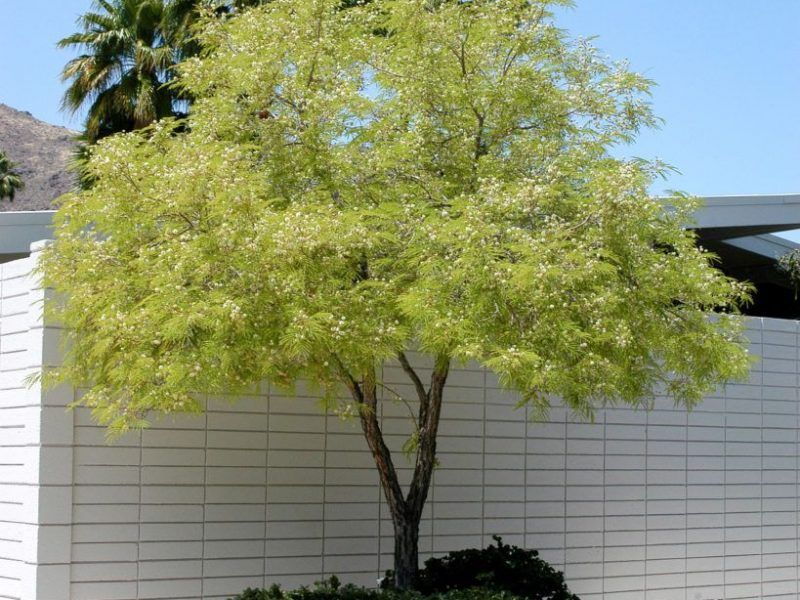
Ever wish you could have that lush, leafy look without a giant water bill? Meet the desert fern tree, a Tucson-area native that looks thirsty but really is not.
Lysiloma watsonii carries feathery, bright green leaves that ripple in the slightest breeze. The canopy spreads wide and soft, casting a gentle shade that keeps a patio pleasant without making it gloomy.
It fits right into layered desert designs, pairing well with penstemon, brittlebush, and low groundcovers underneath. That layering also creates cover for lizards and birds, which helps turn your yard into a working habitat instead of just a backdrop.
Fluffy cream flowers appear in late spring, bringing in bees and butterflies. Seed pods follow, so place it where a quick sweep now and then will not bother you.
Plant it 8 or so feet from your pavers to give the trunk room to thicken over the years. It handles reflected heat well, but extra water during the first two summers helps a lot.
After that, an occasional deep drink keeps it happy. Frost can nip new growth in colder pockets, though it usually bounces back quickly once warm days return in spring.
5. Thornless Cascalote
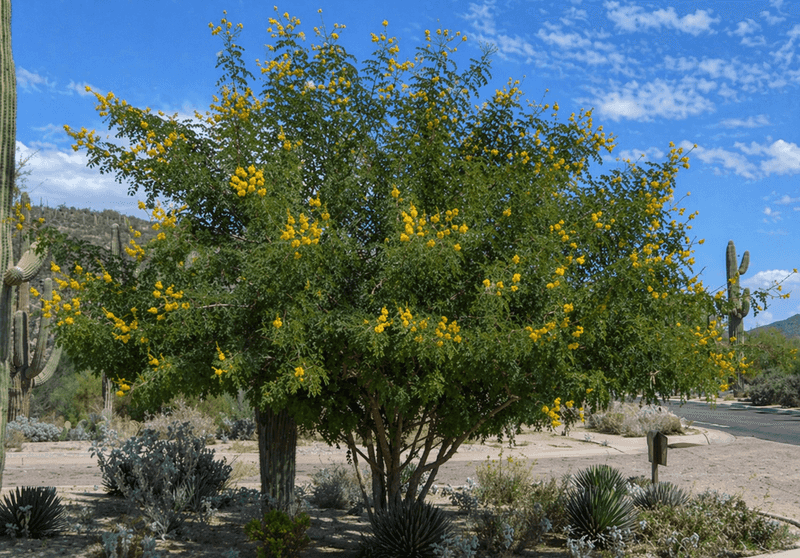
January in Phoenix can look a little brown. Then the thornless cascalote lights up like a string of golden lanterns, and suddenly the whole patio feels like a party.
Caesalpinia cacalaco Thornless blooms in bold yellow spikes through the cool months, right when most desert plants are resting. Hummingbirds notice fast, and you get to enjoy the show during perfect outdoor weather.
It grows slowly as a large shrub or small tree, reaching up to about 20 feet tall and wide with time. That slow pace is a gift near hardscape, because roots and trunk never surge in size and catch you off guard.
The dark, round leaflets provide solid shade in the warm season. Being semi-deciduous, it may drop some leaves in a hard freeze, letting more winter sun warm your seating area.
Choose the thornless form for patios. The regular version has prickly stems that snag clothes and fingers.
Plant in fall or early spring with full sun and good drainage. Deep watering every couple of weeks in summer is plenty once it is established.
Light pruning after bloom keeps a clean canopy above head height.
6. Texas Ebony
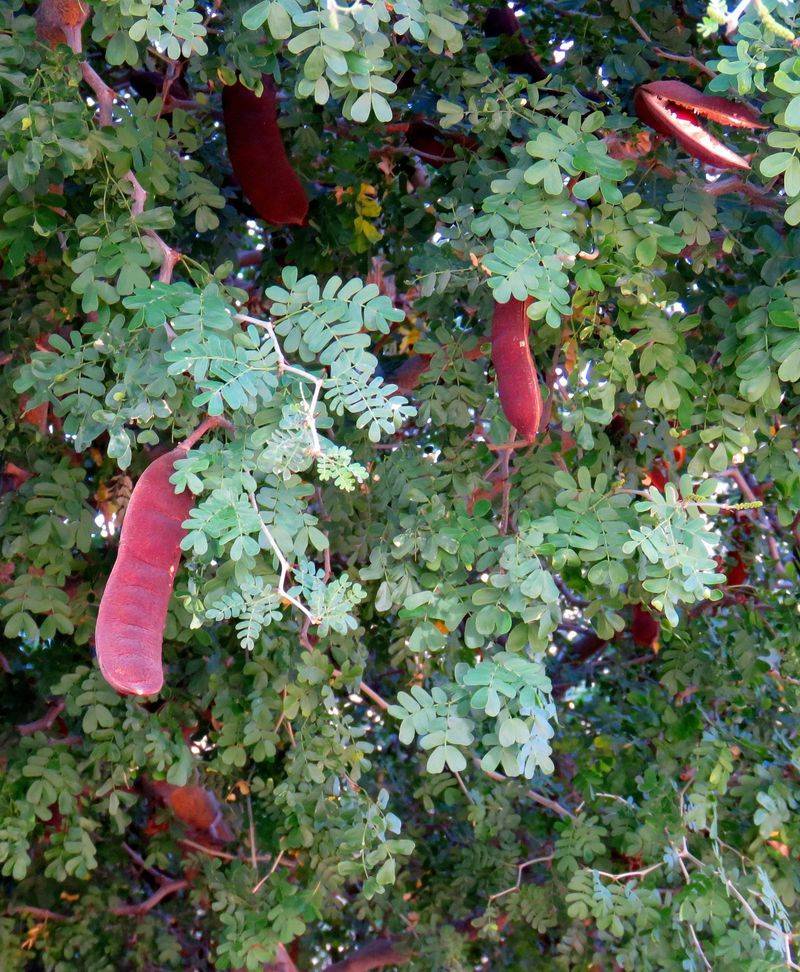
If you want real, deep shade, the kind where the air under the branches actually feels different, Texas ebony delivers. Its canopy is dense, dark green, and evergreen all year long.
Ebenopsis ebano is a slow grower, which works in your favor. It can eventually reach 25 to 30 feet, but that takes many years, and you can keep it smaller with steady pruning.
Many growers suggest planting it 8 to 10 feet from walls and paving, a sign its roots are far more manageable than those of big shade trees. It also handles alkaline soil and full sun with ease, two things Arizona yards have in abundance.
Pale, fuzzy flowers in late spring bring in bees, and the thick branches give birds safe nesting spots. The curved woody pods hang on for months and add winter interest.
A couple of honest notes. Branches carry small thorns, so lift the canopy well above seating.
Young trees can get frost damage, so cover them on the coldest nights for the first few winters. Once mature, it shrugs off cold snaps and 115-degree days with equal calm, rewarding you with year-round cool.
7. Desert Museum Palo Verde
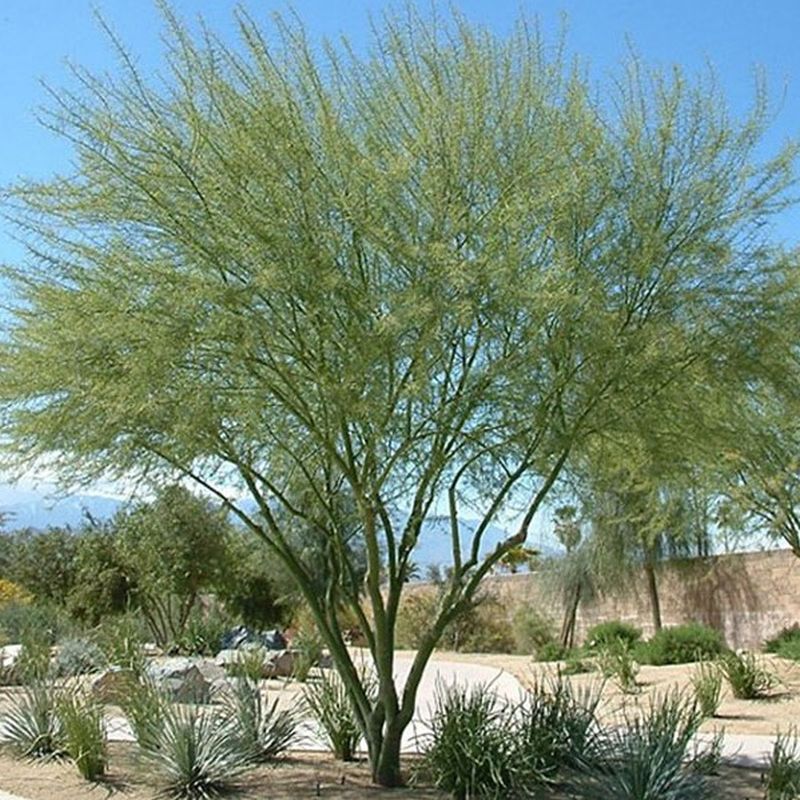
Green bark, yellow flowers, and almost no thorns. The Desert Museum palo verde was bred to combine the best traits of several palo verde species, and it shows.
This hybrid grows fast to about 20 to 25 feet, giving you shade sooner than most desert trees. The open canopy lets some light through, so the patio stays bright yet noticeably cooler on summer afternoons.
Each spring it bursts into a cloud of yellow blossoms that native bees adore. Its seeds and branches support birds and other wildlife long after the flowers fade.
Here is a perk scorpion-weary homeowners appreciate. Because it needs little water and has an open structure, it is less inviting to scorpions than dense, heavily irrigated plantings that create damp, shady hiding spots.
Keep the ground underneath clear of thick leaf piles and that benefit may improve even further.
Since it grows big quickly, give it room. Plant at least 10 feet from pavers and water deeply but rarely to steer roots downward.
Shallow, frequent watering is what tempts roots toward the surface. Fall planting sets it up perfectly, and it is also less messy than older palo verde varieties.
8. Desert Ironwood
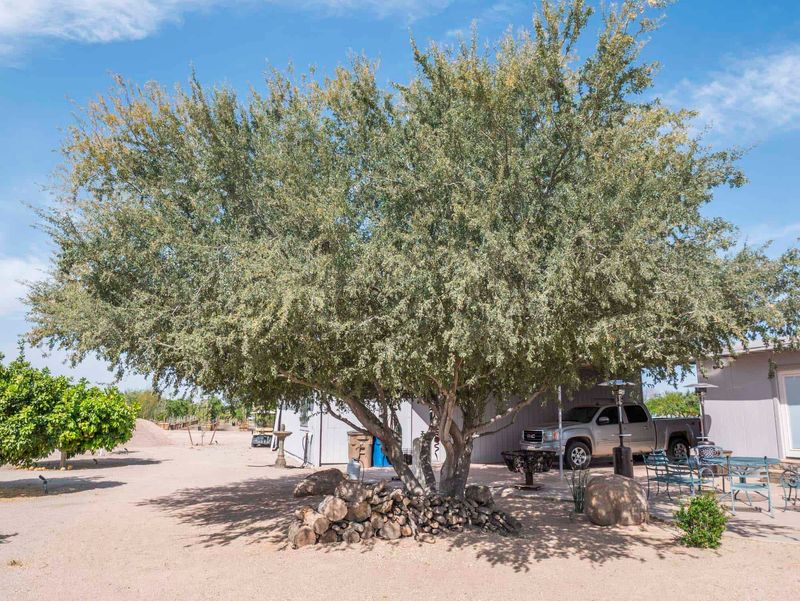
Think of desert ironwood as the wise elder of the Sonoran Desert. Wild specimens can live for centuries, and their wood is so dense it sinks in water.
Olneya tesota is a slow, steady evergreen that eventually reaches around 25 feet tall and spreads 15 to 25 feet. In the wild, it acts as a nurse tree, sheltering young saguaros and hundreds of other species under its canopy.
Your patio gets that same cool, protective feeling.
Neat freaks, take note. Ironwood drops very little litter compared to many shade trees, so you spend less time sweeping pavers and more time relaxing.
Lavender-pink blooms appear in late spring, buzzing with bees, and birds like doves and quail enjoy the seeds.
Once established, it ranks among the most water-thrifty trees you can grow, handling poor, rocky soil without complaint. Slow growth means the trunk and roots expand gradually, giving you years of predictable behavior near hardscape.
Give it at least 10 feet from the patio edge to plan for its mature width. Plant in fall, water deeply during the first couple of summers, then back off.
Prune lightly, since its small thorns appreciate a little clearance from foot traffic.