10 Desert Plants That Make An Arizona Yard Look Like Fall Even Without Changing Leaves
Arizona does not get the red maples and golden oaks that paint autumn in colder places. But your yard can still glow with warm reds, oranges, golds, and rusty seed pods when the heat finally breaks.
The right native plants bring that cozy fall mood while saving water and feeding hummingbirds, bees, and other helpful wildlife. Here are ten tough desert picks that deliver autumn color without a single changing leaf.
1. Desert Willow
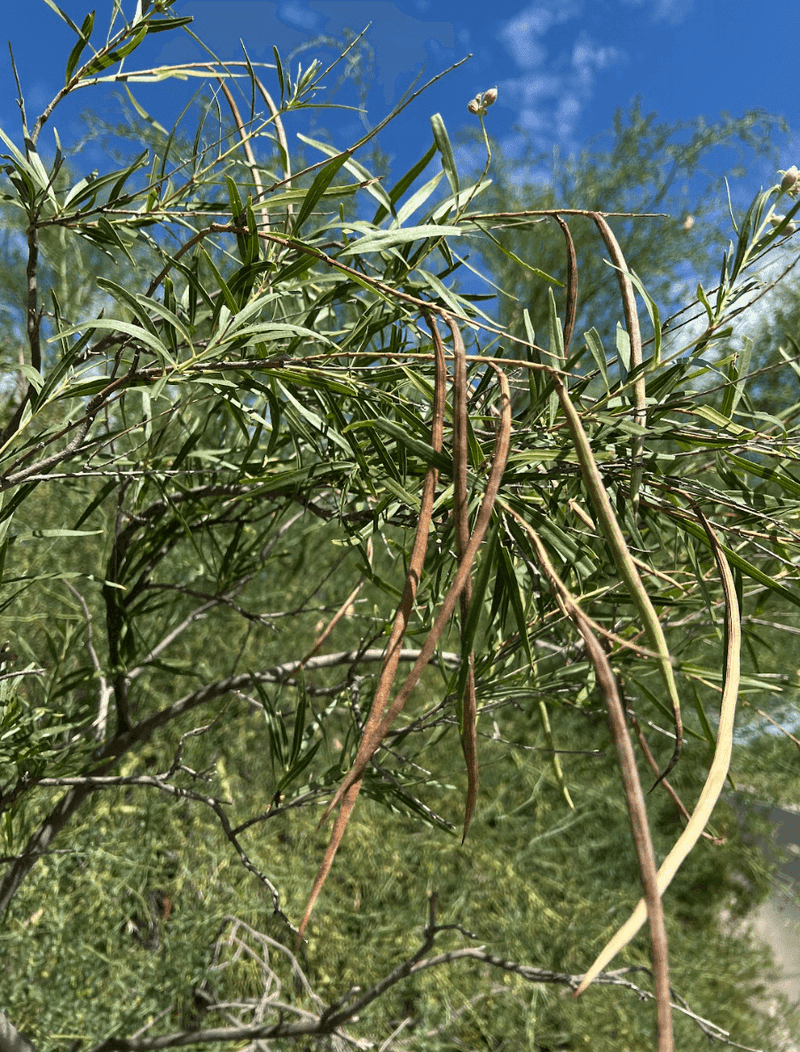
Picture a slim tree hung with long, slender seed pods swaying like tiny cinnamon sticks. That rustic look is exactly what desert willow brings to a yard once September rolls around.
Pink, lavender, or white trumpet flowers start in late spring and often keep going into fall, so you get blooms and pods side by side. The pods turn a toasty brown that reads as pure autumn, even while the leaves stay green.
Hummingbirds and native bees work the flowers hard, which turns one small tree into a busy pollinator stop.
Desert willow is native to Arizona washes, so it shrugs off 110-degree afternoons and alkaline, caliche-heavy soil. Once established, it needs only occasional deep watering.
Its airy canopy casts dappled shade, a welcome bonus for a west-facing patio that bakes every summer.
Fall is the smartest time to plant here. Getting it in the ground between late September and November gives roots several mild months to spread before the next scorching season arrives.
Fun fact: despite the name, it is not a willow at all. It belongs to the same family as catalpa trees, which explains those long, bean-like pods.
2. Baja Fairy Duster
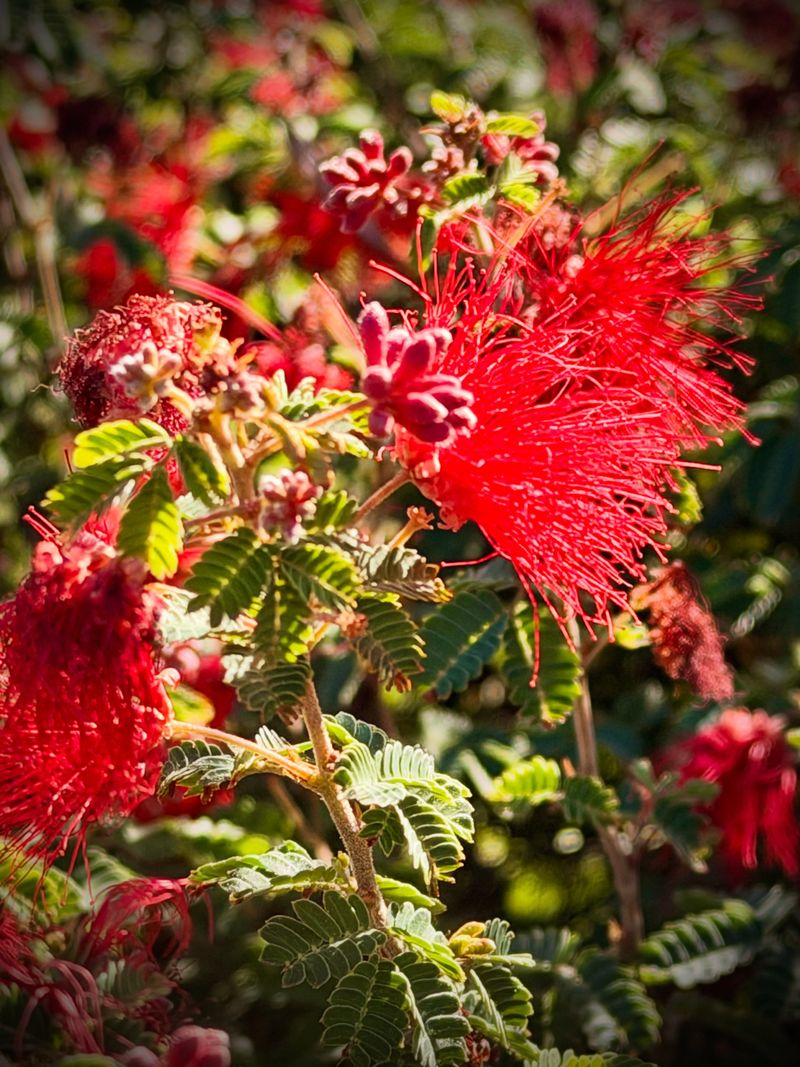
Hummingbirds treat a Baja fairy duster like an all-day snack bar, and once you see the blooms, you will understand why. Each flower looks like a tiny red firework frozen mid-burst.
Those feathery pompoms show up nearly year-round, but spring and fall are the big shows. In October, the fiery red against fine, fern-like green leaves gives the same warm punch as a maple turning scarlet back east.
Butterflies and native bees join the hummingbirds, so the shrub stays lively from morning to dusk.
Toughness is where it really earns its spot. Full sun, reflected heat off a stucco wall, and long dry spells barely slow it down.
It stays evergreen and rarely needs more than a light shaping, which makes it a friendly pick for busy homeowners.
Plant it along a driveway, near a front window, or anywhere you want to watch the hummingbird traffic. Give it deep, infrequent water the first summer, then back off as roots settle in.
One tip: it can be a little tender during a hard freeze. In the low desert, that rarely matters, but a sheet tossed over it on frosty nights keeps the show going.
3. Red Yucca
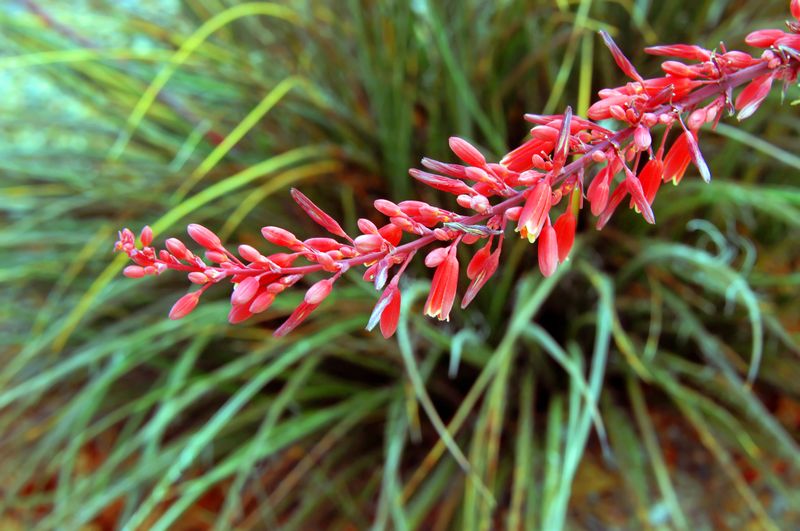
Here is a little secret: red yucca is not a yucca at all. It is actually a cousin of agave, and it might be the easiest plant on this whole list.
Your Arizona Garden Changes Every Week. Your Plan Should Too.
Gardening in Arizona changes quickly throughout the season. Every Friday you’ll receive a simple weekly plan showing exactly what to plant, prune, fertilize, harvest, and protect so you never miss the right timing.
Grass-like evergreen leaves form a neat fountain, and from late spring through fall, tall arching stalks rise up covered in coral-red tubular flowers. Some varieties even bloom in soft yellow.
Those warm-toned spikes look like autumn candles poking above the gravel, especially when the low October sun hits them.
Very little rattles this plant. It handles blazing heat, poor soil, and long stretches without rain.
The tough, fibrous leaves are not appealing to rabbits, which is great news if bunnies keep nibbling your other plantings.
Hummingbirds visit the flowers constantly, and bees and butterflies stop by too. Leave the dried flower stalks up into winter if you like the rustic look, then snip them when new growth appears.
Because it stays fairly compact, red yucca fits nicely along walkways, around pools, and in narrow side yards where bigger shrubs would crowd things. A row of three or five clumps creates a strong, repeating rhythm of color that ties a whole desert landscape together.
4. Desert Marigold
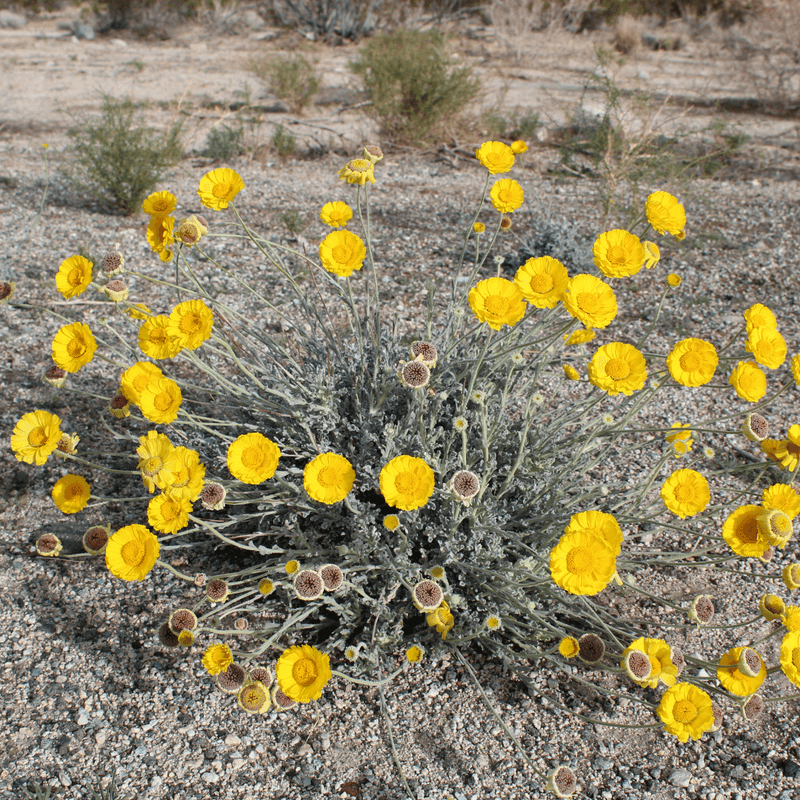
Sunshine on a stem, that is the simplest way to describe desert marigold. Its bright yellow daisies float above soft, silvery leaves that feel almost like felt.
In the low desert, this cheerful wildflower blooms from spring through fall and sometimes nearly all year. That golden color, paired with the woolly gray foliage, gives you the classic harvest palette of mustard and sage.
Tuck a few near rust-colored boulders and the whole corner suddenly feels like late October.
Desert marigold is about as low-maintenance as plants get. It actually prefers poor, fast-draining soil and grumbles if you water it too much.
Rich soil and frequent sprinklers can shorten its life, so treat it a little rough.
Native bees and butterflies love the flowers. Let some blooms fade and set seed, and finches and sparrows may come pecking at the heads.
Those dropped seeds also sprout new plants, so a small patch slowly becomes a golden drift.
Because it is short-lived, think of it as a self-renewing ground cover rather than a permanent shrub. Scatter seed or set out transplants in fall, when cooler temperatures help young plants get their footing.
5. Chuparosa
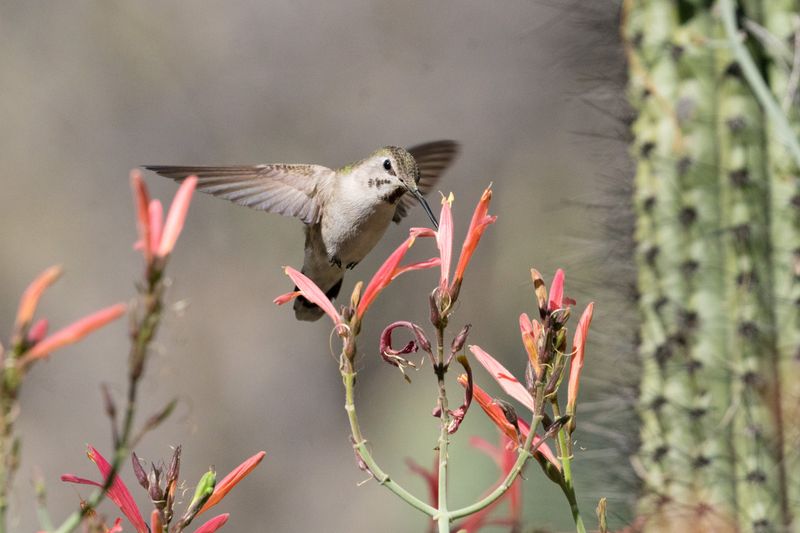
Just when most gardens start to nap, chuparosa wakes up. This Sonoran Desert native saves its biggest flower show for fall, winter, and spring.
The name means hummingbird in Spanish, and it fits perfectly. Bright red tubular flowers cover the sprawling green stems, offering nectar right when hummingbirds need it most and other plants are taking a break.
Orange and yellow forms exist too, all of them carrying that warm autumn glow.
The small gray-green leaves may drop during deep drought or a cold snap. No worries, though.
The smooth green stems stay attractive on their own and keep the plant looking full.
Chuparosa handles heat and very little water once established. It also hosts caterpillars of several native butterflies, so you are feeding the next generation of pollinators, not just the adults.
Give it room to sprawl, about four feet each way, near a window or patio where you can enjoy the visitors. Rocky slopes, wash edges, and the base of a mesquite are all happy homes.
Plant in fall so it can settle in during the same months it starts blooming, and you may see flowers in its very first season.
6. Autumn Sage
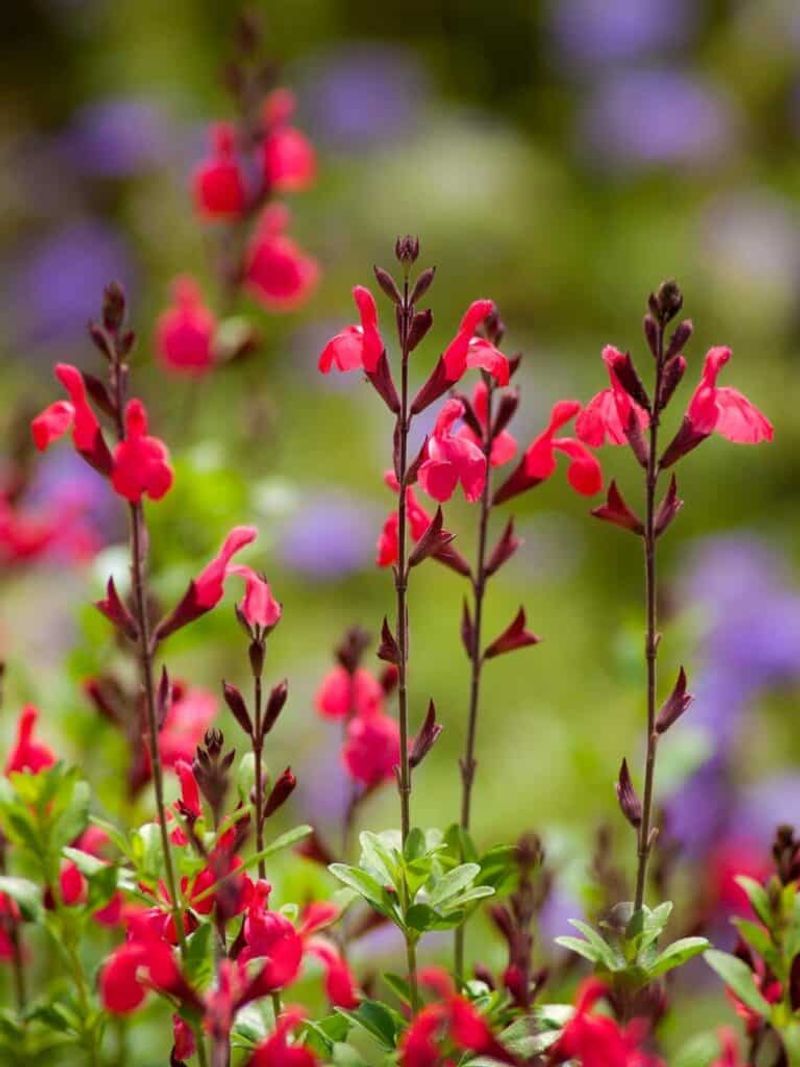
With a name like autumn sage, you might guess when this little shrub shines. Sure enough, it puts on a strong flush of flowers from about September into December.
Small tubular blooms in red, pink, coral, or white cover the compact plant, and the red forms look especially seasonal. A cluster of three by the front door feels like a festive fall wreath without any decorating effort.
Spring brings a second big round of color, so you get two shows a year.
Hummingbirds adore these flowers, and you will often catch them darting from bloom to bloom. The leaves have a pleasant minty scent when brushed, and that fragrance tends to make the plant unappealing to rabbits.
In the low desert, autumn sage does best with a bit of afternoon shade, such as the east side of a house or under a palo verde canopy. It uses low to moderate water once established.
Give it a light trim in late winter to keep it tidy and bushy. Avoid heavy pruning in the heat of summer.
Planting in October or November gives roots time to grow before the following year brings triple-digit temperatures again.
7. Desert Museum Palo Verde
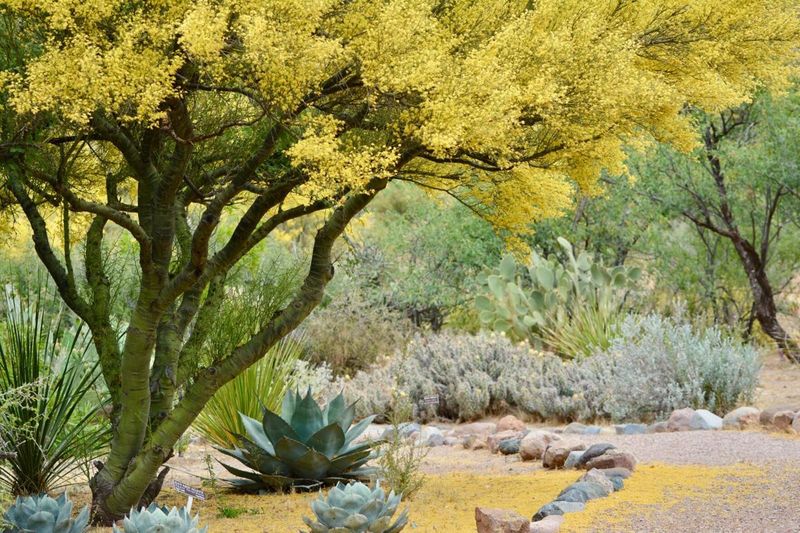
Most trees hide their trunks under bark. The Desert Museum palo verde shows off a smooth, bright green one that actually makes food from sunlight, just like a leaf.
That green bark is the trick that keeps this tree lively when leaves drop to save water. Add brilliant yellow flowers, which bloom longer on this hybrid than on other palo verdes, sometimes from spring into fall, and you get a golden canopy that echoes an aspen grove in autumn.
Shade is the big practical payoff. A mature tree can cool a patio or the west wall of a home during brutal summer afternoons, which may help trim cooling bills.
It does all this on very little water once established.
Wildlife benefits too. Bees swarm the flowers, birds perch and nest in the branches, and the seed pods offer food for small critters.
Young cacti often grow best beneath palo verdes, which act as nurse plants by sheltering seedlings from harsh sun.
Unlike many native palo verdes, this hybrid has few thorns, so it is friendlier near walkways and pools. Plant in fall and water deeply during its first couple of summers.
8. Brittlebush
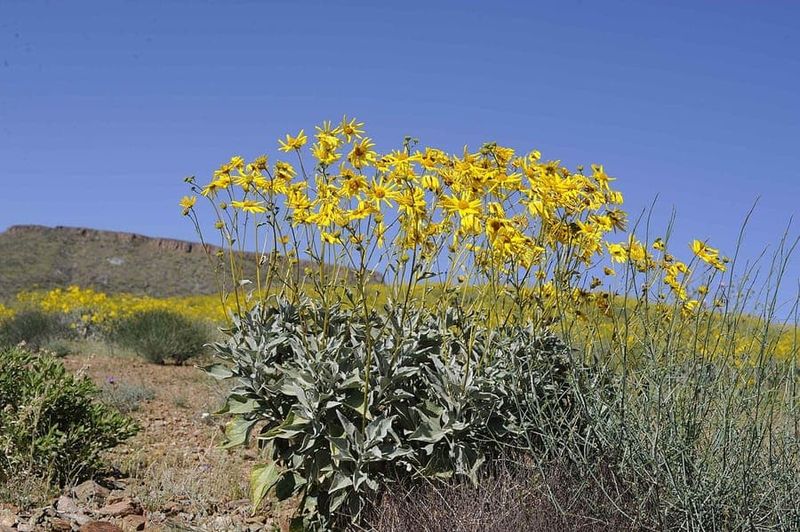
Ever notice how a frosty morning makes a yard look magical? Brittlebush gives you that silvery shimmer all year, no cold weather required.
Its rounded mounds of soft, gray-white leaves glow against red rock, brown gravel, and dark green shrubs. That pale foliage creates the same cozy contrast you see in fall wreaths, where dusty sage sits beside warm orange and gold.
In spring, the plant erupts with golden daisies that can cover entire hillsides around Phoenix and Tucson.
The leaves look silver for a smart reason. Tiny hairs reflect intense sunlight, helping the plant stay cool and hold onto moisture.
In fact, brittlebush tends to grow more silvery during dry spells.
Care is close to zero. It thrives in full sun, rocky soil, and heat that would wilt most shrubs.
Overwatering is the main way to cause trouble, so let rain do most of the work after the first year.
Bees and butterflies visit the flowers, and seed-eating birds forage on the spent heads. Long ago, people used the plant’s sap as a glue and even as incense.
Plant in fall and enjoy those golden spring blooms just months later.
9. Ocotillo
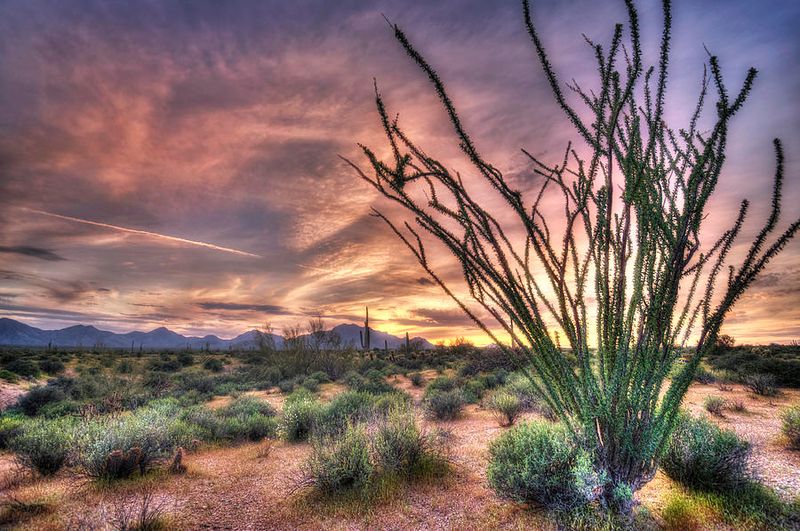
Some plants win you over with flowers. Ocotillo wins with pure drama, a fountain of tall, whip-like canes reaching up toward the sky like a living sculpture.
During dry stretches, the canes stand bare and gray-brown, giving a bold, autumn-branch silhouette that looks stunning against an orange sunset. After a good rain, small green leaves pop out almost overnight, then drop again as soil dries.
That cycle can repeat several times a year, making it a fun plant to watch.
In spring and sometimes summer, each cane tip lights up with clusters of red-orange tubular flowers. They resemble flickering flames, and hummingbirds and orioles arrive quickly to sip the nectar.
Ocotillo needs almost no water once rooted and loves full sun and rocky, well-drained ground. Its thorny canes also make a natural barrier along a property line.
Some Arizona families even weave cut canes into living fences that sprout leaves.
Patience helps with this one. Newly planted ocotillos can take a year or more to leaf out.
Buy from a reputable nursery, plant in warm months, mist the canes occasionally, and you will soon have the most striking focal point on your street.
10. Red Bird of Paradise
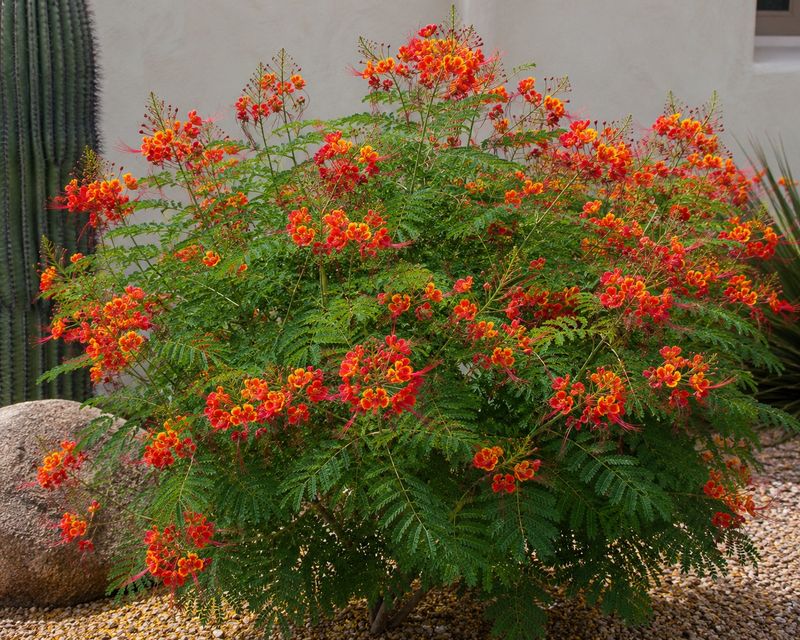
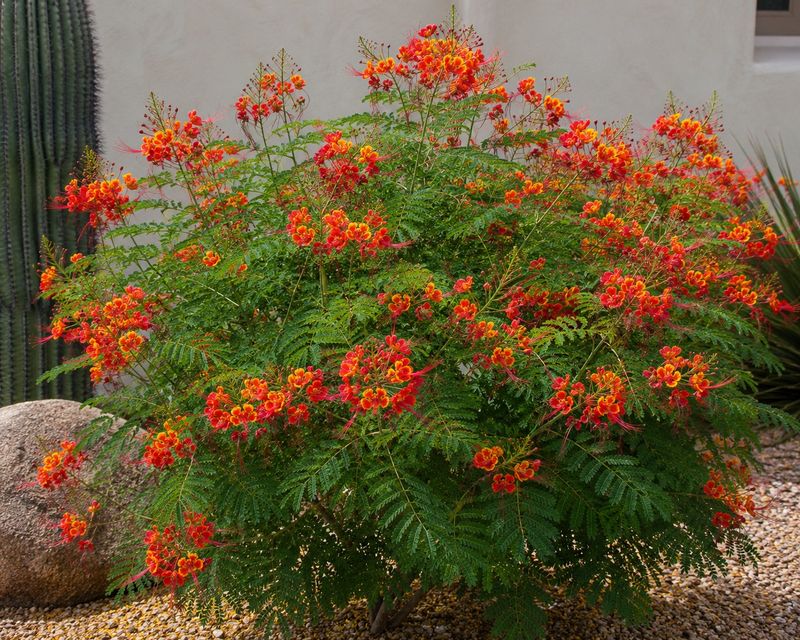
If one plant could bottle a bonfire, it would be red bird of paradise. Blazing clusters of orange, red, and yellow flowers look like flames dancing above feathery green leaves.
The blooms run from late spring right through summer and into fall, so the fiery colors line up perfectly with the season. Those long red stamens curl out of each flower like tiny sparks.
Few shrubs capture the pumpkin-and-ember palette of autumn quite so boldly.
The hotter it gets, the happier this plant seems. Full sun and reflected heat near pools, driveways, and walls suit it just fine.
It is drought tolerant once established, though a deep soak every week or two in summer keeps flowers coming.
Hummingbirds and butterflies flock to it, adding motion to an already lively display. In the low desert, frost may nip it back in winter.
Simply cut it down to about a foot tall in late winter, and it bounces back fast in spring.
A quick heads-up: the seeds and pods should be kept away from kids and pets, so plant it away from play areas. Otherwise, it is a showstopper that asks for very little.