These Soft Desert Grasses Make Your Arizona Cactus Garden Look Twice As Lush
Cactus gardens look bold and striking, but sometimes they can feel a little stiff and empty. Soft desert grasses fix that problem by adding movement, texture, and a full, green look that makes spiky plants pop.
The best part is that many of these grasses handle Phoenix and Tucson heat, sip very little water, and give birds and helpful bugs a place to live. Here are eight easygoing grasses that can turn your rocky yard into a living, breathing desert retreat.
1. Deer Grass
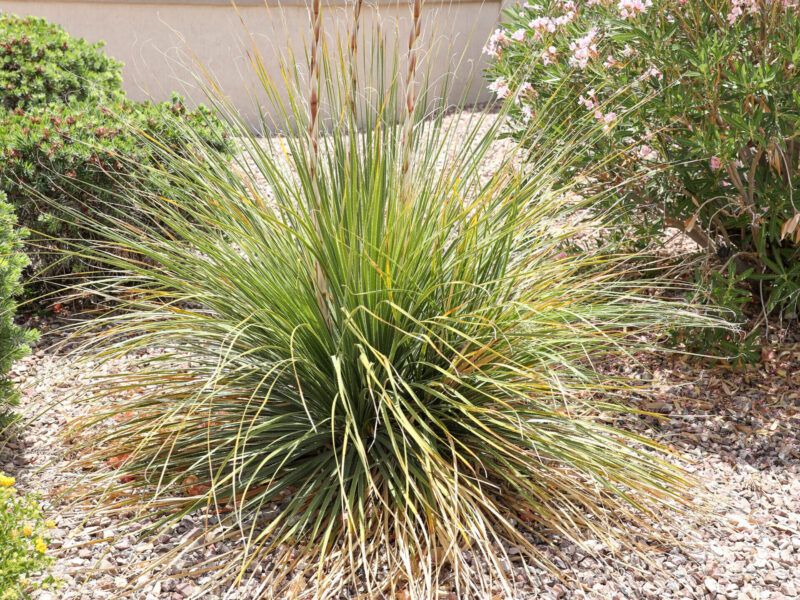
Picture a giant green fountain frozen mid-splash, and you have deer grass. Native to the Southwest, Muhlenbergia rigens forms arching mounds about 3 to 4 feet tall and wide, which makes it a natural anchor plant beside tall saguaros or chunky barrel cactus.
In late summer and fall, slim seed spikes shoot up above the foliage like pencil-thin wands. Seed-eating birds such as sparrows and finches often visit to snack, and the dense base gives lizards a shady hiding spot during brutal July afternoons.
Those lizards and birds may help keep insect numbers in check, so the plant quietly pulls double duty.
Deer grass shrugs off 110-degree days, alkaline soil, and reflected heat from walls once its roots settle in. Plant it from containers in October or November so it has a full cool season to grow before summer arrives.
Water every few days at first, then stretch to a deep soak every 7 to 14 days in summer once established. Each year in late January, trim the clump down to roughly 6 to 8 inches.
Fresh blades push up fast in spring, and the whole mound looks tidy and full again within weeks, with almost no fuss.
2. Pink Muhly
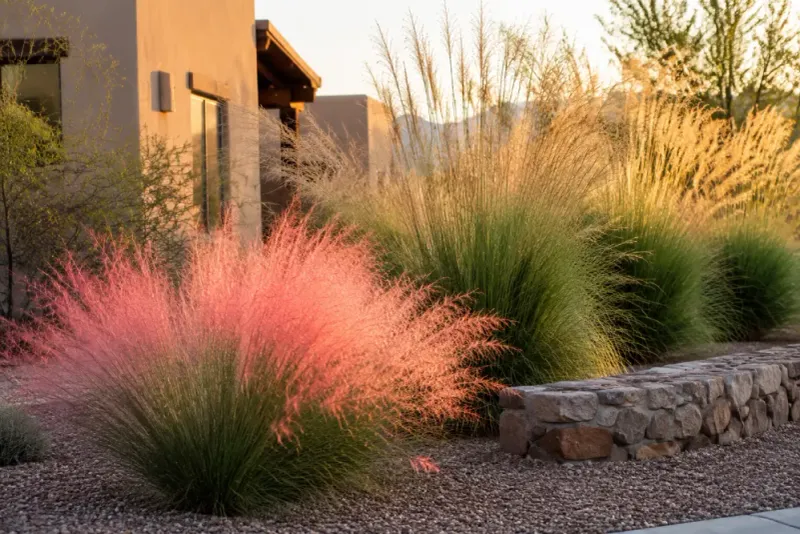
Every November, Arizona neighborhoods get a surprise show when pink muhly bursts into bloom. Its airy plumes look like cotton candy floating over the yard, and when the low sun shines through them, the whole garden seems to glow.
Muhlenbergia capillaris grows into fine-textured clumps about 2 to 3 feet tall and wide. Most of the year it stays a quiet green, which makes it a smart backdrop for blue agaves, prickly pear, and golden barrels.
Then October arrives, and the grass steals the spotlight right as many cactus flowers have faded.
Planting it in groups of three or five creates a soft pink haze instead of a single puff. Small insects shelter in the clumps, and those bugs become food for birds and lizards, adding a little more life to your yard.
Give pink muhly full sun and decent drainage, since soggy roots cause trouble. Fall planting works best, followed by regular watering through its first year.
After that, a deep drink every week or two in summer usually does the job. Cut it back in late winter, and it will reward you with another rosy display next autumn.
3. Bamboo Muhly
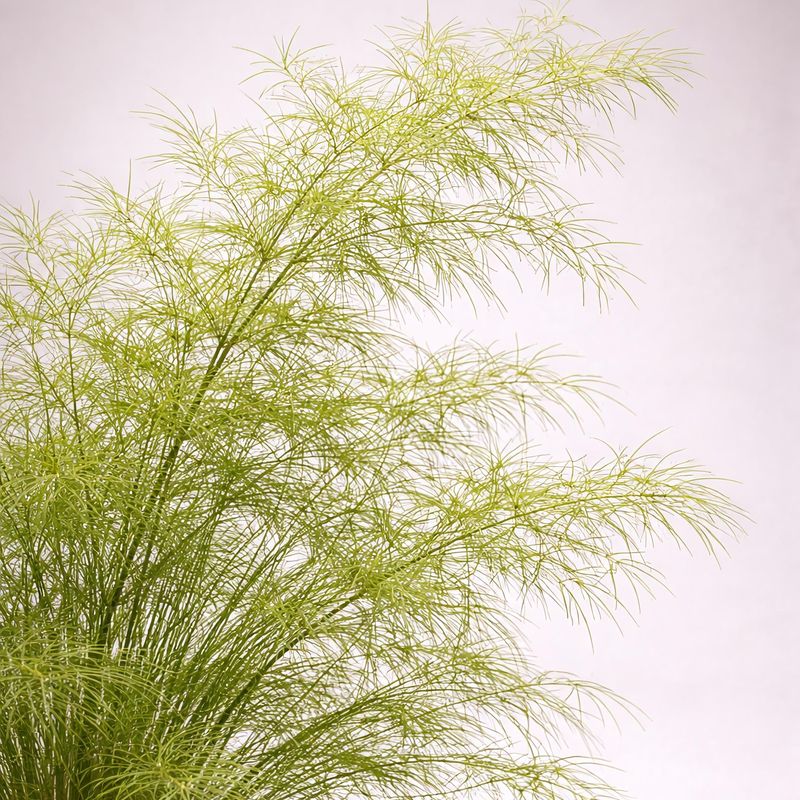
Need privacy but hate the idea of a thirsty hedge? Bamboo muhly might be your answer.
Muhlenbergia dumosa grows 4 to 6 feet tall with feathery, lacy stems that really do resemble tiny bamboo, yet it handles desert life far better than the real thing.
Your Arizona Garden Changes Every Week. Your Plan Should Too.
Gardening in Arizona changes quickly throughout the season. Every Friday you’ll receive a simple weekly plan showing exactly what to plant, prune, fertilize, harvest, and protect so you never miss the right timing.
Plant a row along a block wall or patio edge, and you get a soft, swaying screen that breaks up harsh lines. The fine leaves catch even a whisper of breeze, adding motion to a yard that might otherwise feel frozen in place.
Behind a lineup of totem pole cactus or ocotillo, the contrast looks stunning.
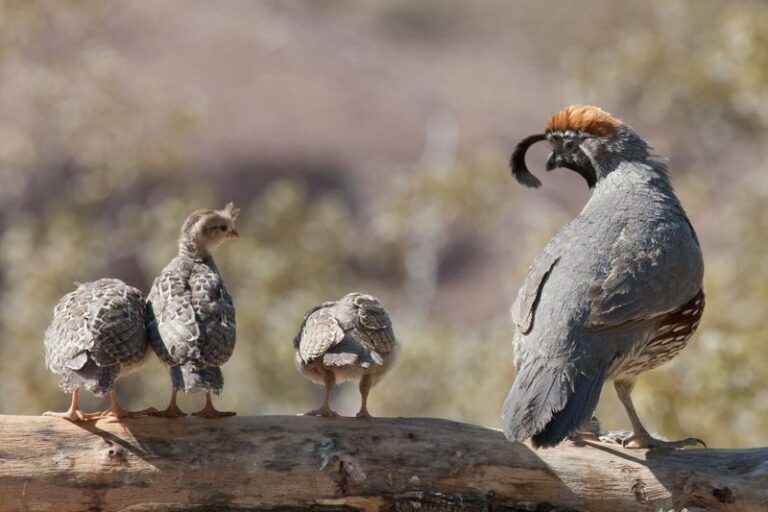
Birds love the dense, leafy cover for resting and hiding from hawks. Quail families in particular may dart in and out of it, and quail happily gobble up insects around the garden.
Bamboo muhly prefers a little afternoon shade in the hottest spots, though it can take full sun with a bit of extra water. Plant it in fall or late February through March.
Once roots spread, water deeply every week or two in summer and much less in winter. A light trim of floppy stems in early spring keeps it looking fresh and full.
4. Blue Grama
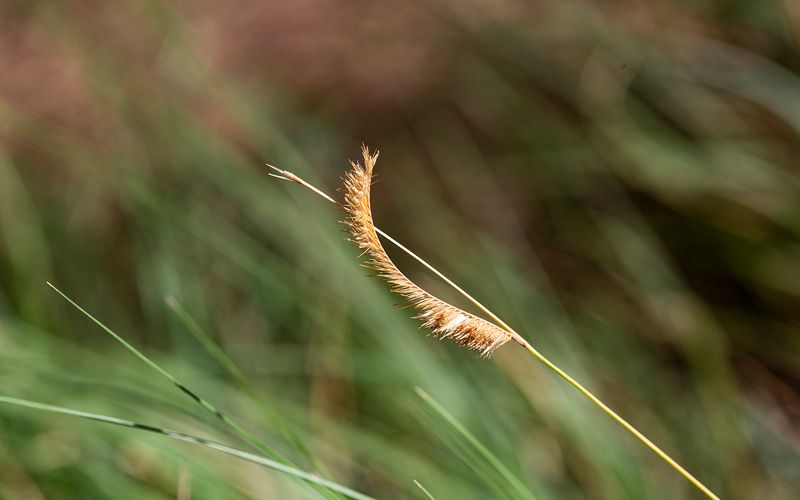
Look closely at blue grama in late summer, and you will spot seed heads curled like tiny eyelashes. Kids often think they look like little mustaches, and once you see it, you cannot unsee it.
Bouteloua gracilis is a short bunchgrass, usually 1 to 2 feet tall, which makes it ideal for tucking between low cacti, hedgehogs, and boulders. It fills empty gaps in rock gardens without hiding your favorite spiny specimens.
Some homeowners even use it as a lawn substitute because it can be mowed now and then.
Here is where it really shines: water use. After establishment, blue grama is among the toughest grasses around and can get by with very little irrigation, sometimes just occasional deep soaks during long dry stretches.
That makes it a friendly pick for anyone watching their water bill climb.
Native bees and other small pollinators sometimes visit its blooms, and ground birds forage for the seeds. Sow seed during the monsoon season, roughly late May to mid-July, when summer rains help it sprout.
Container plants go in best during fall. Skip fertilizer almost entirely, since rich soil can actually make this tough little grass floppy.
5. Mexican Feather Grass
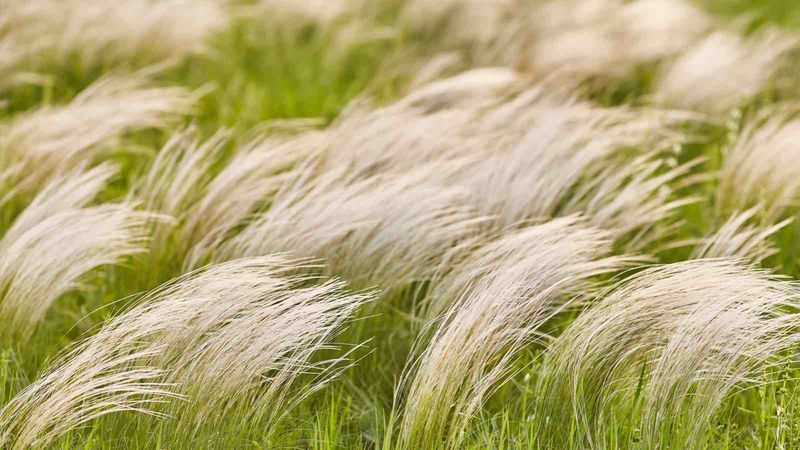
Few plants move as gracefully as Mexican feather grass. Its leaves are so thin they look like silky hair, and the slightest breeze sends whole clumps rippling like water.
Nassella tenuissima stays about 18 to 24 inches tall, a nice size for borders, pathways, and pots near the patio. Paired with round golden barrel cactus, the soft blond tufts create a playful contrast that photographs beautifully, especially in spring when the grass looks its brightest.
A fair warning, though. Because it is a cool-season grass, it often turns tan during the hottest summer months, and it tends to self-seed readily.
Snipping off seed heads before they drop helps keep it where you want it and away from natural washes. Some gardeners in Phoenix and Tucson prefer native options for this reason, so consider it a garnish rather than a main course.
Plant it in fall so it can grow through winter’s mild weather. Afternoon shade helps it hold color longer into June.
Water moderately while young, then occasionally once settled in. Combing out the brown blades with your fingers in late winter is oddly satisfying and keeps the clumps looking fluffy and tidy.
6. Sideoats Grama
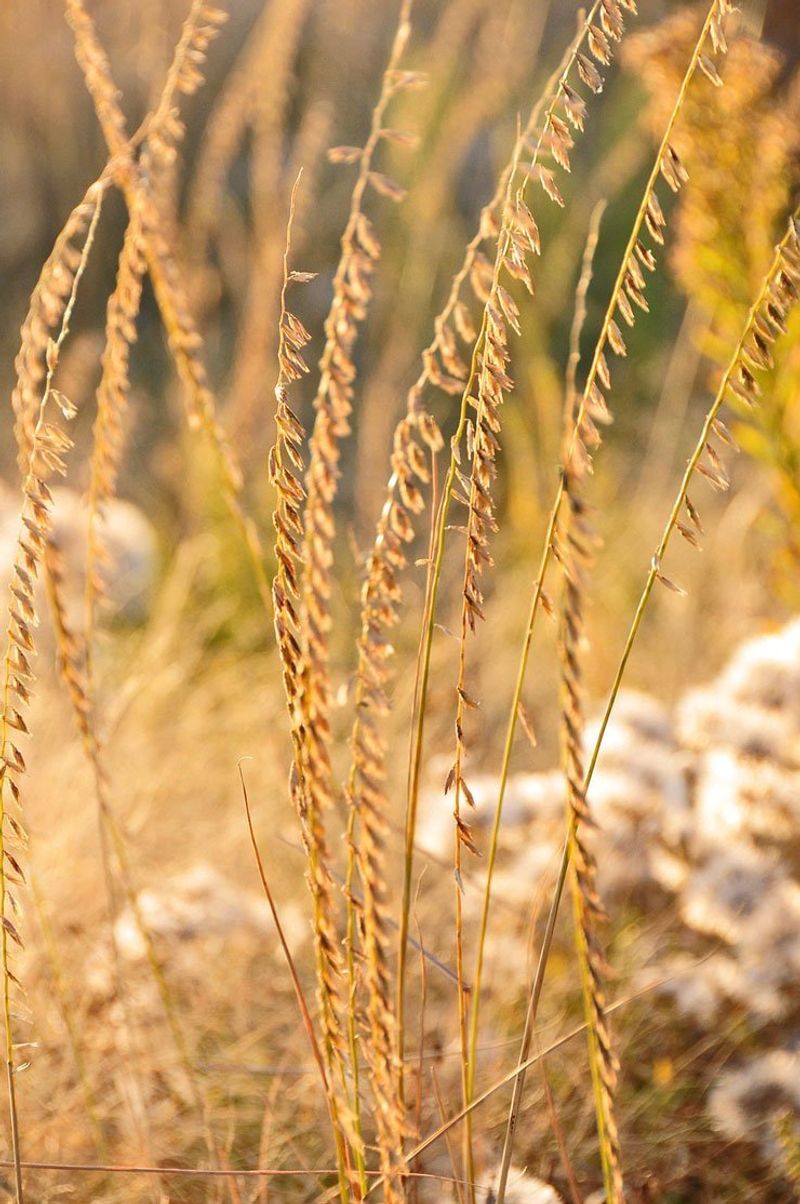
Sideoats grama got its quirky name honestly. Its little oat-shaped seeds dangle along just one side of each stem, like flags all blowing the same direction.
Bouteloua curtipendula is a native bunchgrass that grows 1 to 3 feet tall and fits right into wildlife-friendly yards. During summer, tiny orange or red flowers appear on the seeds, and up close they look like miniature fireworks.
Later, those seeds draw in songbirds and quail looking for an easy meal.
Planting it alongside desert marigold, penstemon, and prickly pear builds a mini habitat where bugs, birds, and lizards can all find something useful. A busier ecosystem may help balance out pest insects naturally, since more predators tend to hang around when there is food and cover nearby.
Sideoats grama handles caliche and alkaline soil without complaint. Start seeds with the monsoon or plant containers in October and November.
Water regularly through the first year, then cut back to deep watering every couple of weeks in summer. Trim old stems to about 6 inches in late January.
Fresh blue-green leaves will return as the days warm, ready for another season of swaying seed flags.
7. Purple Three-Awn
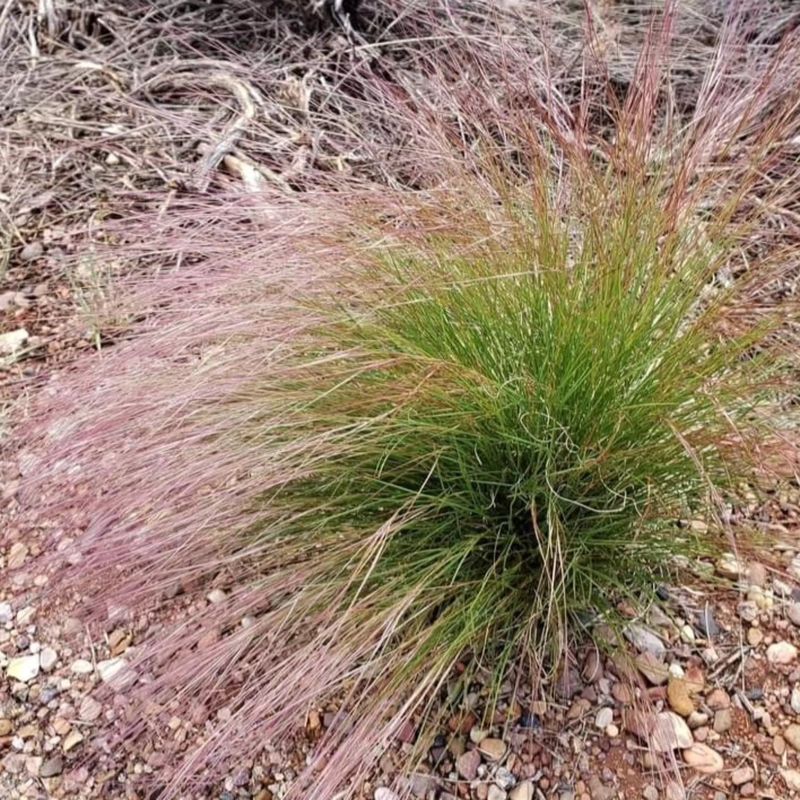
Catch purple three-awn at sunrise, and you might stop in your tracks. Its wispy seed heads blush a reddish purple, and with the sun behind them, they shimmer like a soft cloud hovering above the ground.
Aristida purpurea is a native that grows in loose clumps about 1 to 2 feet tall. It brings a wild, natural feel, perfect for gardens meant to look like a slice of the Sonoran Desert.
Mix it with cholla, ocotillo, and brittlebush for a scene that looks like it grew there on its own.
One tip: the seeds have sharp little awns that can stick in socks and pet fur. Plant it away from paths where dogs run, and save it for the back of beds or along the edges of the property instead.
Purple three-awn is extremely drought tolerant and can often survive mostly on rainfall after it settles in. It provides cover for ground-dwelling birds and small critters, which helps build a fuller food web in your yard.
Plant in fall or early spring, water gently while it establishes, then mostly leave it alone. A quick haircut in late winter keeps it looking neat.
8. Alkali Sacaton
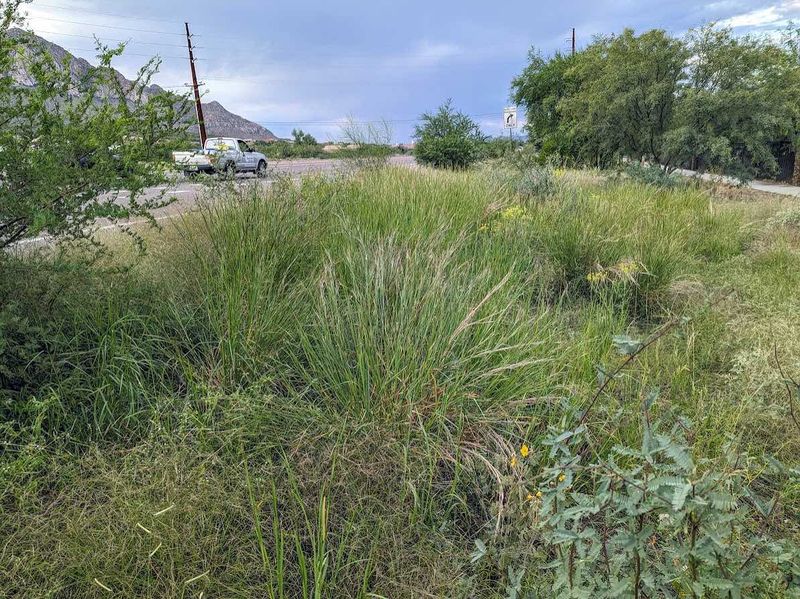
Got a low spot where monsoon water puddles? Alkali sacaton practically raises its hand for that job.
Sporobolus airoides is a sturdy native that handles salty, alkaline soil and still looks soft and graceful doing it.
It grows into large clumps about 2 to 3 feet tall, topped with airy, pinkish seed sprays that look like fine lace in late summer. Planted in a rain basin under a mesquite or palo verde, it helps the yard soak up storm water instead of letting it run off into the street.
That deep root system makes every rain count.
Wildlife appreciates it, too. Small birds feed on the tiny seeds, and the thick clumps offer nesting material and shelter.
More birds around the yard may mean fewer bugs bothering you on the patio, since many species eat insects as well as seeds.
Alkali sacaton tolerates both drought and occasional flooding, which is a rare combo. Plant containers in fall or late winter and water well during the first year.
Afterward, deep watering every two weeks in summer is usually plenty. Cut it back in late January, and it will rebound with fresh growth when the weather warms.