A Roadrunner In Your Arizona Yard May Be A Clue To Nearby Habitat
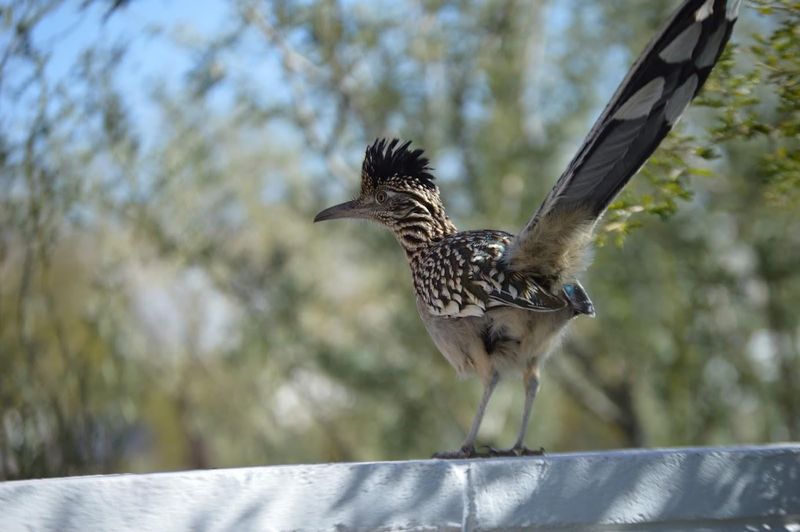
A roadrunner can sprint along the ground faster than most people jog. It also hunts with a sharp eye and a quick beak, which is quite a show.
Seeing one outside your window can feel like a small desert gift. That sighting is worth enjoying, and it is worth reading carefully, because it tells you less than you might hope.
What One Visit Can—and Cannot—Tell You
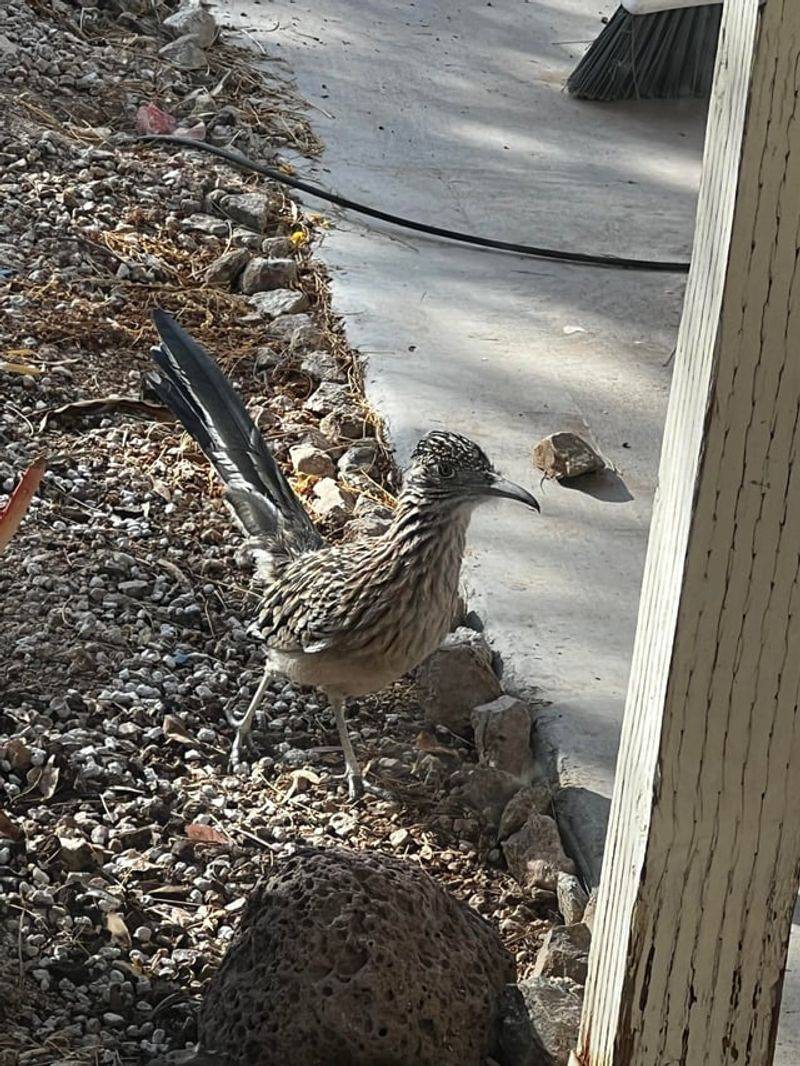
A roadrunner strutting across your gravel is a thrill, and it is fair to wonder what brought it there. The bird may have found a tasty meal, a safe path, or simple cover nearby.
Those are possible clues, not a verdict on your property.
The bird is not tied to your fence line. A roadrunner can forage across a wide area, so the food or shelter it wanted might sit in a neighbor’s yard, a wash, or a vacant lot.
That is why “in or near the yard” is a safer way to think about it than “my yard provides.”
Sightings also have limits as evidence. A Tucson study of urban and suburban roadrunners cautions that reports reflect where people look and report birds.
Abundance and habitat preference are hard to infer from them.
So enjoy the visit as an encouraging hint that some useful resources are around. Just do not treat it as a yard scorecard, and do not assume your landscaping caused it.
The bird has its own reasons, and it is not telling.
A Native Bird Of Open, Scrubby Places
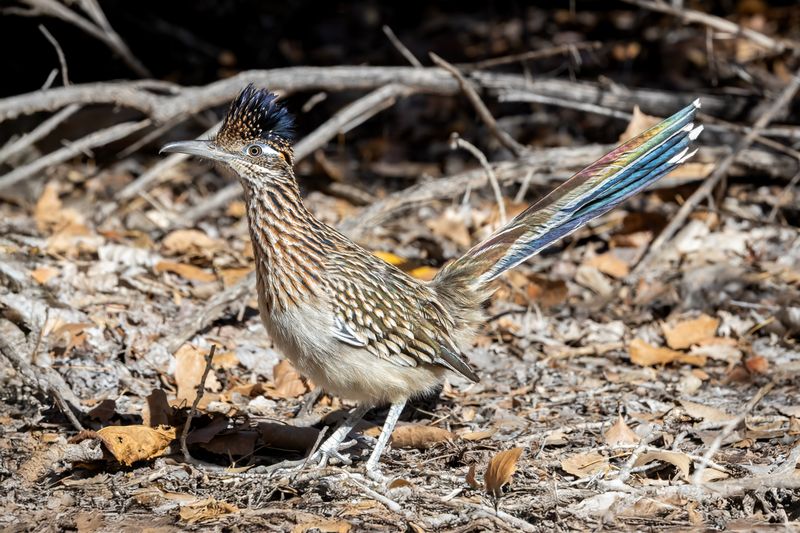
With its shaggy crest and long tail, the greater roadrunner looks right at home in desert scrub. Arizona’s wildlife conservation strategy lists it as a native nongame species.
That makes it a true local, not a visitor passing through.
Its favorite settings are semi-open and scrubby, including Sonoran Desert country. It likes open ground mixed with scattered shrubs and other sturdy plants.
Some suburban areas with lighter development can work for it too, as described in the Cornell Lab’s life history notes.
Developed areas do show up in the records. The Tucson study documented reported sightings in urban and suburban settings, with a broad pattern around the city’s edge.
Yet it warns against strong conclusions about relative abundance or habitat choice.
That means a citywide pattern cannot explain why one bird crossed one yard. Think of the map as background, not a reason.
Your sighting is a single dot, and dots are shy about their stories.
Their Menu Extends Beyond Lizards
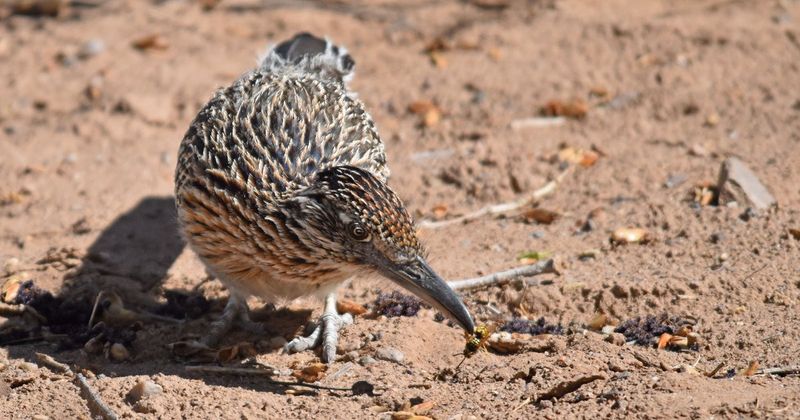
Cartoons made us think roadrunners live on snakes and lizards. Real life is more varied.
According to Cornell’s life history summary, they eat insects, reptiles, small mammals, birds, and scorpions.
They also eat carrion at times. Some plant material joins the menu seasonally, such as fruit and seeds.
It is an opportunistic diet, so the bird takes what it can catch and handle.
One southern Texas study offers a useful reality check. In that mesquite-thornscrub research, invertebrates made up most identified food items, with grasshoppers and beetles prominent.
That result belongs to its own study site. It is not a number for Arizona yards, and it does not mean lizards are rare on anyone’s menu.
It simply shows that diets shift with place, so a roadrunner outside your window might be hunting beetles as easily as lizards.
A Predator Is Not A Pest-Control Service
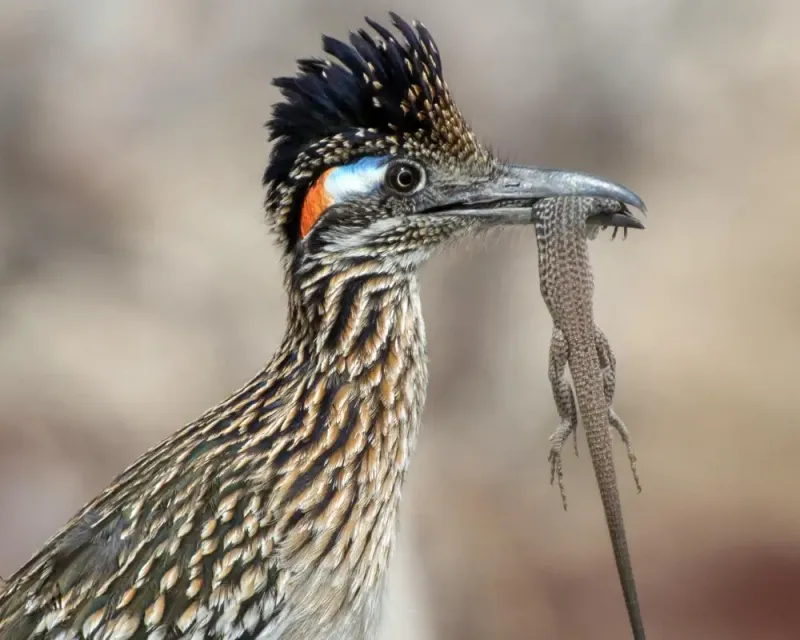
It is tempting to hire a roadrunner in your imagination as a scorpion patrol. The bird would not sign the contract.
Eating a prey type is not the same as keeping its numbers down around a house.
Roadrunners are opportunistic hunters, as the Cornell Lab’s life history page explains. They take scorpions among many other foods.
Nothing in the sources reviewed shows they control scorpions, ticks, mosquitoes, or other pests in residential yards.
The Texas diet study points the same way, since its findings describe a varied menu at one site. A single bird passing through is not a pest plan.
If scorpions worry you, use proven household methods and not wishful thinking.
Roadrunners also are not at the very top of the food chain. An Arizona field report documents a Swainson’s Hawk preying on a greater roadrunner.
Even the speedy hunter has to watch the sky.
Pair Open Foraging Space With Cover
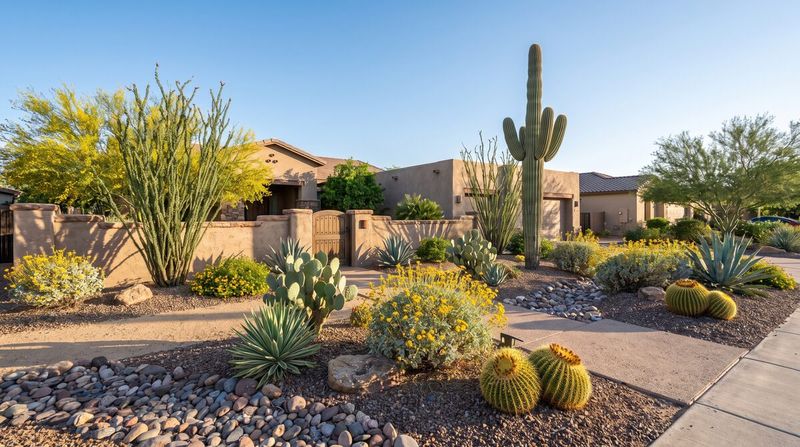
Picture a yard that gives a ground hunter room to move and a place to duck out of sight. That combination is the heart of roadrunner habitat.
Tucson Audubon’s roadrunner guidance points toward complex ground structure and sturdy vegetation.
In practice, leave some open ground next to shrubs instead of covering every inch with plants. Dense, thorny plants can offer cover or potential nest sites.
Fallen leaves, rocks, and low litter add texture where small animals may live.
The wider species account from the Texas Breeding Bird Atlas also describes roadrunners using a mix of open ground and brushy vegetation. It fits the picture of a bird that likes both room and refuge.
Treat these steps as support for wildlife in general. They do not guarantee a roadrunner will stop by, since the bird roams widely.
Still, a layered yard may help lizards, insects, and songbirds too.
Choose Plants For Local Conditions And Water
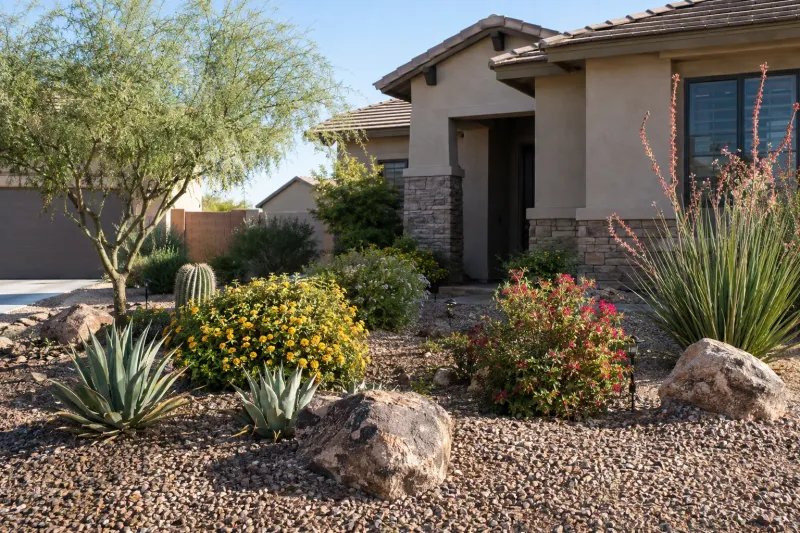
Wildlife-friendly and water-wise can happen in the same bed. University of Arizona Cooperative Extension advises choosing plants suited to local conditions.
Native and desert-adapted plants generally need less supplemental irrigation than less-adapted choices.
That is a handy fit for habitat planting. The dense, sturdy shrubs that offer cover can also be tough desert natives.
Tucson Audubon’s guidance likewise favors plants that give structure to the ground and shrub layers.
Water needs still vary by plant and by location. A shaded north side and a sunbaked west wall are not the same place.
For specifics on trees and shrubs, see the extension watering guide and not a one-size schedule.
Plant for the conditions you actually have, and give new plants the care they need to settle in. Do not expect the planting itself to summon a roadrunner.
Expect a tougher, thriftier yard, and consider a visitor a bonus.
Support Wildlife Without Baiting It
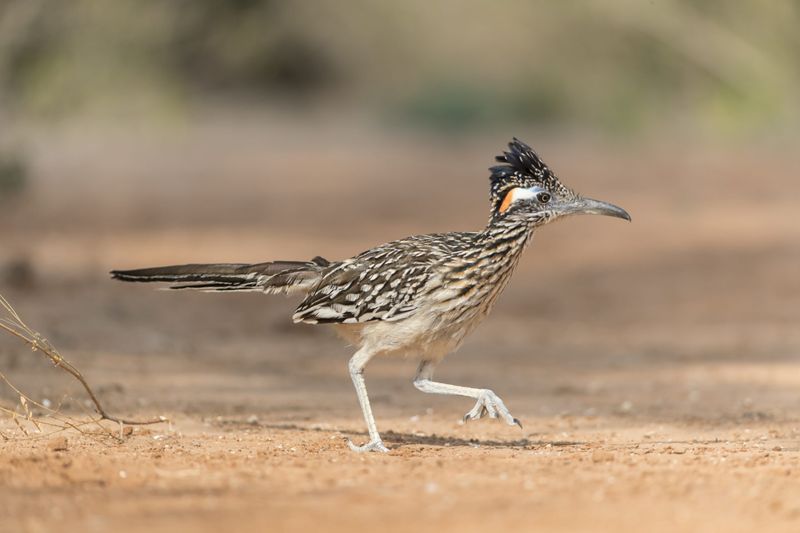
Enjoying a roadrunner from a distance is the best way to share a yard. Leaving out food or hand-feeding it is not.
Arizona Game and Fish advises against intentionally feeding wildlife, since it can pull animals into risky habits.
The department’s page also describes state-law exceptions for birds and tree squirrels, and notes that local rules can vary. So it would be wrong to say feeding roadrunners is illegal everywhere in the state.
Check the department’s guidance and your local ordinances.
A better habit is skipping insecticides, which Tucson Audubon recommends for roadrunner-friendly yards. Think of it as habitat advice, not a promise of a visit.
Fewer chemicals leave more insects and other small prey around for wildlife.
If a roadrunner does stroll through, treat it as an encouraging clue that some resources may be nearby. It is not a yard scorecard or a pest-control guarantee.
It is a fine reason to pause with your coffee and watch.