8 Winter Blooming Plants That Bring Color To Michigan Gardens
Winter in Michigan doesn’t have to mean a completely colorless garden. Certain plants have adapted to bloom during the colder months, offering a welcome patch of color when almost everything else in the yard has gone dormant.
Many of these varieties are surprisingly tough, having evolved specifically to handle freezing temperatures without damage to their flowers or foliage.
Because bloom timing varies between species, a thoughtful selection can keep some color visible across several winter months rather than concentrated into just one short window.
For Michigan gardeners craving a reason to look forward to their yard even in January, these eight winter bloomers offer a genuine solution.
1. American Witch Hazel Blooms As Winter Arrives
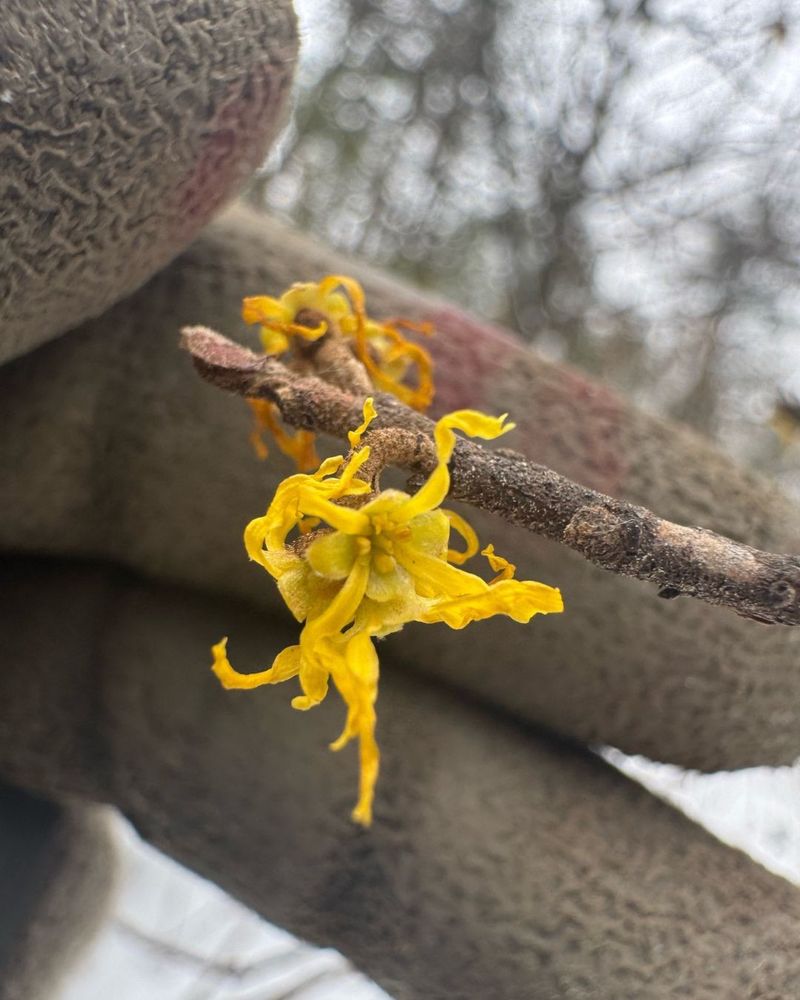
Just when most gardens have gone to sleep, American witch hazel wakes up and throws a party. Its bright yellow flowers look like tiny bundles of crinkled ribbon, and they pop open in late fall. Many hang on well into early winter.
What makes Hamamelis virginiana so special is its timing. Nearly every other plant has finished blooming by then, so these flowers stand out like little sparks on the branches.
Lean in close and you will notice a light, spicy scent that feels cozy on a chilly afternoon. Frost does not bother the blooms either. They simply keep shining after a cold night.
Growing one is easier than you might think. Pick a spot with full sun to part shade and soil that stays moist but drains well. During the first few seasons, water deeply during dry stretches so the roots can settle in and grow strong.
Pruning is rarely needed. Snip only crossing branches or stray stems, and do it lightly. The shrub has a loose, natural shape that looks best when left mostly alone.
Over time, it can reach 15 to 20 feet tall, so give it space near the edge of a yard or woodland bed.
Michigan is home turf for this shrub. It grows wild in woodlands across the state, from the southern counties all the way to the Upper Peninsula. That means it handles harsh winters with ease.
Planting one is like inviting a local friend who already knows how to handle the weather and still shows up with flowers.
2. Hybrid And Vernal Witch Hazels Bloom In Late Winter
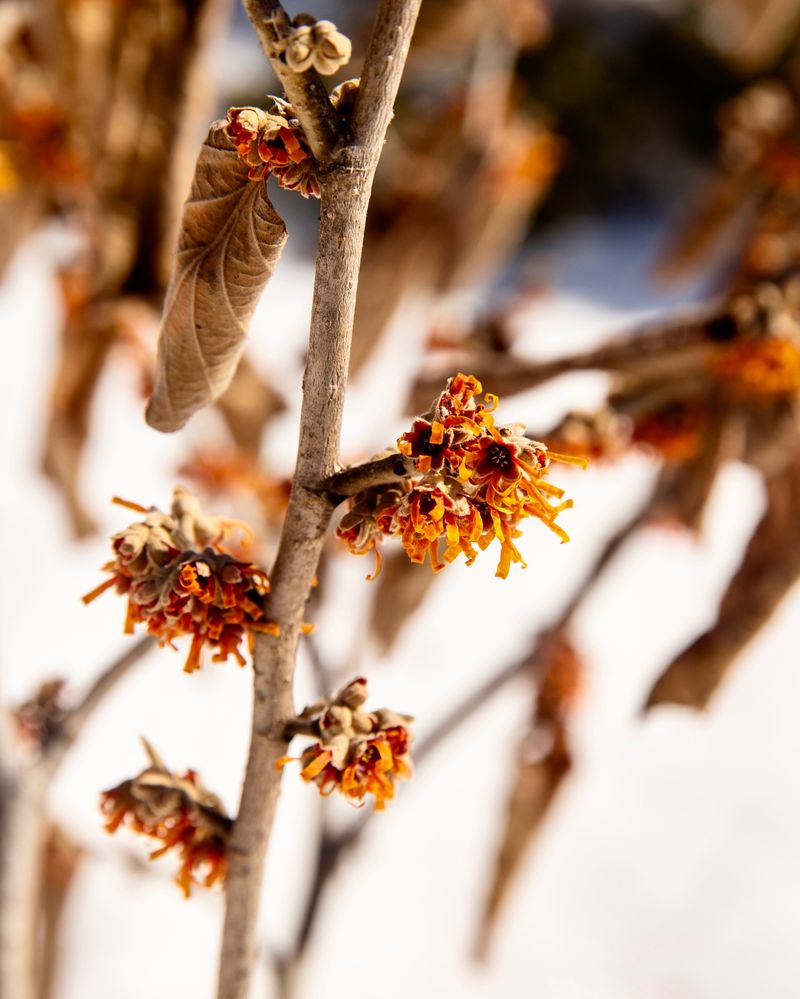
Imagine walking outside in February and spotting fiery orange ribbons on a bare shrub. That surprise is exactly what hybrid and vernal witch hazels deliver. They carry the witch hazel family tradition of cold weather blooms, only later in the season.
Hybrid witch hazels, known as Hamamelis x intermedia, come in several popular varieties. Arnold Promise offers clear yellow flowers with a sweet fragrance, while Jelena glows with coppery orange.
Vernal witch hazel, Hamamelis vernalis, is smaller and blooms in shades of yellow to reddish orange, often with a strong scent.
Here is a clever trick these plants use. On very cold days, the thin petals curl up tight to protect themselves. When temperatures rise again, they slowly unfurl and look fresh as ever.
Watching that change over a week feels a bit like seeing the shrub breathe. Location matters a lot with these beauties.
Plant them in full sun to part shade in moist, well-drained soil, ideally where you can see the flowers from a window, driveway, or path. Late winter blooms are easy to miss if they hide in a far corner.
Water during dry spells, especially in summer when next year’s buds are forming. If you want to shape the shrub, prune right after flowering ends. Cutting later can remove buds for the next season.
In Michigan, these witch hazels rank among the earliest shrubs to bloom. They shine brightest in the southern Lower Peninsula, where winters are a little milder.
A single well-placed plant can turn a gloomy view into something you look forward to every morning.
3. Christmas Rose Flowers In The Coldest Part Of The Year
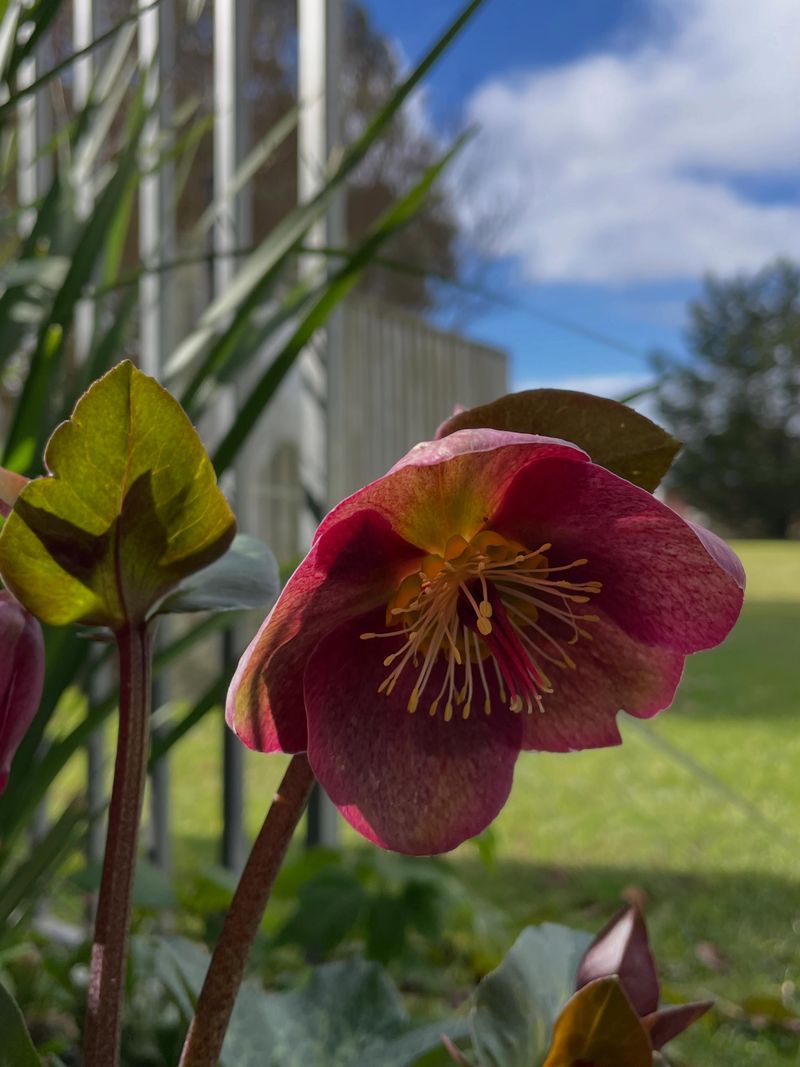
Few flowers earn a holiday name, and the Christmas rose wears it proudly. Helleborus niger is not actually a rose at all. It belongs to the buttercup family, and its white, cup-shaped blooms are famous for showing up when the weather is at its worst.
Each flower opens a clean, snowy white. As the weeks pass, many petals slowly blush to soft pink, so one plant can show several shades at once. In Michigan, blooms usually appear in late winter as the snow melts back.
During mild spells, though, a few flowers may peek out earlier and catch you off guard.
Tough is the best word for this perennial. It is very cold hardy and keeps its leathery green leaves through much of winter. Deer and rabbits leave it alone because the plant is toxic, which is great news for gardeners tired of chewed plants.
Just keep pets and small kids from nibbling on it too. Choose a spot in part shade with rich, well-drained soil.
Soggy ground is its biggest enemy, so avoid low places where water sits after rain. A light layer of mulch helps keep roots comfortable, but do not bury the crown.
In late winter, trim away old, tattered leaves. With the worn foliage gone, the new flowers stand out and look much cleaner.
Shady beds in Michigan often sit bare for months, waiting on hostas and ferns. Christmas rose fills that gap beautifully, blooming long before most perennials even wake up. Once settled, it can come back faithfully for many years.
4. Snowdrops Push Up Through Melting Snow
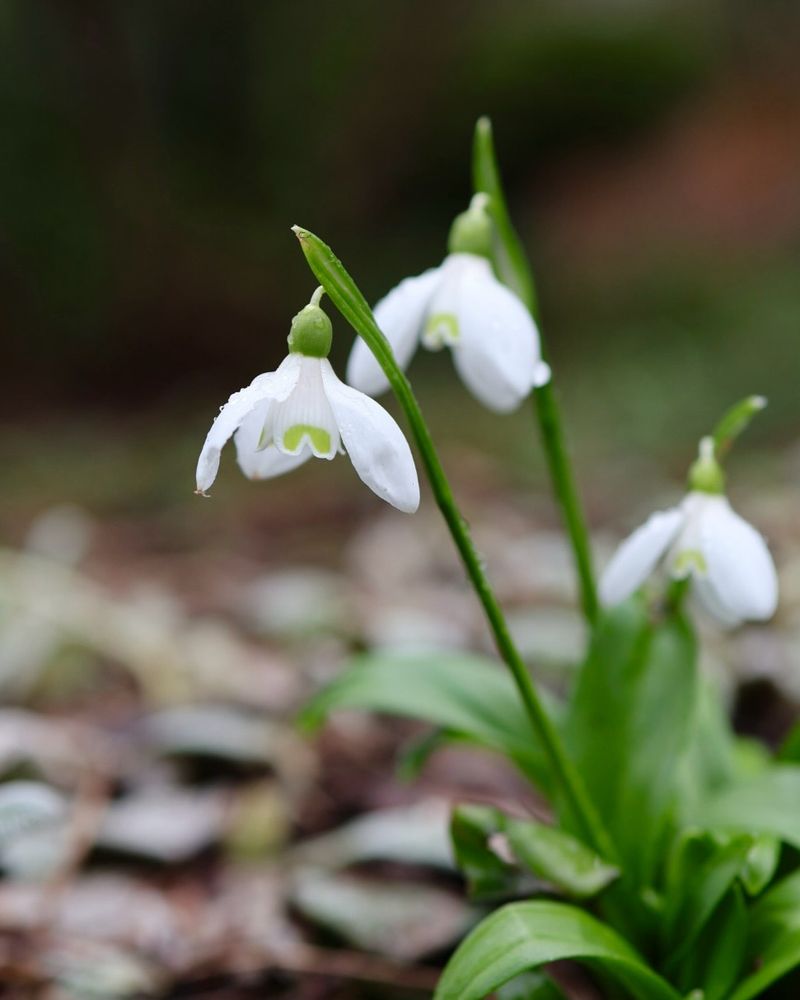
Tiny, brave, and full of hope, snowdrops are often the very first flowers of the year. Their nodding white blooms hang like little lanterns, and each inner petal carries a small green mark. Seeing them is a sure sign that winter is losing its grip.
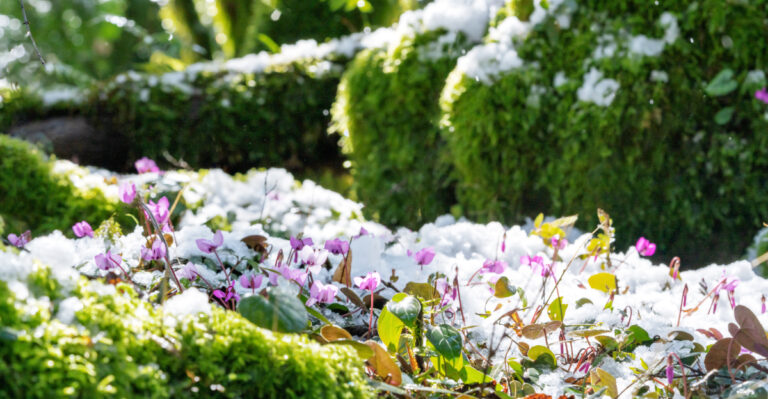
Galanthus nivalis does not wait for the snow to fully disappear. These little bulbs often bloom right through a thin blanket of snow in late winter. On a gray day, a patch of snowdrops can lift your mood faster than a cup of hot cocoa.
Pests are rarely a worry. Deer, rabbits, and voles leave snowdrops alone, which makes them a smart choice if other bulbs keep vanishing from your beds.
Planting happens in fall. Set the bulbs about 3 inches deep in part shade, such as under deciduous trees or along a walkway. Trees without leaves let in plenty of winter sun, then offer cool shade in summer when the bulbs rest.
After blooming, let the leaves fade on their own. Those green leaves feed the bulb for next year, so mowing or cutting them too soon weakens the plant.
Want more snowdrops? Dig and divide the clumps just after flowering while the leaves are still green. Gardeners call this planting in the green, and it helps them settle in quickly.
Michigan gardens suit snowdrops well. Over the years, they naturalize and spread into wide drifts. Each late winter, they return like an old friend, quietly announcing that brighter days are close.
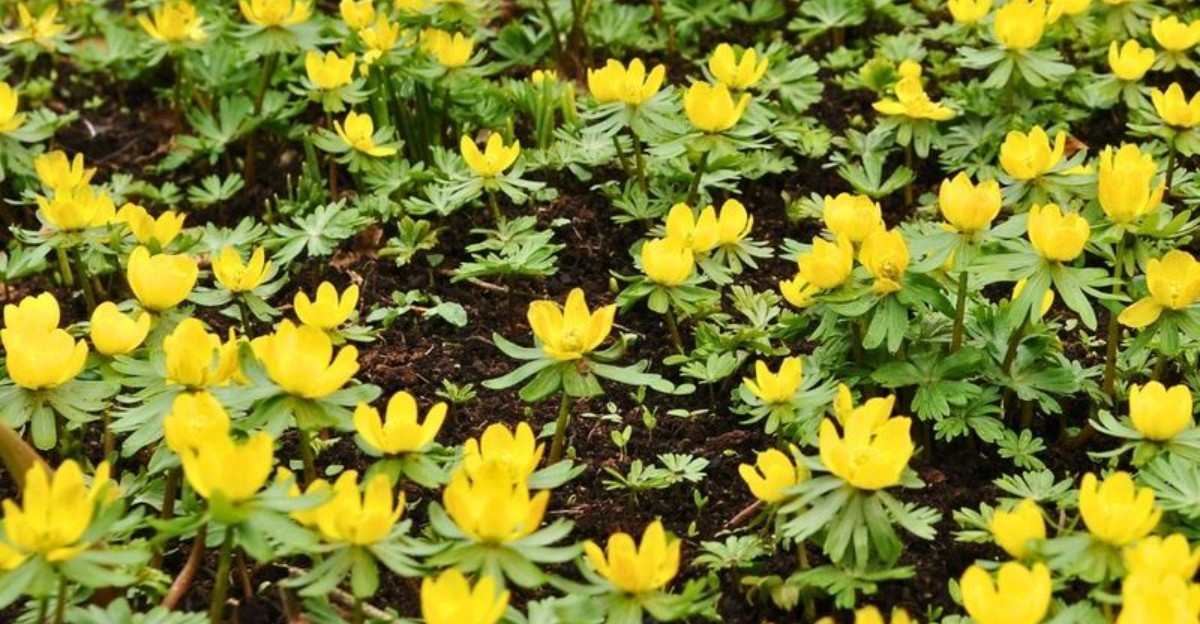
5. Winter Aconite Carpets The Ground In Gold
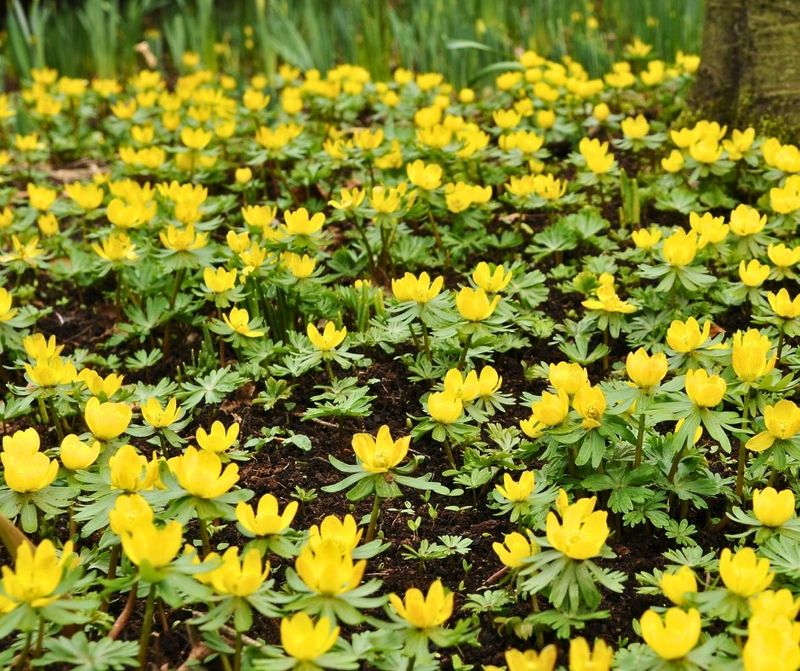
Think of winter aconite as sunshine you can plant. Eranthis hyemalis grows only a few inches tall, but its glossy yellow cups make a huge impact on a cold, brown garden floor.
Each bloom sits on a frilly green collar of leaves, almost like a buttercup wearing a ruffled scarf. The flowers open in late winter, right alongside snowdrops. Put the two together and you get a cheerful mix of gold and white that looks like it came from a storybook.
Patience pays off with this plant. A small handful of tubers can slowly spread into a bright yellow carpet under trees and shrubs. Some old gardens have patches that stretch across whole lawns, all started from just a few plants many years ago.
Getting started takes a little care, though. The small tubers often arrive dry and shriveled, so soak them in water overnight before planting. Early fall is the best time to get them in the ground.
Plant them about 2 to 3 inches deep in part shade. After that, the best thing you can do is leave the area alone. Winter aconite spreads by reseeding, so avoid heavy digging or raking in that spot. Let the seeds ripen and drop naturally in spring.
Michigan cold does not slow this little plant down. It handles freezing nights with ease and brings color to beds while most of the garden is still dormant. For anyone craving an early burst of yellow, few plants give so much from such a tiny start.
6. Reticulated Iris Adds Rich Blue And Purple
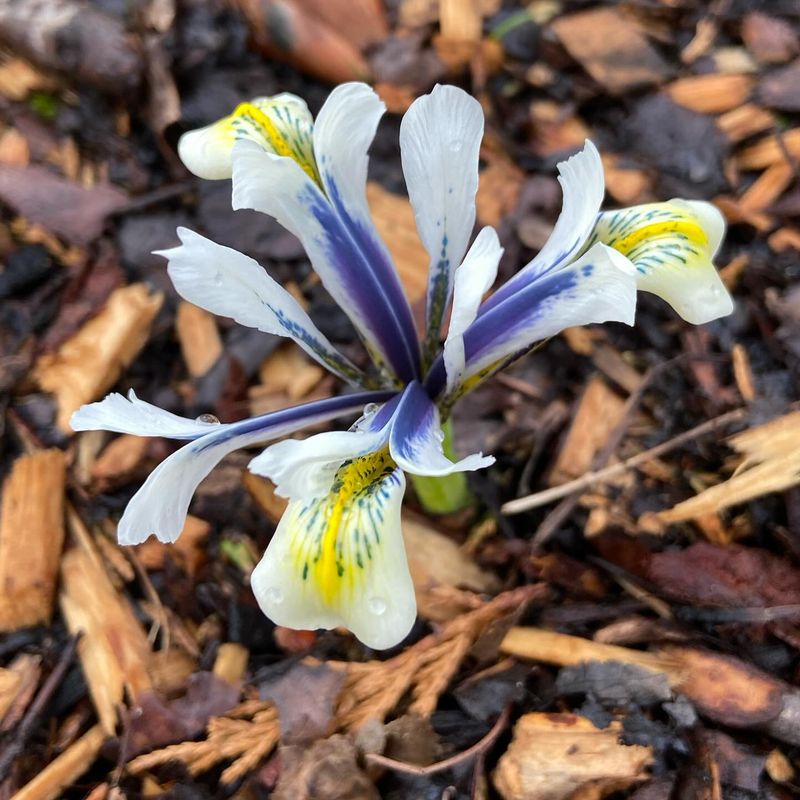
Blue is a rare color in the late winter garden, which is why reticulated iris feels like such a treat.
These small bulbs produce jewel-toned flowers in deep blue, rich purple, or crisp white. Most have bright yellow or white markings on the petals that look almost hand painted.
Iris reticulata stays short, usually around 4 to 6 inches tall. It blooms in late winter to very early spring, often poking through melting snow. Up close, the petals have a soft, velvety look.
Color lovers will enjoy pairing these irises with other early bloomers. Their cool shades look amazing next to golden winter aconite and white snowdrops. Plant all three near each other, and you get a bright little patchwork that pulls you outside.
Drainage is the secret to success. Plant the bulbs about 3 to 4 inches deep in fall, in full sun and soil that drains quickly. Raised beds, rock gardens, and slopes work well because water will not collect around the bulbs.
Wet, heavy soil can cause them to rot. Once the flowers fade, let the grassy leaves wither naturally. They help recharge the bulb for next year, even if they look a bit messy for a while.
Michigan homes offer a handy trick for these bulbs. Sunny, well-drained spots along foundations often warm up first, since the house gives off heat. Bulbs planted there tend to bloom earlier than ones out in the open yard.
Tuck a few near your front steps, and you will get a colorful welcome on your way out the door.
7. Cornelian Cherry Dogwood Covers Bare Branches In Yellow
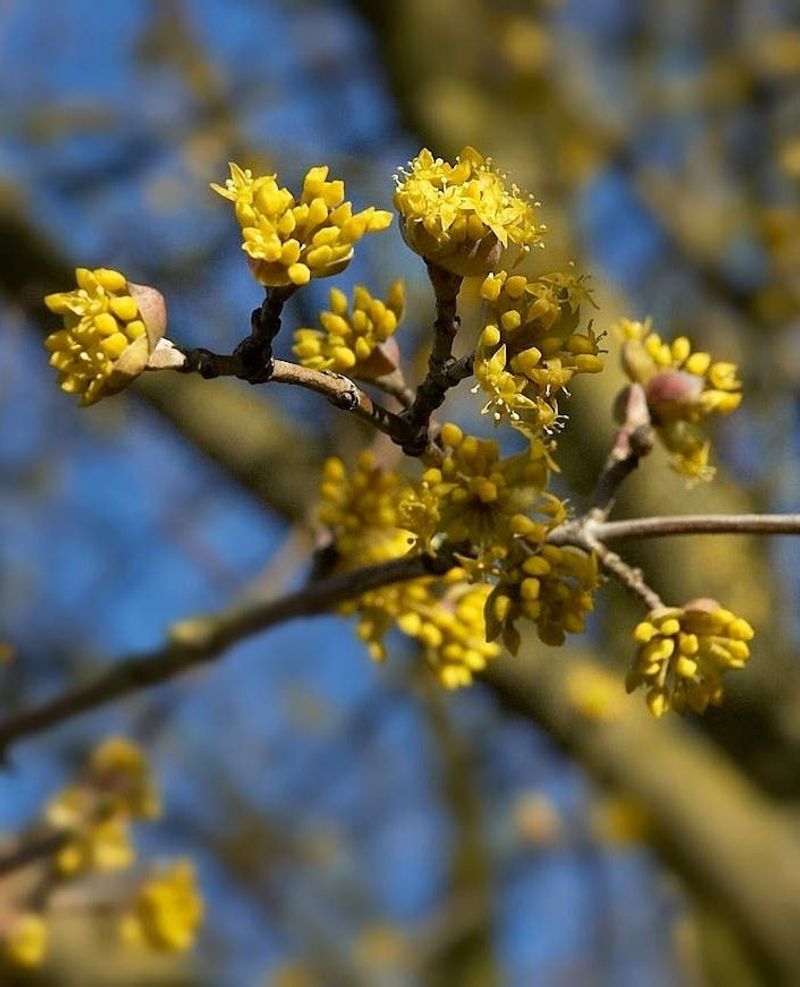
Long before forsythia gets all the attention, Cornelian cherry dogwood quietly steals the show. In late winter, its bare branches fill with clusters of tiny yellow flowers. From a distance, the whole plant seems wrapped in a soft golden haze.
Cornus mas grows as a large shrub or small tree, often reaching 15 to 25 feet. Each flower cluster is small, but there are so many that the effect is big and bright. The timing is the real bonus, since it blooms before forsythia and most other flowering shrubs.
Bees and other early pollinators love it. On warm days in late winter, they come out searching for food, and this dogwood offers one of the first meals of the year. You might hear a gentle buzz while snow still lingers in shady corners.
There is a tasty surprise later on too. In late summer, the plant produces shiny red fruits that look like cherries. They are edible and quite tart, and people have used them for jams, syrups, and sauces for centuries in Europe and western Asia.
Care is simple. Plant it in full sun to part shade in well-drained soil. Water regularly during the first few seasons while roots grow deeper. After that, it handles most conditions well.
If shaping is needed, prune right after flowering so you do not cut off next year’s buds. Michigan winters are no problem for this cold hardy plant. As one of the first woody plants to flower each year, it gives a cheerful signal that spring is right around the corner.
8. Pussy Willow Brings Soft Silver Catkins
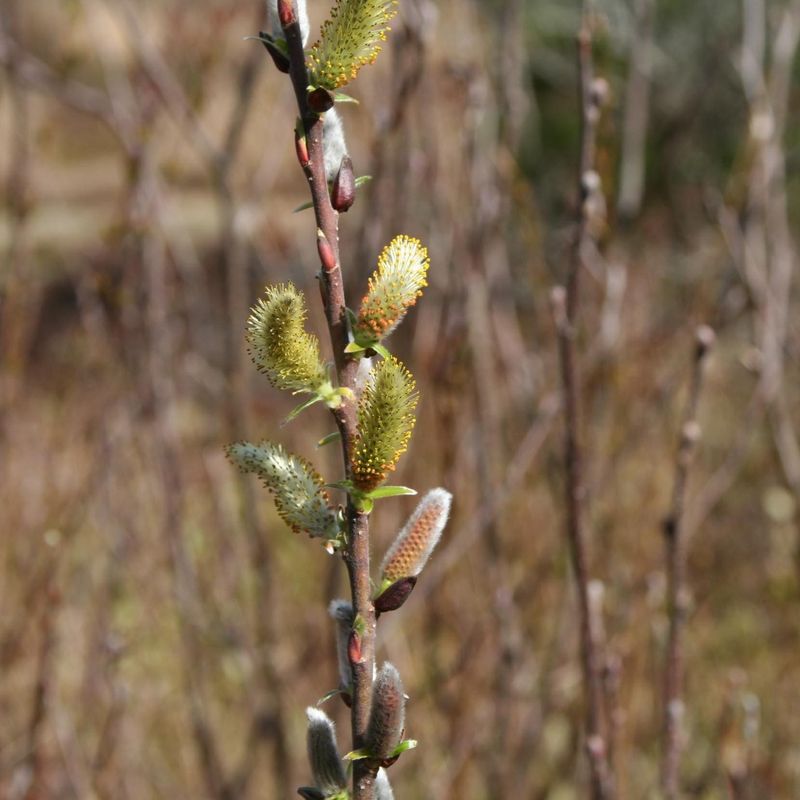
Almost everyone remembers touching their first pussy willow. Those fuzzy, silver buds feel like tiny kitten paws, which is exactly how the plant got its sweet name.
Many people do not realize that those soft tufts are actually flowers. Called catkins, they appear on bare stems of Salix discolor in late winter. As they open further, male catkins become dusted with yellow pollen and look like little fuzzy torches.
That pollen matters more than you might guess. Pussy willow is one of the earliest pollen sources for bees on warm days, so it helps them get a strong start each year. Planting one gives local pollinators a much needed boost.
Indoors, the stems shine too. Cut a few branches before the catkins fully open and place them in a vase without water. They will stay soft and silvery for months, making a simple, charming decoration.
Moisture is this shrub’s best friend. Plant it in full sun in moist to wet soil, such as near a pond, a low spot, or a rain garden. Give it plenty of room, because it can grow 10 to 20 feet tall and wide.
Every few years in early spring, cut back a few of the oldest stems near the ground. Fresh new growth will follow, and younger stems produce more catkins.
Pussy willow is a true Michigan native. It grows naturally in wet meadows, marshes, and along streams throughout the state. Bringing one into your yard feels like borrowing a small piece of wild Michigan, soft and silver, right when you need it most.