This Is Where Japanese Beetles Do The Most Damage First In Michigan Gardens
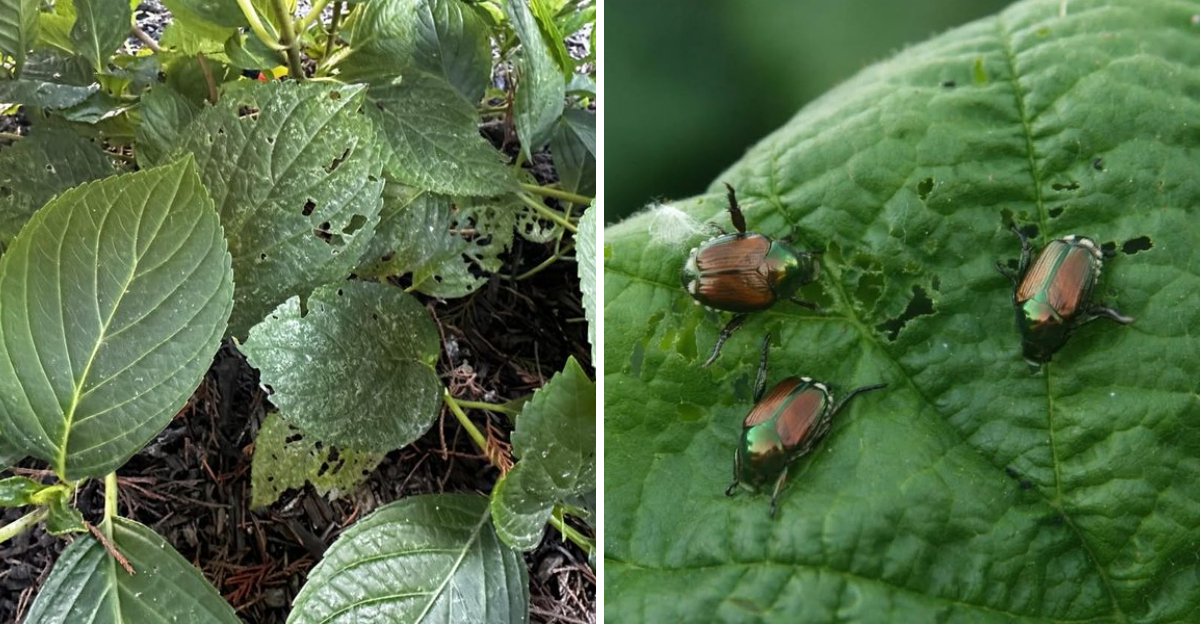
Japanese beetles do not hit every plant in the garden equally or all at once. They move through a yard in a very specific pattern, targeting certain plants and certain parts of those plants before anything else even gets touched.
Michigan gardeners who understand this pattern have a real advantage because it allows them to focus protection where it actually matters most before the heaviest feeding gets underway.
By the time damage shows up across the whole garden, the beetles have already been working for a while.
Knowing which plants and which locations draw the first and most intense attention every single season is the kind of practical knowledge that makes a measurable difference in how your garden looks from July through August.
1. Rose Bushes
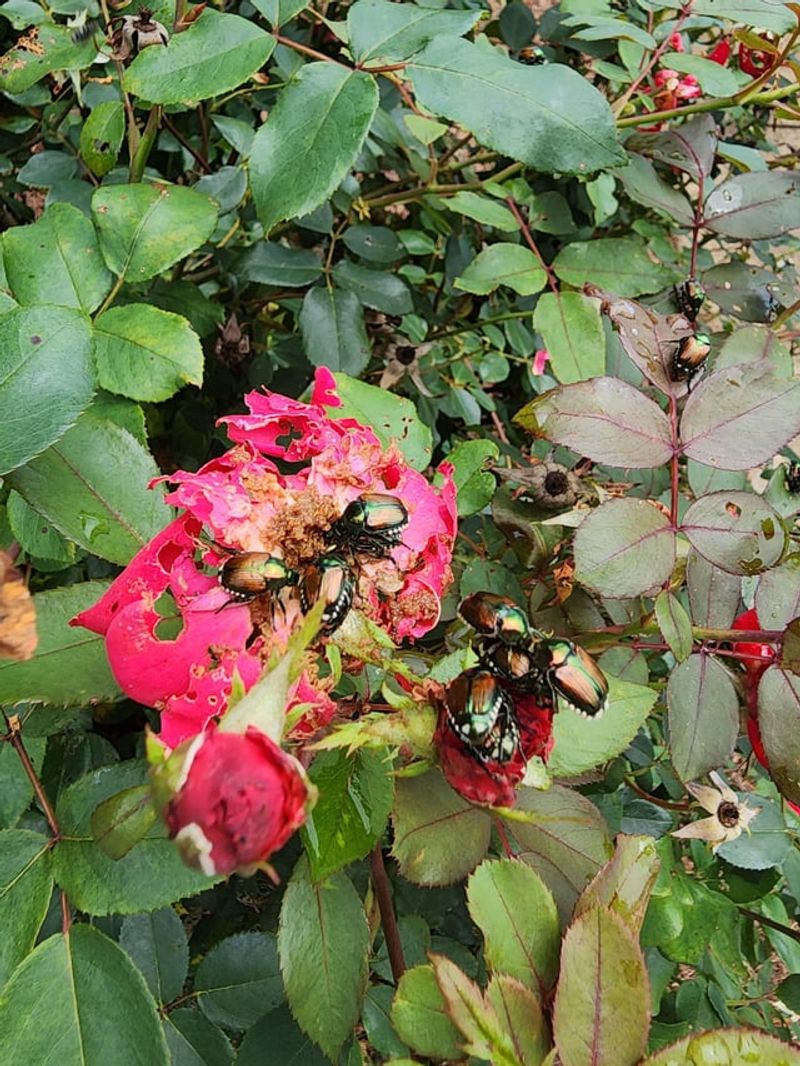
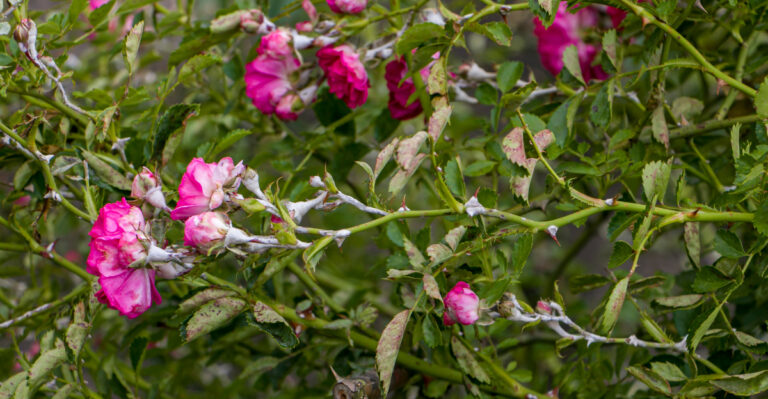
Nothing is quite as heartbreaking as walking out to your rose garden and finding the leaves riddled with holes. Rose bushes are almost always the first stop for Japanese beetles in Michigan yards, and it happens fast.
The beetles are drawn to the sweet fragrance of blooms and the soft texture of new foliage, making roses a prime target from the moment adults emerge in late June.
Feeding damage on roses shows up as skeletonized leaves, where the beetles eat everything between the leaf veins, leaving a lacy, see-through appearance.
Flowers get chewed from the inside out, turning beautiful blooms into ragged, brown messes within days.
A single rose bush can attract dozens of beetles at once because the feeding releases scent compounds that actually invite more beetles to join in.
Checking your roses every morning is one of the smartest moves you can make. Early in the day, beetles are sluggish from cooler temperatures, so you can knock them into a bucket of soapy water easily.
Applying kaolin clay or neem oil sprays every five to seven days creates a deterrent barrier without harming pollinators. Row covers work well for short periods when pressure is heaviest, usually the first three weeks of July in most Michigan regions.
2. Grapevines
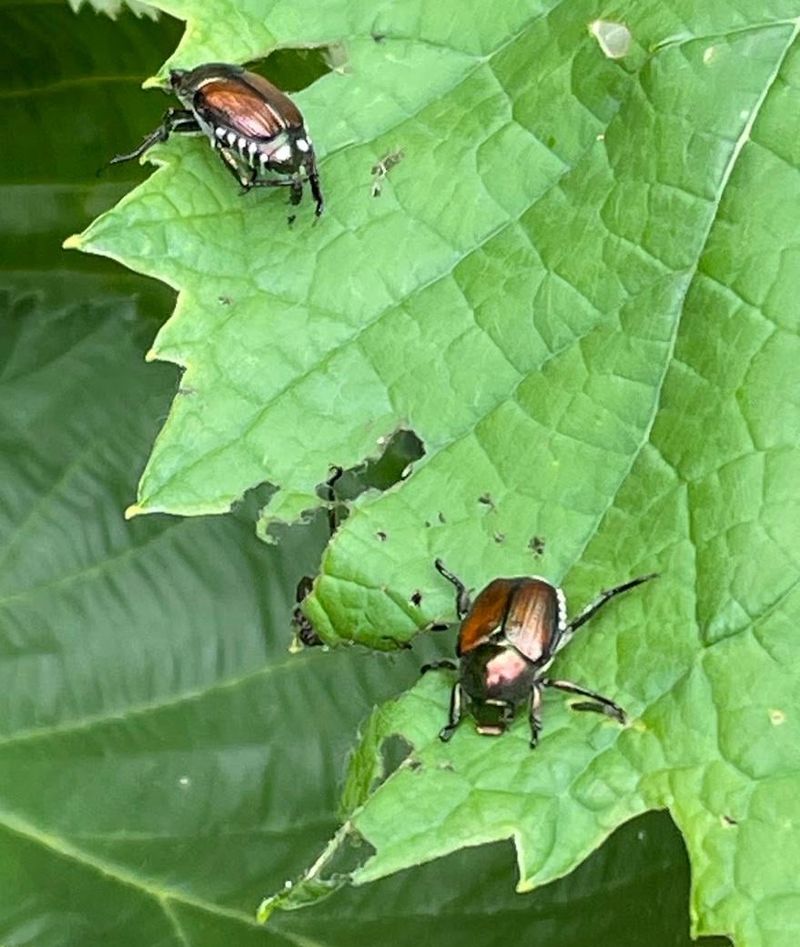
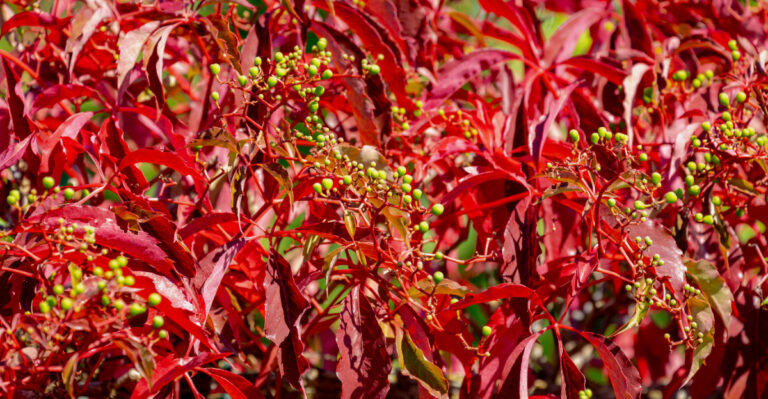
Grapevines have a way of turning into a beetle buffet almost overnight. Japanese beetles are strongly attracted to grapevines, and researchers have confirmed that compounds in grape leaves are among the most powerful natural attractants for this pest.
Whether you grow table grapes in your backyard or tend a small vineyard in western Michigan, this is a plant you need to watch closely starting in late June.
Beetles typically start feeding on the upper canopy first, working their way down as leaf tissue is consumed.
Heavily skeletonized leaves cannot perform photosynthesis properly, which stresses the vine and can reduce fruit sugar content and overall cluster size.
When feeding pressure is high during fruit development, the beetles will move from foliage to the grapes themselves, causing direct fruit damage that leads to rot and mold.
Protecting grapevines requires a combination of approaches. Hand-picking beetles in the early morning is surprisingly effective on smaller plantings.
Kaolin clay, a fine white mineral powder, can be sprayed on leaves and fruit to make them less appealing without leaving harmful residues. For larger plantings, spinosad-based insecticides are approved for organic use and work well against Japanese beetles.
Your Michigan Garden Changes Every Week. Your Plan Should Too.
Gardening in Michigan changes quickly throughout the season. Every Friday you’ll receive a simple weekly plan showing exactly what to plant, prune, fertilize, harvest, and protect so you never miss the right timing.
Avoid placing commercial pheromone traps near your vines since research shows traps can attract more beetles than they catch, increasing feeding pressure on nearby plants.
3. Linden Trees
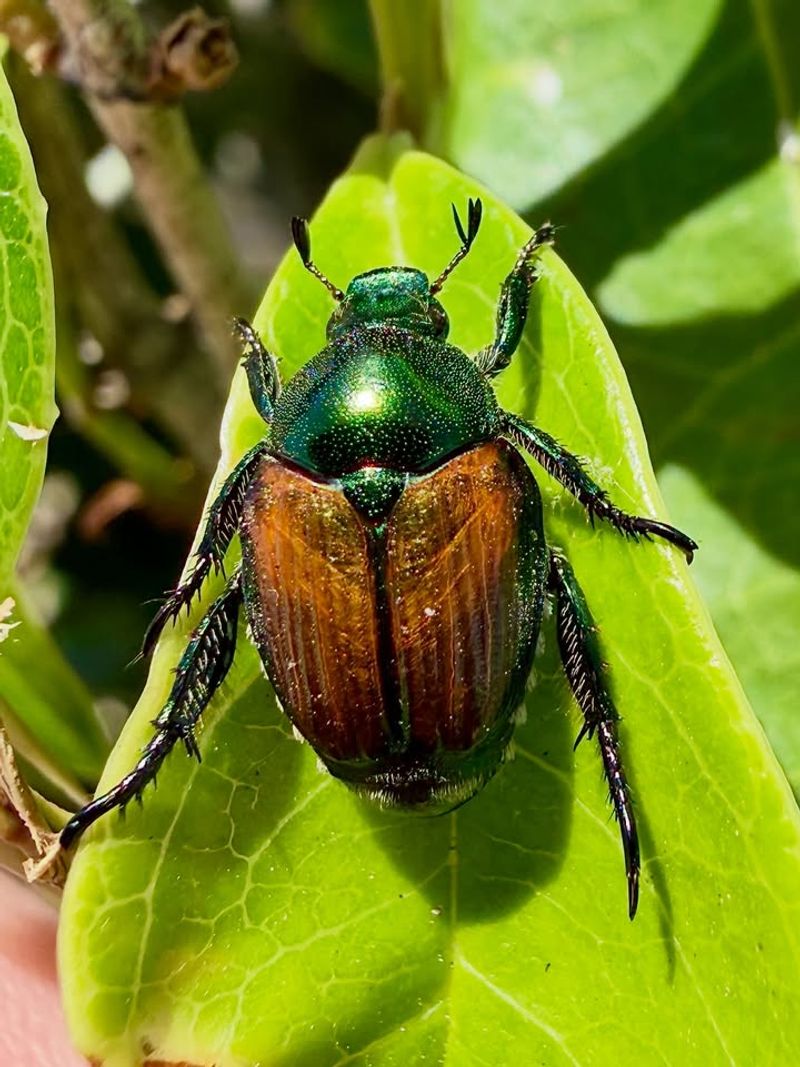
Linden trees are basically an all-you-can-eat invitation for Japanese beetles, and Michigan has plenty of them lining streets and filling yards.
The broad, heart-shaped leaves of linden trees, especially the American linden and littleleaf linden, are among the most preferred feeding sites for adult beetles.
Infestations often begin at the top of the tree and work downward, making early damage tricky to spot from ground level.
Peak feeding on lindens in Michigan typically happens between late June and mid-August, coinciding with the warmest part of the summer.
A heavily infested linden can lose a significant portion of its leaf canopy, which weakens the tree and makes it more vulnerable to secondary stressors like drought or disease later in the season.
The canopy can take on a brown, scorched appearance from a distance, which is often mistaken for heat stress.
Mature linden trees are difficult to treat comprehensively because of their size, but there are realistic options for homeowners.
Systemic insecticides applied as soil drenches, such as imidacloprid, can move through the root system and into leaves to protect foliage for an extended period.
This approach works best when applied in spring before adults emerge. For younger or smaller trees, direct foliar sprays with pyrethrin or spinosad can reduce beetle numbers effectively.
Monitoring the tree weekly through July helps you respond before populations grow too large to manage.
4. Crabapple Trees
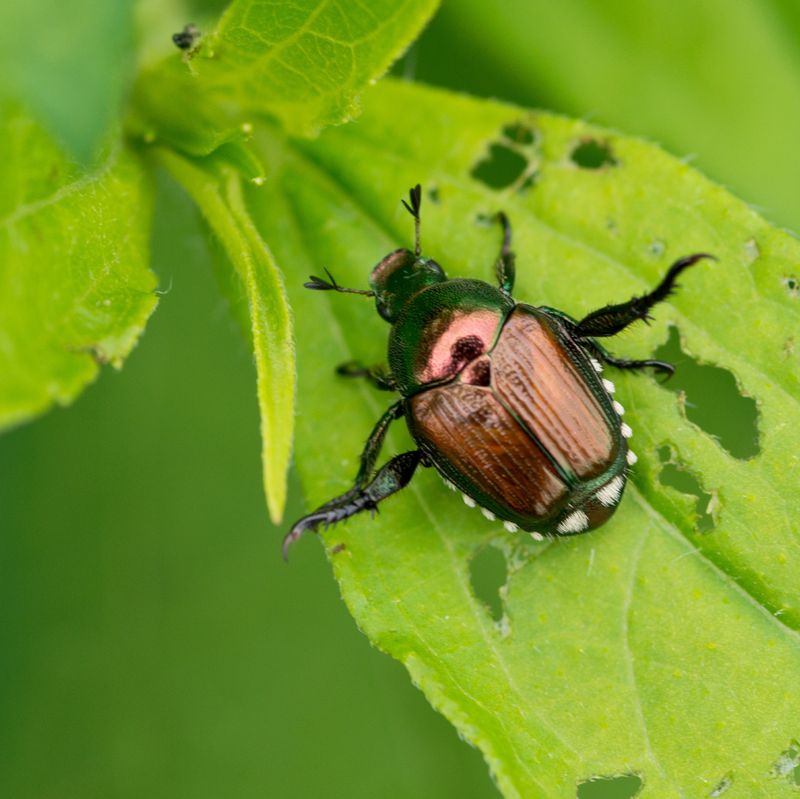
Crabapple trees are a staple of Michigan landscaping, prized for their spring flowers and colorful fall fruit. Unfortunately, Japanese beetles share that appreciation and show up reliably every summer to feed on new leaves and any lingering blossoms.
Because crabapples often finish flowering just as beetle season begins, the insects shift their attention entirely to tender foliage, which they can strip surprisingly fast.
The damage pattern on crabapples starts at branch tips where the newest, softest leaves are found. Skeletonized patches spread inward across the canopy as more beetles arrive, attracted by the feeding activity of the first arrivals.
Young crabapple trees planted within the last two or three years are especially vulnerable because they have less stored energy to recover from repeated defoliation compared to established trees.
For crabapples in Michigan yards, a few practical strategies can significantly cut down on damage. Pruning out any dry or weak branches in early spring improves tree health and reduces stress before beetle season hits.
Applying sticky barrier bands around the trunk can prevent some adult movement, though this works better as a monitoring tool than a complete solution.
Foliar sprays with pyrethrin or neem oil work well on smaller ornamental trees when applied every seven to ten days during peak activity.
Planting beetle-resistant companion plants nearby, such as catnip or tansy, may also help deter feeding in the immediate area around your crabapple.
5. Berry Bushes
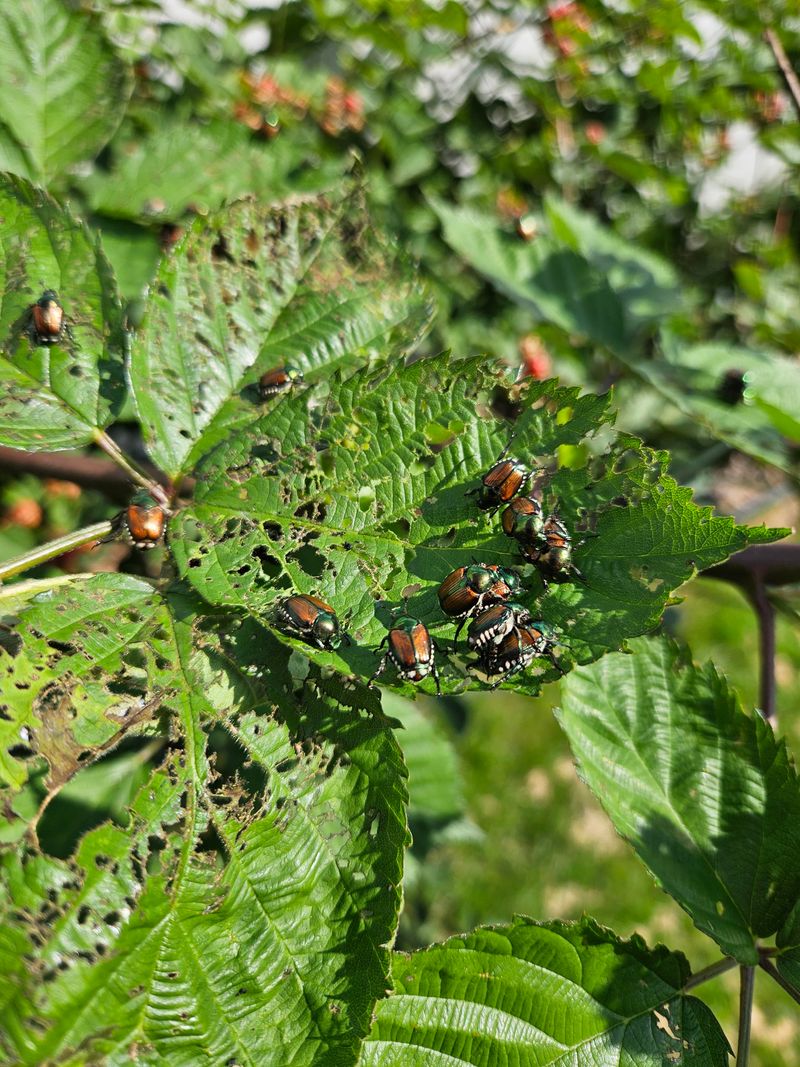
For gardeners growing their own fruit, few sights are more frustrating than Japanese beetles swarming over blueberry, raspberry, and blackberry plants.
Berry bushes are consistently among the earliest and most heavily attacked plants in Michigan gardens, partly because their fruiting season overlaps almost perfectly with peak beetle activity.
Blueberries are especially attractive to beetles, which will feed on both the foliage and ripening fruit.
Leaf damage reduces the plant’s ability to produce energy for fruit development, which directly impacts your harvest.
On raspberries and blackberries, beetles often feed on canes and leaves simultaneously, slowing new shoot growth and reducing next season’s fruit production as well.
When beetle pressure is heavy, partially eaten berries become entry points for fungal infections, compounding the problem well beyond what the insects alone would cause.
Home gardeners have several realistic options to protect berry bushes. Fine mesh netting draped over plants during peak beetle season is one of the most effective physical barriers available, and it does not involve any chemicals at all.
For organic spray options, spinosad works well on raspberries and blackberries and has a short pre-harvest interval. On blueberries, kaolin clay applied as a spray creates a gritty film that beetles find unappealing.
Checking plants every two to three days and hand-removing beetles in the early morning hours keeps populations from building up to damaging levels throughout the season.
6. Vegetable Foliage
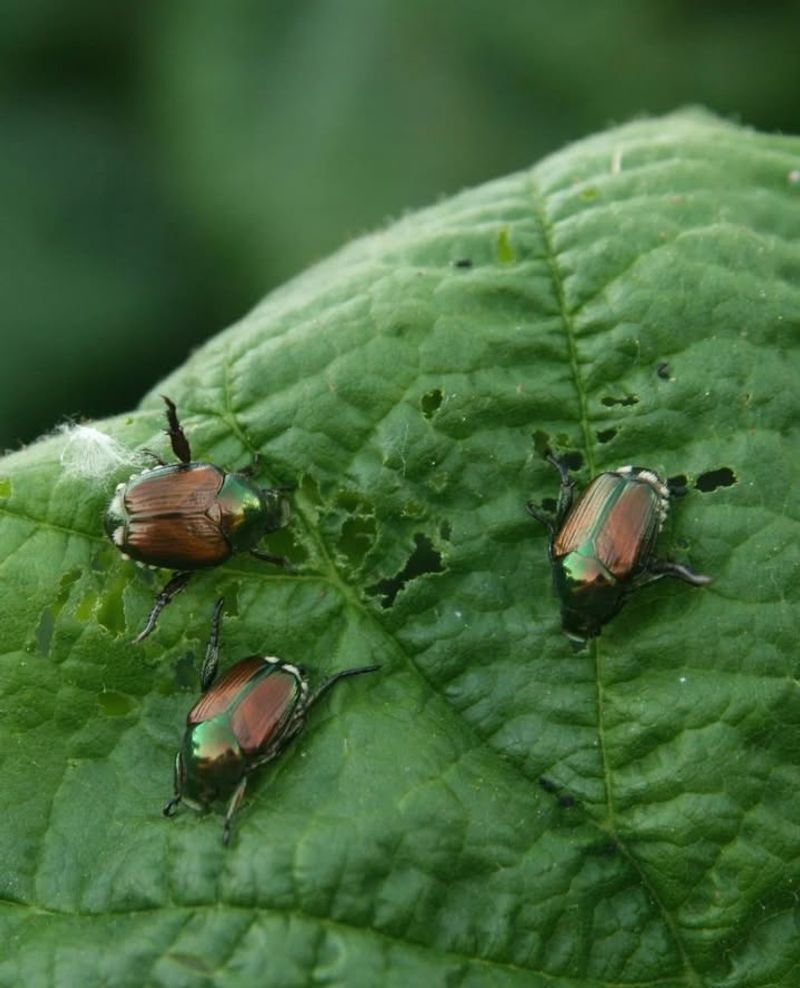
Vegetable gardens might not be the very first place most people think of when Japanese beetles come up, but beans and squash are genuinely attractive to these pests, and damage can show up fast.
Green beans are particularly vulnerable because their broad, tender leaves are easy for beetles to chew through, and a small group of feeding adults can defoliate a row of bean plants within a week if left unchecked.
Squash plants, including zucchini and pumpkins, also get hit early in the season. The large leaf surface area gives beetles plenty of feeding real estate, and damage tends to concentrate at the edges of leaves first before moving inward.
Severely damaged squash leaves lose the ability to shade developing fruit, which can cause sunscald on exposed squash and reduce overall plant productivity through the rest of the growing season.
Monitoring your vegetable garden every couple of days starting in late June is the most important thing you can do. Row covers are a practical and chemical-free solution for beans, though you will need to remove them when plants need pollination.
For squash, hand-picking beetles in the morning is fast and effective when populations are still manageable. Neem oil sprays are safe to use on most vegetables and work as both a repellent and a feeding deterrent.
Rotating where you plant susceptible crops each year also helps reduce beetle pressure over time by disrupting predictable feeding patterns.
7. Ornamental Shrubs
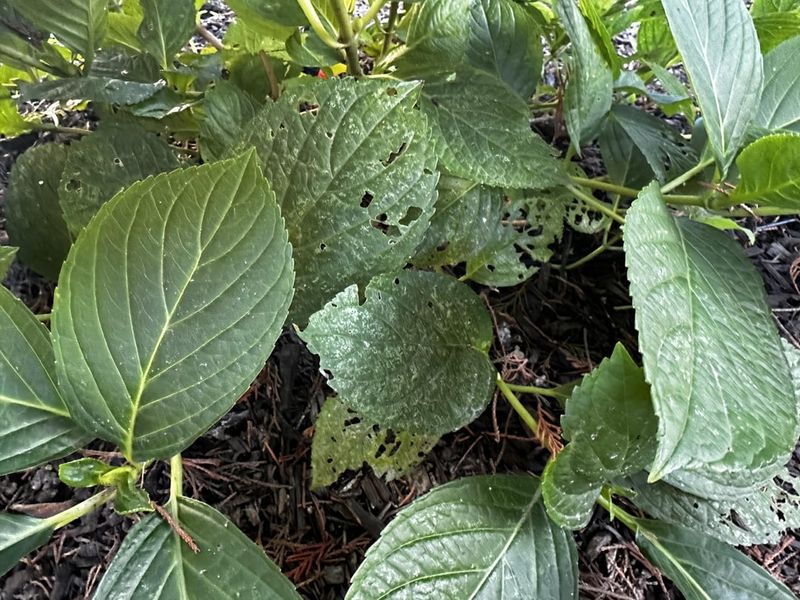
Hydrangeas, lilacs, and viburnums are three of the most popular ornamental shrubs in Michigan yards, and all three land squarely on the Japanese beetle preferred menu.
Hydrangeas tend to get hit especially hard because their large, soft leaves and fragrant blooms are irresistible to feeding adults.
Damage on hydrangeas can go from light nibbling to severe skeletonization in just a few days when beetle pressure is high.
Lilacs are usually attacked right after their blooms fade, when beetles shift their focus to the fresh summer foliage. Viburnum species vary in their attractiveness to beetles, but arrowwood viburnum in particular seems to attract heavy feeding.
On all three shrubs, repeated defoliation through the summer season weakens the plant, reduces flower bud formation for the following year, and can make shrubs more susceptible to winter stress.
Scouting these shrubs every few days starting in late June gives you the best chance to catch infestations early. Hand-picking beetles into soapy water works well when numbers are still low, and it takes only a few minutes per shrub.
Neem oil or insecticidal soap sprays are good options for homeowners who want a low-toxicity approach that is also safe around pets and children.
For severe infestations, pyrethrin-based sprays provide fast results, though reapplication every five to seven days is needed to stay ahead of new arrivals throughout the beetle season.
8. Daylilies
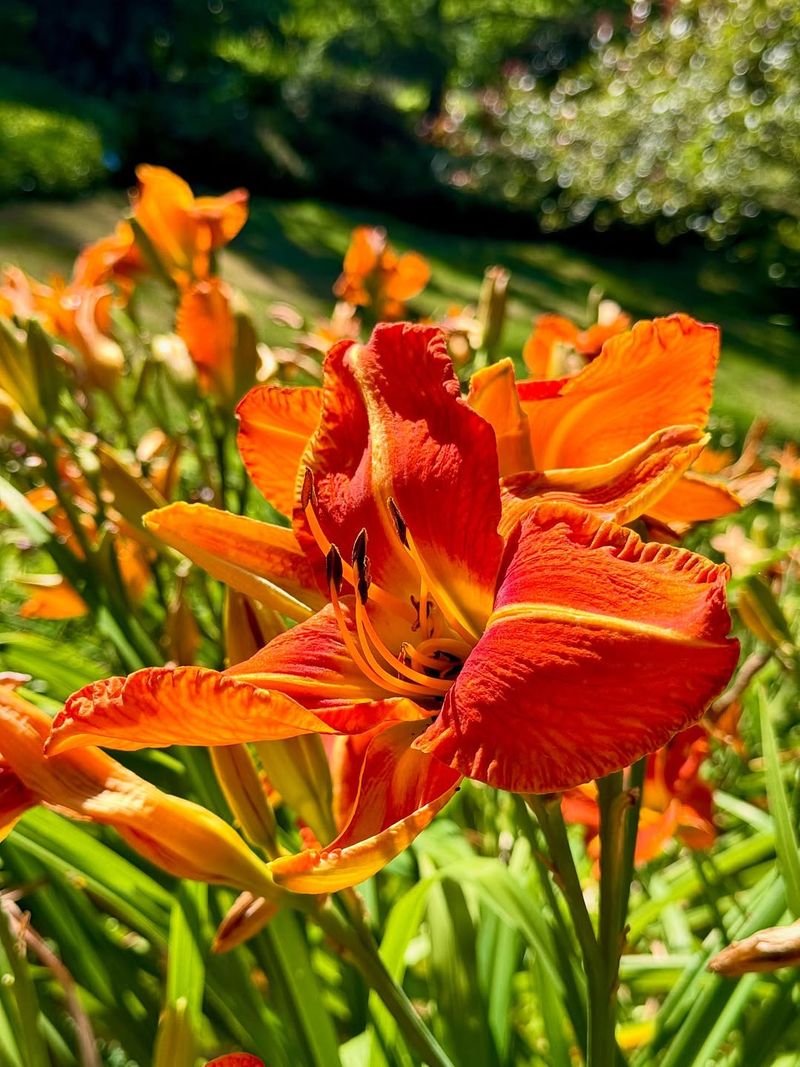
Daylilies are celebrated for their toughness and vibrant summer blooms, but that summer timing puts them right in the crosshairs of Japanese beetle season.
Beetles are strongly attracted to daylily flowers, feeding on petals and stamens, which ruins individual blooms quickly.
Since each daylily flower only lasts one day naturally, beetle feeding can make it feel like your plant never gets a chance to show off at all.
Beyond the flowers, beetles also chew on the strap-like foliage, leaving ragged edges and irregular holes that detract from the plant’s appearance.
Because daylilies spread and produce many buds over several weeks, the feeding pressure can be sustained across the entire bloom period rather than concentrated in one short window.
Heavily infested clumps can lose most of their open flowers to beetles on any given day at the height of the season.
Protecting daylilies takes a mix of physical and chemical strategies. Checking plants each morning and flicking beetles into a container of soapy water is an easy, effective routine that takes very little time.
Neem oil sprayed on buds and foliage every five to seven days acts as a repellent and reduces feeding significantly. Insecticidal soap is another gentle option that works on contact without leaving long-lasting residues.
Planting daylilies away from known beetle hotspots in your yard, such as linden trees or rose beds, can also reduce how quickly beetles find and colonize your plants each season.
9. Turf And Lawns Near Plantings
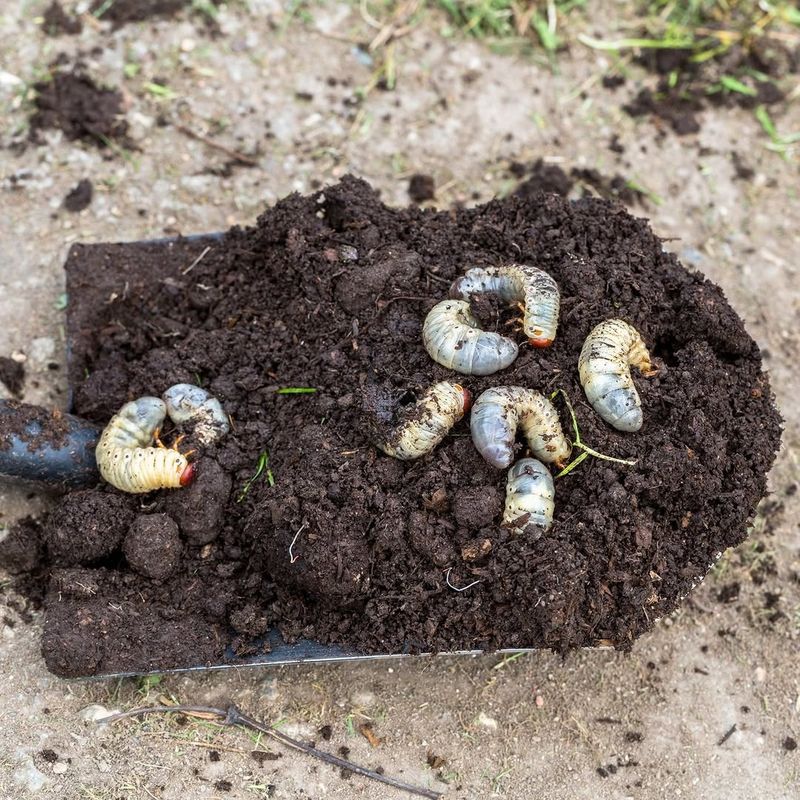
Most people think of Japanese beetle damage as a plant problem, but the story actually starts underground in your lawn.
Female beetles lay their eggs in turf grass during midsummer, and the larvae, called grubs, spend months feeding on grass roots just below the soil surface.
Come late spring, those grubs pupate and adults emerge directly from the lawn, meaning your garden beds closest to the grass are always the first to get hit.
Gardens that border lawns or have turf paths running through them tend to experience the heaviest beetle pressure early in the season simply because the adults do not travel far from where they emerge.
Beds along the lawn edge, shrubs near the grass line, and any plants within twenty to thirty feet of turf areas should be your first scouting priority every year.
Understanding this connection between lawn grub populations and adult beetle pressure in the garden is genuinely useful for planning your response strategy.
Reducing grub populations in your lawn is one of the most proactive steps you can take. Beneficial nematodes applied to moist soil in late summer target newly hatched grubs before they can grow large.
Milky spore, a naturally occurring bacterium, offers longer-term grub suppression in Michigan lawns over several seasons.
Adjusting your irrigation schedule to water deeply but less frequently during egg-laying season in July makes the soil less attractive for egg-laying.
Mowing at a taller height through summer also creates conditions that are less favorable for beetle egg survival.
10. Newly Planted Ornamentals
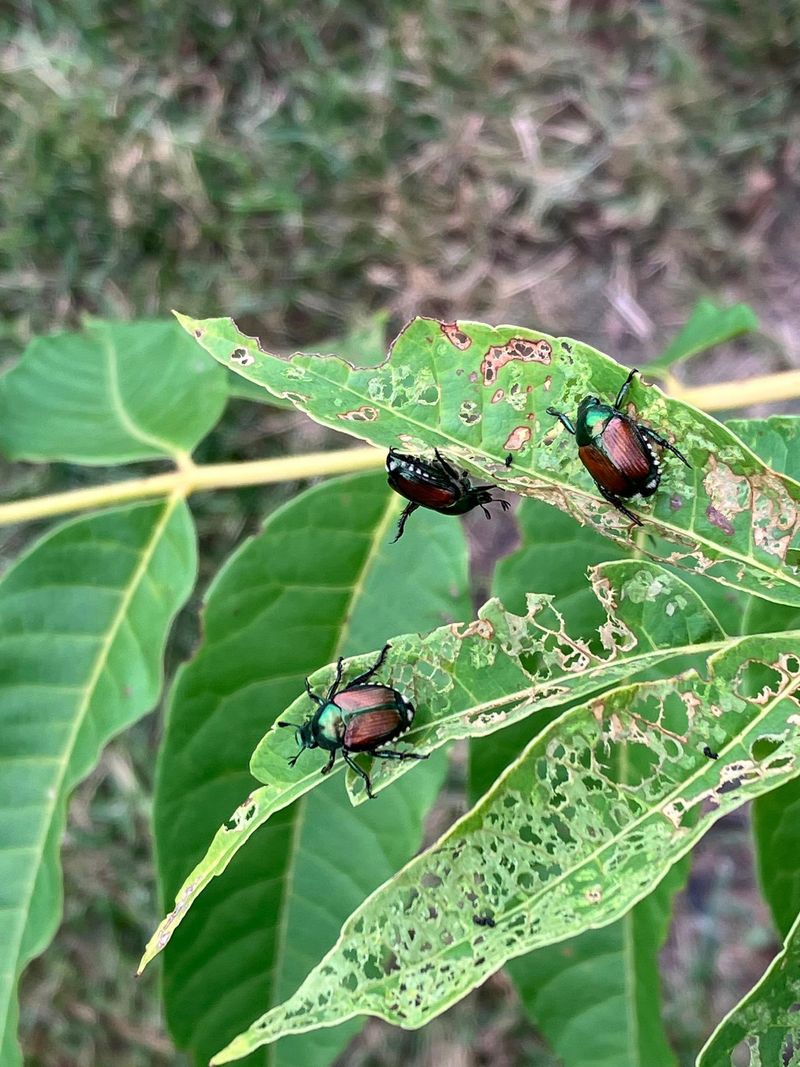
Fresh out of the nursery and full of new growth, recently planted trees and shrubs are practically a flashing invitation for Japanese beetles.
New transplants push out tender, soft foliage as they establish, and that young tissue is exactly what beetles prefer over tougher, more mature leaves.
A tree or shrub that was just planted this spring is working hard to establish roots while simultaneously dealing with pest pressure, which makes the combination particularly stressful for the plant.
The feeding damage on new transplants is especially concerning because the plants have not yet built up the energy reserves that established plants rely on to recover.
Losing a significant portion of new foliage during the first or second summer after planting can set a tree back by a full growing season or more.
Ornamentals like burning bush, serviceberry, and young maples are particularly prone to early and heavy beetle feeding when freshly planted.
Protecting new plantings requires a hands-on approach throughout the beetle season. Lightweight floating row cover or fine mesh netting draped loosely over small trees and shrubs provides immediate physical protection without trapping heat.
Insecticidal soap sprays applied every five days work well on tender foliage because they break down quickly and do not accumulate in the plant tissue. Setting up a weekly scouting schedule from late June through mid-August helps you catch feeding early.
Watering new transplants consistently also reduces plant stress, giving them better resilience when beetle pressure inevitably arrives.