If a Hummingbird Shows Up in Your Florida Yard This Winter, It May Be a Rare Western Visitor
A tiny bird banded in a Tallahassee backyard in January 2010 later turned up in Chenega Bay, Alaska. That trip covered about 3,530 miles, the longest hummingbird migration ever recorded.
I still get goosebumps thinking about it. A creature lighter than a nickel crossed a continent, and it chose a Florida yard for its winter break.
Most of us assume the summer buzzers head south by October and leave our feeders empty.
Personally, I used to take my feeder down every fall. I can’t imagine doing that now, knowing what might have stopped by.
Winter visitors from far out West slip into Southern gardens every year, and many go unnoticed. Some flash orange, some wear a dark throat, and one sports a bill as red as a holly berry.
Your feeder might be hosting one of them right now, and spotting it takes only a little patience and a sharper eye.
That Winter Hummingbird at Your Feeder Probably Took the Long Way Here
Bird experts once called winter hummingbirds in the Southeast lost or confused. Banding studies changed that thinking, and the story turned out far more interesting.
Many hummingbirds that nest in the western United States, Canada, and Alaska follow routes that carry them toward the Gulf Coast instead of Mexico. Researchers now believe some of these birds return to the same Southern yards year after year.
That suggests the path is a real migration pattern, not a one-time mistake.
Here in the Southeast, records of these western birds have grown over recent decades, especially across the Panhandle. Part of that rise may come from more people keeping feeders up and more banders watching closely.
Scientists still debate how much is a true increase versus better detection.
So when a hummingbird appears between November and February, it deserves a second look. Ruby-throated Hummingbirds do linger in parts of the state, particularly in Central and South Florida.
Yet in North Florida, a winter hummer has a solid chance of being something more unusual.
I find that thrilling. A quick glance out the kitchen window might connect your yard to mountain meadows thousands of miles away.
Rufous Hummingbirds Lead the Pack of Winter Visitors
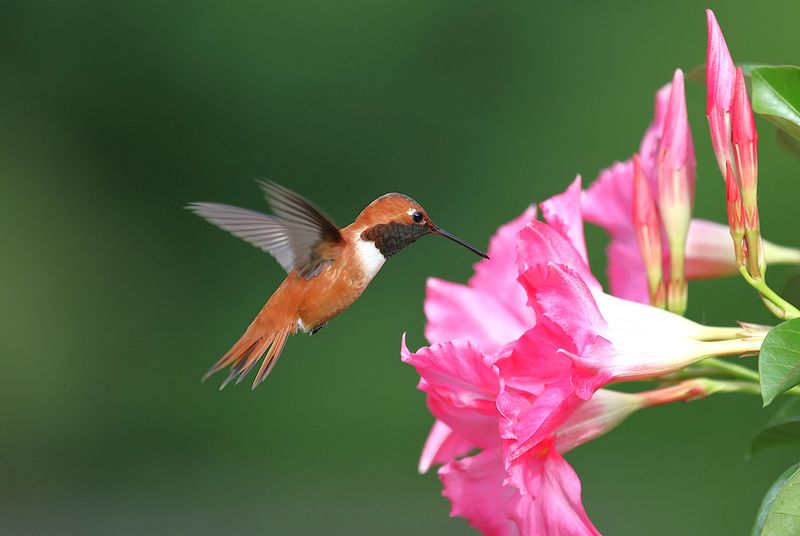
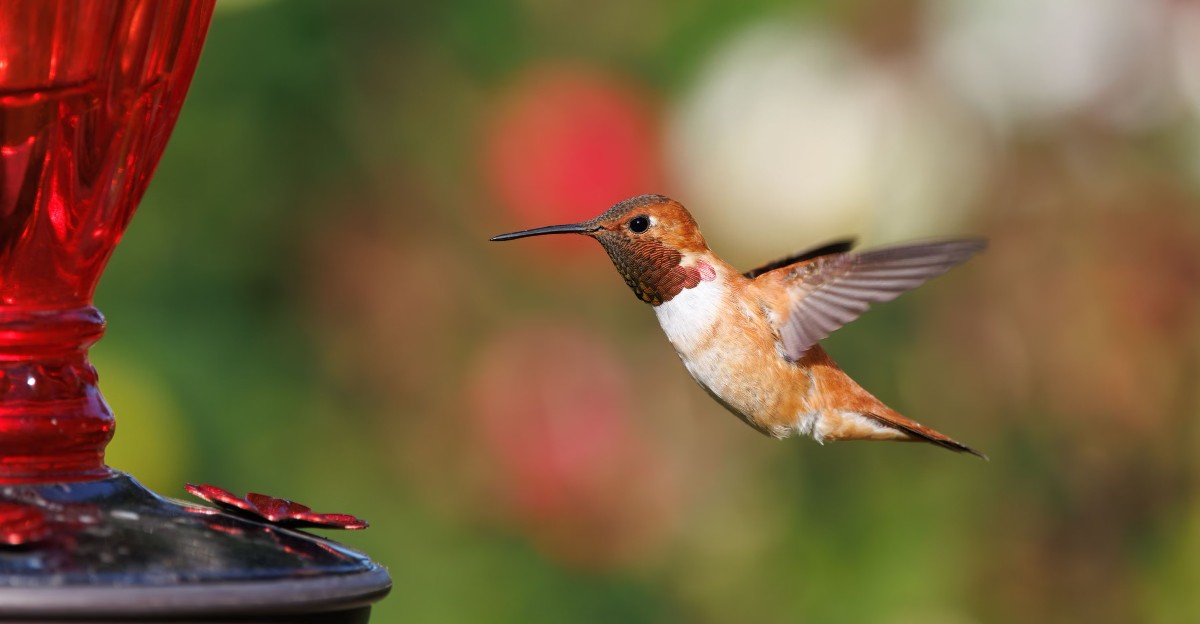
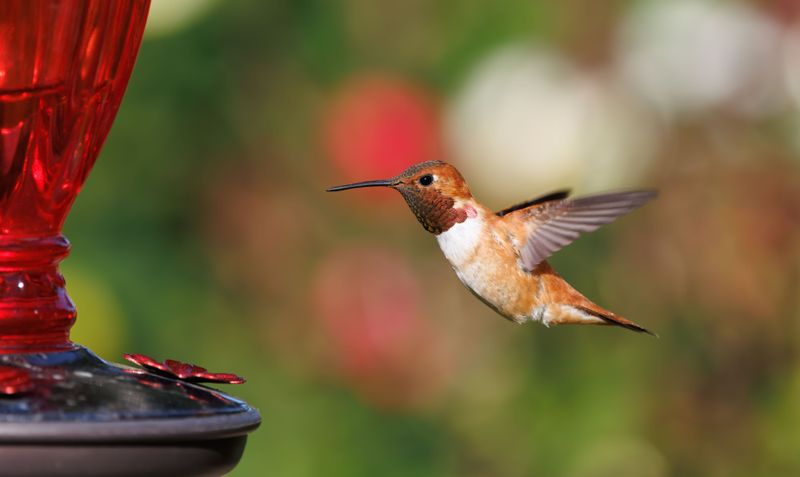
Orange feathers glowing like a tiny ember are the giveaway. Rufous Hummingbirds are the most common western hummingbird wintering in the state, especially in the Panhandle.
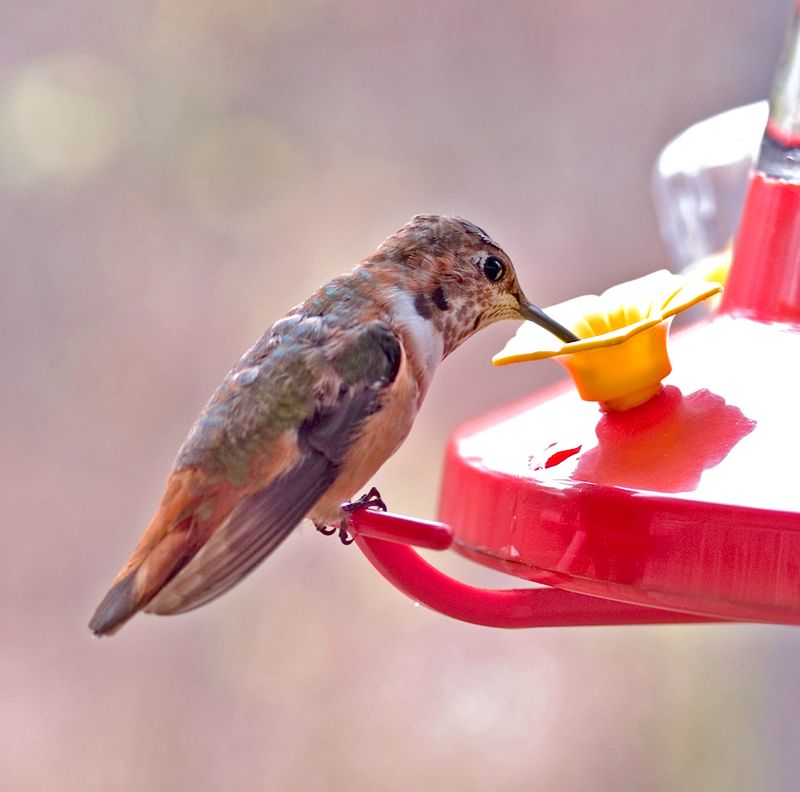
Adult males wear bright rusty orange on the back and sides, plus a throat that flashes reddish orange in sunlight. Females and young birds look greener, with rusty wash on their flanks and some orange at the base of the tail.
Telling a young Rufous from its close cousin, the Allen’s Hummingbird, often takes a bander holding the bird in hand.
Personality helps with identification too. Rufous hummers are famously feisty and will chase much bigger birds away from a favorite feeder.
If one bird seems to own your yard and guards it all day, take notice.
That record-setting Alaska traveler was a female Rufous, which shows how tough this species is. They handle cold better than many people expect, and a frosty North Florida morning rarely sends them packing.
Try snapping a photo when you see one. Clear pictures of the tail and sides help local experts confirm the species and add your sighting to valuable winter records.
A Dark Throat and Long Wings Could Mean a Black-Chinned Hummingbird
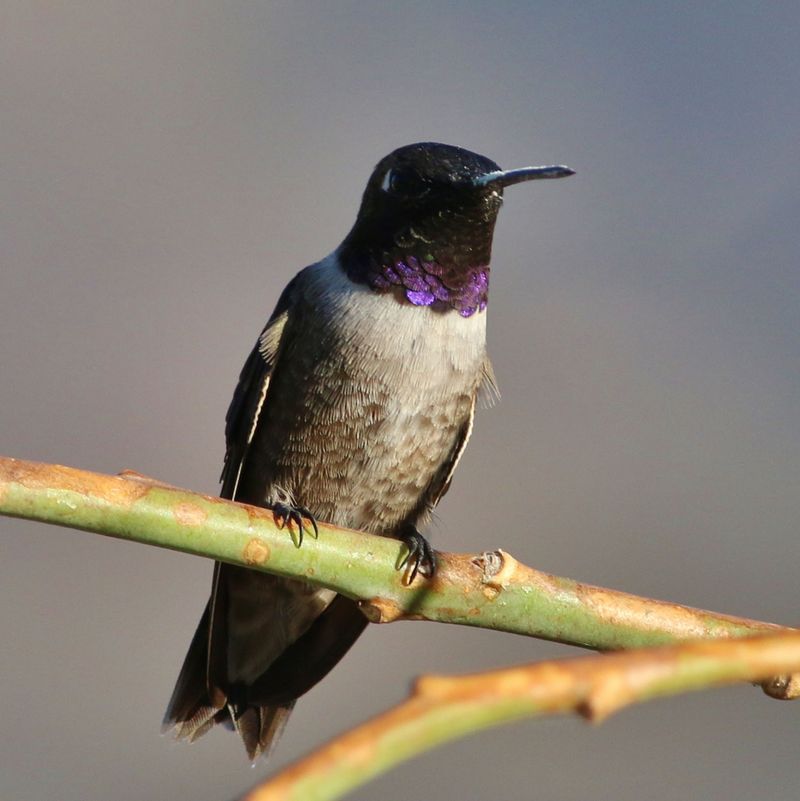
Shade can play tricks on your eyes with this one. A male Black-chinned Hummingbird has a black throat edged by a thin band of shimmering purple, but in poor light the whole throat looks plain black.
Black-chins are the second regular western visitor in winter, mostly in North Florida. Females and young birds are the real puzzle, since they look a lot like female Ruby-throats.
Both are green above and pale below.
Wing length offers a helpful clue. On a perched Black-chinned, the folded wingtips reach nearly to the tip of the tail.
A Ruby-throat’s tail clearly sticks out past its wings.
Watch the tail while the bird feeds, too. Black-chins tend to pump and wag their tails often while hovering.
Ruby-throats do this as well, so treat it as a supporting hint rather than proof.
Patience pays off here. Sit near the feeder with a camera and wait for the bird to perch, because those wing and tail details are hard to judge midair.
Honestly, figuring out a tricky female feels like solving a fun backyard riddle.
Spot That Bright Red Bill on a Buff-Bellied Hummingbird
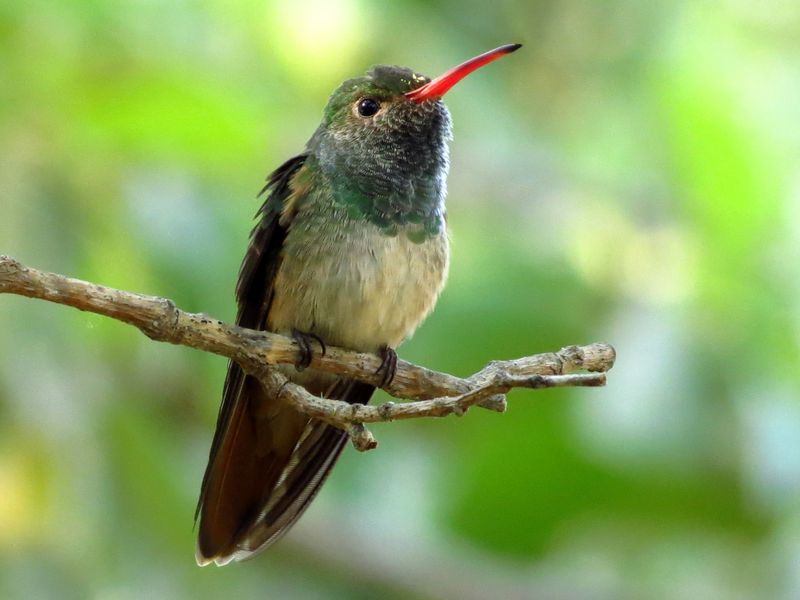
Few birds make identification this easy. The Buff-bellied Hummingbird sports a bright red bill with a dark tip, a glittering green throat, a buff belly, and a rusty tail.
No other regular hummingbird in the state has that red bill. Once you see it, you will know right away.
It is also a bit larger than a Ruby-throat, so it looks sturdy at the feeder.
Technically this bird is a Gulf Coast species rather than a true westerner. Most nest in southern Texas and Mexico, and some drift east along the coast after breeding.
Pensacola often reports more of them than anywhere else in the state.
If you live along the western Panhandle, your odds are best. Sightings farther south and east happen, but they are scarcer.
Plant some winter-blooming shrubs near the feeder to keep one around longer. Buff-bellies like dense cover nearby where they can rest and stay warm.
A sheltered spot near the house tends to suit them well.
Spotting one feels a little like finding a gemstone in your flowerbed. Grab the binoculars and enjoy the show.
Calliope and Other Tiny Western Rarities Have Made Surprise Appearances
Some winter guests are rare enough to make birders drive hours. Florida’s official bird list includes several western hummingbirds recorded only a handful of times.
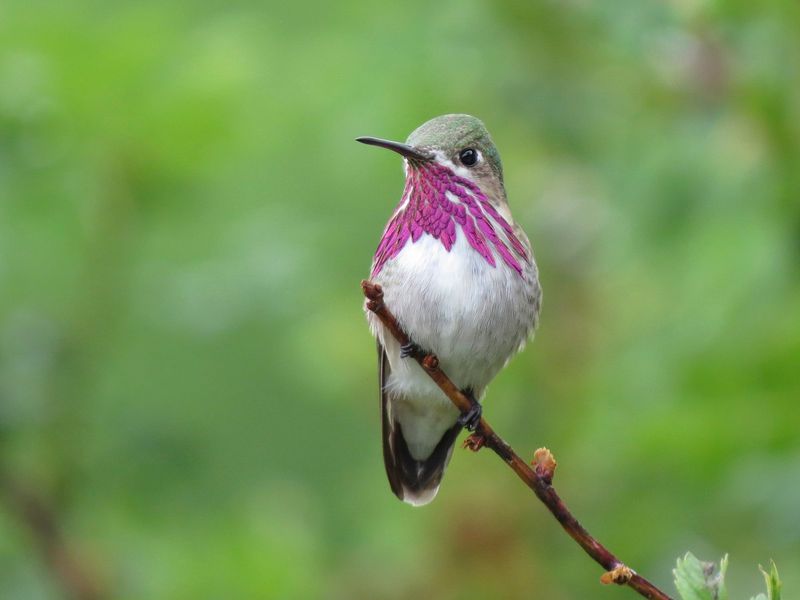
The Calliope Hummingbird is one of the stars. It is the smallest bird breeding in the United States, weighing about as much as a ping-pong ball.
Males wear a streaky magenta throat that looks like a fanned-out ribbon.
Other rare species recorded in the state include Allen’s, Broad-tailed, Broad-billed, Anna’s, and Costa’s Hummingbirds. Each one is a casual or accidental visitor, meaning sightings are irregular and exciting.
Do not expect these birds, but stay ready. Many rare records come from ordinary homeowners who noticed something odd and took a photo.
If your bird looks unusual, report it on eBird or contact your local Audubon chapter. Licensed hummingbird banders sometimes visit homes to confirm the species and band the bird.
Only federally permitted banders can trap or handle hummingbirds, so leave capture to them.
I love that a regular backyard can add a new page to state bird history. Your feeder could be the next one.
Keep That Hummingbird Feeder Up Through the Winter Months
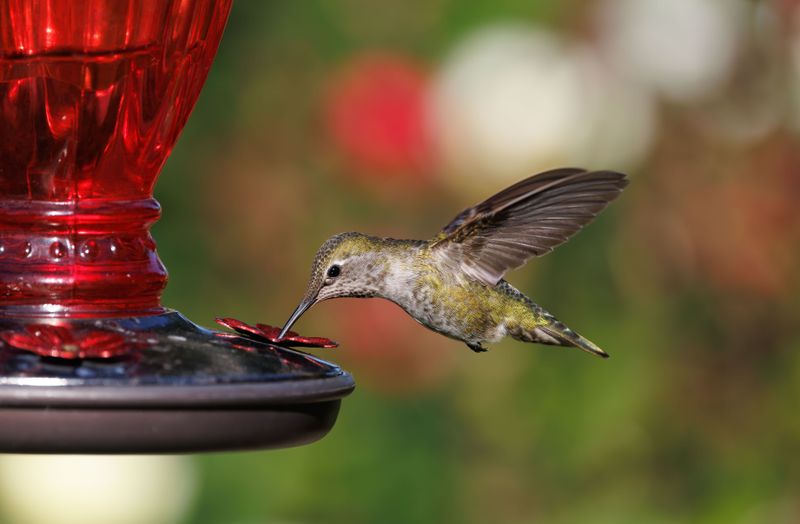
Taking down feeders in fall is an old habit worth breaking. Experts agree that leaving feeders up does not stop healthy hummingbirds from migrating, because daylight and instinct drive that urge.
A full feeder gives winter visitors reliable fuel during chilly nights. Hummingbirds burn energy fast, and a steady food source helps them stay in good shape.
Mix one part plain white sugar with four parts water. Skip red dye, honey, and brown sugar, since those can harm the birds.
Boiling the water briefly helps the mix stay fresh longer.
Winter in Florida is milder than summer, but sugar water still spoils. Change it every few days in cool weather and more often during warm spells.
Cloudy liquid or black mold means it is time to scrub.
Clean feeders with hot water and a bottle brush each time you refill. A diluted vinegar rinse works well, followed by a good water rinse.
Hang your feeder where you can see it easily from a window. Honestly, half the fun is catching that quick flash of color while you sip your morning coffee.
Native Firebush and Coral Honeysuckle Roll Out the Welcome Mat
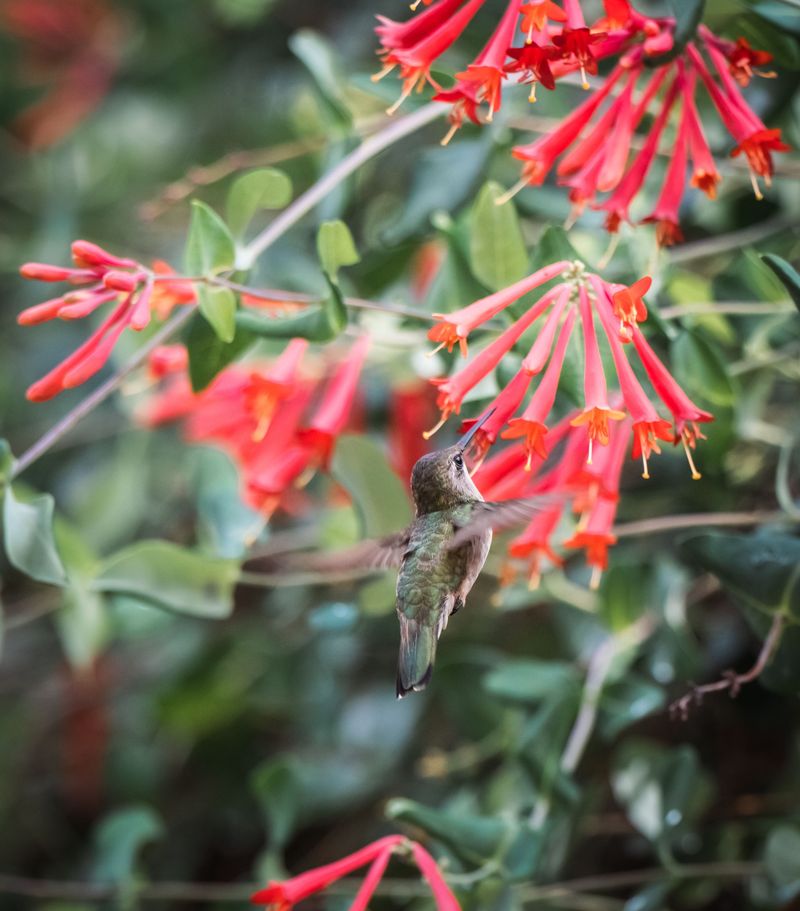
Flowers beat feeders for natural appeal. Hummingbirds adore tubular blossoms in red, orange, and hot pink, and native plants often feed them best.
Firebush is a favorite in Central and South Florida, where it can bloom much of the year. In North Florida, frost may knock it back, though it usually resprouts in spring.
Coral honeysuckle is a native vine that hummers love. Unlike invasive Japanese honeysuckle, it behaves nicely on a trellis or fence.
It often blooms in late winter and early spring, right when some winter visitors are still around.
Tropical sage, also called scarlet sage, reseeds easily and flowers for long stretches. Cardinal flower adds deep red spikes in moist spots.
Shrimp plants and firespike are popular too, though neither is native to the state.
Plant in groups so birds can find blooms quickly. Layer different plants so something flowers in each season.
Skip pesticides in hummingbird areas. These birds eat tiny insects and spiders for protein, especially in cold weather.
A garden buzzing with small bugs is a better pantry than you might guess.
Your Hummingbird Photos Can Help Scientists Track These Western Travelers
Every sighting counts more than you might expect. Winter hummingbird research depends heavily on everyday people who notice birds and share what they see.
Start by keeping a simple notebook or phone log. Write down the date, time, weather, and what the bird looked like.
Note if it returns at the same hours each day.
Photos are gold. Try to capture the tail spread out, the sides, and the throat from different angles.
Even blurry pictures can sometimes help experts narrow down a species.
Submit your observations to eBird, a free tool from the Cornell Lab of Ornithology. Your record joins a huge database that scientists use to map migration changes.
Local Audubon groups can also connect you with licensed banders.
Banding gives each bird a tiny numbered leg band. That is how researchers learned about the Rufous who flew from Tallahassee to Alaska.
Keep watching through February and into March, when many winter visitors start heading back west. I think that is the best takeaway here.
Stay curious, keep the feeder fresh, and let your yard become part of a much bigger story.