8 Low-Water Shrubs That Hide An Ugly Pennsylvania Block Wall By Next Summer
A standard concrete block measures roughly eight by sixteen inches, and every gray seam seems to glow in afternoon sun. Those walls also bounce heat onto nearby soil, which means anything planted beside them gets thirsty fast.
Pennsylvania summers can swing from soggy weeks to surprise dry spells, so fussy plants often sulk against masonry. Luckily, several tough shrubs shrug off that reflected heat and can add two feet of growth in one season.
I have to admit that I once stared at my own cinder block wall for three summers straight. You deserve a faster fix, and the right plants can soften that blank gray face within a year.
Several of my favorite picks are natives that birds adore, while others bring flowers your neighbors will ask about.
1. Arrowwood Viburnum
Native Americans reportedly used the straight young stems of this shrub for arrow shafts, which explains the name. I love that a plant with such a sturdy backstory also looks so cheerful against a gray wall.
Arrowwood viburnum grows six to fifteen feet tall and about as wide, so it covers block walls generously. Expect roughly one to two feet of new growth each year once the roots settle into your soil.
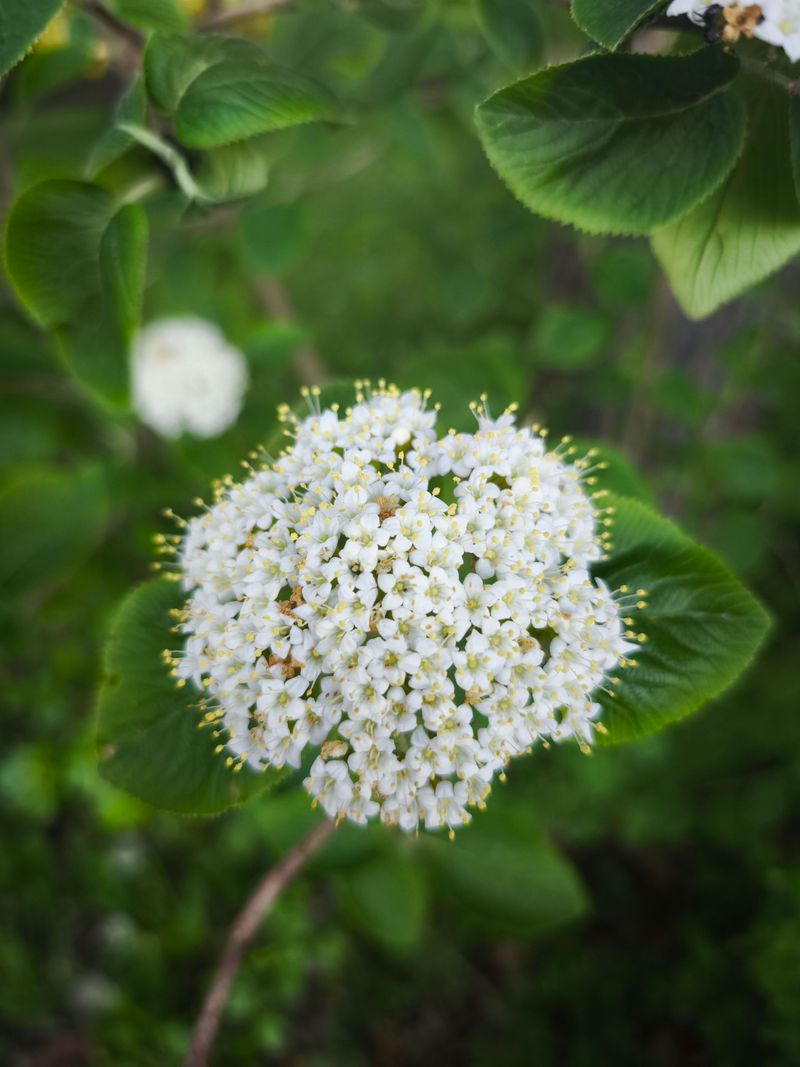
Creamy white flower clusters show up in late spring and draw plenty of bees and other busy pollinators. Blue-black berries follow in late summer, and songbirds usually strip them from the branches surprisingly fast.
Fall brings another show, with glossy leaves turning shades of yellow, red, or deep burgundy depending on the plant. You get color across several seasons, which is more than that plain concrete has ever offered you.
Water deeply once a week through the first summer, especially during hot spells when wall heat dries the soil. After that, this native handles dry stretches well and only needs a drink during long droughts.
Plant it about three to four feet out from the wall so air moves freely around the branches. Full sun gives the most flowers and berries, though partial shade still produces a thick, leafy screen.
Keep an eye out for viburnum leaf beetle, a pest that chews leaves full of holes in many areas. Pruning out infested twigs during winter, when you spot the tiny egg sites, helps keep the problem small.
2. Ninebark
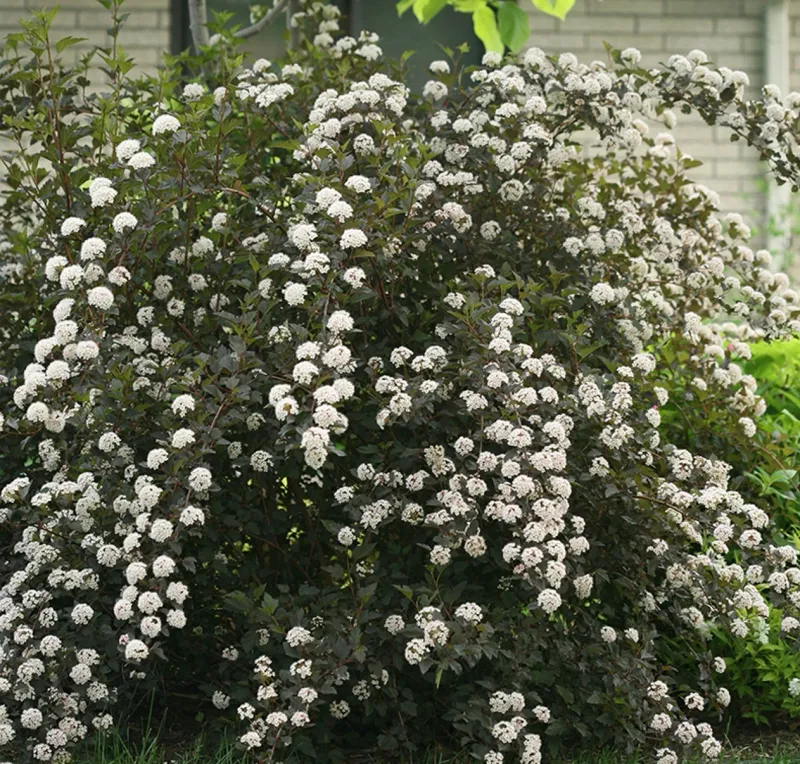
Peel back a little curiosity and look at ninebark in winter, when its bark curls off in papery layers. Folks once claimed it had nine layers of bark, and honestly, the shaggy stems make that story easy to believe.
This native shrub is a speed demon, often adding two feet or more of height in one year. Most plants mature between three and ten feet tall, forming a dense, rounded mound that hides block seams nicely.
Late spring brings clusters of white or pale pink flowers that look a bit like spirea blooms. Pollinators visit them eagerly, and reddish seed capsules follow, adding a warm tint to the shrub in summer.
Personally, I think the purple-leaved cultivars look fantastic against gray concrete because the contrast feels so bold. Gold and copper types also exist, so you can pick a shade that suits your house and patio.
Ninebark tolerates a wide range of soils, from moist spots to dry, rocky ground near foundations. Give it steady water during the first growing season, then let it handle most dry spells on its own.
Choose a sunny spot for the best leaf color, though it accepts light shade without much complaint. Space plants about four to five feet apart if you want them to knit together into one hedge.
Older stems can be trimmed to the ground in late winter to encourage fresh growth from the base. Powdery mildew sometimes appears in humid weather, so good airflow and resistant cultivars make life much easier.
3. Eastern Red Cedar
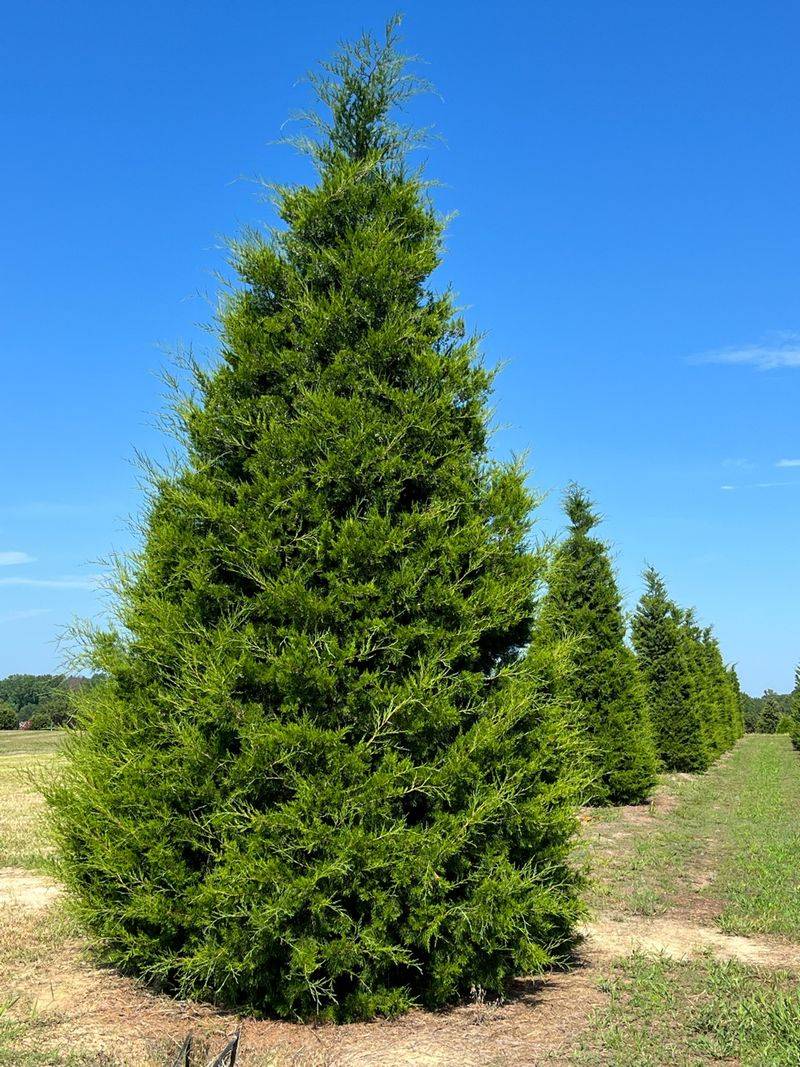
Despite the name, eastern red cedar is a juniper, and its fragrant wood has lined closets and chests for generations. I can’t think of a tougher evergreen for a hot, dry strip of soil beside a block wall.
This native conifer often grows one to two feet per year once it settles into a sunny spot. The wild species can become a forty-foot tree, so narrow columnar cultivars are smarter choices beside a wall.
Its dense, scaly foliage stays green through winter, which means your wall stays hidden in every season. Some plants take on a bronze or purplish tint in cold weather, then green up again in spring.
Female plants produce small, waxy blue cones that look like berries and hang on well into winter. Cedar waxwings were named for their fondness for this tree, and many other birds shelter in the thick branches.
Water new plants regularly for the first season, then expect them to shrug off heat and dry, windy weather. Well-drained soil matters most here, since soggy ground causes far more trouble than a dry summer does.
One caution involves cedar-apple rust, a fungus that bounces between junipers and nearby apple or crabapple trees. Orange, jelly-like galls may appear in wet spring weather, so keep this evergreen away from your backyard orchard.
Deer usually leave it alone, which matters plenty in Pennsylvania neighborhoods where hungry herds browse everything green. Plant it in full sun, and give each one enough elbow room to reach its mature width.
4. Northern Bayberry
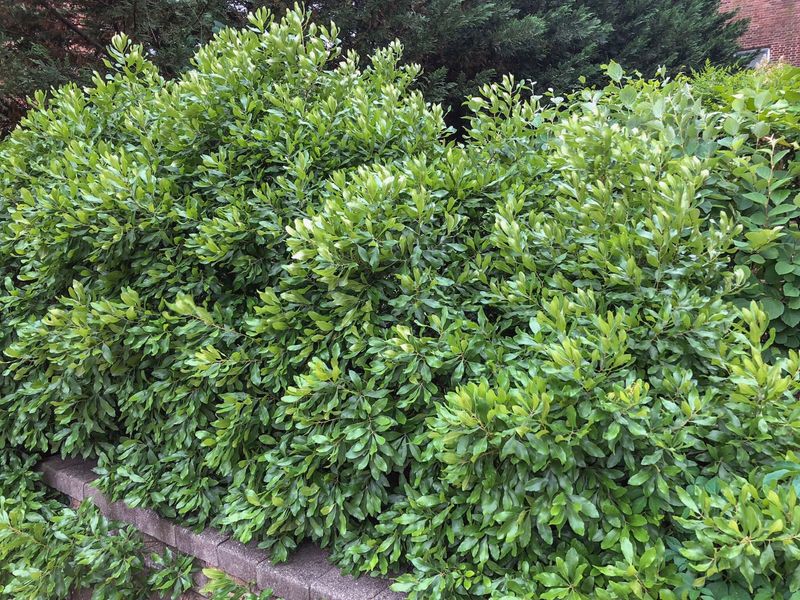
Rub a northern bayberry leaf between your fingers, and you get a spicy scent that smells like a holiday candle. Colonists actually boiled the waxy berries to make fragrant candles, though it took a lot of fruit per candle.
Northern bayberry grows about five to ten feet tall and wide, forming a dense, rounded clump over time. It spreads by suckers, so a few plants can gradually fill in a long stretch of ugly wall.
Growth is moderate, usually around one to two feet per year, which still adds up quickly by next summer. I like buying larger container plants for this one, since a head start helps hide the wall sooner.
Leaves are glossy, gray-green, and semi-evergreen, so some foliage often hangs on well into the colder months. Female plants carry clusters of grayish-white berries that feed hungry songbirds when winter food gets scarce.
You will need a male plant nearby for good berries, because bayberry produces male and female flowers on separate shrubs. Ask your nursery for both, or plant a small group so the odds work in your favor.
Poor, sandy, or dry soil suits this native just fine, and it even tolerates salt and strong wind. Root nodules help it gather nitrogen from the air, so skip the heavy fertilizer and let it work.
Water weekly during its first season, then give it a deep soak only during long dry stretches. Full sun to part shade works, and occasional pruning keeps suckers from wandering into nearby garden beds.
5. Smokebush
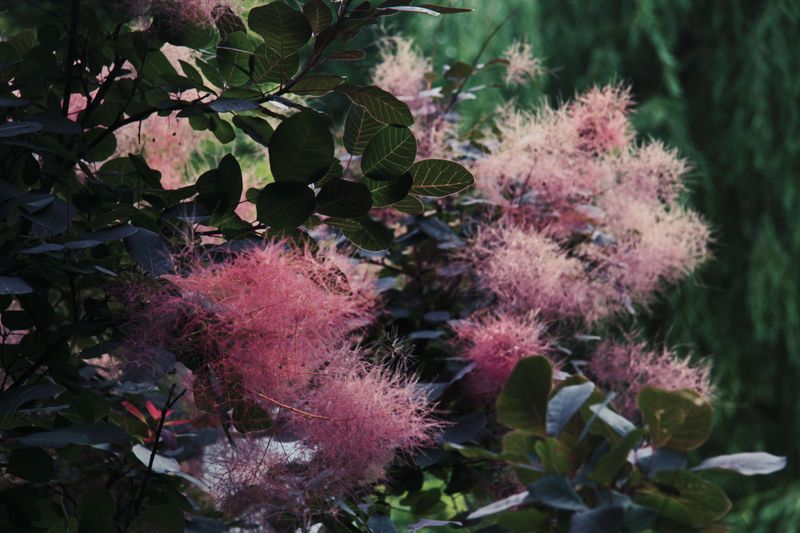
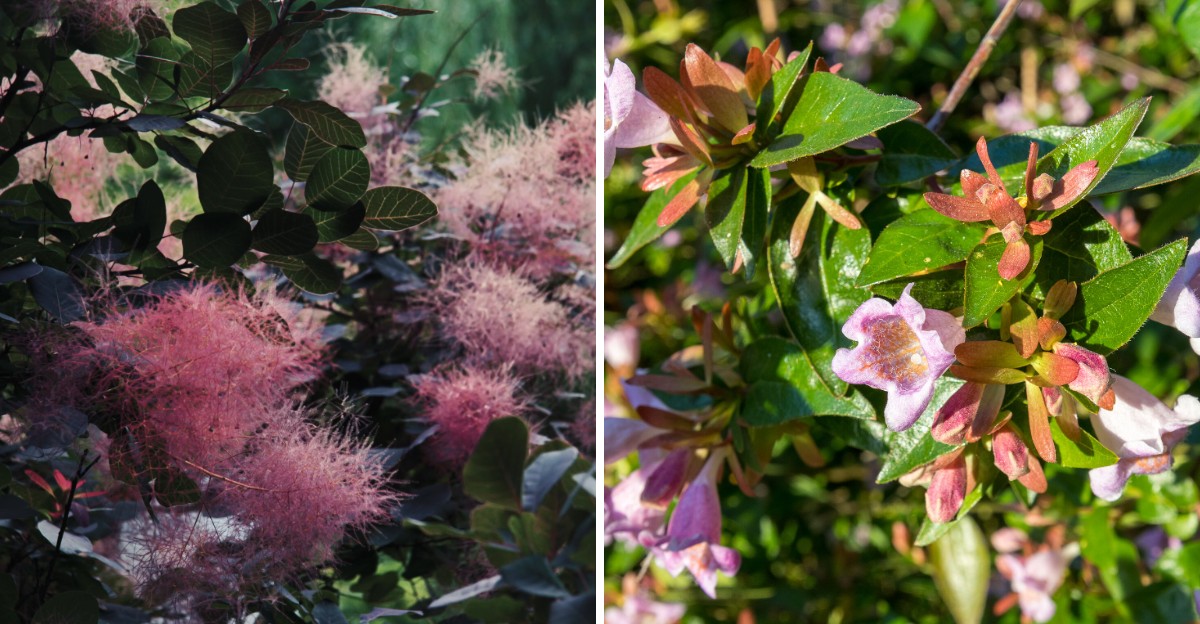
Every summer, smokebush looks like someone parked a fog machine in the garden and walked away laughing. Those fluffy pink plumes are actually tiny flower stalks covered in fine hairs, and they last for weeks.
This shrub grows fast, eventually reaching ten to fifteen feet tall and nearly as wide in a sunny spot. One plant can screen a big section of block wall, so you may need fewer shrubs than expected.
Many gardeners grow purple-leaved cultivars such as Royal Purple, which glows deep plum in late afternoon sun. In fall, the leaves shift toward orange and scarlet, giving your former eyesore a fiery autumn finish.
Smokebush is not native, coming from Europe and Asia, but it is not considered invasive in our region. Penn State Extension has listed it among shrubs that handle heat and drought well, which suits hot walls nicely.
Water it regularly through the first growing season so the roots can spread deep and wide. After that, it actually prefers drier soil, and overwatering can cause more trouble than a dry August.
I have to admit the smoky plumes look best when backlit, so plant where evening sun hits them. Give each shrub room to spread, about eight feet or more from its neighbors, to avoid crowding later.
Some gardeners cut stems hard in late winter for bigger leaves, but that sacrifices most of the summer plumes. Light shaping right after the plumes fade keeps the shape tidy without losing next season’s show.
6. Glossy Abelia
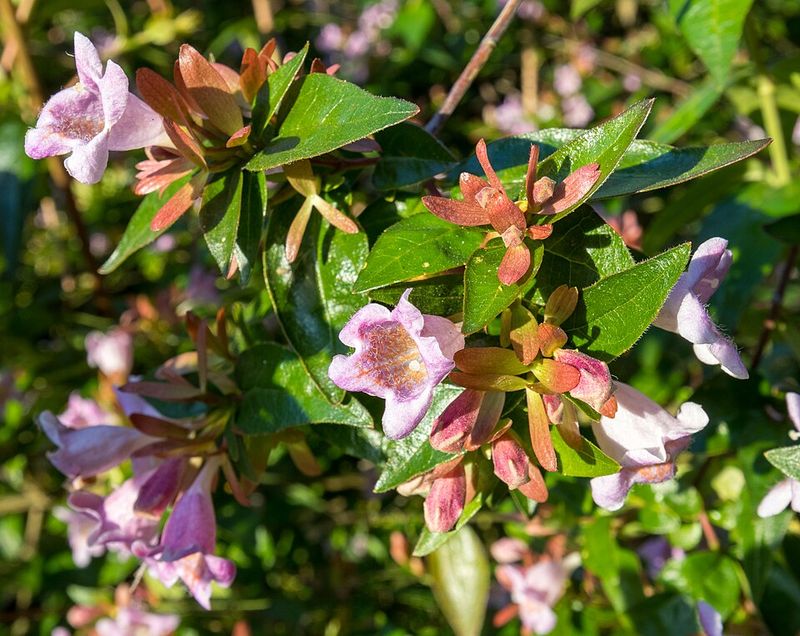
Butterflies treat glossy abelia like an all-day snack bar, visiting its tiny bells from late spring into fall. Few shrubs bloom that long, and I love how the sweet scent drifts across a patio on warm evenings.
Glossy abelia grows quickly into a graceful mound of arching branches about three to six feet tall. That size suits shorter retaining walls, or you can plant it in front of taller shrubs for layers.
Its small white or pale pink flowers form clusters at branch tips, and they keep coming for months. Dark, shiny leaves often take on a bronze or reddish tint as cooler autumn weather settles in.
Hardiness runs from zone five through nine, so it fits the warmer southeastern parts of Pennsylvania best. Colder spots may see stem tips freeze back in a harsh winter, though plants usually regrow from the base.
A sheltered south-facing wall actually helps here, because stored warmth from the blocks can protect stems in winter. Well-drained soil matters, and once the roots settle, this shrub handles heat and dry spells admirably.
Water it every week during the first summer, especially when temperatures climb and the wall radiates heat. Deer tend to pass it by, which helps a lot if your neighborhood has regular four-legged visitors.
Prune in late winter or early spring, removing any winter-damaged tips and a few of the oldest stems. Avoid shearing it into boxes, since the natural arching form looks far prettier against flat masonry.
7. Flowering Quince
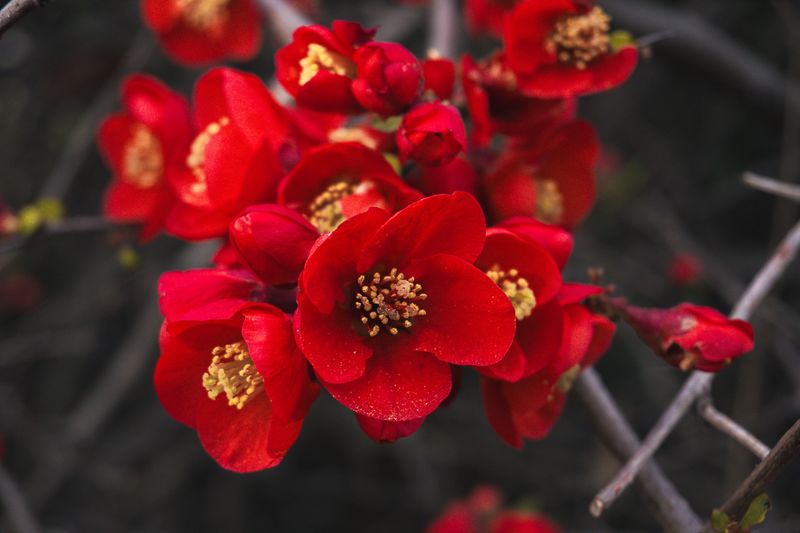
Long before most shrubs wake up, flowering quince bursts into scarlet, pink, or white blooms on bare branches. Spotting those bright flowers in early spring feels like finding a party invitation tucked into a gray envelope.
This tough shrub grows into a dense, rounded mass about six to ten feet tall and wide. Growth is moderate to fast, so young plants fill out noticeably within a couple of seasons near your wall.
Thorny, tangled branches make it an excellent barrier, and deer usually avoid chewing on the prickly stems. Wear sturdy gloves when pruning, because those spines will remind you quickly that this plant means business.
Early bees and other pollinators visit the flowers when little else is blooming, which makes them extra valuable. Hard, fragrant yellow-green fruits may follow, and many cooks simmer them into tart jellies and preserves.
Flowering quince is native to China rather than North America, but it is not listed as invasive here. Established plants handle dry spells well and grow in many soils, including heavy clay that challenges other shrubs.
Water steadily during the first summer, then rely mostly on rainfall except during long hot stretches. Full sun produces the most flowers, while too much shade leaves you with sparse blooms and leggy growth.
Prune right after flowering, since next year’s buds form on old wood during the summer months. Cutting out a few older canes every couple of years keeps the shrub dense and blooming freely.
8. Beautybush
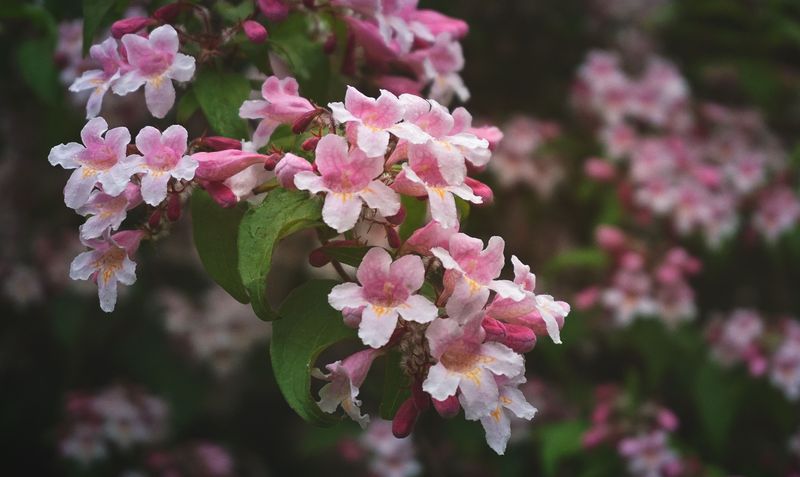
When beautybush blooms in late spring, the pink flowers pile on so thickly that the leaves nearly disappear. I believe few shrubs can match that cotton-candy moment, especially when it happens right in front of concrete.
Botanists recently moved it into the genus Linnaea, so you may see labels reading Kolkwitzia amabilis or Linnaea amabilis. Both names refer to the same easygoing shrub, which originally comes from the mountains of central China.
Beautybush grows fast into an arching, fountain-like mound that reaches six to ten feet tall and wide. That generous size means two or three plants can hide a surprisingly long stretch of block wall.
Each bell-shaped flower is soft pink with a yellow throat, and bees happily crawl inside to gather nectar. After the blooms fade, fuzzy seed heads and peeling bark keep things interesting through the colder months.
Penn State Extension has listed beautybush as tolerant of heat and drought, which makes sense for sunny walls. Water consistently during the first season, then give deep drinks only when weeks pass without decent rain.
Full sun brings the heaviest flowering, and average, well-drained soil keeps the roots happy for years. Skip rich fertilizer, since extra nitrogen pushes leafy growth at the expense of those famous pink blooms.
Older plants can look leggy, so remove a few of the oldest stems at ground level after flowering. That simple habit keeps fresh growth coming and helps your wall disappear behind a pink curtain every June.