Do This To Your Pennsylvania Crape Myrtle In November Instead Of Pruning It
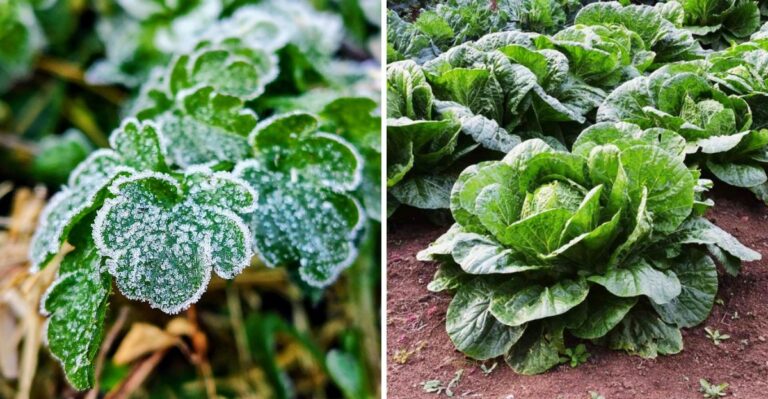
Cutting a certain summer-blooming tree in fall can push out fresh shoots right before a hard freeze. Those soft shoots rarely survive the first serious cold snap.
I learned this the hard way after a tidy November cleanup left my favorite shrub with brown, brittle tips by March. Personally, I still wince when I see bare stubs in a neighbor’s yard each December.
The plant blooms on new wood, so every flower cluster you enjoy next July grows from stems that appear in spring. Pennsylvania sits at the northern edge of where this Southern favorite grows well, so it needs a little extra help in winter.
You’re in for a pleasant surprise, because the smartest November move takes less work than pruning. A bag of mulch, a garden hose, and a bit of patience will do more good than any pair of shears. Ready to swap the loppers for something kinder?
Those Crape Myrtle Shears Can Wait Until Late Winter
Sharp pruners and a cold November afternoon feel like a perfect match. For crape myrtles in Pennsylvania, though, that pairing often backfires.
A pruning cut sends a signal to nearby buds. On a mild fall day, those buds may wake up and push soft new shoots.
Those shoots have no time to harden before freezing nights arrive, so they often turn brown and brittle by winter’s end.
Fresh cuts also leave open wounds. In cold weather, a tree heals slowly, which can let cold injury creep further down the stem than you’d expect.
There’s another reason to wait. Crape myrtles form flowers on the current season’s growth. Cutting in fall doesn’t help next summer’s blooms at all, and it may simply give winter more tender wood to damage.
Many Penn State Extension and nursery experts point to late winter or early spring as the better window. Leaving the branches alone now lets the tree settle into dormancy at its own pace.
So set the shears back on the shelf. Your crape myrtle has a different kind of help in mind this month, and it’s far easier on your back.
Tuck A Thick Layer Of Mulch Around The Crape Myrtle Base
Mulch is the cozy blanket your crape myrtle wishes it could pull up by itself. In November, it’s the single best job you can do for this tree.
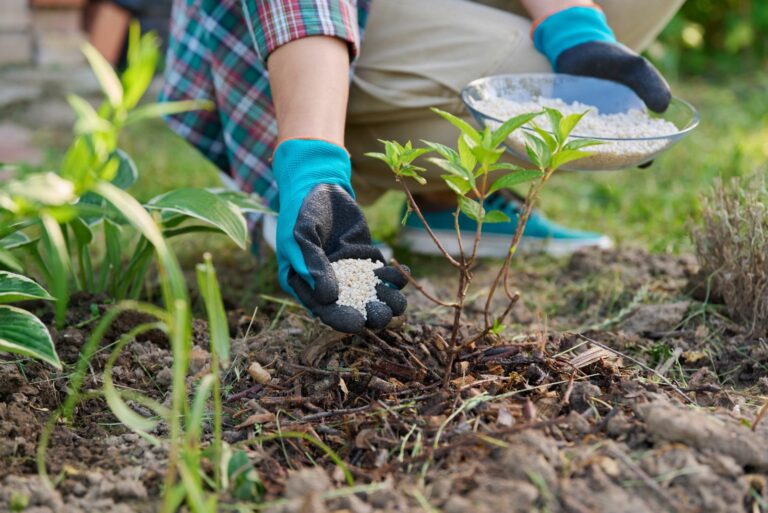
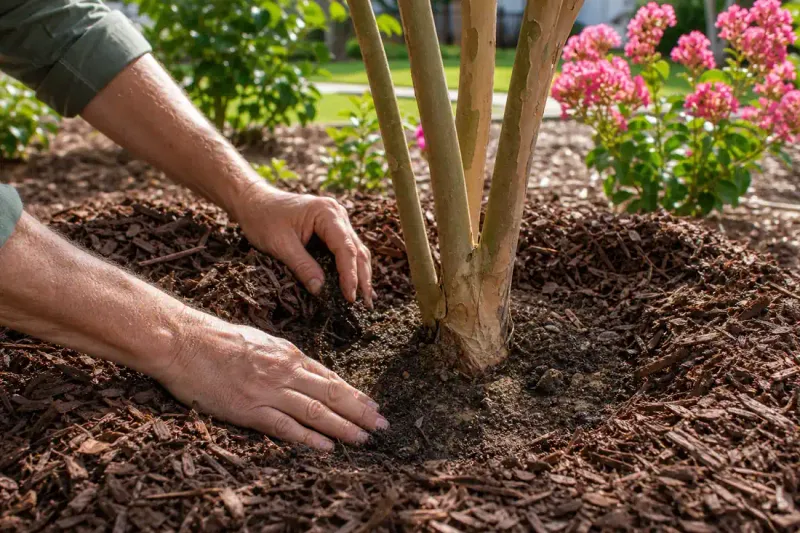
Spread shredded bark, wood chips, or chopped leaves about 2 to 4 inches deep. Cover a wide circle, ideally reaching out toward the edge of the branches.
That layer helps keep soil temperatures steadier, which protects the roots from sudden freezes and thaws.
Freeze and thaw cycles are a real headache in much of the state. Soil that heaves up and down can tug at shallow roots, especially on young plants.
Keep the mulch pulled back a few inches from the trunks. Piling it against the bark, sometimes called a mulch volcano, holds moisture and invites rot and gnawing critters.
Fallen leaves from your own yard make a fine, free option. Run over them with a mower first so they don’t mat down into a soggy sheet.
In colder parts of northern Pennsylvania, some gardeners add a bit more mulch for root-hardy shrub types that may freeze back to the ground. Those roots often send up fresh stems again in late spring.
A Deep Drink Before the Ground Freezes Helps Crape Myrtle Roots
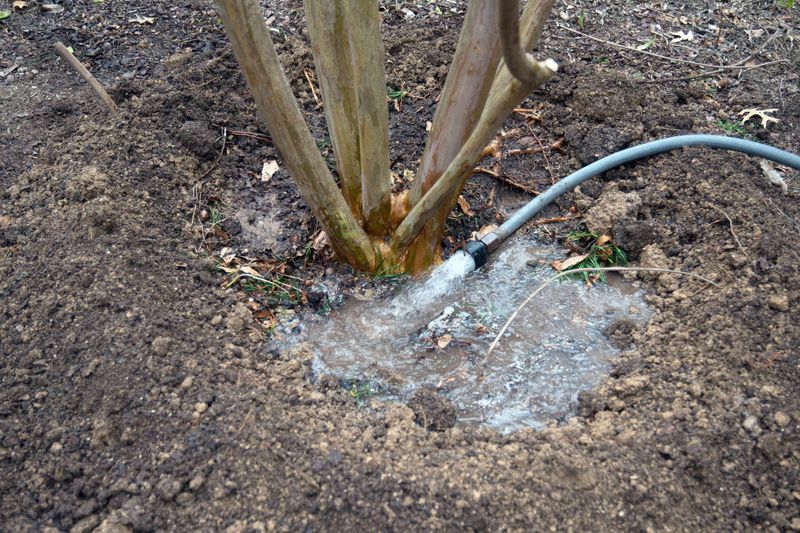
Watering in November sounds strange, I know. My first reaction was a raised eyebrow too. Yet winter winds pull moisture from branches even when a tree is dormant.
If the soil goes into winter dry, roots can’t replace that lost water once the ground freezes solid. The result is twig damage that shows up in spring and gets blamed on the cold alone.
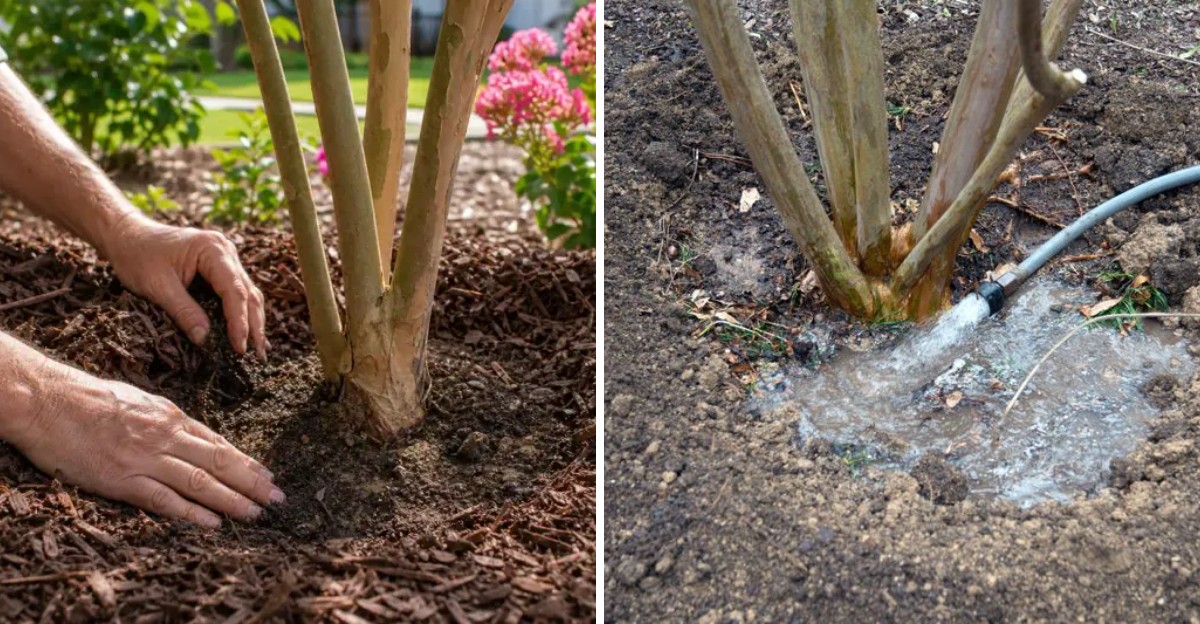
Check the soil a few inches down with your finger. If it feels dry and fall rains have been light, give the tree a slow, deep soak.
A hose trickling at the base for 20 to 30 minutes works nicely. Soaker hoses are even better because water sinks in rather than running off.
Pick a day when temperatures sit above freezing, ideally in the morning. That gives water time to soak in before the night turns cold.
Newly planted crape myrtles benefit the most. Their root systems are still small, so they dry out faster than established trees.
Once the ground freezes for good, you can coil up the hose. Mother Nature handles the rest until spring.
Wrap Young Crape Myrtles In Burlap Against Bitter Winds
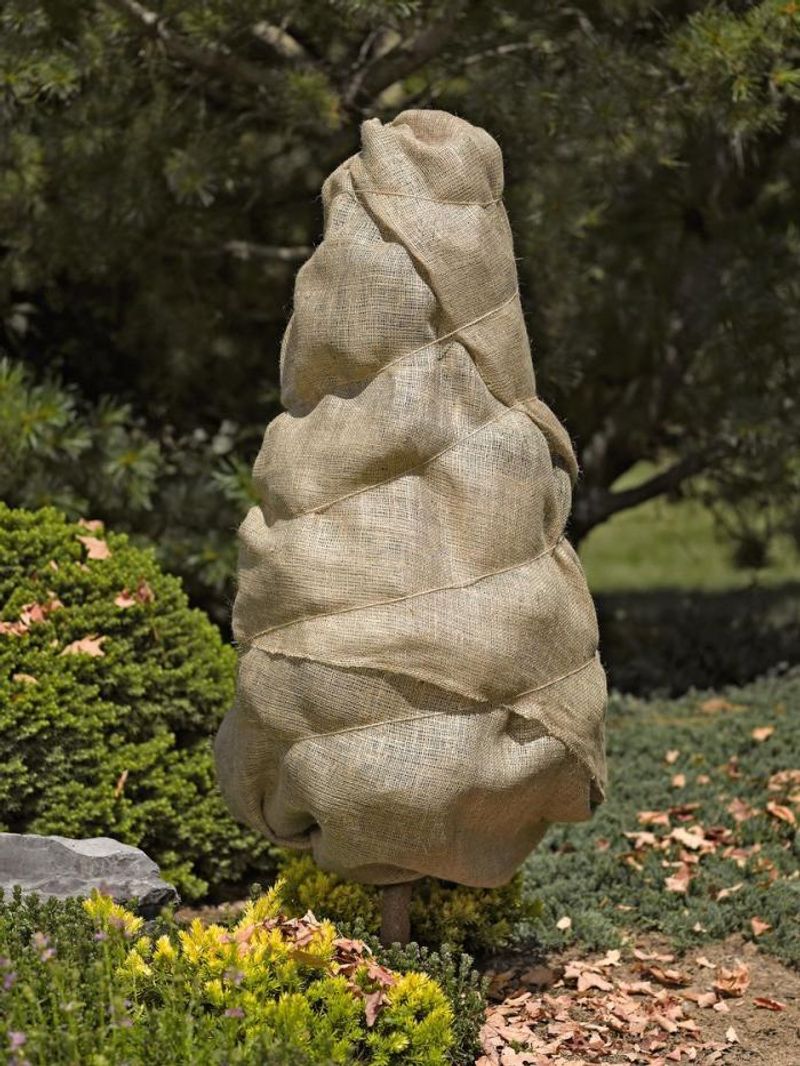
Young crape myrtles are a bit like kids at a bus stop in January. They need an extra layer. Plants in their first few winters, or those in windy, open spots, benefit from a burlap screen.
Pound three or four stakes into the ground around the shrub before the soil freezes. Then wrap burlap around the stakes to block harsh winds.
Burlap breathes, which matters a lot. Plastic traps heat on sunny days and moisture on cold nights, and that swing can harm tender bark.
Frost cloth is another option for cold snaps. Drape it loosely over smaller shrubs and remove it once the weather calms down.
Leave the top of a burlap screen open so light and air can reach the plant. You’re building a windbreak, not a sealed box.
Gardeners near Philadelphia, in zone 7, often skip wrapping on established trees. Folks in zone 6 or colder areas around State College and the northern tier may find it well worth the effort.
Take the wraps down in early spring once hard freezes ease. Leaving them on too long can encourage early, tender growth.
Potted Crape Myrtles Want An Unheated Garage Getaway

Container plants face a tougher winter than their in-ground cousins. Their roots sit above ground, wrapped only in a thin pot wall.
That means roots can freeze far harder than they would in the soil. Dwarf crape myrtle varieties grown in pots often struggle through a Pennsylvania winter if left out on the patio.
Once the leaves have dropped and the plant is dormant, move it to a sheltered, unheated spot. A garage, shed, or enclosed porch that stays cold but mostly above the deep-freeze range works well.
Skip the cozy living room. Warm indoor air can wake the plant too early, and weak, pale shoots tend to follow.
Light needs are minimal while dormant. A dim corner is fine, though a little window light doesn’t hurt.
Water lightly about once a month. The goal is soil that stays barely damp, never soggy and never bone dry.
Fun fact: plenty of gardeners in cold states grow crape myrtles this way for years. Roll the pot back outside in spring after your last frost date, and it picks up right where it left off.
Snip Broken Crape Myrtle Branches And Leave The Rest
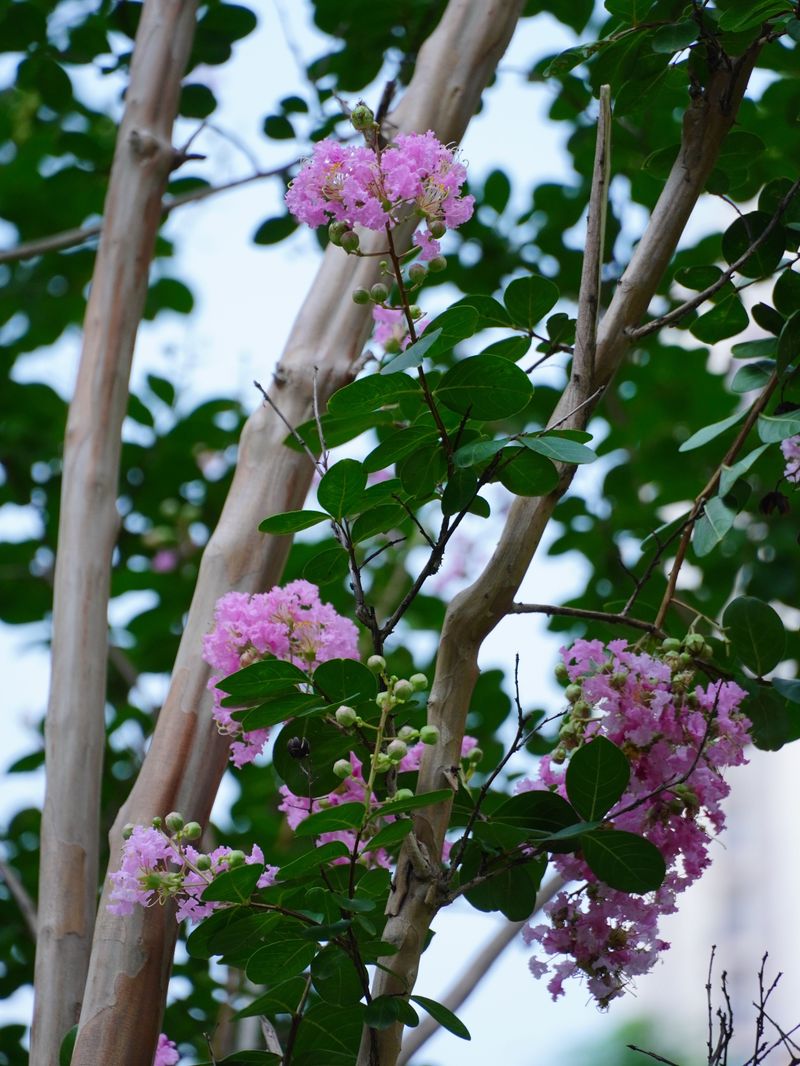
A light touch is allowed this month. Think of it as a quick tidy, not a makeover.
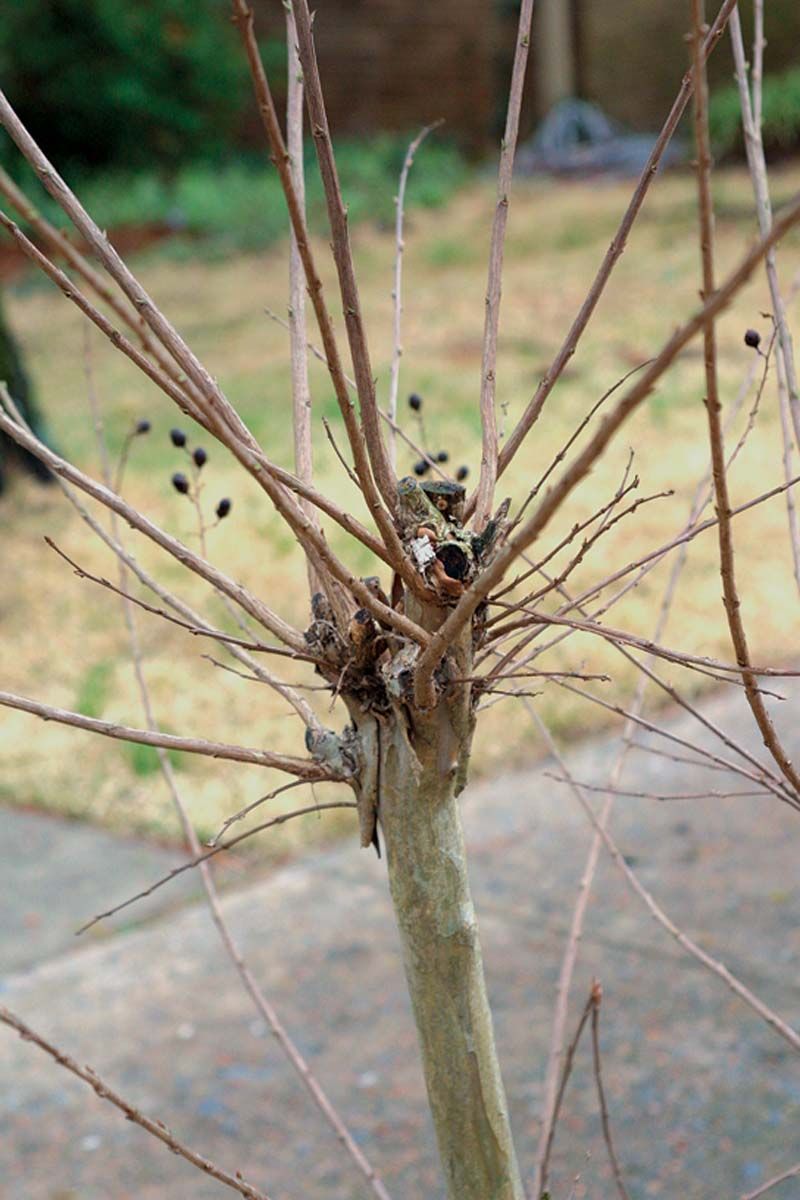
If a storm snapped a limb, go ahead and remove it. Broken branches with torn bark can collect water and invite trouble over winter. Cut cleanly back to a healthy branch or the trunk using sharp bypass pruners.
Rubbing or crossing branches that are clearly damaged can come off too. Keep it to a few cuts, though.
Spent seed heads are another story. Many people like leaving them on for winter interest, and small birds sometimes pick at the seeds. Removing them is mostly about looks, so do it only if they bother you.
Clean your tools before and after. A quick wipe with rubbing alcohol or a household disinfectant helps prevent spreading disease.
Here’s my rule of thumb. If a cut fixes a real problem, make it now; if it’s about shape or size, save it for late winter.
That small dose of restraint pays off. Your tree stays sturdy, and you keep your bigger decisions for a better time.
Peek At The Crape Myrtle Bark For White Fuzzy Scale
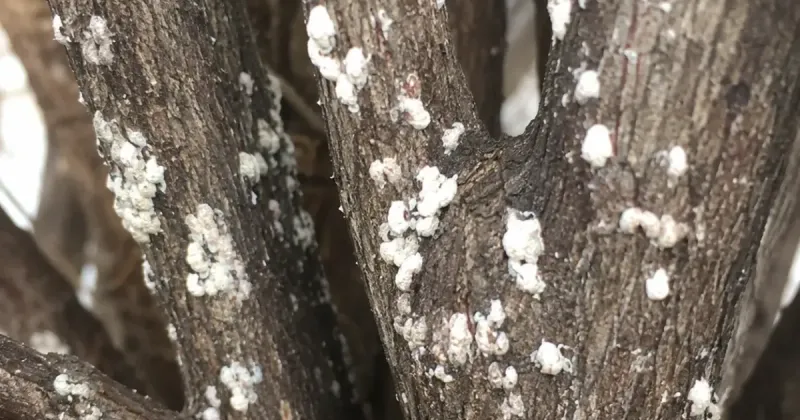
Bare branches give you a rare, clear view of the bark. November is a great time to look closely.
Crape myrtle bark scale is a newer pest that has spread across the South and been found in parts of the mid-Atlantic.
It shows up as white or gray felt-like patches, often in branch crotches and pruning wounds. Crush one, and it may ooze a pinkish fluid.
Black, sooty mold on the trunk is another clue. That mold grows on the sticky honeydew the insects leave behind.
If you spot it, try scrubbing affected areas with a soft brush and soapy water. Horticultural oil applied during dormancy can also help, following label directions carefully.
Not every white spot is scale, though. Lichens and old bark can fool the eye, so take a clear photo before you panic.
Penn State Extension offers help identifying unfamiliar pests. Sending them a sample or a photo is a smart move, especially since this insect is still being tracked in many areas.
Catching it early keeps your tree healthier. A five-minute inspection now could save you a lot of trouble next summer.
Mark Your Calendar For A March Crape Myrtle Trim
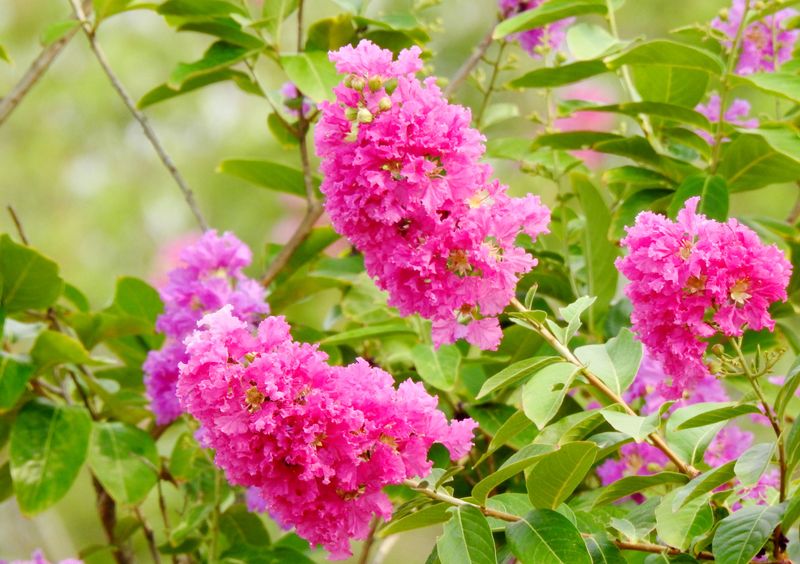
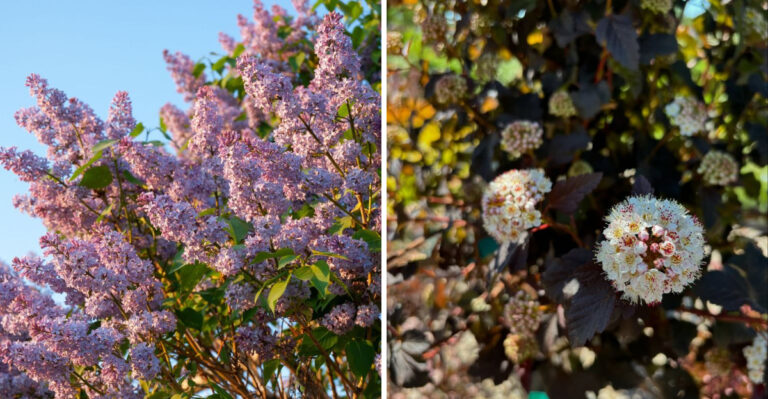
Patience is the secret ingredient with crape myrtles. Your reward arrives in July with clusters of pink, white, or purple blooms.
In Pennsylvania, late February through March is usually the sweet spot for real pruning. The tree is still dormant, yet the worst cold is mostly behind you.
Waiting until you see buds starting to swell also shows exactly which stems made it through winter.
Any brown, brittle tips can come off then. Scratch the bark lightly with a fingernail, and green tissue underneath means the stem is alive.
Please skip the flat-top chop people call crape murder. Lopping trunks at the same height creates weak, knobby growth and floppy branches.
Instead, remove suckers at the base, thin out crowded inner branches, and trim back to a side branch or the trunk. The natural vase shape and peeling bark look lovely all year.
If winter freezes a shrub-type plant to the ground, don’t give up. Many cultivars resprout from the roots and still bloom that same summer. Write a reminder on your calendar now. Future you will be glad your fall self stayed calm.