The Mulch Mistake That Can Undo Everything You Did Right When Planting A Tree In California
Arborists have a nickname for one of the most common sights in American landscaping, and they mean it as a warning. They call it a volcano, and it shows up in parking lots, schoolyards, and front lawns everywhere.
I find it funny and a little sad that this mistake comes from love. You picked the right tree, dug a wide hole, set it at the perfect height, and watered it in like a pro. Then one cozy-looking finishing touch quietly works against all of it.
Here in California, mulch is a gardener’s best friend during long, dry summers. It holds moisture, cools the soil, and keeps weeds down. Used the wrong way, though, it can soften bark, starve roots of air, and invite chewing critters right up to the trunk.
So how can something that helpful turn into trouble? The answer sits just a few inches from your tree.
That Cone Of Mulch Hugging Your Tree Trunk Is Hiding A Problem
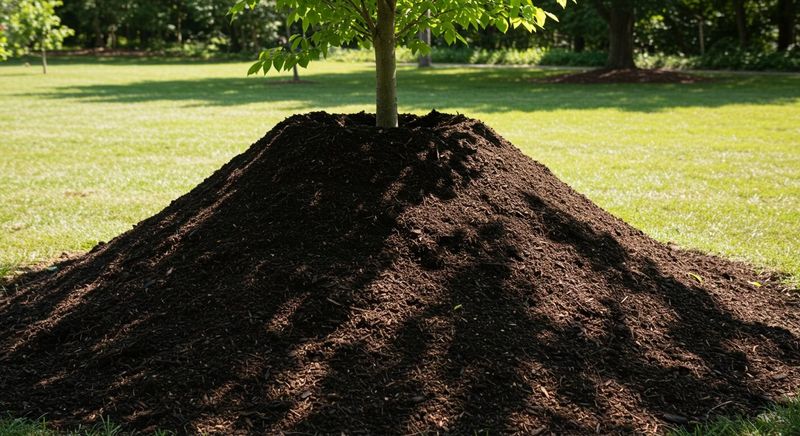
Drive through almost any neighborhood and you will spot them. Young trees stand inside tall, tidy cones of wood chips piled right up against the bark, like a scoop of ice cream around a stick.
Tree experts call these mulch volcanoes, and they rank among the most common planting errors in the country. They look neat and caring. The trouble is that tree bark was built to stay dry and open to the air, not buried under damp material.
Bark works like a raincoat for the living tissue underneath. Just below it sit thin layers of living tissue that carry water and sugars between roots and leaves. When wet mulch sits against that raincoat day after day, the bark softens and that protective barrier starts to fail.
I think the sneakiest part is how slowly it happens. A volcano does not cause trouble in a week or even a season. Damage builds quietly over months and years, often long after you have forgotten who piled the mulch.
The good part is that this problem is easy to spot. Walk outside, look at the base of your trees, and check whether you can see where the trunk flares out. If you cannot, the mulch is too close.
Pull The Wood Chips Back Into A Donut Shape Around The Trunk
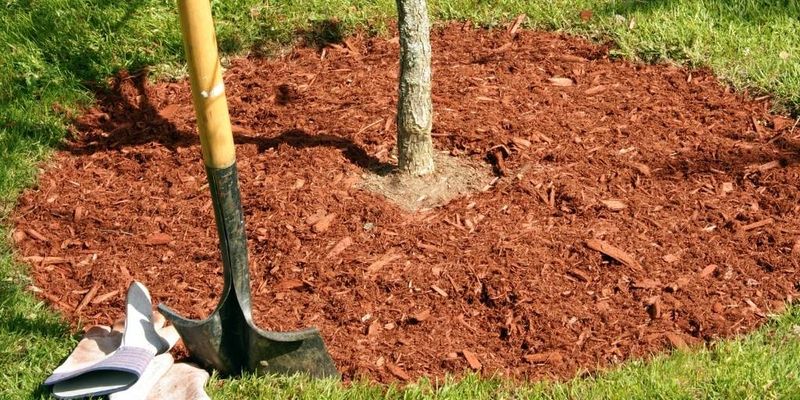
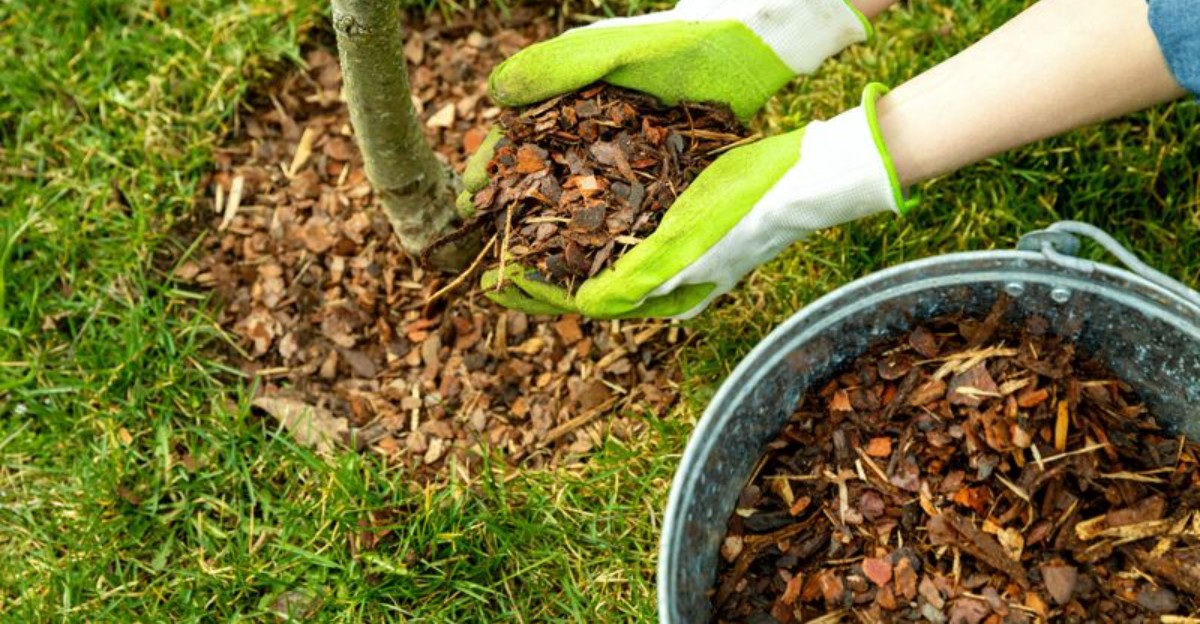
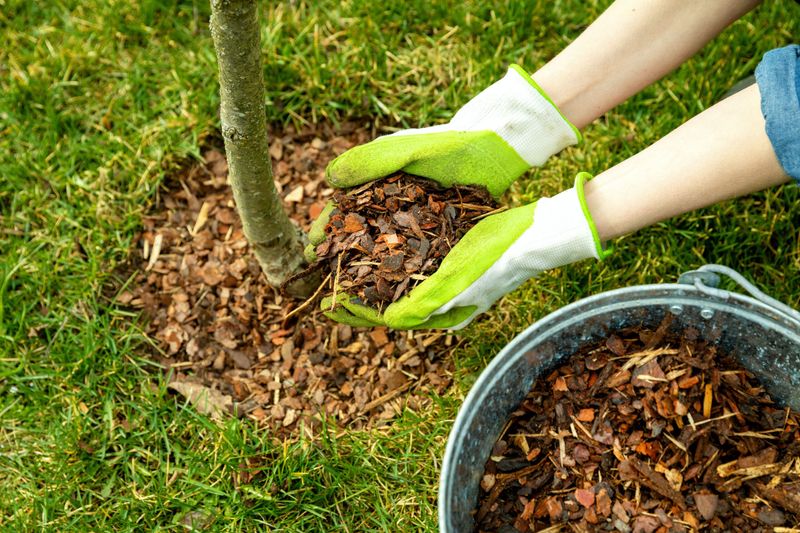
Fixing a mulch volcano takes about five minutes and a garden rake. Most arborists and university extension programs point to one simple shape that keeps trees happy. Think flat donut, not tall mountain.
Start by pulling mulch away from the trunk until you can see the root flare. That is the spot where the trunk widens as it meets the soil. Leave a bare gap of at least a few inches, and many experts suggest 3 to 6 inches for young trees.
Next, keep the layer itself fairly thin. About 2 to 4 inches of coarse mulch is the sweet spot. That depth blocks weeds and holds moisture while still letting air and water reach the soil.
Personally, I like to use the back of my hand to check depth. If the mulch rises above my knuckles anywhere in the ring, I spread it out wider.
Finally, smooth the outer edge so the ring is slightly higher at the rim than in the middle. A gentle rim helps hold irrigation water where the roots need it. You end up with a tidy saucer that looks just as nice as a volcano and works far better.
Spread The Mulch Ring Wide Toward The Tree’s Drip Line
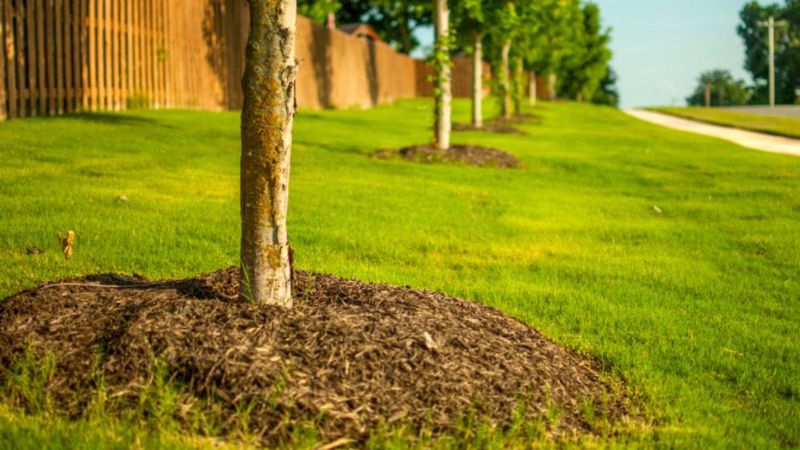
Most of a tree’s thirsty feeder roots are not hiding under the trunk. They spread outward in the top foot or so of soil, often well past the edge of the branches. That is where your mulch does its best work.
For a new tree, aim for a ring at least 3 feet across. Wider is even better. As the tree grows, push the ring outward toward the drip line, the outer edge of the canopy.
A wide ring pays off in a dry California summer. It shades the soil, slows evaporation, and keeps roots cooler on hot afternoons. It also keeps lawn grass from fighting your tree for every drop of water.
Turf is a tough competitor. Research has shown that young trees grow faster when grass is kept away from their root zone. A broad mulch circle handles that job without chemicals.
A wide ring also protects the trunk from mower and string trimmer damage, which wounds plenty of young trees. So the rule is simple. Go wide and shallow, not tall and narrow.
Soggy Bark Under Piled Mulch Invites Rot And Fungus
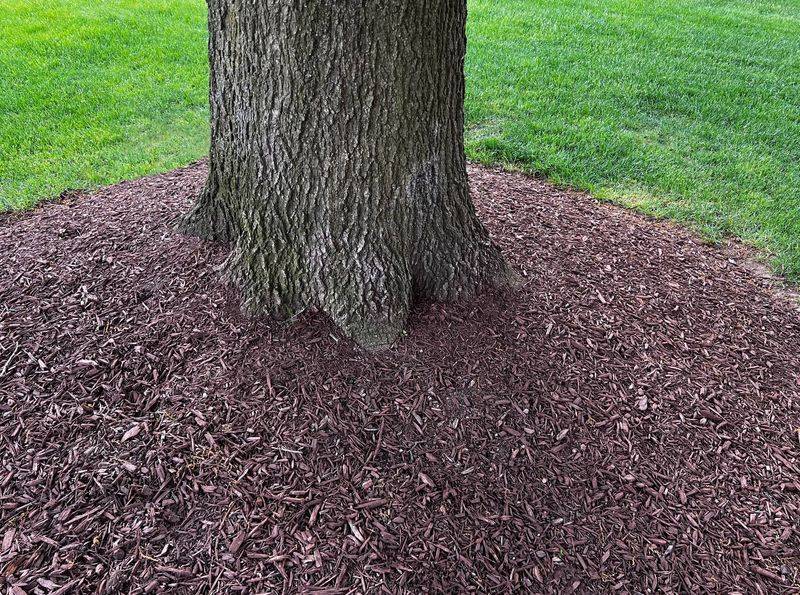
Lift the edge of an old mulch volcano and you might find a surprise. The bark underneath can look dark, spongy, or flaky, sometimes with white fungal threads running across it.
Constant moisture is the culprit. Fungi and water molds thrive where things stay damp, warm, and out of the sun. A thick pile against the trunk gives them exactly that.
Some of these organisms cause crown rot and collar rot, which attack the tree right at the soil line. Phytophthora, a group of water molds well known to UC experts, is a common troublemaker in California landscapes. It loves wet soil around the base of trees, especially when irrigation sprays the trunk too.
Once the bark breaks down, the living layer beneath is exposed. If the damage circles the trunk, it can cut off the flow of water and food. A tree in that state often declines over several seasons.
You can lower the risk with a few habits. Keep mulch off the bark, aim sprinklers and drip emitters away from the trunk, and avoid planting trees too deep. Dry bark at the soil line is a healthy sign.
Smothered Tree Roots Can Start Circling And Girdling The Trunk
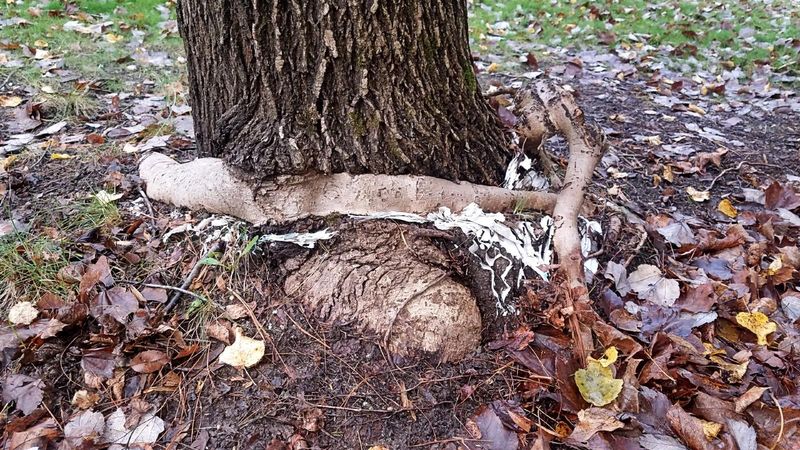
Roots breathe, even though we rarely picture it. They take in oxygen from tiny air pockets in the soil. Pile on too much mulch and those pockets shrink, especially once the pile packs down.
Roots respond in odd ways. Some grow up into the mulch itself, chasing air and moisture. Those shallow roots then dry out fast in a hot spell because mulch cannot hold water like real soil.
Other roots may wander sideways and wrap around the trunk. These are called girdling roots. As both the trunk and the root thicken, the root can squeeze the stem like a tight belt.
To be fair, deep mulch is not the only cause. Root-bound nursery containers and planting too deep are major reasons too, according to arborists. Still, a buried root flare makes the problem harder to spot early.
That is why I always check the base of a tree after planting. Loosen circling roots on the root ball before it goes in the ground. Later, if you notice a root crossing the trunk, call a certified arborist to see whether it should be removed.
Voles And Gophers Love A Cozy Mulch Pile Next To Bark

Voles are small, round-faced rodents with a big appetite for tender bark. In many California gardens, they share the underground scene with pocket gophers. Both appreciate shelter, and a mulch volcano is basically a free cabin.
Deep mulch against the trunk hides voles from hawks, owls, and cats. Tucked inside, they can gnaw the bark at ground level without anyone noticing. UC pest experts note that voles may chew a ring around young trunks, which can seriously harm the tree.
Gophers feed mostly on roots from below, so mulch matters less to them. Still, a cluttered base makes it harder to spot fresh mounds and chewing early.
A clear gap around the trunk takes away that hiding spot. Predators can see better, and you can see better too.
For extra protection, many gardeners wrap young trunks with a loose hardware cloth cylinder. Bury the bottom a few inches and leave room for growth. In gopher country, a wire basket around the root ball at planting gives roots a fighting chance. Small steps like these keep critters from snacking on your hard work.
Thin Leaves And Weak Branch Growth Can Point Back To Bad Mulching
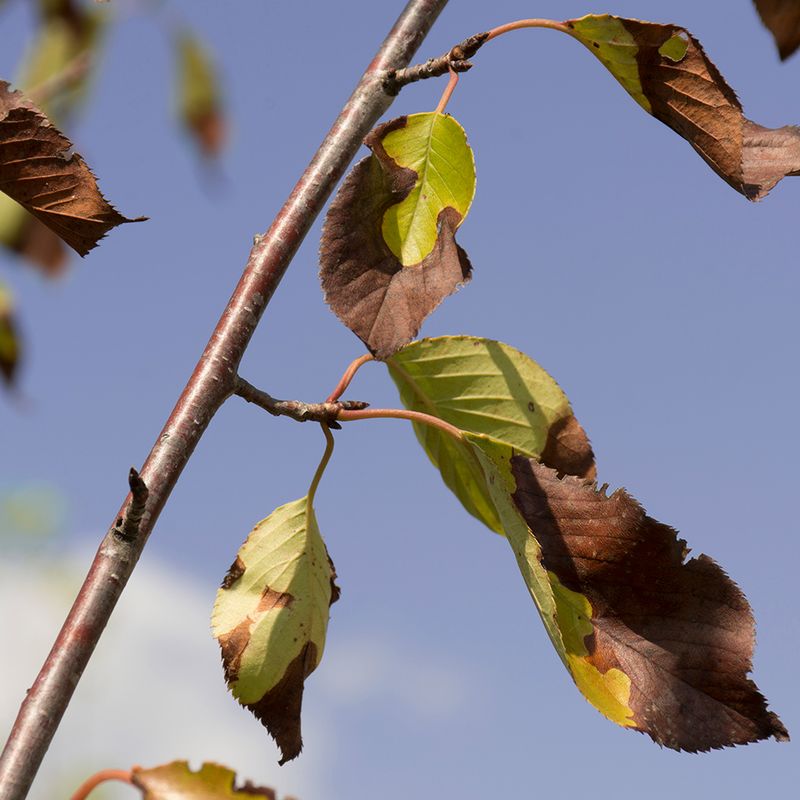
Trees are quiet patients. They rarely show trouble at the trunk first. Instead, the first clues usually appear up in the leaves.
Watch for leaves that look smaller than normal, pale, or yellowish. Twig growth may slow down, and the canopy can look thin compared with similar trees nearby. Some trees drop leaves early in late summer or show branch tips that fail to leaf out.
These signs are not unique to mulch problems. Drought stress, overwatering, poor soil, and pests can look very similar. That is what makes mulch damage so easy to miss.
So I like to play detective at the base first. Pull back the mulch and check the bark. Is it soft or cracked? Are roots growing up into the mulch or wrapping the trunk? Can you see the root flare?
If you find trouble, fix the mulch right away and adjust your watering. Then give the tree time, since recovery happens slowly. For older trees with serious symptoms, a certified arborist can dig gently around the base and see what is going on. Catching it early gives your tree the best shot.
Fire-Smart Mulch Choices Near California Homes Protect More Than Trees
Mulching in California comes with one extra twist that gardeners in many other regions rarely have to think about. Wildfire season can stretch for months, and embers can travel far ahead of a fire. Organic mulch near your house can catch those embers.
UC Agriculture and Natural Resources advises keeping wood chips and bark mulch out of the first 5 feet around a home in fire-prone areas. In that zone, gravel, rock, or bare soil makes a safer choice. Shredded rubber and very fine shredded bark like gorilla hair are worth avoiding near structures.
The best fix is simple. Plant trees well away from the house, then mulch them normally with coarse wood chips. Coarse chips also hold moisture better and blow around less than fine ones.
Timing helps too. Fall and late winter are great moments to refresh mulch because rain soaks in and roots stay active. Before topping off, rake out old layers so the total depth stays around 2 to 4 inches.
Get the donut shape right, keep it wide, and keep it fire smart. Your new tree can then reward all that careful planting for decades.