Why Having A Cooper’s Hawk In Your Yard Is Not Always Good News
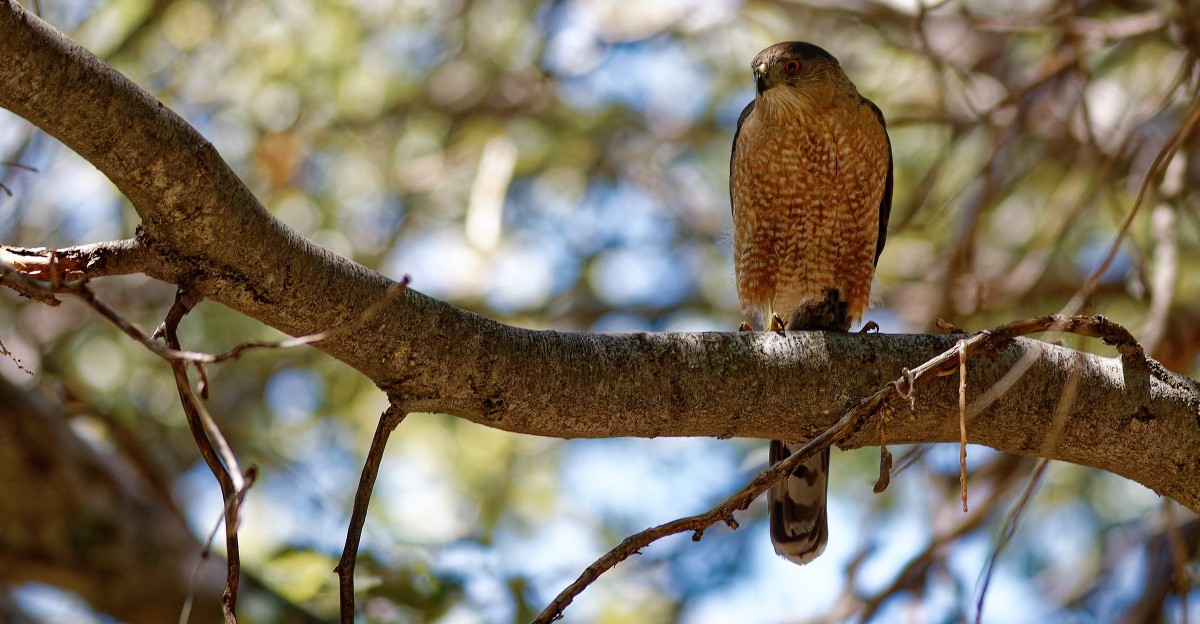
A bird no bigger than a crow can chase a mourning dove through a tangle of branches without slowing down. Old farm families nicknamed this sleek raptor the chicken hawk, and plenty of backyard flock keepers still agree.
Its long tail works like a rudder, letting it twist between tree trunks during a high-speed chase. These hunters have become a common sight in suburbs where feeders and tall shade trees mix.
I love watching raptors, yet one regular visitor changed the whole mood of my garden each morning. You might notice the same shift, with quiet feeders and stray feathers showing up on your patio.
Admiring a wild predator is easy until it starts treating your songbird sanctuary like a private grocery store. So is this striking visitor a welcome neighbor, or a guest you should gently encourage to move along?
1. Cooper’s Hawks Turn Bird Feeders Into Ambush Spots
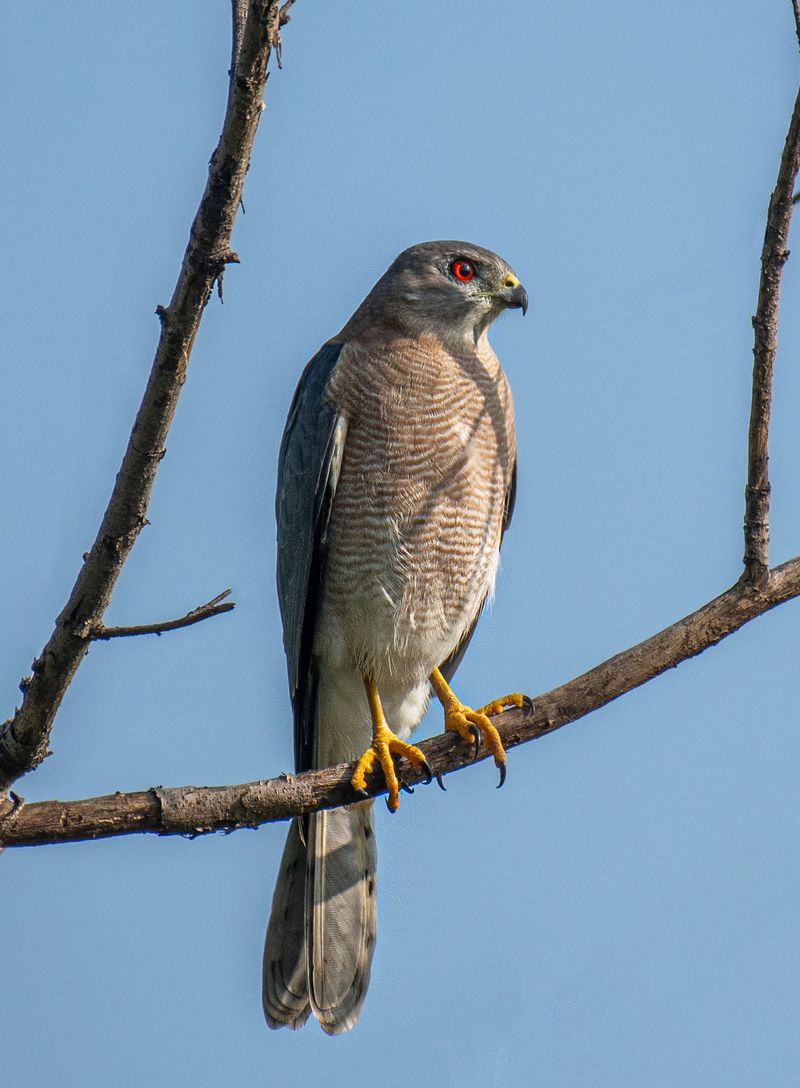
One morning my feeder went from a noisy chickadee party to frozen silence in less than a heartbeat. A slate-backed hawk shot past the lilac, and every finch disappeared into the nearest shrub.
Cooper’s hawks feed mostly on medium-sized birds, according to the Cornell Lab of Ornithology and state wildlife agencies. Mourning doves and European starlings rank high on their menu, though chipmunks and squirrels get taken too.
Feeders gather prey in one predictable place, which makes your yard a dependable stop on a hawk’s daily route. These raptors favor surprise, using thick hedges and garden sheds as cover before a sudden low strike.
Winter often brings more visits, since feeder traffic climbs while wild seeds and insects grow harder to find. Hawks notice that pattern quickly and may patrol the same perch every day for weeks at a time.
My first fix was moving the feeder about ten feet from a dense evergreen that birds could reach quickly. That distance lets songbirds dash to safety without giving the hawk a hidden launch point right beside the seed.
If the strikes keep happening, take feeders down for one or two weeks and let the songbirds scatter naturally. The hawk usually shifts its hunting to another neighborhood once the easy gathering spot disappears from its routine.
Bringing feeders back afterward works well, especially if you add brush piles or thick native shrubs nearby for shelter. You still enjoy the birds, while your yard stops looking like a guaranteed meal ticket for a hungry raptor.
2. Songbirds Go Quiet When A Hawk Patrols The Yard
Silence can be the loudest clue in a garden, and I learned that lesson during a strangely hushed autumn week. My feeders stayed full for days, and not one cardinal sang from the holly hedge by the porch.
Songbirds respond strongly to predators, and many species give sharp alarm calls when a hawk appears nearby. Chickadees even adjust their calls depending on the threat, and other birds listen in and react quickly.
Once a hawk starts hunting a yard regularly, smaller birds may feed in shorter bursts or skip the spot. You might see them hanging back in thick shrubs, grabbing a seed, then racing straight back under cover.
Such caution makes sense, because an open lawn gives a fast raptor a clear path to a distracted finch. For bird lovers, though, the quiet can feel like your carefully built habitat suddenly lost its sparkle overnight.
The change is usually temporary, and birds tend to return once the hawk moves on to another hunting area. Hawks rotate between several spots, so a hushed week does not mean your songbirds have left for good.
Layered planting helps a lot here, since birds feel braver when safety sits only a few wingbeats away. Native shrubs like inkberry holly or arrowwood viburnum give dense cover and also feed birds with berries later.
Leave a few fallen branches stacked in a back corner too, because brush piles make quick hideouts for sparrows. I noticed juncos using mine within days, which made the yard feel lively again even with a hawk around.
3. Backyard Chickens And Chicks Can Look Like Easy Meals
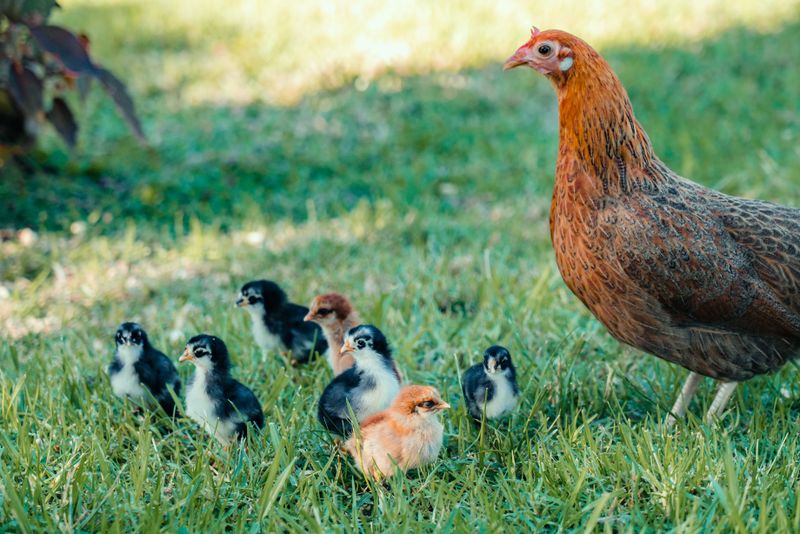
Old farm families did not give this raptor the nickname chicken hawk just for fun or folklore. Cooper’s hawks really do take poultry sometimes, especially young chicks and small bantam breeds wandering in open runs.
Full-grown standard hens are often too heavy for a male, which usually weighs well under one pound. Females are bigger and bolder, though, and a determined one may still strike a hen she cannot carry off.
Backyard flocks have grown popular across suburbs, so more keepers notice hawks circling their coops. A single loss can shake you up, especially when the hen had a name and a favorite dust bath.
Covered runs are the most reliable fix, and sturdy hardware cloth or tight netting overhead blocks a diving strike. Gaps matter, because these agile hunters can slip through surprisingly narrow openings when chasing something tasty.
Chicks need extra protection, since their small size makes them perfect targets for a hungry hawk nearby. I keep young birds inside a fully enclosed pen until they are big enough to hold their own outdoors.
Shade structures and shrubs inside the range give free-roaming hens places to duck when a shadow passes overhead. Many keepers also value a watchful rooster, who often sounds an alarm call that sends the flock running.
Scare tactics like reflective tape may help briefly, but hawks usually figure out harmless tricks within a few days. Physical barriers work better over time, so spend your effort on the coop rather than gadgets that fade.
4. Scattered Feathers Pile Up Under Hawk Plucking Perches
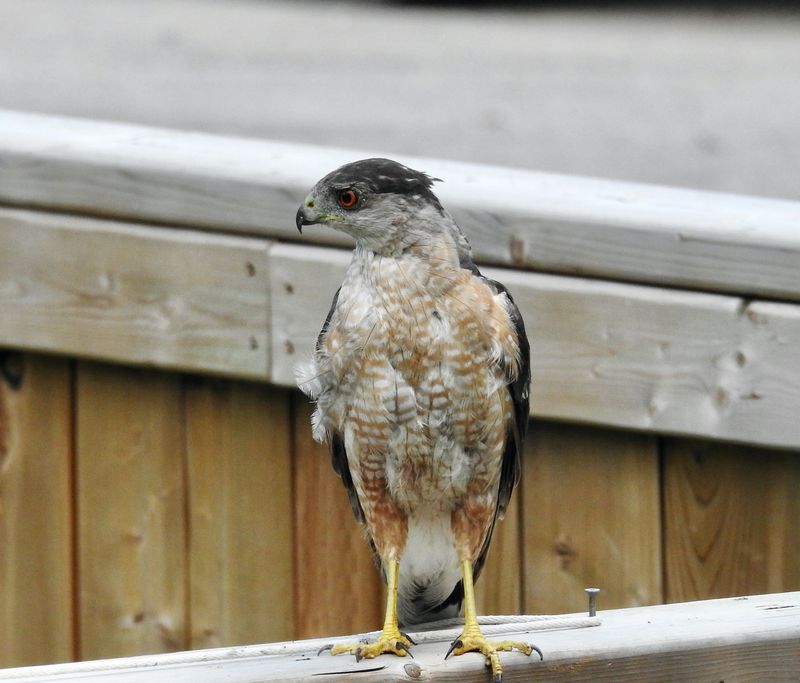
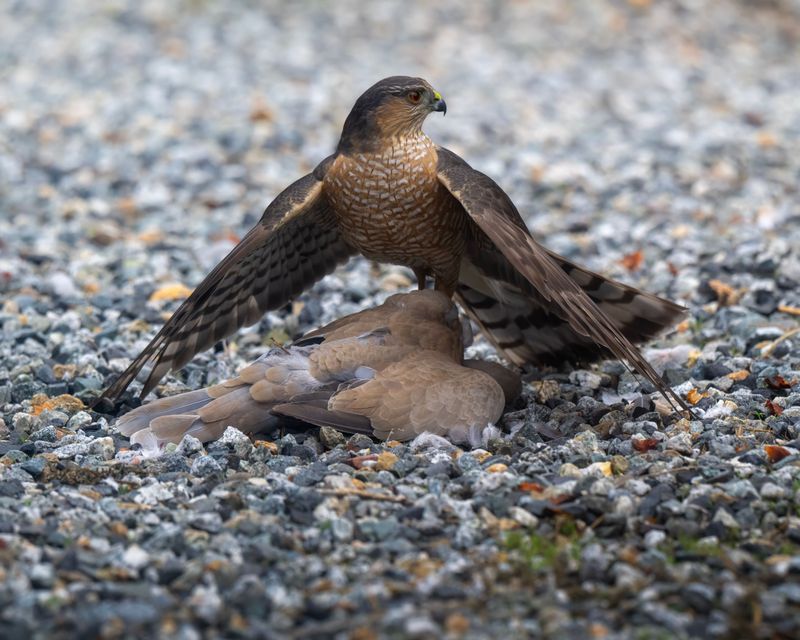
Finding a neat ring of gray dove feathers on your patio feels a bit like stumbling onto a mystery scene. Plenty of gardeners panic at first, but the cause is usually a hawk enjoying breakfast at its favorite perch.
Cooper’s hawks often carry prey to a sturdy branch or fence post before settling in to eat. They pluck feathers first, so loose piles collect below these spots and drift across nearby lawns and flower beds.
Biologists call these locations plucking posts, and a hawk may return to the same one many times. I found mine on a low maple limb, with fresh feathers showing up beneath it every few days that fall.
Such evidence can upset kids or guests, especially when a favorite cardinal suddenly stops visiting the feeder. Leftover scraps may also draw in scavengers like raccoons or crows, adding visitors you probably did not invite.
Cleanup is simple but worth doing carefully, so wear gloves and bag the remains before tossing them out. Avoid handling feathers barehanded, since wild birds can carry germs like salmonella that you do not want indoors.
Federal law also limits keeping feathers from native birds, so resist the urge to save pretty ones for crafts. Under the Migratory Bird Treaty Act, even collecting one feather from most wild species requires proper permission.
Some gardeners trim back a favorite plucking branch or tuck tall perennials beneath it to hide the mess. Grasses like little bluestem or switchgrass soften the view while giving ground birds extra cover in that spot.
5. Speedy Hawk Chases Can End In Window Crashes
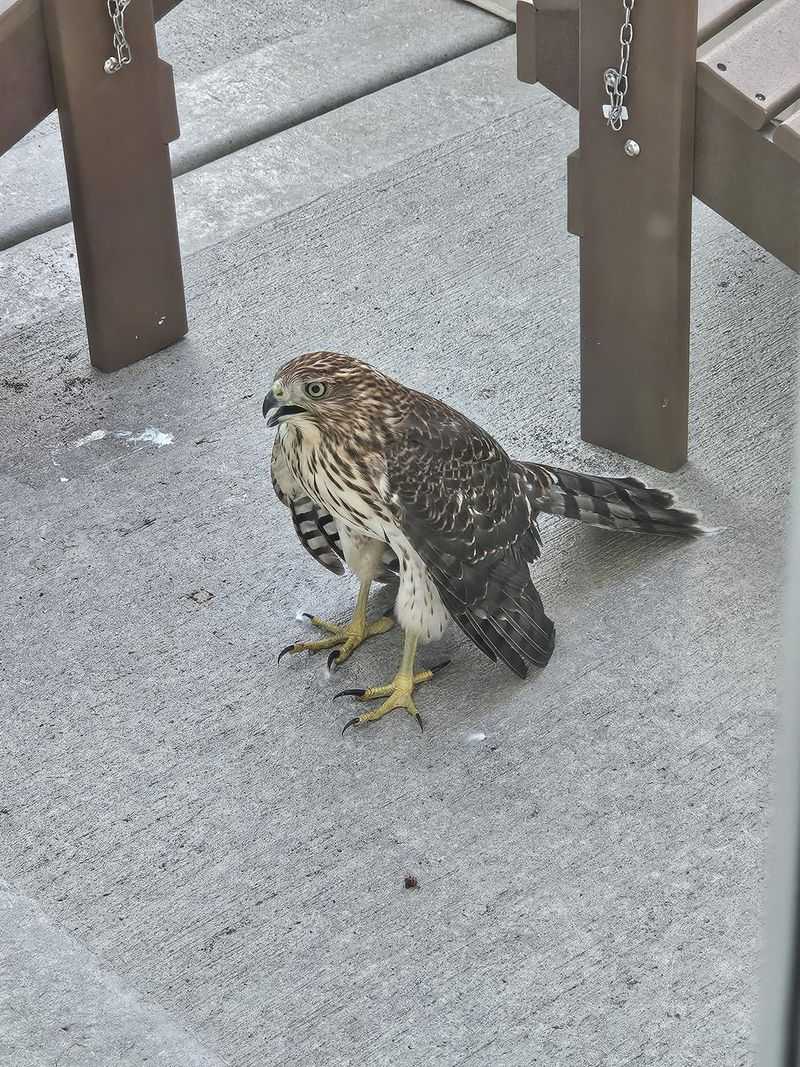
A sharp thump against the living room window sent me rushing outside with my coffee mug still in hand. On the deck sat a stunned junco, and a hawk perched nearby looked just as confused as I felt.
Cooper’s hawks hunt with fast, twisting chases through trees and shrubs, focusing hard on their fleeing prey. Glass that reflects sky or greenery looks like open space, so neither bird notices the barrier in time.
One study of more than three hundred Cooper’s hawk skeletons found nearly a quarter showed healed breaks in chest bones. Crashing through branches and into obstacles seems to be part of the job, and windows only raise that risk.
Feeders placed near windows add to the problem, because panicked songbirds may flee straight toward reflective glass. Experts suggest keeping feeders within three feet of a window or farther than thirty feet away.
Close feeders keep birds from building up enough speed to get badly hurt if they hit the glass. Distant feeders give birds more room to spot the house and change direction before an impact happens.
Exterior window markers help even more, especially dot patterns spaced about two inches apart across the outside pane. Outdoor screens or hanging paracord strands also break up reflections that fool fast-flying birds near your house.
If a small bird hits and seems stunned, place it in a ventilated box somewhere quiet and dark. Contact a licensed wildlife rehabilitator for injured hawks, since handling a raptor yourself can hurt both of you.
6. Nesting Cooper’s Hawks Guard Their Trees With Attitude
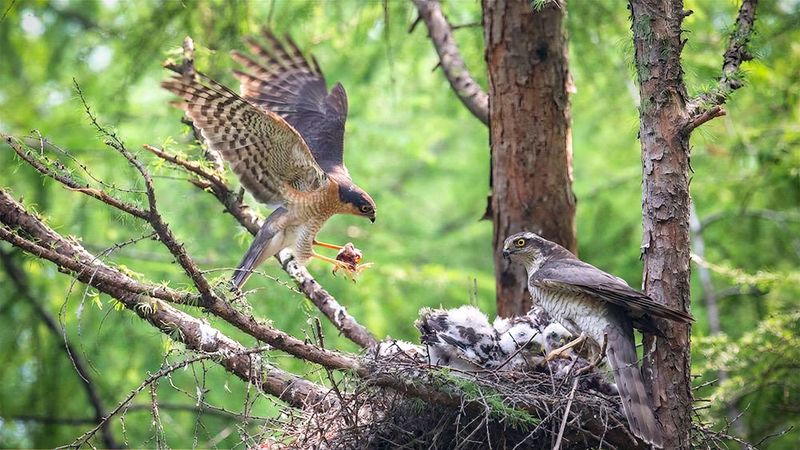
Few things wake you up faster than a crow-sized hawk cackling at you from a branch overhead. That loud kak-kak-kak call often means you wandered a little too close to a nest during breeding season.
Cooper’s hawks usually start building nests in early spring, with young leaving by midsummer. Pairs often choose tall trees in wooded patches, placing stick nests roughly twenty-five to fifty feet up.
Most hawks are fairly secretive at the nest, so many homeowners only notice them once the chicks beg loudly. Some adults, however, become defensive and swoop low over people walking near the nest tree.
Actual strikes on humans are uncommon, but even a close swoop can make weeding feel like a nervous adventure. I started wearing a wide-brimmed hat near our back oaks one June, and honestly it calmed my nerves.
Active nests and their young are protected by federal law, so removing an occupied nest is not an option. The smartest move is giving the family space and adjusting your routine for a few weeks while chicks grow.
Try moving garden chores to another side of the yard, or work when the adults seem calmer and quieter. Pruning near the nest tree can wait until fall, when the youngsters have fledged and the family has moved on.
Keep kids and pets informed too, since a sudden swoop can scare anyone who is not expecting it at all. Once the young birds head off on their own, your garden usually returns to normal until next spring.
7. Tiny Pets Need Extra Watching When Hawks Hunt Nearby
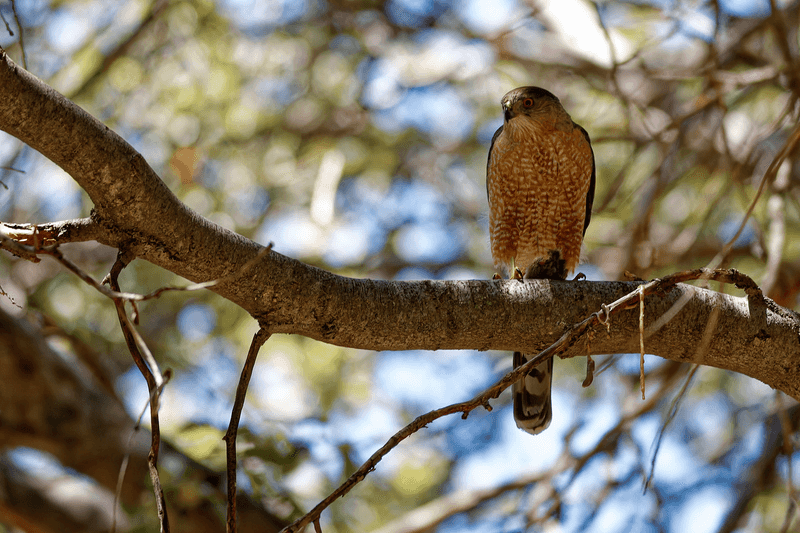
My friend’s four-pound Yorkie loves sunbathing on the deck, and she worried after spotting a hawk overhead. Her concern was understandable, though the real risk from a Cooper’s hawk is smaller than many people fear.
Even a large female Cooper’s hawk weighs only around one pound, so carrying off a cat or dog is unlikely. Their usual targets are birds and small mammals, which they handle easily with those long, sharp talons.
Very small animals are a different story, especially pet rabbits or caged birds placed outside for fresh air. A curious hawk may strike a hutch or cage, and the stress alone can seriously harm a fragile pet.
Tiny puppies and kittens may occasionally draw a hawk’s interest, although documented strikes by Cooper’s hawks are rare. Larger raptors such as great horned owls pose more risk, yet hawk sightings still make owners understandably nervous.
Supervision is the simplest answer, so stay outside with very small pets instead of leaving them alone outdoors. Covered runs or a shaded porch spot let them enjoy fresh air without sitting exposed on an open lawn.
Small animal hutches should have solid tops and sturdy wire sides that a talon cannot easily reach through. I also bring our parakeet’s cage back indoors whenever nobody is right there on the patio keeping watch.
Awareness matters more than fear here, since most Cooper’s hawks mostly ignore pets and focus on songbirds instead. Knowing the real risks lets you relax while still giving your smallest family members a safe place to play.
8. Federal Law Protects The Cooper’s Hawk Hunting Your Yard
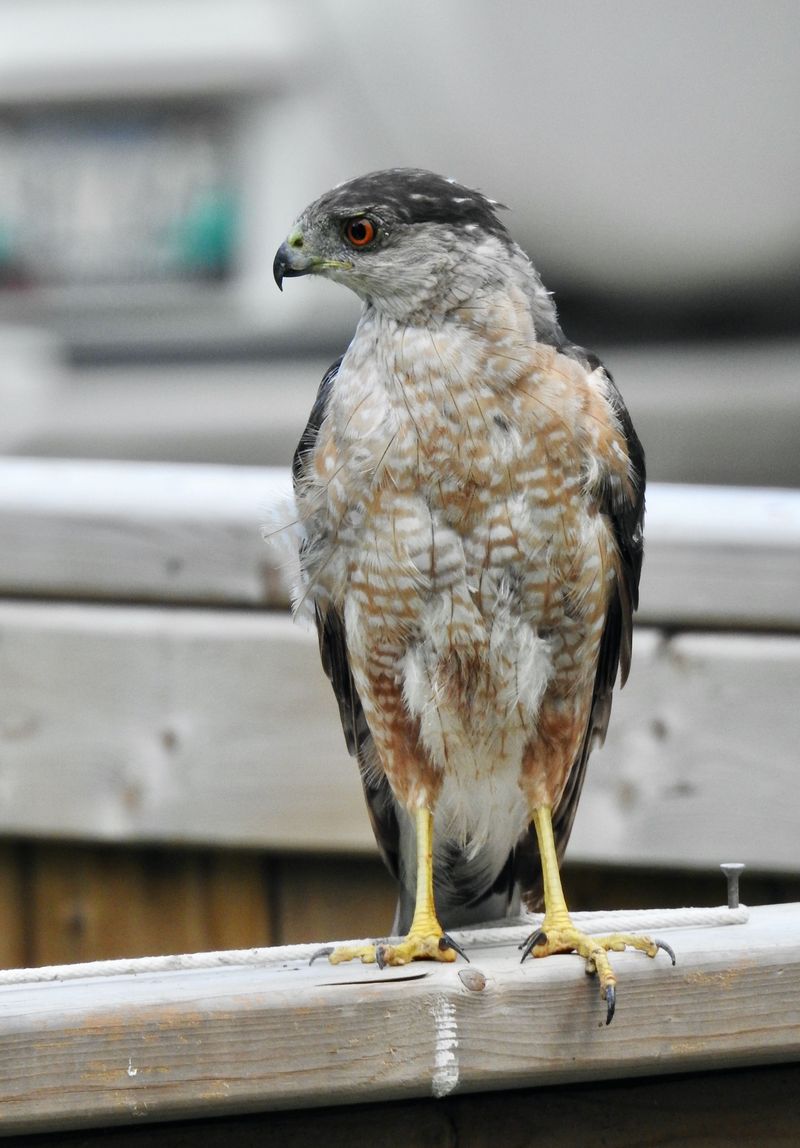
Frustrated gardeners sometimes ask how to get rid of a hawk for good, and the answer surprises many people. Cooper’s hawks are protected under the Migratory Bird Treaty Act, which makes harming or trapping them illegal without permits.
The law covers the birds themselves, along with their nests and feathers, so homeowner options are fairly limited. State wildlife rules add protection too, and violations can bring hefty fines for anyone caught.
Such protection exists for good reason, since pesticides like DDT caused serious declines in many raptors during the mid-1900s. Cooper’s hawks recovered after DDT was banned in 1972, and their numbers have grown steadily in suburbs since then.
That success story means more hawks share our neighborhoods, which can feel bittersweet for people who love songbirds. You cannot legally remove the hawk, but you can make your yard less convenient as a daily hunting ground.
Temporary feeder breaks and thicker native shrubs are legal tools that shift the odds back toward smaller birds. Fake owls and noise devices rarely work for long, because hawks quickly learn that the decoy stays put.
If a hawk is injured or trapped somewhere, contact your local wildlife agency or a licensed rehabilitator. Trained experts can handle the bird safely, and they know exactly which steps the law allows in each situation.
Honestly, learning about these rules softened my frustration and helped me see the hawk as part of the neighborhood. Your garden can still welcome songbirds, as long as you plan ahead for the occasional sharp-eyed visitor overhead.