Why California Rosemary Roots Rot After The First Fall Rain
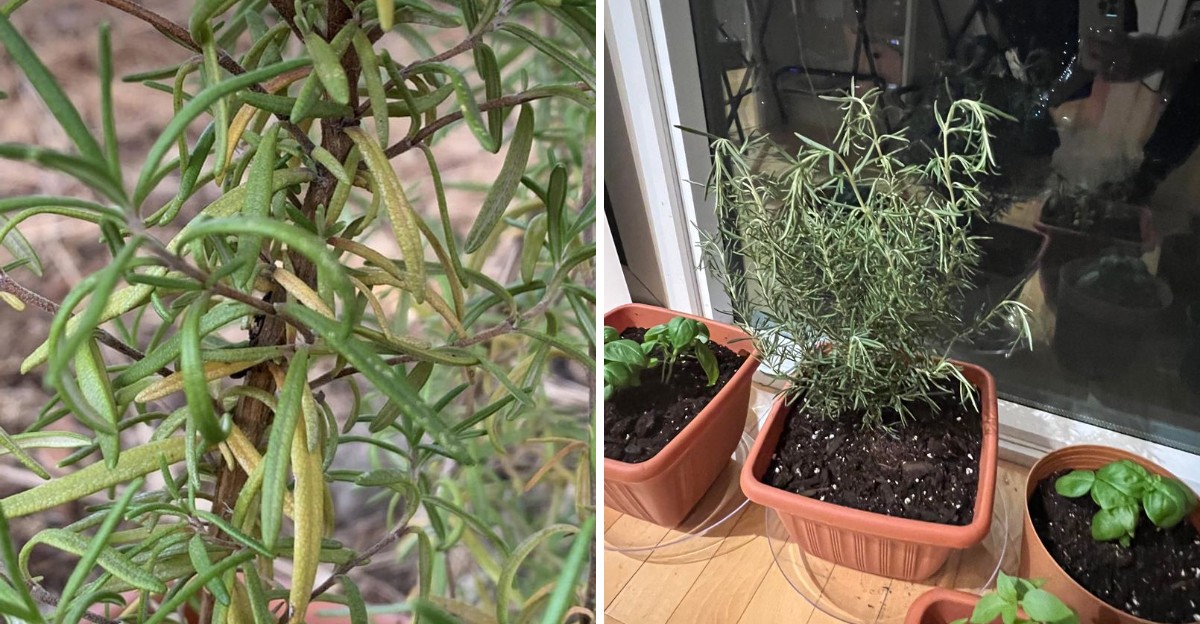
A rosemary bush in a Fresno backyard spent all summer looking unstoppable, blue-green and stiff with new growth while the lawn around it went crispy and brown.
Then the first real storm of October rolled through, dropped an inch of rain in an afternoon, and within three weeks that same bush turned gray, brittle, and hollow from the inside out.
Gardeners across California see this exact pattern every fall, and it almost never comes from cold or bad luck like most people assume.
Most homeowners blame the wrong season entirely, pointing fingers at chilly nights when the real damage happened weeks earlier, underground.
The real story sits below the surface, where months of bone-dry soil suddenly turn into a soggy trap that rosemary roots were never built to survive.
1. Months Of Dry Soil Meet Sudden Moisture
Picture a hillside garden in Sacramento in early October. The ground has been baked hard for five straight months, and then an inch of rain lands in one single afternoon.
California’s weather swings in a way few other places match. Most of the state stays dry from May through September, then flips to steady moisture almost overnight.
Rosemary evolved on rocky Mediterranean slopes where winter rain drains away fast through gravel and thin, coarse soil. UC ANR describes it as well suited to dry-summer regions, but that suitability depends entirely on water leaving the root zone quickly.
Here is where trouble begins. Long drought changes the soil itself, and hard, dusty ground can actually repel the first rainfall instead of soaking it in evenly.
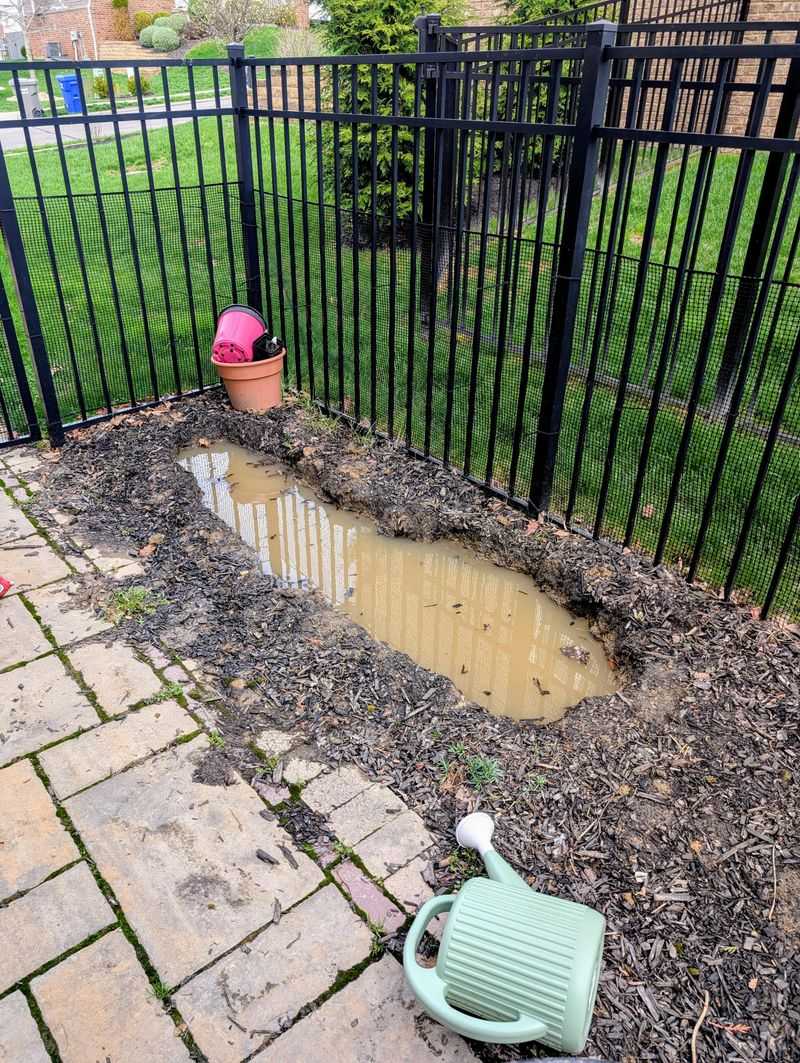
Water then runs sideways and collects in low spots, planting basins, and old irrigation wells dug around the stem. Those depressions hold water for days while the surrounding soil stays dry.
Meanwhile the plant has spent months in water-saving mode with fine roots tuned to scarce moisture. Roots need air in the soil pores to breathe, and a saturated pocket pushes that air out completely.
The timing is what fools people. A shrub that shrugged off 105-degree heat can look scorched and lifeless two weeks after a storm, and the gardener blames autumn chill instead.
Watch your yard during that first downpour instead of staying inside. Anywhere puddles sit longer than an hour is a spot where rosemary will eventually fail.
2. Poor Drainage Traps Water At The Roots
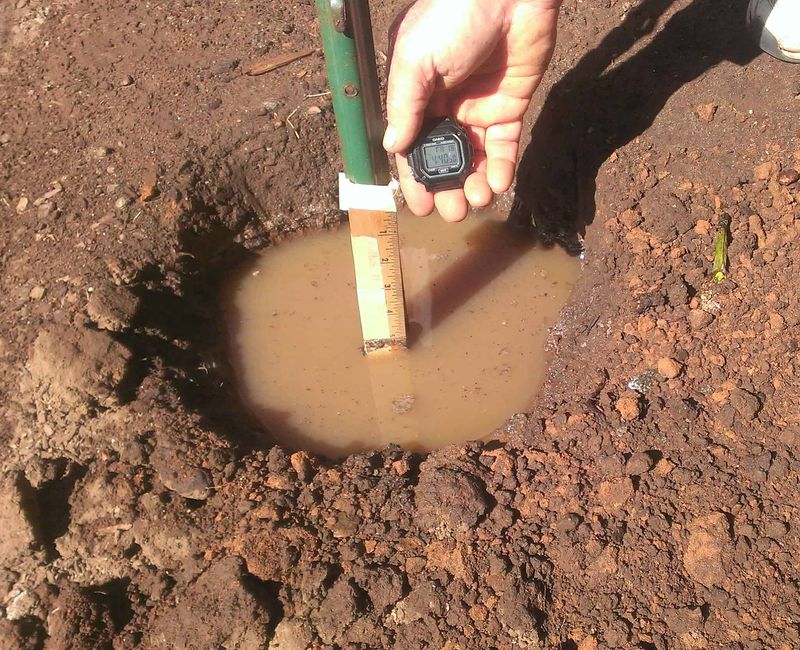
Dig a hole a foot deep, fill it with water, and time how long it takes to vanish completely. That quick percolation test predicts rosemary’s future better than any plant tag at the nursery.
Drainage simply means how fast water moves down and out through soil. Fast drainage lets air return to the root zone within hours, which is exactly what Mediterranean shrubs expect after a storm.
Slow drainage does the opposite entirely. Water sits in the pore spaces, oxygen disappears, and root cells begin to fail because they cannot respire in a flooded environment.
Plenty of California yards have hidden barriers underground too. Builders often scrape topsoil away and compact the subsoil with heavy equipment, leaving a dense layer that water cannot pass through.
Your California Garden Changes Every Week. Your Plan Should Too.
Gardening in California changes quickly throughout the season. Every Friday you’ll receive a simple weekly plan showing exactly what to plant, prune, fertilize, harvest, and protect so you never miss the right timing.
Landscape fabric, buried concrete rubble, old driveway base rock, and even a hardpan layer can all act like the bottom of a bathtub. Rain enters, then has nowhere to go.
Planting holes make it worse when they are dug straight down with smooth, glazed sides. UC ANR guidance on planting stresses roughening hole walls and avoiding sunken planting pockets for this exact reason.
A practical check takes fifteen minutes. If your test hole still holds water after four to six hours, treat that location as unsuitable for rosemary planted at grade level.
Move the plant, mound the soil, or build up the bed instead. Fighting physics with careful watering habits alone rarely works once the rainy season takes over the schedule.
3. Clay Soil Makes The Problem Worse
Squeeze a moist handful of clay soil, and it forms a sticky ribbon that holds its shape. Squeeze sandy soil, and it crumbles apart instantly by comparison.
That difference explains a lot of rosemary loss across the Central Valley, the Sacramento region, and much of coastal Southern California, where heavy clay is common.
Clay particles are microscopically small and pack together tightly. Water moves through them slowly, sometimes at a fraction of an inch per hour, and it clings there long after a storm passes.
Summer heat turns the same soil into something like fired pottery. Deep cracks open up, and the first rain pours straight down those cracks before the surface seals shut and stops absorbing.
Once sealed, clay behaves like a lid. Water trapped below cannot escape sideways or downward, so the root zone stays saturated for a week or more after a single storm.
Amending a small planting hole with compost sounds helpful but often backfires. UC ANR has long cautioned that a pocket of loose, spongy material inside surrounding clay acts as a sump that collects water.
Better results come from improving a wide area rather than one hole. Spread two to three inches of compost across the whole bed and work it into the top several inches evenly.
Choosing location beats fighting texture, though. Slopes, berms, and gravelly spots along driveways or walls give clay-soil gardeners a much better shot at rosemary that lives for decades.
4. Raised Beds Solve It Before It Starts
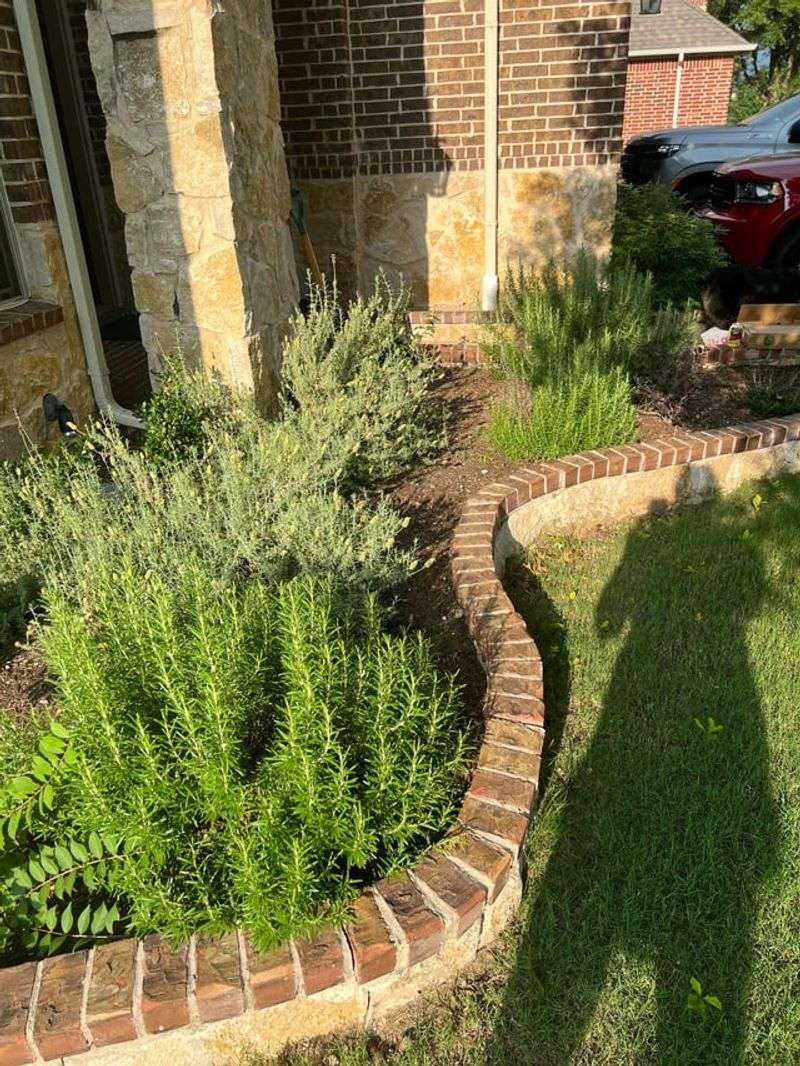
Gravity is free, and it is the cheapest drainage tool any California gardener owns. Lifting rosemary above the surrounding grade gives excess water somewhere to go without any pipes or pumps.
Raised beds work because the extra height adds a zone of soil that drains by gravity. Roots stay in that upper layer, above the waterlogged ground below, even during a wet January.
Wooden or block beds eight to twelve inches deep handle rosemary nicely. Fill them with a coarse, gritty mix rather than pure compost, which stays too wet and settles over time.
Mounds and berms do the same job for less money. Shape a wide, gently sloped hill about a foot tall and three feet across, then set the plant at the top center.
One detail matters more than people expect here. Keep the crown, where stems meet roots, slightly above the surrounding soil line so water always flows away from it.
Skip the sunken watering basin that nurseries sometimes recommend for trees. On rosemary in a wet-winter climate, that little moat becomes a reservoir at the worst possible moment.
Slopes offer the same advantage naturally, which is why rosemary thrives on freeway embankments and coastal bluffs throughout the state. Those plantings get rain and then shed it immediately.
Build before October if you can. Working soil into mounds is far easier while it is dry and crumbly than after the rains turn clay into heavy paste.
5. Overwatering Beforehand Compounds The Risk
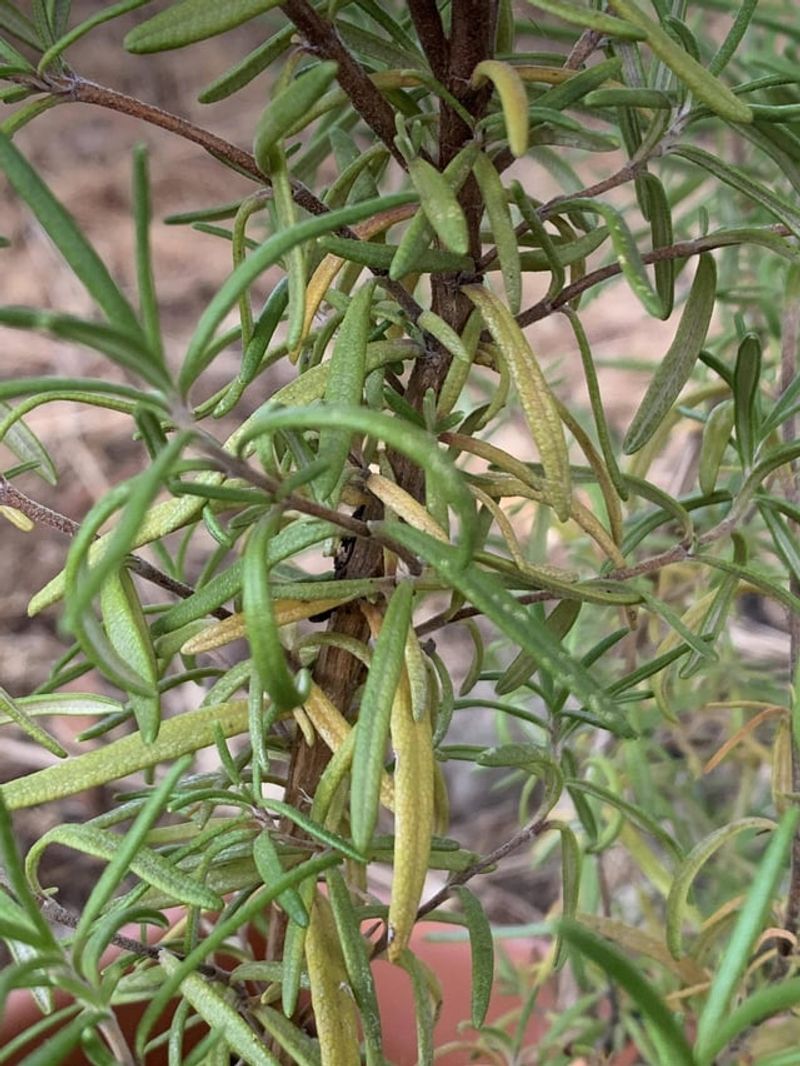
Kindness harms more rosemary in California than neglect ever has. A shrub sharing an irrigation zone with thirsty lawn or annual flowers gets watered on somebody else’s schedule entirely.
Established rosemary needs remarkably little summer water once its roots reach down. UC ANR materials on low-water landscaping group it with plants that tolerate infrequent deep irrigation, not daily sprinkling.
Frequent shallow watering creates two problems at once. Roots stay lazy near the surface, and the soil rarely dries enough to let oxygen return between cycles.
Soil chemistry shifts too when moisture lingers all summer. Populations of water-loving soil organisms build up quietly, so the pathogens are already in position when fall storms arrive.
Then October rain lands on ground that never really dried out. Instead of a dry sponge absorbing the first inch, you have a nearly full sponge that saturates immediately.
Fixing this usually means separating zones. Put rosemary, lavender, and sage on their own valve or drip line, and keep spray heads from hitting their foliage and crowns.
Taper watering as summer ends rather than stopping abruptly. Stretching intervals from weekly to every two or three weeks through September helps the root zone dry down before the weather changes.
Check moisture with a screwdriver instead of guessing. If it slides in easily six inches down, that plant does not need another drink, no matter how hot the forecast looks.
6. Root Rot Fungi Wait For Wet Conditions
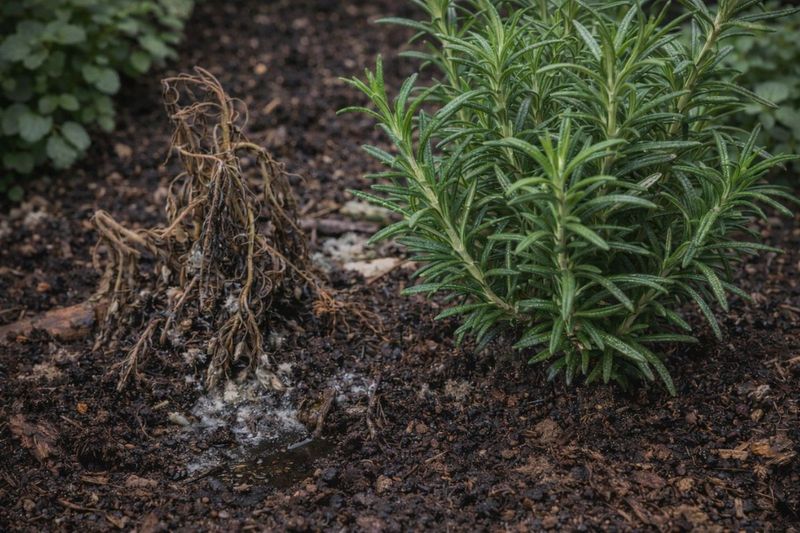
Something is already living in your garden soil, dormant and patient, waiting for the right moment. Water molds in the genus Phytophthora survive dry months as tough resting spores, then wake up when moisture returns.
UC Statewide IPM Program Pest Notes on Phytophthora root and crown rot explain the trigger plainly. Saturated soil allows these organisms to produce swimming spores that move through water films and find roots.
Once inside, they destroy the fine feeder roots and then work upward into the crown. Related organisms such as Pythium and Rhizoctonia can also attack roots in wet, poorly aerated ground.
Symptoms fool almost everyone because they look like drought. Foliage fades to gray-green, then tan, and whole branches fade while the soil underneath stays damp.
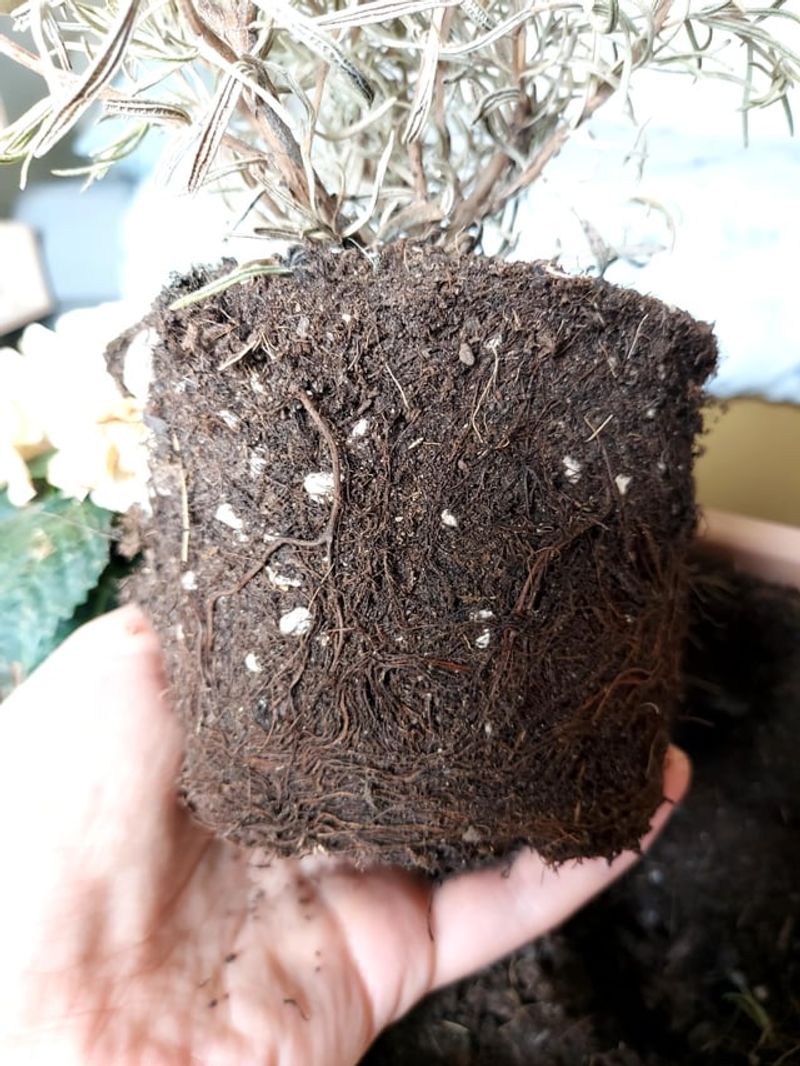
Pull up a failing plant, and the evidence shows clearly. Healthy rosemary roots are firm and pale, while rotted roots turn dark, soft, and slip apart between your fingers.
Fungicides rarely rescue a plant this far gone, and home gardeners have few effective options anyway. Removing the plant and the wet condition works better than any spray.
Infected soil stays risky for years, so replanting the identical spot with rosemary invites a repeat. Choose a drier location or rebuild that area into a well-drained mound first.
7. Prevention Beats Any Fix After The Fact
Ask any UC Master Gardener volunteer about curing root rot, and you will hear the same answer every time. There is no cure, only prevention, and September is the month to act.
Walk your garden before the first storm and look for the warning signs. Sunken basins, flat compacted areas, downspouts aimed at beds, and low corners all collect winter water.
Regrade those spots so water flows away from plant crowns. A slope of even an inch or two over a few feet makes a measurable difference during a heavy rain.
Pull thick organic mulch back from the base of each plant. Coarse gravel around the crown keeps the area drier than shredded bark, which holds moisture against the stems.
Plan new rosemary plantings for fall or early spring on mounds rather than in holes. Setting the root ball slightly high costs nothing and protects the plant for its whole life.
Treating a struggling plant later means digging, guessing, and usually losing it anyway. Twenty minutes of shovel work in dry September beats replacing a five-year-old shrub in February.
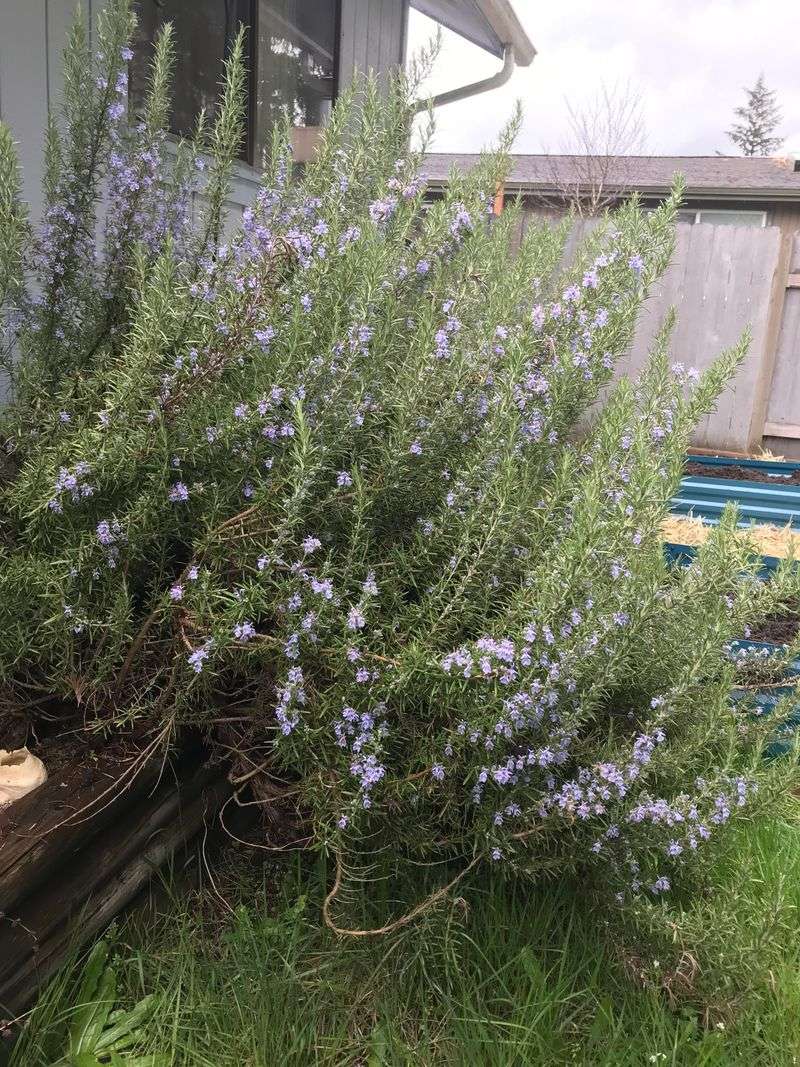
Rosemary can live for decades in California when its feet stay dry. Old plantings around missions and ranch houses prove it, surviving generations on nothing but rain and good drainage.
8. Container Rosemary Faces The Same Risk Indoors
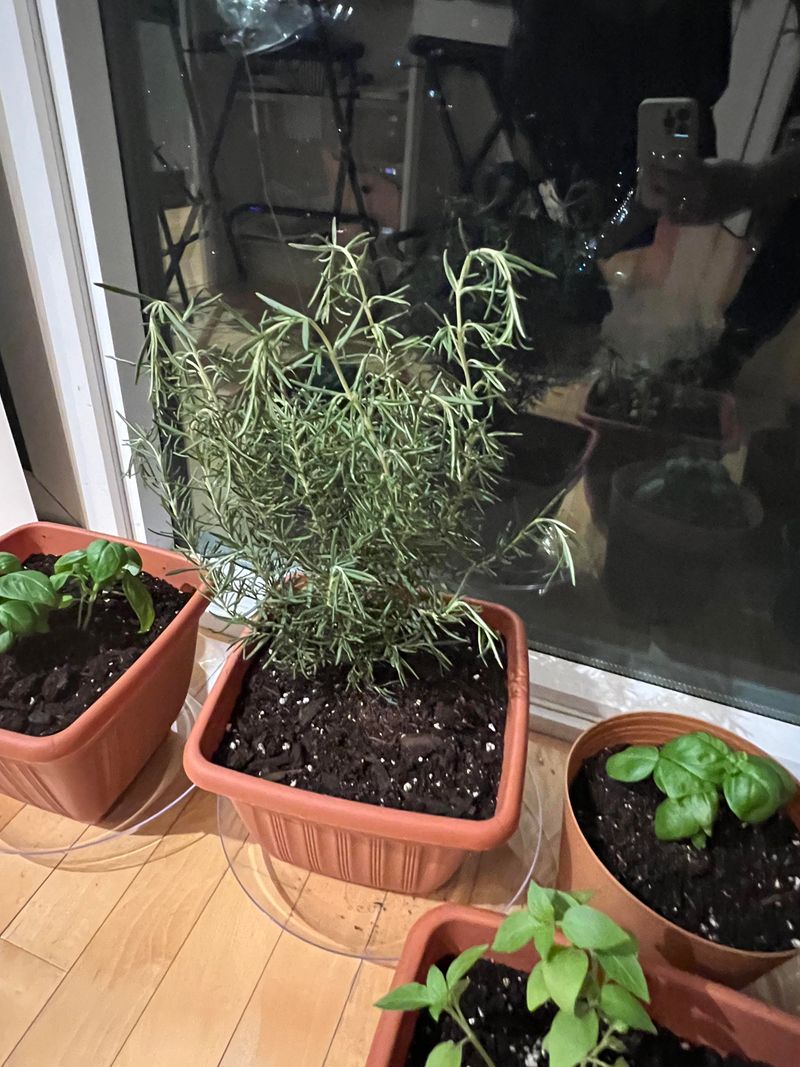
Potted rosemary sitting on a patio or deck seems safer from fall rain than one planted in the ground, but the same waterlogging problem shows up just as easily in a container.
Pots without adequate drainage holes, or ones sitting in a saucer that traps runoff, recreate the exact saturated conditions that drown roots in a garden bed.
Fall rain falling directly into an already moist container can push soil past the point where roots can breathe, especially if summer watering habits carried straight through into October without adjustment.
A pot placed under an eave or roofline that funnels extra runoff during a storm collects far more water than a plant in open ground ever would, turning a small container into its own private flood zone.
Checking drainage holes before the rainy season starts takes only a moment. Clearing away any soil or roots blocking the holes ensures water actually exits rather than pooling at the bottom of the pot.
Elevating pots slightly on pot feet or bricks lets excess water drain away freely instead of sitting trapped underneath, where it can wick back up into the root ball over several days.
Moving container rosemary under a patio roof or awning during the heaviest fall storms gives the plant a break from direct rainfall while still letting it enjoy typical outdoor light and airflow.
A gritty, fast-draining potting mix matters here just as much as it does in a raised bed, since standard potting soil often holds far more moisture than this Mediterranean plant can tolerate once the weather turns wet.